The Koran burnings in Sweden – legal, but unethical?

More than 90,000 articles have been written about the Koran burnings that are occurring in Sweden. The burnings have led to an escalated terrorist threat, international public protests, storming of embassies, burning of the Swedish flag, and condemnation from everyone from Turkey’s Erdogan to the Pope.

For many people outside Sweden it is hard to understand why the burnings are being permitted. The bottom line is that it is not against the law. The question is why is it not against the law.

It all boils down to understanding Sweden’s version of freedom of speech, expression and demonstration. In Sweden, you are allowed to publicly comment on, demonstrate against and criticize anything. Sweden’s centuries-old democracy is built on this.

Powers such as the royal family, industry giants or organized religions cannot legally stop or influence this. In secular Sweden, religion has no influence over politics. However, you are free to follow any religion you want, and this right is protected by law. Likewise you are free to criticize any religion you want.

With this understanding, you can see how the burning of books, including any religious scripture is allowed and not, per se, limited only to the Koran.

So you have to separate the law from ethics. Is it ethical? Maybe not. Is it illegal? No. This is why the Swedish government condemns the action but at the same time defends the right to self expression.

That said, there are other laws in Sweden that restrict public speech. For example, if it is considered hate speech, or incitement to violence, or against the interests of national security.

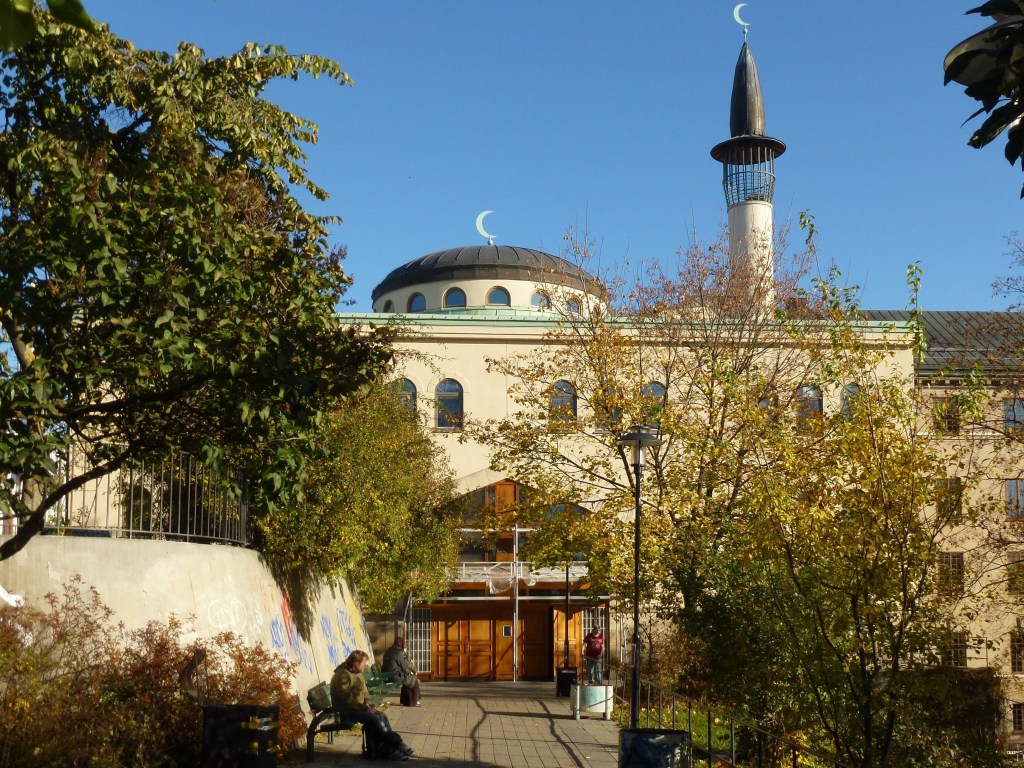
In the case of recent Koran burnings, outside a mosque on the first day of Eid, or outside the embassies of Muslim countries, and with today’s political instability, one can seriously question the police’s choice to allow such demonstrations to occur. Many Swedes say that it shows a poor sense of judgement and disregard for public safety and national security. But it isn’t illegal, and is fully in line with freedom of speech and demonstration.

Swedish law often looks at intent. At this could be the case with the Koran burnings moving forward. What is the intent of the demonstrators? Personally, I see it as a obvious provocation, an attempt to destabilize Swedish society and a direct insult to all the Swedish Muslims residing in the country.

Denmark has recently suggested a law change, based on the fact that the intent behind the action is malicious. The legislation will prohibit the inappropriate handling of objects with essential religious significance for a religious community. The Minister of Justice says ‘I fundamentally believe there are more civilised ways to express one’s views than burning things.’ I’m sure he is right. Changing the law isn’t about bowing down to the extremist demands of other nations, but showing respect for the diverse citizens of one’s own country.

Maybe it is time for Sweden to follow suit?

What are your thoughts on this current debate?

Is Sweden Islamophobic?

More than 90,000 articles have been written about the Koran burning in Stockholm that occurred last week. Many of these articles are declaring Sweden as Islamophobic. The action has led to international public protests, storming of embassies, burning of the Swedish flag, and condemnation from everyone from Turkey’s Erdogan to the Pope.

So, is this true? Is liberal-minded, egalitarian Sweden, in fact Islamophobic? Like everything the answer lies in your definition, and perspective.

It all boils down to understanding Swedish freedom of speech. In Sweden, you are allowed to publicly comment on, demonstrate against and criticize anything.

Influential powers such as the royal family, industry giants or organized religions cannot legally stop or influence this.

In Sweden, you are free to follow any religion you want. Likewise you are free to criticize any religion you want. That is the basis of democracy in Sweden.

With this understanding, you can see how the burning of any religious scripture is allowed and not, per se, limited only to the Koran.

So you have to separate the law from ethics. This is why the Swedish government condemns the action but at the same time defends self expression.

That said, there are other laws in Sweden that restrict public speech. For example, if it is considered hate speech, or incitement to violence, or against the interests of national security.

In the case of the recent Koran burning, outside a mosque on the first day of Eid, and with today’s political instability, one can seriously question the police’s choice to allow a such a demonstration to occur. Personally, I think it shows a poor sense of judgement and disregard for public safety and national security. But it wasn’t illegal, and fully in line with freedom of speech.

So, is Sweden islamophobic? From this one action, no. If you want to burn a bible or the tora, you can. Is Sweden Islamophobic in other regards? Maybe. Were the actions of the individual demonstrator islamophobic? Maybe, although he himself is Muslim. He claims his action to be politically motivated.

Time will tell what the outcome is of this. The man who carried out the act is currently living under police security, and amongst other things is being charged with starting a fire during a fire ban.

Sweden crowns their melody Queen

Last night, the final of Sweden’s ‘Melodifestivalen’ took place. The winner gets sent to the Eurovision Song Contest in Liverpool in May. Many Swedes take this competition very seriously – the process of selection takes 6 weeks!

But finally, last night, the victor was crowned. The winner this year was Loreen – again. Loreen won Eurovision Song Contest in 2012 for Sweden with the fantastic song Euphoria.

After two failed attempts, she finally gets to once again represent Sweden 2023 with the song Tattoo. The song, along with her performance and the tv production is a very strong contender to take home the victory. Many Swedes are already feeling triumphant. But Eurovision is often an unpredictable animal – since musical taste levels between the competing countries vary drastically. What is popular in the Nordic countries is usually not as popular in, for example, the Balkans.

So the question remains, will Loreen deliver Sweden’s 7th victory and thereby equal the record for most victories currently held by Ireland?

On May 13, we will find out.

You can catch the song and her performance below:

Songs about Sweden 2: ‘Stockholm tonight’

There have been many songs written about Sweden and Swedish towns. In this series, I will share a few with you.

The second is a song in Swedish called ‘Stockholm inatt’, which translates as ‘Stockholm tonight’. The original song was released in 2007 by artist Peter Jöback, and is about a night out in central Stockholm. The lyrics take in classic locations and venues in the city.

However, it was covered in 2021 by soul singer Cherrie in a tribute show where artists interpret each other’s songs. She modernized the lyrics and placed the song partially in the suburbs of Stockholm. This re-working gave the song a huge renaissance, and a hit for Cherrie.

World Book Day – and my book on Sweden

Today is UNESCO World Book Day, to celebrate books and promote reading. The 23 April is a significant day as it commemorates the death of many famous writers such as William Shakespeare, Miguel de Cervantes and Inca Garcilaso de la Vega.

Every year a World Book Capital is nominated. The first one, in 2001, was Madrid, Spain. This year it is Guadalajara in Mexico.

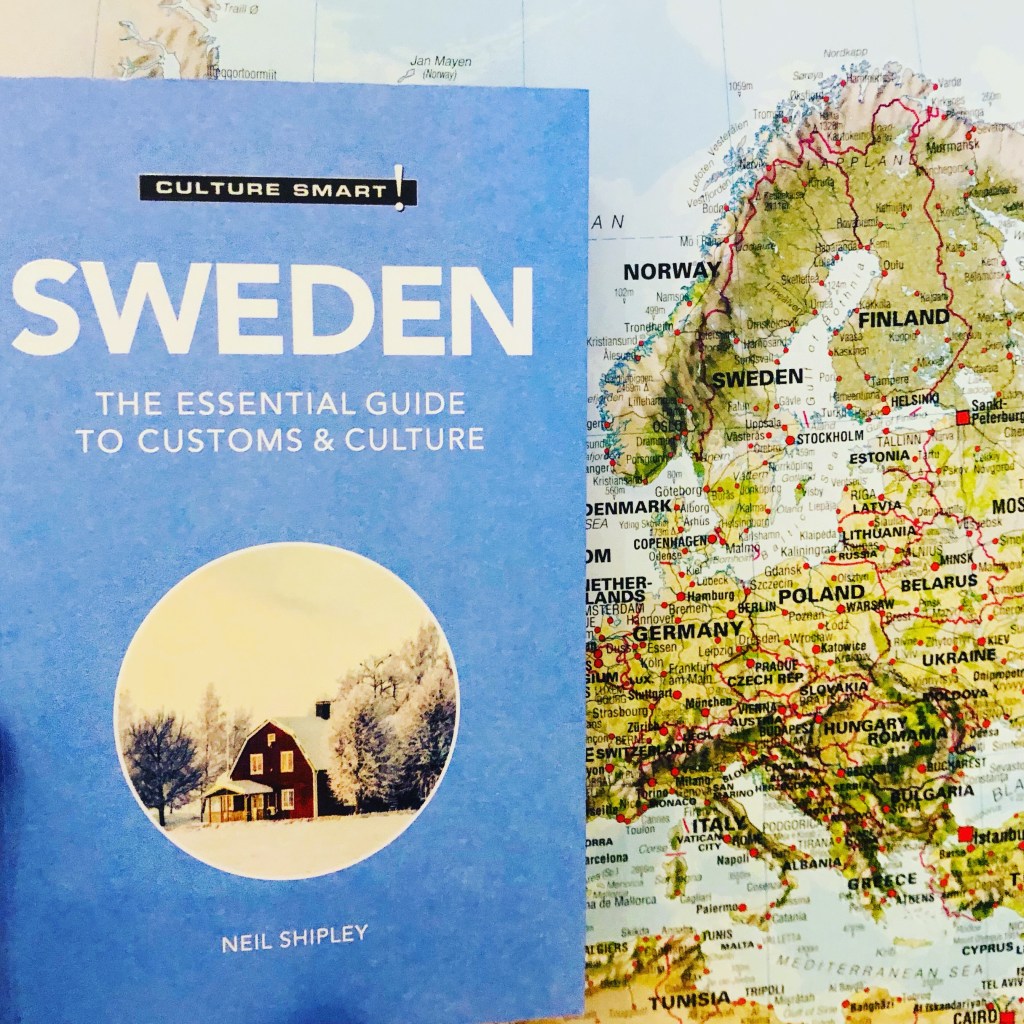
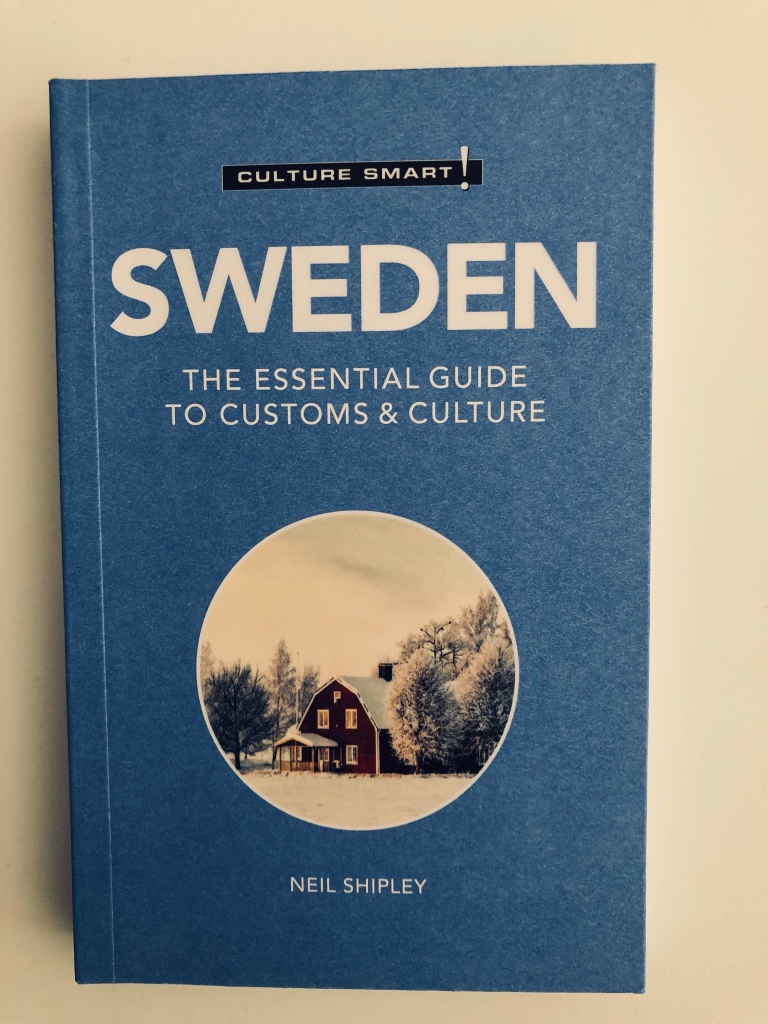
So today is a good day to buy a book, or to gift one. If you know anybody who is interested in learning about Sweden, or planning on visiting Sweden, then my guide book is a good match! I published it in 2021.

You can buy it on Amazon, Bokus, Akademibokhandeln and Adlibris amongst other online stores. Sweden, by Neil Shipley, published by Kuperard 2021. You can also buy it straight from the publisher at http://www.culturesmartbooks.co.uk

I still have a few copies left, so if you’d like to buy a signed copy, just let me know!

Riots on the streets of Sweden

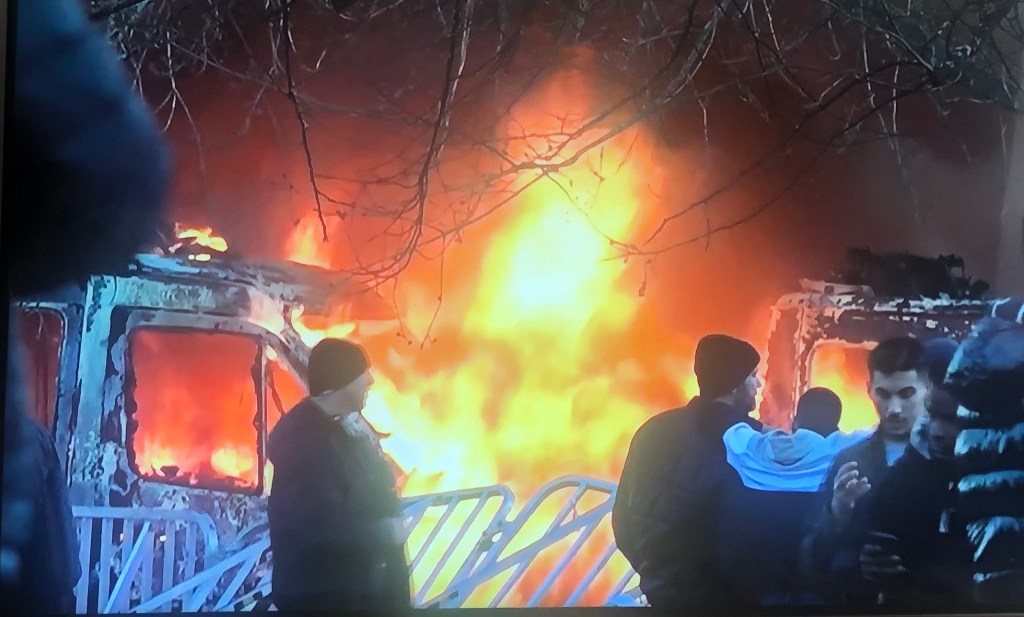
Over the Easter weekend, there were several riots in different parts of Sweden in which participants violently attacked the police and other emergency services. Screaming, trashing, burning, destroying, threatening and killing.

The riots were in response to anti-Islam events organised by radical, far-right Danish party Stram Kurs (Hard Line). The leader Rasmus Paladan, who is half Swedish, had been given permission to hold public rallies and burn the Qur’an.

While it is not illegal in Sweden to burn a religious scripture of any denomination, it is a clear and fully-intended provocation, leading to public outcry and reaction.

Let me be clear – I in no way condone the criminal actions of the rioters. They need to be identified, and prosecuted. I also do not condone the burning of the Qur’an. It is a senseless and racist affront intended only to aggravate.

The whole situation has put Swedish politicians in a pickle. Like most democratic countries, the concept of freedom of speech is central. Everybody has the right to say what they think, even if it is heinous. As a democracy, we have to accept it. We meet our combatants in debate and not in violent action.

So, the question becomes is burning the Islamic scripture an expression of this democratic right? Or is it incitement of hate, which is illegal in Sweden?

The politicians have skilfully dodged the question and passed it on to the police, to whom Rasmus Paladan has applied for permission to continue his tour of Sweden, despite ongoing public unrest.

It will be interesting to see what happens next in this historical moment in Swedish history.

My book on Sweden – the Essential Guide!

My book is doing really well, which I’m very proud of. You can buy it on Amazon, Bokus, Akademibokhandeln and Adlibris amongst other online stores. Sweden, by Neil Shipley, published by Kuperard 2021.

I still have a few copies left, so if you’d like to buy a signed copy, just let me know!

Book recommendation – how to adapt to Swedish culture

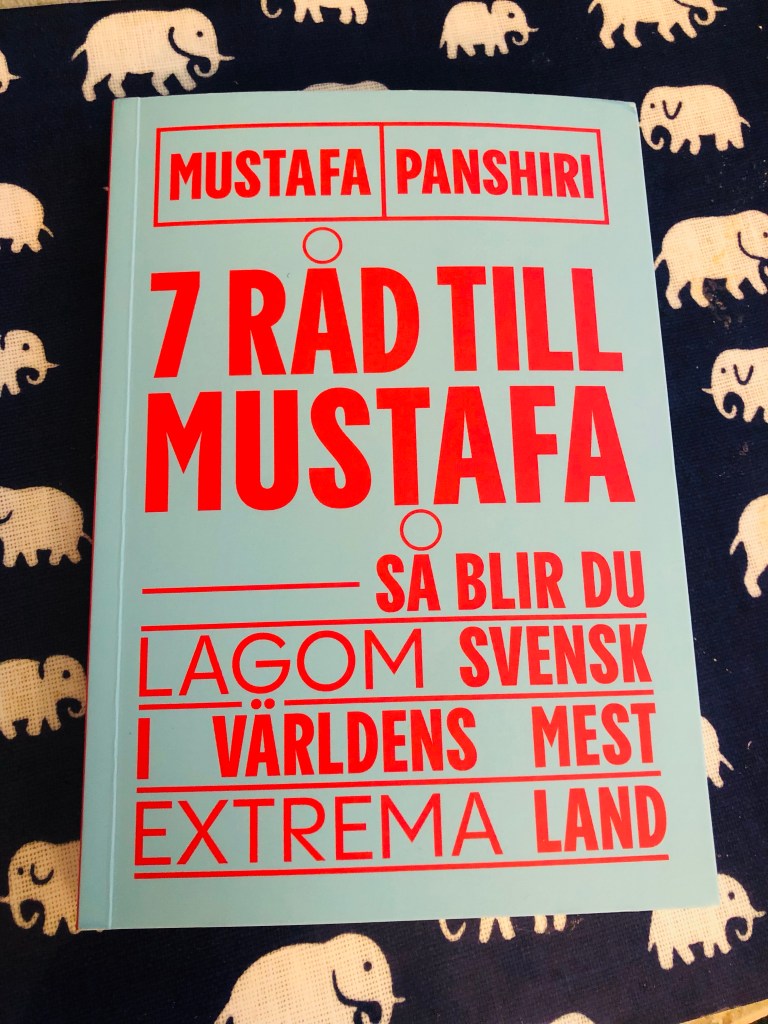
I have just finished reading Mustafa Panshiri’s 2021 book ‘7 Råd Till Mustafa’. If you understand Swedish, I strongly recommend you read it.

Mustafa Panshiri came to Sweden as a child from Afghanistan. In his book, he cleverly weaves his own experience of integration with seven pieces of advice he wishes he would have been given. This makes the book not only interesting to read, but very practical and useful. He has an non ‘Western-centric’ perspective which I found fascinating to read about and reflect over.

Aimed at readers who want to understand Swedish culture, and integrate into society, the book is also relevant to Swedes. Panshiri includes sections with advice to ‘Svenssons’.

Integration is a complex issue and Mustafa Panshiri does not claim to solve all of the problems. However, with this book, and his endless youth outreach work, he will clearly make a difference.

The book can be bought on line and at good book shops.

Sweden: the spiritual magic of ‘joiking’

We have all experienced moments of beauty in our lives. One of mine is something I experienced on a trip to the North of Sweden in an town called Hemavan.

The resort we stayed at had a restaurant at the bottom of a ski slope. One day when we were in there, a Sami man climbed up onto the small stage and began to sing an enchanting song. He was dressed in traditional blue and red Sami dress, and through the large windows behind him we could see reindeer high up in the snowy landscape.

It is a beautiful, serene image that is forever etched in my mind.

A contributing factor to the impact this had on me is how the man was singing. In fact, he wasn’t singing, he was ‘joiking ’. What, you might wonder, is joiking ?

Joiking is not a song as such, but a melodic sound that is integral to Sami culture. It is used to express relationships to people and nature. Traditionally, joiks have no lyrics, consisting of chanting, not unlike that found in some Northern American Indigenous cultures. They can also include mimicry of animal sounds.

Like in the restaurant, joiks are often performed for entertainment. However, they can also have a spiritual function. In past times, a noaidi (Sami shaman) could perform joik whilst beating on a Sami drum with bones to contact the spiritual world.

In Sami culture, most people are given their own melody, like a signature tune. This leads to the Sami saying that they are “joiking someone” rather than “joiking about someone”. Most joik melodies are about people, but also animals and places can have their own joiks. Animal joiks are often about wolves, reindeer, or birds such as ducks.

During the Christianization of the Sami from the 1700s onwards, joiking was considered sinful and was banned. But it survived and today is included as a frequent part of Swedish cultural events. Most recently, a Sami artist was televised joiking in a celebration of Crown Princess Victoria’s birthday in July.

If you’d like to experience some traditional and modern joiking, check out the links below. You will be captured by its melancholy and immediately transported to the mountains and plains of northern Sweden.

My Essential Guide to Sweden

In 2020, I was approached by the publishers behind the respected Culture Smart series to see if I would write a book about Swedish culture. I accepted and, finally, it is here! I am proud to join their staff of authors! Available soon to buy on Amazon, or via me. Just pm me if you’d like a copy. Today’s a good day!!!