Ski crazy Swedes


Tonight the skiing World Cup came to Sweden where, in Stockholm, elite skiers competed in parallel slalom. It was fun to be there, on the packed stands and see all the Swedish flags waving as Swedish skiers Hargin and Hansdotter competed. The competition took place on Hammarbybacken, which is a ski slope in the city. 
Hammarbybacken is a man-made ski resort built from rubble and refuse, towering in the southern part of Stockholm city. Building commenced in the 1950’s and finished in 1990. At 93.5 meters high, it’s a popular weekend destination for outdoorsy Stockholmers. And tonight, there were around 8000 of them there, cheering and shouting into the cold January night. 

The Swedish skiers didn’t win. But the spectators left the event having witnessed a fantastic winter sport event in their very own capital city. 

Swedish caviar – but not as you know it

kalleskaviarWhen you hear the word ‘caviar’, you probably get an instant picture in your head – a picture of jewelled fish eggs, vodka, champagne, Russia and luxuriousness.

Until you hear about Swedish caviar – or more specifically a popular Swedish fishy foodstuff called ‘Kalle’s kaviar’.

Kalle’s caviar comes in a tube, emblazened with the image of a blue-eyed, blonde-haired boy called Kalle. It hit the Swedish market in 1954, and has remained an extremely popular food since then. The tube contains smoked, sugar-salted cod and sik roe. It also contains lots of sugar, lots of salt, potato flakes and tomato purée. To eat it, one simply squeezes it from the tube, like toothpaste, onto sandwiches usually containing boiled eggs. Kalle’s caviar is a fishy staple in the Swedish diet. It has a very pungent, extremely salty fishy taste.

It seems to be a divider amongst people. Some people love it, some people despise it. I would politely say that it’s an acquired taste. It certainly is a taste that has taken me twenty years to acquire. When I first tasted it, I remember balking and questioning if it was even fit for human consumption. But now, I will happily squeeze the fishy stuff onto my boiled egg at breakfast time.

Sure, it’s caviar. But not as you know it.


How Swedes reflect on their mortality

skogskyrkogarden

Thankfully, it isn’t every day that you are faced with death. It is isn’t every day we contemplate our own mortality. Probably a good thing. Imagine what life would be like if we thought about death all the time.

But this weekend is an opportunity to do just that. Tomorrow is All Saints’ Eve. Well, not technically. All Saints’ Eve is actually October 31st. But in Sweden, they are practical and, since 1953, they round it up to the nearest weekend and call it a public holiday.

Legislation aside, tomorrow is the day in Sweden when people reflect over life, death and those who have passed away. It is a peaceful time. It is a beautiful time.

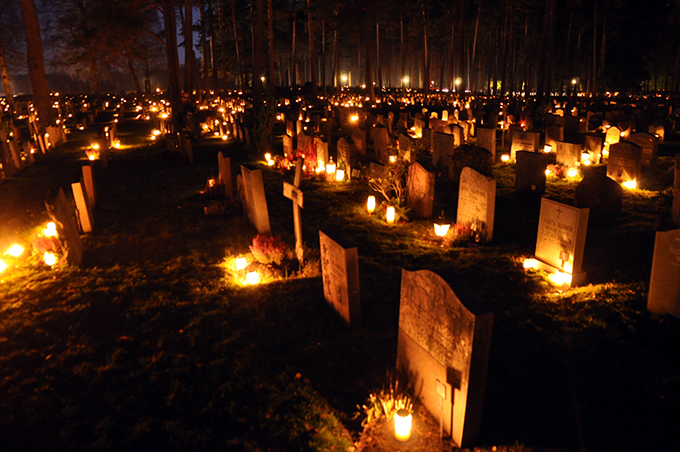
Graveyards around the country twinkle with candle light. Relatives flock to the burial grounds and light candles and lanterns and place them by the graves of their loved ones. It is a miraculous sight to see the dark cemetries twinkling and glowing with bright white lights. It brings scerenity and majesty to an otherwise intensive and dark time of the year.

On Österlen in the rural south of Sweden, they have taken it a step further. A festival called ‘Österlen Lyser’ – Österlen shines – happens this weekend. The dark villages and fields are lit up with candles, flares, lanterns and torches. People play lantern-illuminated night time boule by the edge of the sea. Choirs sing, windows glow and open bonfires celebrate this dark time of the year.

It isn’t every day that you are faced with death. Full respect to Halloween, which is also taking hold in Sweden, but I don’t need to be reminded of witches, vampires and zombies. The less commercial traditional Swedish approach provides a more reflective vehicle for us to contemplate our own mortality and remember those we loved.

Top 10 things I miss about Sweden

swebuildings

I’ve been hearing and reading a lot of Sweden-bashing recently. While we are free to think what we want, I believe it’s all too simplistic to focus on the negative and complain about Sweden or Swedes. It’s very easy to focus on what Sweden is not, rather than what it is.

Recently, I’ve been a lot in Asia and Latin America, far away from Sweden and my family and friends. Sometimes when we’re confronted by new environments, it is then we realize what we appreciate about our home locations. I’ve been putting some thought into it. Apart from my loved ones, what is it that I miss about Sweden when I’m away?

Here are my top 10, in no particular order of priority.

  1. the feeling that the sky is big and endless, giving a sense of freedom in my mind and spirit
  2. knowing that I can take a deep breath and fill my lungs with fresh oxygen instead of polluted toxic fumes
  3. the calmness in my thoughts and that I don’t have to battle with external noises in order just to hear myself think
  4. my anonymity and just blending in with the crowd
  5. the certainty of knowing how things function and how I am supposed to behave
  6. walking outside without interruption, confusion or danger
  7. the knowledge that I don’t have to keep buying bottled water – I can drink directly from the tap without getting seriously sick as a consequence
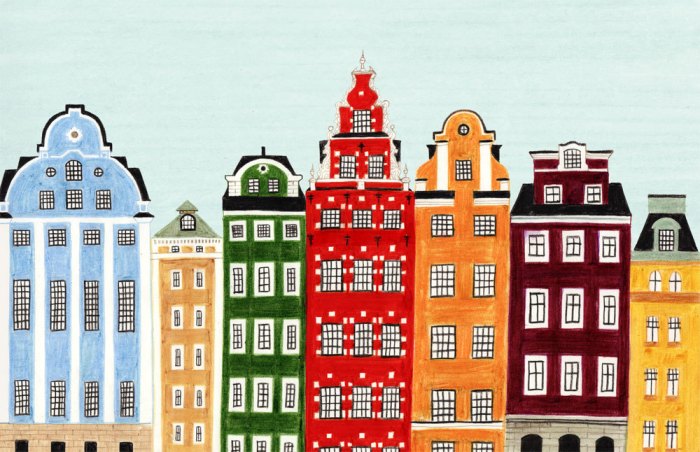
  8. the evening light cascading on the colorful buildings – the umbras, the rusty reds and the deep golds
  9. the sting of the cold air on my nose and cheeks (never thought I’d admit to that one)
  10. the Swedish aesthetic – environments filled with stylish modern design, cool Nordic solutions and healthy-looking easy-on-the-eye people

None of this is to say that I don’t enjoy traveling, because I do very much so. I just think that sometimes it’s worth taking a moment to reflect over what you appreciate about where you live.

I’m sure, if you do, you’ll find there’s a lot more than you think.

What do you appreciate about Sweden when you’re not here? I’d love to hear your thoughts – write them in the comments below.

If you like this blog, please share it with your friends.

What do Shakespeare, the 1st of May and immigrants have in common?

Shakespeare_2888800b

Today is May 1st 2016, celebrated in Sweden as in many other countries, with demonstrations, political speeches and parades. Most political parties, including the fascist party, have rallies and gatherings. One of the hot topics this year is immigration and the large increase of asylum seekers that have arrived in Sweden during the recent months. For some people in Sweden, these immigrants are a positive addition to Swedish society. For others the influx of immigrants is unwelcome, a problem that is perceived to bring with it social and societal disruption.

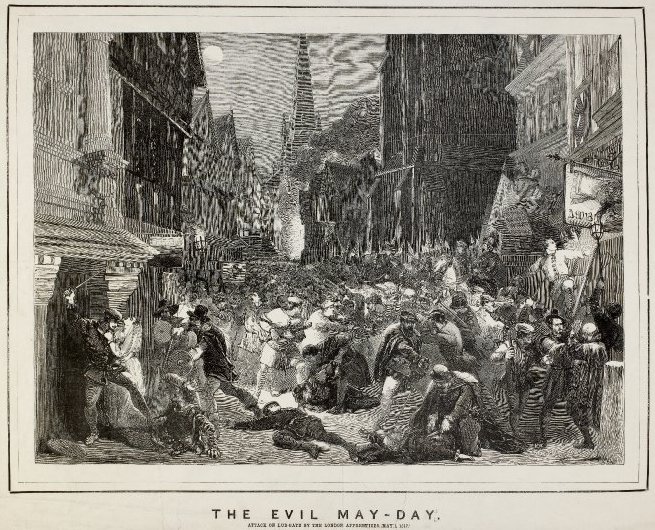
Reflecting over this situation, I hear echoes of something that happened in London on May 1st, 1517 – almost exactly 500 years ago – something known as ‘Evil May Day’.

During this period ín history, the reign of Henry the Eighth, Londoners were feeling unhappy with their situation. There was a great deal of misery, poverty and disease. As a consequence, they came to resent the presence of foreigners in the city, especially those seen to have money.  An inflammatory xenophobic speech had been made at Easter calling on all “Englishmen to cherish and defend themselves, and to hurt and grieve aliens for the common weal’.  Over the following two weeks there were sporadic attacks on foreigners and immigrants. On May Day 1517, it culminated, and a mob of thugs, liberated prisoners and others took to the streets and attacked foreigners and looted their homes. The under-sheriff at the time, the legendary Thomas More, tried unsuccessfully to dissuade them. Nobody was killed but several were arrested and charged with treason. Referring to the events of this day, William Shakespeare, many years later, wrote a text depicting the speech that Thomas More delivered to the rioters.

The voice of Shakespeare, who died 400 years ago last week, resonates through this text. The fascinating thing about it is that it is as relevant today as it was 400 years ago. This saddens me. The same forces at action centuries ago, are still in action today. This should be a reminder to all of us to be vigilant. Not everything, it seems, does change with time.

Here’s the text:

‘A Plea on behalf of Immigrants’ by William Shakespeare

Grant them removed, and grant that this your noise
Hath chid down all the majesty of England;
Imagine that you see the wretched strangers,
Their babies at their backs and their poor luggage,
Plodding to the ports and coasts for transportation,
And that you sit as kings in your desires,
Authority quite silent by your brawl,
And you in ruff of your opinions clothed;
What had you got? I’ll tell you: you had taught
How insolence and strong hand should prevail,
How order should be quelled; and by this pattern
Not one of you should live an aged man,
For other ruffians, as their fancies wrought,
With self same hand, self reasons, and self right,
Would shark on you, and men like ravenous fishes
Would feed on one another.

You’ll put down strangers,
Kill them, cut their throats, possess their houses,
And lead the majesty of law in line
To slip him like a hound.
Alas, alas! Say now the king
Should so much come too short of your great trespass
As but to banish you, whether would you go?
What country, by the nature of your error,
Should give you harbour? go you to France or Flanders,
To any German province, to Spain or Portugal,
Nay, any where that not adheres to England,
Why, you must needs be strangers: would you be pleased
To find a nation of such barbarous temper,
That, breaking out in hideous violence,
Would not afford you an abode on earth,
Whet their detested knives against your throats,
Spurn you like dogs, and like as if that God
Owed not nor made not you, nor that the claimants
Were not all appropriate to your comforts,
But chartered unto them, what would you think
To be thus used? this is the strangers case;
And this your mountainish inhumanity.

 

Evil%20May%20Day.jpg


Don’t choke on the almond

And so it is Christmas. Like many places around the world, Sweden celebrates on Christmas Eve. Festivities throughout the day include eating the Christmas ham, receiving a visit from Santa, opening presents, drinking, playing board games and eating more. 

But the day usually kicks off with a steaming bowl of rice porridge. This delightful dish is made of rice, milk, sugar and cinnamon. Deep inside the porridge, there is often an almond. Presuming you don’t choke on it, if you find the almond it means you will be married during the following year. In the south of Sweden, and in Denmark, Norway and Iceland, the person finding the almond receives a gift. During the 1920’s it became trendy in Sweden to replace the almond with a ‘porridge doll’ made of porcelain and hide that in the porridge instead. 

Really superstitious people will even leave a bowl of porridge outside tonight to appease the house gnome who, according to legend, can make your cows dry up if he’s pissed off. 

But hopefully nobody should be pissed off on a day like today. And with family and friends gathered around a twinkling Christmas tree, a bowl of steaming hot rice porridge is a great way to kick off a lovely day. 


And Sweden’s ‘Christmas present of the year’ 2015 is…

Every year, Sweden’s trade research institute nominates an item that is the ‘Christmas present of the year’. This item should have sold in large quantities and/or represent current trends in Swedish society. 

The first item to be granted this status was in 1988 and it was the baking machine. Since then, various items have been the mobile phone, the tablet, the spike mat, the book, the food home delivery service, the woolly hat and the wok. Last year’s was the smartband – a reflection of today’s physical activity trend and the need to digitally track and register results. 

So this year, what is it? 

Given the current state of the world, and the number of refugees that Sweden has taken in, one might hope that it is a charitable contribution. But no it’s not. 

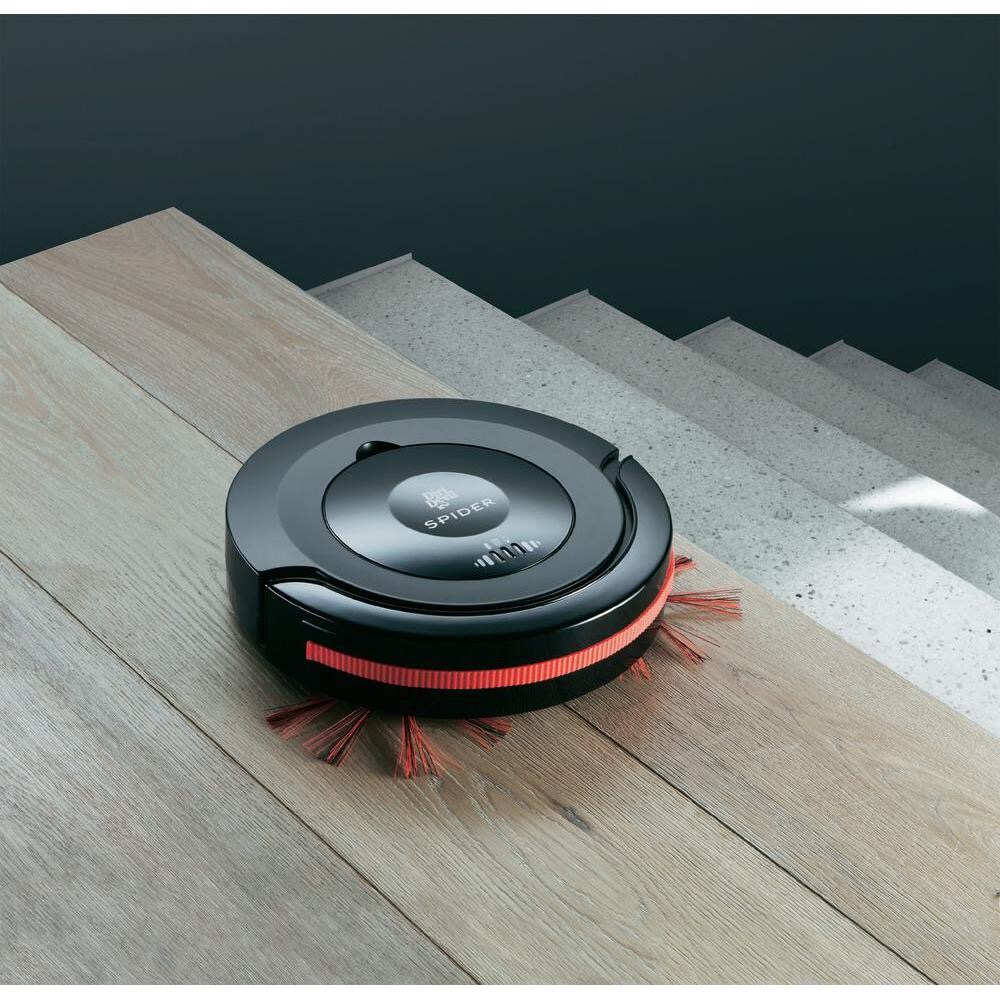
It’s the robot hoover. 

What does this say about Sweden’s current time? It clearly represents the robotisation of our society, and the automisation of household functions. But it also reflects the stressful nature of today’s society in which people feel that time is limited. Additionally, it shows that the home is back in focus and the need to be liberated from boring tasks such as vacuum cleaning is strong. 

So Happy Christmas and a dust-free New Year! 


This queen don’t wave

  
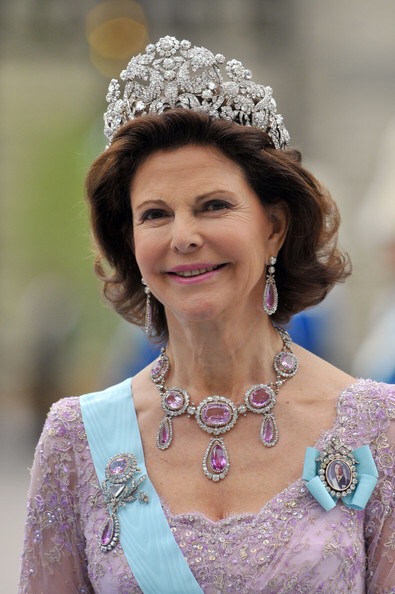
A month or so ago, I bought a little model of Sweden’s Queen Silvia. Brandishing a handbag which encloses a solar panel, the energy from the sun is supposed to make her wave   She’s been standing on my window ledge for a while now in direct light. But for the last few days, that queen isn’t waving. Her hand remains still. Royally poised. But nothing happens. Nothing. Nada. Zero. Zilch. Ingenting. 

It’s a clear indication of the lack of sunlight we’ve had in Stockholm recently. 

So little that the queen herself protests. 

International LGBT games comes to Sweden

  
Fancy seeing well-trained men or sinuous women in Lycra shorts? Well Stockholm is the place to be this week. 

Every second year a European-based sporting event takes place in different countries. The ‘Eurogames’ is the premiere sport competition for LGBTQ people. And this year it’s in Stockholm! 

5000 athletes have registered to participate in over twenty different sports, such as athletics, swimming, golf, marathon running, badminton and ballroom dance. Anyone can go watch these events and cheer on the athletes as they compete for a medal. Events are spread out over Stockholm and on different days, more information can be found at http://www.eurogames.com

Tomorrow, Wednesday, is the opening ceremony which takes place at 7pm in Kungsträdgården in Central Stockholm. Athletes will proudly march into the park behind their country flag. I’m sure it’ll be an event worth seeing! It is open to everyone and free if charge. 

So put on your running gear, or jump on your bike, and head down to Kungsan tomorrow evening! See you there! 

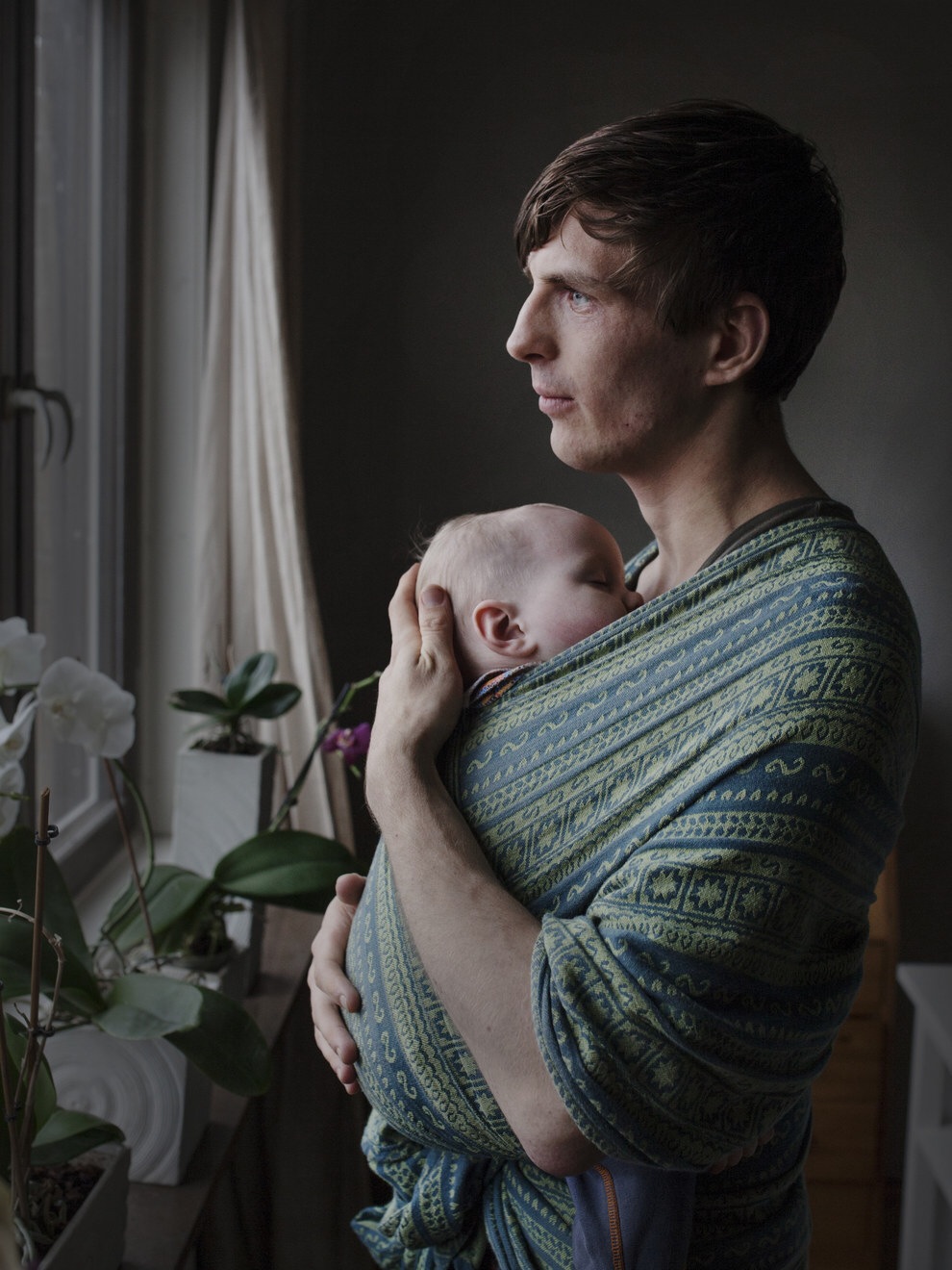
Swedish Dads

60 days or lose them. That’s the deal in Sweden when it comes to dads taking out parental leave. 

Sweden has one of the world’s most generous parental leave systems in the world – 480 days per child, with a paid allowance from the state. These days can be divided between the parents however they like, apart from 60 days that must be taken by the father (presuming heterosexual partners).  If he doesn’t do this, the days are simply lost. 
This is an effort by the government to promote gender equality around child nurturing – and a more equal sharing of child benefit and leave. 

Photographer Johan Bävman found this so interesting that he has documented various fathers during their paternity leave. The exhibition called ‘Swedish Dads’ has raised interest around the world as it challenges traditional stereotypes about gender roles in the family. Johan himself says that he wants to show pictures of role models so that more dads take the opportunity to be home with their newborns.   

Photo: Johan Bävman

It’s no surprise that this initiative comes out of Sweden. According to one piece of cultural research, Sweden is extreme when compared to other countries in the area of gender overlap (men doing historically ‘traditionally female’ things and women doing historically ‘traditionally male’ things). This system and also this photo series seem to just reinforce the findings in this research. 

Can it be that Swedish men are the best dads in the world? Or is it just that the system allows them the freedom and approval to develop their relationships early on with their children? 

To see the pictures go to http://www.johanbavman.se