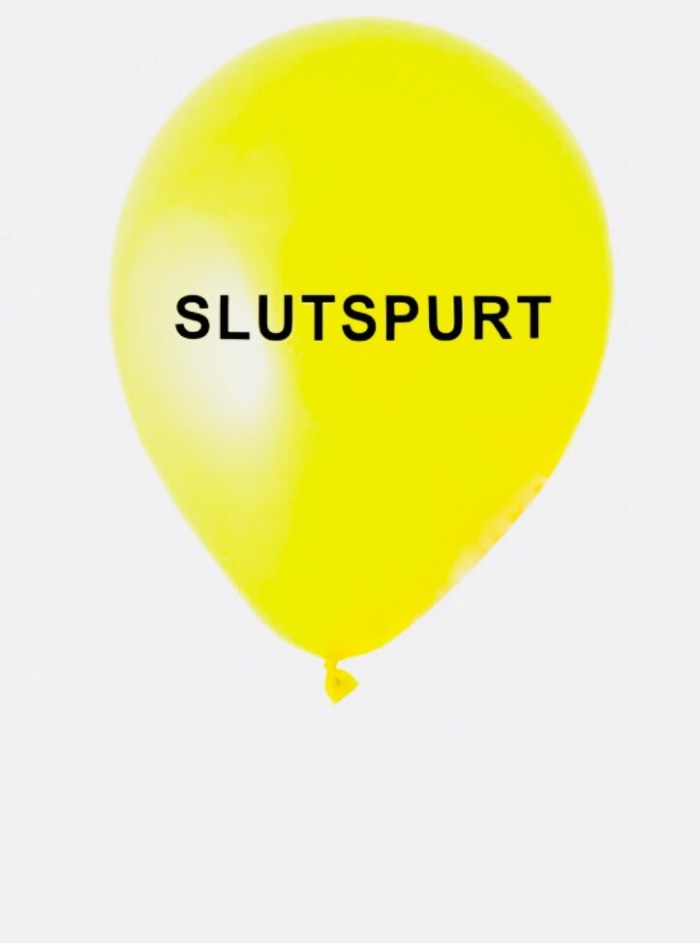
Sweden’s politicians are slut spurting

I know, i know. It sounds gross doesn’t it? ‘Sweden’s politicians are slut spurting.’ However disgusting it might sound, it is exactly what they are doing.

With one week to go to the election, all the parties are in the final throws of their campaigning. In this final week, they try to get their message across by turning the gear up a bit. This final sprint to the finishing line is called a ‘slutspurt’ in Swedish. It’s often used to describe the final hurried days of a sale.

And it’s what they’re all doing.

They’re slut spurting on the tv, in the streets, in the media. It’ll be a relief when it’s all over I expect. That much spurting can’t be good for you.

Swedish election language – val*****

Valspecial

Currently there’s a lot of election campaigning going on in Sweden. In a couple of weeks, Swedes will decide who they would like to have in their government. It’s a bit of a nail-biter as the established parties are waning in popularity and the far-right populist party is gaining ground. Time will tell how the public votes. But in the meantime, let’s have a little lesson in Swedish election language. The Swedish word for election is ‘val’, which also means choice and also means whale. The word ‘val’ appears in front of lots of words in election times. Here are a selection of my personal favourites that I’ve spotted in the media:

  • Valbråk – ‘election fight’ – some kind of conflict that arises in association with an election. It can be connected to posters or pamphlets or anything that gets people agitated, often by making populistic ‘vallöfte’
  • Valfläsk – ‘election pork’ – a weird one, describing the hyperbole, the bullshit and the exaggerated claims made at the time of elections
  • Valfusk – ‘election cheating’ – used to describe corruption in relation to an election
  • Vallöfte – ‘election promise’ – what the party promises, and more often than not fails to deliver
  • Valstuga – ‘election cottage’ – small wooden houses on a public square where representatives from each party stand and represent their policies
  • Valspurt – ‘election spurt’ – nothing saucy, but rather a word to describe the escalating final run up to voting day
  • Valchock – ‘election shock’ – an unexpected result, rather like Brexit or Trump and perhaps what we are heading for in Sweden in a couple of weeks’ time.


Do you have any other any other election words that particularly amuse you?


Swedish expressions – take it piano

If a Swede says to you ‘ta det piano’ – take it piano – what they mean is take it easy, go slow often to avoid any mistakes. They can also say ‘it’s piano’ which means everything is cool, calm, ok.

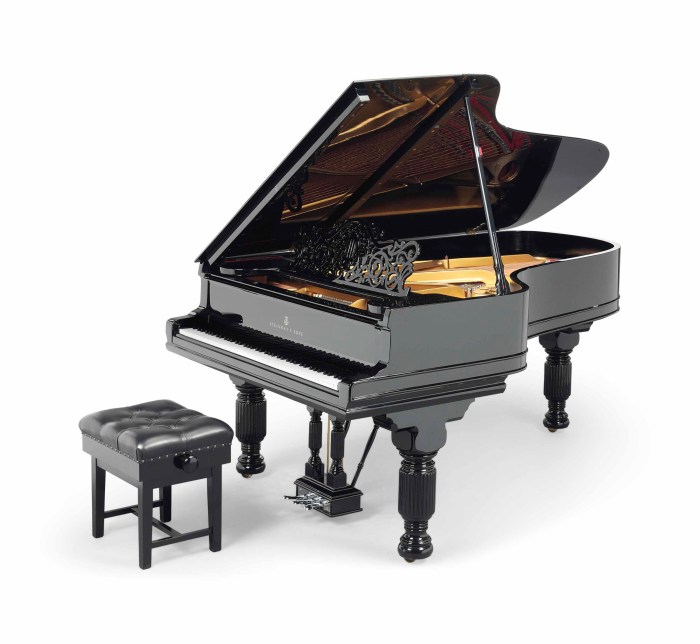
Researching the origin of this expression led me, not surprisingly, to the world of music.

The word ‘piano’ has two meanings – firstly the string instrument with its variety of keys.

Secondly, it is a musical term for ‘weak’ or ‘soft’. In sheet music, the letter ‘p’ indicates piano and tells the musician to play their instrument softly. Double ‘pp’ means pianissimo and indicates to play very softly.

The term ‘piano’ originates in Italian and has been in use in Sweden since the 1600’s.

Swedish expressions: to shit in the blue cupboard

In Swedish, when you have landed yourself in trouble, or made a fool of yourself, you can use the delightful expression ‘shit in the blue cupboard’.

Example: ‘oh no, Edward really has shit in the blue cupboard now’.

So where does this originate? After some exploration, I have discovered what is recognised as the most likely explanation.

Centuries ago in Sweden, furniture was painted red and okra as this colour was cheap and easy to produce. Around the 1800’s new production methods enabled the production of blue paint – Berlin blue – and this was more expensive and seen as more exclusive. Consequently, people used this colour to paint the cupboard where they kept their finer pieces of porcelain, silver and linens.

In these times, the population used potties to go to the toilet in. Putting the potty into the blue cupboard, amongst the finer articles, was seen as a really stupid thing to do. And so the expression developed in relation to foolish acts.

Swedish expressions: Bang on the beetroot

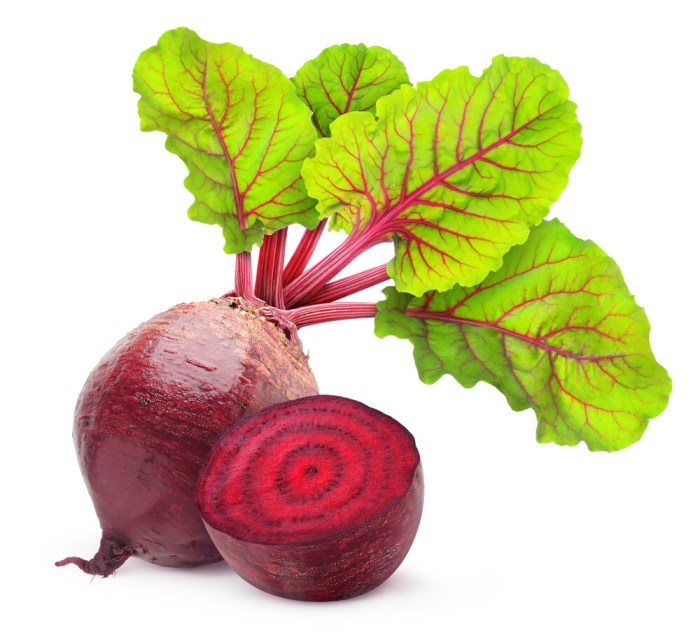
There’s an expression in Swedish that I’ve often wondered about where it comes from. The expression – ‘pang på rödbetan‘ – bang on the beetroot. It’s a weird idiomatic expression that in its earlier meaning, referred to getting straight down to penetrative sex without any foreplay. However, today it is used to describe any situation in which we get straight down to it, for example in a meeting, in a discussion, in a conflict.

The ‘pang på’ is easy to understand as it means straight forward or slap-bang. But where does the beetroot come from?

Well, according to a common theory, it originated from the word ‘robota’ in Polish. This word came with temporary labourers to southern Sweden in the 1800’s and was Swedified by the locals. The expression ‘pang på rödbeta’ was used in Sweden’s southern Skåne region already in the 1900’s. So what does the word ‘robota’ mean? Well, it is defined as hard work, repetitive work and routine work.

So ‘pang på robata’ – getting straight down to hard work.

Interestingly, the word ‘robata’ is also the origin of the word ‘robot’ – something that does repetitive, routine work.

15 Swedish words for getting married

With the UK, and probably the USA, in a Royal wedding frenzy at the moment, it made me think about Swedish words for getting married. In English, we have for example ‘tie the knot’, ‘take the leap’ and ‘get hitched’, so I did some research. And I found the following formal, and less formal expressions for getting wed.

  1. gifta sig – to get married
  2. ingå äktenskap – to enter into marriage
  3. äkta – to wed
  4. ingå giftermål – to enter into marriage
  5. Gå träda i brudstol – ‘step onto the bridal chair’ (tradition from the 1600’s)
  6. Ingå förmälning – enter into marriage
  7. Gå brud – ‘go bride’
  8. Vigas – get married
  9. Föra till altaret – lead to the alter
  10. Knyta hymens band – tie the wedding band
  11. Bygga hjonelag – ‘build a marriage’
  12. Slå sina påsar ihop – ‘join your bags’
  13. Förena sina öden – unite your destinies
  14. Gänga sig – get married
  15. Stadga sig – settle down

Interestingly, the most used word for married in Swedish is the same as the word for poison – ‘gift’!

Wondering about Sweden in the middle of the night

It’s 4am and I can’t sleep. One of those nights with a million thoughts churning around in my mind. Outside, the city of Stockholm is quiet. Daylight is starting to slowly break. As I lie here, a question about Sweden pops into my head. Something I’ve never thought of before.

Where does the English name ‘Sweden’ come from?

I should be sleeping, but I decide to google for the answer and I am catapulted into the world of historical research, language theory and ethno-cultural writing. And now I have the explanation and hopefully I can sleep.

Would you like to know? Here’s what I found:

The English name for Sweden was loaned from Dutch in the 17th century to refer to Sweden as an emerging power. Before Sweden’s imperial expansion, Early Modern English used Swedeland.

The Old English name of Sweden was Sweoland or Sweorice, land or realm of the Sweonas – the Germanic tribes of the Sviar. The name of the Sviar itself is derived from a proto-Norse Swihoniz, presumably a self-designation containing the Germanic reflexive ‘swe’ – one’s own, self”.

The modern English name Sweden

was loaned from Dutch. It is based on Zweden, the Dutch name of Sweden, and in origin the dative plural of Zwede. It has been in use in English from about 1600, first recorded in Scottish Swethin, Swadne.

So there you go. Perhaps I can now zleep. Zzzzzzz.

21 sexy Swedish words

There’s one stereotype of Swedes that seems like it will never go away – the stereotype that Swedes are sexually liberated. This impression started after the wave of Swedish films that came out in the 1960’s and which were considered erotic by the rest of the world. Equal gender rights, contraception, abortion rights and a relaxed attitude to nudity have reinforced this stereotype. Perpetuating it further over the decades is the regular supply of seductive and physically attractive Swedes in the media – Britt Ekland, Ulrika Jonsson, Anita Ekberg, Maud Adams, Dolph Lundgren, Victoria Silvstedt, Alexander Skarsgård to name a few.
I don’t know if Swedes are more sexually emancipated than other nations or if they indeed have more sex than anybody else.

One thing is for certain though, they do have lot of words and phrases for the sexual act. So, if they’re not doing it – they’re certainly talking about it!

Here are 21 words and phrases to expand your vocabulary. Any others you can think of?

  1. sex
  2. knulla
  3. göka
  4. ligga
  5. älskog
  6. nyp
  7. skjut
  8. samlag
  9. skaka lakan – ‘shake the sheets’
  10. pippa
  11. nuppa
  12. banka bäver
  13. doppa
  14. sätta på
  15. gömma korven – ‘hide the sausage’
  16. älska
  17. nuppilura
  18. pöka
  19. rajtan-tajtan
  20. fjuppa
  21. gänga

Why Swedes celebrate on the ‘afton’ (eve)

In the UK, we celebrate ‘Days’ such as Christmas Day & Easter Day. But in Sweden, it is always the Eve ( ‘afton’) that is the big celebration time. There’s påskafton, Valborgsmässoafton, Midsommarafton, pingstafton, nyårsafton, trettondagsafton. Why is this? Surely it can’t just be to get an extra day’s holiday?

Well, actually it originates from a time before the mechanical clock. In that period, a new day began at sunset rather than at midnight as it does now. In the Medieval times there was an expression – ‘vid kväll ska dag leva’ – which means something like ‘in the evening, shall the day live.’ Skandinavians held onto this tradition even after clocks were invented, and this is why they celebrated their important days the evening before. Now the evenings have, for practicalities sake, become day time activities. That’s why Swedes celebrate on the ‘Afton’. Oh yeah, and for the extra day’s holiday.

Demolishing Swedish treats

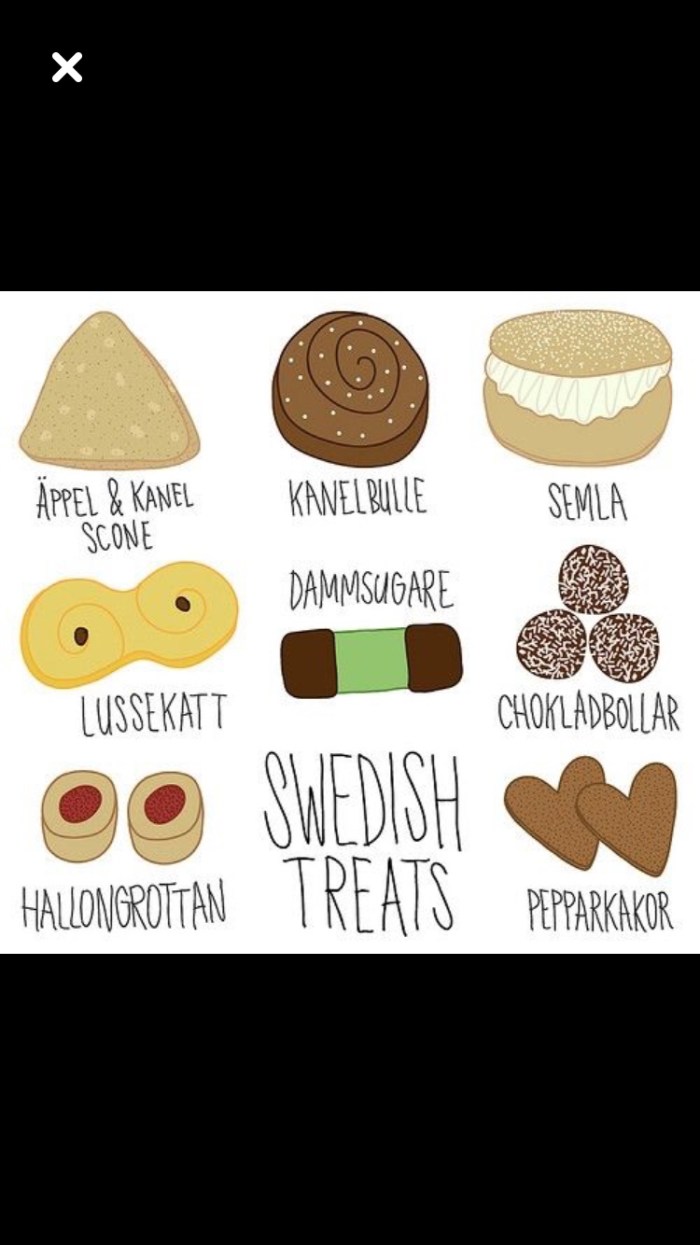
Many Swedes love to ‘fika’ – the tradition of drinking coffee and eating a cake. So much so that somebody decided to create the graphic above about popular Swedish treats. While the drawing is nice, the picture rather shows the meagreness of a Swede’s cake options. What then are some of the terrible choices depicted?

In a previous blog I’ve talked about the creamy bun known as semla, which I happen to think is delicious. In my opinion the semla is the best of them all. It is the king of Swedish treats reigning large over the other, to be honest, rather underwhelming alternatives.

The apple and cinnamon scone – as a British person I would not call this a scone. I don’t know what it is. Some kind of triangular bit of plaster. So, no further comment.

Probably the most popular dry-as-a-bone pastry associated with Sweden is the ‘kanelbulle’ or the cinnamon bun. Sold predictably in every bakery and cafe in Sweden and in their millions at Ikea, the cinnamon bun is only redeemed when drenched in melted, oozing butter.

Then there’s the ‘lussekatt’ – a disgusting saffron bun baked and sold in December. If you like bland, yellow bakes that give you indigestion for hours then this is the one for you.

The ‘dammsugare’ – or vacuum cleaner – is a marzipan roll dipped in chocolate. They can contain a bit of Swedish liqueur ‘punsch’ to take the edge off their otherwise plasticky taste. Altogether pointless and unsatisfying.

‘Chokladboll’ or chocolate ball is a linguistically dubious treat. Traditionally given a racist title, they are basically cocoa balls rolled in coconut. An unpleasant eating experience, these balls tend to ‘grow in your mouth’ as they say in Swedish….

‘Hallongrotta’, literally means raspberry cave. These are vanilla biscuits filled with raspberry jam that melt in the mouth. Unless they’re rock hard. They are a traditional biscuit which seem to evoke memories of grandmas and hot kitchens for many Swedes.

‘Pepparkakor’ are crisp gingerbread biscuits eaten around Christmas time. A ubiquitous classic eaten with Swedish mulled wine – ‘glögg’. They are a must during the festive season in homes, offices and often served covered in bacteria in shops. They come in many sizes and shapes, such as love-hearts, stars, people and goats. Yes, you read that correctly – goats.

So none of the above have a patch on the creamy, gooey, airy, almondy delight that is the semla. I know what I’m ordering with my coffee!

Any other Swedish treats that you think rival the almighty semla?