Swedish Midsummer – food and drink

Swedish Midsummer celebrates abundance and as such, a great deal of food and drink is consumed. After guests arrive and have their first drink(s), the wreaths start to get made, the potatoes peeled, strawberries topped and the maypole gets decorated with flowers and leaves. Once erected, and danced around, it’s time for lunch.

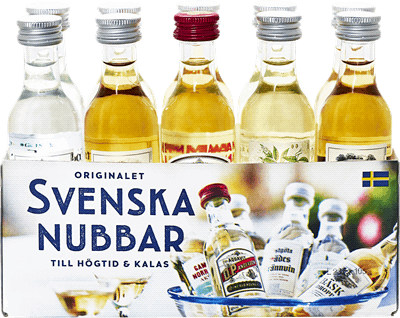
As far as drinking goes, ‘nubbe’, or snaps, is a common tipple accompanied by traditional drinking songs and washed down with beer. A popular brand of snaps is OP Anderson which is flavored with aniseed and fennel and is 40% proof. The drink has been around for 130 years on the market – the first snaps being sold in 1891! Another popular nubbe , the Danish Jubileums, is 40% proof and tastes of dill, coriander and bitter orange. There are also small-sized bottles than can be bought in fun packages that have a mixture of flavorings.
When it comes to the food, in the evening it has become popular in recent years to have a barbecue. But it is at lunch time when the traditional food is consumed, with a Midsummer smorgasbord (buffet).

On this buffet, it is common to find various types of pickled herring, soused herring, boiled new potatoes, gravlax with ‘hovmästare’ sauce, smoked salmon, Västerbotten cheese pie, crisp bread and mature cheese, chopped herbs, red onion, egg halves, ‘silltårta’ (herring cake), various sauces and mixes, fresh and smoked shrimps, fish roe.

As you can imagine, this food is very rich and fatty, which is why it is usually eaten together with the alcoholic snaps.

For dessert, the only thing to eat are Swedish strawberries and cream or a home-made strawberry cake. Anything else would be sacrilege. Some families also eat rhubarb pie.

After lunch, bolstered by the snaps, it’s usually time for garden games, a walk in the woods or a quick dip in the not-quite-yet-warm-enough lake or sea.

If the party lasts really late into the night, then there can also be a ‘vickning’. This is a ‘midnight meal’ designed to sober up drunk guests. It often includes some leftovers from the day, or can also be a very welcome hot dog. 🌭

Swedish cinnamon bun day

Today, Oct 4, is the day that Swedes up and down the country celebrate that most Swedish of foods – the cinnamon bun.

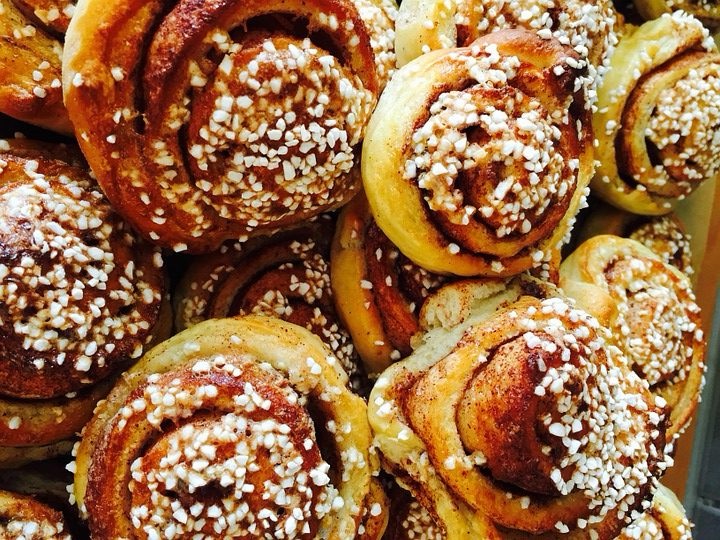
The cinnamon bun – kanelbulle- was invented in Sweden in the 1920’s and sold in bakeries. In the 1950’s, as ingredients, such as sugar and cinnamon, became more affordable, people started to bake them at home.

In 1999, Oct 4 was crowned as National Cinnamon Bun Day. At least 9,000,000 buns are consumed during the day.

Swedish cinnamon bun day

Today, Oct 4, is the day that Swedes up and down the country celebrate that most Swedish of foods – the cinnamon bun.

The cinnamon bun – kanelbulle- was invented in Sweden in the 1920’s and sold in bakeries. In the 1950’s, as ingredients, such as sugar and cinnamon, became more affordable, people started to bake them at home.

In 1999, Oct 4 was crowned as National Cinnamon Bun Day. At least 9,000,000 buns are consumed during the day.

The Swedish sandwich cake

You’ve probably heard of the word smorgasbord. It is a Swedish word that we borrow in English for a plentiful buffet of food. It stems from the Swedish word for sandwich – ‘smörgås’.

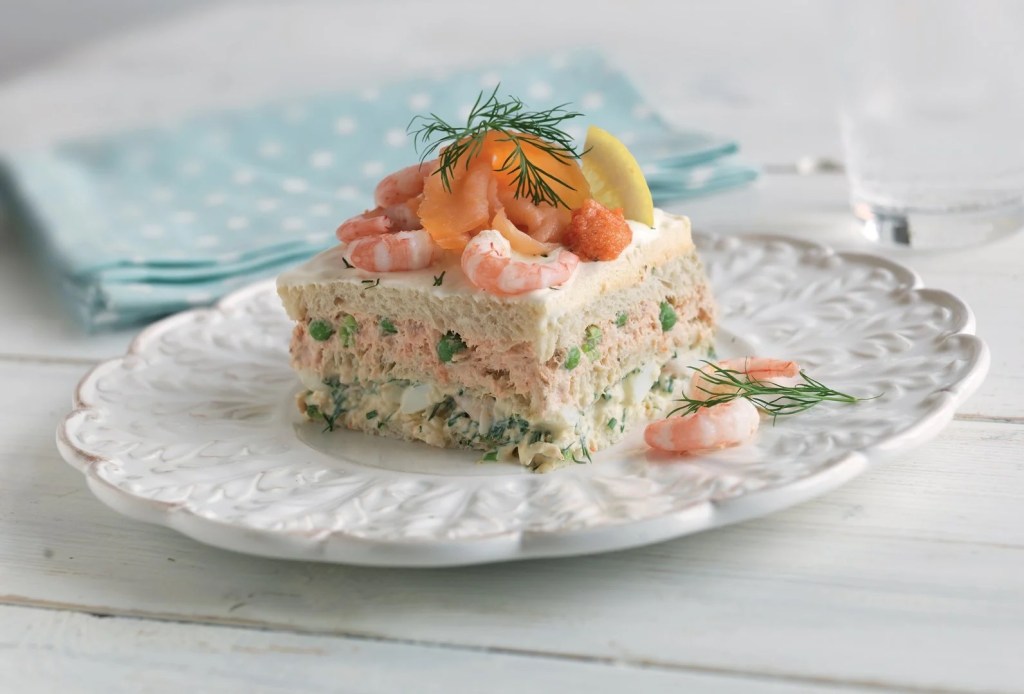
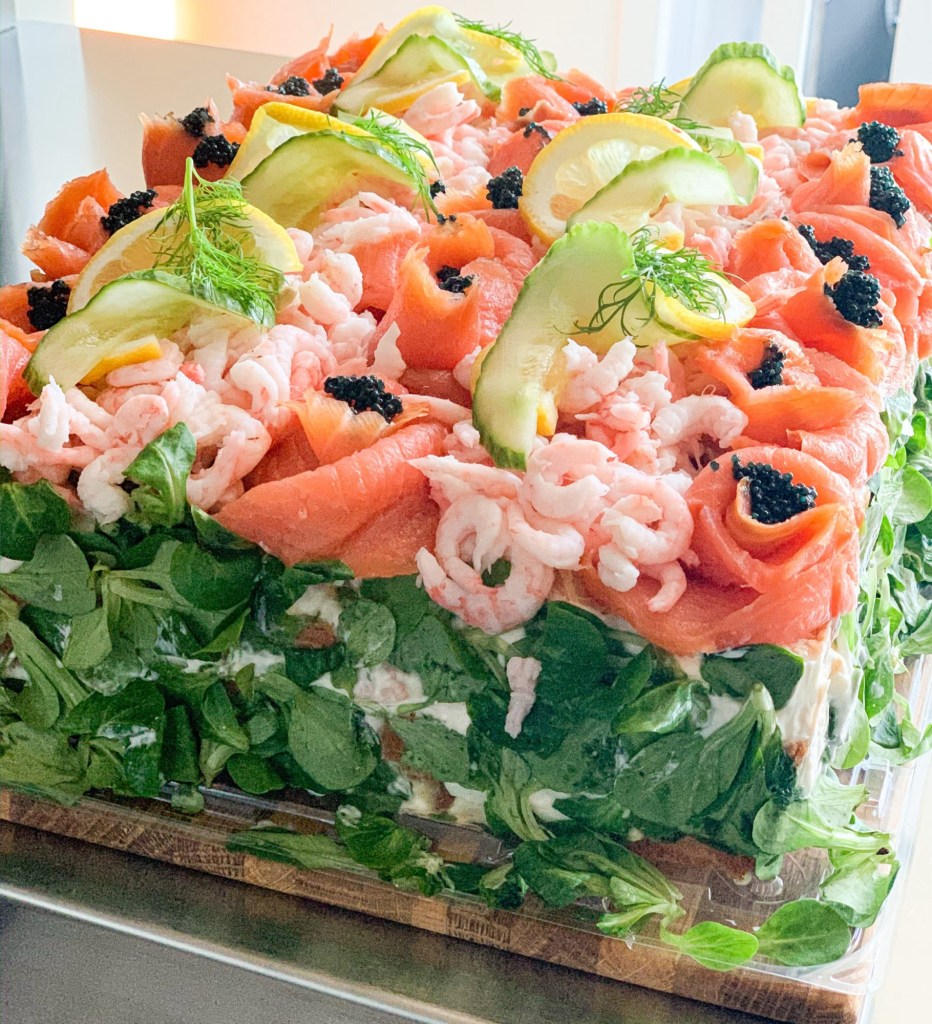
So while smorgasbord might be known to you, I am doubting that ’smörgåstårta’ is as familiar. The ’smörgåstårta’ translates as ‘sandwich cake’, and it is a dish served at celebratory events such as birthdays, anniversaries, weddings and even funerals. It has an almost iconic status in Sweden.

The Swedish sandwich cake is not a sweet dish. It is a cake-shaped dish built in layers of bread. Between each layer of bread is a variety of fillings, for example ham, beef, shrimps, salmon, vegetables. It is full of egg and mayonnaise and is garnished with various vegetables or herbs such as dill, caviar, cucumber and radishes. It looks like a layered cream cake and is sliced and served cold like a cake.

The smörgåstårta first was mentioned in a newspaper in 1934, and quickly grew in popularity through the decades. It easily took hold as Sweden had a tradition of eating open sandwiches, and of considering a sandwich a meal in itself. The sandwich cake became an elevated version of this and was considered to be luxurious – and it still is today. It even has its own day of celebration – 13 November is smörgåstårta’s day!

The sandwich cake has been imported from Sweden and become popular in other countries in the north – being a festive sight in Finland, Estonia and Iceland.

As you can imagine, a slice of sandwich cake is very filling. Its creamy consistency and rich ingredients make it difficult to stomach more than two servings for most people. This usually results in smörgåstårta being eaten for lunch for several days afterwards.

If you’re interested in making one, here’s a recipe in English: Swedish sandwich cake

The cultural diversity of the tea cake

Ever seen those cakes that are whipped meringue domes, or peaks, coated with a thin, crisp layer of chocolate? Sometimes with a biscuit base, sometimes not? In Swedish, if they have a biscuit bottom, they are called ‘mums-mums’. Without the biscuit bottoms they can be called ‘chokladbollar’.

If you’re Swedish, I am about to blow your mind! Those little chocolate domes are, in Scotland, called tea cakes!

In Sweden, a tea cake is something quite different. It is a kind of sweetened bread bun made with wheat and milk. It is often used to make ham or cheese sandwiches.

But the disagreement on what a tea cake doesn’t end there. In England, a tea cake is also something else. Although there are regional differences, it is generally a soft yeast-based bun, filled with dried fruits, such as sultanas, and eaten toasted with melted butter.

In USA, a tea cake is, yet again, something else. It is a large, hard cookie made from wheat and sugar. In Russia, it is also a cookie – but containing nuts.

In Ireland, a tea cake is a fluffy butter cake, as it in Australia – although there it is often flavoured with, eg, cinnamon, and apple.

Who knew that the humble tea cake could present so much diversity? One thing they have in common though, is that they are traditionally enjoyed as a sweet accompaniment to a cup of tea. Apart from the Swedish one that is- which is sandwich bread to probably enjoy with a cup of coffee.

Swedish Midsummer – food and drink

Swedish Midsummer celebrates abundance and as such, a great deal of food and drink is consumed. After guests arrive and have their first drink(s), the wreaths start to get made, the potatoes peeled, strawberries topped and the maypole gets decorated with flowers and leaves. Once erected, and danced around, it’s time for lunch.

As far as drinking goes, ‘nubbe’, or snaps, is a common tipple accompanied by traditional drinking songs and washed down with beer. A popular brand of snaps is OP Anderson which is flavored with aniseed and fennel and is 40% proof. The drink has been around for 130 years on the market – the first snaps being sold in 1891! Another popular nubbe , the Danish Jubileums, is 40% proof and tastes of dill, coriander and bitter orange. There are also small-sized bottles than can be bought in fun packages that have a mixture of flavorings.

When it comes to the food, in the evening it has become popular in recent years to have a barbecue. But it is at lunch time when the traditional food is consumed, with a Midsummer smorgasbord (buffet).

On this buffet, it is common to find various types of pickled herring, soused herring, boiled new potatoes, gravlax with ‘hovmästare’ sauce, smoked salmon, Västerbotten cheese pie, crisp bread and mature cheese, chopped herbs, red onion, egg halves, ‘silltårta’ (herring cake), various sauces and mixes, fresh and smoked shrimps, fish roe.

As you can imagine, this food is very rich and fatty, which is why it is usually eaten together with the alcoholic snaps.

For dessert, the only thing to eat are Swedish strawberries and cream or a home-made strawberry cake. Anything else would be sacrilege. Some families also eat rhubarb pie.

After lunch, bolstered by the snaps, it’s usually time for garden games, a walk in the woods or a quick dip in the not-quite-yet-warm-enough lake or sea.

If the party lasts really late into the night, then there can also be a ‘vickning’. This is a ‘midnight meal’ designed to sober up drunk guests. It often includes some leftovers from the day, or can also be a very welcome hot dog. 🌭
‘Long’ Friday in Sweden

Today, Good Friday, is called ‘Long Friday’ in Swedish – ‘Långfredag’. It commemorates the long day and the long suffering that Jesus endured on the cross, according to Christian teachings. It is a public holiday, and for many years, everything was closed in Sweden making the day deliberately long and boring for many people. Now, most things are open.

‘Long Friday’ is a day of cooking, shopping and going for walks. Some people attend church services. For traditionalists, salted fish is the food of the day – such as salted herring or salted salmon. This symbolises the thirst that Jesus felt on Golgotha. Fish was also the only food that historically was available for people to eat in Sweden at this time of the year.

In English, this day used to also be called Long Friday, but at some point in history it changed to Good Friday. Good in this context means Holy.

Swedish New Year’s pizza – with cabbage! 


Today, January 1st, is the most popular day to eat take-away pizza in Sweden. Partly it’s easy to order but also its greasiness acts as a great remedy for sore heads and tired bodies.

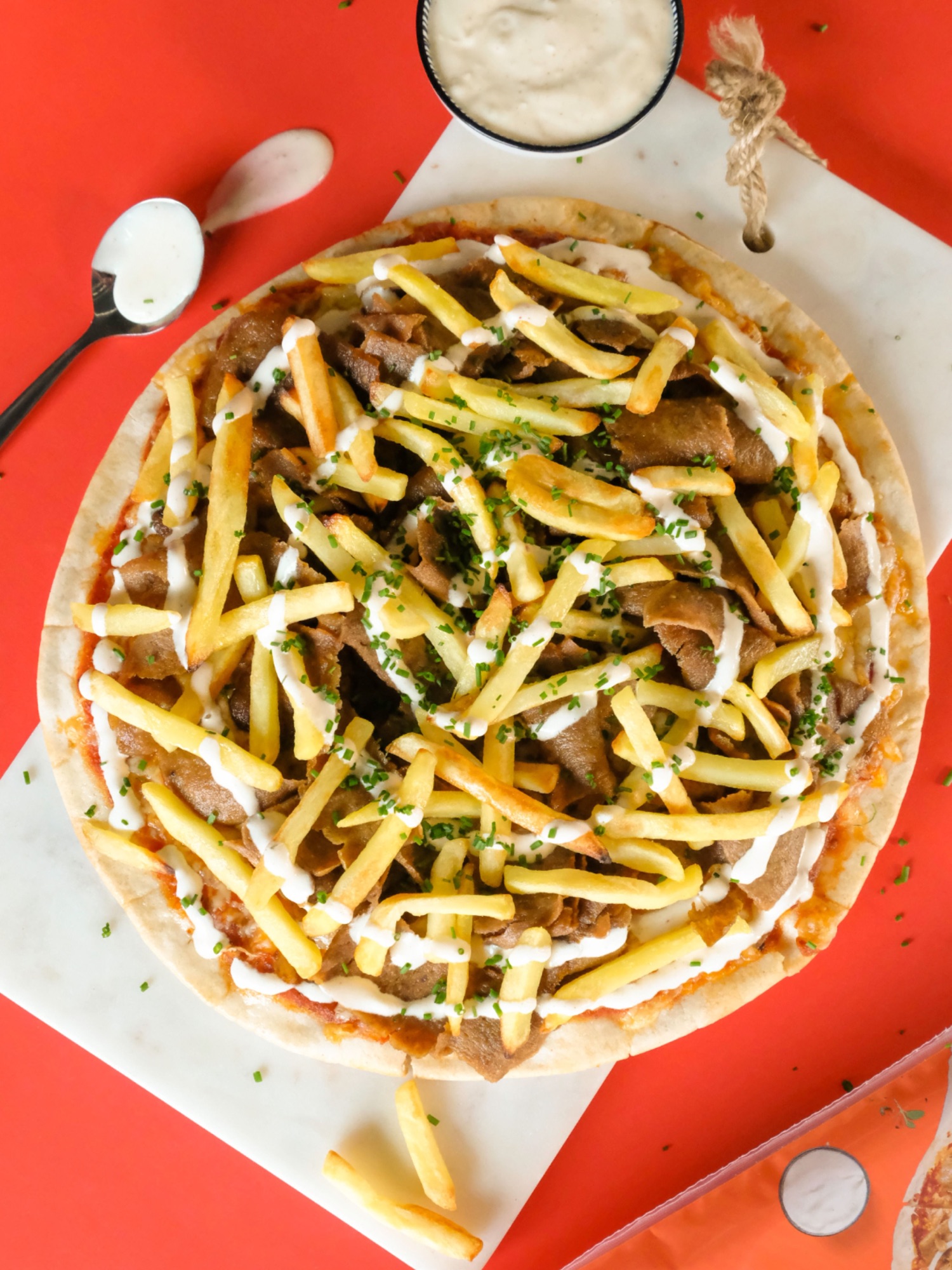
The Vesuvio and the Capricciosa are very popular pizzas in Sweden. However, the number 1 ‘national pizza’ is the Kebab pizza – a greasy pizza with kebab meat (and sometimes fries) dumped on the top.

When you order a pizza in Sweden, you will also experience a very strange bedfellow.

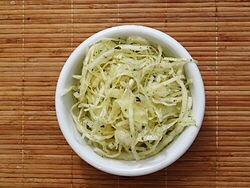
In Sweden, pizza is served with complimentary salad, in both restaurants and take aways. This salad is called creatively –  ‘pizza salad’ and is made of cabbage. It is a kind of coleslaw with white wine vinegar, salt, pepper and oil. It’s fresh, crispy and a bit weird. 

This odd combination is, as far as I know, only offered in the Nordic countries and its origin is a bit unclear.

One theory is that when the first pizzerias opened in Sweden, the traditional tomato salad wasn’t an option due to the climate in the winter. So, subsequently the pizza baker decided to use a more available, local vegetable – the cabbage – inspired by the Croatian salad ‘kupus salata’. 

Whatever it’s origin, the pizza salad is so ingrained in the Swedish mentality, it’s become a cultural ‘classic’.  In fact, it’s hard to imagine a pizza without cabbage salad in Sweden. Especially on New Year’s Day!

And so it is Advent – Swedish style


Today, the first of Advent, the light shines strong in the darkness.

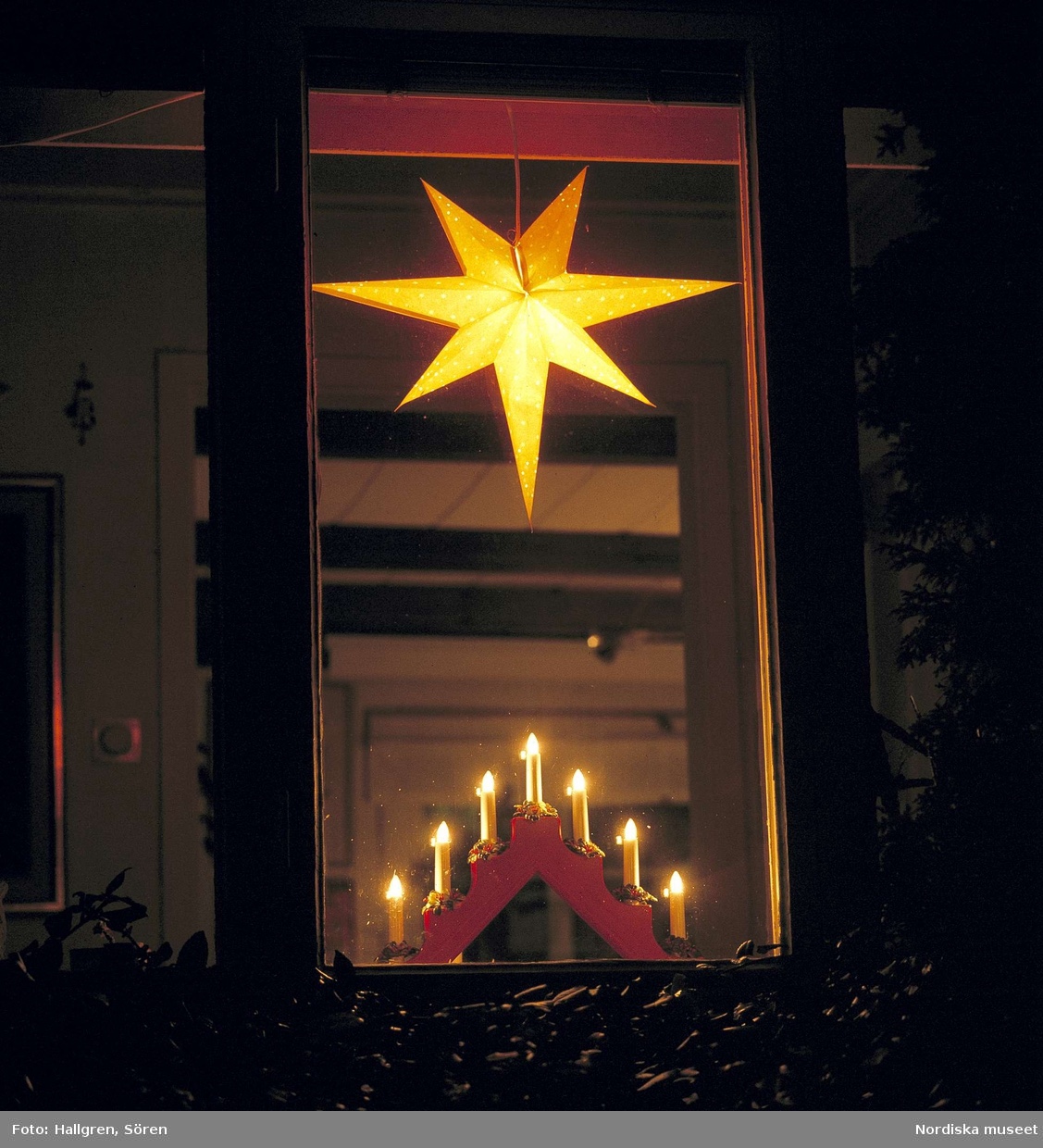
Since the 1930’s Swedes have decorated their homes with lights from the first of Advent. The tradition was inspired from Germany, where the Advent star had been a popular decoration since the 1880’s. The star symbolizes the star of Bethlehem that guided the three wise men to the stable, where the baby Jesus lay in a manger.

Today, the star has lost most of its religious symbolism. In Sweden, illuminated advent stars are hung in windows. On window ledges, electric advent candles are placed. Gardens and balconies are decorated with fairy lights. On tables, four candles are positioned and one is lit every Sunday up until Christmas. Small candles, often red, are dotted about the home. Some people change curtains and populate their homes with small gnomes and fragrant flowers.

Since November is often a grim month, the collective advent decoration is a welcome arrival as light is spread into the murky places. From the dark street, it is lovely to see windows lit up in every apartment.

This weekend is also the starting signal for the Swedish ‘glöggfest’. People go to each other’s homes and drink ‘glögg’ (mulled wine), eat gingerbread and saffron buns. It is a very cosy time of year.

Swedish New Year’s pizza – with cabbage! 


Today, January 1st, is the most popular day to eat take-away pizza in Sweden. Partly it’s easy to order but also its greasiness acts as a great remedy for sore heads and tired bodies.

The Vesuvio and the Capricciosa are very popular pizzas in Sweden. However, the number 1 ‘national pizza’ is the Kebab pizza – a greasy pizza with kebab meat dumped on the top.

When you order a pizza in Sweden, you will also experience a very strange bedfellow.

In Sweden, pizza is served with complimentary salad, in both restaurants and take aways. This salad is called creatively –  ‘pizza salad’ and is made of cabbage. It is a kind of coleslaw with white wine vinegar, salt, pepper and oil. It’s fresh, crispy and a bit weird. 

This odd combination is as far as I know only offered in the Nordic countries and its origin is a bit unclear.

One theory is that when the first pizzerias opened in Sweden, the traditional tomato salad wasn’t an option due to the climate in the winter. So, subsequently the pizza baker decided to use a more available, local vegetable – the cabbage – inspired by the Croatian salad ‘kupus salata’. 

Whatever it’s origin, the pizza salad is so ingrained in the Swedish mentality, it’s become a cultural ‘classic’.  In fact, it’s hard to imagine a pizza without cabbage salad in Sweden. Especially on New Year’s Day!