Today, 26 September, is World Contraception Day, which hopes to spread the word and raise awareness about contraception and safe sex. The aim is to help each new generation of adults make informed decisions until every pregnancy in the world is a planned one.
Contraception is Sweden is widely accepted, as there is little or no religious or social stigma around the subject of birth control. Over 90% of women have used some form of contraception in their life time. Common forms of ‘female’ birth control are the pill, the coil and hormone rings. The condom is also very commonly used.
Like in many other countries, the pill was seen as a vehicle for sexual liberation of women in the 1960’s. However, today, it is used less frequently in Sweden than in other neighboring countries as emphasis has been placed more on its negative side effects. Approximately one third of women in Sweden regularly use this type of contraception.
Contraceptive counseling is free in Sweden, although contraceptives themselves are not. You need a prescription, except for condoms and emergency contraception, such as the morning after pill, which are sold over the counter.
Controlling unwanted childbirth has been successful in Sweden, although there is still work to be done. According to the Swedish Statistics Center, 512 children were born to teenage mothers in 2020. Compare this to 6,198 children born to the same age group in 1973.
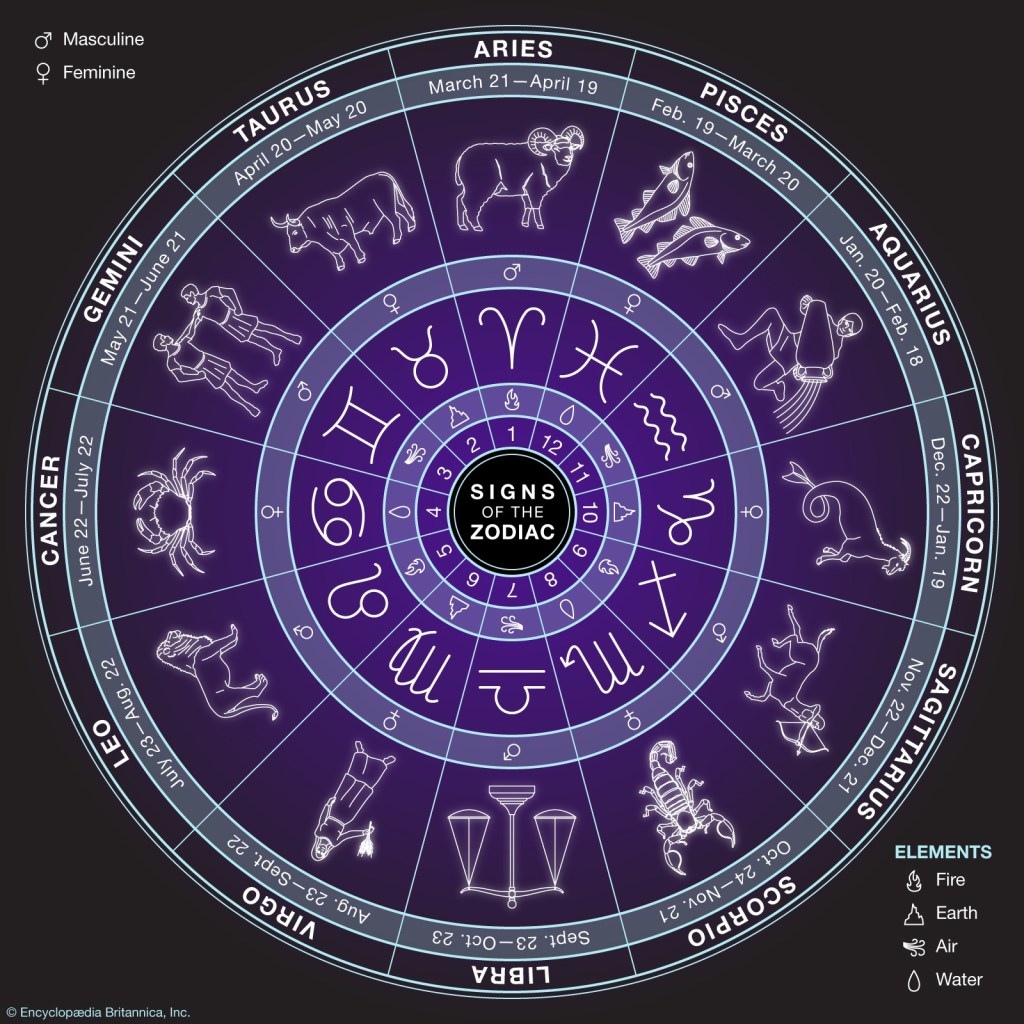
The earliest astrology can trace its roots to 19th Century BC. Beginning in Mesopotamia, it later spread to Greece and Rome, and eventually Central and Northern Europe.
Western astrology has twelve signs, reflecting the month in which you were born. In English, these signs are named after the original Greek words. But not the Swedish names. Like much else in the Swedish language, the words for these signs are very literal. They are also in the definite form.
Learning Swedish is tough for many because of the tricky pronunciation. Some words are very long, making them real tongue twisters. The same can be said for some place names – not necessarily long, but hard to say. Here are ten difficult-to-pronounce place names in Sweden:
1) Hjo. This small town positioned on the West Bank of Lake Vättern is actually pronounced something like ‘you’.
2) Ystad. This south coast town is a tricky one. It’s the ‘y’ sound that makes this one hard as it’s a vowel sound that we don’t have in English, and many other languages. It’s pronounced ‘ee’ but with the lips rounded.
3) Kristianstad. It might look straightforward to pronounce this town in county Skåne, but it’s not. It is pronounced something like ‘Krischansta’.
4) Jönköping. You have to know something about Swedish pronunciation to say the name of this town in county Småland. ’J’ is pronounced ‘Y’. ‘K’ is often pronounced as ‘Sh’ and ‘ö’ is pronounced like ‘er’ (as in her but without the ‘r’ sound). That makes this place name ‘Yernsherping’.
5) Örnsköldsvik. This is a town in the north of Sweden and is a tongue twister. Swedes often refer to it as ‘Övik’, just to avoid saying the full name. It is pronounced something like ‘ern-sherld-sveek’
6) Växjö. This is a town deep in the forests of county Småland. Pronounced ‘Veck-sher’ (kind of) it’s quite a tricky one.
7) Göteborg. The large west coast city of Gothenburg is a hard one to say in Swedish, which is probably why the name was changed to a more easily-pronounced English name. It is pronounced something like ‘yer-te-borry’.
8) Åmål. Once you grasp the ‘å’ sound, this one becomes easier. ‘Å’ is pronounced like the English ‘or’ but without the ‘r’ sound. So this town on the banks of Lake Vänern is pronounced ‘ormorl’
9) Skellefteå. This town in the northern county of Västerbotten is pronounced ‘Shell-efte-or’ (without the ‘r’ sound on the end).
10) Hamrångefjärden. This small village is outside the town of Gävle (also difficult to say). It is amongst the longest place names in Sweden, together with Skummeslövsstrand, Skinnskatteberg, Guldsmedshyttan, andHälleviksstrand. (Try saying those!). Hamrångefjärden is pronounced something like ‘Ham-wrong-e-fyare-den’.
We have all experienced moments of beauty in our lives. One of mine is something I experienced on a trip to the North of Sweden in an town called Hemavan.
The resort we stayed at had a restaurant at the bottom of a ski slope. One day when we were in there, a Sami man climbed up onto the small stage and began to sing an enchanting song. He was dressed in traditional blue and red Sami dress, and through the large windows behind him we could see reindeer high up in the snowy landscape.
It is a beautiful, serene image that is forever etched in my mind.
A contributing factor to the impact this had on me is how the man was singing. In fact, he wasn’t singing, he was ‘joiking ’. What, you might wonder, is joiking ?
Joiking is not a song as such, but a melodic sound that is integral to Sami culture. It is used to express relationships to people and nature. Traditionally, joiks have no lyrics, consisting of chanting, not unlike that found in some Northern American Indigenous cultures. They can also include mimicry of animal sounds.
Like in the restaurant, joiks are often performed for entertainment. However, they can also have a spiritual function. In past times, a noaidi (Sami shaman) could perform joik whilst beating on a Sami drum with bones to contact the spiritual world.
In Sami culture, most people are given their own melody, like a signature tune. This leads to the Sami saying that they are “joiking someone” rather than “joiking about someone”. Most joik melodies are about people, but also animals and places can have their own joiks. Animal joiks are often about wolves, reindeer, or birds such as ducks.
During the Christianization of the Sami from the 1700s onwards, joiking was considered sinful and was banned. But it survived and today is included as a frequent part of Swedish cultural events. Most recently, a Sami artist was televised joiking in a celebration of Crown Princess Victoria’s birthday in July.
If you’d like to experience some traditional and modern joiking, check out the links below. You will be captured by its melancholy and immediately transported to the mountains and plains of northern Sweden.
I was listening to a presentation the other day and the presenter kept saying that he would provide users with a ‘lazy dog’. In Swedish, the expression makes sense, but in English it makes no sense – it means literally a dog that is lazy.
The Swedish word ‘lathund’ or ‘lazy dog’, is the word for a quick reference guide, or a cheat sheet. If you need support to follow a process, for example, you can follow a ‘lazy dog’. It is designed to make life easier and for things to go faster.
The word ‘lazy dog’ has been around in the Swedish language since the 1600’s. However, at that time it was used as an insult to a lazy person – ‘you lazy dog’. In the 1800’s, it changed to its current meaning – but its implication is the same. A person who uses a ‘lathund’ is a person looking for quick fixes and short cuts – in other words ‘lazy’.
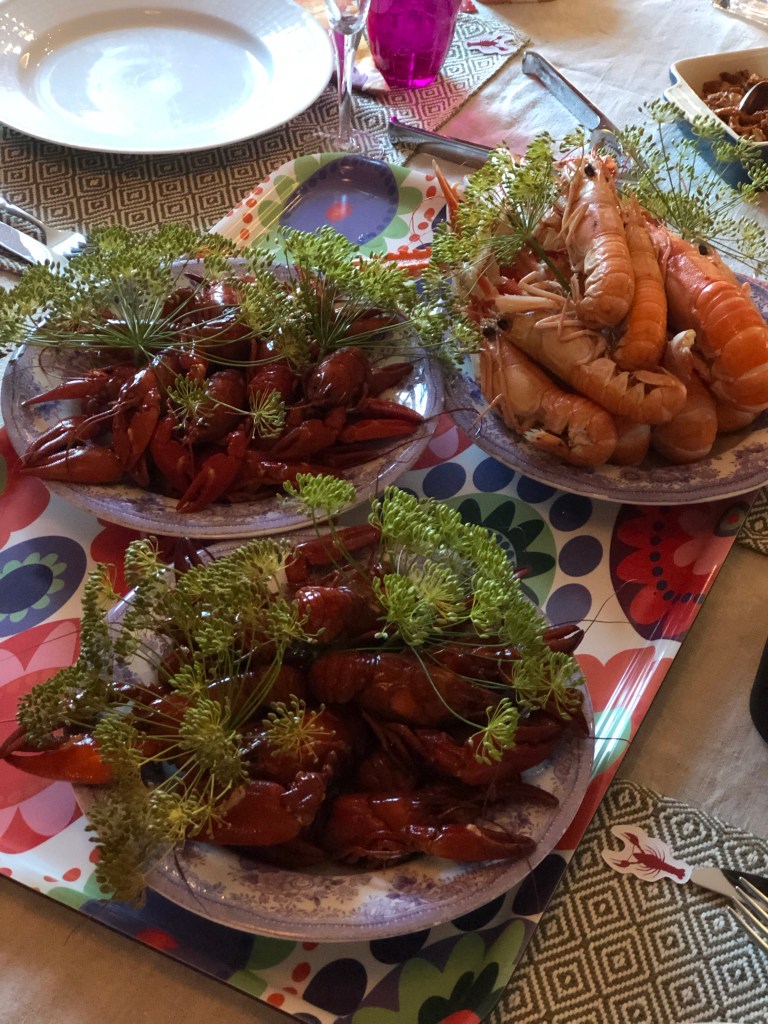
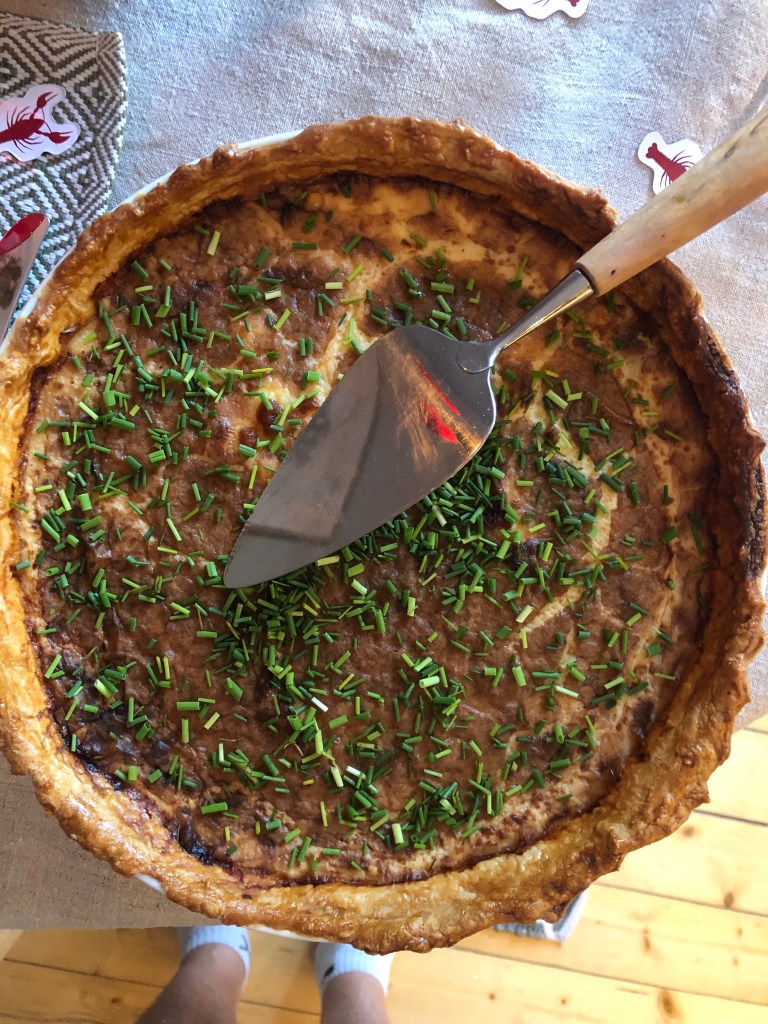
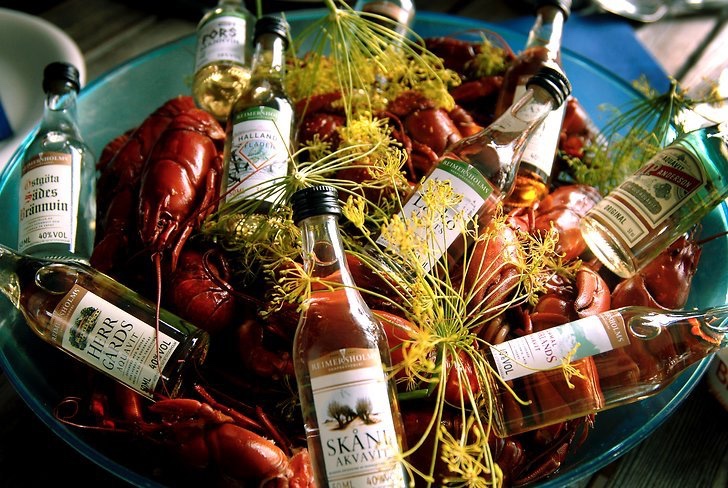
This time of the year is the traditional crayfish party in Sweden. These small red crustaceans are usually eaten with Västerbottens cheese pie. Of course, crayfish parties don’t have to involve alcohol, but the traditional approach is to wash it all down with copious amounts of snaps and beer.
Throughout the years, I’ve been to my fair share of crayfish parties. I was at one last night. The bon ami, the snaps songs, the silly paper hats and the noisy, messy slurping make it, for me, one of the best festivities in the Swedish calendar.
One thing is certain though. The day after a crayfish party, one feels a little….delicate. After snaps cometh headache.
A snaps is a small glass of ‘burnt wine’ – or brännvin in Swedish. Brännvin is a spirit distilled from potatoes or grain with a high alcohol contented at least 37.5%. So it is not the same as a shot! It can be plain and colourless, or flavoured with herbs and spices. Brännvin includes vodka and akvavit, but akvavit is always flavoured with caraway and dill.
Brännvin has been in Sweden since around the late 1400’s and is an integral part of Swedish custom. It has been given many different names throughout history. Some synonyms are: ‘eldvatten’ (fire water), ‘jodlarsaft’ (yodel juice), ‘hojtarolja’ (shouting oil), ‘polarvätska’ (polar liquid), and ’spånken’ (originating in the Latin and Greek word for mushroom – spongia).
If you’re ever here, you should try it. But take it carefully!
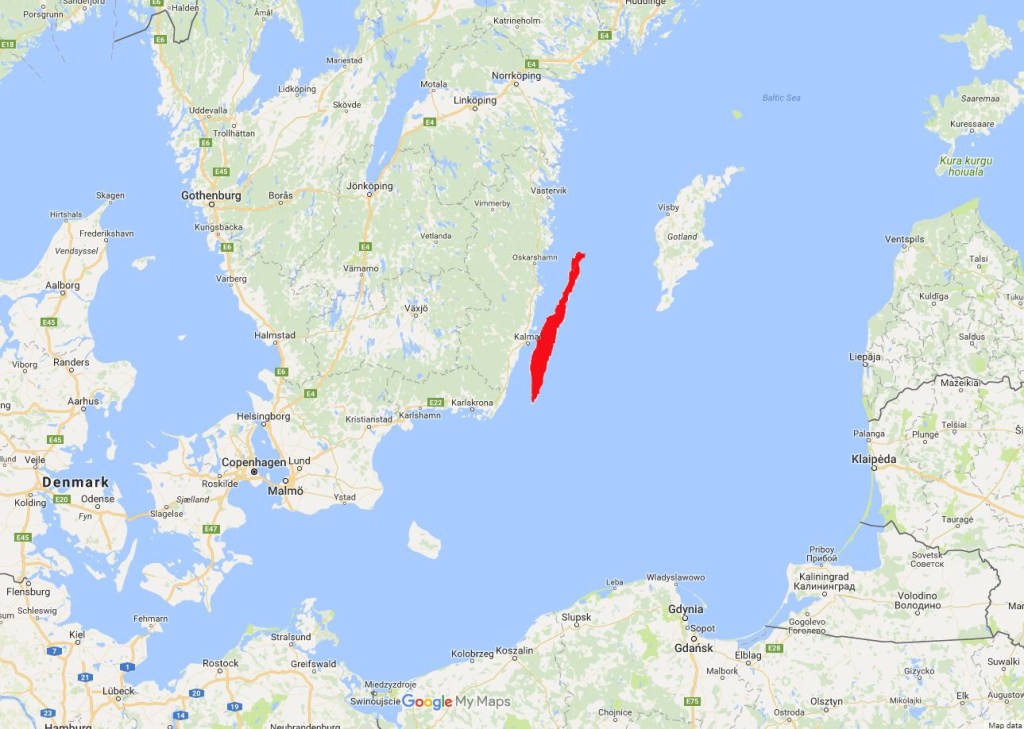
This summer holiday I was on the Baltic island of Öland for the first time. It is a fascinating place linked to the Swedish mainland by a 6 km long bridge. Interestingly, the name Öland translates as ‘Island Land’ – Ö being the Swedish word for island.
Öland lies outside the town of Kalmar in South East Sweden. The island is long, thin and mostly flat. This makes it windy and the landscape in the south of the island is barren. Made of limestone, the island is home to some unique flora and fauna that is found only on Öland. In the centre of the island is a large, open steppe called Alvaret. This vast, protected area is on the UNESCO Word Heritage List.
People have lived on Öland since 8000 BC, and the island has several Stone Age archeological sites as well as Viking settlements. The original settlers migrated across the ice bridge that connected the island with the mainland.
For a long time, the island was a royal hunting ground – which is reflected in the Öland coat of arms depicting a crown and a deer.
Today around 27,000 people live there permanently. During the summer months, the population multiplies drastically, with Swedish and foreign tourists descending on the island. This includes the Swedish Royal Family who have their summer residence on Öland. The island is a summer paradise, with its many long white sandy beaches.
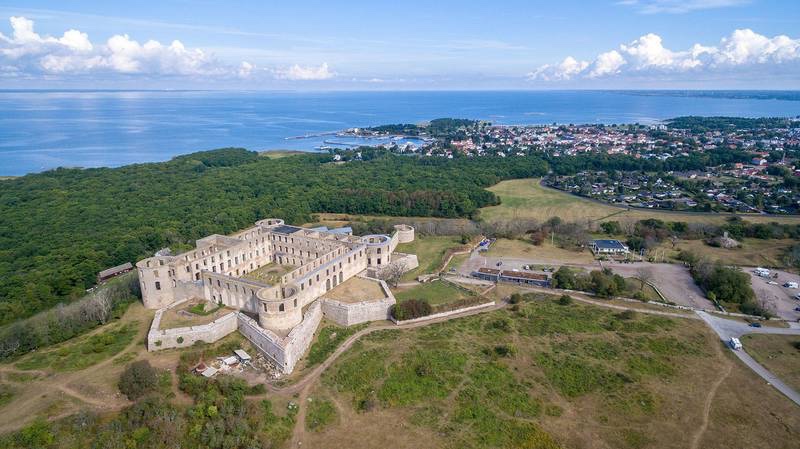
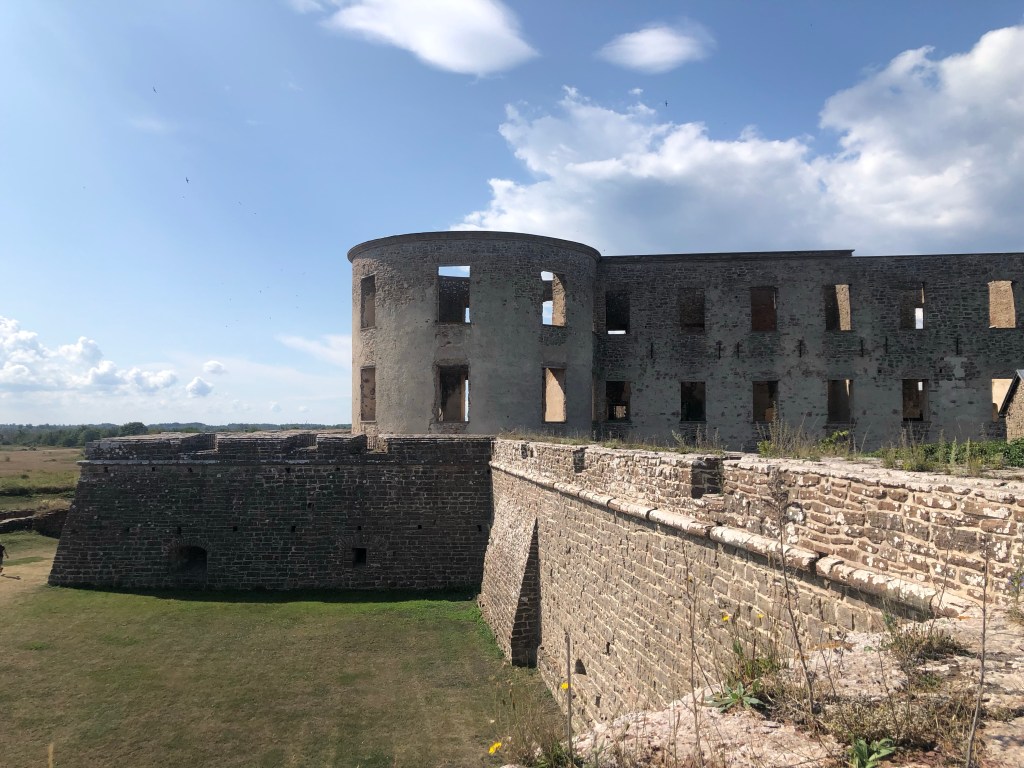
The regional capital is a small town called Borgholm, and here there is a majestic ruin called Borgholm Castle. Dating back to the 16th Century, the castle stands on the site of an older fortress from the 1200’s. It is an impressive building with its panoramic view over the sea and any potential invaders.
Öland offers a unique insight into Swedish history and culture. It took me over 20 years to visit, but I hope to return again soon!
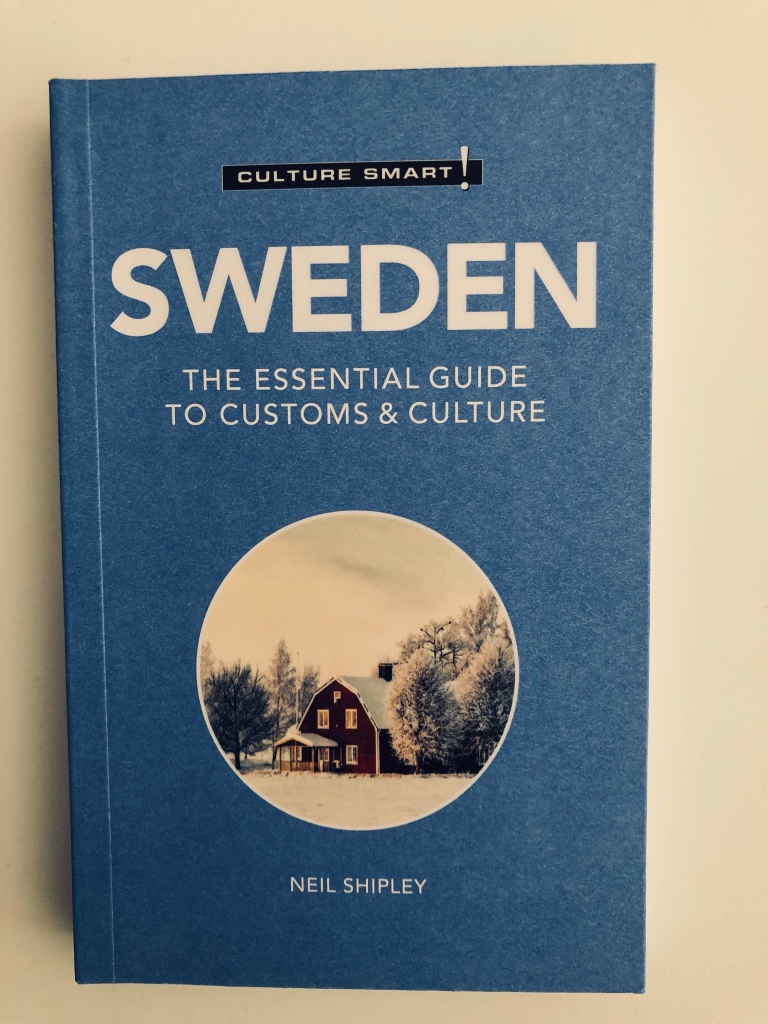
In 2020, I was approached by the publishers behind the respected Culture Smart series to see if I would write a book about Swedish culture. I accepted and, finally, it is here! I am proud to join their staff of authors! Available soon to buy on Amazon, or via me. Just pm me if you’d like a copy. Today’s a good day!!!
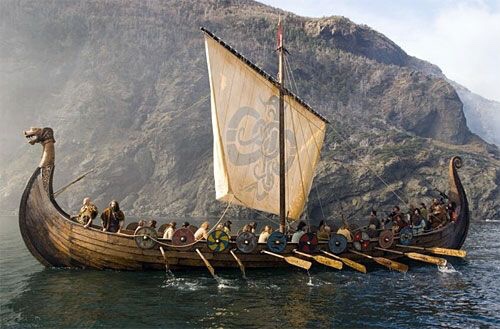
Hooked on the drama series Vikings, I am ploughing through all six seasons. The story follows the saga of legendary Vikings, who invaded the UK and continental Europe around 850 AD. The Vikings are portrayed as blood-thirsty, fame-thirsty, plunder-thirsty warriors coming from what today is Norway, Denmark and Sweden.
The Vikings first point of landing in the UK was on the island of Lindisfarne, close to where I am originally from in north east England. The visit resulted in devastation for the undefended locals. For me, this story has led to a lifelong fascination.
The many Viking raids on the UK spanned over 300 years, which meant that they left more behind them than just destruction and conquest. They also left language.
A lot of the words used in mainstream English today stem from old Norse. Even more exist in local colloquial language in Yorkshire and along the east coast. Some of these words are recognizable in the modern day Nordic languages. Here are 15 examples:
Berserk – from berserkr – meaning ‘bear shirt’ and depicting a jacked-up warrior who went into battle wearing nothing but an animal skin.
Cake – from kaka – meaning cake, biscuit
Happy – from happ – meaning good luck
Hell – from Hel, Loki’s daughter and ruler of the underworld
Husband – from hus bondi – meaning house occupier
Lad – from ladd – meaning young man
Loan – from lán – meaning to lend
Plough – from plogr – meaning to till the earth
Ransack – from ransaka – meaning to search a house
Run – from renna – to run
Skin – from skinn – meaning animal hide
Slaughter – from slatra – meaning to butcher
Thursday – from torsdagr – meaning Thor’s day
Ugly – from uggligr – meaning dreadful
Window – from vindauga – meaning ‘wind eye’
Words like knife, egg, scales, call, get, give, race, take, seem are all originally from Old Norse. The Vikings certainly had a massive influence on the English language.
What other words do you know that stem from Old Norse?
The leader of the Swedish Moderate party aims to win the next election. To do this, he is taking further steps to the right to appeal to the conservative and nationalistic trend that is currently sweeping the country. It is his only way to grab the power he so desperately craves. This little man, with big ambition. In his most recent speech, he said that ‘immigration has become a burden for Sweden’.
What he really means is that immigrants have become a burden. Human beings. He isn’t talking about immigrants like his three adopted daughters from China. Oh no, they are raised as ‘proper Swedes’.
He isn’t either talking about white, privileged European immigrants like myself. Oh no, he’s referring to dark-skinned people, many who have had to fight for their survival, and who come to this country with nothing. According to him, it is these people of colour that are dragging the country down.
That is what he means. Make no mistake.
Racism, nationalism and fear are rapidly on the rise in Sweden, fueled by the lies of politicians like this man. His facts are wrong and his rhetoric exaggerated. Immigration is actually at an all time low in Sweden. The country currently has the strictest immigration laws it has ever had. But still this man and these ideas are gaining traction.
His party, and his right-wing lackies, supported by the media, have succeeded in associating Sweden’s current ills with immigrants: economic imbalance, crime, security. ‘Immigrant as criminal’ is not a new argument, it is a successful argument that echoes from our not-so-distant European history. It doesn’t seem to matter that it’s misleading and incorrect.
We humans seem to always want a scapegoat. This concept comes from the Bible’s Leviticus, in which a goat is designated to be cast out into the desert to carry away the sins of the community. Scapegoating can be traced as far back as the 24th century BC. We think we are so advanced in Sweden but we are not. We still fall for the lies of charismatic politicians and we still look for easy scapegoats. Blaming all the immigrants is the predictable option. A casebook example.
On Facebook, there is a group called ‘Nysvenskar i Sverige’ (New Swedes in Sweden). I urge you to join it. It is a refreshing counterbalance to the veiled xenophobia in main stream media and politics. The group is full of people who have moved to Sweden and who are telling their stories. Each person demonstrates how they are an asset to this country, and far from a burden on society. They work, they pay taxes to the Swedish state and they contribute. They end their texts with ‘I am not a burden’.
There are also Swedish-born people in the group. One person called Anna writes this:
I am plus 40 and was born in Sweden to Swedish parents. I have previously been unemployed for 6 months, I have been on sick leave due to cancer, several times. I have used the health care system to its max. I have three kids, all in state subsidized school. We receive parental benefit. Need I go on? NO!
I do not have to prove that I am a burden on society. Why should I also have to prove I am an asset? No. A handful of people have the need to call people a burden. We are ALL a ‘burden’ more than once in our lives. It is the blend of everything that makes us people. Nationality has nothing to do with how you are as a human. Those who think otherwise should educate themselves and go out into the world. Sincerely, A Human. Who happened to be born in Sweden.
I couldn’t have said it better myself.
Please share this post. Please join the FB group. Please make your voice heard.