Advent Calender Dec 2 – Pepparkaka

Every day leading up to Christmas, I will open a window containing a Swedish word that has something to do with the festive season.

Today’s word is ‘pepparkaka‘, which translates as gingerbread.

Other than glögg, nothing else is more synonymous with the Swedish festive season than pepparkaka (gingerbread).

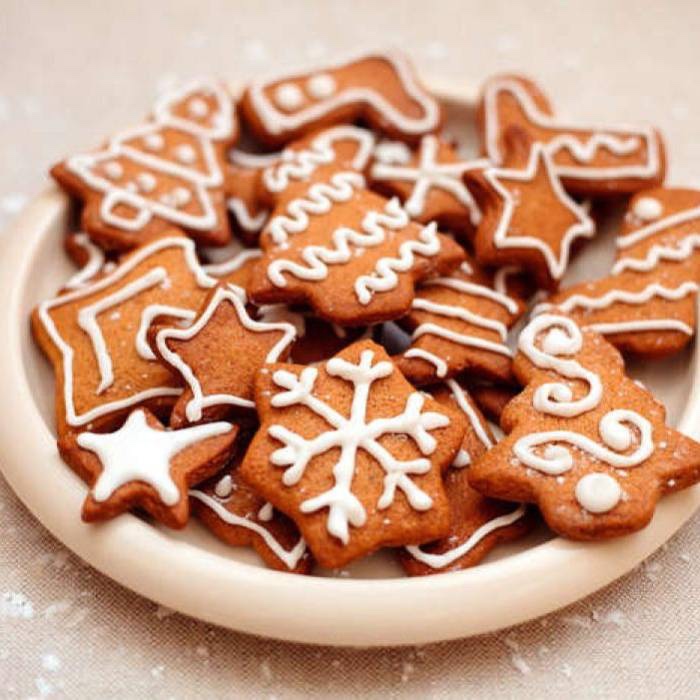
The Swedish version of gingerbread comes in the form of thin crispy biscuits flavoured with cinnamon, cardamon, ginger and cloves. Formed in different shapes such as hearts, trees, and stars, gingerbread is eaten plain or decorated with icing. Many people buy squeezy blue cheese in a tube and squirt it onto the biscuit before consumption. Some people build gingerbread houses as part of their Christmas decorations.

Making your own pepparkaka is a cosy a Christmas tradition – here is a typical recipe. However, most people buy their gingerbread ready-made.

Pepparkaka has been associated with Christmas in Sweden since the 1800’s but was eaten much earlier than that. The first documented record of pepparkaka in Sweden is from 1335 for a royal wedding. In a recipe from the 1400’s, gingerbread included pepper, which could be why it has the name pepparkaka. But nobody is really sure.

Ever wondered why Swedish people are so nice? Well, the answer lies in an old myth – apparently the very eating of pepparkaka is what makes you nice.

Advent Calendar Dec 1 – Glögg

Welcome to the Watching the Swedes Advent Calendar 2021

Every day before Christmas, I will open a window containing a Swedish word that has something to do with the festive season. Today’s word is the fantastic-to-say ‘glögg‘. (Pronounced ‘glugg’)

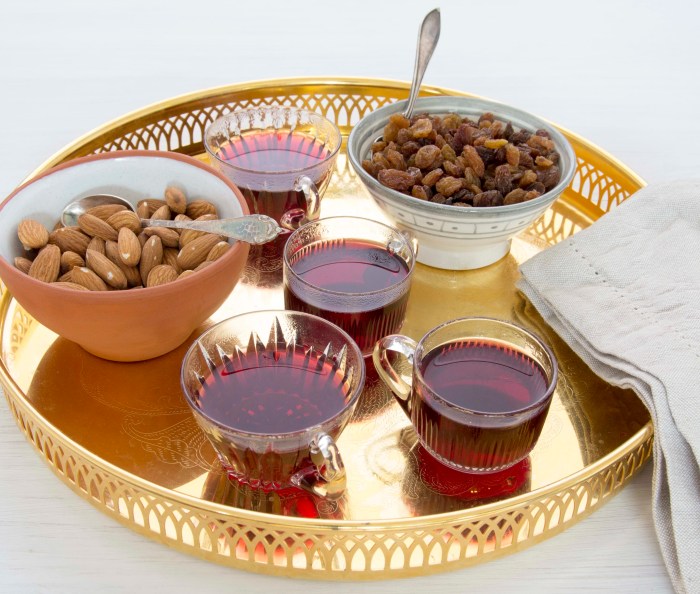
Glögg is festive Swedish mulled wine: heated wine, most commonly red, with spices. It is drunk together with almonds and raisins added in. And it is delicious!

Glögg is very popular, having been drunk in Sweden around Christmas since the 1890’s. However, the earliest record of drinking heated wine dates back to the 1500’s.

The word glögg comes from the Old Swedish word ‘glödg’, and the verb ‘glögda’ – to heat up. This, in turn, has its origins in the verb glöder (to glow).

Some make their own glögg, here is a typical recipe. Glögg can be with, or without, alcohol.

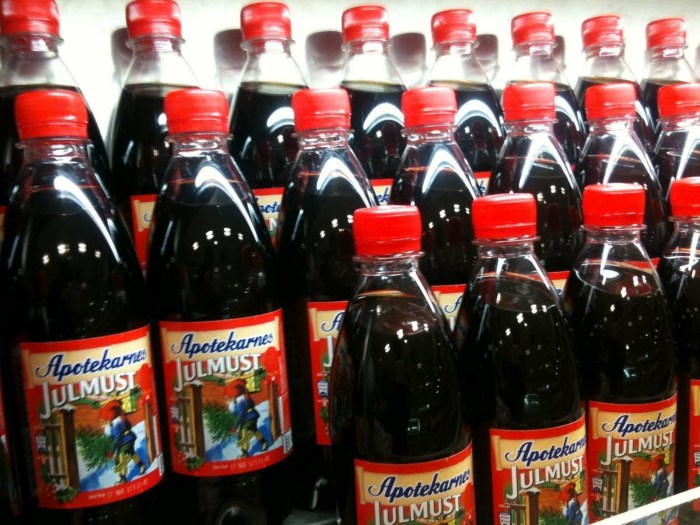
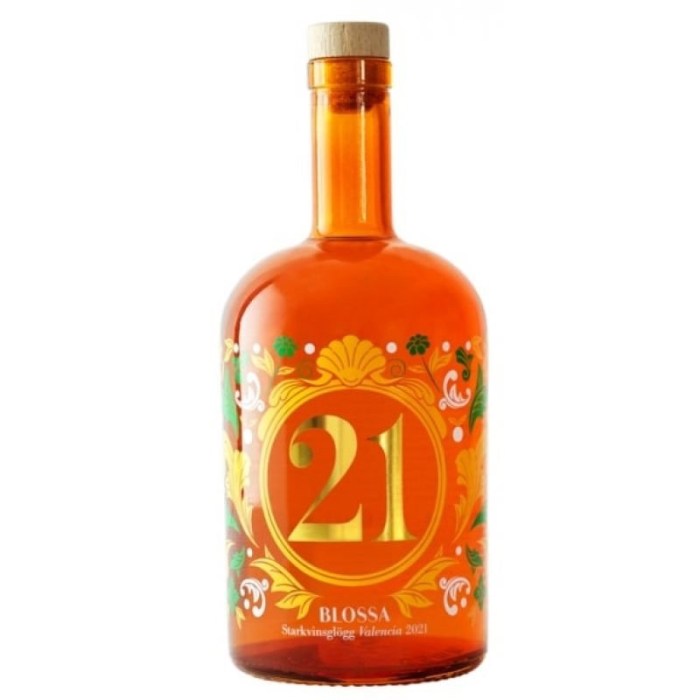
However, most Swedes buy their glögg ready-made in a bottle. In addition to the traditional flavours, each year a new flavour of the nectar is released and there’s always a debate regarding its success. This year’s glögg (2021) is called Valencia and is an infusion of Spanish oranges, lemon and bitter orange. Yummy!

And so it is Advent – Swedish style


Today, the first of Advent, the light shines strong in the darkness.

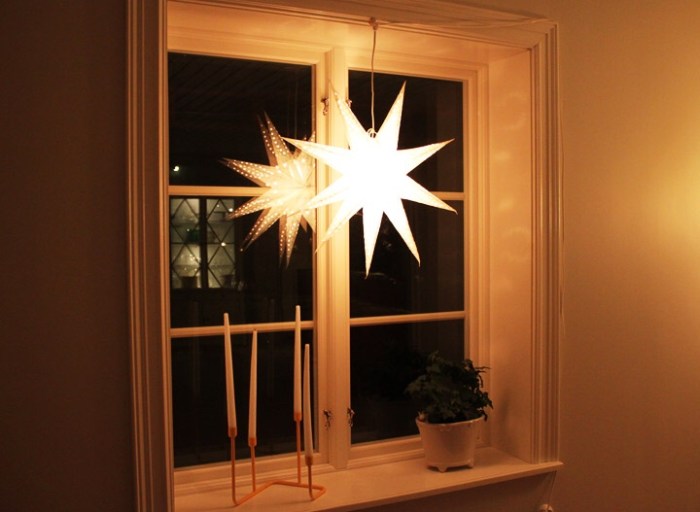
Swedes decorate their houses, apartments and windows with lights. From ceilings, illuminated stars are hung. On window ledges, electric advent candles are placed. On tables, four candles are positioned and one is lit every Sunday up until Christmas. Small candles, often red, are dotted about the home. Some people change curtains and populate their homes with small gnomes and flowers.

Since November is a grim month, the collective advent decoration is a welcome arrival as light is spread into the murky places. From the dark street, it is lovely to see windows lit up in every apartment.

This weekend is also the starting signal for the Swedish ‘glöggfest’. People go to each other’s homes and drink ‘glögg’ (mulled wine), eat gingerbread and saffron buns. It is a very cosy time of year.

And so it is Advent – Swedish style


Today, the first of Advent, the light shines strong in the darkness.

Swedes decorate their houses, apartments and windows with lights. From ceilings, illuminated stars are hung. On window ledges, electric advent candles are placed. On tables, four candles are positioned and one is lit every Sunday up until Christmas. Small candles, often red, are dotted about the home. Some people change curtains and populate their homes with small gnomes and flowers.

Since November is a grim month, the collective advent decoration is a welcome arrival as light is spread into the murky places. From the dark street, it is lovely to see windows lit up in every apartment.

This weekend is also the starting signal for the Swedish ‘glöggfest’. People go to each other’s homes and drink ‘glögg’ (mulled wine), eat gingerbread and saffron buns. It is a very cosy time of year.

Sweden gets its first female Prime Minister

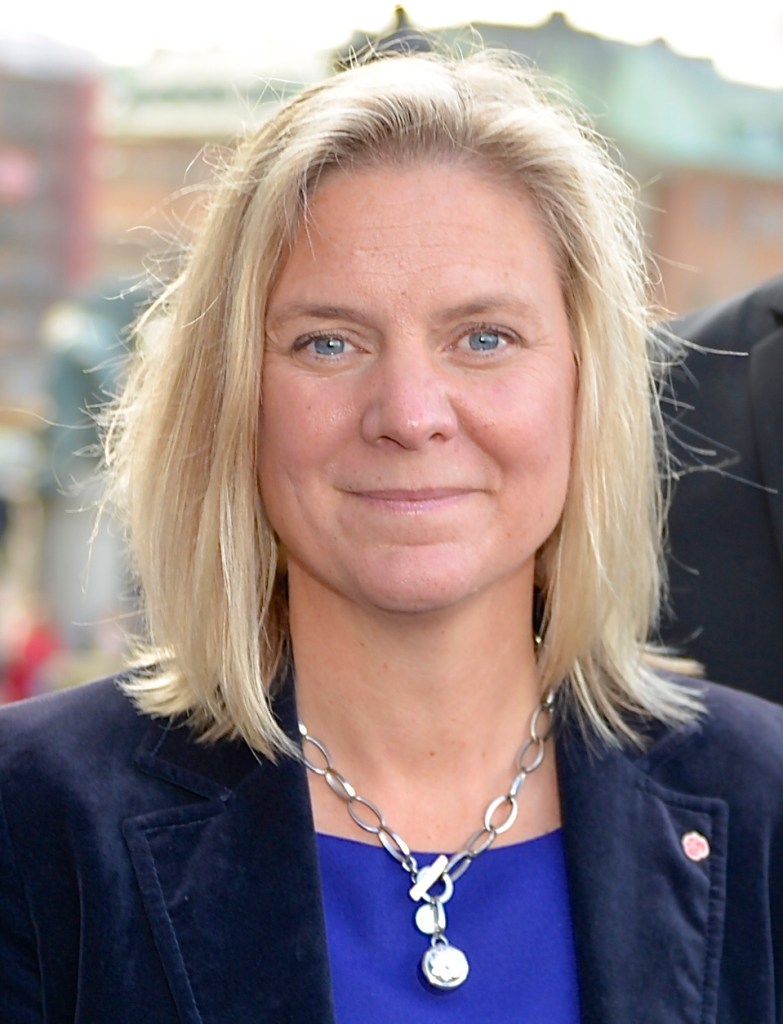
Today is a historic day in Sweden. Magdalena Andersson has been chosen by the Parliament as Prime Minister, and as such, is the first woman to have the post in the history of Swedish politics. A great day for equality, and not a day too soon. It seems rather odd that it took Sweden so long.

Around the world, women have been politically appointed as state head since the 1940’s. However, the first woman to be democratically elected as prime minister was Sirimavo Bandaranaike of Ceylon (present-day Sri Lanka) in 1960. The first woman democratically elected president of a country was Vigdis Finnbogadottir of Iceland in 1980.

The other Nordic countries have a better track record than Sweden. Norway has had two female Prime Ministers to date, the first being Gro Harlem Brundtland in 1981. Denmark has had two – Helle Thorning Schmidt was first elected in 2011. Finland has had three female Prime Ministers with the first, Anneli Tuulikki Jäätteenmäki, elected in 2003.

With the appointment of Magdalena Andersson, four of the five current leaders of the Nordic countries are female.

Sweden’s most beautiful dialect

On the FB site New Swedes, the author writes about Swedish dialects and accents:

‘Dialekter skiljer sig väldigt mycket åt, och nästan varje stad har flera ord som är snudd på omöjligt att uppfatta om man inte kommer just därifrån.
Vilken är Sveriges vackraste dialekt tycker du 😅?

Roughly translated this means:

Dialects differ very much and almost every town has words that are virtually impossible to understand if you don’t come from there. Which is Sweden’s most beautiful dialect do you think?

Around 100 people have answered, and the most popular dialects seem to be Värmländska, from county Värmland, and Gotländska, from the island of Gotland.

I would tend to agree, although I also really like the dialects from Dalarna and Västra Götaland.

What do you think?

The shimmering cemeteries of Sweden

In Sweden, the first Saturday in November is All Saints’ Day – not necessarily November 1st as in most other countries. In 1983, the Sunday after All Saints’ Day was given the official name All Souls’ Day to separate between the saints and the dead.

Since the 1800’s Swedes have, during this weekend, made pilgrimage to graveyards up and down the country to decorate the graves with candle light.

It is a beautiful experience to walk through the churchyards this weekend. In pitch black November, it is a shimmering reminder of those who have gone before us. Individual graves blink in the Nordic darkness, and memory groves blaze with the collective light of hundreds of flames.

If you are in Sweden today, go to a cemetery. If you happen to be in Stockholm, head for the Forest graveyard (Skogskyrkogården) for a specifically spectacular experience. 

The shimmering cemeteries of Sweden

In Sweden, the first Saturday in November is All Saints’ Day – not necessarily November 1st as in most other countries. In 1983, the Sunday after All Saints’ Day was given the official name All Souls’ Day to separate between the saints and the dead.

Since the 1800’s Swedes have, during this weekend, made pilgrimage to graveyards up and down the country to decorate the graves with candle light.

It is a beautiful experience to walk through the churchyards this weekend. In pitch black November, it is a shimmering reminder of those who have gone before us. Individual graves blink in the Nordic darkness, and memory groves blaze with the collective light of hundreds of flames.

If you are in Sweden today, go to a cemetery. If you happen to be in Stockholm, head for the Forest graveyard (Skogskyrkogården) for a specifically spectacular experience. 

My book on Sweden – the Essential Guide!

My book is doing really well, which I’m very proud of. You can buy it on Amazon, Bokus, Akademibokhandeln and Adlibris amongst other online stores. Sweden, by Neil Shipley, published by Kuperard 2021.

I still have a few copies left, so if you’d like to buy a signed copy, just let me know!

Villa, Volvo, Vovve – an essential guide to Swedish words

A new book is being released tomorrow. Villa, Volvo, Vovve is the Local newspaper’s word guide to Swedish life. The book looks at Swedish culture through Swedish vocabulary and is interesting and entertaining in equal measure. I learned a lot and laughed out loud quite a few times!

Organised alphabetically, the book takes you on a journey from ‘A’, meaning ‘yes, I agree’ to ‘Ö’ meaning ‘island’. Along the way it stops off at Swenglish, False Friends, grammar, pronunciation and a variety of crosswords and quizzes to test the reader. It is not a text book but is a great book for dipping into and learning more about Swedish culture and tradition via its language.

The book is edited by Catherine Edwards and Emma Löfgren and published by Lys Förlag. If you are interested in discovering more about Swedish words and sayings then I suggest you grab a copy from tomorrow at reputable book shops, physical and on-line.