Say ‘Welcome to Sweden’ – and mean it!

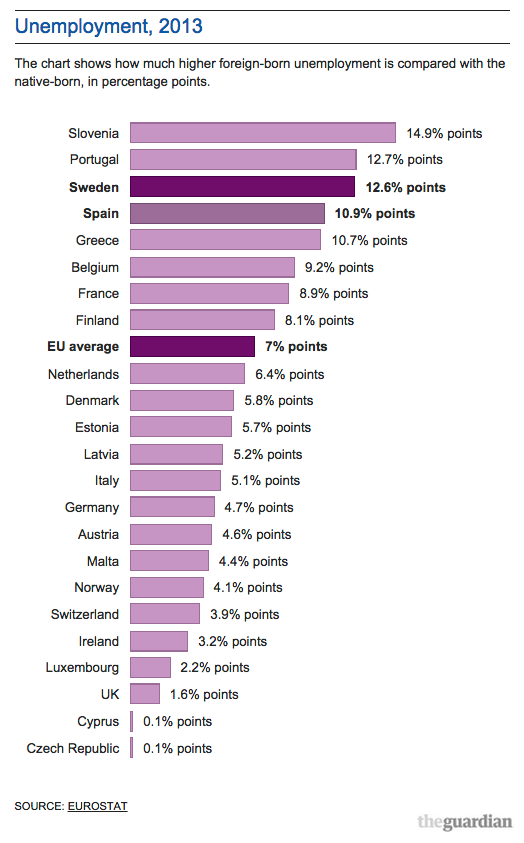
Unemploymentcopy

Last night, I was thinking about my working career and realised that I have always had a job. I have never been unemployed more than a few days. When I lived in the UK, I hopped from employment to employment. When I moved to Sweden 20 years ago I got a job teaching English within a week.  Working in Sweden is probably one of the main contributors to my successful integration into society. Through working, I met Swedes, I learned the language and developed an understanding of the culture. I became participative in Swedish life, I paid taxes and I felt a strong sense of involvement and motivation to contribute.

I know I am one of the privileged ones. The latest statistics from Eurostat compares unemployment amongst foreign-born and native-born residents in various European countries. In Sweden during 2013, unemployment was 12.3% higher for foreigners than for natives. This percentage is only higher in Portugal and Slovenia. According to the research, ‘immigrants in Sweden are now more than twice as likely to be unemployed as their native counterparts. In part this is explained by the integration challenge, but in many cases the children of immigrants of certain ethnic backgrounds need to send twice the number of CV’s compared to native-born job applicants before landing a job interview – alongside the challenge, there is also a hint of discrimination.’

This is serious. On the one hand, Sweden is an open and tolerant country. On the other hand, we see the rise of nationalism and the focus on immigration and integration. I strongly believe that what is required are jobs. But not just McJobs. Qualified, relevant jobs. As in my case, through work comes involvement and integration. In Sweden, the foreign-born population is actually more likely to have a higher education compared to the native Swedes. But Sweden has failed to leverage on this. This leads to doctors, lawyers and engineers working as cab drivers and cleaners, something that is corroborated in the OECD International Migration Outlook report which shows that Sweden’s over-qualification rates are among the worst when compared to other advanced economies.

It is no surprise that a failure to integrate foreign born population into Swedish society creates frustration and anger on both sides of the equation. This can be allievated through broad, far-reaching employment initiatives which Sweden has been so good at historically, So be shocked by the statistics and shout this out to the politicians! When we say ‘Welcome to Sweden’, we should mean it.

Please walk on the right

right traffic

On the way to work this morning I tested something out. I have to admit I was a bit scared. I took my life in my hands and my heart was beating rapidly. I saw, coming towards me, a group of people. Freshly off the train, they hit the pavement and were stomping with determination to their places of work. As they approached me, I decided to test cultural expectations and see what would happen.

I shifted position and walked on the left side of the pavement.

In Sweden, cars drive on the right side of the road. On escalators, people stand on the right side and let people climbing the escalator pass on the left. It’s an unwritten cultural rule that this also translates to the pavement. When masses of people move along the street, they automatically migrate to right-side walking.

But not me. Not this morning anyway. I wanted to test this cultural assumption.

As the masses approached me, and I walked on the left, I paid attention to the expression on people’s faces. Many ignored me. Others saw me and looked surprised. But the majority, gave me the evil eye. This came in a variety of forms, from staring at me and grimacing, to rolling the eyes upwards to audibly tutting as they walked past or were forced to navigate around me. Nobody reproached me or scolded me. Nobody told me I was doing it wrong. But many of them looked annoyed at my existence and the fact that I was inconveniencing them.

This little experiment highlighted a classic concept in intercultural competence. We are so preoccupied with our own view of the world that we fail to see other people’s perspectives. There are often situations where others don’t know the ‘rules’, but we judge them as though they do know the rules – but are just idiotic or rude. Consequently, we become angry or frustrated and this affects our interaction and our communication.

The solution? Instead of thinking ‘that person’s an idiot’, we can think ‘that’s interesting, why might they be doing that differently?’  

Think about that next time you get irritated because somebody isn’t following the norms that you believe in.

25 words for snow!

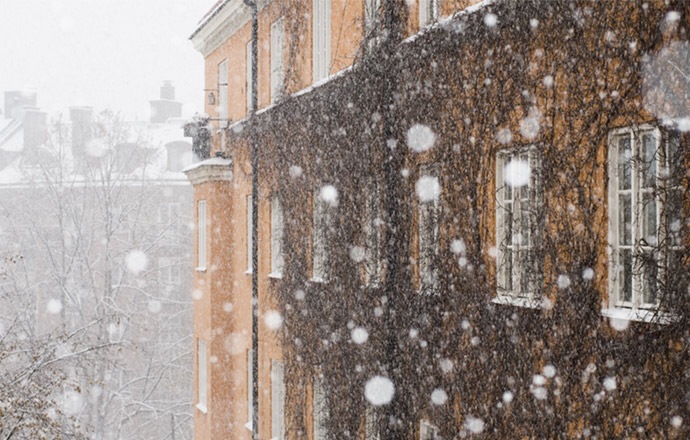
2015/01/img_4847.jpg

As the snow tumbles down over the city, I am reminded of the many different words for snow that Swedes have. Not surprisingly when living in a country where it snows a lot, people start to see differences and nuances in the type of snow, whereas in English the word might just be an unsatisfactory ‘snow’.

1) Blötsnö – wet, slushy snow
2) Drivsnö – snow that is blown into troublesome snow drifts
3) Aprilsnö – snow in April, according to suspicion signifies plenty of food for the coming season
4) Hårdsnö – compacted hard snow
5) Konstsnö – artificial snow
6) Kramsnö – squeezy snow, perfect for making snowballs
7) Julesnö – snow at Christmas
8) Klabbsnö – wet, warm snow for building snowmen
9) Kolsyresnö – frozen carbondioxide
10) Kornsnö – small white snow breadcrumbs
11) Lappvante – thick, falling snow
12) Lössnö – snow that can loosen and be dangerous
13) Majsnö – surprising and unwelcome snow in May
14) Modd – snow that has partly melted due to salt
15) Natursnö – real snow (as opposed to artificial)
16) Nysnö – fresh snow, crisp and white
17) Pudersnö – powder snow
18) Rekordsnö – an unusual amount of snow, breaking previous snow records
19) Slask – slushy snow mixed with rain and dirt on the ground
20) Snö – snow
21) Snöblandat regn – snow mixed with rain
22) Snömos – sloppy snow that resembles mashed potato
23) Snörök – faint particles of snow that look like smoke
24) Yrsnö – snow being whipped around by the wind in all directions
25) Åsksnö – snow that pours down during a thunder storm

Swedish life balance

/home/wpcom/public_html/wp-content/blogs.dir/6dc/32262531/files/2015/01/img_4842.jpg

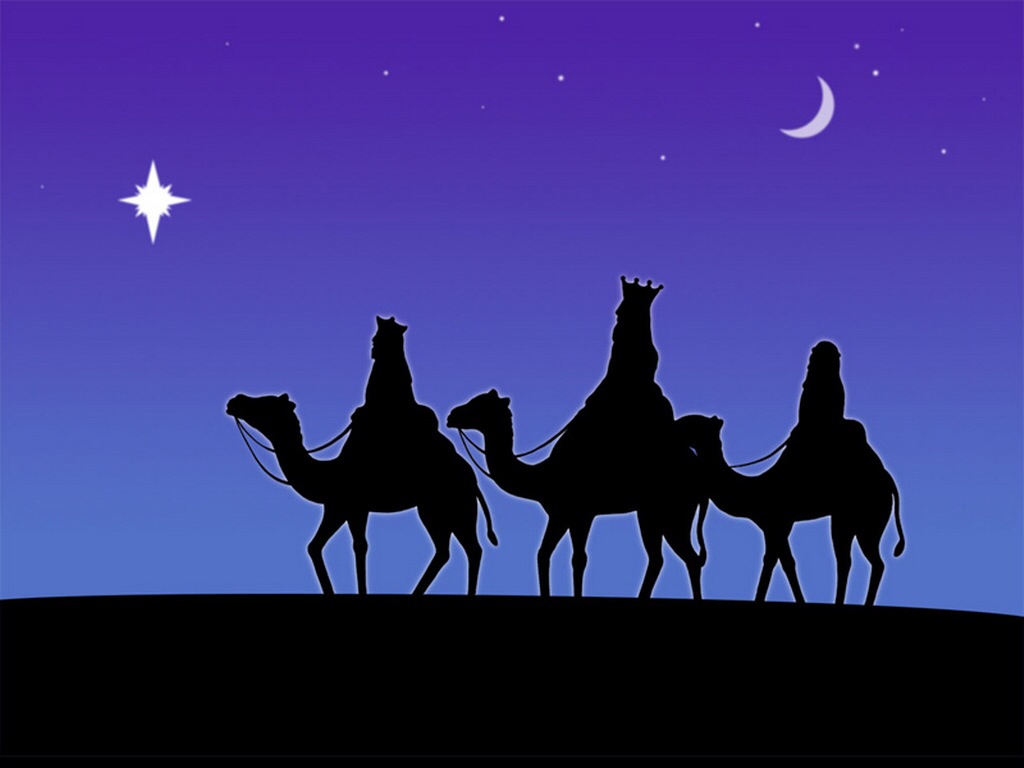
It’s said that Swedes have an enviable work life balance and this festive season has been no exception. Similar to many countries, Christmas and New Year are both bank holidays in Sweden. Similar to a few countries, today is also a bank holiday – kings’ day, epiphany or the twelfth day of Christmas. Biblically it signifies the arrival of the three wise men and the baptism of Jesus. Secularly, it means another day off for most people.

This festive season has been a great opportunity for time off. By taking only 5 days’ holiday, workers have been able to be off for two and a half weeks. And with 8 days’ holiday – 3 weeks off was the reward.

A strong belief in work life balance is behind this. In general, Swedes work really hard and are dedicated. Coupled with the darkness at this time of the year, many people are exhausted by the time Christmas comes around. A long break is seen as a necessary way to recharge batteries, and regain motivation. There’s a great Swedish word that you frequently hear after these long breaks – people describe themselves as ‘utvilade’. This translates as ‘thoroughly rested’, and is essential to survive the long, dingy winter season.

Swedish goats on fire

/home/wpcom/public_html/wp-content/blogs.dir/6dc/32262531/files/2014/12/img_4735.jpg

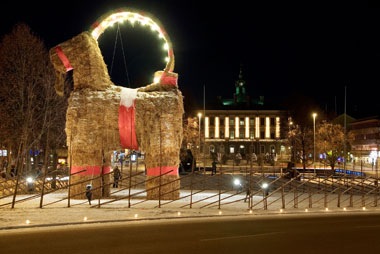
Since the 60’s, in the town of Gävle, north of Stockholm, they have had the Christmas tradition of building a large hay goat in the town centre. Oddly, the goat is a Christmas symbol in Sweden. This ‘Gävle Goat’ has become famous throughout the nation because it has spawned another, less Christmassy tradition. Every year, with few exceptions, the giant goat has been vandalised or set on fire.

This year, guards have successfully intercepted several people during the weeks prior to Christmas who had a mission to set the goat aflame. But it survived! This year, the fortunate goat made it to Christmas Eve without being graffitied, singed or doused in any form of flammable liquid.

But will it make it to 2015? Or will it go up like a New Year’s firework? Well, that cliffhanger will be resolved in a few days.

A literal Swedish Christmas

/home/wpcom/public_html/wp-content/blogs.dir/6dc/32262531/files/2014/12/img_4734.jpg

Swedish is often a very literal language. Today, the 26th December, is a good example of that.

In the UK, today is known as ‘Boxing Day’. In Finland, it’s ‘Stefani Day’. In Ireland it’s ‘Wren’s Day’. In South Africa, it’s the ‘Day of Goodwill’.

And in Sweden? Well, here comes the literalness.

It’s called ‘Second Christmas Day’.

My dad thinks you’re ugly

IMG_4486.JPG

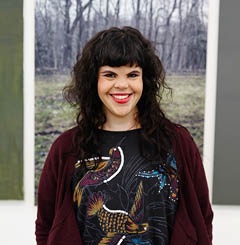
Swedish children’s television presenter Sannah Salameh has recently pointed the spotlight on Swedish body obsession and social control. In a text, she describes how a little girl approaches her on a railway platform and says ‘My dad thinks you’re ugly’. Quite naturally, Sannah is upset and angry, but keeps her composure. It’s not the fault of this little child but of her father who teaches her that judging others by their appearance is valid. Interested, I googled Sannah and ended up on a consumer forum. I was shocked by what I read there, by the vile and bilious comments people felt entitled to write about her appearance. Some people were even demanding she be removed from the tv as the way she looks offended them and scared their children.

In Sweden, as in many other western countries, there is a strong fixation around appearance. Having the right body, the right face, the right clothes is seen as important. Deviate from this and there must be something wrong. You are not seen as an individual but reduced to the fact that you are overweight or dark skinned or ‘damaged goods’, regardless of how talented or intelligent you might be. Thanks to social and established media this seems to have escalated over recent years.

And people like Sannah Salameh end up in the crossfire.

Swedish culture is driven by two strong values – individualism and self actualization. The right to be yourself and to be responsible for your own life. The right to be who you want to be and make the most of yourself. These manifest themselves in different ways in society, for the most positive. But here we have a contradiction. Does Individualism and self actualization only apply as long as you fit into a pre-determined template?

I want to give a big shout out to Sannah Salameh. She is a fantastic, talented woman who, despite her fears and insecurities, stands up for herself and for all women. Don’t let yourself be reduced to your appearance. Don’t let others decide your worth.

And to all fathers of little girls – teach them that their value lies in their intellect and their hearts, not in the way they look.

Is it a fish, is it a whale, is it a submarine?

IMG_4443.JPG

In Stockholm’s archipelago, a military operation is ongoing. Reports/suspicions of underwater activity in Swedish territory have led to this. Residents claim to have sighted a surface submarine and the general finger is pointing towards Russian involvement – not surprising given their recent actions.

But the thing is, no submarine is found. Now in the 6th day of hunting, the insufficient Swedish navy ships keep drawing blanks. Does this mean there is no submarine? Maybe. But it definitely puts the spotlight on Sweden’s inadequate military power and it’s subsequently inability to defend itself in an armed conflict.

So is this a wake up call? It’s definitely a dilemma for pacifistic Sweden.

Time to build up Sweden’s military defence that was politically dismantled during the last decade? Or time to invest more into diplomatic dialogue to avoid potential territorial confrontation?

What side of the fence do you land?

Swedish social control or just health consciousness?

smoking outdoors

For a long time, there has been a ban on smoking Indoors in public places in Sweden. A new law is now being prepared to ban smoking also in outdoor public places such as bus stops, beaches, parks and even on people’s private balconies.

It’s unclear as yet if this law will pass but it’s an interesting case of Swedish beaurocratic imposition on the freedoms of the individual. Those for the ban claim the argument of health consciusness and respect for others in the public environment. They also claim that public spaces will become more accessible for people who today cannot move freely in public spacers such as asthmatics. Those against the ban claim that this is the state ínvolving themselves in something that is about individual choice and that barbecuing should also be banned in public spaces by the same argument.

Those for the ban suggest that it is easier to deal with unpleasant smoking habits if the law is on your side. For example, if a neighbour smokes on their balcony, and this smoke rises up into your apartment, it’s easier to get them to stop by throwing the law book at them.

Culturally, I think this is interesting. Is this about facilitating dialogue? I don’t believe so.

I think it’s more about the Swedish tendency to want to create law and legislation to solve interpersonal problems.

Do Swedish good looks make good politics?

Sweden’s New Public Health Minister, Gabriel Wikström, has created a storm on social media due to his good looks. Called ‘the handsome minister’ he’s getting a great deal of attention. Here’s my blog from the end of last year in which I listed Sweden’s top 10 handsome politicians. Gabriel Wikström didn’t make the list then. Maybe it should be revised?

It doesn’t come as a surprise that looks count in politics. We all know that PR people try to pimp their candidates so that they look more attractive and gain votes. We all know that, although politics is all about the issues, a winning smile doesn’t hurt. At the weekend, some friends and I designed a list of Sweden’s most handsome politicians. We came up with the Top Ten! This list is in no way objectively researched but purely the subjective reflections and objectifications of this little international group. So, here’s the list!

Position 10 – Tomas Tobé. Moderaterna Tomas_Tobe_0000149000

Position 9 – Erik Ullenhag, Folkpartiet
erik ullenhag

Position 8 – Christopher Fjällner, Moderaterna
christopher fjallner

Position 7 – Ardalan Shekarabi, Social Demokraterna
Shekarabi_Ardalan

Position 6 – Hans Lindberg, Social Demokraterna
hans lindberg

Position 5 – Gustav Fridolin, Miljöpartiet
gustav fridolin

Position 4 – Ali Esbati, Vänsterpartiet
ali esbati

Position 3 – Hampus Magnusson, Moderaterna
Hampus-med-Lars2

Position 2 – Hans Linde, Vänsterpartiet
02_Hans-Linde-192

Position 1 – Jan Eliasson, Social Demokraterna
jan eliasson