Sweden’s disgrace! 

  
In the latest poll today, over one fifth of the Swedish voting population would vote for the nationalistic right wing party, putting the party into position of the second largest political party in Sweden. 

Let’s be clear what this means. One fifth of Swedes support a party that has its roots in the nazi party, that has verbally and physically attacked minority groups and that believes in Swedish racial superiority. It’s a disgrace for all Swedes who believe in tolerance, openness and solidarity. 

It’s time to act. To speak out. This is not going away. As the established parties bitch at each other, the Swedish population grows tired of their rhetoric. Consequently, they feel more disengaged and resentful and turn to a party that seems to talk straight to their concerns and promises protection of the Swedish identity. It is scarily reminiscent of the past. 

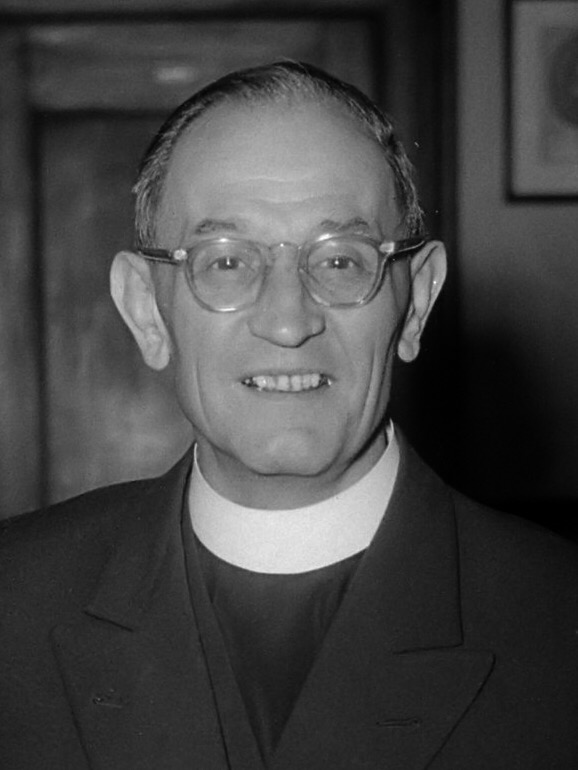
Pastor Martin Niemoller, pictured above, wrote a famous poem after he survived the concentration camps of the Second World War. His poem criticised the cowardice of German intellectuals after the Nazi’s rise to power and their subsequent purging of one group after another. It’s worth reflecting over his words. They are very relevant today. Right now. In Sweden. About us. 

‘First they came for the Socialists, and I did not speak out— Because I was not a Socialist.

Then they came for the Trade Unionists, and I did not speak out— Because I was not a Trade Unionist.

Then they came for the Jews, and I did not speak out—Because I was not a Jew.

Then they came for me—and there was no one left to speak for me.’

Do these words resonate with you? Are we the cowards he’s referring to? Are we so comfortable and complacent that we just sit back and watch it happen? 

If, like me, you believe in a multicultural society, it’s time to take a stance. Write to your MP. Talk to your colleagues, neighbours and friends. Get involved. Share this blog. Root out those one in five and challenge them. Demonstrate. Communicate. Educate. 

Speak out. While you can. Before it’s too late. 

Top 5 Rude Swedish Place Names 


In Britain, and Sweden, there are many places with funny or rude names. 

What’s in a name? Does the name of a place say anything about its residents? For example, are the people of Uppsala upwardly mobile people? Or are the people of Sundsvall very sound in their values and morals? Maybe. If the name of place represents the type of people who live there, what does it say about the residents of these top 5 rude place names in Sweden? 

5) In the town of Mora there is a place called Rövhålet, which translates as ‘butt hole’. 

4) Bögs gård, north of Stockholm, literally means ‘Gay’s farm’

3) Kattsjärten in the county of Värmland is the evocative ‘cat’s arse’ in English 

2) Way up in the north of Sweden, you will find Sexträsk, which is the exotic place of ‘sex swamp’

1) But the most embarrassing must be the place called Djupröven, which is just outside of Uppsala. It means ‘Deep Ass’ in English. Says it all. 

There’s also a suburb of Stockholm which I’m always embarrassed to say. The suburb of Fittja sounds very much like the offensive word for female genitalia. Best to avoid saying it if you’re a foreign speaker of Swedish. 

What other funny or rude place names in Sweden do you know? 

Please share this blog, if you enjoyed it. 

Stockholm: City of my Dreams

 
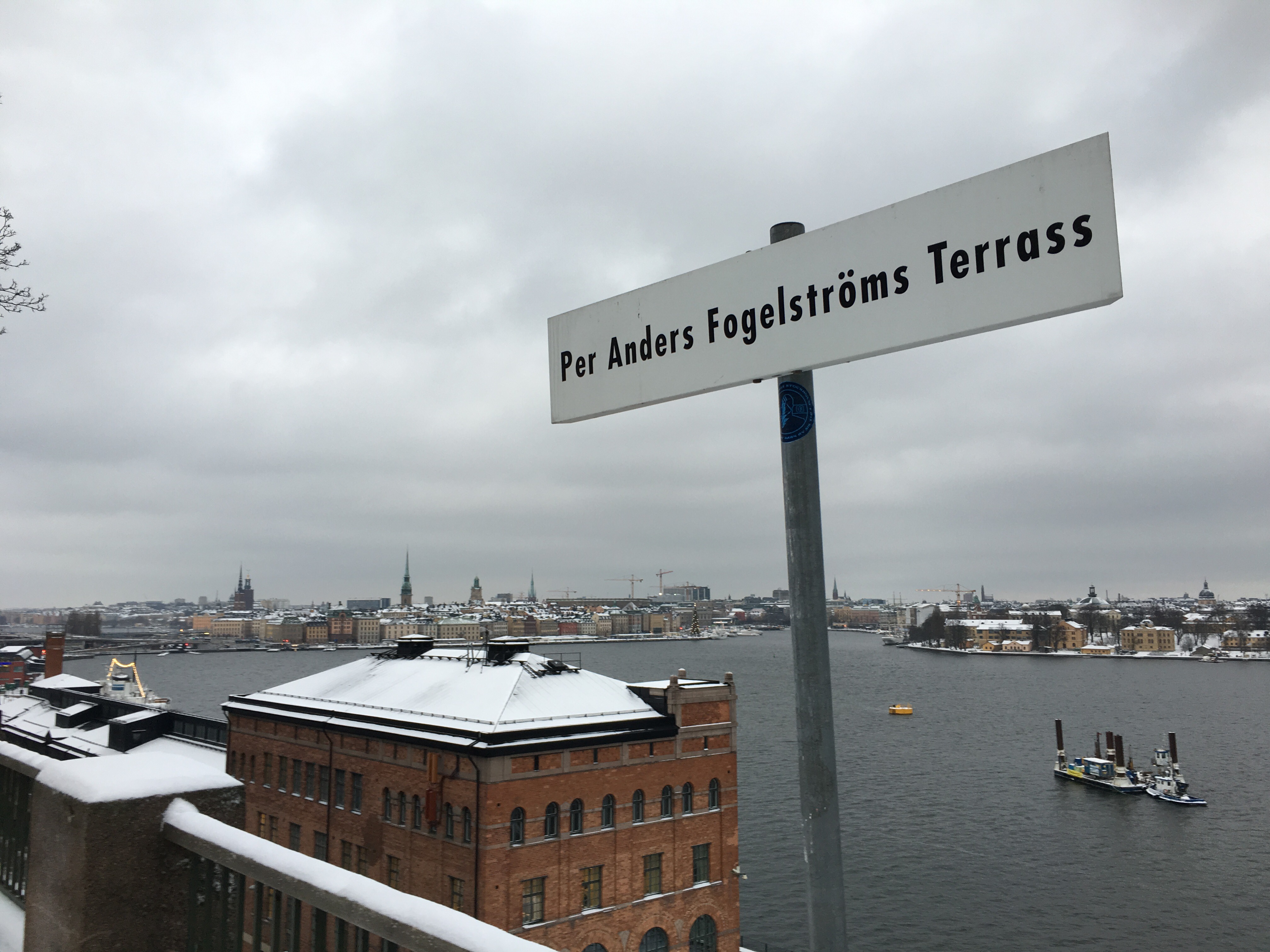
A wintry Sunday walk took me up to one of Stockholm’s most popular view points. Standing over the water, looking across the harbour to the Old Town and the islands of Skeppsholmen and Djurgården, I noticed the place name – ‘Per Anders Fogelströms Terrace’. 

Per Anders Fogelström was one of Sweden’s most popular authors. His most famous work was a series of books which followed the fate of successive generations of Stockholmers from 1860 to 1968. I’ve actually only read the first book – ‘City of my Dreams’ – which describes the harrowing and tough existence of a group of working-class people in the impoverished neighborhood of Södermalm at the end of the 1800’s. 

As I stood on the terrace high up on Södermalm and looked down towards the town, I felt the breeze of history’s wings on my face. And I realized, after more than 20 years here, this is also the place where many of my dreams have come true. 

What Sweden’s New Year’s Eve has to do with Lord Tennyson 

New Year’s Eve in Sweden is like most other places in the world. Good food, fireworks, friends and alcohol frame in the event.

However, there is another tradition which is peculiarly English and particularly Swedish.

Almost every New Year’s Eve since 1896, a well-known person has stood on the stage at a Swedish open-air museum and recited the poem ‘Ring out Wild Bells’ by Lord Alfred Tennyson written in 1850. This may seem weird, but nowadays, the event is televised and attracts a large public. Translated into Swedish, the poem is called ‘Ring Klocka Ring’ and it has a very meaningful and deep content as we leave one year and enter into another. 

Various famous people, mostly actors, have had the honour of delievering this rousing poem throughout the years. Of the 20 narrators so far, only one has been a woman. However, this year the second female narrator – popular opera singer Malena Ehrman – will take the stage.

Below, you will find the text in English. ‘Ring out the old, ring in the new’ – and a Happy New Year to each of you!
In Memoriam, [Ring out, wild bells] – Lord Alfred Tennyson, 1809 – 1892
Ring out, wild bells, to the wild sky

The flying cloud, the frosty light:

The year is dying in the night;
Ring out, wild bells, and let him die.
Ring out the old, ring in the new,
Ring, happy bells, across the snow:
The year is going, let him go;
Ring out the false, ring in the true.
Ring out the grief that saps the mind
For those that here we see no more;
Ring out the feud of rich and poor,

Ring in redress to all mankind.

Ring out a slowly dying cause,
And ancient forms of party strife;
Ring in the nobler modes of life,

With sweeter manners, purer laws.

Ring out the want, the care, the sin,
The faithless coldness of the times;
Ring out, ring out my mournful rhymes

But ring the fuller minstrel in.

Ring out false pride in place and blood,
The civic slander and the spite;
Ring in the love of truth and right,
Ring in the common love of good.
Ring out old shapes of foul disease;
Ring out the narrowing lust of gold;
Ring out the thousand wars of old,
Ring in the thousand years of peace.
Ring in the valiant man and free,
The larger heart, the kindlier hand;
Ring out the darkness of the land,
Ring in the Christ that is to be


Don’t choke on the almond

And so it is Christmas. Like many places around the world, Sweden celebrates on Christmas Eve. Festivities throughout the day include eating the Christmas ham, receiving a visit from Santa, opening presents, drinking, playing board games and eating more. 

But the day usually kicks off with a steaming bowl of rice porridge. This delightful dish is made of rice, milk, sugar and cinnamon. Deep inside the porridge, there is often an almond. Presuming you don’t choke on it, if you find the almond it means you will be married during the following year. In the south of Sweden, and in Denmark, Norway and Iceland, the person finding the almond receives a gift. During the 1920’s it became trendy in Sweden to replace the almond with a ‘porridge doll’ made of porcelain and hide that in the porridge instead. 

Really superstitious people will even leave a bowl of porridge outside tonight to appease the house gnome who, according to legend, can make your cows dry up if he’s pissed off. 

But hopefully nobody should be pissed off on a day like today. And with family and friends gathered around a twinkling Christmas tree, a bowl of steaming hot rice porridge is a great way to kick off a lovely day. 


And Sweden’s ‘Christmas present of the year’ 2015 is…

Every year, Sweden’s trade research institute nominates an item that is the ‘Christmas present of the year’. This item should have sold in large quantities and/or represent current trends in Swedish society. 

The first item to be granted this status was in 1988 and it was the baking machine. Since then, various items have been the mobile phone, the tablet, the spike mat, the book, the food home delivery service, the woolly hat and the wok. Last year’s was the smartband – a reflection of today’s physical activity trend and the need to digitally track and register results. 

So this year, what is it? 

Given the current state of the world, and the number of refugees that Sweden has taken in, one might hope that it is a charitable contribution. But no it’s not. 

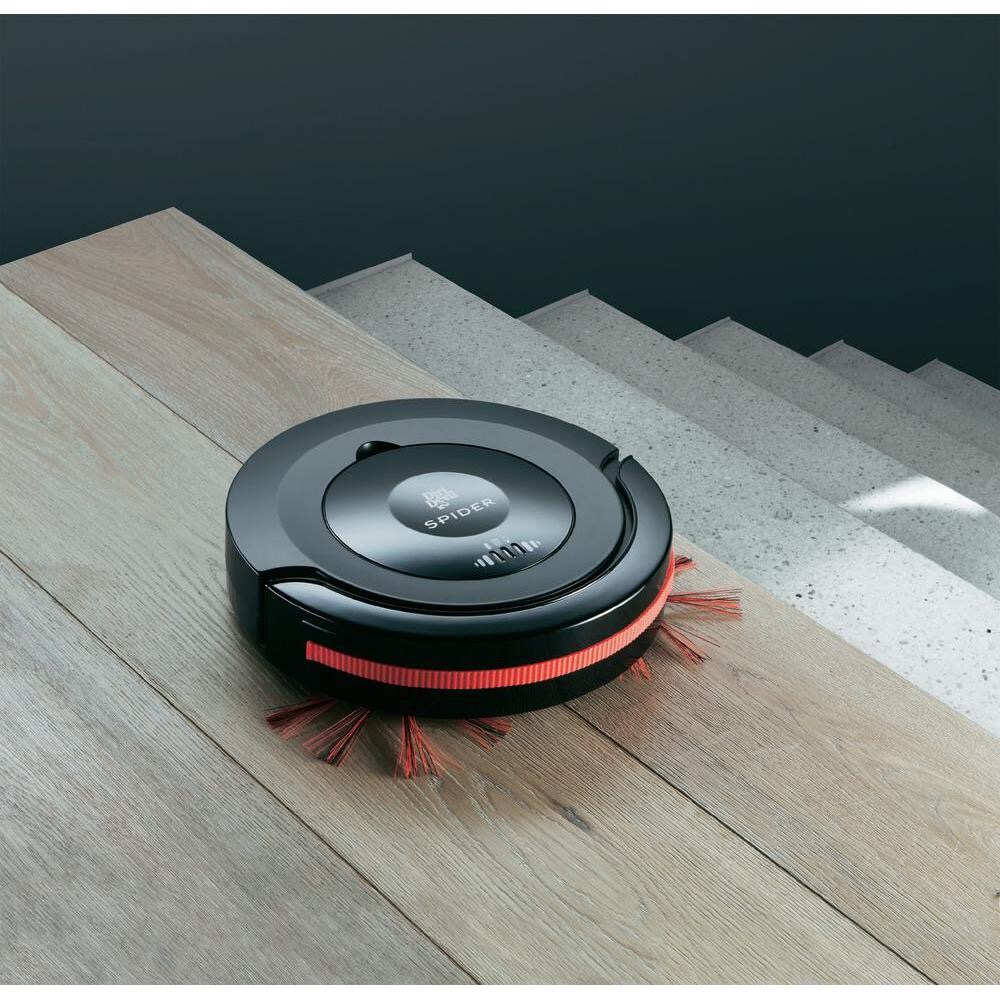
It’s the robot hoover. 

What does this say about Sweden’s current time? It clearly represents the robotisation of our society, and the automisation of household functions. But it also reflects the stressful nature of today’s society in which people feel that time is limited. Additionally, it shows that the home is back in focus and the need to be liberated from boring tasks such as vacuum cleaning is strong. 

So Happy Christmas and a dust-free New Year! 


What is a Swede? 

Went to see stand up comedian Jonas Gardell yesterday and he told a story about when he had been awarded the ‘Swede of the Year’ award. But what actually is a Swede he pondered. Is it what the right-wing party in Sweden would have us believe? Blond-haired, fair-skinned, blue-eyed, hetero, Christian, arian? 

With reservation for misquotation and mistranslation, he defined himself this way.

‘ I am a middle aged gay man married to a Finnish American immigrant. We have two children with a lesbian couple, one of whom is Jewish. My brother is married to a Muslim and has two kids. And my sister is married to a woman and has a kid with a Jewish man’. 

They are one big fantastic, modern Swedish family. 

Spotifree time

spotify sketch

It’s common knowledge that Sweden has one of the world’s best systems for paid leave in connection with the birth of a child – thirteen months parental leave which can be shared between both the parents. The payment received is equivalent to about 80% of salary up to a certain level.

Now, Swedish company Spotify has announced an upgrade to this system for employees working in their company. Parents at Spotify are allowed to take free time, or parental leave, for 6 months at full pay. This is for either parent so is not gender, or role, specific. When the employee returns to work, there is also a ‘welocme back’ month where they can work part-time and from home to ease themselves back into the workplace and from their infant. The great thing about this is that it’s not just Sweden. It’s GLOBALLY! For all employees everywhere in the world.

It’s great to see private organisations taking responsibility for their employees. The government and the tax payer can only do so much, if they even do anything at all. The Head of HR at Spotify says

“This policy best defines who we are as a company, born out of a Swedish culture that places an emphasis on a healthy work-family balance, gender equality and the ability for every parent to spend quality time with the people that matter most in their lives.”

The Gentle Minister

Anders_Ygeman

Reading on social media recently, I am struck by the amount of praise given to Sweden’s Home Secretary, Anders Ygeman. The minister is appearing a lot in newspapers and on the TV at the moment commenting on the tragic events of Paris and the impact terrorism has on the increasing security levels on Swedish soil. He also regularly informs the public on the refugee situation and the political reasons behind the government’s actions to reintroduce border controls.

On the face of it, Anders Ygeman should not be considered a good communicator. He has a very gentle, apologetic manner. He avoids eye contact at times. He speaks with a very quiet voice and a very flat tone. He is, in fact, the opposite of everything that a leader is said to be – inspiring, charismatic and energetic.  In the USA, or the UK, he would probably be ridiculed. But in Sweden, it seems to work.

From a cultural perspective, this is really interesting. What is it about Anders Ygeman that works so well in Sweden? Maybe it is a case of content over packaging. Often how we say something has more impact than what we say, but in Anders Ygeman’s case, it’s the opposite. He might not be charismatic, but he is clear and very direct. And is this an approach that Swede’s prefer in times of crisis – a no frills, humble and direct communication?