The relief of Swedish Advent


So it’s the first of Advent this weekend and this year it comes as a major relief for those of us in Stockholm.

You see at Advent, Swedes decorate their houses, apartments and windows with lights. From ceilings, illuminated stars are hung. On window ledges, electric advent candles are placed. On tables, four candles are positioned and one is lit every Sunday up until Christmas. Small candles, often red, are dotted about the home.

Some years, there is already deepish snow at the first of Advent, but this year in Stockholm, there isn’t. So it is very, very, very dark. The collective advent decoration is a definite reprieve from this darkness as light is spread into these murky places.

The word ‘advent’ comes from the Latin ‘adventus’ which means ‘arrival’ and is traditionally the start of the period where we wait for the arrival of nativity, or Christmas. Some religions also see it as waiting for the second coming of Christ. But in this secular society that is Sweden, the waiting is probably for the snow to come, the cold to hit, the water to freeze to ice and for winter to clasp its fingers firmly around us.

World Aids Day in Sweden

Lying here in the middle of the night, the sound of the rain beating on the windows and the wind howling around the rooftops. During these dark nights, my mind often wanders.

And right now, it is reminding me that Saturday is World AIDS Day.

My mind circles around the memories of friends and acquaintances I lost in the peak of the crisis in London. I remember all the talented celebrities who died, such as Freddy Mercury, Rudolf Nureyev, Arthur Ashe, Derek Jarman. I ponder the unnecessary number of beautiful young people, unknown to most of us, who succumbed to the disease over the last 30+ years. An estimated 35,4 million people have died from AIDS since the beginning of the epidemic, to quote the grim statistics.

Today, in Sweden about 10000 people live with diagnosed HIV and Sweden has become the first country in the world to achieve the UN goal for identification and treatment of people with HIV.

But that’s not the case on many other countries, where HIV continues to devastate communities and families. In East and Southern Africa, an incomprehensible 19 million people are believed to live with the infection, and an additional 25% don’t know their status.

World AIDS Day (WAD), designated on 1 December every year since 1988, is an international day dedicated to raising awareness of the AIDS pandemic caused by the spread of HIV infection and mourning those who have died of the disease.

In Stockholm, Noak’s Ark has a day of lectures, meetings and performances to commemorate the day. Check out their web page.

Tomorrow night, Friday 30 November, there is a WAD concert at Maria Magdalena Church on Bellmansgatan on Södermalm. I will be there to sing with my choir and to show respect for those who are living and who have died.

It starts at 17.30 and is open to all.

Please come along.

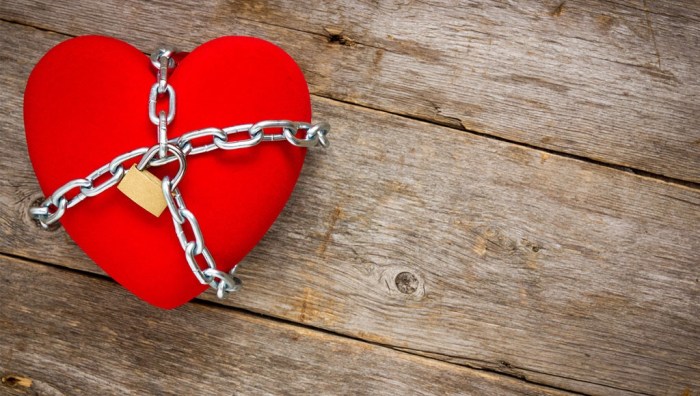
Do Swedes have no heart?

Working recently in India, one question I received was ‘why don’t Swedes greet us with heart?’ This was referring to when Indians visit colleagues in Sweden, or when they start working together in new constellations.

It is an interesting perception, and maybe not a new one. The experience of Swedes as cold, unfriendly and disengaged seems common, and genuinely baffles a lot of non-Swedish people.

Firstly, I would like to say that in general this is not true. It is just a perception. Many of the Swedes I know are kind, generous and affectionate. However, I do have a few theories as to why this perception prevails.

Expressiveness – how much it is appropriate to express emotion is something that we are trained in from childhood. Some cultures train their children to use their entire bodies when they communicate, others train their children to be more reserved. Generally Swedes are trained to be emotionally inexpressive. What they mean is clearly in their words, and not so much their bodies or faces. And this can lead more physically expressive cultures to presume they are cold. So it is important to understand that lack of expression should not be confused with lack of feeling.

Importance of relationships. Swedes do have many close friendships and family ties. However, this doesn’t necessarily extend to neighbors or colleagues. While in other cultures, strong close relationships with colleagues are essential for getting the job done, in Sweden isn’t the case. Relationships help, but they are not essential for carrying out the task. This means Swedes can go to work and be friendly towards each other, but don’t necessarily need to make friends or show a great deal if interest in each others private lives. This can be frustrating for people who come from strongly relationship-oriented cultures.

Independence. Swedish culture is amongst the most individualistic cultures in the world. In Swedish society, this manifests itself in the attitude that every able-bodied person can take care of themselves. This means that the Swedish attitude is generally if you want help you will ask for it. And you usually get it. The fact that help is rarely offered was a hard lesson for me to learn when moving to ‘unhelpful’ Sweden.

The peach and the coconut. Some cultures are like peaches – soft on the outside, easy to get into, open in communication, overtly friendly. Other cultures are like coconuts – hard shelled, difficult to get into and less open to people outside the group. Typically, but not exclusively, Swedish culture is ‘coconutty’ and Indian is peachy. This can mean it’s a challenge for people from peachy cultures to break into Swedish society and easy for them to form the perception that Swedes are cold and unwelcoming. My experience tells me, however, that once you break through the shell, the friendships that you make are very close and lasting. It is easy to assume when you meet a Swede that he or she is shy or introvert. This might be the case, but not necessarily. He or she might just be a coconut.


Sweden’s sand box

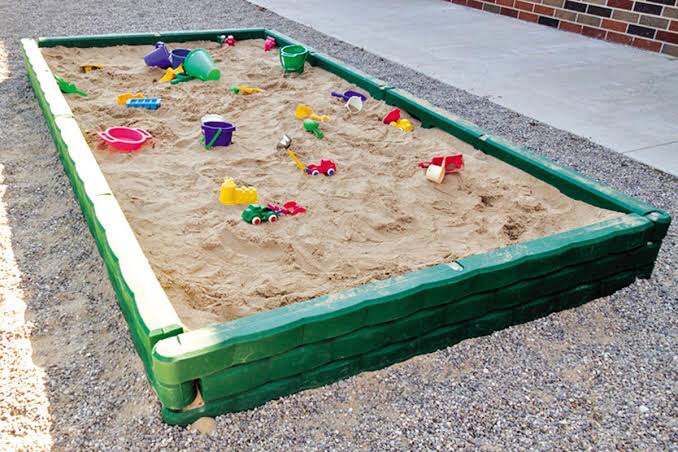
It’s been over two months since the general election, and still no government in Sweden. This is because the 8 parties can’t find a suitable coalition that doesn’t damage egos, betray voters, let in the nationalists or destroy alliances. It’s a bit like watching a discussion between toddlers in a sand box:

  • Ulf wants most of all to play with Ebba, Jan and Annie
  • Annie doesn’t want to play with Ulf, Ebba and Jan unless Isabella is allowed in
  • Annie and Jan definitely don’t want to play with Jimmy or Jonas
  • Annie and Jan want to play with Isabella but Isabella wants to play with Jonas and Stefan
  • Jonas is happy to play with Stefan and Isabella but not Jimmy or Ulf or Ebba
  • Stefan wants Annie and Jan to join in with Jonas and Isabella
  • Nobody wants to play with Jimmy, except sometimes Ulf and Ebba
  • Jimmy doesn’t know who he wants to play with

One wonders how it all will end. Well, how does this discussion in a sand box usually end?

In tears!

Trump in Swedish

Today I was reminded of a fun Swedish word. A very contemporary one.

The Swedish word I’m referring to is ‘trumpen’. Contemporary for obvious reasons, the word is an adjective and translates as the following:

  • Glum
  • Moody
  • Morose
  • Stuffy
  • Surly

Appropriate, isn’t it? Shame it doesn’t also mean misguided, arrogant and narcissistic.

Spectacular Swedish serenity on All Saints’ Day

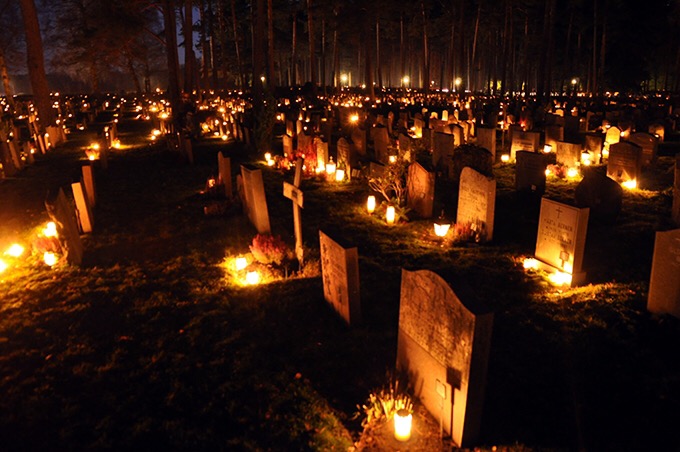
I remember walking around Stockholm when I had recently moved here. It was a pitch black Saturday evening in November, cold and crisp. As I approached a majestic church, I noticed that it was shimmering from the grave yard. This yellow and white light slowly flickered and cast shadows on the gravestones and the church wall. As if drawn by a magic spell, I walked up to the church and looked over the wall. The sight that met my eyes was spectacular and serene at the same time. Hundreds of candles were spread around the cemetery, decorating each of the graves. In the memory grove a bright blazing blanket of candles lit up the area. It was as if the spirits of the dead had come out to play.

In Sweden, the first Saturday in November is All Saints’ Day (the Sunday after All Saints’ Day is called All Souls’ Day to separate between the saints and the dead).

Since the 1800’s Swedes have, during this weekend, made pilgrimage to graveyards up and down the country to decorate the graves with candle light and to pay respect to the dead. It is a much more elegant and atmospheric tradition than the typical Halloween parties that otherwise have become very popular in Sweden.

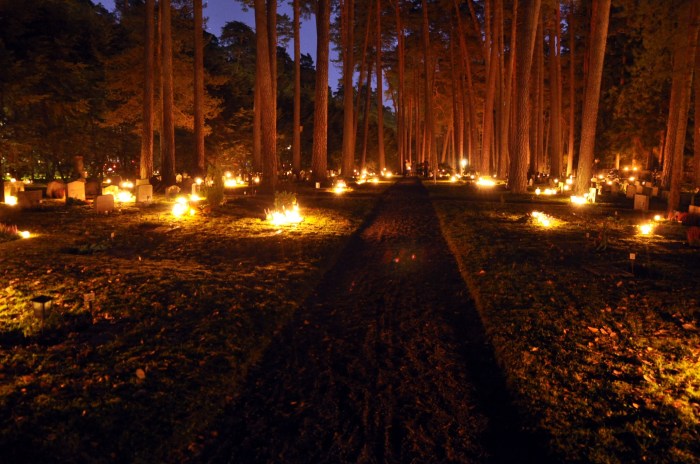
It is a truly beautiful experience to walk through the churchyards this weekend. In the pitch black November Nordic darkness, it is a peaceful reminder of those who have gone before us. So head for your nearest cemetery this weekend and, if you happen to be in Stockholm, go to the Forest graveyard (Skogskyrkogården) for a specifically spectacular experience (pictured below).

Swedish expressions – ‘to buy a pig in a sack.’

In Swedish, this is a common phrase used to describe a situation where somebody has bought something without first fully examining it. And it proves to be a costly mistake. It’s also used to describe situations where somebody says yes to something without really knowing what it is – to their detriment. The expression ‘köpa grisen i säcken’ is the equivalent of the little-used English phrase ‘to buy a pig in a poke.’

But where does the expression come from?

Well, it dates back to the late Middle Ages when livestock was sold in the market places. Small animals were transported in sacks so as to make it easy to carry them. When you bought an animal, if you didn’t look in the sack, you might be in for a big surprise when you got home. You thought you bought a piglet, for example, but on opening the sack you realize it contains a rat or a cat.

It’s a bit like voting for a person or a party without fully understanding their politics and then being shocked afterwards. You really shouldn’t have bought that pig in the sack.

Cash free Sweden

I read in the paper yesterday that Sweden has taken over from the USA in terms of cash free payments. Plastic prevails in this country as does the mobile payment technology called ‘Swish’. With a simple transfer, Swedes can send money to each other via their phones. All that’s needed is a bank account, a bank ID and, of course, a mobile.

Shop after shop is putting up signs saying ‘we do not accept cash – only card and Swish’. I have to wonder if this is legal, as coins and notes are still actually legal means of payment. Do they have the right to refuse?

Sweden’s cash free society really hit home with me this morning. Sitting on the tube on the way into work, a beggar got into my carriage.

He stood in the middle of the aisle and presented a plea for the money he needed to buy food. Nobody looked at him, everybody looked at their cell phones.

In response to this, the beggar said, ‘if you prefer not to give me cash, I take Swish!’

Odd Swedish names

Ok, I know that English has quite a lot of funny names such as Dick and Willy, but Sweden also has its fair share.

Here come the top 10 hysterical and odd names that people in Sweden actually have.

  • 1. Gun. A popular name of over 18000 women in Sweden. Not bad for a pacifist country
  • 2. Jerker. Seriously. A man’s name, and also the name of a piece of furniture at IKEA.
  • 3. Saga. Ugly when pronounced in English, this name for a woman actually means ‘fairy tale’.
  • 4. Odd. An odd one this. A name owned currently by 735 men in Sweden.
  • 5. Even. Interestingly, the name Even also exists. Odd and Even would make a well-balanced coupled wouldn’t they?
  • 6. Love. It’s true. You could fall in love with a Swedish boy called Love.
  • 7. Ninni. A name of a Swedish woman. Although it means ‘an idiot’ in English, I assume all Ninnis in Sweden are not stupid.
  • 8. Knut. An unfortunate name that, at best, gets pronounced as nut, and at worst gets the letters mixed up to mean something altogether more rude
  • 9. Tintin. Yeah, it’s true. There are many people in Sweden, both male and female, who have this name. Over 500 to be more precise.
  • 10. Titti. This has to be the queen of all unfortunate Swedish names. 1024 women in Sweden currently bear this name with pride.
  • Swedish expressions – ‘more stupid than the train’


    prins albert

    The Swedish train system is notorious for its lack of reliability and continuous delays. Anybody who travels by train in Sweden has probably called it stupid, or worse, in anger or frustration. However, this is not where the Swedish expression (you are) ‘more stupid than the train’ comes from.

    To understand the origin of this expression, we have to travel to my home country of England and to the end of the Industrial Revolution. In the 1800’s the rail industry was booming and in 1856 Sweden imported a train from the UK, pictured above.

    A Swedish tradition is to give names to trains, and this particular train was christened ‘Prince August’ after King Oskar I’s youngest son. Prince August was well-known across the country for not being the brightest light in the Christmas tree. His weak intellect was well referred to in stories of the time. This was a period in history, however, when open criticism of the Royal family borded upon treason. So, the people created an expression – more stupid than the train – to describe somebody’s idiocy while at the same time referring ‘discretely’ to the royal fool by referencing the train of the same name.

    This tradition of naming trains, and train carriages, still exists in Sweden today. Only this morning I travelled in a carriage called Pippi, but I’m afraid it wasn’t much of an adventure. Here is a list of all the carriage names on the Stockholm underground – see if your is there!