Neil Shipley on Swedish culture – the strange, the special and the sublime
Author: Neil Shipley's watching the Swedes
Since 1994, I've been watching the Swedes. Not in a creepy, obsessive way, but like an adventurer in unknown territory who carefully observes his surroundings.
I run a training company with my American business partner in Stockholm. We hold seminars and workshops in Cultural Awareness and Communication.
For more info about this check out www.keytraining.se
Today is Ascension Day, and it is a public holiday in Sweden. The Swedish word for today is Kristi himmelsfärdsdagen or Kristiflygare, which translates loosely as Christ Flying Day. Yet another example of the literalness of the Swedish language, this day signifies the bible story of Jesus Christ ascending (or flying) to heaven.
Unlike some countries that moved the celebration to the following Sunday, Sweden celebrates Ascension Day on the actual Thursday. This gives rise to another Swedish concept – the ‘squeeze day’. Since Thursday is a holiday, and Saturday is a work-free day for most, Friday gets squeezed between them and is also taken as a day off by most people. That makes this weekend a lovely long weekend, often signifying the beginning of summer. In previous times, today was also called ‘barärmdagen’ – or ‘bare arm day’ – as women started to wear clothes that exposed their arms.
This weekend is not religiously observed by most Swedes. Being a secular country, time is usually spent outdoors if the weather permits. Some Swedes go to their summer houses, or sail the waterways on their boats. Others meet friends, sit in outdoor cafes, or carry out sporting activities. In years when travel is permitted, this is also a popular weekend to fly off for a four-day break in, for example, Barcelona, Nice or Palma.
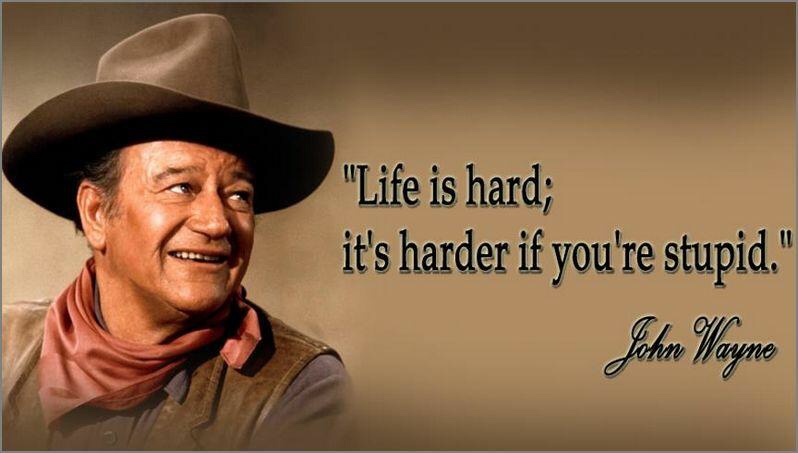
Sitting with some friends yesterday, we discussed why the Swedish word ’korkad’ (corked) means stupid. After much research, we couldn’t find an answer but we guessed it had something to do with the fact that cork is empty, light and flighty. Another thought was once you have uncorked a bottle and drunk it, it is an empty vessel.
We might not have found the origin of the word ‘korkad’ but we did find lots of expressions in Swedish to call somebody stupid. Here are 15 of them!
1) Bakom flötet – behind the float (fishing)
2) Tjockskallig – thick skulled
3) Tappad bakom en vagn – dropped behind a carriage
4) Tappad i backen – dropped on the ground
5) Ut och cyklar – out cycling
6) Dum i huvudet – stupid in the head
7) Fårskalle – sheep skull
8) Obegåvad – ungifted
9) Har inte alla hästar i stallet/hemma – doesn’t have all his/her horses in the stable / at home
10) Inte den vassaste kniven i lådan – not the sharpest knife in the drawer
11) Hjulet snurrar men hamstern är död – the wheel is turning but the hamster is dead
12) Född i farstun – born in the porch
13) Har inte alla kottar i granen – doesn’t have all the cones on his/her fir tree
14) Jubelidiot – celebrated idiot
15) Hissen går inte hela vägen upp – the lift doesn’t go all the way to the top floor
Then there are lots of words like ‘korkad’ that are fun to say and all mean stupid. For example, ’trög, bombad, knasig, knäpp, puckad, pantad, pundig, beng, bläng, boll, ding, fläng, prillig, stollig, svagsint, rubbad, koko, blåst’.
Who knew there were so many ways to call somebody stupid in Swedish? I tend to just say ‘dum’ but I’m now going to practice a few more of these words and expressions.
The Swedish expression ‘kaka på kaka’ or ’tårta på tårta’ is translated as ‘cake on cake’. It is quite a commonly-used expression – but what does it mean?
Swedes use ‘kaka på kaka’ to describe something that is an unnecessary addition that becomes a bit too much, or even over the top. For example, ‘buying another television when we already have two is a bit cake on cake.’
It can also mean an unnecessary repetition. In English – superfluous – ‘when you gave that example in your presentation, it was a cake on cake’.
The saying itself is an example of tautology – a concept in language where we unnecessarily repeat a word and it adds no meaning, eg chai tea (chai means tea), or salsa sauce (salsa means sauce) or naan bread (naan is bread). So the expression ‘cake on cake’ feeds into this concept by emphasising that one of the cakes is unnecessary.
The original meaning of the saying was related to overindulgence. So cake on cake meant basically you can’t get too much of a good thing – bring on the cake!! Over the years, and with the influence of Swedish moderation, it changed to mean too much that is not necessary.
Yesterday, a new book was published by author Rickard Gramfors. The book, entitled ‘Do you believe in Swedish sin?’ looks at Swedish exploitation and cult films. The book includes ‘350 outrageous, sexy, violent, fun movie posters from the Fifties to the early Eighties. Swedish films of all kinds, whacky co-productions, exported Swedish babes, and international films using the words Sweden, Schweden, Svezia, Suède as selling points; if it was “Swedish” – it was sexy!’
I have put my order in.
This international concept of Swedish sin still lingers around today, and influences some foreigners’ perception of Swedish women. Where does it come from?
Maybe unsurprisingly, it originates in the prudish conservative USA. In a speech given by US president Dwight D Eisenhower in 1960, he claimed that “sin, nudity, drunkenness and suicide” in Sweden were due to welfare policy excess. This was a rhetorical way to attack Swedish people and politics at the same time. However, the world quickly forgot the link to welfare policy – but the sin reference remains.
He was basing his opinion on the scandalous Swedish fifties art films like ”One Summer of Happiness” and ”Summer with Monika”, birth-control pills, sexual education publications and condom vending machines. Swedish nudity was prevalent in most of the films throughout the 60’s and 70’s thus cementing the idea of Swedish sin.
In 1971, the Swedish sex education film ‘Language of Love’ was released in London to massive protest. One anti-film sign read ‘Sweden – more pornography, more suicides, more alcoholism and more gonorrhoea every year’.
Place on top of these scandalous films, young women who were self-determined, educated, liberated and sexually-active, and the stereotype becomes fixed.
The interesting thing about stereotypes is that they remain for a very long time. This is why the notion still exists today even though Swedish film today is far from exploitative.
Additionally, stereotypes often have little to do with reality. The reality was of course something else in Sweden at that time. The country was not riddled with promiscuous, drunken people. For example, Sweden had the world’s most restrictive alcohol laws and was struggling with the oppressive inheritance of Lutheran thinking.
So, did Swedish ‘sin’ ever actually exist? Or was it a politically motivated attack aimed at undermining social democracy? Or was it just a marketing trick to sell films and magazines?
Yesterday, a new book was published by author Rickard Gramfors. The book, entitled ‘Do you believe in Swedish sin?’ looks at Swedish exploitation and cult films. The book includes ‘350 outrageous, sexy, violent, fun movie posters from the Fifties to the early Eighties. Swedish films of all kinds, whacky co-productions, exported Swedish babes, and international films using the words Sweden, Schweden, Svezia, Suède as selling points; if it was “Swedish” – it was sexy!’
I have put my order in.
This international concept of Swedish sin still lingers around today, and influences some foreigners’ perception of Swedish women. Where does it come from?
Maybe unsurprisingly, it originates in the prudish conservative USA. In a speech given by US president Dwight D Eisenhower in 1960, he claimed that “sin, nudity, drunkenness and suicide” in Sweden were due to welfare policy excess. This was a rhetorical way to attack Swedish people and politics at the same time. However, the world quickly forgot the link to welfare policy – but the sin reference remains.
He was basing his opinion on the scandalous Swedish fifties art films like ”One Summer of Happiness” and ”Summer with Monika”, birth-control pills, sexual education publications and condom vending machines. Swedish nudity was prevalent in most of the films throughout the 60’s and 70’s thus cementing the idea of Swedish sin.
In 1971, the Swedish sex education film ‘Language of Love’ was released in London to massive protest. One anti-film sign read ‘Sweden – more pornography, more suicides, more alcoholism and more gonorrhoea every year’.
Place on top of these scandalous films, young women who were self-determined, educated, liberated and sexually-active, and the stereotype becomes fixed.
The interesting thing about stereotypes is that they remain for a very long time. This is why the notion still exists today even though Swedish film today is far from exploitative.
Additionally, stereotypes often have little to do with reality. The reality was of course something else in Sweden at that time. The country was not riddled with promiscuous, drunken people. For example, Sweden had the world’s most restrictive alcohol laws and was struggling with the oppressive inheritance of Lutheran thinking.
So, did Swedish ‘sin’ ever actually exist? Or was it a politically motivated attack aimed at undermining social democracy? Or was it just a marketing trick to sell films and magazines?
Today, May 5th, is International Cartoonists’ Day, designed to celebrate this specific craft and art form. For all of us, cartoons are part of the tapestry of our lives, and it’s hard to imagine a media landscape without them. This isn’t surprising given that the art form as we know it today – in newspaper, magazine and film – goes back around 170 years.
Although hand-drawn stories originated in the Middle Ages, the satirical and humouristic form we know today started in 1843 in the British Punch magazine. The longest-running newspaper cartoon strip is called The Katzenjammer Kids, known as Knoll and Tott in Swedish. This strip has been published in the American Humorist since 1897. The earliest animated cartoon for film is considered to be Fastasmagorie by French cartoonist Émile Cohl, drawn in 1908. It wasn’t until 20 years later that the first Disney film – Steamboat Willy – appeared, featuring the very familiar Mickey Mouse
So what about Sweden? What is Sweden’s history of cartoons? Cartoon strips in Sweden started in the late 1800’s/early 1900’s. The oldest cartoon strip that is still being published today is 91:a, which started in 1932. In Sweden, international cartoons have been very popular. Although originating abroad, their names are usually Swedified. For example, Donald Duck is Kalle Anka, Popeye is Karl-Alfred and Fred Basset is Laban. The Finnish cartoon Mumin is also very popular. There are, however, some strips that have been drawn by talented Swedish cartoonists. Here are a few:
1) Bamse. The most successful cartoon from Sweden. Bamse is the world’s strongest bear, who eats honey and is best friends with a rabbit (Lilla Skutt) and a tortoise (Skalman). Drawn by Rune Andreasson, Bamse has his own comic strip, magazine and films. When Swedes give each other a strong hug, they call it a ‘Bamse hug’.
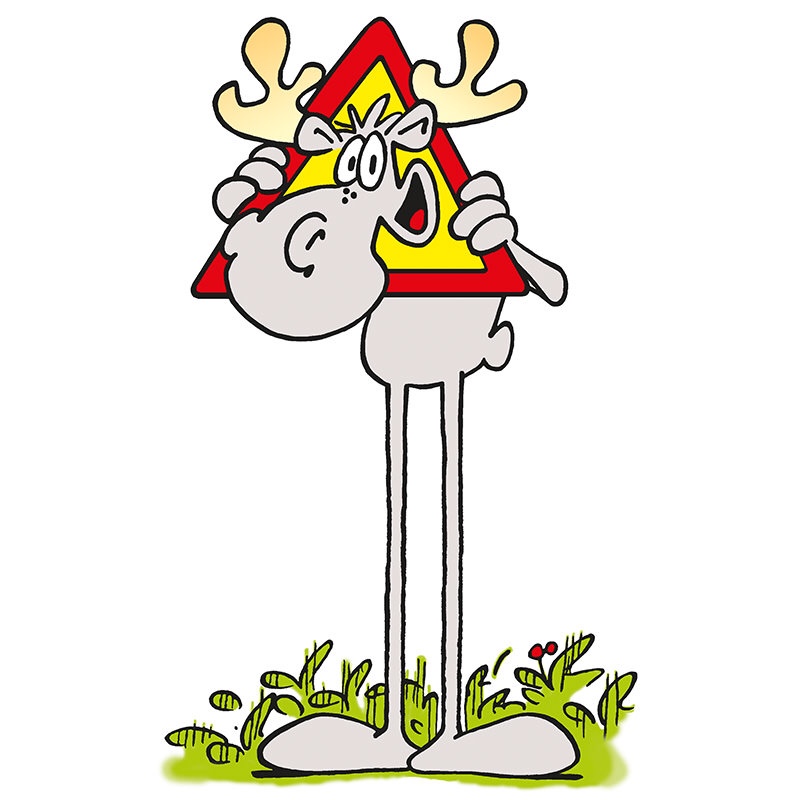
2) Hälge. A melancholy elk drawn by Lars Mortimer. Hälge is constantly on the run from Hunter Edwin and his dog Blixten, who he manages to outwit season after season.
3) Rocky. Cartoonist Martin Kellerman created this autobiographical character aimed at the adult reader. Rocky is a cool dog, the same age as Kellermann and is also a cartoonist. The character is philosophical, satirical and critical and has even been converted into theatre.
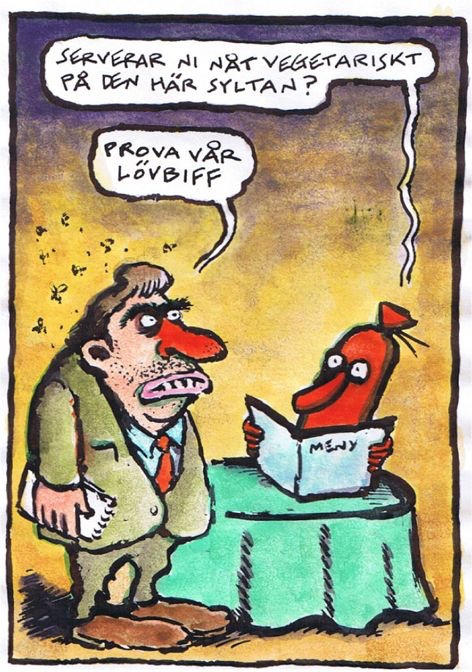
4. Assar. A satirical comic strip that appeared in Swedish newspaper DN, drawn by Ulf Lundqvist. Assar is a talking hot dog who has escaped the hot dog stand and lives in a depressed village populated with small-minded residents. Many of the later stories focused more on these residents than on Assar himself.
All of the examples are successful strips drawn by men. There are several acclaimed female cartoonists in Sweden also. Lena Ackebo and Nina Hemingsson are probably the most well known. Both are satirical cartoonists, with distinctive style. They draw a variety of players, and do not restrict themselves to portraying the antics of one particular named character.
Lena Ackebo cartoon Nina Hemingsson cartoon
What other Swedish cartoonists deserve a mention? Please let me know below!
In my local park, there is a little urban zoo where you can see goats, sheep, rabbits, hens and two portly pigs. The hog is called Lasse and the sow is called Maja. They are named after a man called Lasse-Maja – a legendary name in Swedish culture.
It struck me, however, that I’ve only really heard his name – I didn’t really know who he was. So I researched him. And I was met by a story that was fascinating and tragic in equal measure.
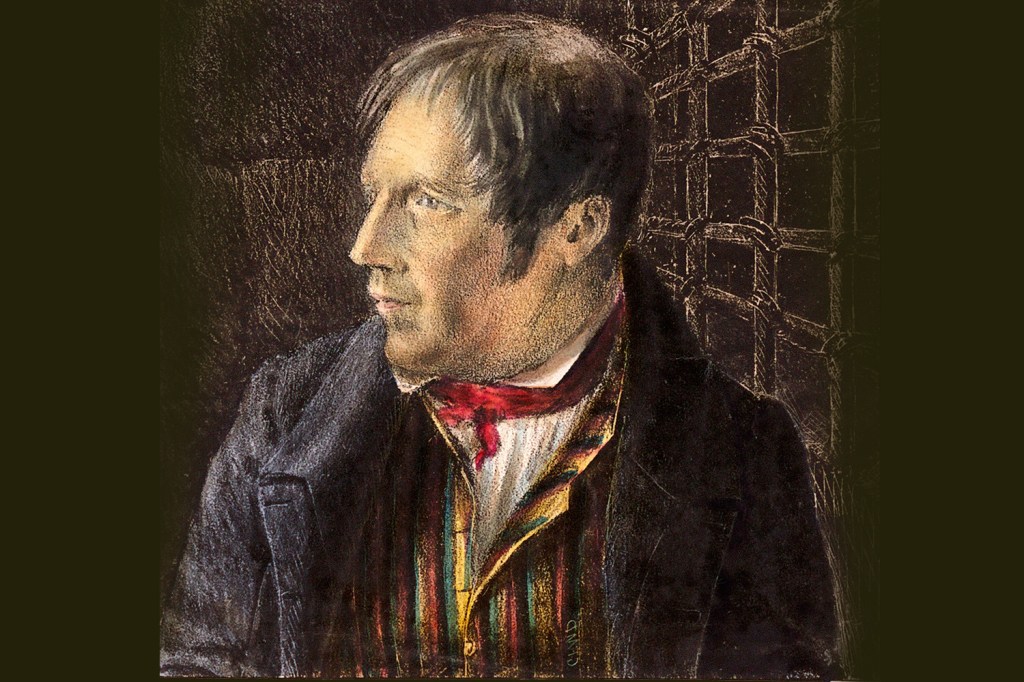
Lars Larsson, later Molin, was born in 1785, and went on to become one of Sweden’s most notorious criminals. He wrote a sensational autobiography about his escapades in 1833 and this book was extremely popular because it contained adventure and, not least, explicit sex scenes. It still continues to fascinate Swedes, with the latest publication coming out in 2016.
So, why the nickname Lasse-Maja? Lasse is a man’s name, and Maja is a female name. Well, he was given this gender-combined name because he periodically lived as a woman. He often dressed as a man when he committed his crimes, as it was more comfortable. However, he lived long periods as a woman and supported himself as a maid, housekeeper and prostitute. By today’s terms, he probably would have identified as transgender. His book is one of the few 19th Century works to describe the transgender experience, which added to its mystique and popularity. In this article, I will use the pronoun ‘he’ for ease.
Lasse-Maja’s life was one of poverty and misery. He was a serial liar and petty thief who was arrested over 30 times and frequently escaped. He became notorious amongst citizens and was written about in newspapers. However, in 1812 he stole silver from a church in Järfälla, just outside of Stockholm. He was captured, sentenced to life and shipped off to the fortress prison on the west coast island of Marstrand. He even managed to escape from this military building on one occasion, but was later caught and returned.
Lasse-Maja was an inventive and guileful person and quickly gained a position of privilege in the prison. He made sure that his reputation spread to the outside world, and convinced the authorities to arrange for tourists to visit him and hear his elaborate stories. His celebrity became so large that he was even given an audience by Crown Prince Oscar.
In 1839 he was pardoned, probably because of the popularity of his book. He traveled the country telling his stories and died in Arboga in 1845, where he is buried today. Several books and films depict his life, and in the fortress prison there is a plaque to commemorate him. He also has a walking trail, a skerry, a tv show, a pre-school and a hotel named after him.
Lasse-Maja would probably never have been remembered in Swedish culture if it wasn’t for the autobiography, the female clothing and his skill for self promotion. Popular culture depicts him as a happy-go-lucky, cheeky, lovable rogue. However, Lasse-Maja was no Robin Hood – the truth is that his life was extremely tough and without much joy. He lived a life of crime, deceit and despair.
Today, it is hard to really know Lasse-Maja’s truth. He was a first class liar, manipulator and fabulator. However, one thing is certain; Lasse-Maja holds the position of the most famous transperson in Swedish history.
This weekend is something called ‘Vårkollen’ in Sweden. Translated as ‘Spring Inventory’, or as I like to say ‘Springventory’, this is a research project organised by the Swedish Botanical Society in which they ask people up and down the country to check for specific signs of spring and report on what they see.
The project is carried out with the involvement of researchers at Sweden’s Agricultural University. The aim is to analyze how plants are affected by climate change. It is a citizen research project where thousands of volunteers from the general public report on the appearance and progression of coltsfoot, coltsfoot, willow, bird cherry and birch.
An example of something the project has unearthed is that the birch tree is budding 500km further north today than it did 100 years ago.
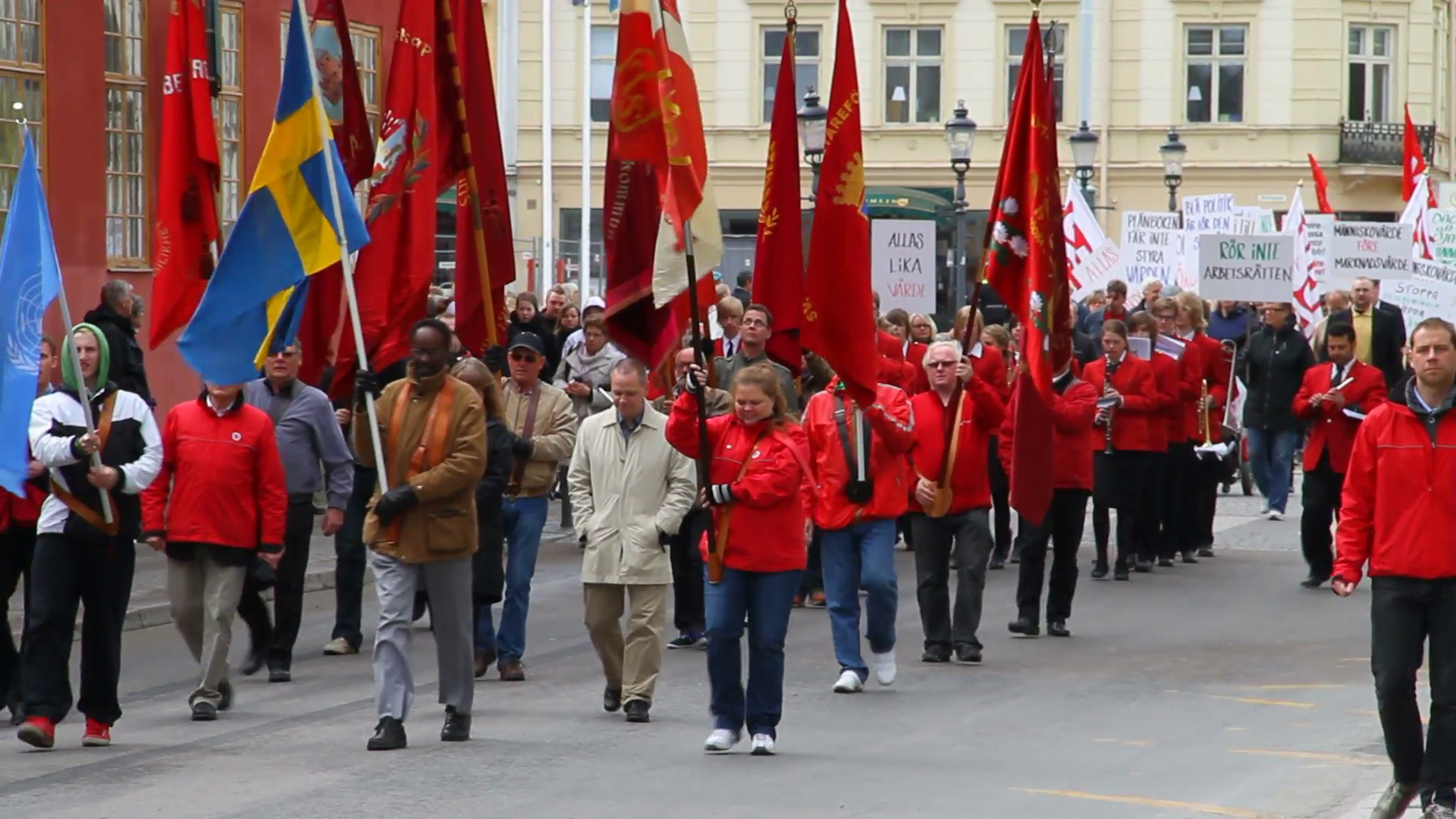
In Sweden, and in many other countries, May 1st has been embraced as the International Workers’ Day. In 1938, May 1st became Sweden’s first non-religious public holiday and has been an important celebration of labourers and the working classes since then.
But why specifically May 1st?
The answer is found in a massacre in the USA. On 1 May 1886, laborers in Chicago went out on strike for an 8 hour working day. On 4 May 1886, Chicago police and the demonstrators clashed and 11 people died. The event is called the Haymarket massacre. Seven of the demonstrators were sentenced to death, despite lack of evidence. To commemorate the massacre, the socialist organization suggested that 1 May should become day of demonstrations every year.
Around Sweden, traffic is shut off, huge flag-waving demonstrations are held and people gather to hear speeches from their politicians and representatives. Since the demonstrations are most commonly from the political left, the streets are awash with bright red flags and banners. However, this year, like 2020, is different. As large public gatherings are banned, the speeches are instead broadcast from a studio over Facebook and YouTube.
Contrary to the stereotype, not everybody in Sweden supports left wing political groups. Many Swedes lean towards the centre or the right. For them, today is just a day off work – an opportunity to perhaps nurse hangovers from the festivities of the previous evening or to relax, watch Netflix, go for a walk and enjoy the day.
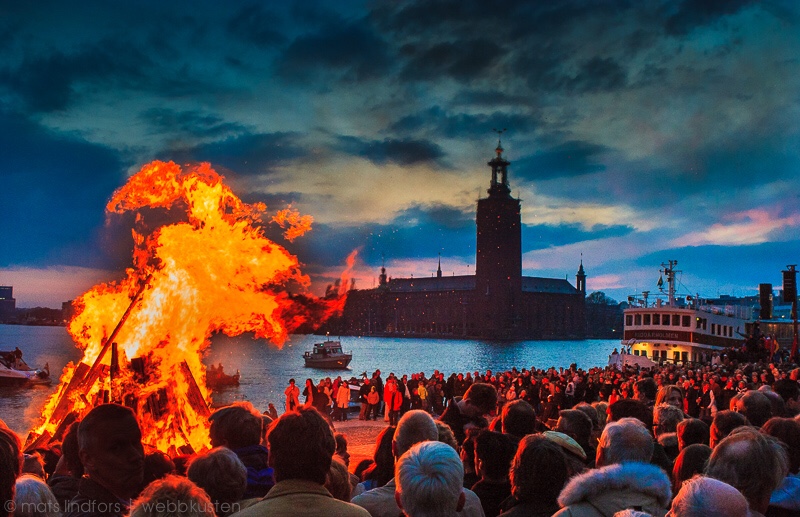
Today, 30 April, is Walpurgis Eve, called Valborgsmässoafton in Swedish. The name Walpurgis is taken from the eighth-century Saint Walburga, and in Sweden this day marks the arrival of spring.
On this evening, Swedes usually gather to celebrate together. This pandemic year is of course slightly different as crowds are not allowed.
The forms of celebration vary in different parts of the country and between different cities. Essential celebrations include lighting a large bonfire, listing to choirs singing traditional spring songs and a speech to honour the arrival of the spring season. Walpurgis bonfires are an impressive thing to see and are part of a Swedish tradition dating back to the early 18th century. At Walpurgis, cattle was put out to graze and bonfires lit to scare away predators.
The weather is often unpredictable on Walpurgis Eve. It can be sunny and warmish, or it can still snow on 30 April! Despite bad weather, Swedes still shiver around the bonfires and ironically celebrate the arrival of Spring.









 Watching the Swedes