Vasaloppet in Sweden – the world’s longest cross country ski race


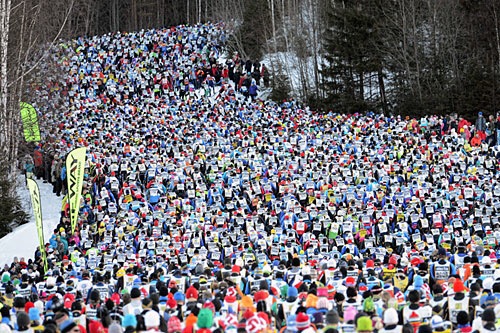
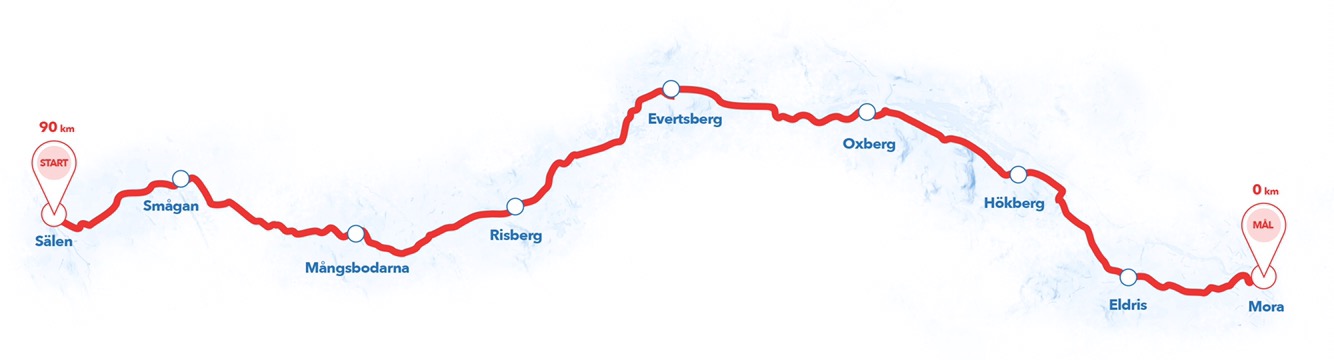
Tomorrow, the world’s longest cross country ski race takes place in Sweden. Called Vasaloppet, it entails participants skiing 90 kilometers from start to finish. It’s an extremely popular international race which is broadcast live on tv. When tickets to participate are released, they usually sell out in 15 minutes – it’s that popular.

The first Vasalopp was in 1922 and takes place annually, the first Sunday in March and it is a first sign of spring.  Normal participants can take up to 12 hours to complete the gruelling course, but the elite athletes do it in a comparatively speedy time of around 4 hours.

So why is this race called ‘Vasaloppet’? Well, it takes its name from a Swedish king. The race commemorates the escape to Norway, through the forest, of King Gustav Vasa in 1521. Legend has it that he carried out the long journey on skis,  but experts believe he more likely completed this escape on snow shoes. Nevertheless, out of this legend sprung the race which is so popular today. ‘Vasa’ after the king, and ‘loppet’ meaning ‘the race’.

Modern day skiers don’t see the experience as an escape, they see it as a challenge and for many of them it’s a rite of passage.

And as you sit watching the TV comfortably from the sofa, with tea and toast, you take vicarious pleasure in this long, amazing Swedish race.

It will be broadcast tomorrow from 7.30 on SVT ( Swedish TV). You can also check it out on the internet in the streaming service SVT Play.

It’s fatty Tuesday – Swedish style!

Today it’s ‘Fat Tuesday’ in Sweden, known as Shrove Tuesday or Mardi Gras around the world.

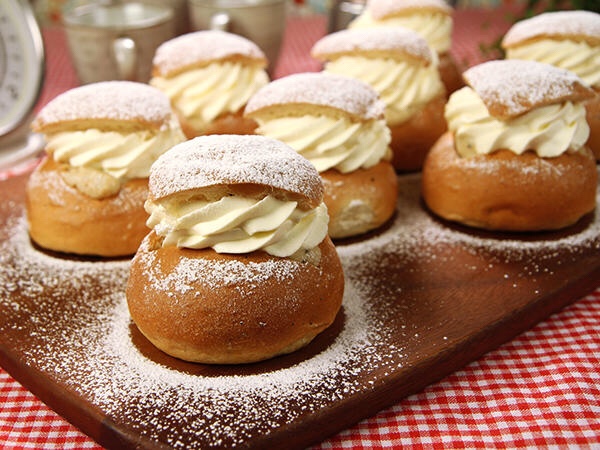
While in the UK we eat pancakes (today is even called Pancake Day) and in Latin America they scoff down fried bread, Swedes celebrate by eating the traditional cream Lent bun – the ‘semla’. 40 million of them every year! I’m also clearly going to indulge. In fact, my mouth is watering just writing this post.

The semla is a creamy bun filled with delicious almond paste. They were eaten traditionally in Sweden to commemorate the start of Lent and the great Fast, leading up to Easter. In the south of Sweden, they still refer to them as ‘fastlagsbullar’ – Shrovetide buns. Nowadays however, semlas are usually sold anytime between Christmas and Easter.

I just love them. I could eat a barrel load. But I’d end up looking like a barrel if I did. I love the taste of them, and the feeling of luxurious indulgence. I also love the knowledge that as you take a bite into a creamy semla, you are biting into over 500 years’ history of Scandinavian baking.

The word ‘semla’ comes from the Latin ‘simila’ which means fine flour and originally referred just to the bun without any filling. As long ago as the 1500’s, bakers started to hollow out the middle of the bun and fill it with cream and butter. As ingredients became more available, bakers started adding almond and cardemon and the type of semla that we know today developed towards the end of the 1800’s. After rationing of sugar and dairy products ceased at the end of WW2, the semla took off and became very popular.

Nowadays the semla trend has reached new heights. Every year bakers around the country try to launch new types of semla, with their own spin on it -for example, the semla wrap, the semla burger, the semla layer cake, the semla cocktail, semla ice cream, semla nachos, semla langos, the chocolate semla, the vanilla semla, the lactose-free, gluten-free vegan semla. Last year, the gross-sounding fermented Baltic herring semla was revealed.

But I’m a traditionalist in this matter. Give me a round fluffy cardemon-scented wheat bun brimming over with whipped cream and almond paste.

And give it to me NOOOOWWW!!!

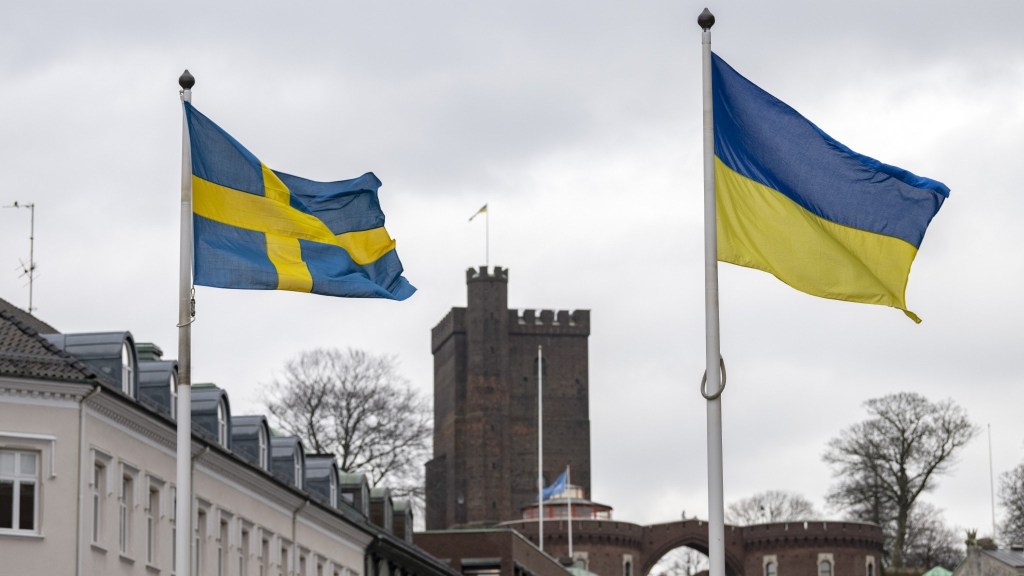
Sweden and Ukraine – Yellow and Blue

Because of the Russian invasion of Ukraine, many official buildings in Sweden are flying the Ukrainian flag in solidarity. The authorities want to show that Sweden stands side by side with Ukraine in their time of need.

The Ukrainian flag, like the Swedish flag, is yellow and blue. The Swedish flag is a yellow cross on a blue background. The Swedish flag was initiated in the early 1500’s and the yellow is said to represent gold and blue represent the sea. Sweden depicted itself as a wealthy sea-faring realm.

Psychologically, the blue represents justice, loyalty, truth, vigilance and perseverance. The yellow represents generosity.

The colours on the Ukrainian flag represent something else. The blue represents the sky, and the yellow represents the wheat fields that are so important to the country’s identity and economy. The flag was first hoisted in 1848.

On a psychological level , the yellow in the Ukrainian flag is said to represent joy and the blue represents calm.

I am sure we all hope that the people of Ukraine experience both again very soon.

Swedish Valentine – All Hearts’ Day’

Like many places around the world, Swedes celebrate Valentine’s Day today, on February 14th. Called ‘Alla Hjärtans Dag’ – All Hearts’ Day – it is a newish tradition that started around 50 years ago, but didn’t really gain traction until the 1990’s.

American influence and commercialization are often cited as the reasons for this. I also think that it’s a timing issue – the month of February is an otherwise boring time of year in Sweden. A little celebration is a small distraction from the tedium.

In Sweden, Valentine’s wishes are not only limited to love interests, but also extended to children, friends and even school teachers.

Romantically, the most common Valentine’s gifts are flowers, and treating your loved one to a nice dinner, in a restaurant or at home. Approximately 10 million red roses are sold around this day, which is huge considering the population is also 10 million.

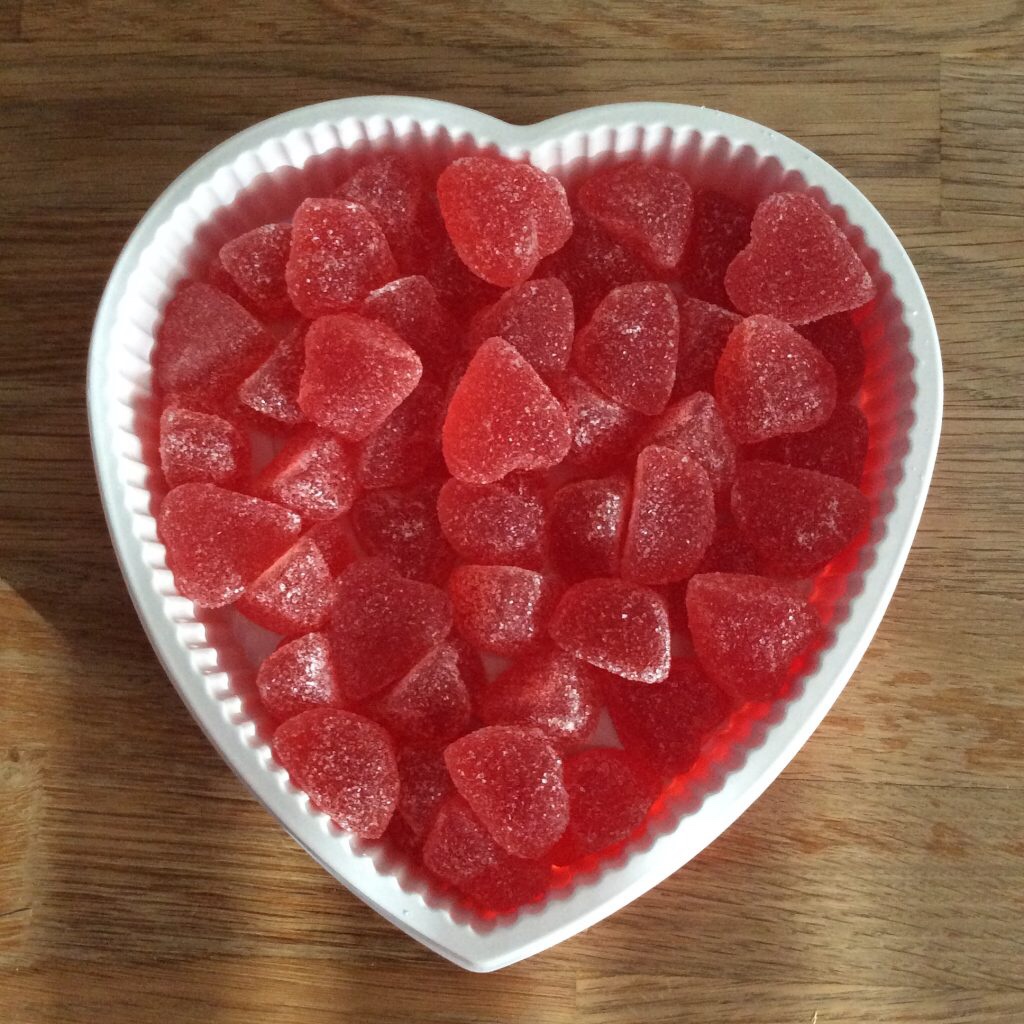
Heart-shaped candy is also popular, and in Sweden the most common is ‘jelly hearts’. Sales of chocolate and candy apparently increase by 90% every year around Valentine’s Day.

So, I might not have flowers or chocolates to give you, but I’d like to wish each of you a Happy Valentine’s Day. I appreciate that you want to read my writing, and in return I send you some loving energy. I hope you have love and affection in your life and that, now most Covid restrictions are lifted, you can celebrate with a long, warm hug!

Swedish ‘en’ or ‘ett’ – baked goods or a butt?

One of the difficult aspects of learning Swedish is knowing if the noun is prefaced with the indefinite article ‘ett’ or ‘en’. For example ‘a house’ is ‘ett hus’ but ‘a flat’ is ‘en lägenhet’. It’s important to know the difference as it affects the plural and the definite forms of the words. Mixing them up is a mistake many foreigners make, even after 20 years of living in Sweden. (guilty!).

About 20% of Swedish nouns are ‘ett’ nouns, so if in doubt guess ‘en’. However, it’s not that easy, as most of the commonly-used nouns begin with ‘ett’.

To add some spice to the pot, some nouns can be both ‘ett’ words and ‘en’ words, but the meaning of the word changes. Here are some examples:

Bak – ett bak is baked goods, but en bak is a butt/backside. So you see why the expression ‘I love grandma’s ‘bak’ can go very wrong!

Bål – ett bål is a bonfire but en bål is a torso or a punch (as in drink)

Barr – ett barr is a needle (eg from a pine tree), men en bar is a bar (gymnastics equipment)

Ton – ett ton is a tonne but en ton is a note (as in music)

Lag – ett lag is a team but en lag is a law or a syrup

Slam – ett slam is sludge but en slam is a term in a game of cards

Lager – ett lager is a layer but en lager is a lager (beer)

Vak – ett vak is a wake but en vak is a hole in ice

Klöver – ett klöver is a club (in playing cards) but en klöver is clover/shamrock

Poäng – ett poäng is point as in a score, but en poäng is point as in point of view

Nöt – ett nöt is an idiot, but en nöt is a nut (for example hazelnut)

Lår – ett lår is a thigh, but en lår is a crate

Can you think of any more examples to add to the list?

Huge Swedish demonstration against the vaccine pass

Yesterday, in central Stockholm and Gothenburg, a huge anti-vaccine pass demonstration took place. Thousands of people, assumed unvaccinated, crowded together in a public square and marched the streets.

One demonstrator was interviewed on tv and said ‘I want the right to my own body, I believe in freedom, I don’t want to be forced to take a vaccine’.

Last I checked, the vaccine was voluntary and nobody’s forcing anybody.

We have the freedom to do what we want: take the vaccine or don’t. I have had Covid and do not want to experience it again. So I choose to take the vaccine to protect myself from serious illness if I get re-infected. However, that is only a part of my choice. I also choose the vaccine to protect others in society, to try to reduce the spread of the virus and out of solidarity for our exhausted health care workers.

If somebody else does not want to get vaccinated, that is their liberty. They are in the minority in Sweden, at roughly 15%.

There is a confusion between pro- or anti-vaccine and supporting the existence of a vaccine pass. The demonstration seemed to mix up both issues. They are very different.

However, the ironic truth is that if more people got vaccinated, the fewer restrictions we would need. The more who are vaccinated, the less likely it is we need a vaccine pass.

Many people dismiss these demonstrators as ‘tin foil hatters’ – a pejorative term for people with paranoid, persecutory delusions. However, this diminishes an important and valid concern. The debate around vaccination really is a tricky one. There is a conflict between the right to make one’s own decisions over what happens to one’s body – versus the collective level of safety necessary to protect vulnerable people and the healthcare system. What we need to figure out is how to strike a balance between individual rights and the public good. The question is who’s rights weigh the strongest: a person denying a vaccine, or a vulnerable at-risk person who cannot take the vaccine?

I am sure most of us agree that safety is the basis of freedom. That’s why I see the vaccine pass as a temporary way to protect the public, while still enabling us as individuals to live a freer life.

It will hopefully enable us to protect ourselves and each other, and alleviate the burden carried by our health care workers. And it will hopefully lead to a quicker path out of the pandemic. For me, that is worth trading off against a small restriction on my personal rights.

Today is a Swedish squeeze day

Today is a ‘squeeze day’ in Sweden. What, you may wonder, is a squeeze day?

– It is not a day when everybody goes around hugging each other. Especially now during the pandemic.

– Nor is it a day when people pinch each other’s cheeks or rear ends.

– It is not either a day of drinking copious amounts of fresh citrus juice.

No, a ‘squeeze day’, or ‘klämdag’ in Swedish, is a day of the week that falls between a public holiday and a weekend.

In Sweden, when a public holiday occurs on a Tuesday or a Thursday, a common custom is to take the day between the holiday and the weekend as a day off. Sometimes this is subsidized by the employer. In English, this is called a ‘bridge day’ but in Swedish it’s cutely referred to as a ‘squeeze day’.

As yesterday (Thursday) was a public holiday, many people are also off work today.

Swedish Life Balance

It’s said that Swedes have an enviable work life balance and the festive season is no exception.

Similar to a few countries, today – 6 January – is a bank holiday. In Sweden it’s called ‘Trettondag jul’ which translates as ’13th day of Christmas’. In other places, it’s known as Kings’ day, Day of the three magi, or epiphany.

Biblically it signifies the arrival of the three wise men and the baptism of Jesus. Secularly, it means another day off for most people.

In Sweden, it is the official end of the Christmas season, although the Christmas tree and decorations might stay up for a little longer.

There’s a great Swedish word that you frequently hear after these long breaks – a person might describe themselves as ‘utvilad‘. This translates as ‘thoroughly rested’, and is essential to survive the long, dark winter season.

Advent Calendar – Dec 24: Kalle Anka

Window 24. As I am following the Swedish system of advent calendars, today is the last window, not the 25th as in the UK. So here is the final word: Kalle Anka. This is the Swedish name for Donald Duck – a Disney character with a strong, and unexpected, connection to Swedish Christmas.

Traditional Christmas celebrations on Christmas Eve in Sweden get off to a slow start usually. It all begins with a Christmas breakfast, consisting of rice porridge, wort bread, ham and Christmas cheese, amongst other things. After breakfast, some people go for a walk, some go to church, others begin the preparation for the Christmas julbord.

When to eat julbord differs from family to family. For some, it’s at lunch time, for others it more towards late afternoon. One surprising time marker is Kalle Anka (Donald Duck).

Every Christmas Eve since 1960, the Disney show ‘From All of Us to All of You’ featuring Donald Duck and his friends has been broadcasted on Swedish television at 3pm. Every single year. A very weird tradition for someone like me who grew up listening to the Queen’s speech on Christmas Day at 3pm. In the UK we have the Queen. In Sweden, Donald Duck.

So the discussion in Swedish homes is ‘should we eat before or after Kalle?’.

Today, Kalle Anka is watched as a sentimental tradition, or as background noise on Christmas Eve. But in the 1960’s when it began, it was the only time of the year that cartoons were shown on tv, so it was a Christmas treat. Since it’s been broadcast for almost 60 years, it is an integral part of what many Swedes associate with Christmas.

After Kalle Anka och julbord, it’s time for a visit from Tomten with gift-giving. This is followed usually by more food and drink. Some people conclude the day with a Midnight service at their local church.

Christmas is, like many places around the world, a time of overconsumption. Enormous amounts of food are left over and eaten during the following days.

In Sweden, Christmas Day and Boxing Day are both Public holidays – and the official end of Christmas is January 13th. Then it is time to traditionally throw out the Christmas tree. The lights in the windows have usually disappeared by February.

And as the daylight slowly returns to Sweden, people start planning for the lighter and warmer time of the year. And Christmas fades into memory…until next December.

Advent Calendar – Dec 23: Dan före dopparedan

Window 23. Today’s words are ‘Dan före dopparedan‘ – which translate somewhat curiously as ‘the day before dipping day’. Or, the day before Christmas.

I always thought that the name ‘dopparedan’ (dipping day) for Christmas Eve was somehow a reference to John the Baptist.

But I was wrong.

It actually comes from the Medieval Swedish tradition of dipping and drenching bread in the stock juices in which the Christmas ham has cooked, and eating it.

This traditional practice is called ‘dopp i grytan’ and originated in agricultural communities. People dipped their bread as a little snack while they made final preparations for the celebrations later in the evening. Some people still do this today.

Because Christmas Eve was called ‘dopparedagen’, the 23rd Dec became known as ‘dan före dopparedan’ – the day before the day of dipping bread.

Today’s ‘dan före dopparedan’ is more to do with making the final stressful arrangements for tomorrow. Final baking is done, last-minute Christmas presents are bought, a visit to Systembolaget (alcohol shop) is made. Long queues are to be expected.

And then, darkness and calmness descends over houses and homes all around the country. The evening before Christmas Eve is called ‘uppersittarkväll’ and Swedish families traditionally gather to wrap presents, play tv bingo, play games and write Christmas present rhymes.

It is also the evening when traditionally people put up final decorations and dress the Christmas tree, although this happens earlier for many families.

Once everything is finalized, hopefully there is a moment of relaxation to be had with a glass of warm glögg and a pepparkaka.

And then, it’s time to head off to bed in anticipation for the big day tomorrow – dipping day!