When Norway became free from Sweden

Today, 17 May, is National Day in Norway. Known as ‘Syttende mai’, it is the day on which Norwegians celebrate the signing of their constitution in 1814. The constitution was signed in an attempt to declare independence and avoid ratification with Sweden. But it failed. Norway was forced into an unwilling union with Sweden and ruled under the same monarch with two capitals – Stockholm and Christiania (Oslo). It wasn’t until 1905 that Norway finally gained independence and the forced union with Sweden was peacefully dissolved.

Since then, Norway is fiercely and proudly their own. 17 May is a huge, patriotic party consisting of concerts, parades and parties.

Today, the relationship between Sweden and Norway is very friendly. The Kings of each country are second cousins. Free trade and transportation exists across the seamless border. The main rivalry between the countries appears to come in the competitive world of cross country skiing, where Norwegian athletes dominate.

As a hangover from the times when Sweden saw Norway as their country cousins, there are a lot of jokes mocking Norwegians. In all of these jokes, Norwegians come off as stupid and simple. When I looked further into it, I discovered that the same exists the other way round. In many Norwegian jokes, known as ‘svenskevitser’, Swedes are depicted as stupid or as spectacular failures. It is not untypical that these kinds of jokes exist between neighbouring countries – English jokes about the Irish, Welsh and Scottish being another example.

Equivalent to the ‘Englishman, Irishman and Scotsman’ jokes, Norway also has its ‘the Swede, the Dane and the Norwegian’ jokes. In these jokes, the Dane is usually drunk, the Swede stupid and the Norwegian smart. Here’s an example:

A Swede, a Norwegian and a Dane were arrested in France during the French revolution. They each got to choose which way they would die. The Norwegian chose the guillotine, because he saw it as the latest fashion. His head went under, but the blade stopped 1 inch from his neck. The French saw this as a sign from God or something and decided to let him go. The same thing happened to the Dane who ran off into the nearest tavern to celebrate. Then they asked the Swede how he wanted to die. “I think I’ll die by hanging, that guillotine doesn’t work anyway,” he said.’

So, regardless of who might be considered stupid, today is a day to celebrate Norway! May you have a long and prosperous existence, and may you continue to live in peaceful, slightly ridiculing, co-existence with your neighbours.

Happy Syttende Mai!
May 1st in Sweden – a day of solidarity

I have recently been reminiscing a lot about my University days. Not sure why. Maybe it’s the self isolation that makes us dig deeper, and further back. Old faces and forgotten names have popped into my head – Ginger Bill, Gertie the Goth, Posh Sarah, and her with the dislocating knees. Something Peacock, I believe.

Anyway, I was actually in touch with an old friend yesterday – Bob from Yorkshire – a person I probably haven’t physically met since 1988. Concerned about the state of affairs in the UK, he mentioned that he follows my writing and enjoys reading about Sweden. He found it ‘reassuring’ to know that ‘some places in the world still hold a candle, however small, to a more egalitarian future’.

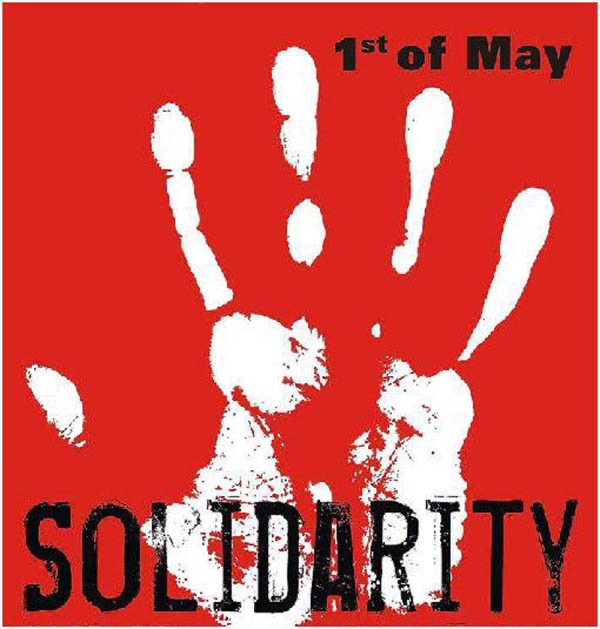
In fact, never has this comment been more relevant than today – May 1st. In Sweden, and in many other countries, May 1st has been embraced as the International Workers’ Day. In 1938, May 1st became Sweden’s first non-religious public holiday and has been an important celebration of class equality, labourers and the working classes since then.

Usually, around Sweden, traffic is shut off, huge flag-waving demonstrations are held and people gather to hear speeches from their politicians and representatives – most commonly from the political left. However, these are corona times and all demonstrations and large gatherings are banned.

So this year will be different. Instead of seeing the politicians on the streets, they are coming onto our screens. For example, at 11am, Swedish Prime Minister Stefan Löfven, will be broadcasting his May 1st speech to the nation over Facebook and You Tube. As a Social Democrat, he will apparently talk about what kind of society Sweden should be. I’m sure it’s going to be right up Bob’s alley.

So let’s celebrate together, separately. Remember to stay home, avoid crowds and wash your hands. This is a day for solidarity. As a wise man once said, we might not be in the same boat, but we are all in the same storm.

Happy May the first!


Welcome the spring in Sweden – wherever you are.

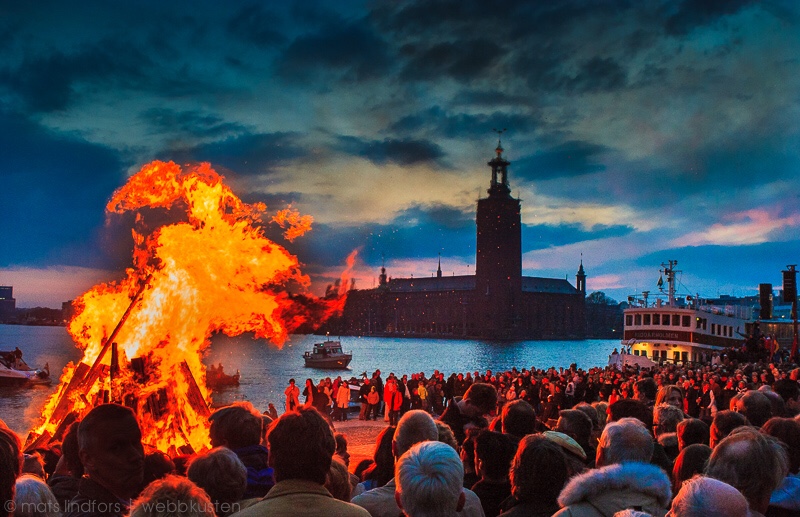
Tomorrow, 30 April, is Walpurgis Eve, called Valborgsmässoafton in Swedish. The name Walpurgis is taken from the eighth-century Saint Walburga, and in Sweden this day marks the arrival of spring.

On this evening, Swedes normally gather to celebrate together. The forms of celebration vary in different parts of the country and between different cities. Essential celebrations include lighting a large bonfire, listing to choirs singing traditional spring songs and a speech to honour the arrival of the spring season.

Walpurgis bonfires are an impressive thing to see and are part of a Swedish tradition dating back to the early 18th century. At Walpurgis, cattle was put out to graze and bonfires lit to scare away predators.

This year however is very different from normal, thanks to Covid-19. Official celebrations have been cancelled and informal gatherings have been banned. Some of the official celebrations are being still carried out, without large groups of revellers, and are being broadcast via social media. This is a great opportunity for anyone to participate in a bit of classic Swedish culture and tradition.

If you are interested in witnessing this, go to http://www.confidencen.se/kalendarium

This is the site for events at Ulriksdal’s Palace. They will live stream their Walpurgis event tomorrow at 7pm. (Valborgsmässokonsert). The youtube link will be put up on this site just before 7.

I fully intend to watch it. Hope to see you there!

Swedish expression: Life on a stick

The expression ‘life on a stick’ – (livet på en pinne)- is used in Swedish to describe a care-free, wonderful life. In the mind of the modern Swede, it conjures up images of, for example, lying on the beach, or floating in the lake, or partying and eating favourite food, or chilling with a beer in the sunset.

The expression is epitomised in a song released by a TV personality called Edward Blom with the name ‘Livet på en pinne’. It includes lyrics such as:

Livet på en pinne
Göra var dag till en fest
Ta varje liten chans du får och njut
Minut för minut, livet på en pinne
Nåt för varje sinne
Ja, låt ditt välbehag få blomma ut’

This translates roughly as:

Life on a stick, make every day a party, take every little opportunity you have to enjoy, minute for minute, life on a stick, something for every sense, yes let your contentment blossom.

So, where does this expression ‘life on a stick’ come from?

There are a few different theories, including a traveling hobo with his possessions in a cloth hung on a stick, and a hygrometer measuring humidity and expansion of a stick. The expression dates from the 1800’s and probably has a more rural origin.

One theory is that the expression relates to birds sitting on a branch in a tree, living a seemingly unfettered life. Another theory is to do with hens.

In the 1800’s in the countryside, many people kept hens and each farm had a hen house. The hen house was stuffed full with hay and sticks and the birds sat there and had a comfortable and carefree existence. While the farmers and their other animals toiled hard, the hens simply enjoyed their life on a stick.

The Swedish Easter egg

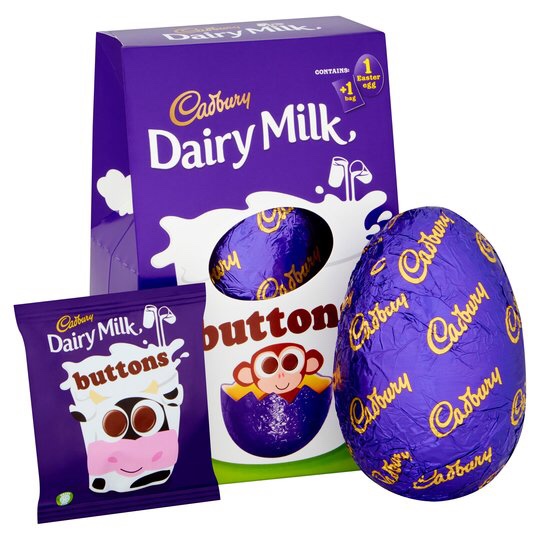
In the UK, Easter eggs are usually bought ready-made. The big egg is itself made of chocolate, and inside is a small bag of more chocolates. It is wrapped in colourful packaging, and marketed around a particular brand of chocolate such as Maltesers, or Buttons or Dairy Milk.

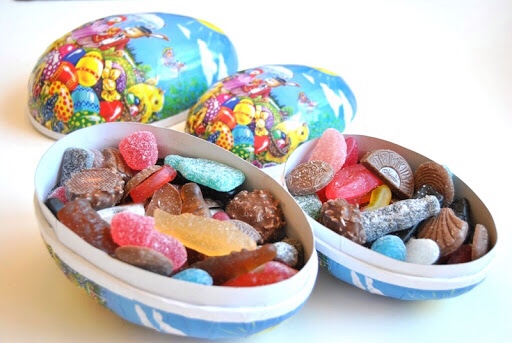
For me that was what an Easter egg liked like. Until I moved to Sweden. Here, Easter eggs look quite different. The Swedish egg is usually an inedible cardboard egg, emblazoned with colourful Easter motifs. It can also be made of tin or porcelain. So, the egg itself is also the packaging. Inside the egg, is pick ‘n’ mix, usually consisting of a few candied eggs and other well-chosen sweets such as cola bottles, sour dummies and fudge. This style of Easter egg was actually also popular in the UK around the reign of Queen Victoria.

Giving Easter eggs as gifts in Sweden became popular in the 1800’s and was facilitated by the paper-making industry. Although decorating eggs dates further back, to the 1600’s, when Swedes would paint eggs to celebrate the spring.

Whatever the type of egg the Easter bunny brings you this year, I hope you enjoy it!

Happy Easter!

What is Sweden’s ‘Tranquil Week’ ?

There is an irony to the fact that we are socially distancing, quarantining and home working specifically during this week. In Swedish, this week is called ‘Stilla Veckan’ – which literally translates as ‘tranquil week’ or ’quiet week’.

‘Stilla Veckan’ is a term in the Swedish church calendar to describe the week leading up to Easter – the last week of Lent. In English, we call it Holy Week.

Every day in ‘Stilla Veckan’ has a name. Holy Saturday is called ’Påskafton’ in Swedish, which translates as Easter Eve. Do you know what the Sunday, Monday, Tuesday, Wednesday, Thursday and Friday leading up to Easter are called?

The Sunday before Easter is called ’Palmsöndag’ – Palm Sunday in English. According to scripture, it commemorates Jesus’ triumphant arrival into Jerusalem. The crowds threw palm branches in front of him as he approached.

The Monday before Easter is called Blå Måndag – Blue Monday. It can also be called ‘Svart Måndag’, (Black Monday), ’Bullmåndag’ (Bun Monday), ’Fläskmåndag’ (Pork Monday) and ’Korvmåndag’ (Sausage Monday). It is called a predictable Holy Monday in English.

The Tuesday before Easter is called ‘Vittisdagen’ (White Tuesday). This is called Holy Tuesday in English.

Both Blue Monday and White Tuesday were originally used to describe the Monday and Tuesday before Lent begins in Ash Wednesday. At some point in history, they were moved colloquially to describe the Monday and Tuesday before Easter instead. Blue Monday refers to the colour that church rooms were painted on this day. White Tuesday is an old name for Shrove Tuesday, Fettisdag in Swedish, and probably refers to the flour that was used to make the Lent buns.

The Wednesday before Easter is, unsurprisingly, called Holy Wednesday in English. However, in Swedish it had the fascinating name ‘Dymmelonsdag’. This literally translates as ‘Clapper Wednesday’. The clapper that this is referring to is a wooden clapper that was traditionally put inside the church bells on this day so that the chimes would have a more subdued sound during Easter weekend.

The Thursday before Easter is called ‘Skärtorsdag’ in Swedish. This translates as ‘Clean Thursday’ and refers to the ritual of Jesus washing the feet of the disciples before the Last Supper. In English, this day is called Maundy Thursday.

And finally, the Friday before Holy Saturday is called Good Friday in English. This is derived from an obsolete meaning of the word good as being holy. In Old English, this day was called Long Friday, which is the name that was adopted in Swedish – ‘Långfredag’.

The Swedish King and the British Queen

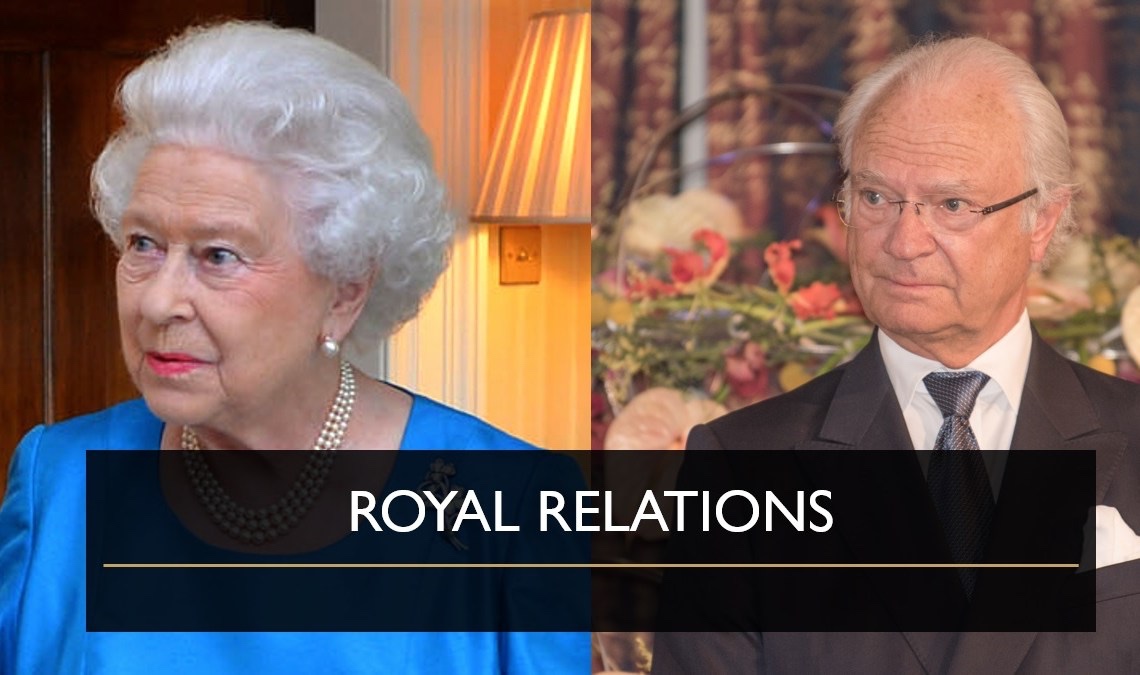
Both Sweden and the UK have reigning monarchs. The UK’s has Queen Elisabeth II and Sweden has King Carl Gustaf XVI. Like most of the European monarchs, they are related to each other. King Carl Gustaf is a descendent of the UK’s Queen Victoria, making him and Queen Elisabeth third cousins.

The other evening, they both gave a speech to their respective nations in regards to the corona pandemic. And they were like chalk and cheese.

I first watched the Swedish King’s speech. This bumbling, friendly man stumbled his way through his speech. Heavily dependent on his paper notes, he sounded a bit robotic to me. A friend of mine said it was like watching a trained chimp. Don’t get me wrong, I like the Swedish King. He seems like a nice man. But as a father of the nation in times of crisis, he missed the mark for me.

Then I watched the British Queen. This imperturbable woman, looking straight into that camera, embodied calm and credibility. In her typical restrained manner, her speech had depth and meaning, and her words were truly comforting in a crisis – from the nation’s mother.

I reflected over the two speeches, and why my reaction was so different. Part of it was definitely influenced by the delivery of the speech. The Queen used an auto prompt which enabled her to look into the camera, straight into the living rooms of her subjects. The King also looked into the camera but read from paper notes, meaning he frequently lost vital connection with his audience. The Queen spoke fluently, the King, who has dyslexia, struggled through his speech. The Queen looked dignified and prepared. The King looked like a stunned uncle who has unexpectedly been called upon to deliver a speech at a funeral.

However, I think the main difference for me lies in the cultural value of language. Even though I can speak Swedish, King Carl Gustaf’s words did not resonate with me. I understood him but was not moved by him. His words hit me in the brain, but not the heart. In comparison, English is my mother tongue, my native language. I have a more emotional relationship to English. When words of gravitas are spoken in my native language, I experience them with depth and fullness.

This really surprises me. I’ve been in Sweden over 25 years, I speak Swedish on a daily basis, and many of my relationships are in Swedish only. Yet in times of crisis and seriousness, words in my first language cut through Swedish like a knife through butter. It goes to show the mark that our first language leaves on us – our language of feeling. This is the language that indelibly forms our emotional cultural identity.

The colourful Swedish Easter tree

With Easter approaching, Swedes start pimping their homes. Yellow table cloths, yellow curtains and yellow tulips are common, as is something called a ‘påskris’. Pronounced ‘poskrees’, this is a Swedish Easter tree.

The Easter tree is a bunch of twigs and sticks (usually birch) in a vase with brightly coloured feathers attached to the ends. Some people also hang decorated eggs, colourful ribbons or festive chickens. The Easter tree can be seen all over the country this time of year. Outside shop entrances, in peoples’ living rooms, outdoors in the neighbours’ gardens. It is a very popular decoration, probably because it brings colour at a time of the year when most flowers haven’t yet bloomed in Sweden.

The Easter tree is an interesting cultural phenomena. In fact, all products of a society are. This is because they originate somewhere and, often, we have forgotten the origin but still maintain the product or behaviour.

What’s the origin and symbolism of the Easter tree then?

Well, some Swedes say that it symbolises the wiping away of the winter. The twigs represent a broom and the feathers get caught in the broom as we sweep.

Others say that it represents witchcraft. The twigs represent a witch’s broomstick and the feathers indicate flight. This could also be why Swedish kids dress up as witches at Easter and do a kind of ‘trick or treating’ for Easter eggs.

But, apparently the Easter tree has a completely different origin and symbolism. It dates from the 1600’s. Swedish people at this time were more pious, and used to take twigs and sticks and beat each other with on Good Friday – to commemorate the suffering of Jesus. In the 1800’s and 1900’s, they started to be decorated and became a symbolic decoration for Easter.

So, wiping, witching or whipping. Who would have thought the colourful Easter tree would have such a colourful history?

Sweden’s ‘Vasalopp’ – the world’s longest cross-country ski race.

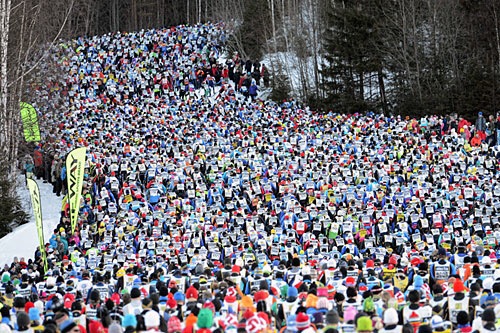
Today, the world’s longest cross country ski race takes place in Sweden. It was, this year, touch and go if it would actually happen, as there wasn’t much snow on the ground. But at 8.00 this morning the race began.

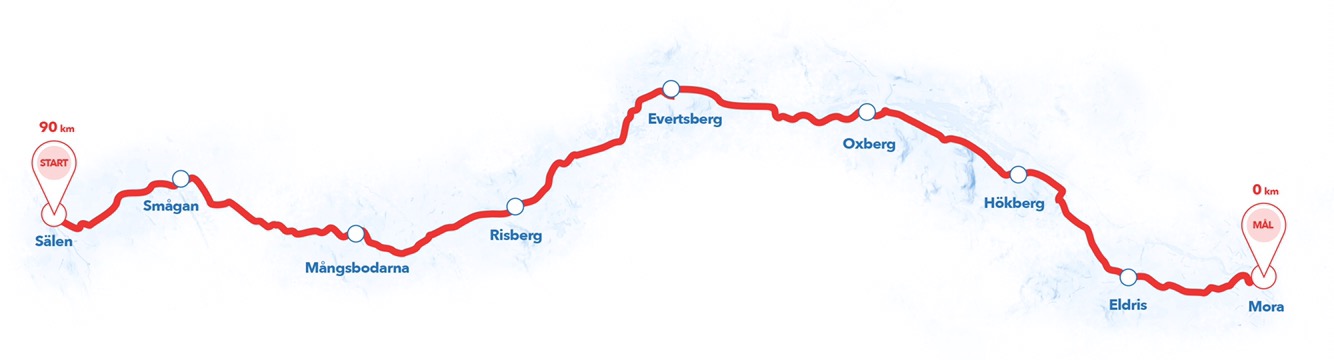
Called Vasaloppet, the race entails participants skiing 90 kilometers from start to finish. It’s an extremely popular international event, which can take up to 12 hours to complete, and which is broadcast live on tv. When tickets to participate are released, they sell out in 15 minutes – it’s that popular.

The first Vasalopp was in 1922 and it takes place annually, the first Sunday in March and it is a first sign of spring. It’s an amazing sight to watch, as more than 15000 mad, happy skiers glide along, the swishing sound of ski on snow filling the air. For the elite athletes, 12 hours to complete the race is of course unthinkable. They go considerably faster. The person who has completed the race fastest is Jörgen Brink, who in 2012 won the race in just over 3 hours 40 minutes, roughly 25 km per hour.

So why is this race called the Vasalopp? Well, it takes its name from a Swedish king. The race commemorates the escape to Norway, through the forest, of King Gustav Vasa in 1521. Legend has it that he carried out the gruelling journey on skis, but experts believe he more likely completed this escape on snow shoes. Nevertheless, out of this legend sprung the race which is so popular today.

Modern day skiers don’t see the experience as an escape, they see it as a challenge and for many of them it’s a rite of passage. And as you sit watching the TV comfortably from the sofa, under a duvet, with tea and toast, you take vicarious pleasure in this long, amazing Swedish race.

English Leap Day and Swedish ‘Skott’ Day

2020 is a leap year, and today 29 February is Leap Day. In Swedish, leap year is called ‘skottår’ and Leap Day is ’skottdag’.

So, why ‘skott’? And why indeed ‘leap’? Well, the English word refers to the fact that the extra day in February means we leap over a day for the rest of the year. For example, the 1st March would have been a Saturday, but because of the leap day, it is now a Sunday.

What about the Swedish word ‘skott’? Well, it has nothing to do with Scotland. Nor does it mean ‘leap.’ The word ‘skott’ originally means ‘inserted in between’. So ‘skottdag’ is literally an extra day inserted in between two other days.

An interesting fact, those born on 29 February are called leaplings in English, and there are about 4,000,000 of them in the world!