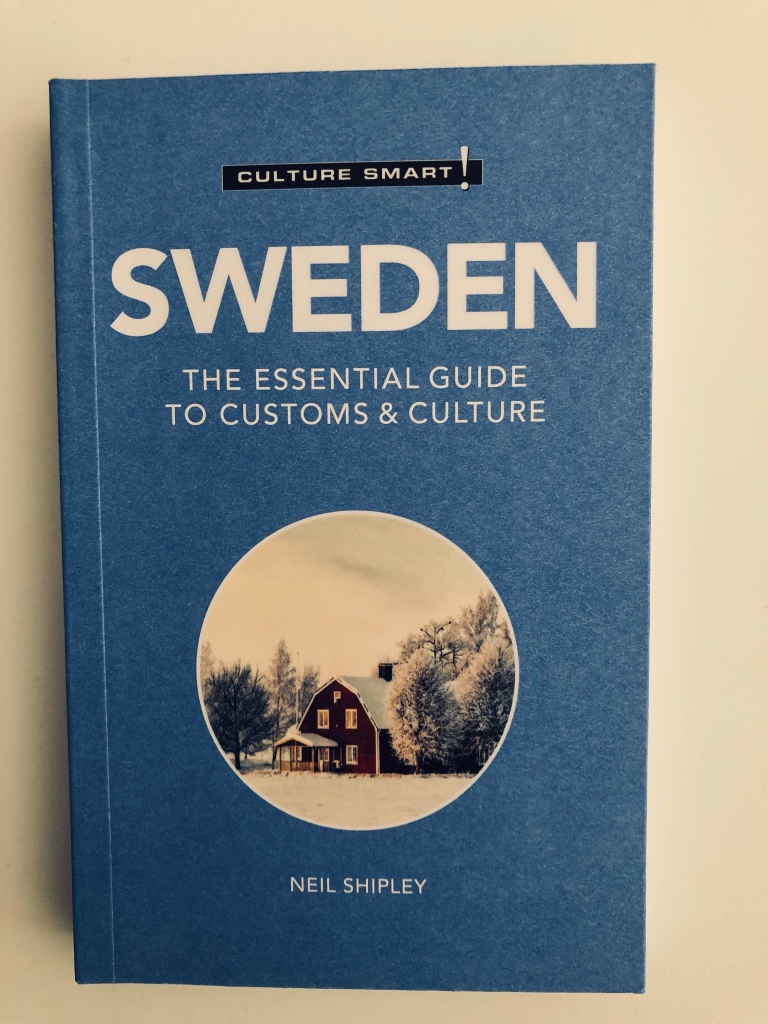
In 2020, I was approached by the publishers behind the respected Culture Smart series to see if I would write a book about Swedish culture. I accepted and, finally, it is here! I am proud to join their staff of authors! Available soon to buy on Amazon, or via me. Just pm me if you’d like a copy. Today’s a good day!!!
Hooked on the drama series Vikings, I am ploughing through all six seasons. The story follows the saga of legendary Vikings, who invaded the UK and continental Europe around 850 AD. The Vikings are portrayed as blood-thirsty, fame-thirsty, plunder-thirsty warriors coming from what today is Norway, Denmark and Sweden.
The Vikings first point of landing in the UK was on the island of Lindisfarne, close to where I am originally from in north east England. The visit resulted in devastation for the undefended locals. For me, this story has led to a lifelong fascination.
The many Viking raids on the UK spanned over 300 years, which meant that they left more behind them than just destruction and conquest. They also left language.
A lot of the words used in mainstream English today stem from old Norse. Even more exist in local colloquial language in Yorkshire and along the east coast. Some of these words are recognizable in the modern day Nordic languages. Here are 15 examples:
Berserk – from berserkr – meaning ‘bear shirt’ and depicting a jacked-up warrior who went into battle wearing nothing but an animal skin.
Cake – from kaka – meaning cake, biscuit
Happy – from happ – meaning good luck
Hell – from Hel, Loki’s daughter and ruler of the underworld
Husband – from hus bondi – meaning house occupier
Lad – from ladd – meaning young man
Loan – from lán – meaning to lend
Plough – from plogr – meaning to till the earth
Ransack – from ransaka – meaning to search a house
Run – from renna – to run
Skin – from skinn – meaning animal hide
Slaughter – from slatra – meaning to butcher
Thursday – from torsdagr – meaning Thor’s day
Ugly – from uggligr – meaning dreadful
Window – from vindauga – meaning ‘wind eye’
Words like knife, egg, scales, call, get, give, race, take, seem are all originally from Old Norse. The Vikings certainly had a massive influence on the English language.
What other words do you know that stem from Old Norse?
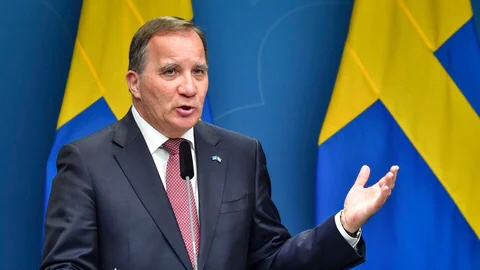
The leader of the Swedish Moderate party aims to win the next election. To do this, he is taking further steps to the right to appeal to the conservative and nationalistic trend that is currently sweeping the country. It is his only way to grab the power he so desperately craves. This little man, with big ambition. In his most recent speech, he said that ‘immigration has become a burden for Sweden’.
What he really means is that immigrants have become a burden. Human beings. He isn’t talking about immigrants like his three adopted daughters from China. Oh no, they are raised as ‘proper Swedes’.
He isn’t either talking about white, privileged European immigrants like myself. Oh no, he’s referring to dark-skinned people, many who have had to fight for their survival, and who come to this country with nothing. According to him, it is these people of colour that are dragging the country down.
That is what he means. Make no mistake.
Racism, nationalism and fear are rapidly on the rise in Sweden, fueled by the lies of politicians like this man. His facts are wrong and his rhetoric exaggerated. Immigration is actually at an all time low in Sweden. The country currently has the strictest immigration laws it has ever had. But still this man and these ideas are gaining traction.
His party, and his right-wing lackies, supported by the media, have succeeded in associating Sweden’s current ills with immigrants: economic imbalance, crime, security. ‘Immigrant as criminal’ is not a new argument, it is a successful argument that echoes from our not-so-distant European history. It doesn’t seem to matter that it’s misleading and incorrect.
We humans seem to always want a scapegoat. This concept comes from the Bible’s Leviticus, in which a goat is designated to be cast out into the desert to carry away the sins of the community. Scapegoating can be traced as far back as the 24th century BC. We think we are so advanced in Sweden but we are not. We still fall for the lies of charismatic politicians and we still look for easy scapegoats. Blaming all the immigrants is the predictable option. A casebook example.
On Facebook, there is a group called ‘Nysvenskar i Sverige’ (New Swedes in Sweden). I urge you to join it. It is a refreshing counterbalance to the veiled xenophobia in main stream media and politics. The group is full of people who have moved to Sweden and who are telling their stories. Each person demonstrates how they are an asset to this country, and far from a burden on society. They work, they pay taxes to the Swedish state and they contribute. They end their texts with ‘I am not a burden’.
There are also Swedish-born people in the group. One person called Anna writes this:
I am plus 40 and was born in Sweden to Swedish parents. I have previously been unemployed for 6 months, I have been on sick leave due to cancer, several times. I have used the health care system to its max. I have three kids, all in state subsidized school. We receive parental benefit. Need I go on? NO!
I do not have to prove that I am a burden on society. Why should I also have to prove I am an asset? No. A handful of people have the need to call people a burden. We are ALL a ‘burden’ more than once in our lives. It is the blend of everything that makes us people. Nationality has nothing to do with how you are as a human. Those who think otherwise should educate themselves and go out into the world. Sincerely, A Human. Who happened to be born in Sweden.
I couldn’t have said it better myself.
Please share this post. Please join the FB group. Please make your voice heard.
A Swedish word you often hear this time of year is ‘högsommartemperaturer’. You hear it on the tv, radio, and read it in the newspapers. Literally translated, it means ‘high summer temperatures’. It is used in weather forecasts to describe the hot sunny days and evenings that we experience this time of year.
This is also a great example of Swedish language structure. Putting separate words together, in this case ‘hög’, ‘sommar’ and ‘temperaturer’ to form a longer word. This is one of the reasons why Swedish words often seem inscrutable to the foreign eye. It also means that Swedish words can sometimes get very long.
According to the Guinness Book of Records, the longest Swedish word is:
Scary to read, huh? Well, try saying it. It translates as something like “Coast artillery flight searching simulator area material maintaining follow-up system discussion preparation tasks planning of the Northern Baltic Sea”. Still doesn’t really make sense even when separated into individual words!
By the way, did you know that the fear of long words is called ‘hippopotomonstrosesquipedaliophobia’? Now that’s ironic isn’t it?
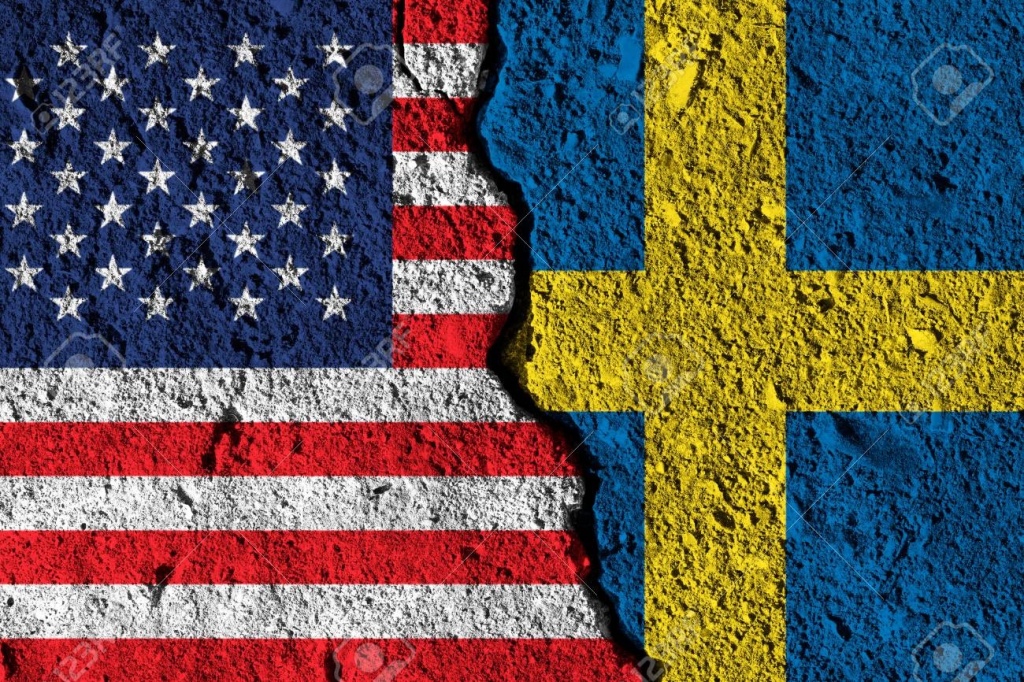
Happy 4th July – Independence Day in the USA! Since 1776, Americans have been celebrating this day as the day they gained independence from Great Britain. Since 1938, it has been a paid public holiday. This got me thinking about the relationship between Sweden and the USA.
According to Statistics Sweden, there are approximately 49,000 American citizens living in Sweden. I know 6 of them – Lynn, Alex, Ruthie, Scott, Brian and Chris. The majority of Americans in Sweden live in the bigger cities of Stockholm and Gothenburg. There are various groups and societies to bring Americans together, such as the Swedish American Chamber of Commerce and The American Women’s Club.
Sweden and America have a long political relationship, with Sweden being the second country, after France, to officially acknowledge America’s independence in the 1700’s. Since then, the relationship has been smooth, with a couple of hiccups during the presidencies of Olof Palme and later Donald Trump. Today, the USA is Sweden’s third largest trade partner, and American-owned companies make up the largest number of foreign companies in Sweden.
Many Americans have family ties to Sweden due to the mass emigration of Swedes to the USA in 1885-1912. In fact, this is such a significant part of Sweden’s history that there is a tv program called ‘Allt för Sverige’ which helps Americans trace their Swedish Ancestry.
At the end of the 19th century 1.3 million Swedes fled famine and persecution in Sweden for a new life in the USA. This was a third of the population at the time. These Swedish Americans were mostly of Lutheran faith and settled primarily in the Mid West.
Prior to this, in 1638, the first Swedish settlers founded New Sweden, around Delaware. It only lasted 17 years before being absorbed into New Netherland and ceased to be a Swedish colony.
In 1639, Swedish settler Jonas Bronck settled a colony around the area of today’s New York. The settlement grew and flourished, and today is called The Bronx – after its original Swedish founder.
According the American Community survey, Swedish Americans and descendants make up around 2% of the US population today. Around 56,000 people still speak Swedish in their homes.
Some famous Americans of Swedish descent include: Emma Stone, Scarlet Johansson, Candice Bergen, Val Kilmer, Michelle Pfeiffer, Julia Roberts, Uma Thurman, Peggy Lee, Steven Soderbergh and George W Bush.
Not many Americans have reached such fame in Sweden, however. One is Don Cherry, the jazz musician from Oklahoma who fathered artists Neneh and Eagle Eye Cherry. Another is Armand Duplantis from Louisiana, the American-Swedish pole vaulting world champion. A third one is LaGaylia Frazier, a singer and tv personality from Miami.
Today, July 3rd, is International Plastic Bag Free Day. Plastic pollution is a man-made global catastrophe. Around 500 billion plastic bags are used on a global scale – most of them littering the planet and having a negative effect on the environment, wildlife and human health. Plastic bags can take up to 500 years before they decay properly.
A staggering 300 million tons of plastic are produced every year. At least 8 million tons of this ends up in the sea every year. Scientists estimate that more than 5 trillion pieces of plastic are currently floating in our oceans.
International Plastic Bag Free Day was introduced to encourage people to choose paper over plastic, to go on plastic bag scavenging outings and to recycle.
In Sweden, in May 2020, a tax was added to plastic bags in shops. After 8 months, the statistics showed a reduced consumption from 83 bags per person to 55. The EU goal is to reduce this number to 40 by 2025.
In November this year, Sweden will introduce additional tax to plastics intended for one-time use, such as food containers and mugs. In 2024, there will also be a total ban on cups and containers that contain more than 10% plastic.
So, think about anything small you can do to help today. Take a bag with you to the shop. Take a mug to your local cafe. Don’t put your fruit and veg in a plastic bag at the supermarket. Cook at home, don’t buy take away. Reuse. Recycle.
Sweden’s Prime Minister today resigned after losing a vote of no confidence last week. This vote, and his subsequent resignation, throws the country into political chaos in the middle of a pandemic and just one year before a scheduled general election.
The sad thing is that this could have been avoided if it wasn’t for political positioning. This chaos is the main responsibility of three small parties who hold the balance of power and who cannot drop their prestige. They all say they do not want an new election, but have acted in such a way that a new election is now inevitable. And the worse thing is that they all use the same argument that they are ‘taking responsibility for Sweden’. BULLSHIT. Responsibility would be to resolve this issue and keep us on a stable path for one more year.
After a Prime Minister resigns in Sweden, the speaker of the House has an opportunity to find a new constellation of government. If that doesn’t succeed, then it is a new election. This is the most likely to happen given the make up of the parliament at the moment. Whatever government comes out of this new election will rule for less than a year. It is very unlikely they can achieve anything in this period of time so it is essentially toothless. And pointless. And expensive.
So another period of unrest lies ahead. And a costly one. The 400,000,000 Swedish crowns that an election costs could better be spent elsewhere.
But hey, if we elect politicians that decline to cooperate with each other and they refuse to drop their prestige for the stability of the country – this is the shit show we end up with.
These days, Midsummer Day is a flexible holiday practically celebrated on a Saturday sometime between 20 and 26 June. This means that Midsummer Eve, one of the biggest festivities in the Swedish calendar, is always on a Friday. In the case of 2021, that’s tomorrow.
Bit did you know that this has only been since 1953? Prior to 1952, Midsummer Day was always celebrated today – the 24th June – coinciding with John the Baptist’s birthday. This was regardless of the day of the week it landed on. So today’s strong association with Midsummer being a long weekend is actually only around 70 years old
John the Baptist was a person who foresaw the birth of Jesus. He is considered a prophet in several of the world’s religions. He was a prolific preacher whose severed head was notoriously presented on a silver platter to Salome. His birthday has been celebrated since 300 AD on June 24 in many countries around the world.
An interesting fact is that Midsummer Day is still associated with John the Baptist in the other Scandinavian countries. For example, in Finland it is not called Midsummer but Juhannus. In Iceland, it is Jònsmessa. And in Denmark and Norway – Sankt Hans.
This week, the Swedish Left Party withdrew their support for the minority Social Democrat government over a rent control argument. This lead to the extreme right party calling for a vote of no-confidence in the Prime Minister and his government, with the conservatives and Christian Democrats jumping on the bandwagon.
On Monday at 10.00, the vote will happen. Currently there is a majority for no-confidence, which would mean the government would topple throwing Sweden into a chaotic parliamentary state. Just what we do not need when we are still fighting the consequences of a pandemic.
If this happens, the Prime Minister can step down and let the parliament sort out a new government. Given that it took four months to sort out a government after the last election, we have even more unnecessary chaos to look forward to.
A more likely alternative is that a new election will be held in three months. This is also unnecessary as next year 2022 is an election year anyway. This means we would have an election in September and then again next September. I’m sure most people don’t want this.
It is so irresponsible of our political leaders, left and right. Throwing Sweden into a parliamentary crisis one year before an election is short-sighted, opportunistic and disrespectful. They have turned parliament into a circus.
A new election costs approximately 400 million Swedish crowns. This is tax payers money that should be spent on helping the economy recover from the effects of the pandemic – not on solving a petty battle between our childish MP’s. Additionally, public sector workers will have to remove their focus from currently important issues to instead organizing and administering an extra election.
If politicians don’t agree with each other, fine. That is why we have budgeted general elections. Let the planned election of 2022 reflect the will of the people. Let the current government continue its work.
Back in the days when we could fly, we all used to find ourselves sharing airport space with lots of other people. This led to me developing a specific skill. Wherever I was in the world, I could always identify the Swedish families. It wasn’t to do with language or looks or fashion style. No, it was to do with parenting.
If there was a child, or children, sprinting around the airport without the supervision of an adult – they were without a doubt Swedish. If kids were screaming at top volume without parental intervention – Swedish. If restaurant queues were building up because a kid couldn’t decide what to eat – invariably Swedish. In an airport, the Swedish parenting style was on show for everybody to see.
Swedish parenting is child-centric and comparatively free. It can be perceived as permissive and hands-off. Most parents adopt a communicative style with their children, which can seem to the untrained eye that this means there are no boundaries and no consequences. Children are from an early age involved in decisions that affect them, which is in contrast to a more authoritative and punitive style of parenting found in other countries. This leads to a population where self expression and independence is important
Here are 5 typical parenting behaviours in Sweden:
1) Egalitarian parenting. In Sweden, parents get 480 days of paid parental leave to share and, in heterosexual relationships, 90 of those are non-transferable days for fathers only. This is intended to achieve a more equal division of child-rearing responsibilities. This often extends into the division of duties in the home. So both men an women cook, clean, change nappies and stay home with sick children. For Swedes, it’s a no brainier.
2) Cosiness and cuddling. Friday evenings are reserved for family time. Called ‘fredagsmys’, or Friday coziness, it is when families curl up under a blanket, light candles and watch a film or series together—all while eating tacos, pizza, crisps and sweets. It is not unusual for kids to sleep in their parents’ bed until they reach double digits.
3) Right to Day Care. Every child in Sweden has a right to attend day care from one year old. Day care is subsidised and cheap. At Day Care, the kids spend most of their time playing—academia usually begins in earnest around 6 years old. The other reason for organised child care is so that parents can quickly return to the tax-paying workforce – and collectively finance child care and rest of the welfare state.
4) No spanking. Hitting a child is unthinkable – and illegal – in Sweden. Sweden was the first country in the world to ban spanking and all corporal punishment in 1979. As mentioned before, Swedes apply communicative style of parenting and discipline their children by talking and reasoning with them.
5) Go outside. Outdoorsiness starts early with parents leaving their children outside to sleep in their prams in sub zero temperatures. The crisp air is thought to be good for them. In schools, kids go outside and play every day—regardless of the weather. Some day care solutions are set outdoors with kids spending all day every day in the woods. In the summer, it’s not unusual to see naked kids on the beaches, reflecting Sweden’s relaxed attitude to nudity. Sports and being outdoors are highly prioritised in Sweden. Fresh air, and getting dirty, are considered healthy.
So back to those Swedish kids in the airport. Sure, they justifiably could be seen as unruly, disrespectful and unsupervised. But in equal measure, their behaviour can be a result of a flexible, free parental style that encourages independence and self sufficiency from an early age.






 Watching the Swedes