Spotifree time

spotify sketch

It’s common knowledge that Sweden has one of the world’s best systems for paid leave in connection with the birth of a child – thirteen months parental leave which can be shared between both the parents. The payment received is equivalent to about 80% of salary up to a certain level.

Now, Swedish company Spotify has announced an upgrade to this system for employees working in their company. Parents at Spotify are allowed to take free time, or parental leave, for 6 months at full pay. This is for either parent so is not gender, or role, specific. When the employee returns to work, there is also a ‘welocme back’ month where they can work part-time and from home to ease themselves back into the workplace and from their infant. The great thing about this is that it’s not just Sweden. It’s GLOBALLY! For all employees everywhere in the world.

It’s great to see private organisations taking responsibility for their employees. The government and the tax payer can only do so much, if they even do anything at all. The Head of HR at Spotify says

“This policy best defines who we are as a company, born out of a Swedish culture that places an emphasis on a healthy work-family balance, gender equality and the ability for every parent to spend quality time with the people that matter most in their lives.”

The Gentle Minister

Anders_Ygeman

Reading on social media recently, I am struck by the amount of praise given to Sweden’s Home Secretary, Anders Ygeman. The minister is appearing a lot in newspapers and on the TV at the moment commenting on the tragic events of Paris and the impact terrorism has on the increasing security levels on Swedish soil. He also regularly informs the public on the refugee situation and the political reasons behind the government’s actions to reintroduce border controls.

On the face of it, Anders Ygeman should not be considered a good communicator. He has a very gentle, apologetic manner. He avoids eye contact at times. He speaks with a very quiet voice and a very flat tone. He is, in fact, the opposite of everything that a leader is said to be – inspiring, charismatic and energetic.  In the USA, or the UK, he would probably be ridiculed. But in Sweden, it seems to work.

From a cultural perspective, this is really interesting. What is it about Anders Ygeman that works so well in Sweden? Maybe it is a case of content over packaging. Often how we say something has more impact than what we say, but in Anders Ygeman’s case, it’s the opposite. He might not be charismatic, but he is clear and very direct. And is this an approach that Swede’s prefer in times of crisis – a no frills, humble and direct communication?

This queen don’t wave

  
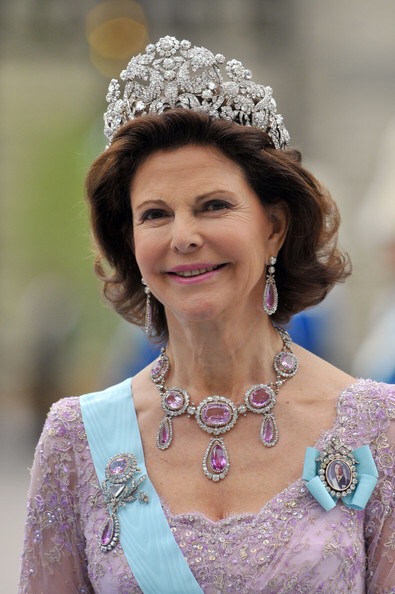
A month or so ago, I bought a little model of Sweden’s Queen Silvia. Brandishing a handbag which encloses a solar panel, the energy from the sun is supposed to make her wave   She’s been standing on my window ledge for a while now in direct light. But for the last few days, that queen isn’t waving. Her hand remains still. Royally poised. But nothing happens. Nothing. Nada. Zero. Zilch. Ingenting. 

It’s a clear indication of the lack of sunlight we’ve had in Stockholm recently. 

So little that the queen herself protests. 

Wilkommen, bienvenue, welcome – to Sweden….

Cabaret_Trio

Last night I went to a performance of ‘Cabaret’ at Stockholm’s ‘Stadsteatern’. Starring popular singer, Sarah Dawn Finer, the story never felt more relevant. Set in and around the decadent Kit Kat Club, the familiar story depicts the slow and insidious growth of Nazism in pre-war Germany. As Hitler’s politics start to become more accepted, life initially goes on as usual inside the nightclub. But slowly, even the performers  cannot ignore the hardening attitudes, the anti-semitism and what is necessary to survive.  As the Nazis rise to power, and ‘Germanness’ falls into focus, the characters have to make a choice: stay or go.

One of the main characters is an American author based in Berlin. As he is confronted by the rise of Nazism he stands up against it saying ‘if you don’t stand against it, you stand with it’. Somewhat remniscent of a US President in a speech against terrorism, this hit a raw nerve. Just because we are not actively and vocally against something, does it really mean that we are for it? Is it that black and white?

As right-wing politics yet again take hold in Europe, what can we learn from the past? If we stand by and say nothing, do nothing, are we in effect accepting it? Are we saying it’s ok? And if we don’t stand up for others, who will stand up for us when we need it?

In the musical Cabaret, we see the nightclub as a metaphor of Berlin, slowly falling more and more under the influence of dark powers. We see the characters numb themselves in alcohol and we see one main character bend to the norms of society by demonstratively removing his makeup – stripped of his uniqueness and his humanity.

Never has it felt more relevant than today. ‘You are not German’ is today expressed as ‘You are not European‘ or ‘You are not Swedish’. And as I was consumed in the musical, I thought to myself, can we do it differently this time? Can we beat the negative forces in society and come out of it victorious? Or are condemned to repeat the mistakes of the past?

Sweden lessons 3: crossing the road

herr garman

In Sweden, crossing the road can be a risky affair.  Consider yourself warned.

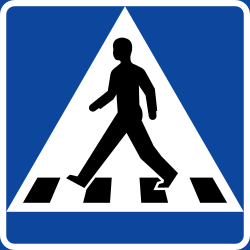
The first thing is that you look to the left to cross the road. You do this preferably at a crossing, indicated by the white and blue sign of the crossing gentleman known as ‘Herr Gårman’. Crossings with traffic lights are a little easier, as the green figure chirps a high-pitched signal to indicate it is safe to cross.

However,  pelican crossings are treacherous. Approach them with great caution.  Cars and bikes are legally supposed to stop to let pedestrians across, but not all do. So the way to do it like this:

  1. Approach the crossing with assertiveness, maybe a little spring in your step
  2. Pause casually on the pavement at the crossing, looking to the left
  3. Lift a leg, either will do, and dangle it out over the crossing. This signals your willingness to cross
  4. Try to make eye contact with the approaching driver
  5. Step gingerly out into the road as you notice the driver slows down
  6. Avoid the bloody cyclists who bomb along the road and who don’t think that normal traffic rules apply to them and who think that they own the road and that you as a pedestrian have to get out of their way and not the other way around and if you don’t pay attention they will literally mow you down as you stand on the pelican crossing.
  7. Success! You reached the other side!


If you like what I write, please share this blog.

Dark clouds over Öresund 


With the refugee crisis raging on, the news is full of articles and commentary. People are taking to the streets and the railway stations in support of the refugees,donating money and other needed items. This issue is in full focus, deservedly so. 

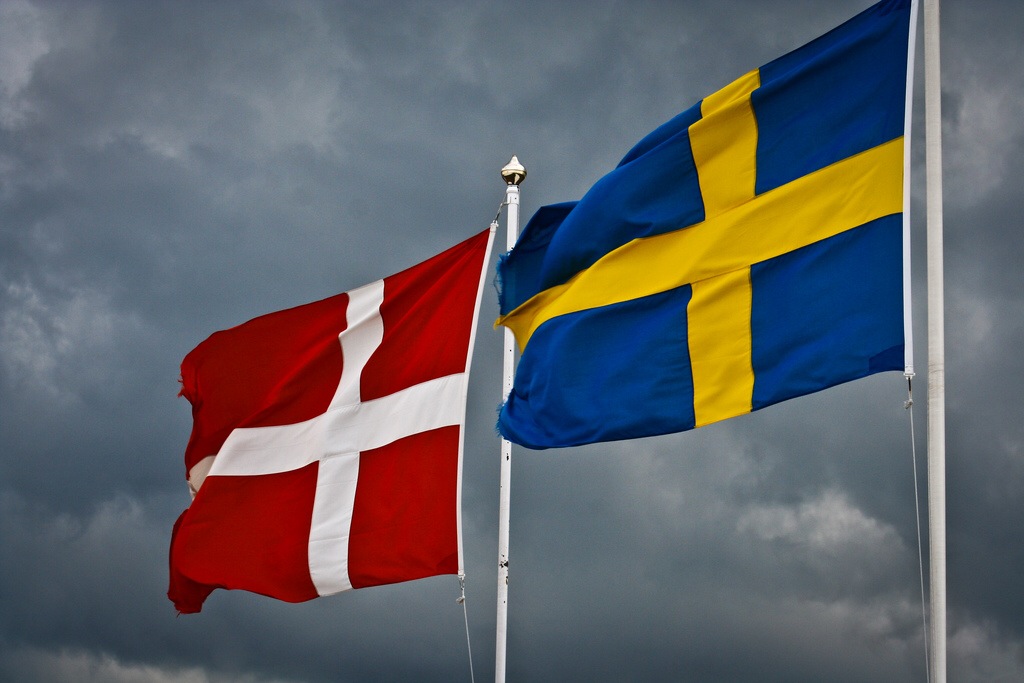
If this blog was called ‘Watching the Danes’ I would be outraged by my adopted country today. If media is to be believed, it seems like our neighbors to the south are doing everything they can to deny sanctuary to these desperate people. 

For example, they want to shuffle refugees through Denmark to Sweden without processing their refugee applications, which is against EU law. They resist any form of pan-EU deal on refugee quotas and are happy to watch other countries bear the ‘burden’ of those seeking asylum. They cancelled the trains between Denmark and Germany. Elements in the government want Denmark to leave Schengen, thus making border control more strict and difficult.  They have even gone as far as putting adverts in Lebanese newspapers urging immigrants not to come to Denmark. The Danish door is firmly closed thanks to its racist and protectionist agenda. 

Their political leaders should be ashamed. 

But this not a blog about Denmark, it’s about Sweden. 

And I’m happy to witness that solidarity, compassion and empathy are still going strong in this Scandinavian nation. 

Was Spock Swedish? 

  
According to the World Values Survey, Sweden is one of the most rational non-secular countries in the world: decisions tend to be made on logical rather than on emotional or hypothetical grounds. 
One area in which this manifests itself in Sweden is in the separation of church and state. Policies and legislation spring out of political, and not religious, ideologies. Unlike other countries where religion has a strong influence on how the country is run, Swedish politicians base their arguments on statistical and factual information. God is never mentioned in political debate, not even by the far-right Christian Democrat Party. If they mentioned God, it would probably send them swiftly packing out of the Parliament building. 

This is why what is currently happening in the USA is so fascinating. In the USA there is a strong connection between God and rhetoric. In the USA you simply don’t become President unless you mention God several times in your speeches. With this background, it’s not surprising that extremist Christians can arise, such as marriage registrar Kim Davis in Kentucky. The delightful Ms Davis abuses her position of authority and refuses to issue marriage licenses to same-sex couples as it collides with her Christian views. In doing this, she denies these couples their legal rights and interprets the law to suit her own religious agenda. This has caused outrage in the USA and she has been ordered to back down, but continues to righteously defy the courts. And is allowed to do so. Prison is next in line, but she cannot be dismissed as her position is one for which she has been publically elected. 

This is a simple, but insidious, example of how religion, law and social legislation do often not make for a happy marriage. What would happen if we all decided to interpret the law according to our own religious convictions? Chaos. Religious dogma. Moralising power mongers.  In Sweden, Ms Davis would have been stripped of her official duties long ago. 

One secular quote reflects Swedish society in a nutshell. And it’s from Star Trek’s Spock in 1982: 

‘The needs of the many outweigh the needs of the few.’

It’s logical. May Swedish society live long and prosper. 

Sweden – get some perspective!!

60 million is a massive number. So big that it’s impossible to imagine. Difficult to relate to. 60 million is roughly 6 times the population of the whole of Sweden. And it’s the estimated number of people who are currently on the run in the world today. These people are running from war, from oppression, violence and starvation. They are running to escape persecution, to save their lives, and the lives of their children.

As we sit here in our comfortable homes, drinking coffee and eating our cinnamon buns, we watch these people on our flat screen televisions and switch them off when it gets too repetitive. 60 million people is an impossible number to digest, so it’s better just to put those images somewhere to the back of our minds and complain about the weather instead.

But just because it’s not happening here, doesn’t mean it’s not happening. 

A comparative handful of these 60 million people, against all odds, make it to Sweden. Housed in camps or living homeless on the streets, they break our illusion of our rich society. These people see Sweden as a temporary sanctuary. Here they are safe from war, famine and disease. They are safe from persecution and attack. But some Swedes see them as vermin, as parasites who are here to suck freely at the teet of the tax payer. 

We are told in political rhetoric that Sweden is being ‘swarmed’ by refugees, that our comfortable society is at risk. And people are scared that the self righteous baracades that have been built are creaking under the pressure of a world outside. 

Get some perspective Sweden! 

According to statistics released by the UN, the actual number of refugees and immigrants seeking asylum in Europe last year was round 600 000 – a mere 1%. 

Other statistics from Forbes show the following: 

  
Per thousand people, Sweden took in 15 refugees during 2014 which means around 135000 people. Out of 60 million people who are currently on the move. 

We need to have a reality check in Sweden and not believe the political arguments that some parties would have us believe. 

In the big picture, the number of people who make it to Sweden is tiny. These people have endured more than we can imagine just to get here. They have suffered mentally and emotionally and probably experienced indignities beyond our comprehension. 

The question becomes how do we treat these people who break through our flat screen complacency when they become living examples of what we fear? 

I suggest we welcome them with pride and with humanity. And treat them with the dignity they deserve. These are people, not parasites.  

And they are desperate to receive our protection. 


If you like this blog, please share it and spread it. 

International LGBT games comes to Sweden

  
Fancy seeing well-trained men or sinuous women in Lycra shorts? Well Stockholm is the place to be this week. 

Every second year a European-based sporting event takes place in different countries. The ‘Eurogames’ is the premiere sport competition for LGBTQ people. And this year it’s in Stockholm! 

5000 athletes have registered to participate in over twenty different sports, such as athletics, swimming, golf, marathon running, badminton and ballroom dance. Anyone can go watch these events and cheer on the athletes as they compete for a medal. Events are spread out over Stockholm and on different days, more information can be found at http://www.eurogames.com

Tomorrow, Wednesday, is the opening ceremony which takes place at 7pm in Kungsträdgården in Central Stockholm. Athletes will proudly march into the park behind their country flag. I’m sure it’ll be an event worth seeing! It is open to everyone and free if charge. 

So put on your running gear, or jump on your bike, and head down to Kungsan tomorrow evening! See you there! 

10 Swedish ways to describe this summer 

  
So far, this is one of the rainiest and coldest Swedish summers on record. Scanning Facebook and other media, I’ve come up with the top 10 Swedish ways to describe this usually happy season: 

1) Pissväder ( pissy weather)

2) Sommar-ångest (Summer anxiety)

3) Höstlikt (similar to autumn)

4) Sommar?? (Is this really summer??)

5) Trött på detta (sick of this)

6) Äntligen sol! (Finally – sun!)

7) Vafaan!? (What the hell!?)

8) Regn, regn, regn (rain, rain, rain)

9) Sjuktkallt (extremely cold)

10) Semesterbubbel (holiday bubbly)