When watching the Swedes is a disappointment

I love watching the Swedes. That is, in fact, what this whole blog is based on. Usually I’m struck with admiration and curiosity, sometimes outrage and anger. But right now, disappointment is the biggest emotion I’m feeling.

Sweden is an amazing country that has handled the corona pandemic in a very different way from the rest of the world. This is culturally not so surprising as Sweden is a country that often deviates from the norm. Instead of draconian lock downs, Sweden’s approach is based on personal responsibility, solidarity and common sense.

So why my disappointment? Well, a couple of reasons.

The instructions about social distancing are very clear. Avoid crowds and stand or sit 2 meters away from the nearest person. And yet, many Swedes are not doing this. On outside restaurants and cafe terraces, people are packed together like sardines. In parks and squares, people are squeezed onto shared picnic blankets. What is it about social distancing that people don’t understand? Be sociable yes, but be physically distanced. It’s so easy that it’s ridiculous to not follow it.
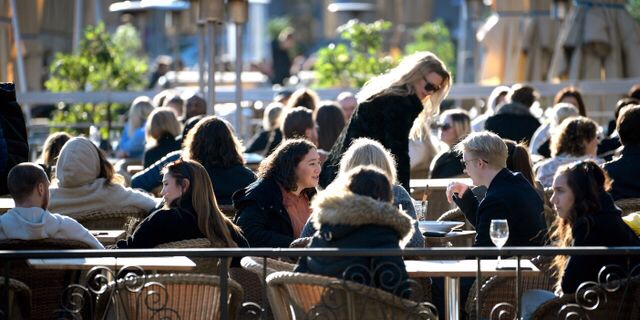
The second source for my disappointment is the lack of perseverance that seems to be prevailing. After a few weeks of self control, it looks like many Swedes have tired of it. They think that the worst is over. They couldn’t be more wrong. Now is not the time to relax. Cases are increasing, not decreasing. Now is the time to persevere, to work from home if possible, to keep washing hands and keep your distance. Even if the sun is shining and the weather is warmer.

I am sure my disappointment is temporary. But I would like to say to everybody in Sweden – be happy things are more relaxed here but do follow the instructions of the authorities. It’s that simple. If we all do it, it will all be over sooner. And then we can all sit in the sun in the park.

In the meantime, I’ll be watching the Swedes – from a comfortable distance.
12 Swedish films – a must see list

I remember the first Swedish film I ever saw. I was living in London, and there was a film festival in a cinema on the South Bank. I’d never heard of the film, but had heard of the author who’s book it was based on – Astrid Lindgren. The film was called ‘Ronja, the robber’s daughter’, and it was a dramatic romp set in the Viking era. I loved it.

Since then, I’ve seen many Swedish films, of varying quality, from Christmas romcoms to Bergman. The Swedish film industry is alive and kicking, and many films are released in the Swedish language every year. Sweden even has its own center of film-making lovingly nick-named Trollywood.

If you’re self-isolated at home and you’d like to watch a Swedish film, here are some that I think are good, in no particular order:

1. ‘Monica Z’ – drama about Swedish jazz legend Monica Zetterlund, played amazingly by singer Edda Magnusson.

2. ‘Border’ (Gräns) – dark drama about a border guard who can smell fear

3. ‘As it is in heaven’ (Så som i himmelen) – drama about a famous conductor who retires to a remote village and takes over the local choir. Drama ensues.

4. ‘The Girl with the Dragon Tattoo’ (Män som hatar kvinnor) – a action thriller about legendary anti-hero Lisbet Salander and a twisted murder mystery plot. Starring Noomi Rapace.

5. ‘House of Angels’ (Änglagård) – a comedy drama about a modern young woman who inherits a house from her mother in a small rural village. But she is not welcomed by all.

6. ‘The Dalecarlians’ (Masjävlarna) – a comedy drama about a woman who visits her hometown to celebrate her father’s 70th birthday. An urban-rural clash takes centre stage. Starring ‘The Bridge’s Sofia Helin.

7. ‘Fanny and Alexander’ – a long Bergman film about a wealthy family in Uppsala. A classic Christmas saga and probably the only Bergman film that everybody likes.

8. ‘Let the Right One in’ (Låt den rätte kommer in) – a drama horror film about a vampire child living in a dark Stockholm suburb

9. ’My life as a dog’ (Mitt liv som hund) – a drama about a young boy and his odd way of dealing with life’s set backs.

10. ’The Hunters’ (Jägarna) – a drama thriller about a wicked group of hunters in the north of Sweden.

11. ’A man called Ove’ (en man som heter Ove) – a drama comedy based on the best-selling novel about the adventures of a grumpy, old man in a Swedish small town.

12. ‘Show me Love’ (Fucking Åmål) – a drama comedy love story between two young girls in the conservative town of Åmål.

There are of course lots more Swedish films to see. If you’d like to check out more, go to: http://www.svenskfilmdatabas.se

The Swedish Easter egg

In the UK, Easter eggs are usually bought ready-made. The big egg is itself made of chocolate, and inside is a small bag of more chocolates. It is wrapped in colourful packaging, and marketed around a particular brand of chocolate such as Maltesers, or Buttons or Dairy Milk.

For me that was what an Easter egg liked like. Until I moved to Sweden. Here, Easter eggs look quite different. The Swedish egg is usually an inedible cardboard egg, emblazoned with colourful Easter motifs. It can also be made of tin or porcelain. So, the egg itself is also the packaging. Inside the egg, is pick ‘n’ mix, usually consisting of a few candied eggs and other well-chosen sweets such as cola bottles, sour dummies and fudge. This style of Easter egg was actually also popular in the UK around the reign of Queen Victoria.

Giving Easter eggs as gifts in Sweden became popular in the 1800’s and was facilitated by the paper-making industry. Although decorating eggs dates further back, to the 1600’s, when Swedes would paint eggs to celebrate the spring.

Whatever the type of egg the Easter bunny brings you this year, I hope you enjoy it!

Happy Easter!

The Swedish ‘recommendation’

In the wake of covid-19, the National Agency of Public Health has provided the Swedish population with recommendations and advice. However, it seems that these very words ‘recommendation’ (rekommendation) and ‘advice’ (råd) are causing problems for many people.

How do you understand the word ‘recommendation’? Maybe it’s a friend who is making a suggestion to you? Or a family member who is promoting a certain behaviour? Or a respected critic who is letting you know what restaurant you should eat at? For most of us, the words ‘recommendation’ and ‘advice’ imply a suggestion that we can decide to listen to or not, act on or not. This is how we understand it.

But it doesn’t always mean this and this is where linguistic confusion is arising. As I understand it in Swedish, when ‘recommendation’ or ‘advice’ is used by a government authority it is not something to be taken as a suggestion – it is a serious instruction that has to be followed. It is the strongest action an authority can take. The next step is a law change decided by the parliament.

So when the Swedish Agency for Public Health recommends that we stand 2 meters apart, it is not a recommendation as we might understand it, it is a strict instruction, and does not include a high level of individual choice. It is the step before criminalising something.

In his press briefing today, Swedish Prime Minister Stefan Löfven said ‘allmänna råd från myndigheter är ingen lösa tips. Det förväntas att (alla) som omfattas av råden följer dem. Inte ibland, utan varje dag och varje minut.’ This translates roughly as ’general advice from an authority is not just a tip. Everybody who is covered by this advice is expected to follow it. Not just sometimes, but every day and every minute.’

This confusion between colloquial terminology and governmental terminology can explain a lot of the behaviour and attitudes we see around us. People are not defying the authorities, they just think that recommendations are elective.

But the bottom line is this – we do not have a choice, even though we might interpret it so. We are obliged to all follow the instructions we are provided with. Zealously.

If we do this, we avoid criminalization and curfew and hopefully can together quickly crush corona.

The colourful Swedish Easter tree

With Easter approaching, Swedes start pimping their homes. Yellow table cloths, yellow curtains and yellow tulips are common, as is something called a ‘påskris’. Pronounced ‘poskrees’, this is a Swedish Easter tree.

The Easter tree is a bunch of twigs and sticks (usually birch) in a vase with brightly coloured feathers attached to the ends. Some people also hang decorated eggs, colourful ribbons or festive chickens. The Easter tree can be seen all over the country this time of year. Outside shop entrances, in peoples’ living rooms, outdoors in the neighbours’ gardens. It is a very popular decoration, probably because it brings colour at a time of the year when most flowers haven’t yet bloomed in Sweden.

The Easter tree is an interesting cultural phenomena. In fact, all products of a society are. This is because they originate somewhere and, often, we have forgotten the origin but still maintain the product or behaviour.

What’s the origin and symbolism of the Easter tree then?

Well, some Swedes say that it symbolises the wiping away of the winter. The twigs represent a broom and the feathers get caught in the broom as we sweep.

Others say that it represents witchcraft. The twigs represent a witch’s broomstick and the feathers indicate flight. This could also be why Swedish kids dress up as witches at Easter and do a kind of ‘trick or treating’ for Easter eggs.

But, apparently the Easter tree has a completely different origin and symbolism. It dates from the 1600’s. Swedish people at this time were more pious, and used to take twigs and sticks and beat each other with on Good Friday – to commemorate the suffering of Jesus. In the 1800’s and 1900’s, they started to be decorated and became a symbolic decoration for Easter.

So, wiping, witching or whipping. Who would have thought the colourful Easter tree would have such a colourful history?

’Svennigt’ – what’s that?

The word ‘’svennigt’ is a slang term to refer to the typical, middle of the road Swede. Derived from the common surname Svensson, ‘svennig’ describes the lifestyle preferences and attitudes of the mainstream Swede.

Depending on the intention, the word ‘’svennig’ can be used endearingly, or even proudly, to refer to the ‘typical Swede’ or the typical Swedish. It can also be used as an insult. I often hear the word, laced with contempt, to undermine or criticize other people’s behaviours and choices. There is a definite class element to the term, where ‘svennigt’ implies lack of sophistication.

In American English, the closest comparison is ‘Average Joe’. In British English, there’s no real equivalent but ‘Joe Bloggs’ comes closest. However, in both of these, there is no element of ridicule, and they aren’t used as an insult; they are used just to describe an average person in the population.

Since ‘svennigt’ can have many different interpretations, I went onto social media and carried out some informal research. I asked people what was ‘svennigt’ for them. My hope was to get closer to an understanding. While there were some overlaps, I received a lot of differing inputs – positive, negative, and neutral. Most of the people who answered were themselves Swedish. Here are some of the perspectives:

Barbecuing

Being afraid of conflict but still whingeing

Being politically correct, but harbouring other opinions under the surface

Binge drinking at the weekends

Bingolotto

Consensus

Eating pickled herring at every national celebration

Eating Salty licorice

Eating TexMex on a Friday evening

Going to ‘After work’ on Fridays

Going to Golden Hits nightclub

Going on holiday in a Caravan/ Trailer

Going to the Canary Islands

Having a ‘Poodle’ hair-do

Liking Swedish dance band music

Loving the singer Carola and wondering why she hasn’t succeeded internationally

Open society

Playing car bingo

Quoting and laughing at lines from Swedish film Sällskapsresan

Reading Camilla Läckberg, author of crime fiction

Saying the vague, non-committal words ‘Jaha’ and ‘Nja’ when you actually disagree

Shopping at Ullared

Sweet loaves of bread

Talking about the weather

Talking about what is ‘typically Swedish’

Taking Löfbergs Lila coffee och Kalles kaviar fish paste when you travel abroad

Watching Lets dance/Strictly Dancing

Watching Melody festival

Watching TV4

Wearing Crocs

Wearing matching tracksuits

Wearing clogs

Working 9-5 and saying ‘Thank God it’s Friday’ at the end of the week

Worrying what other people think

As you see, these descriptions are very wide-ranging. It seems hard to nail down one particular attribute, attitude or behaviour that makes somebody ‘svennig’; it depends very much on the perception. Being ‘svennig’ is in the eye of the beholder. That said, judging by the responses above, it seems like we are all a bit ‘svennig’ now and again.

Please share this article and feel free to add your perspective on it.

But it doesn’t apply to me, right?

Out walking today, I passed through one of Stockholm’s biggest building sites – the Slussen renovation. As I approached, I saw a guard in a reflective vest and holding a red flag. He was stopping pedestrians from getting through, as the construction company was blasting into the rock to make a service tunnel. And he waved at me and told me to wait.

It was going to take 10 minutes to safely blast, so I stepped to the side and stood in the sun to warm my face. And waited.

From behind me, a middle-aged man approaches the guard and asks what was happening. The guard informs him of the on-going blasting. ‘But I need to get through’ the man says. ‘You’ll have to wait’ says the guard. ‘I can’t wait, this is very inconvenient’, the man replies. ‘You have to’ says the guard. The man folds his arms, and scowls in silence.

A few minutes later a young woman arrives. She walks right past the waiting crowd that has now formed. She approaches the guard. ‘I have to get through’. ‘You have to wait’ says the guard. ‘No I can’t do that, let me through’ replies the woman. ‘It is not safe’ answers the guard, ‘they are blasting and it is dangerous to walk past’. ‘I’ll be quick’ says the woman. ‘No,’ responds the guard, ‘you have to wait’.

Two minutes later, a voice on the guard’s walkie-talkie allows us to continue through. The middle-aged man stomps off, the young woman doesn’t move – swiping her mobile.

It often seems to me that some people have a hard time accepting instructions. Even if there are signs, or barriers or even a guard with a red flag, they seem to think they are not affected by it. Because they are in a hurry or it is inconvenient. It’s like saying ‘Yes, I understand, but it doesn’t apply to me, right?’

Might these be the same type of people who, despite strong recommendations from the government, nevertheless squeeze into public transport, hang close together in restaurants and still plan to travel away for Easter?

Just wondering….

Sweden under attack

I put out a picture of my local cafe yesterday and got the reaction from a friend in Germany ‘what!? Are cafes still open?! Everything’s closed here!’ It seems like most places in the world are on lock down. But not in Sweden yet. The Swedish authorities have chosen another route, and are being attacked for it from the international community.

Media in the UK and USA are calling Sweden’s approach ‘Russian roulette’ with the lives of the population. One neighbouring country said Sweden is making its worst decision throughout history. Italian press have said it’s beyond comprehension why Sweden doesn’t follow the way that Italy has gone.

In Sweden there is no lock down, or curfew. It seems like the government want to protect the nation – without totally destroying the economy. Restaurants and cafes are open. Shops are open. Schools are open. However, sport and cultural events have been cancelled, theatres and cinemas are closed, as are sports centres, swimming pools, many work places, some museums, universities and colleges. Sweden’s largest gym chain was closed, and has now reopened. Meeting in groups of more 50 people is illegal.

I’m not here to defend or criticize Sweden’s approach. I am not a doctor or a virus expert, and I am certainly not an epidemiologist. However, as a citizen, I am obliged to follow the recommendations put forward by the authorities:

Work from home if you can, avoid large groups, stand two meters away from other people, socially distance yourself, limit your movement, wash your hands and crucially – stay home if you show the slightest symptom: cough, sniffle, temperature, sneezing.

It seems like many people are following these recommendations, but some are not. For me, it’s about individual responsibility for yourself and the collective. If we all follow the recommendations now, the quicker it will be over. Makes sense, right?

But some people still crowd into public transport, or sit on busy restaurant terraces. Some old folks, the most at-risk in our community, still mingle amongst people and still go shopping. The ski resorts are still open, but not the after ski. With Easter approaching, swarms of people will descend upon these resorts. God forbid that they should miss out on their holiday.

Experts believe this is of little consequence as the virus already exists in society and cannot be eradicated. They are focusing instead on flattening the curve and not on preventing the spread of the virus. They are ramping up health care services and trying to delay the inflow of patients needing care. It seems like it is a question of when, rather than if, we all get infected. The vast majority of people will not be affected with more than mild flu-like symptoms. The main concern at the moment is our elderly. They need to stay home, and many aren’t. How the Government will approach this is the next big question.

When all this is over, we can look back and judge. Whose approach was the best?

With the benefit of hindsight, we might see that Sweden did the right thing, lives were saved and the economy survived.

Or we might see that not enforcing a lock down was the most devastating decision Sweden ever made.

Swedish solidarity in times of crisis

My sister wrote in our family chat that this crisis brings the best and the worst out in people. It made me think. Truthfully, most of the news today is bad. But there are some moments of positivity shining through. We seem to be closing in on a potential vaccine. In Sweden, the situation is manageable – that enormous volume of people needing health care hasn’t happened yet. Most people seem to be taking their personal responsibility and staying tf home.

But most of the positive news is connected to the way in which people are behaving towards each other. When I thought solidarity was dead in Sweden, it seems like the crisis has proved me wrong. It warms the cockles of the heart. Here are a few examples:

Residents are putting notes on walls and through doors offering help to people who can’t go out because they are sick, quarantined or in a risk group. ‘If you need help walking the dog, buying food or going to the chemist, just call me on..’

In the town of Ystad, an elderly woman had her 96th birthday. A local school class didn’t want her to be alone, so they stood outside her balcony and serenaded her.

A movement has started up to support and show appreciation for health care staff. When in a cafe, you can buy a coffee, or sandwich etc. in advance. This is then given for free to a customer who comes in after you and is a healthcare worker. This is one I actually copied and did today at my local cafe.

A student took the initiative and enlisted hundreds of other students who want to volunteer to help in the health care system.

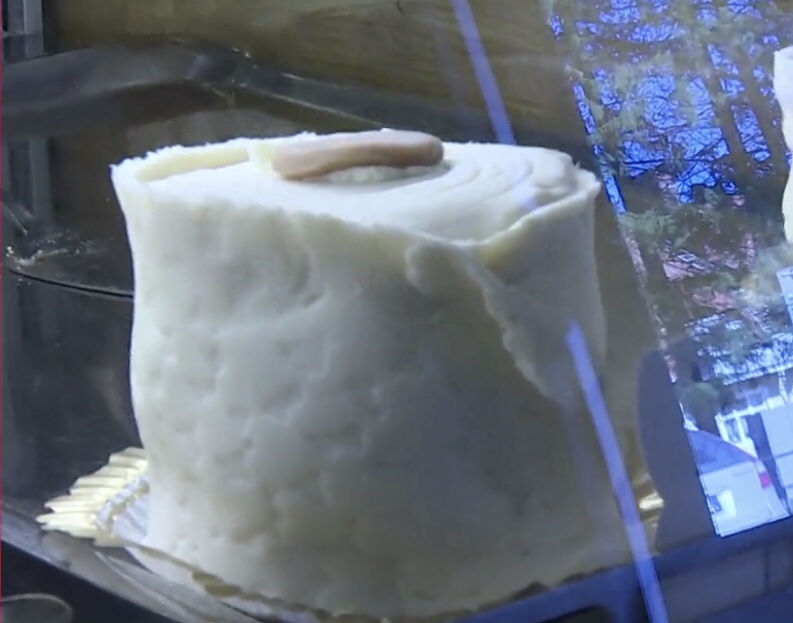
A bakery in the Swedish town of Karlstad decided they wanted to give everybody a laugh. So they designed a new cake. In the shape of a roll of toilet paper.

A loo roll cake at a cafe in Karlstad, Sweden

Do you know of any other acts of kindness in Sweden or wherever you are? Please share!

Surviving our VUCA world

A quote from Charles M Schultz in the comic strip Peanuts goes like this ‘Worrying won’t stop the bad stuff from happening, it just stops you from enjoying the good’. Here, he is referring to our personal ability to manage a VUCA world.

Have you heard of the acronym VUCA? It’s a very useful term right now.

Defined on Wiki, VUCA was first used in the leadership theories of Bennis and Nanus to describe or to reflect on the volatility, uncertainty, complexity and ambiguity of general conditions and situations.

  • V = Volatility: the nature and dynamics of change, and the nature and speed of change forces and change catalysts.
  • U = Uncertainty: the lack of predictability, the prospects for surprise, and the sense of awareness and understanding of issues and events.
  • C = Complexity: the multiplex of forces, the confounding of issues, no cause-and-effect chain and confusion that surrounds organization.
  • A = Ambiguity: the haziness of reality, the potential for misreads, and the mixed meanings of conditions; cause-and-effect confusion.

VUCA often impacts how individuals and organisations make decisions, plan forward, manage risks, foster change and solve problems. Our ability to operate in a VUCA world is defined by our fear, comfort levels, optimism and by how much we try to control or avoid uncertainty.

More than ever, we are living in a VUCA world. None of us know how this corona virus epidemic will end. Here in Sweden, society seems to be shutting down and the economy is in the middle of a major crisis. A global recession seems inevitable.

So how do we get through it?

Our ability to get through this without emotional breakdown does not come from panic, rumour and phobia.

According to Bill George, a senior fellow at Harvard Business School, it calls for a response which he calls VUCA 2.0: Vision, Understanding, Courage and Adaptability. From the government, from employers and from each individual. Thinking and acting in this way provides us with the stability and psychological safety we will need to get through to the other side.

So, how do you personally handle the concept of VUCA?