In Sweden, and 160 other countries, May 1st is International Workers’ Day. Sweden has been celebrating it since 1939.
But why specifically May 1st?
The answer is found in a massacre in the USA. On 1 May 1886, laborers in Chicago went out on strike for an 8 hour working day. On 4 May 1886, the Chicago police force and the demonstrators clashed in a physical conflict. Eleven people died.
The event is called the Haymarket Massacre. Seven of the demonstrators were sentenced to death, despite lack of evidence. To commemorate the massacre, the socialist organization suggested that 1 May should become day of demonstrations every year around the world. Ironically, USA does not follow this tradition, but celebrates their Labour Day in September instead.
In Sweden, traffic is shut off, huge flag-waving demonstrations are held and people gather to hear political speeches.
The demonstrations represent people from various parties. However, since most of them are from the political left, the streets are awash with bright red flags and banners.
Not all Swedes demonstrate of course. For many, today is just a day off work – an opportunity to perhaps nurse a hangover from the festivities of the previous evening or to relax, go for a walk and enjoy the day.
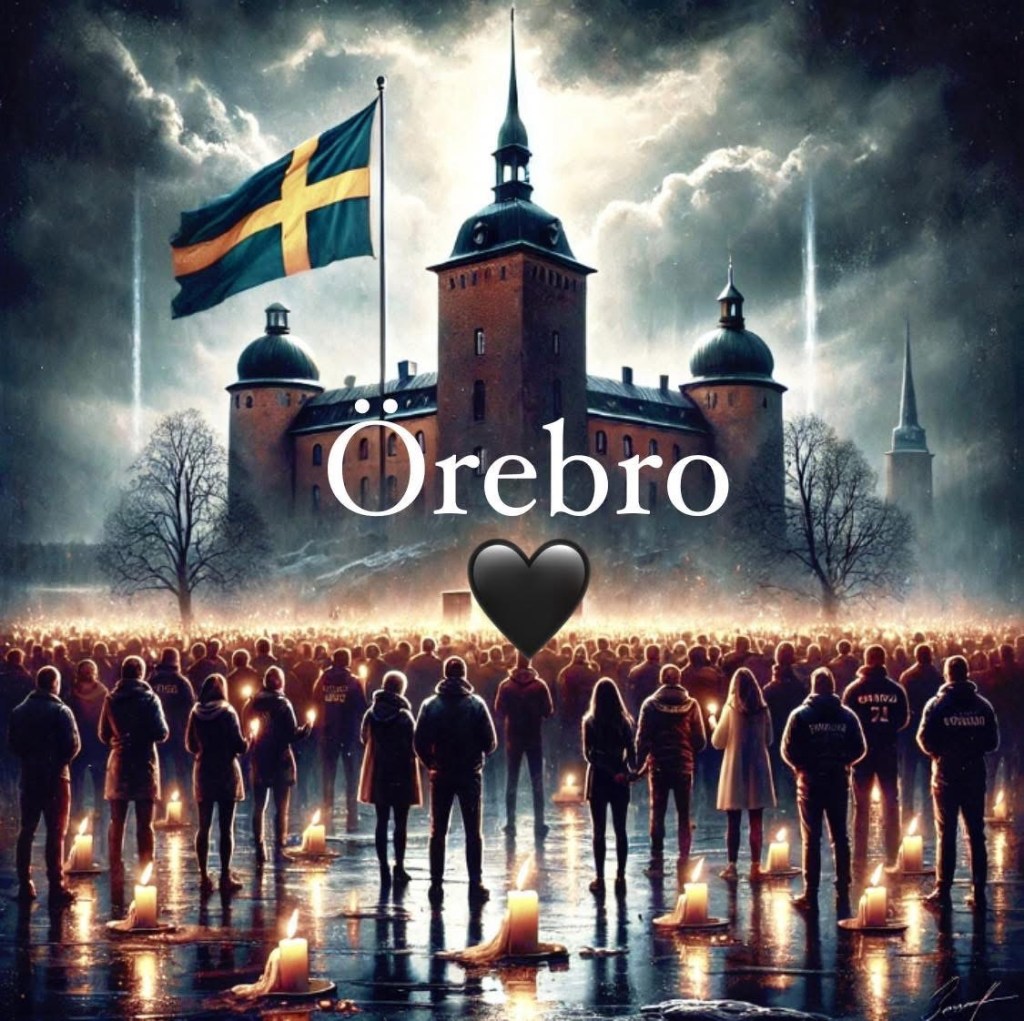
Yesterday in the town of Örebro in Sweden, 10 people were killed in a despicable school shooting. While this kind of attack is rare in Sweden, it follows a rapidly escalating period of terrible bombings, gang shootings and other hate crimes in society. In 2025, so far, there has been at least one crime of this type reported on the news every day.
Politicians, police and the population in general are devastated. It seems like authorities have lost control, and it is not easy to fix, as it has been going on a long time. However, it is resolvable – with the right strategies and the right investments.
I was curious on how AI might solve the problem, so I asked the question. And this is what I got. Definitely food for thought, and many good suggestions for concrete action.
Stopping a wave of shootings and bombings requires a multi-layered approach that addresses both immediate threats and the deeper causes of violence. Here are some key strategies:
1. Immediate Security Measures
• Increase Law Enforcement Presence: Deploy more police in high-risk areas to deter attacks.
• Improve Intelligence Gathering: Strengthen surveillance, monitoring of extremist groups, and cooperation between law enforcement agencies.
• Gun and Explosive Control: Tighten regulations on firearms, ammunition, and bomb-making materials.
2. Addressing Root Causes
• Social and Economic Programs: Address poverty, unemployment, and lack of opportunities that may push individuals toward violence.
• Education and Awareness: Promote education programs that counter radicalization and teach conflict resolution.
• Mental Health Support: Provide access to counseling and mental health services to identify and assist individuals at risk.
• De-radicalization Programs: Engage with communities to rehabilitate individuals influenced by extremist ideologies.
3. Political and Legal Reforms
• Strengthen Laws Against Violence: Enforce strict penalties for illegal weapons possession, terrorist activities, and hate crimes.
• Promote Dialogue and Mediation: Encourage political and community leaders to engage in discussions that prevent extremism and violence.
• Fight Corruption: Ensure law enforcement and government agencies operate transparently to maintain public trust.
4. Long-Term Cultural Shifts
• Promote Nonviolence and Tolerance: Through media, education, and religious institutions, promote peaceful coexistence.
• Strengthen Community Bonds: Encourage local communities to work together in preventing violence.
• Regulate Social Media Misinformation: Work with tech companies to prevent the spread of extremist propaganda.
A society that combines strong security measures with social reforms and long-term cultural changes has the best chance of stopping a wave of shootings and bombings.
Window 15. Today’s word is ‘Musikhjälpen‘ which translates as Music Aid.
Since 2008, the radio/tv program ‘Musikhjälpen’ has become a traditional part of the lead up to Christmas.
In this program, 3 presenters are locked into a glass ‘cage’ on a town square somewhere in small town Sweden – this year from the northern town of Sundsvall. They are sleep deprived and only allowed to eat liquids.
From the cage, they broadcast radio and tv round the clock until they are released a week later.
The program is a fund-raising event for Sweden’s international aid organization Radiohjälpen. People up and down the country request songs and make donations, or carry out fund-raising activities. Live music performed in the ‘cage’ has also become an important part of the event. At most, the event has raised a staggering 74,410,363 SEK in 2017 when the theme was fighting against child prostitution.
Every year the theme is different; this year the theme is ‘every woman has the right to survive her pregnancy’.
Throughout the years, many of Sweden’s music and media celebrities have taken on the challenge of incarceration, such as singers Sara Dawn Finer, Daniel Adams-Ray, Molly Sandén, Miriam Bryant and Linnea Henriksson, and rappers Petter and Timbuktu. This year, radio profiles Linnea Wikblad and Assia Dahir are locked in with YouTube influencer Emil Hansius.
The program is based on an original format called Serious Request from Holland and is an amazing display of charity just a couple of weeks before Christmas.
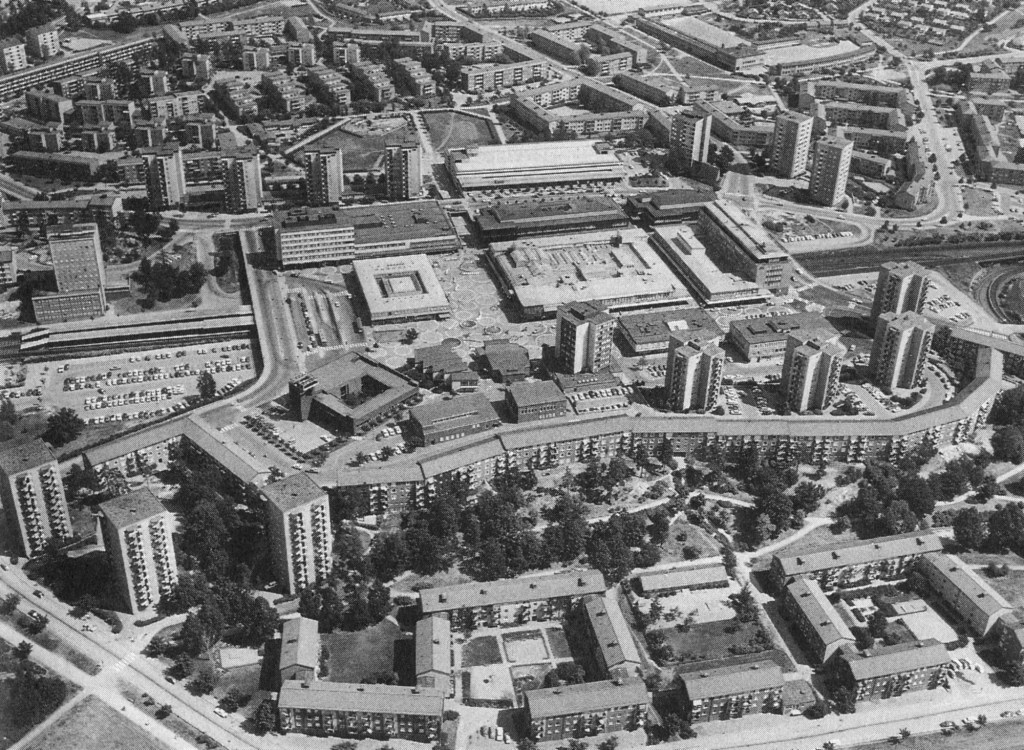
ABC is a concept in Swedish town planning, said to have been minted by Stockholm city planner Sven Markelius around 1952. ABC refers to the approach of building a suburb where modern families have easy access to work, dwelling and services, such as shops. A stands for ‘arbete’ (work), B stands for ‘bostad’ (accommodation) and C stands for ‘centrum’ (center for services and shops).
ABC city planning was introduced mid 1950’s and it expanded suburban Stockholm to the north and south. This growth was spurred on by the influx of people to the capital after the Second World War, and the severe shortage of accommodation.
In the original development plan from 1952, Markelius suggests that blocks of flats should be constructed within 450m of the centre, small houses should be built within 900m of the centre and light industry 600m from the centre. Everything should be built compactly in order to facilitate daily life for its 16000 residents. An underground system would connect the ABC suburb to the rest of the city and Stockholm’s downtown.
If you’d like to visit an ABC suburb, the two that are mostly still in tact are Vällingby to the north of Stockholm, and Farsta to the south.
Once a year, with exception of the two pandemic years, there is a summer politics week in Sweden. The week is happening now. It takes place in a park called Almedalen on the Baltic island of Gotland, and attracts heavy media coverage.
During the week, the leaders of the eight parliamentary parties deliver speeches – their view of Sweden’s challenges and future.
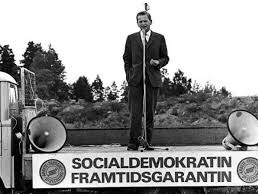
The Almedalen politics week started when legendary Swedish Prime Minister Olof Palme spoke publicly, from the back of a truck, during a summer visit to Gotland. It was at the end of the 60s and there was an audience of a few hundred people. It very quickly became a tradition.
Now Almedalen politics week attracts thousands of participants and is intended to involve the person on the street in politics and to protect the strong Swedish value of democracy and free speech. The idea is that at Almedalen politics week, we meet each other in debate. And in debate and discussion, we influence each other and our environment. This is an amazing, and very Swedish, approach to politics.
However, Almedalen Politics Week has also been heavily criticized for being elitist. Accommodation is, for example, very difficult to find, and expensive to book. The event has also become a popular opportunity for businesses to promote themselves by meeting, networking and partying with each other and engaging in media stunts. And writing it off as a marketing initiative.
Some people go to Almedalen only for this purpose and not to participate in any political activities. Social media is every year awash with images of participants mingling, drinking rose wine, partying, dancing and taking drunken groupies.
This is of course a provocation for many Swedes who perceive Politics Week as a week to enact change, and not to party and mingle. With this expanded version of Almedalen Politics Week, the question becomes is it still a platform for democracy or has it been watered-down by all of the ballyhoo?
In Sweden, and 160 other countries, May 1st is International Workers’ Day. Sweden has been celebrating it since 1939.
But why specifically May 1st?
The answer is found in a massacre in the USA. On 1 May 1886, laborers in Chicago went out on strike for an 8 hour working day. On 4 May 1886, the Chicago police force and the demonstrators clashed in a physical conflict. Eleven people died.
The event is called the Haymarket Massacre. Seven of the demonstrators were sentenced to death, despite lack of evidence. To commemorate the massacre, the socialist organization suggested that 1 May should become day of demonstrations every year around the world. Ironically, USA does not follow this tradition, but celebrates their Labour Day in September instead.
In Sweden, traffic is shut off, huge flag-waving demonstrations are held and people gather to hear political speeches.
The demonstrations represent people from various parties. However, since most of them are from the political left, the streets are awash with bright red flags and banners.
Not all Swedes demonstrate of course. For many, today is just a day off work – an opportunity to perhaps nurse a hangover from the festivities of the previous evening or to relax, go for a walk and enjoy the day.
So Sweden is now an official member of NATO, the military defense alliance.
As the 32nd country to join the alliance, Sweden will be protected under Article 5 – the ultimate guarantee of allie’s freedom and security.
To the outside world, this might not be that significant. But for Sweden, March 7th 2024 is a day that will be recorded as one of the most momentous in history.
By becoming a member of NATO, Sweden ends over 200 years of official non alignment. This neutrality stretched back to the Napoleonic wars.
Sweden joining NATO was inconceivable just over two years ago, and the Swedish population had little appetite to join a military alliance.
The country remained neutral in both World Wars but when Russian troops began marching toward Kyiv in February 2022, Sweden – and neighbour Finland – became alert to the threat Moscow could pose to nearby countries outside the alliance.
And everything changed.
Finland joined NATO in April 2023, and Sweden, after lots of head-butting with Turkey and Hungary, formally joined yesterday.
It is currently unknown how the membership will affect the lives of Swedes. Hopefully, not noticeably.
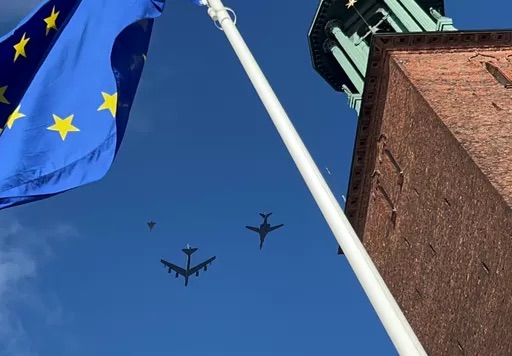
But it was very apparent on Tuesday when two American bomb planes, B52 and B1B, flew at a low altitude over central Stockholm – that things have changed in this formally-neutral country in the north.
Window 15. Today’s word is ‘Musikhjälpen‘ which translates as Music Aid.
Since 2008, the radio/tv program ‘Musikhjälpen’ has become a traditional part of the lead up to Christmas.
In this program, 3 presenters are locked into a glass ‘cage’ on a town square somewhere in small town Sweden – this year from the town of Växjö in county Småland. They are sleep deprived and only allowed to eat liquids.
From the cage, they broadcast radio and tv round the clock until they are released a week later.
The program is a fund-raising event for Sweden’s international aid organization Radiohjälpen. People up and down the country request songs and make donations, or carry out fund-raising activities. Live music performed in the ‘cage’ has also become an important part of the event. At most, the event has raised a staggering 74,410,363 SEK in 2017 when the theme was fighting against child prostitution.
Every year the theme is different; this year the theme is ‘nobody should die from hunger’.
Throughout the years, many of Sweden’s music and media celebrities have taken on the challenge of incarceration, such as singers Sara Dawn Finer, Daniel Adams-Ray, Molly Sandén, Miriam Bryant and Linnea Henriksson, and rappers Petter and Timbuktu. This year, singer Oscar Zia is locked in together with radio profile Linnea Wikblad and comedian Sofia Dalén.
The program is based on an original format called Serious Request from Holland and is an amazing display of charity just a couple of weeks before Christmas.
Window number 10. Today’s word is ‘Nobeldagen‘ which translates as ‘Nobel Day’.
Nobel Day is not actually anything to do with Christmas. However, it is a traditional part of the lead up to Christmas. Every year on 10 December, since 1901, the Nobel Prizes are awarded. The date commemorates the death of Alfred Nobel in 1896.
Nobel prizes are awarded in the 6 categories of Literature, Chemistry, Physics, Medicine or Physiology, Economics and Peace. All prizes are awarded in Stockholm, except the peace prize which is awarded in Oslo. Laureates receive a gold medal, a diploma and 10 million Swedish crowns.
Most laureates are happy to accept their prize and the accolade. However, Jean Paul Satre famously declined the Literature Prize in 1964, claiming he did not want to be institutionalized.
In 1974 he was joined by Le Duc Tbo who refused to accept the Peace Prize for his work to end the Vietnam War, saying ‘peace has not yet been established.’
In 1935, German journalist Carl von Ossietzky – a vocalcritic of Hitler- won the Peace Prize. This led Hitler to bar all Germans from accepting a Nobel Prize. Three German laureates were subsequentlyforced to decline their awards. However, they later were presented with their diplomas and medals.
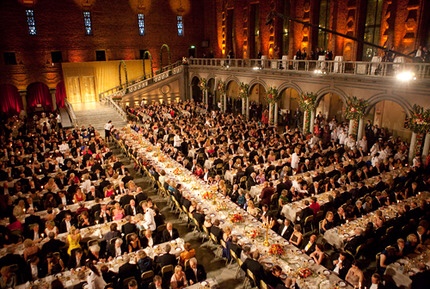
With celebratory lectures, conversations, ceremonies and concerts, Nobel Day culminates with a banquet in the Stockholm City Hall. The banquet lasts about 3 and a half hours and is televised. It is an extremely grand and formal occasion. Everything from the porcelain to the floral arrangements to the dresses, the entertainment and the menu are under scrutiny for the tv viewers.
The guests include not only the Nobel laureates and their families, but also Swedish royals and aristocrats, politicians, ministers, celebrities and other notable people. Even though there are 1300 guests, is virtually impossible for ordinary folk to get an invitation to the banquet. We have to enjoy it from afar, via the screens in our living rooms.
However exclusive the whole thing might be, it is still a welcome splash of glamour in the dark approach to Christmas. Stockholmers are also treated to the light festival called Nobel Lights, which takes place around the city.
More than 90,000 articles have been written about the Koran burnings that are occurring in Sweden. The burnings have led to an escalated terrorist threat, international public protests, storming of embassies, burning of the Swedish flag, and condemnation from everyone from Turkey’s Erdogan to the Pope.
For many people outside Sweden it is hard to understand why the burnings are being permitted. The bottom line is that it is not against the law. The question is why is it not against the law.
It all boils down to understanding Sweden’s version of freedom of speech, expression and demonstration. In Sweden, you are allowed to publicly comment on, demonstrate against and criticize anything. Sweden’s centuries-old democracy is built on this.
Powers such as the royal family, industry giants or organized religions cannot legally stop or influence this. In secular Sweden, religion has no influence over politics. However, you are free to follow any religion you want, and this right is protected by law. Likewise you are free to criticize any religion you want.
With this understanding, you can see how the burning of books, including any religious scripture is allowed and not, per se, limited only to the Koran.
So you have to separate the law from ethics. Is it ethical? Maybe not. Is it illegal? No. This is why the Swedish government condemns the action but at the same time defends the right to self expression.
That said, there are other laws in Sweden that restrict public speech. For example, if it is considered hate speech, or incitement to violence, or against the interests of national security.
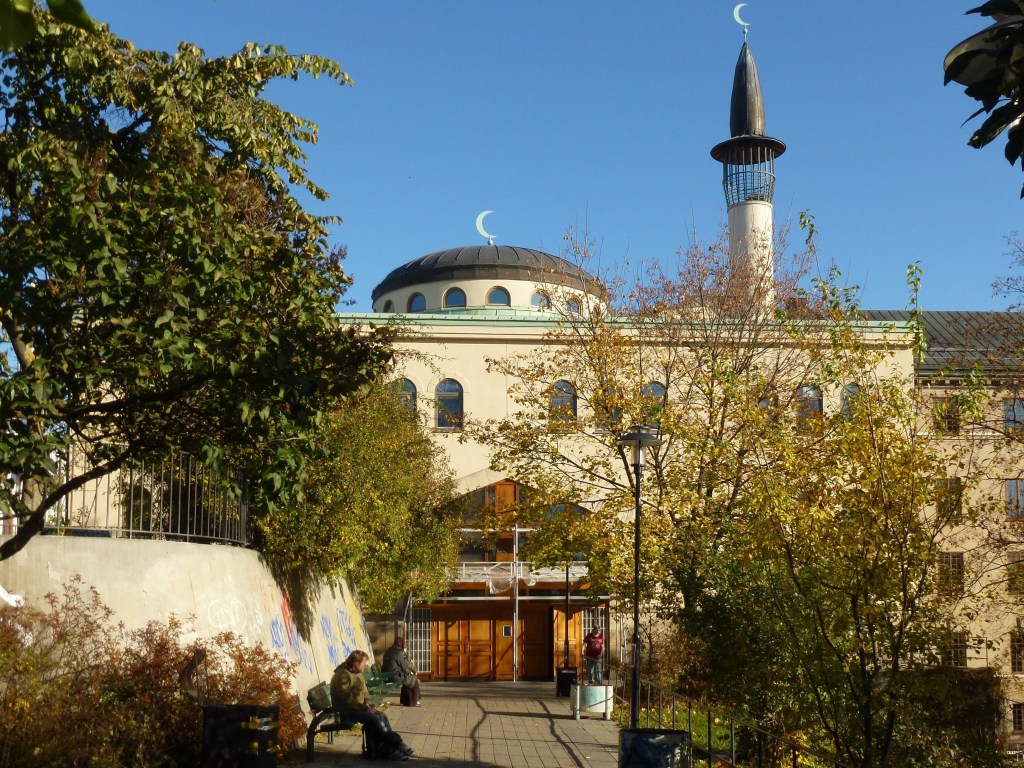
In the case of recent Koran burnings, outside a mosque on the first day of Eid, or outside the embassies of Muslim countries, and with today’s political instability, one can seriously question the police’s choice to allow such demonstrations to occur. Many Swedes say that it shows a poor sense of judgement and disregard for public safety and national security. But it isn’t illegal, and is fully in line with freedom of speech and demonstration.
Swedish law often looks at intent. At this could be the case with the Koran burnings moving forward. What is the intent of the demonstrators? Personally, I see it as a obvious provocation, an attempt to destabilize Swedish society and a direct insult to all the Swedish Muslims residing in the country.
Denmark has recently suggested a law change, based on the fact that the intent behind the action is malicious. The legislation will prohibit the inappropriate handling of objects with essential religious significance for a religious community. The Minister of Justice says ‘I fundamentally believe there are more civilised ways to express one’s views than burning things.’ I’m sure he is right. Changing the law isn’t about bowing down to the extremist demands of other nations, but showing respect for the diverse citizens of one’s own country.




 Watching the Swedes