Sweden, Swedeland or Sweorice? Why is Sweden called Sweden?

The Swedish word for Sweden is Sverige. Have you ever wondered why then Sweden is called Sweden in English?

Well, like all etymology of words, the explanation can be found centuries back and in a different country. In fact, the English name was loaned from the Dutch language in the 17th century. It is based on Middle Dutch Zweden, the Dutch name of Sweden. In turn, the name Zweden is the dative plural of  Zwede (Swede). Country names based on a dative plural and adding -n were the norm in German and Dutch in the 15th century – other examples are the German Italien “Italy” and Spanien“Spain”. These are also actually the words in Swedish for those countries.

What about before the 17th century when England borrowed the name Sweden from the Dutch? Well, clearly Sweden existed, and indeed it was called something else – Swedeland. And in early Old English, the country was known as Sweoland or Sweorice. Sweorice translates as the realm of the Sveonas – who were a Germanic tribe of the Sviar (a Norse tribe).

It’s not clear why the English suddenly changed to the Dutch version, but it may have been due to siding in conflicts or to make trading and communication easier.

So yesterday’s Swedeland is today’s Sweden. Personally, I think Sweorice has a nice ring to it, and is seems closer to the Swedish word Sverige.


Why Swedes celebrate their names

Today is Svea’s Name’s Day. And October 8th is my Name’s Day. Well, not quite….but almost. It is Nils. And since I’m called Neil, well, I take Nils as my day.

Some of you might be wondering what the hell I’m talking about. What is a ‘Name’s Day’? Well, it’s like this. In Sweden, every day has a name, sometimes two. And if your name happens to be represented in this way in the calender, then you can celebrate your day. Strange? Maybe. Unusual? Not really.

A Name’s Day is actually a tradition in lots of countries such as Bulgaria, Croatia and Ukraine. According to Wiki, the custom originated with the Christian calendar of saints: believers named after a saint would celebrate that saint’s feast day. In Sweden, however, there is no longer any explicit connection to Christianity. It’s been a tradition since the Middle Ages and started because the church wanted the people to celebrate Name’s Days instead of birthdays which they viewed as a pagan tradition.

There are different lists though some names are celebrated on the same day in many countries. In 1901 a comprehensive modernization was made in Sweden to make the list up to date with current names. This also happened in Finland, but not in other countries.

But Name’s Days are not without their controversy. The monopoly on calenders, held by the Royal Swedish Academy of Sciences, expired in 1972 and so did the official name day list. And then all hell broke loose. Competing lists emerged and finally in 1986 a new list with three names on each day was designed to create harmony in the Name’s Day chaos. But people weren’t happy. Seven years later, this list was revised and reduced to two names per day. But Swedes were still dissatisfied with this and the Swedish Academy produced a new two-name list which was finally accepted and brought into use in 2001. Although it does not have the official status of older lists, it is now universally used in Sweden.

One alternative calender, however, is the Diversity Calender which appoints each day with a more diverse selection of names to represent modern-day society.

How this tradition arrived in Sweden is unclear. Maybe it was imported by foreign religious leaders or merchants, or maybe it’s to do with the fact that the Swedish Protestant Church retains some traditions similar to the Catholic. Whatever the origin, it’s a reason to celebrate. And Swedes love to celebrate!

So, come on Svea, today’s your day – January 2nd! Happy Name’s Day to you!!

If you’d like to check out if you’re privileged to have a Name’s Day go to www.dagensnamnsdag.nu

Sweden’s politicians are slut spurting

I know, i know. It sounds gross doesn’t it? ‘Sweden’s politicians are slut spurting.’ However disgusting it might sound, it is exactly what they are doing.

With one week to go to the election, all the parties are in the final throws of their campaigning. In this final week, they try to get their message across by turning the gear up a bit. This final sprint to the finishing line is called a ‘slutspurt’ in Swedish. It’s often used to describe the final hurried days of a sale.

And it’s what they’re all doing.

They’re slut spurting on the tv, in the streets, in the media. It’ll be a relief when it’s all over I expect. That much spurting can’t be good for you.

Why is Sweden….according to Google

A quick Google search punching in the words ‘why is Sweden..’ led to a very telling autocorrect.

why is sweden

  • Why is Sweden so hot?
  • Why is Sweden so rich?
  • Why is Sweden so good at hockey?
  • Why is Sweden so good at sports?
  • Why is Sweden so cold?
  • Why is Sweden so innovative?
  • Why is Sweden so good at CS?
  • Why is Sweden so good?
  • Why is Sweden called Sweden?

So, if this represents the most common searches for Sweden, it certainly seems positive! Sweden is hot, rich, good at all sorts of things and innovative! I only wish I knew what CS is –  Christmas shopping? Classic socialism? Counting suicides? Consuming spirits? Well, whatever it is, they are apparently very good at it!


Swedish election language – val*****

Valspecial

Currently there’s a lot of election campaigning going on in Sweden. In a couple of weeks, Swedes will decide who they would like to have in their government. It’s a bit of a nail-biter as the established parties are waning in popularity and the far-right populist party is gaining ground. Time will tell how the public votes. But in the meantime, let’s have a little lesson in Swedish election language. The Swedish word for election is ‘val’, which also means choice and also means whale. The word ‘val’ appears in front of lots of words in election times. Here are a selection of my personal favourites that I’ve spotted in the media:

  • Valbråk – ‘election fight’ – some kind of conflict that arises in association with an election. It can be connected to posters or pamphlets or anything that gets people agitated, often by making populistic ‘vallöfte’
  • Valfläsk – ‘election pork’ – a weird one, describing the hyperbole, the bullshit and the exaggerated claims made at the time of elections
  • Valfusk – ‘election cheating’ – used to describe corruption in relation to an election
  • Vallöfte – ‘election promise’ – what the party promises, and more often than not fails to deliver
  • Valstuga – ‘election cottage’ – small wooden houses on a public square where representatives from each party stand and represent their policies
  • Valspurt – ‘election spurt’ – nothing saucy, but rather a word to describe the escalating final run up to voting day
  • Valchock – ‘election shock’ – an unexpected result, rather like Brexit or Trump and perhaps what we are heading for in Sweden in a couple of weeks’ time.


Do you have any other any other election words that particularly amuse you?


Swedish expressions – take it piano

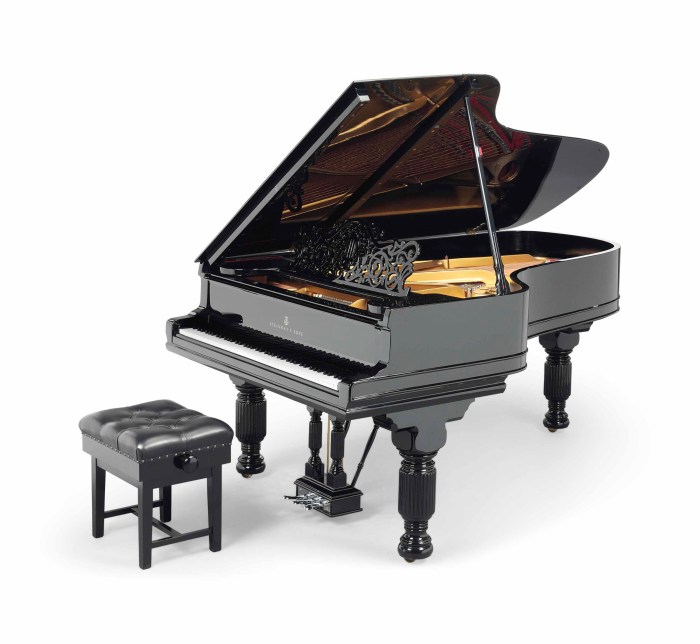
If a Swede says to you ‘ta det piano’ – take it piano – what they mean is take it easy, go slow often to avoid any mistakes. They can also say ‘it’s piano’ which means everything is cool, calm, ok.

Researching the origin of this expression led me, not surprisingly, to the world of music.

The word ‘piano’ has two meanings – firstly the string instrument with its variety of keys.

Secondly, it is a musical term for ‘weak’ or ‘soft’. In sheet music, the letter ‘p’ indicates piano and tells the musician to play their instrument softly. Double ‘pp’ means pianissimo and indicates to play very softly.

The term ‘piano’ originates in Italian and has been in use in Sweden since the 1600’s.

Swedish expressions: to shit in the blue cupboard

In Swedish, when you have landed yourself in trouble, or made a fool of yourself, you can use the delightful expression ‘shit in the blue cupboard’.

Example: ‘oh no, Edward really has shit in the blue cupboard now’.

So where does this originate? After some exploration, I have discovered what is recognised as the most likely explanation.

Centuries ago in Sweden, furniture was painted red and okra as this colour was cheap and easy to produce. Around the 1800’s new production methods enabled the production of blue paint – Berlin blue – and this was more expensive and seen as more exclusive. Consequently, people used this colour to paint the cupboard where they kept their finer pieces of porcelain, silver and linens.

In these times, the population used potties to go to the toilet in. Putting the potty into the blue cupboard, amongst the finer articles, was seen as a really stupid thing to do. And so the expression developed in relation to foolish acts.

Swedish expressions: Bang on the beetroot

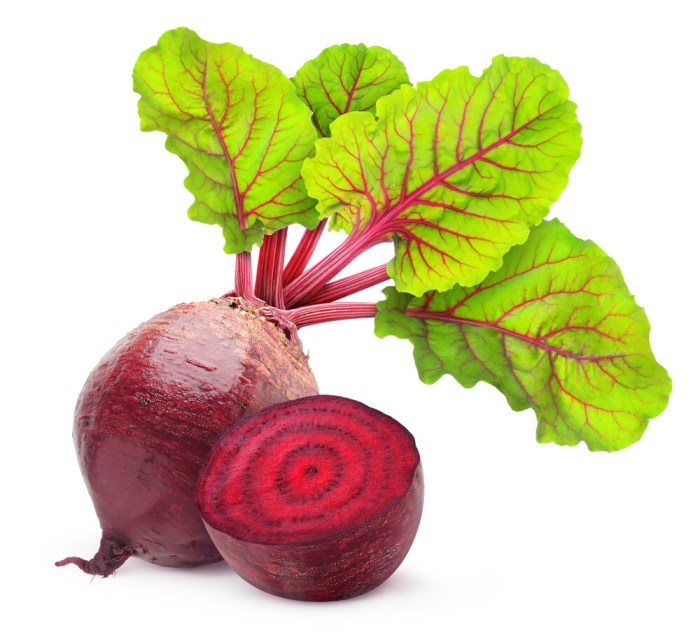
There’s an expression in Swedish that I’ve often wondered about where it comes from. The expression – ‘pang på rödbetan‘ – bang on the beetroot. It’s a weird idiomatic expression that in its earlier meaning, referred to getting straight down to penetrative sex without any foreplay. However, today it is used to describe any situation in which we get straight down to it, for example in a meeting, in a discussion, in a conflict.

The ‘pang på’ is easy to understand as it means straight forward or slap-bang. But where does the beetroot come from?

Well, according to a common theory, it originated from the word ‘robota’ in Polish. This word came with temporary labourers to southern Sweden in the 1800’s and was Swedified by the locals. The expression ‘pang på rödbeta’ was used in Sweden’s southern Skåne region already in the 1900’s. So what does the word ‘robota’ mean? Well, it is defined as hard work, repetitive work and routine work.

So ‘pang på robata’ – getting straight down to hard work.

Interestingly, the word ‘robata’ is also the origin of the word ‘robot’ – something that does repetitive, routine work.

15 Swedish words for getting married

With the UK, and probably the USA, in a Royal wedding frenzy at the moment, it made me think about Swedish words for getting married. In English, we have for example ‘tie the knot’, ‘take the leap’ and ‘get hitched’, so I did some research. And I found the following formal, and less formal expressions for getting wed.

  1. gifta sig – to get married
  2. ingå äktenskap – to enter into marriage
  3. äkta – to wed
  4. ingå giftermål – to enter into marriage
  5. Gå träda i brudstol – ‘step onto the bridal chair’ (tradition from the 1600’s)
  6. Ingå förmälning – enter into marriage
  7. Gå brud – ‘go bride’
  8. Vigas – get married
  9. Föra till altaret – lead to the alter
  10. Knyta hymens band – tie the wedding band
  11. Bygga hjonelag – ‘build a marriage’
  12. Slå sina påsar ihop – ‘join your bags’
  13. Förena sina öden – unite your destinies
  14. Gänga sig – get married
  15. Stadga sig – settle down

Interestingly, the most used word for married in Swedish is the same as the word for poison – ‘gift’!

Wondering about Sweden in the middle of the night

It’s 4am and I can’t sleep. One of those nights with a million thoughts churning around in my mind. Outside, the city of Stockholm is quiet. Daylight is starting to slowly break. As I lie here, a question about Sweden pops into my head. Something I’ve never thought of before.

Where does the English name ‘Sweden’ come from?

I should be sleeping, but I decide to google for the answer and I am catapulted into the world of historical research, language theory and ethno-cultural writing. And now I have the explanation and hopefully I can sleep.

Would you like to know? Here’s what I found:

The English name for Sweden was loaned from Dutch in the 17th century to refer to Sweden as an emerging power. Before Sweden’s imperial expansion, Early Modern English used Swedeland.

The Old English name of Sweden was Sweoland or Sweorice, land or realm of the Sweonas – the Germanic tribes of the Sviar. The name of the Sviar itself is derived from a proto-Norse Swihoniz, presumably a self-designation containing the Germanic reflexive ‘swe’ – one’s own, self”.

The modern English name Sweden

was loaned from Dutch. It is based on Zweden, the Dutch name of Sweden, and in origin the dative plural of Zwede. It has been in use in English from about 1600, first recorded in Scottish Swethin, Swadne.

So there you go. Perhaps I can now zleep. Zzzzzzz.