The pagan origins of Sweden’s Midsummer celebrations

The long Midsummer weekend is drawing to a close in Sweden. Known as “Midsommar”, it is one of the most significant and widely celebrated holidays in the country. Its history blends ancient pagan traditions with later Christian influences and remains a vital part of Swedish cultural identity.

The origins of Midsummer in Sweden are rooted in pre-Christian solstice celebrations. Ancient peoples marked the summer solstice, the longest day of the year, with rituals to honour nature, fertility, and the sun. These rituals often involved dancing, feasting, and the lighting of bonfires, believed to ward off evil spirits and ensure a good harvest.

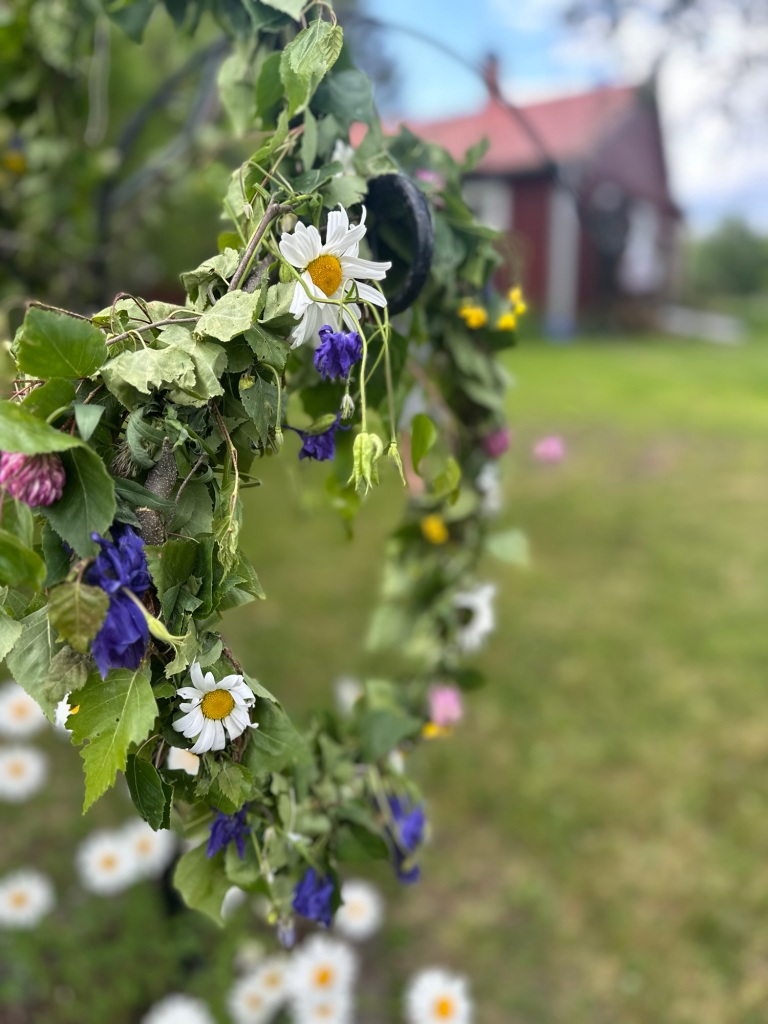
Flowers and greenery played an important role, symbolising fertility and the power of nature at its peak. It was also a time associated with magic and love, when people believed that plants had healing powers and that dreams could foretell the future—especially for young women seeking to glimpse their future husbands.

With the spread of Christianity in Scandinavia during the early Middle Ages, many pagan customs were adapted into the Christian calendar. The Church linked Midsummer celebrations to the feast of St John the Baptist, celebrated on 24 June. As a result, Swedish Midsummer traditionally falls around this date, although in modern times it is observed on the Friday between 19 and 25 June, followed by Midsummer Day on the Saturday.

Despite this Christian connection, the festival retained much of its pagan character, particularly the focus on nature and fertility, rather than religious observance.

Today, Midsummer remains the major secular celebration in Sweden. It marks the unofficial start of the summer holidays, when many Swedes leave cities for the countryside or their summer cottages (sommarstugor).

The festival is a strong symbol of national identity, with its emphasis on community, connection to nature, and timeless traditions. It is a day when Swedes of all ages participate in shared customs that span generations.
Today is a Swedish squeeze day

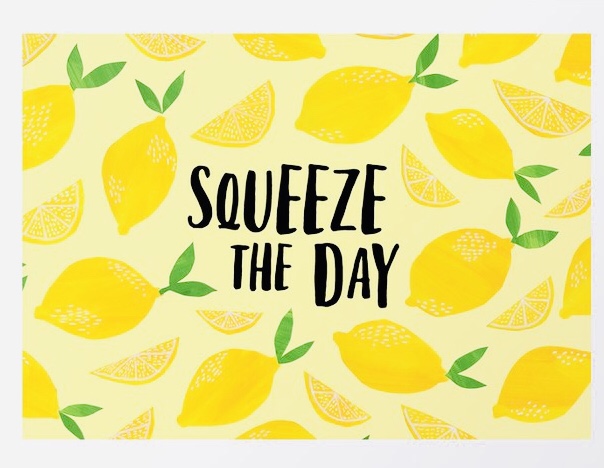
Today is a ‘squeeze day’ in Sweden. What, you may wonder, is a squeeze day?

It is not a day when everybody goes around hugging each other, or a day for drinking copious amounts of fresh citrus juice.

No, a ‘squeeze day’, or ‘klämdag’ in Swedish, is a day of the week that falls between a public holiday and a weekend.

In Sweden, when a public holiday occurs on a Tuesday or a Thursday, a common custom is to take the day between the holiday and the weekend as a day off. Often this is even subsidized by the employer. In English, this is called a ‘bridge day’ but in Swedish it’s cutely referred to as a ‘squeeze day’.

As yesterday (Thursday) was a public holiday, many people are also off work today.

April, April! You stupid herring!

april-fools-day-2015

Playing April Fool’s jokes on each other on the first of April is a tradition in many countries – Sweden included. In fact it is an old tradition – the oldest written reference being in 1392 in Chaucer’s ‘The Cantebury Tales’.

In Sweden, when someone is tricked, the tradition is to say ‘April, April din dumma sill!‘. This translates as ‘April, April you stupid herring!’. This is however not as weird as it might sound. In many countries, such as Italy, France and Holland, April 1st is known as “April fish”. On this day, people try to attach paper fish onto the backs of their victims.

April Fool’s pranks are common in newspapers, with classics such as:

  • IKEA is getting into the airline business. Furnishing all the flights with Ikea furniture, the name of the airline is FLYKEA.
  • Swedish supermarket chain ICA introduced toothpaste with the taste of chocolate. It might be brown, but it makes your teeth white.
  • Burger King introduced a new burger for left-handed people where ingredients were rotated 180 degrees.

I had a look this morning at the media to see if I could identify any April Fools tricks and I found one! A paper in northern Sweden reported that it had found a leaked document from the Swedish Armed Forces, revealing that Sweden is to receive its first moose cavalry. No animal is better suited for battle than the king of the forest, the newspaper claims. An AI image also shows armed soldiers riding moose!


Odd Swedish names

Ok, I know that English has quite a lot of funny names such as Dick and Willy, but Sweden also has its fair share.

Here come the top 10 hysterical and odd names that people in Sweden actually have.

  • 1. Gun. A popular name of over 18000 women in Sweden. Not bad for a pacifist country
  • 2. Jerker. Seriously. A man’s name, and also the name of a piece of furniture at IKEA.
  • 3. Saga. Ugly when pronounced in English, this name for a woman actually means ‘fairy tale’.
  • 4. Odd. An odd one this. A name owned currently by 735 men in Sweden.
  • 5. Even. Interestingly, the name Even also exists. Odd and Even would make a well-balanced coupled wouldn’t they?
  • 6. Love. It’s true. You could fall in love with a Swedish boy called Love.
  • 7. Ninni. A name of a Swedish woman. Although it means ‘an idiot’ in English, I assume all Ninnis in Sweden are not stupid.
  • 8. Knut. An unfortunate name that, at best, gets pronounced as nut, and at worst gets the letters mixed up to mean something altogether more rude
  • 9. Tintin. Yeah, it’s true. There are many people in Sweden, both male and female, who have this name. Over 500 to be more precise.
  • 10. Titti. This has to be the queen of all unfortunate Swedish names. 1024 women in Sweden currently bear this name with pride.
  • Thirteenth Day in Sweden

    Today, 6 January, is a national holiday in Sweden and in many places around the world. In Sweden, not a lot happens on this day – it is just another day off. If it lands on a weekend, the bank holiday is forfeited, unlike in many other countries where the following Monday is taken off in lieu.

    So what does the 6 January celebrate?

    In orthodox churches, the 6 January is celebrated as the day of Jesus’ birth.

    In western Christianity, the 6 January notes the arrival of the three wise men (the magi) to Bethlehem to visit the baby Jesus in his cradle. These wise men are said to represent the three continents of Europe, Africa and Asia.

    In Eastern Christianity, today celebrates the baptism of Jesus in the Jordan river and his manifestation to the world as the son of God.

    January 6 also commemorates the legend of the Wedding at Cana, where Jesus exercised his divinity by turning water into wine.

    Epiphany

    In English, today is called Epiphany – which comes from the Greek word ἐπιφάνεια, epipháneia, meaning ‘manifestation’ or ‘appearance’. It is derived from the verb φαίνειν, phainein, meaning “to appear”. It signifies the day when Jesus first appeared to the Gentiles, in his cradle.

    In the practical language of Swedish, there is no reference to manifesting or appearing. Today is given the name of Trettondag Jul (Thirteenth Day Yule) – literally thirteen days after Christmas Eve.

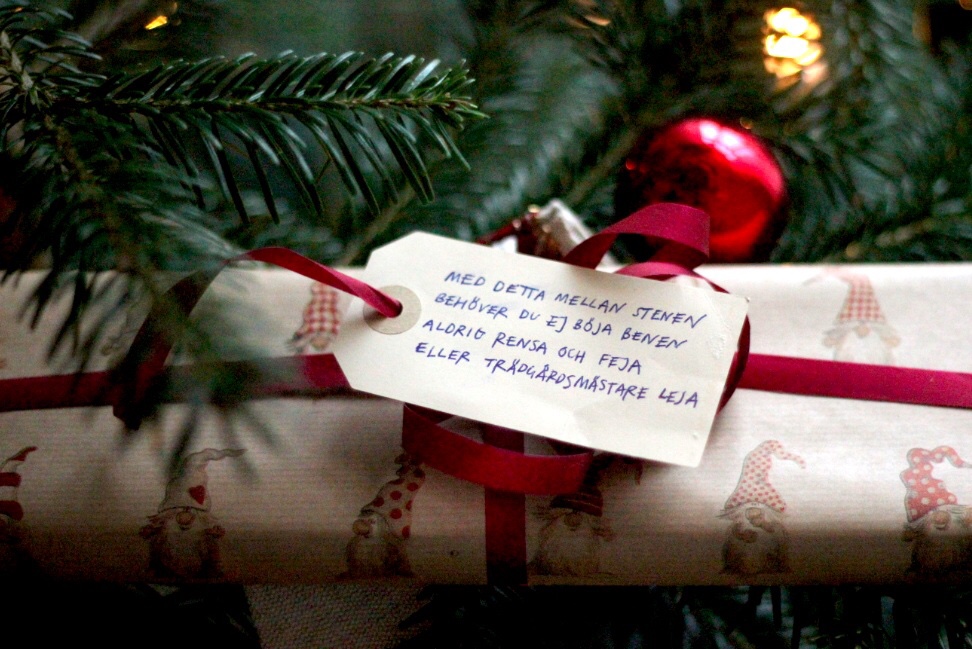
    Advent Calendar – Dec 19: Julklappsrim

    Window 19. Today’s word is ‘Julklappsrim‘ which translates as ‘Christmas present rhyme’

    If you receive a gift at Christmas time,

    You’ll find in Sweden that it comes with a rhyme.

    The packets are wrapped, the present to hide

    And a poem describes all the contents inside.

    You see, Swedes write poems on the label

    Sometimes direct, sometimes a fable.

    They sit in a workshop creating their verse,

    It needs to be brief, but not at all terse.

    The poem is read, the packet ripped open

    And you see what you got, but it still leaves you hopin’

    For a phone or a trip or a book about crime,

    Wrapped up with a Swedish Christmas rhyme.

    Advent Calendar – Dec 11: Nubbe

    Window 11. Today’s word is ‘Nubbe‘ which is the colloquial word for an alcoholic shot known as snaps.

    Nubbe, or snaps, is a really popular drink that Swedes enjoy at Christmas time. At its base, it is a strong spirit (30-38% alcohol content) called ‘brännvin’ which is distilled from potatoes or grain.

    It can be plain and colourless, or flavoured with herbs and spices. Sometimes it can be sweet and infused with, for example blackcurrant, elderflower or raspberry. Others can be so bitter they make your toes curl – flavoured with for example aniseed, wort or wormwood. If it includes caraway or dill, it can according to EU patent protection be called akvavit.

    A mouthful-size of ‘brännvin’ is called a snaps or a nubbe and it is drunk out of small glasses. Usually it is consumed when eating traditional food, and may also be accompanied by a ‘snapsvisa’ – a drinking song.

    One popular drinking song at Christmas is called ‘Hej Tomtegubbar‘ which translates roughly as:

    ‘Hello goblins, fill your glasses and let’s be jolly together.

    Hello goblins, fill your glasses and let’s be jolly together.

    Our time is brief upon the earth, with many troubles and little mirth

    Hello goblins, fill your glasses and let’s be jolly together.

    After a few snapses, the party atmosphere usually begins – with more singing and speeches. For Swedes, snaps is such an important tradition that it is drunk not only at Christmas but at most festive times – such as Easter, Midsummer and autumn’s crayfish party.

    According to The Swedish alcohol monopoly, Swedes have been flavouring their ‘brännvin’ since the 1500’s and the word ‘Nubbe’ as a slang word for snaps turned up first in 1892.

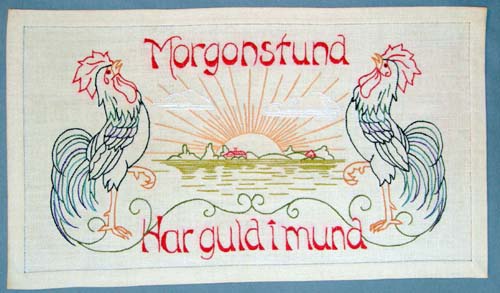
    Swedish saying: ’morgonstund har guld i mund’

    A saying you might hear early risers in Sweden use is ‘morgonstund har guld i mund’ which means the same as the English ‘the early bird catches the worm’. In other words, people who get up early, get a lot acheived.

    It is borrowed from the German saying with the same meaning and exists in many other languages.

    There is some disagreement on what the saying actually refers to. According to various sources, it translates as ’early morning has gold in its hand’ with ‘mund’ being an old word for ‘hand’. Others say that ‘mund’ refers to ‘mouth’ – making the saying ‘early morning has gold in its mouth’.

    The Swedish word for ‘mouth’ is ‘mun’ and one theory is that it was changed to ‘mund’ to simply rhyme with ‘morgonstund’.

    We will probably never know the actually origin. like many sayings, the real explanation is lost in the mists of time.

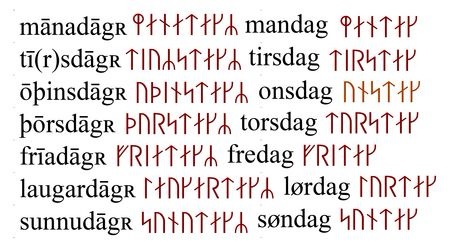
    Where do the names of Swedish weekdays come from?

    All of the Swedish weekdays, and several of them in English, stem from Norse mythology. Additionally all, but one, are named after the Gods and Goddesses of that period.

    • Måndag – Monday – named after the Norse God ‘Måne’, which means moon.
    • Tisdag – Tuesday- named after the Norse God ‘Tyr’, a God of War. This relates to the Roman God of War – Mars – in Germanic ‘Tui’.
    • Onsdag – Wednesday – named after the Norse God ‘Oden’, the King God of Wisdom, War and Death. In Germanic, the God was called Woden.
    • Torsdag – Thursday – named after the Norse God ‘Thor’, the God of Thunder
    • Fredag – Friday – named after the Norse Goddess ‘Freya’ or ‘Frigg’, the Goddess of Love and Fertility (also by the way Oden’s wife)
    • Lördag – Saturday – named not after a god, but after the Norse tradition of bathing – called ‘att löga sig’. The English Saturday stems from the Roman God Saturn.
    • Söndag – Sunday – named after the Nordic Goddess of the Sun – ‘Sol’ or ‘Sunna’.

    If you’re interested in knowing how to pronounce the Swedish days of the week, check out this little film, and put your dancing shoes on!

    https://www.youtube.com/watch?v=Q6cDiYruUK4

    Swedish Monsters: 9) Skogsrå

    When I was at the open-air museum Skansen, I heard a story about trolls. This got me thinking about other mythological creatures and monsters that inhabit Sweden. And a new series was born!

    Today – Skogsrå

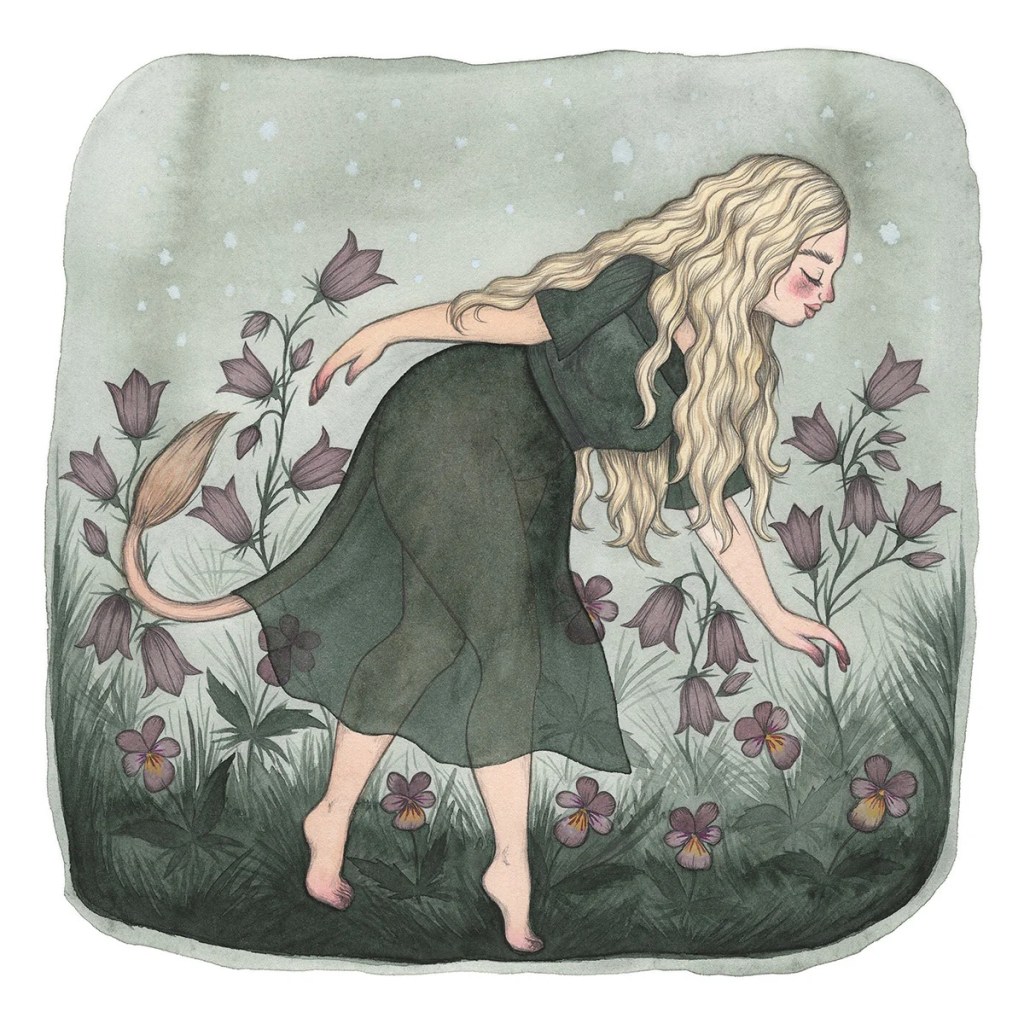
    Another Swedish creature is the Skogsrå. A forest spirit, she is often depicted as a fair-haired beautiful woman, with the skill of seduction as her most prominent weapon. Using her skills, she lures men deep into the woods, to their peril.

    The Skogsrå have hollowed-out backs, concealed from view. They also have a long cow’s tail. Of course, they have to also hide this from sight if their seduction is to work. The only way for a Skogsrå to lose her tail is if she gets married inside a church, when her tail will drop off, and she’ll transform into a human.

    Similar to the legend of the sea-based Sirens, these forest nymphs lure men into the woods with their beautiful singing or harp-playing. They are also hypnotic dancers. It is said that if a human male has sex with a Skogsrå, he becomes sick and dies.

    There are several ways to break the spell if you become bewitched by a Skogsrå. These include burning her with an ignited log and throwing tar in her face. To protect yourself, wear your clothes inside out and, under no circumstances give her your real name. If you do you will never break the enchantment.

    Illustration: Kajsa Wallin