Every day, I will open a window containing a Swedish word that has something to do with Christmas and the festive season.
Today’s word is ‘Julkalendern‘ which translates as ‘Christmas Calendar’
Julkalendern is a television series broadcast on Swedish TV every day in December leading up to Christmas Eve. It is a popular and heavily-anticipated program that children and adults traditionally watch at 7.15 in the morning (or on line). Typically each episode is 15 minutes long, and every year there is a new story.
The first Julkalendern was broadcast in 1960 and was called ‘Titteliture’. In 2016, a competition was held to vote for the all-time favourite Julkalendern. It was won by a series called ‘Sune’s Christmas’ (1991) followed by ‘The Mystery at Greveholm’ (1996), ‘Time of the Trolls’ (1979) and ‘The old woman who shrunk to the size of a teaspoon’ (1967).
This year, the series is a continuation of 1979’s ‘Time of the Trolls’ – ‘ Legend of the Mountain Troll. ‘
Today, the first of Advent, the light shines strong in the darkness.
Since the 1930’s Swedes have decorated their homes with lights from the first of Advent. The tradition was inspired from Germany, where the Advent star had been a popular decoration since the 1880’s. The star symbolizes the star of Bethlehem that guided the three wise men to the stable, where the baby Jesus lay in a manger.
Today, the star has lost most of its religious symbolism. In Sweden, illuminated advent stars are hung in windows. On window ledges, electric advent candles are placed. Gardens and balconies are decorated with fairy lights. On tables, four candles are positioned and one is lit every Sunday up until Christmas. Small candles, often red, are dotted about the home. Some people change curtains and populate their homes with small gnomes and fragrant flowers.
Since November is often a grim month, the collective advent decoration is a welcome arrival as light is spread into the murky places. From the dark street, it is lovely to see windows lit up in every apartment.
This weekend is also the starting signal for the Swedish ‘glöggfest’. People go to each other’s homes and drink ‘glögg’ (mulled wine), eat gingerbread and saffron buns. It is a very cosy time of year.
Every day, I will open a window containing a Swedish word that has something to do with the festive season.
Today’s word is ‘Gävlebocken‘ which translates as ‘The Gävle Goat’.
This strange tradition takes place in the Swedish town of Gävle. Every year, since 1966, a giant handcrafted straw goat is built up. And almost every year, it gets burned to the ground by a pyromaniac.
One year, it was even burned down before its inauguration. Consequently, the local authority have increased security and have managed to prevent the burning for the last three years.
The symbol of the goat is a traditional Christmas decoration in Sweden, called a ‘julbock’ – a Christmas goat. Usually made of straw, a goat is placed under the Christmas tree or small goats are hung from the branches. The symbol of the goat has ancestry in Scandinavia far back in Nordic mythology and, up to the 1800’s, it was the goat who brought presents during the festive season. A kind of precursor to Santa Claus.
So although the Christmas goat has endured for centuries, it remains to be seen if the Gävle goat survives until the New Year.
Every day leading up to Christmas, I will open a window containing a Swedish word that has something to do with the festive season.
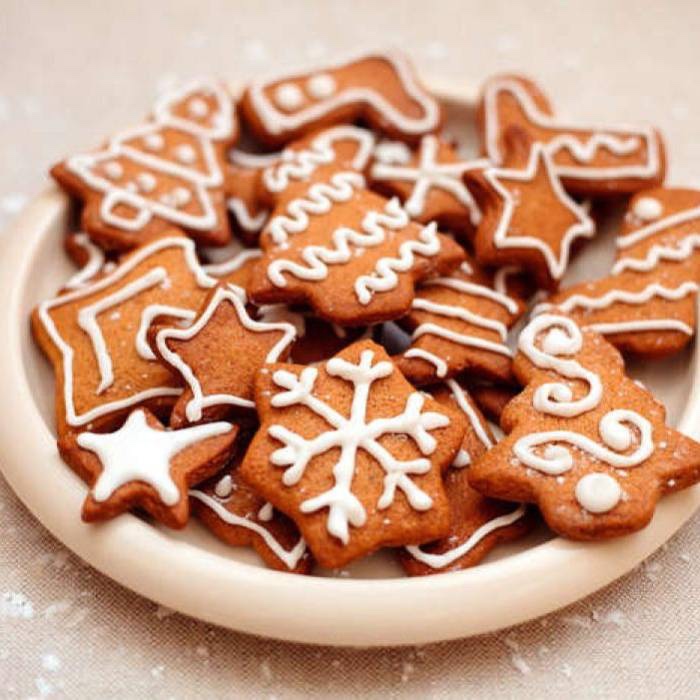
Today’s word is ‘pepparkaka‘, which translates as gingerbread.
Other than glögg, nothing else is more synonymous with the Swedish festive season than pepparkaka (gingerbread).
The Swedish version of gingerbread comes in the form of thin crispy biscuits flavoured with cinnamon, cardamon, ginger and cloves. Formed in different shapes such as hearts, trees, and stars, gingerbread is eaten plain or decorated with icing. Many people buy squeezy blue cheese in a tube and squirt it onto the biscuit before consumption. Some people build gingerbread houses as part of their Christmas decorations.
Making your own pepparkaka is a cosy a Christmas tradition – here is a typical recipe. However, most people buy their gingerbread ready-made.
Pepparkaka has been associated with Christmas in Sweden since the 1800’s but was eaten much earlier than that. The first documented record of pepparkaka in Sweden is from 1335 for a royal wedding. In a recipe from the 1400’s, gingerbread included pepper, which could be why it has the name pepparkaka. But nobody is really sure.
Ever wondered why Swedish people are so nice? Well, the answer lies in an old myth – apparently the very eating of pepparkaka is what makes you nice.
More than 90,000 articles have been written about the Koran burnings that are occurring in Sweden. The burnings have led to an escalated terrorist threat, international public protests, storming of embassies, burning of the Swedish flag, and condemnation from everyone from Turkey’s Erdogan to the Pope.
For many people outside Sweden it is hard to understand why the burnings are being permitted. The bottom line is that it is not against the law. The question is why is it not against the law.
It all boils down to understanding Sweden’s version of freedom of speech, expression and demonstration. In Sweden, you are allowed to publicly comment on, demonstrate against and criticize anything. Sweden’s centuries-old democracy is built on this.
Powers such as the royal family, industry giants or organized religions cannot legally stop or influence this. In secular Sweden, religion has no influence over politics. However, you are free to follow any religion you want, and this right is protected by law. Likewise you are free to criticize any religion you want.
With this understanding, you can see how the burning of books, including any religious scripture is allowed and not, per se, limited only to the Koran.
So you have to separate the law from ethics. Is it ethical? Maybe not. Is it illegal? No. This is why the Swedish government condemns the action but at the same time defends the right to self expression.
That said, there are other laws in Sweden that restrict public speech. For example, if it is considered hate speech, or incitement to violence, or against the interests of national security.
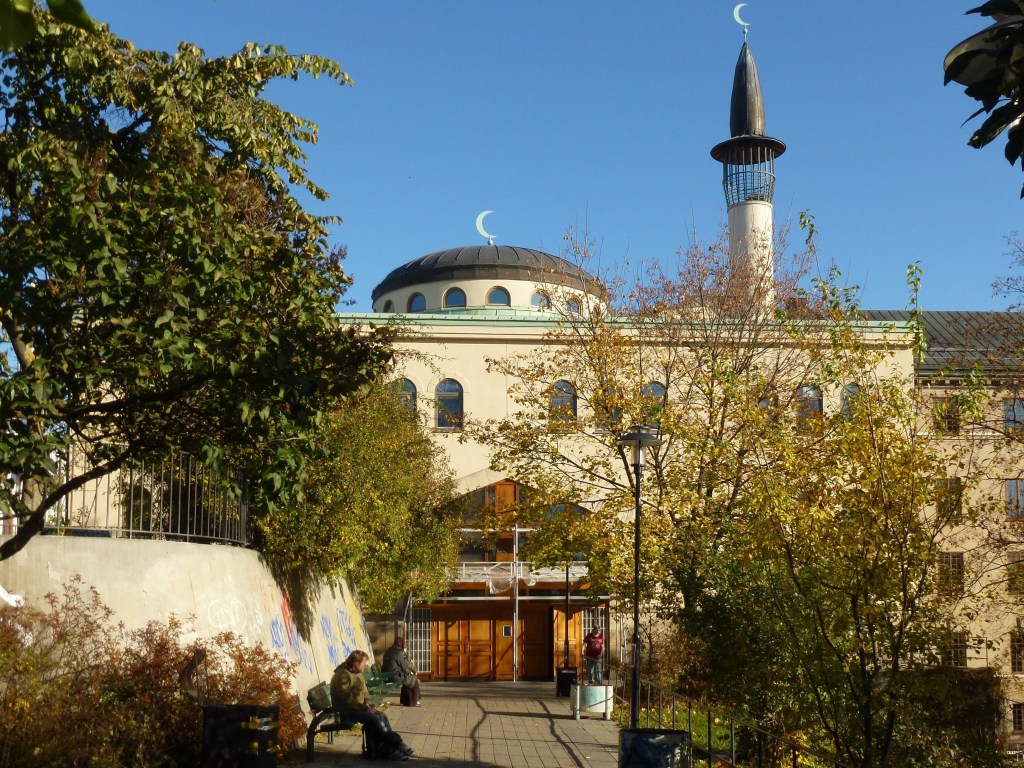
In the case of recent Koran burnings, outside a mosque on the first day of Eid, or outside the embassies of Muslim countries, and with today’s political instability, one can seriously question the police’s choice to allow such demonstrations to occur. Many Swedes say that it shows a poor sense of judgement and disregard for public safety and national security. But it isn’t illegal, and is fully in line with freedom of speech and demonstration.
Swedish law often looks at intent. At this could be the case with the Koran burnings moving forward. What is the intent of the demonstrators? Personally, I see it as a obvious provocation, an attempt to destabilize Swedish society and a direct insult to all the Swedish Muslims residing in the country.
Denmark has recently suggested a law change, based on the fact that the intent behind the action is malicious. The legislation will prohibit the inappropriate handling of objects with essential religious significance for a religious community. The Minister of Justice says ‘I fundamentally believe there are more civilised ways to express one’s views than burning things.’ I’m sure he is right. Changing the law isn’t about bowing down to the extremist demands of other nations, but showing respect for the diverse citizens of one’s own country.
This week is Stockholm Pride. It culminates on Saturday with a huge parade. The event celebrates 25 years this year, and some people question if it is still needed or relevant.
The answer, unfortunately, is more than ever.
But we’ll come to that later.
Currently there are 73 Pride festivals in Sweden during the year. From Arctic Pride way up in the north to Malmö Pride in the south, it is possible to celebrate throughout the year.
This indicates that many Swedes seem to have embraced the concept of Pride with open arms. There is, of course, a commercial benefit but the main reason seems to be that LGBT+ Pride resonates well with the societal Swedish values of equality, tolerance and acceptance.
However, like everything, it has its opponents.
Sweden’s current conservative government is in power, solely with the support of a right-wing populistic party. This party has consistently attacked LGBT people and the Pride movement. For example, this week, one of their politicians tweeted that Pride legitimizes pedophilia.
It is comments like this that plant the seeds of aggressive counter demonstrations, homophobic, anti-Pride propaganda and personal physical attacks. LGBT+ people are still regularly abused, discriminated against and attacked in Sweden. And if we lift our eyes to the broader world, we see examples of LGBT + rights being restricted or removed, and same sex relations being criminalized and punishable with the death penalty.
This is why Pride is still needed, not only as a celebration, but as a political manifestation of human rights.
If you’d like to know where a Pride is near you, go to http://www.svenskapride.sewhich collects all the Swedish events in one place.
More than 90,000 articles have been written about the Koran burning in Stockholm that occurred last week. Many of these articles are declaring Sweden as Islamophobic. The action has led to international public protests, storming of embassies, burning of the Swedish flag, and condemnation from everyone from Turkey’s Erdogan to the Pope.
So, is this true? Is liberal-minded, egalitarian Sweden, in fact Islamophobic? Like everything the answer lies in your definition, and perspective.
It all boils down to understanding Swedish freedom of speech. In Sweden, you are allowed to publicly comment on, demonstrate against and criticize anything.
Influential powers such as the royal family, industry giants or organized religions cannot legally stop or influence this.
In Sweden, you are free to follow any religion you want. Likewise you are free to criticize any religion you want. That is the basis of democracy in Sweden.
With this understanding, you can see how the burning of any religious scripture is allowed and not, per se, limited only to the Koran.
So you have to separate the law from ethics. This is why the Swedish government condemns the action but at the same time defends self expression.
That said, there are other laws in Sweden that restrict public speech. For example, if it is considered hate speech, or incitement to violence, or against the interests of national security.
In the case of the recent Koran burning, outside a mosque on the first day of Eid, and with today’s political instability, one can seriously question the police’s choice to allow a such a demonstration to occur. Personally, I think it shows a poor sense of judgement and disregard for public safety and national security. But it wasn’t illegal, and fully in line with freedom of speech.
So, is Sweden islamophobic? From this one action, no. If you want to burn a bible or the tora, you can. Is Sweden Islamophobic in other regards? Maybe. Were the actions of the individual demonstrator islamophobic? Maybe, although he himself is Muslim. He claims his action to be politically motivated.
Time will tell what the outcome is of this. The man who carried out the act is currently living under police security, and amongst other things is being charged with starting a fire during a fire ban.
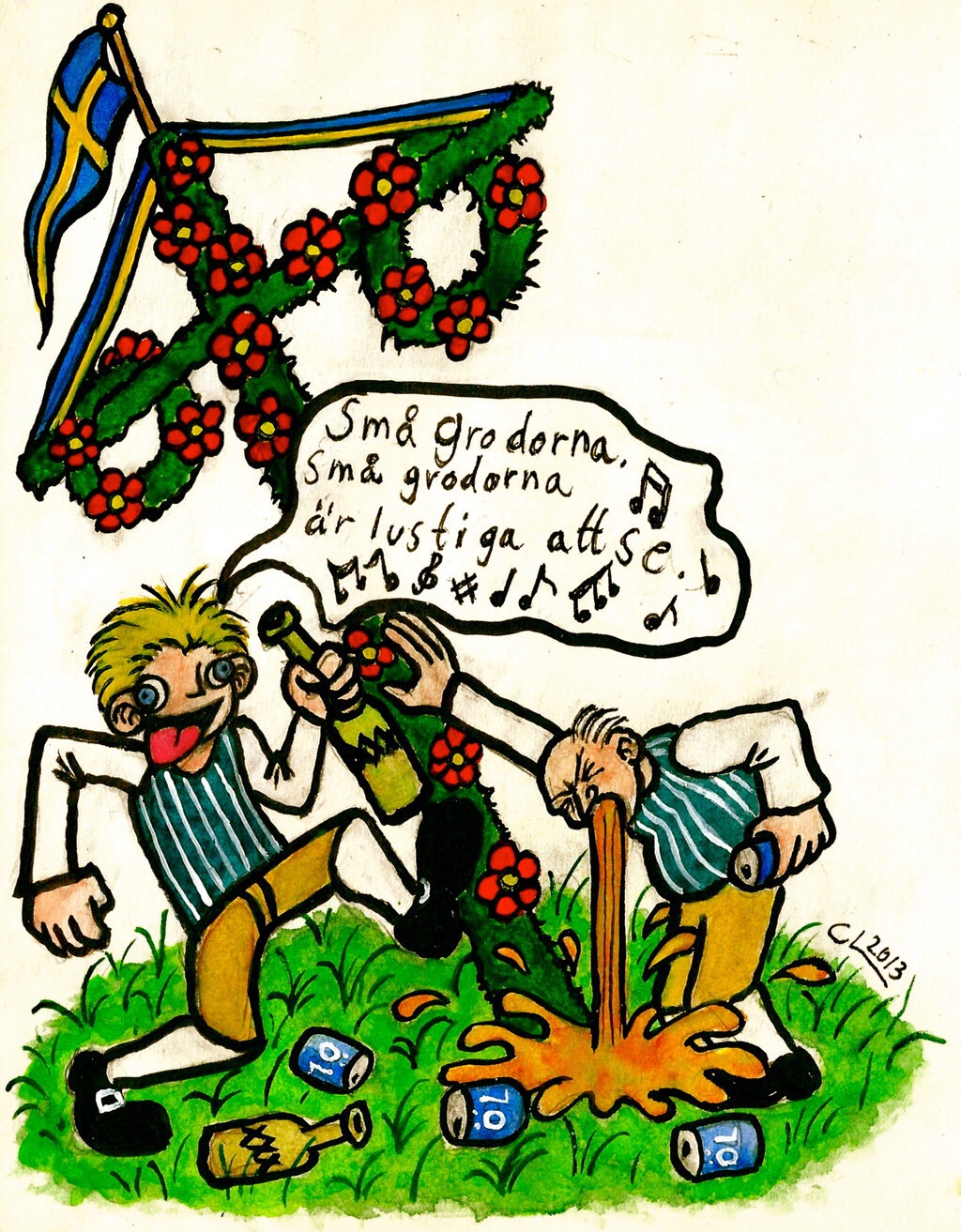
With Midsummer arriving on Friday, it is time to start planning for your survival. Midsummer’s Eve is the craziest custom in the Swedish calender and the time of the year when Swedes go a little bonkers. As a non-Swede, get ready to brace yourself. Here are a few hacks to make sure you make it to Midsummer’s Day in one piece.
Greet like a Swede. In Sweden it is considered polite to greet everybody individually, even if you plan to never speak to them again or remember their name. The appropriate way is to stand 1-2 meters away, look directly in their eyes, say ‘hej’ followed by your name. They will do the same. You might even give a small wave or shake hands if you are comfortable doing so. If you are feeling adventurous, follow up your ‘Hej’ with a ‘trevligt’ or even a ‘Glad Midsommar’. Job done. Now you can hit the booze.
Snaps is not the same as a shot. A lot of alcohol gets drunk on Midsummer’s Eve, especially beer and snaps With the popularity of shots in recent years, it’s easy to make the mistake that Swedish snaps is the same thing. Believe me, it is not. Snaps can be up to 40% proof, considerably more than your normal shot. So, go easy and sip the snaps or see yourself slipping sideways off your chair before the strawberry dessert has even been put on the table.
Take tissue. Midsummer’s Eve is a looong day and you probably will need the loo at some point. The trouble is, so will everybody else – to the detriment of the supply of toilet paper. There’s a big chance you will be seeking relief in the woods so come equipped with the appropriate amounts of paper for your needs.
If shy, bring swimwear. Bathing in the icy June waters is a common activity at Midsummer. Swedes generally are not afraid of skinny dipping when they do this. If you are, then come prepared with swimwear and a towel.
Shelve your maturity. Part of Midsummer is dancing around the maypole, playing silly games, pretending to be a frog, participating in competitions. To survive these activities, it helps to conjour up your inner child and forget you are an adult for a while.
Protect yourself. Given the amount of alcohol consumed at Midsummer, it is no surprise that the many babies in Sweden are made on this day. It you don’t want to join the ranks of parents, remember to put it on before you put it in.
Throw in the thermals. It looks like it might be super sunny and warm this Midsummer’s Eve. One of the warmest ever! But it is good to be prepared. It is not unusual that temperatures fall into single figures and that pesky rain pours down onto the smorgasbord. So bring a jumper, a rain jacket and even thermals to enhance your experience.
Don’t expect culinary miracles on Midsummer’s Eve. The food is exactly the same as is eaten at Christmas and Easter, with a few small summery exceptions – strawberries, cream, dill and new potatoes. Remember to use hand disinfectant before you attack the buffet.
Learn a drinking song. On Midsummer’s Eve, food and alcohol is accompanied by Swedish drinking songs. Learn one in advance and shine at the table. Even better sing one in your own language and you are guaranteed to use those rubbers you packed just for the occasion. For me, ‘what shall we do with the drunken sailor’ works every time.
Argue over the rules. At Midsummer a popular Swedish garden game is called kubb. Involving the throwing of sticks, everybody seems to have their own understanding of the way to play. If you want to feel really Swedish, make sure you start an argument about the rules.
Take pills. Of varying types. Allergy pills are good because there are flowers everywhere: on the table, in the maypole, on peoples’ heads. Pain killers are good as a lot of snaps is consumed. Indigestion pills are good as the food is oily, fatty, acidic, smoky and rich. The after day pill is good, well… because…
That’s it! Follow this guide and you are sure to have a wonderous Midsummer’s Eve in Sweden.
Glad Midsommar!
Please share this post to help others get ready for the big day!
Neighbouring countries Sweden and Finland have entered into a friendly conflict. The subject? The Eurovision Song Contest.
On Saturday, artist Loreen took home the win for Sweden, just ahead of Finland. And the Finns weren’t happy, many of them saying the competition was fixed.
Now, when the televoting statistics have been released, it has become known that Finland was the only country to give Sweden zero points in the public vote. This is weird as the Finnish jury had awarded Sweden the maximum 12 points, and the song Tattoo is currently number 1 on the Finnish chart. One can wonder who was responsible for an attempt at fixing?
It has also come out that the Finnish tv commentator encouraged citizens to vote tactically in a message, something that viewers clearly did.
The issue isn’t an important one, however it is funny to observe as tensions rise between the two Nordic neighbours. It’ll probably run out in the sand, but will be interesting to see how Sweden enacts it’s revenge next year.
In Swedish, there is a term ‘vargtimmen’, which translates as hour of the wolf. It is used to specifically describe the time between 03.00-04.00
Although it sounds like an ancient concept, it was actually coined by Swedish film director Ingemar Bergman in his 1968 film of the same name. Or so he claimed. He describes the ‘vargtimmen’ in the following way:
‘The hour of the wolf is the hour between night and dawn. It is the hour when most people die, when sleep is the deepest and nightmares the most vivid. It is the hour when insomniacs are hunted by their worst anxieties, when ghosts and demons are at their most powerful. The hour of the wolf is also the hour when most babies are born’.
Other academics believe the concept existed earlier than Bergman’s time, and that it refers to the fact that farmers would get up in the night to protect their wild stock from hunting wolves.
Whatever the origin, the ‘hour of the wolf’ has a definite mystical and almost terrifying implication. When was the last time you lay awake at 03.00 am and chased your demons?





 Watching the Swedes