Stockholm A-Z: Långholmen

IMG_4397.JPG

Tucked away on the north west coast of Södermalm, in Lake Mälaren, is the oasis of Långholmen. This island is accessed by small bridges and is a paradise for sunbathers and swimmers. The island has a bloody history – it was originally a prison island, housing criminals up until 1975 when it was closed. Today the old prison houses schools, apartments, a hotel, a conference centre, an inn and a very interesting hostel where you can spend the night in the former prison cells. Outside the prison is a popular beach which attracts hundreds of bathers on sunny days. In fact the whole island attracts its fair share of sun-worshippers. If the crowded beach is not your scene, it’s possible to jump of the rocks or low-hanging branches all around the island. In the winter, the lake freezes and you can walk around the island in the very same place you bathed just six months earlier.

On Långholmen you will also find cafés and restaurants, ice cream stands, a spinnery, a museum, a caravan site and cutely colourful allotments.

Långholmen is easily accessible by bike and connects to the other side of lake Mälaren via the imposing bridge Västerbron. From this high vantage point, you can look down over the city hall, the old town, the city, into the harbour and out into the Baltic Sea.

Close to the island of Långholmen is the residential island of Reimersholme. This smaller island was once the place for a wool factory where the prisoners of Långholmen were put to work. The factory is long gone but the island is worth the walk around to take in the beautiful panoramas over the lake.

Just close to Långholmen and to Reimersholme is a favourite historical Stockholm cafe. Set in a pleasant garden, the cafe Lasse i Parken was, in the 1700’s, a worker’s cottage. Nowadays the only people working there are the catering staff, as Stockholmers enjoy their coffee and cakes listening to live music or stand-up comedy.

Stockholm A-Z: LGBT living

Sweden is internationally known for its tolerance and openness and this means Stockholm is a great city to live in for members of the lesbian and gay community. However, visitors to the Swedish capital might be disappointed in the size of the gay scene. Where many other capital cities have gay neighbourhoods, or lots of gay and lesbian restaurants, cafés and bars to choose from, Stockholm's choices are limited.

One of the reasons for this is that the very tolerance and acceptance that exists in the city has led to a a general integration into the mainstream. Where other places around the world have needed to develop a strong and powerful subculture, it seems to have been less important in Sweden. This means that in Stockholm most places are mixed.

However, there are today a couple of bars, Torget in the Old Town is aimed and a young twinky fashionable crowd and Side Track on Södermalm aimed generally at the older and bear crowd and SLM for the fetish crowd. If you want to strut your stuff, a few clubs nights exist such as Patricia, Candy and Wonk. For a nice cup of coffee or a bite to eat head towards gay cafe restaurant Adams Bistro in the Odenplan area.

Other than occasional parties and club nights, there's very little just for lesbians and unfortunately nothing apart from interest groups exclusively for the transgender community.

In the summer half of the year, the very popular outdoor bar/restaurant Mälarpaviljongen opens its doors and is well worth a visit to take in beautiful Stockholm views and beautiful Stockholmers.

For more information on venues grab the gay rag QX or visit http://www.qx.se. Also check here for gay beaches, gay-friendly beaches and cruising areas such as Långholmen, Frescati and Kårsön.

Once a year, Stockholm organises the biggest Pride festival in Northern Europe. Usually on the first weekend in August, Stockholm Pride is a real carnival and succeeds in balancing the playful, the sexual and the political. The festival attracts up to 60000 participants who take to the streets in pride. Pride week is usually packed with club nights and parties and definitely worth a visit.

But LGBT living isn't only about parties and festivals. In Stockholm's community there is a plethora of things to occupy yourself with. If you enjoy singing, you can listen to Stockholms Gay Choir, the oldest gay men's choir in Europe. They give concerts twice yearly at Christmas and in the spring and are well worth the modest entrance fee. If exercise is your thing, then Stockholm's gay rugby team Stockholm Beserkers are a good option. On frequent Sundays they compete, and they practice on Monday and Wednesday evenings on Årstafältet if you want to go along.

If swimming is your thing, Stockholm Dolphins practice at Eriksdalsbadet on Södermalm. For more info: http://www.qx.se

And for dancing outside of the clubs, why not give Queer Salsa a go? Check out Queer Salsa Stockholm on Facebook for more information

.

IMG_4393.PNG

Stockholm A-Z: Kayak life

IMG_4392.JPG

If you’re up for a bit of adventure, then renting a kayak and heading off into Stockholm’s many waterways might be the thing for you. Kayaking has become a very popular part of urban life in the Swedish capital and seeing those little colourful plastic vessels bobbing around is an integral part of Stockholm’s water views.

As the city is built on many small islands, a kayak is a perfect way to experience it. There are many places around Stockholm to rent, the most popular being in Rålamshovsparken on Kungsholmen, on Långholmen and in Pampas Marina in Solna. You don’t to have kayaked before to rent, although since you’re heading out into water, it’s a good idea to have lessons or a little previous experience under your belt. Life belts are provided.

Popular routes are around the island of Kungsholmen, where, from the glistening water, you can take in the Old Town, the City Hall, the coastal stretch of Norrmälarstrand and the architecturally interesting dockland development of Lindholmen.

Another route is around Långholmen, skimming through the narrow boating canal, skirting the island of Södermalm and propelling along the grandiose lake Mälaren to see the woodlands and bathing areas along the water’s edge.

If you’re interested in less of an urban experience and would like to convene with nature, there are plenty of opportunities to kayak outside of the city. In the archipelago, you can kayak from island to island, through narrow inlets and open water, round skerries and cobs, rocky outcrops and sandy beaches. Take a boat out to the lush island of Grindö for example and spend the day kayaking in some of the world’s most beautiful natural environments. More information: http://www.horisontkajak.se

One of Stockholm’s brand names is ‘beauty on water’. From a kayak, it’s hard to disagree.

Stockholm A-Z: Junibacken

IMG_4391.PNG

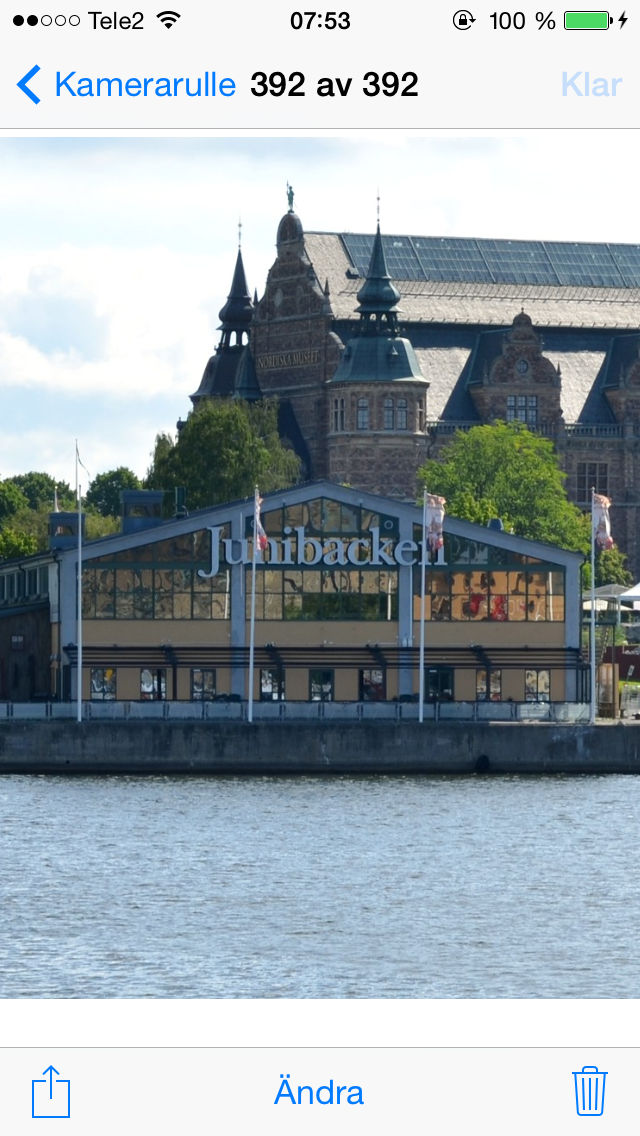
In the hustle and bustle of urban city life there is still room for fairy tales. Out on the museum island of Djurgården, you’ll find a place dedicated to them. A perfect destination for kids and families, Junibacken celebrates the fantastical stories of various Swedish writers, especially the writer Astrid Lindgren. Astrid Lindgren is today still very popular in Sweden and she is the third most translated children’s author after Hans Christian Andersen and the Brothers Grimm. She’s estimated to have sold a staggering 144 million books worldwide and has a whole army of fictional characters to her name.

Here at Junibacken you can meet all of her most well-known characters such as the airborne Karlsson on the roof, the naughty Emil of Lönnerberga, the feisty Ronja the robber’s daughter and the internationally renowned Pippi Longstocking. After traveling the museum train, children arrive at the home of the world’s strongest girl where they can play as wildly as they like.

A visit to Junibacken is a thoroughly Swedish experience, seen through the eyes of children. It is also a testament to a beloved national treasure that ensures her stories will never be forgotten.

Stockholm A-Z: Ice

IMG_4387.PNG

Nothing sums up Stockholm in the winter months than the word ice. As temperatures plummet, sheets of ice start covering the waterways, icicles form on the guttering and pavements turn into treacherous rinks. There are few places in the world that are as beautiful as Stockholm in the winter and the city is well worth a visit December to March. Imagine this – a crisp blue winter sky and a hazy cool sun hanging low. The trees twinkling with the fresh white of snow and the city’s orange and red buildings glistening with ice and smoky plumes of steam. It’s really a sight to behold. It’s so achingly beautiful you almost forget it’s minus 20 degrees and your nose turned to an ice cube long ago.

Stockholmers really know how to make the most of the unfavourable climate. In Kungsträdgården, an outdoor ice rink is built and you can skate around listening to music and enjoying the afternoon sun. If more adventurous skating is your cup of tea then open water skating is made possible on the many frozen lakes outside of town. On these frozen lakes, you can also go pimple fishing. This entails drilling a hole through the ice, dropping the line into the water and sitting on a stool waiting for a passing fish to bite. What might seem to some like savage amusement is actually a very meditative way to spend a few hours. A morning walk on the frozen Mälaren is another popular pastime. Wrapped warmly in think coats, woollen hats and scarves, Stockholmers walk on the water and finish with brunch or a cup of hot chocolate at a nearby restaurant. Outside of the city, in the forests, tracks are made for cross-country skiing, and even parks such as Tantolunden and Gärdet plough shorter tracks for the urbanites to practice on.

As the ice descends on the city, a sense of cosiness develops. In Stockholm’s Old Town, the narrowed cobbled streets seem to be transformed back into previous centuries. There’s nothing more romantic on a winter’s evening than to stroll here, chunky snow flakes pouring down from the sky, the crunch of the ice and snow underfoot.

Stockholm’s smart embracing of ice has even manifested in an Ice Bar, located in the Nordic Sea Hotel. Indoors, wrapped in thermal clothes, you can partake of a vodka drink out of a glass made of ice. This place is an offshoot from the Ice Hotel in the arctic north of Sweden, which is well worth a visit.

It would be an error of judgement to think Stockholm is only a summer city. There is a great deal to do even in the frozen months.

Stockholm A-Z: Hipsters

IMG_4386.JPG

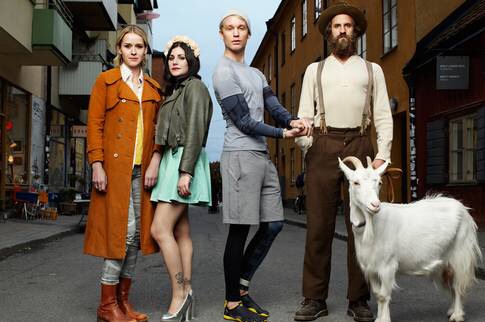
When you understand the definition of hipster as middle-class young bohemians residing in gentrifying areas with an interest in alternative music, vintage, progressive politics, organic, artisanal foods and alternative lifestyles, there’s one neighbourhood in Stockholm that stands out. Recently voted in Vogue magazine as one of the coolest city areas in the world, the island of Södermalm lives up to its reputation as a hipster heaven. Divided into distinct areas, the island offers lots to see and do. On the western side of the island, is Hornstull. Here you will find groovy restaurants, shops, a vibrant music scene, a craft market, an independent cinema, bathing areas and Tantolunden – a popular green area for hanging out in. In the centre of the island, you will find Medborgarplatsen – or ‘Citizen square’. Hipster life is non-existent in this area but the square offers lots of mainstream cafés and restaurants and late night bars. Political rallies are often held here. On the eastern side, you will find an area known as Sofo, the birthplace of the hipster movement in Sweden, which has become such an identifiable brand it has even been ridiculed in a TV comedy based in the area. Sofo is packed with bars, restaurants, cafés, butique shops, vintage places and artisan fooderies. It’s well worth a visit and a stroll about on a sunny day. Much of the life circulates around the few streets between Nytorget, Götgatan and Folkungagatan. On some Saturdays, there is a farmer’s market lining one of the main arteries. For an alternative music and theatre scene, it’s worth visiting the venue Mosebacke with its outside terrace and view over Stockholm.

Stockholm A-Z: Gondolen

IMG_4385.JPG

If you want to experience a breathtaking view of Stockholm, while enjoying a fantastic cocktail or meal, very little beats Gondolen. Perched 33 meters above Slussen in a glass tongue, the restaurant serves critically acclaimed food and offers sweeping vistas of the lake Mälaren to the left, the city and the Baltic Sea to the right. Gondolen is a perfect location in the winter months, when the cold winds and icy temperatures envelop Stockholm. From inside, you can look out over the glittering winterscape while sipping on an elegant Rasperritini and tucking into a bleak roe toast.

The restaurant has historical merit, as it was inaugurated in 1935 as part of an inner city generation project. And history tends to repeat itself. The area where Gondolen is positioned is being heavily renovated again with a lot of demolition and remodelling. However, I believe this Stockholm classic will remain a jewel in the city’s crown for many many years to come.

Stockholm A-Z: Ferries

IMG_4382.JPG

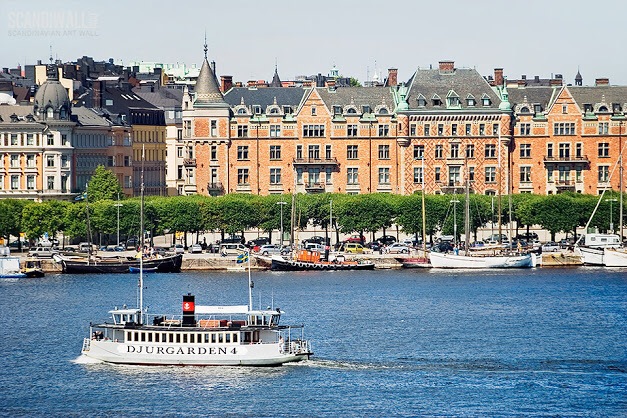
Considering Stockholm is a city built on many small islands, it’s not surprising that a favorite mode of transport is the ferry. In the city, there are several ferries used both by commuters and by pleasure trippers. The Djurgårds ferry takes people from Slussen on Södermalm to the museum and activity island of Djurgården. It’s a cute little boat that looks like a toy that a giant has flicked with his finger and thumb as it catapults over the waterway to the other side. This ferry also carries visitors to Östermalm and to Skeppsholmen, an Island located in the middle of the harbour, and is very well patronized by the city’s inhabitants.

Three other ferries in Stockholm are the ones taking well-heeled dwellers from the docklands development of Hammarby Sjöstad to Södermalm, and from Hammarby Sjöstad into the city, and the ferry that shuttles passengers from the Old Town to the suburb of Nacka and the islands of Fjäderholmarna.

But perhaps the most noticeable ferries are the giant liners positioned in Stockholm’s harbour that take passengers and vehicles to the Baltic Island of Åland and to Finland. These ferries satisfy various needs for Stockholmers. Some use them as a mode of transportation between Sweden’s capital and the Finnish cities of Helsinki and Åbo, maybe to work or to deliver goods or visit family. Others use the ferries as pleasure cruises, an opportunity for a trip out to sea, to eat well and maybe watch a show. Others use them as a way of buying cheaper duty free alcohol as the ferry bobs around in international waters. And other Swedes use them in a way that has gained these ferries notoriety – as a booze cruise. A popular weekend pastime is to embark the ferry on a Friday, drink, dance and party, and disembark, somewhat frazzled, when it returns to Stockholm 48 hours later.

Whatever the reason for taking one of Stockholm’s many ferries, this mode of transport is an undeniable part of the waterscape of this city and it certainly does contribute to Stockholm’s description as ‘the Venice of the North’.

Swedish Anglophiles

20140921-171056-61856967.jpg

Now I know many Swedes are Anglophiles but today it was proved. In Stockholm, a new cafe has opened. Run by Brits, they offer full English breakfast and tea, eggs in all forms, Pimms, you name it. All very British. And I love it. For a while it’s been a well-kept secret but today it seems like the cat’s out of the bag. Approaching the place today, we noticed a gathering of people outside. Probably just a group of friends we thought. But no. It was a queue! The place was packed and there was a waiting list to get in. It seems like more people want beans on toast than me. Now I’m really happy for the owners of this cafe, it’s great that business is going well. But I’m gutted that knowledge of the place has got out. Can’t anybody keep a secret these days?

The seriousness of xenophobia

us and them

In Greek, the word xenos means strange or foreigner. The word phobos as we know means fear. Putting those together gives us the well-known concept of xenophobia – the deep-rooted, irrational fear of something strange or foreign. Xenophobia can present itself in many ways, including the fear that immigrants and refugees are too abundant in a society.

In cultural research, we often talk about in-groups and out-groups. The in-group is usually the majority who belong to a somewhat homogenous culture. The out-group are the ‘others’ who live side by side but rarely amongst the in-group. One way to look at xenophobia is to see it as the relations and perceptions of an in-group towards an out-group. This may include a fear of losing identity, suspicion of the out-group’s activities, aggression, and desire to eliminate their presence to ensure a presumed security.

Xenophobia in a society is often aimed at a group of people who are not considered part of that society, eg beggars from Rumania and refugees from Northern Africa. When xenophobia becomes systematised it often leads to hostile and violent reactions, such as the phsyical attacks on beggars that we are seeing in Sweden or the call for expulsion of immigrants by SD voters. In extreme cases of systemitised xenophobia, genocide becomes the result.

To combat this issue, the Council of Europe in 1993 formed “The European Commission Against Racism and Intolerance”>. This is an independent human rights monitoring body specialised in combating racism, discrimination, xenophobia, antisemitism and intolerance. The organisation produced The Vienna Declaration and Programme of Action, also known as VDPA – a human rights declaration. In this declaration it clearly states the following:

”the VDPA urges all governments to take immediate measure and to develop strong policies to prevent and combat all forms and manifestations of racism, xenophobia or related intolerance, where necessary by enactment of appropriate legislation, including penal measure.’

We know that the winds of fear are sweeping over Sweden and Europe. And we know that governments can do what they can to combat this – changing policy, engaging in dialogue, ignoring the issue, closing the borders. But as soon as there is a manifestation of racism or xenophobia I think Sweden should have a zero tolerance policy. This might include infringing on civil liberties such as freedom of speech and right to demonstrate, but xenophobia is a creeping cancer that leads to horrific actions. We just have to take a look through history to understand that.