Great Swedish Women Part 2 – The Prosecutor

March 8th was International Women’s Day.

I am writing series on Great Swedish Women, past and present: women with strength and passion, women with a voice, women who create change.

For seven days, I am writing about these Great Swedish Women, one per day. I hope you want to join me in celebrating them.

massifritz

Part 2 – Swedish lawyer and prosecutor Elisabeth Massi Fritz.

On 24 June 1999, a 19 year old woman by the name of Pela Atroshi was murdered in a honour-related crime. The murder occured when she was visiting her family in Irak. Killed by her two uncles and her father, the crime was witnessed by Pela’s mother Fatima and sister Breen. The case was concluded with life time sentences for the two uncles. Pela’s father lives in Irak, where Pela is buried in an unmarked grave for bringing dishonour to her family.

In the court, in Sweden, Breen testified against her uncles which led to the conviction. She was represented by lawyer Elisabeth Massi Fritz.  After this case, Elisabeth Massi Fritz became known as one of Sweden’s leading lawyers and prosecutors, and Sweden’s only lawyer specialising in honour crimes. She stands up for the victims of crime, many of them women, and is an active contributor in the debate against honour crimes in Sweden.

Born in Motala, Sweden, to Christian Syrian parents, Elisabeth Massi Fritz personally gained insight into honour culture as she was not allowed to have a boyfriend or to move away to study. At the age of 19, she defied her family and moved to Stockholm to study law. Today, she runs a legal firm where she employs only female staff and where they specialise in defending the victims of crime and prosecuting the perpetrator. She has worked on many high profile cases, such as the rape cases against plastic surgeon Carl-Åke Troilius and the Chief of Police Göran Lindberg, both of which resulted in prison sentences for the accused.

Elisabeth Massi Fritz continues to fight injustice and is the champion of the victim of crime.
 

Great Swedish Women Part 1 – The Catalyst

Today, March 8th, is International Women’s Day.

In support, I am writing series on Great Swedish Women, past and present: women with stength and passion, women with a voice, women who create change.

For seven days, I will write about these Great Swedish Women, one per day. I hope you want to join me in celebrating them.

Fredrikabremer

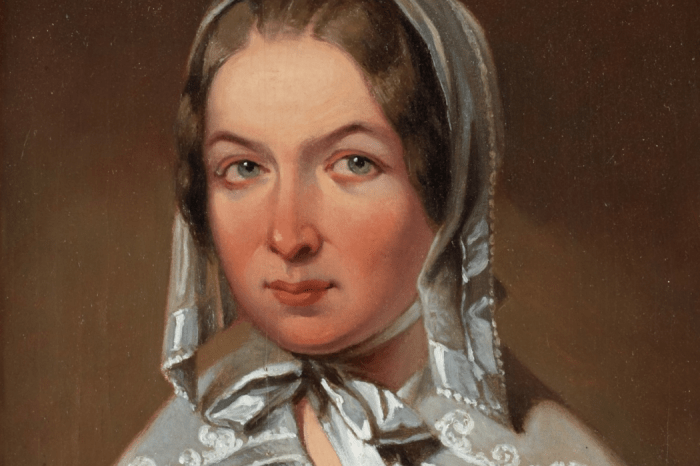
First out is the 1800’s writer and feminist reformer Fredrika Bremer, a kind of Swedish Jane Austen and one of the catalysts of the early feminist movement in Sweden.

Many of the women’s rights that we take for granted in Sweden today did not exist in the Fredrika Bremer’s time. For example, in 1800’s Sweden, women were not free to educate themselves as they liked, marry as they liked, live as they wanted, to have economic independence or to vote in elections. Married women were controlled in all manner by their husbands, unmarried women by their closest male relative. Fredrika Bremer was born into this kind of society in 1801 in Åbo, Sweden, which today is part of Finland. At the age of three, her family moved to Stockholm where Fredrika and her sisters were raised to marry well. Fredrika found the limited and passive family life of Swedish women of her time suffocating and she described her family as “under the oppression of a male iron hand’. Fredrika never was forced under the shackles of marriage, so had a certain level of independence inaccessible to married women at that time. Throughout her adult life, she became a world traveler, an accomplished author (at first anonymously) and a political activist. She was very interested in social reform regarding gender equality and social work and she participated actively in debates around women’s rights in Sweden.

Fredrika Bremer was a catalyst of the first real feminist movement in Sweden. There is much in modern day Sweden to thank her for. In 1853, she started by co-founding the ‘Stockholm Women’s Fund for Childcare’ and the following year, the ‘Women’s Society for the Improvement of Prisoners’. However, it was in her novel, Hertha (1856) that she issued in most change, making it probably her most influential literary work. In the book, she wrote about the lack of freedom for women, which subsequently raised a debate in the parliament called “The Hertha debate”. This directly contributed to a new favourable law for adult unmarried women in Sweden in 1858, and was a starting point for the campaign for women’s rights in Sweden. Hertha also raised the debate of higher formal education for women and, in 1861, the University for Women Teachers was founded by the Swedish state.

In 1860, Fredrika helped to fund Tysta Skolan, a school for the deaf and mute in Stockholm. Now an established and respected citizen and patron, she supported giving women the vote in the electoral reforms of 1862. In the same year, women of legal age were granted this in municipal elections in Sweden. The first real women’s rights movement in Sweden, the ‘Fredrika Bremer Association’, founded by Sophie Adlersparre in 1884, was named after her, 19 years after her death.

Fredrika Bremer’s leaves a legacy of equality and autonomy behind her. Her legacy extends far beyond Sweden’s borders. Not only is she recognised as an influencial writer and reformer, but the town of Frederika in Bremer County Iowa, USA is named after her.


.

Swedish signs of spring


Given the long winter in Sweden, the first signs of spring are very very welcome.  

But what are they, these first signs of spring? 

Well, for me they are:

  • when Vasaloppet ski race is on the tv
  • when people lean against the walls of buildings and look up into the sun 
  • when the thaw comes and scales of loose ice float around in the sea 
  • when the figurine of Queen Elizabeth on my window ledge, with the solar panel in her handbag, starts clapping 
  • when it’s not dark at 5 o’clock when you leave work 
  • when the final of Melodifestivalen finally happens after weeks of tedious heats through the winter
  • when the weather reporters start including pollen in their forecasts 
  • when the sun shines and you, in horror, start thinking that maybe you should clean your windows

What are the early signs of spring for you? Please comment below. 

Vasaloppet – Sweden’s very long distance ski race 


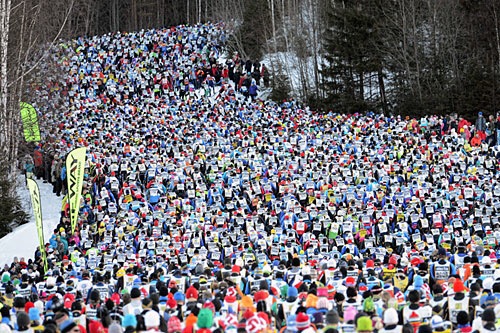
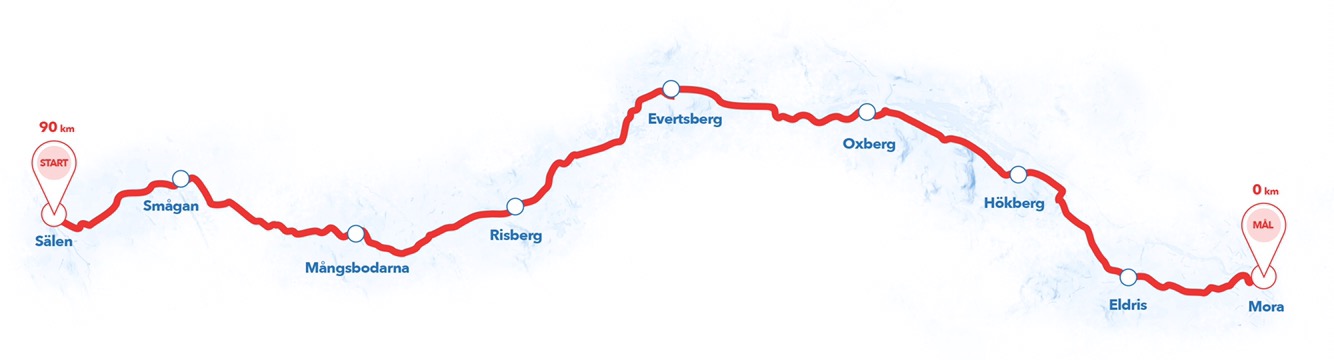
Today, the world’s longest cross country ski race takes place in Sweden. Called Vasaloppet, it entails participants skiing 90 kilometers from start to finish. It’s an extremely popular international race, which can take up to 12 hours to complete, and which is broadcast live on tv. When tickets to participate are released, they sell out in 15 minutes – it’s that popular. The first Vasalopp was in 1922 and takes place annually, the first Sunday in March and it is a first sign of spring.  It’s an amazing sight to watch, as more than 15000 mad, happy skiers glide along, the swishing sound of ski on snow filling the air. 
For the elite athletes, 12 hours to complete the race is of course unthinkable. They go considerably faster. The person who has completed the race fastest is Jörgen Brink, who in 2012 won the race in just over 3 hours 40 minutes, roughly 25 km per hour. 

So why is this race called the Vasalopp? Well, it takes its name from a Swedish king. The race commemorates the escape to Norway, through the forest, of King Gustav Vasa in 1521. Legend has it that he carried out the gruelling journey on skis,  but experts believe he more likely completed this escape on snow shoes. Nevertheless, out of this legend sprung the race which is so popular today. 

Modern day skiers don’t see the experience as an escape, they see it as a challenge and for many of them it’s a rite of passage. 

And as you sit watching the TV comfortably from the sofa, with tea and toast, you take vicarious pleasure in this long, amazing Swedish race. 

Swedish foot fetish 


Sweden’s winters are long, dark and cold. To compensate for this many Swedes leave these icy shores and head off to warmer climes for a week or two. They top up their tan, get a boost of sunlight and fill up their vitamin D. Somebody once said to me that a week abroad in the winter is almost a human right for a Swede. Of course, that’s rather extreme, but some time away certainly does provide renewed energy as the seasons shift slowly from winter to early spring. 
And for many people, me included,  it’s not enough to just slip away discretely. Today’s public sphere of social media means that images of the sun fill our phones on a daily basis. It’s not enough to go away. We also need to let everybody know what a great time we’re having in the wonderful heat while friends at home are enduring the bitter winter weather. For some, seeing this is fun, for others irritating. 

This week alone, which is Swedish sport break for Stockholm schools, my feed has been full of sunny pictures. Of beaches. And golf courses. And long drinks. 

And also full of Swedish feet. Lots and lots of feet. Never mind the selfie, the footsie is all the rage. Never mind the beach, this is proof that I am here! The footsie is not a new concept, in fact it’s rather cliched and ironic nowadays. A quick look at Trip Advisor and you can see the massive amount of feet pictures uploaded there. And they seem to cause a bit of heated debate. One reviewer writes: 

I have to say .. 98% of the feet pictures are disgusting! There are very few truly attractive feet (men or women) People don’t take into account that we all don’t see your piggly wigglies with the same eye. Whether barefoot, or fabulously painted, tattooed or the shoe/sandal is to die for .. I simply don’t want to them. Leave the foot photography to professionals who know how to make a foot beautiful.’ 

And somebody else writes in defence:

‘I would never apologize for a foot pic. For me, none are meant to offend or tread on boundaries of good taste. For me it is almost like a bit of freedom. Living where I do, a person wears socks and shoes most all the time…summer is short… winter feels SUFFOCATING. When I have the chance to shed my socks and shoes…esp WINTER shoes… and feel the soles of my feet on warm earth…and my toes digging into warm sand… well… some of my fav pics in deep winter are memories from a beach where I was able to let my feet (and me) be free. To post such might just be a way of expressing how free and happy a person felt. It is a unique expression of what made them happy. Thank god the internet is fast now and you can click right on by. We are all unique. ‘ 

So it seems like Swedes are not the only ones with ‘foot fetishes’ on Facebook and other social media. And it seems like from the hot beach, the footsie has become a hot topic which leaves some people, well, hot under the collar! 

What do you think about the footsie trend? Let me know in the comments below. 

In defense of my adopted country


Sweden’s reputation is currently under attack and I feel I must respond, however unpopular this might be. I feel angry, frustrated and saddened about recent events. This is my angle….
I am proud to live in Sweden and I am proud, and fortunate, to have received Swedish citizenship. This is a country that, in my mind, builds on equality and solidarity. This a country that tries to do the best for its people. This is a country that stands up and does the humane thing, even in difficult circumstances. I wouldn’t want to live anywhere else. 

In some foreign media, Sweden is currently being dragged through the dirt. Stories based on lies and fabrication are spreading. Sweden is falsely being depicted as a failing country on the edge of collapse. This is total and utter bullshit. It is nothing more than the poisoned school gossip trying to bring down the popular student.  It is a tactical attempt to spread fear and uncertainty and we must not bow to it. It is in their interests to undermine the social experiment that Sweden stands for and attack the politics of liberalism and tolerance. A weaker opposition opens the way to a closed and darker society. 
Opportunistic right wing Swedish politicians are jumping on the bandwagon. By reinforcing this picture internationally, they paint themselves as the concerned party. Make no mistake, this is pure manipulation. Their only motivation is to gain more of a foothold in Swedish politics and gain political power based on lies and fear. They want a fearful and closed society. 

I try to look at the world with open eyes. Sweden, like all other countries, has its problems: an aging population and an expensive welfare state, challenges of integration and inclusion, social problems, unrest and crime. Of course this exists. To claim these didn’t exist would be naive. And of course crime should be fought. But I truly believe that Sweden can solve these issues. And I truly believe that the way forward is the continued path of openness and solidarity. Not fear and defensiveness. And not lies. 

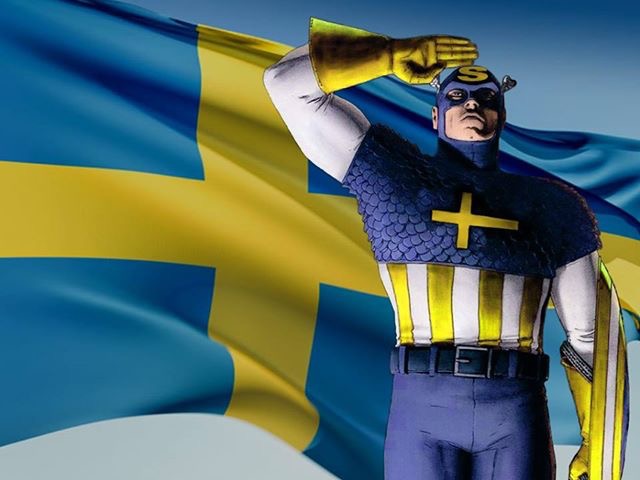
I am proud to be Swedish and live in Sweden. I am proud that Sweden takes in thousands of people in their direst need. I am proud that Sweden helps people survive war and starvation. I am proud that Sweden leads the way  in social and humanitarian issues. I am proud that Sweden does not criminalize poverty. I am proud of Sweden’s diverse and multicultural society. I am proud that Sweden stands for human rights and equality between men and women. I am proud that in Sweden you can be whoever you want to be. I am proud that everyone is welcome here. I am proud that Sweden respects its children. 

Are you? 

In my mind, this is what it is to be Swedish. Sweden is the true land of opportunity. 

This is my call to action. Do not buy into the lies and falsehoods that are spread about this country. Do not buy into the fearmongering of power-hungry politicians. 

On social media, on the streets and in your life, question the source of all information. Do not just swallow the bullshit. And if you disagree, stand up and be proud to be a part of this nation with all of its challenges and its opportunities. 

Are ‘shy Swedes’ sociable?  


Do you subscribe to the belief that Swedes are shy, difficult to get to know, cold and unfriendly? This is not an uncommon perception, amongst foreigners and Swedes alike. 
Well it could be that your perception is nothing more than a stubborn stereotype. Or at least that’s what a new piece of research seems to suggest. 

In the UK’s Guardian newspaper this week, research into identifying the world’s most sociable city was recently published. And the winner? The number one most sociable city in the world? 

Gothenburg. Yes, Gothenburg. 

Sweden’s shimmering city on the west coast beat London, New York and Berlin to grasp the title. And the number two position? The second most sociable city in the world? 

Stockholm. Yes, the Swedish capital. 

I find it rather confusing, but very interesting. The research looked at amongst things propensity to party, openness, and use of social media. 

How does this research match your experience of living in Sweden? 

To see the research, here’s the link: 

https://www.theguardian.com/travel/2017/feb/22/party-gothenburg-voted-worlds-most-sociable-city-hostelworld-stockholm-new-york

What is Sweden’s National Dish?

swedishchef

If you’ve ever wondered what Sweden’s National Dish is, now is the time to take part in a competition hosted by radio station P3. So far, the folowwing have been eliminated: falafel, swede, ‘plankstek’ (literally steak on a plank) and ‘palt’ (dumplings).

What is left to vote for are the following:

  • ‘Smörgåstårta’ (sandwich cake) versus ‘Sill och potatis’ (pickled herring and boiled potatoes)
  • ‘Köttbullar’ (meatballs) versus ‘Blodpudding’ (black pudding)
  • ‘Tacos’ versus ‘Falukorv med makaroner´ (sausage with macaroni)
  • ‘Kebabpizza’ versus ‘varmkorv’ (hot dog)

If you’d like to vote, here’s the link: VoteforSwedenNationalDish

So, what do you think? What is Sweden’s National Dish?

Swedish Championship Week

This week is Swedish Championship week. During these days, players gather in the same town to carry out the national competition in their particular sport. Not only is this cost-efficient but it puts the spotlight on many smaller sports. Much of the week is televised, and as a viewer you get the opportunity to watch popular, and less common sports. Sports such as ice sailing, frisbee, wheelchair floorball and snow scooter jumping take part in the week. 

But my favorite has to be this one – dog pull skiing! Weirdly wonderful! 

How Sweden’s nazis appropriated my shoulder bag 


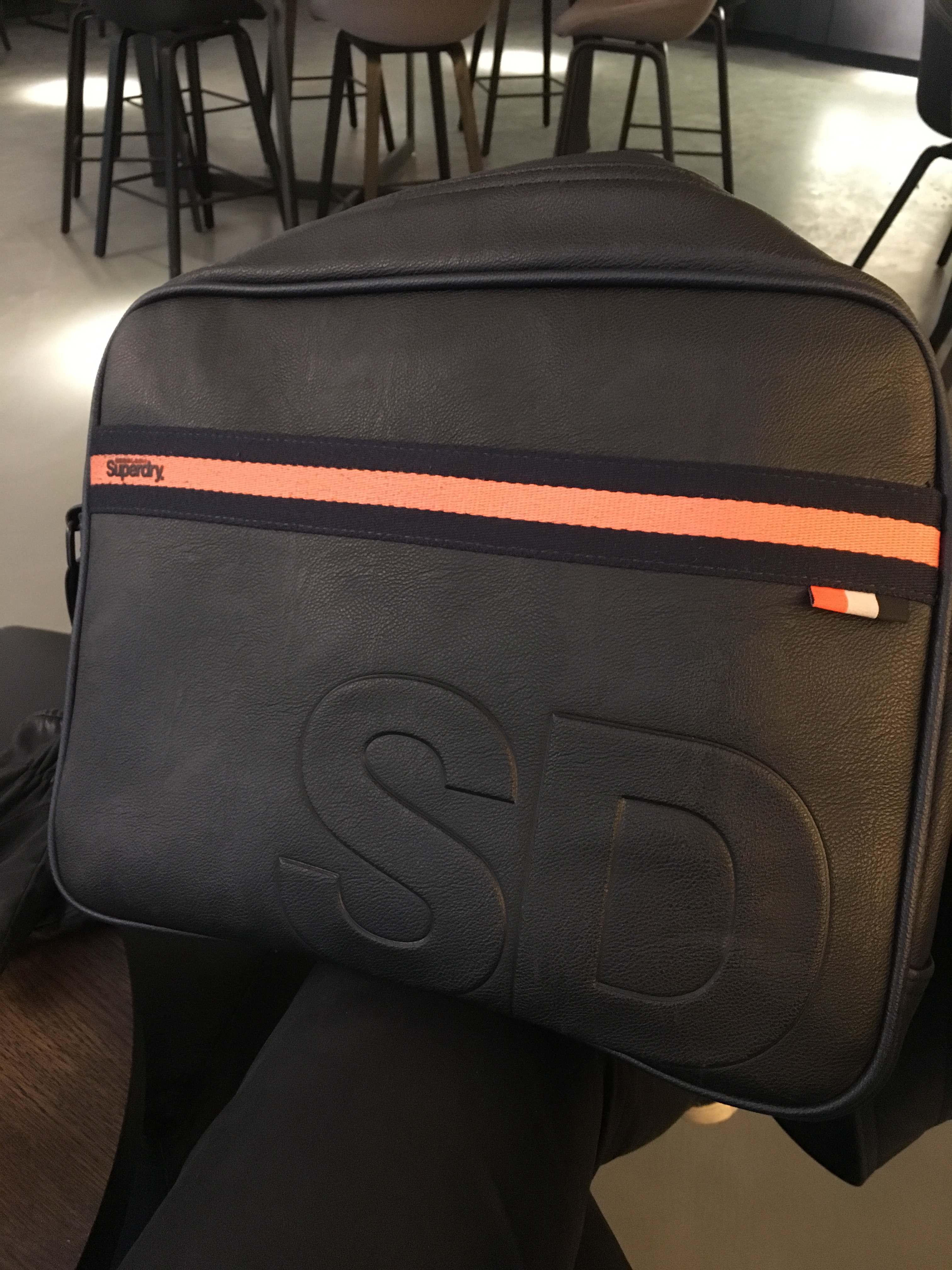
On a trip to India last year, I saw this bag in a shopping centre. I liked it immediately. The streamlined form, the black and orange stripe and the fact that it comes from a brand I like. The brand is called Superdry and the shoulder bag has the abbreviation SD written on it. 
On my return to Sweden, I realised a terrible thing. The initials SD have a different meaning here, one I didn’t even think of when in India. So typical. SD is the abbreviation for Sweden’s right wing populist party Sweden Democrats – a party with their roots in nazism. I was horrified to realise I could be seen as a walking advertisement for this party, a party not in line with my personal political views. But I decided – hell no! They’re not going to appropriate those initials and my bag! 

The next day on the underground, I traveled to work, bag on shoulder. Two Swedish women behind me started discussing my bag. They were displeased that I had a Sweden democrat bag. Turning to them, I explained that they were wrong, the initials are Superdry and they apologised. But it stung. 

Isn’t it interesting how our association with things and our preconceived ideas form our opinions? Without question, we presume to understand what something means. Often we are wrong and yet we we are so quick to judge. 

If we just took that extra moment to check our assumptions, I’m convinced we’d have a more tolerant and open society.