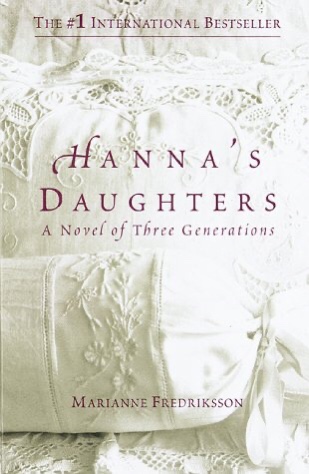
As the autumn darkness envelops us, what better than snuggling under a blanket with a good book? Over 10 posts, I will give you a recommendation of a Swedish book, translated into English, that is well worth a read. The fifth recommendation is ’Hanna’sDaughters’ from 1994, written by Marianne Fredriksson.
Set against the majestic isolation of Scandinavian lakes and mountains, this is a story of three generations of women from the same family. It is a moving testament of a time forgotten and an epic romance in every sense of the word. It also reflects Swedish society and a journey from poverty to prosperity.
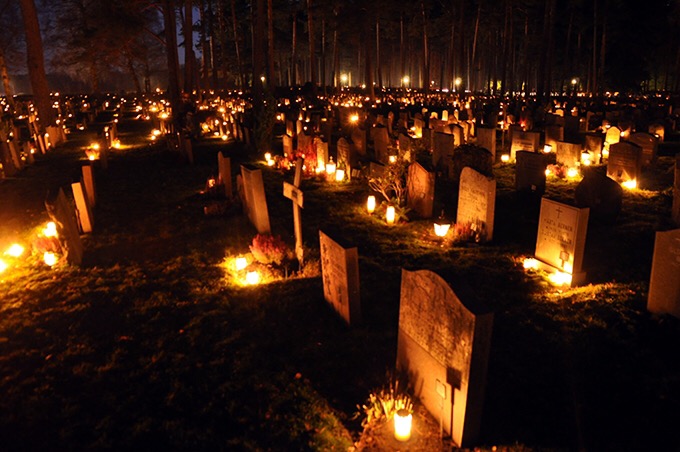
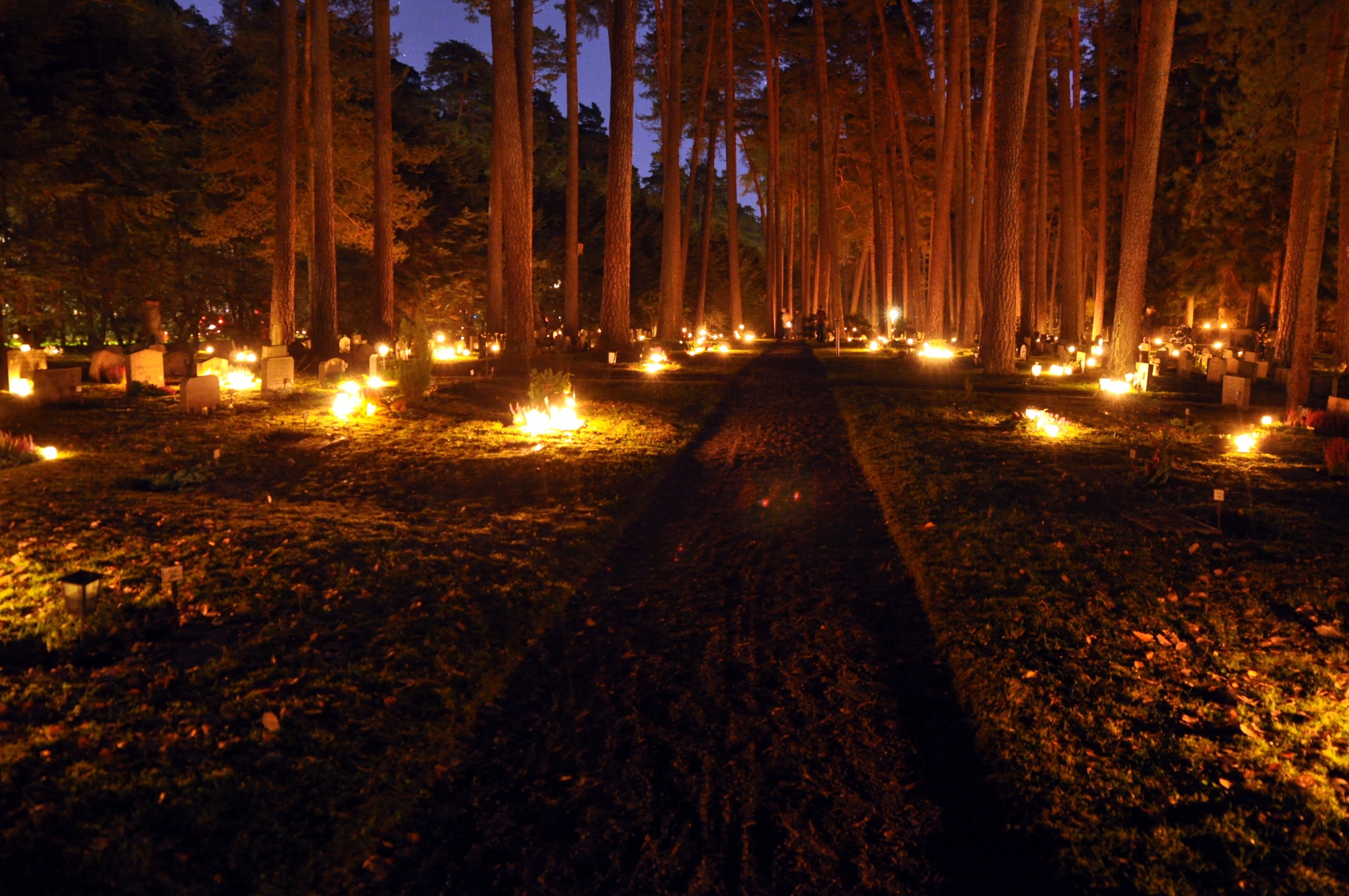
I remember walking around Stockholm when I had recently moved here. It was a pitch black Saturday evening in November, cold and crisp. As I approached a majestic church, I noticed that it was shimmering from the grave yard. This yellow and white light slowly flickered and cast shadows on the gravestones and the church wall. As if drawn by a magic spell, I walked up to the church and looked over the wall.
The sight that met my eyes was spectacular and serene at the same time. Hundreds of candles were spread around the cemetery, decorating each of the graves. In the memory grove a bright blazing blanket of candles lit up the area. It was as if the spirits of the dead had come out to play.
In Sweden, the Saturday between 31 October and 6 November is All Saints’ Day (the Sunday after All Saints’ Day is called All Souls’ Day to separate between the saints and the dead). Since the 1800’s Swedes have, during this weekend, made pilgrimage to graveyards up and down the country to decorate the graves with candle light and to pay respect to the dead.
It is a much more elegant and atmospheric tradition than the typical Halloween parties that otherwise have become very popular in Sweden. It is a truly beautiful experience to walk through the churchyards this weekend. In the pitch black November Nordic darkness, it is a peaceful reminder of those who have gone before us.
This year is a bit different however. The corona pandemic has led to restrictions and there is a recommendation to refrain from going to cemeteries this weekend. We should honour our dead, but try not to contribute to the spread of the virus at the same time. So if you plan to head to your nearest cemetery anyway, make sure to keep distance to the other visitors, and make the visit quick. Alternatively, light a candle in your own garden, or balcony this year.
As the autumn darkness envelops us, what better than snuggling under a blanket with a good book? Over 10 posts, I will give you a recommendation of a Swedish book, translated into English, that is well worth a read. The fourth recommendation is ’The Girl with the Dragon Tattoo’ from 2005.
The first book in the Millenium series by Stieg Larsson is called ‘Men who hate women’ in Swedish. It is a psychological thriller that follows journalist Mikael Blomqvist and brilliant but deeply troubled hacker Lisbeth Salander. A real turn-pager, the book was an enormous success when it was posthumously published. It has been turned into a Swedish film featuring Noomi Rapace, and a Hollywood film, starring amongst others Daniel Craig.
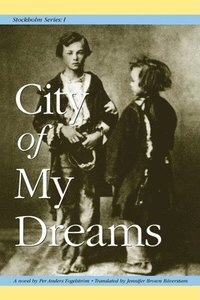
As the autumn darkness envelops us, what better than snuggling under a blanket with a good book? Over 10 posts, I will give you a recommendation of a Swedish book, translated into English, that is well worth a read. The third recommendation is ’City of my Dreams’, written in 1960 by Per Anders Fogelström.
City of My Dreams is a classic Swedish novel that follows a group of working-class people in Stockholm between 1860 and 1880. It is the first novel in a series of five and gives a unique insight into the tough lives faced by people living in that era. A magnificent, gripping saga.
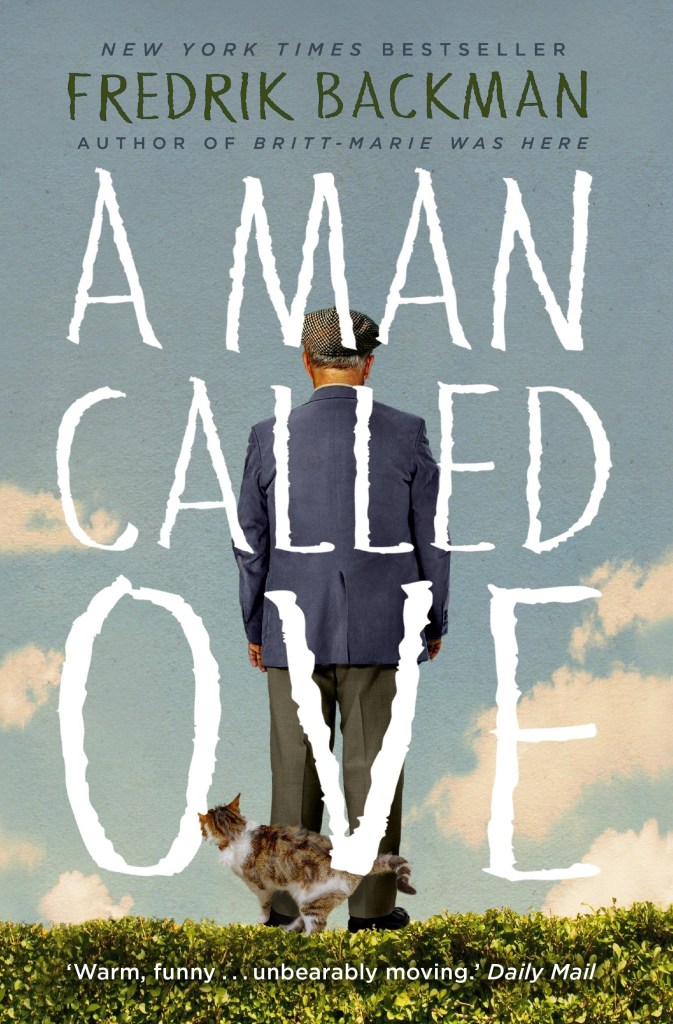
As the autumn darkness envelops us, what better than snuggling under a blanket with a good book? Over 10 posts, I will give you a recommendation of a Swedish book, translated into English, that is well worth a read. The second recommendation is A man called Ove, written in 2012 by Fredrik Backman.
Ove is a grumpy yet loveable man who lives in a small Swedish town. One day, he finds his solitary world turned on its head when a boisterous young family moves in next door. As the novel unfolds, we see the reason behind Ove’s irritable, cranky surface and discover a story of love, grief and unexpected friendship.
The book was made into a hit film in 2015 and was nominated for two Oscars.
In the center of Stockholm, a large building project is starting to take shape. The Slussen Project started 5 years ago and is an enormous feat of engineering that aims to replace a current structure connecting the southern island of Södermalm to the Old Town. The current concrete structure has been in place since the 1930’s and is literally crumbling. The entire structure needs to be demolished and constructed from scratch.
Ever since 1642, there has been a lock between Södermalm and the Old Town in Stockholm. It has been rebuilt four times. This is the fifth, and it is not without controversy.
Today, an important milestone in the project was reached. An enormous new bridge, known colloquially as the Golden Bridge (although it is in fact ockra), was inaugurated by the Swedish King. The bridge connects the two parts of the city, but divides the residents of Stockholm. Some think it’s very effective and attractive, others think it is a monstrous metal clump.
It really doesn’t matter what people think, the Golden Bridge (correct name Slussbron) is now in place and opens tomorrow at 5am for traffic. Then, the demolishing of the rest of the old structure will begin. The whole project is due to be completed in 2025, assuming no delays.
In the meantime, Stockholmers can walk, cycle and drive over the Golden Bridge knowing they are an integral part of the city’s urban history.
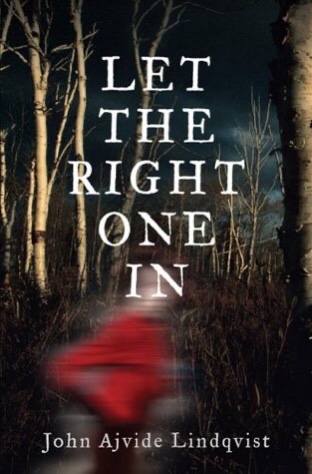
Autumn has us firmly in its clutches. Today, the clocks go back and darkness envelops us. what better then, than snuggling under a blanket with a good book? Sweden’s literary scene is highly productive, from non-fiction to novels, detective stories to literary masterpieces. For the coming ten blogs, I will give you one recommendation of a Swedish book, translated into English, that is well worth a read. Out first – in honour of approaching Halloween – is Let the Right One In by John Ajvide Lindqvist 2004.
In the dark winter of 1981 in the grey Stockholm suburb of Blackeberg, twelve year-old Oskar is being bullied. He develops a friendship with a young neighbour, Eli, who helps him fight back against his tormentors. But all is not what it seems because Eli is a vampire. As mysterious murders spread fear and confusion in the community, Oskar starts to suspect his neighbour’s dark secret.
The book was made into a film in 2008, which is also well worth a watch.
Talking to friends last night the expression ‘en katt bland hermelinerna’ arose. This literally translates as ‘a cat among the ermines’, an ermine being a type of stoat or weasel.
The phrase originated in a couplet by Swedish performer Karl Gerhard in 1955. Karl Gerhard is one of Sweden’s historical entertainers who wrote songs and couplets as well as a large number of sketches, dialogues and monologues. During the Second World War, he wrote humorous pieces with strong anti-fascist statements criticising the Swedish government’s apathy towards Nazi Germany.
So, he coined the comical expression ‘en katt bland hermelinerna’. It’s not the same as our ‘cat amongst the pigeons’ which means somebody is causing chaos and panic. The expression refers to a person who has insinuated themselves into an environment where they do not belong, because they are not from the same social class. In other words, someone who isn’t fancy enough for the rest of the people in their company.
As far as I am aware, there is no expression for this in English. But I hope I’m wrong. Can any of you readers help me out here? Do you know of an English equivalent?
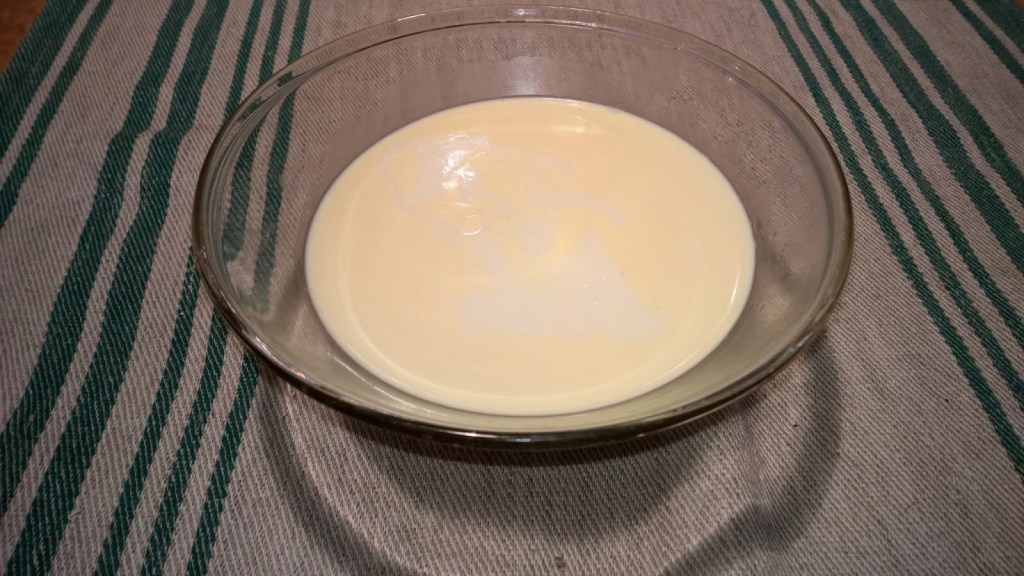
In English, we have the expression ‘cool as a cucumber’. It was first recorded in a poem by John Gay in 1732. The Swedish version of this is ‘cool/calm as a bowl of fermented milk’, or ‘lugn som en filbunke’ in Swedish.
What, you might be asking, is a filbunke? Well, according to the dictionary it is ‘milk that has fermented, unstirred, in small bowls. Has a pudding-like consistency. Traditionally made in small bowls from (unpasteurized and unhomogenized) raw milk, which normally contains some cream. The cream forms a yellowish layer of sour cream on top. Comes unflavoured and flavoured.’
We don’t have an equivalent dish in English as far as I know.
Although the dish has been around since the 1600’s, the expression ‘cool as a filbunke’ entered the Swedish language in 1845. Playwright Johan Jolin wrote in his play ‘A Comedy’ – ‘I’m cool, cool as a filbunke’. It was met with much hilarity. I guess he thought there was something chilled out about a bowl of fermented milk.



 Watching the Swedes