Stockholm A-Z: Museum mania

IMG_4398.JPG

The latest museum to be added to Stockholm’s impressive stock is the Abba Museum. Located on Djurgården, the museum island, the ABBA museum celebrates the music of the notorious Swedish pop group. As it attracts a lot of visitors, it’s best to pre-book.

There are museums in Stockholm to cater for most tastes: interior design, art, Swedish history, nautical history, dance, architecture, medieval history, the Mediterranean, ethnicity, diversity, Alfred Nobel, royalty, coins, natural history, astronomy, Judaism, technology. You name it, you could spend a whole week in the museums of Stockholm and still not see them all.

Here are few highlights:

Everyone thinks they’re a photographer. But this museum helps put things into perspective. For the latest in breathtaking international photography, head to the fabulous Fotografiska on Stockholm’s harbour side. Housed in an old toll house, the museum has a good restaurant, party nights with cool music and great views of the city.

Are historical buildings and national costumes more your thing? Then take a tram out to Skansen, Stockholm’s wonderful open-air museum. Here the whole family can spend a whole day eating, listening to music and admiring the old buildings and crafts of centuries past. There’s even a small zoo hosting nordic animals. If you’re in Skansen at 8pm on a Tuesday in the summer, don’t miss the weekly televised show called Allsång på Skansen. This is one of the most popular TV shows in Sweden. Famous artists, old and young, Swedish and international perform and the show’s host encourages the audience to sing along in a huge collective choir. You don’t get much more Swedish than this, and it’s definitely worth sticking around to witness it.

Are you thrilled by the sting of modern art? Then Stockholm’s Museum of Modern Art not only has a great restaurant with fantastic views but also some of the best modern paintings, sculptures and media to be seen. Located on the island of Skeppsholmen in Stockholm’s harbour, walking distance from the city. After visiting this museum, a walk around this historical island is also recommended.

Into old queens? And other royalty? Then the Royal Armoury in the cellars under the Royal Palace is the place for you. This the oldest museum in Sweden, established in 1628, and shows the history of Sweden’s royalty through arms and armours, clothing, robes, jewels, carriages and blood-stained items from murdered monarchs.

Surprisingly, there’s no Viking museum in Stockholm. However, a trip out to the lake island of Björkö, 30km from Stockholm, might satisfy that yearning. On Björkö lies the former settlement of Birka, the predecessor to Stockholm and an important point of trading for the Vikings. Today Björkö is an architectural site with a small museum housing its findings.

Fancy a drink? Then a trip to the Spritmuseum might be just the potion. Or it might put you off forever. Alcohol is also culture and this museum puts the Swedish bittersweet relationship to alcohol in focus.

For more information on all the many museums and art galleries go to http://www.stockholmmuseum.com

Stockholm A-Z: LGBT living

Sweden is internationally known for its tolerance and openness and this means Stockholm is a great city to live in for members of the lesbian and gay community. However, visitors to the Swedish capital might be disappointed in the size of the gay scene. Where many other capital cities have gay neighbourhoods, or lots of gay and lesbian restaurants, cafés and bars to choose from, Stockholm's choices are limited.

One of the reasons for this is that the very tolerance and acceptance that exists in the city has led to a a general integration into the mainstream. Where other places around the world have needed to develop a strong and powerful subculture, it seems to have been less important in Sweden. This means that in Stockholm most places are mixed.

However, there are today a couple of bars, Torget in the Old Town is aimed and a young twinky fashionable crowd and Side Track on Södermalm aimed generally at the older and bear crowd and SLM for the fetish crowd. If you want to strut your stuff, a few clubs nights exist such as Patricia, Candy and Wonk. For a nice cup of coffee or a bite to eat head towards gay cafe restaurant Adams Bistro in the Odenplan area.

Other than occasional parties and club nights, there's very little just for lesbians and unfortunately nothing apart from interest groups exclusively for the transgender community.

In the summer half of the year, the very popular outdoor bar/restaurant Mälarpaviljongen opens its doors and is well worth a visit to take in beautiful Stockholm views and beautiful Stockholmers.

For more information on venues grab the gay rag QX or visit http://www.qx.se. Also check here for gay beaches, gay-friendly beaches and cruising areas such as Långholmen, Frescati and Kårsön.

Once a year, Stockholm organises the biggest Pride festival in Northern Europe. Usually on the first weekend in August, Stockholm Pride is a real carnival and succeeds in balancing the playful, the sexual and the political. The festival attracts up to 60000 participants who take to the streets in pride. Pride week is usually packed with club nights and parties and definitely worth a visit.

But LGBT living isn't only about parties and festivals. In Stockholm's community there is a plethora of things to occupy yourself with. If you enjoy singing, you can listen to Stockholms Gay Choir, the oldest gay men's choir in Europe. They give concerts twice yearly at Christmas and in the spring and are well worth the modest entrance fee. If exercise is your thing, then Stockholm's gay rugby team Stockholm Beserkers are a good option. On frequent Sundays they compete, and they practice on Monday and Wednesday evenings on Årstafältet if you want to go along.

If swimming is your thing, Stockholm Dolphins practice at Eriksdalsbadet on Södermalm. For more info: http://www.qx.se

And for dancing outside of the clubs, why not give Queer Salsa a go? Check out Queer Salsa Stockholm on Facebook for more information

.

IMG_4393.PNG

Stockholm A-Z: Junibacken

IMG_4391.PNG

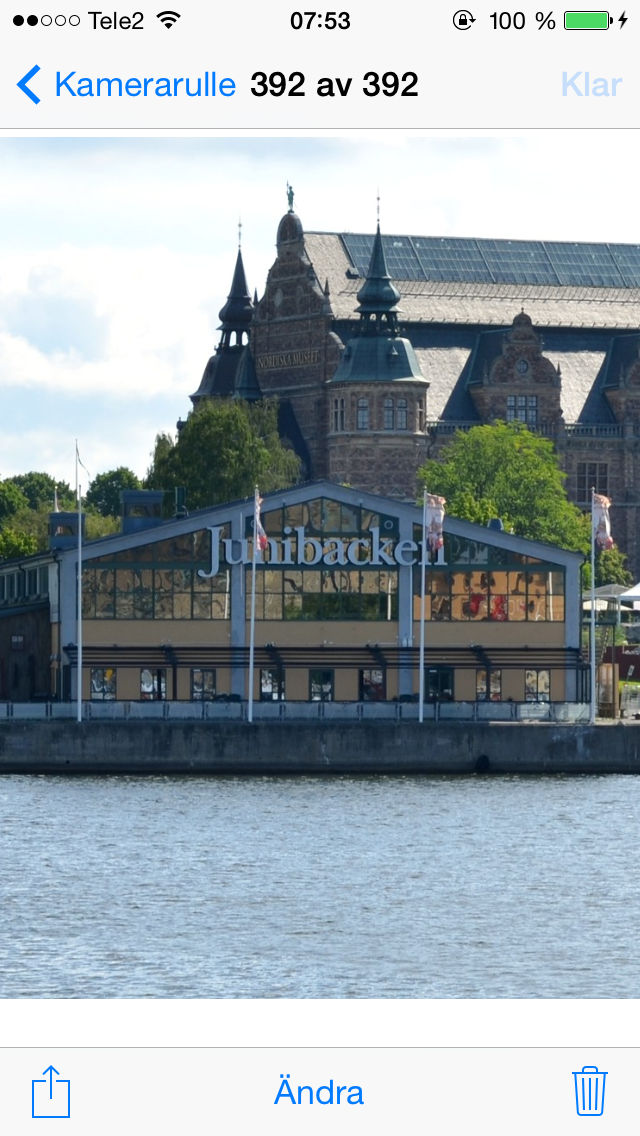
In the hustle and bustle of urban city life there is still room for fairy tales. Out on the museum island of Djurgården, you’ll find a place dedicated to them. A perfect destination for kids and families, Junibacken celebrates the fantastical stories of various Swedish writers, especially the writer Astrid Lindgren. Astrid Lindgren is today still very popular in Sweden and she is the third most translated children’s author after Hans Christian Andersen and the Brothers Grimm. She’s estimated to have sold a staggering 144 million books worldwide and has a whole army of fictional characters to her name.

Here at Junibacken you can meet all of her most well-known characters such as the airborne Karlsson on the roof, the naughty Emil of Lönnerberga, the feisty Ronja the robber’s daughter and the internationally renowned Pippi Longstocking. After traveling the museum train, children arrive at the home of the world’s strongest girl where they can play as wildly as they like.

A visit to Junibacken is a thoroughly Swedish experience, seen through the eyes of children. It is also a testament to a beloved national treasure that ensures her stories will never be forgotten.

Stockholm A-Z: Ice

IMG_4387.PNG

Nothing sums up Stockholm in the winter months than the word ice. As temperatures plummet, sheets of ice start covering the waterways, icicles form on the guttering and pavements turn into treacherous rinks. There are few places in the world that are as beautiful as Stockholm in the winter and the city is well worth a visit December to March. Imagine this – a crisp blue winter sky and a hazy cool sun hanging low. The trees twinkling with the fresh white of snow and the city’s orange and red buildings glistening with ice and smoky plumes of steam. It’s really a sight to behold. It’s so achingly beautiful you almost forget it’s minus 20 degrees and your nose turned to an ice cube long ago.

Stockholmers really know how to make the most of the unfavourable climate. In Kungsträdgården, an outdoor ice rink is built and you can skate around listening to music and enjoying the afternoon sun. If more adventurous skating is your cup of tea then open water skating is made possible on the many frozen lakes outside of town. On these frozen lakes, you can also go pimple fishing. This entails drilling a hole through the ice, dropping the line into the water and sitting on a stool waiting for a passing fish to bite. What might seem to some like savage amusement is actually a very meditative way to spend a few hours. A morning walk on the frozen Mälaren is another popular pastime. Wrapped warmly in think coats, woollen hats and scarves, Stockholmers walk on the water and finish with brunch or a cup of hot chocolate at a nearby restaurant. Outside of the city, in the forests, tracks are made for cross-country skiing, and even parks such as Tantolunden and Gärdet plough shorter tracks for the urbanites to practice on.

As the ice descends on the city, a sense of cosiness develops. In Stockholm’s Old Town, the narrowed cobbled streets seem to be transformed back into previous centuries. There’s nothing more romantic on a winter’s evening than to stroll here, chunky snow flakes pouring down from the sky, the crunch of the ice and snow underfoot.

Stockholm’s smart embracing of ice has even manifested in an Ice Bar, located in the Nordic Sea Hotel. Indoors, wrapped in thermal clothes, you can partake of a vodka drink out of a glass made of ice. This place is an offshoot from the Ice Hotel in the arctic north of Sweden, which is well worth a visit.

It would be an error of judgement to think Stockholm is only a summer city. There is a great deal to do even in the frozen months.

Stockholm A-Z: Hipsters

IMG_4386.JPG

When you understand the definition of hipster as middle-class young bohemians residing in gentrifying areas with an interest in alternative music, vintage, progressive politics, organic, artisanal foods and alternative lifestyles, there’s one neighbourhood in Stockholm that stands out. Recently voted in Vogue magazine as one of the coolest city areas in the world, the island of Södermalm lives up to its reputation as a hipster heaven. Divided into distinct areas, the island offers lots to see and do. On the western side of the island, is Hornstull. Here you will find groovy restaurants, shops, a vibrant music scene, a craft market, an independent cinema, bathing areas and Tantolunden – a popular green area for hanging out in. In the centre of the island, you will find Medborgarplatsen – or ‘Citizen square’. Hipster life is non-existent in this area but the square offers lots of mainstream cafés and restaurants and late night bars. Political rallies are often held here. On the eastern side, you will find an area known as Sofo, the birthplace of the hipster movement in Sweden, which has become such an identifiable brand it has even been ridiculed in a TV comedy based in the area. Sofo is packed with bars, restaurants, cafés, butique shops, vintage places and artisan fooderies. It’s well worth a visit and a stroll about on a sunny day. Much of the life circulates around the few streets between Nytorget, Götgatan and Folkungagatan. On some Saturdays, there is a farmer’s market lining one of the main arteries. For an alternative music and theatre scene, it’s worth visiting the venue Mosebacke with its outside terrace and view over Stockholm.

Stockholm A-Z: Gondolen

IMG_4385.JPG

If you want to experience a breathtaking view of Stockholm, while enjoying a fantastic cocktail or meal, very little beats Gondolen. Perched 33 meters above Slussen in a glass tongue, the restaurant serves critically acclaimed food and offers sweeping vistas of the lake Mälaren to the left, the city and the Baltic Sea to the right. Gondolen is a perfect location in the winter months, when the cold winds and icy temperatures envelop Stockholm. From inside, you can look out over the glittering winterscape while sipping on an elegant Rasperritini and tucking into a bleak roe toast.

The restaurant has historical merit, as it was inaugurated in 1935 as part of an inner city generation project. And history tends to repeat itself. The area where Gondolen is positioned is being heavily renovated again with a lot of demolition and remodelling. However, I believe this Stockholm classic will remain a jewel in the city’s crown for many many years to come.

Stockholm A-Z: Ferries

IMG_4382.JPG

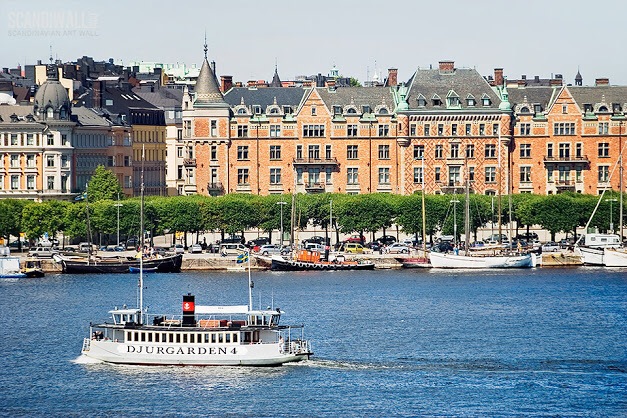
Considering Stockholm is a city built on many small islands, it’s not surprising that a favorite mode of transport is the ferry. In the city, there are several ferries used both by commuters and by pleasure trippers. The Djurgårds ferry takes people from Slussen on Södermalm to the museum and activity island of Djurgården. It’s a cute little boat that looks like a toy that a giant has flicked with his finger and thumb as it catapults over the waterway to the other side. This ferry also carries visitors to Östermalm and to Skeppsholmen, an Island located in the middle of the harbour, and is very well patronized by the city’s inhabitants.

Three other ferries in Stockholm are the ones taking well-heeled dwellers from the docklands development of Hammarby Sjöstad to Södermalm, and from Hammarby Sjöstad into the city, and the ferry that shuttles passengers from the Old Town to the suburb of Nacka and the islands of Fjäderholmarna.

But perhaps the most noticeable ferries are the giant liners positioned in Stockholm’s harbour that take passengers and vehicles to the Baltic Island of Åland and to Finland. These ferries satisfy various needs for Stockholmers. Some use them as a mode of transportation between Sweden’s capital and the Finnish cities of Helsinki and Åbo, maybe to work or to deliver goods or visit family. Others use the ferries as pleasure cruises, an opportunity for a trip out to sea, to eat well and maybe watch a show. Others use them as a way of buying cheaper duty free alcohol as the ferry bobs around in international waters. And other Swedes use them in a way that has gained these ferries notoriety – as a booze cruise. A popular weekend pastime is to embark the ferry on a Friday, drink, dance and party, and disembark, somewhat frazzled, when it returns to Stockholm 48 hours later.

Whatever the reason for taking one of Stockholm’s many ferries, this mode of transport is an undeniable part of the waterscape of this city and it certainly does contribute to Stockholm’s description as ‘the Venice of the North’.

Swedish Anglophiles

20140921-171056-61856967.jpg

Now I know many Swedes are Anglophiles but today it was proved. In Stockholm, a new cafe has opened. Run by Brits, they offer full English breakfast and tea, eggs in all forms, Pimms, you name it. All very British. And I love it. For a while it’s been a well-kept secret but today it seems like the cat’s out of the bag. Approaching the place today, we noticed a gathering of people outside. Probably just a group of friends we thought. But no. It was a queue! The place was packed and there was a waiting list to get in. It seems like more people want beans on toast than me. Now I’m really happy for the owners of this cafe, it’s great that business is going well. But I’m gutted that knowledge of the place has got out. Can’t anybody keep a secret these days?

Sweden in shock

20140915-144739-53259286.jpg

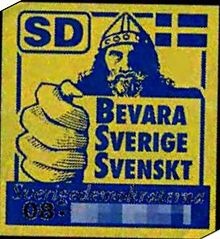
At midnight last night, I was glued to the television in shock. The results of the Swedish General Elections were confirmed. The shock wasn’t that there was a shift of power from right to left, nor that the current Prime Minister resigned. The shock was that 12.9 percent of the voters elected the right wing, populistic, nationalist party The Swedish Democrats (SD).

Positive thinkers focus on the fact that 87 percent didn’t vote that way, but the fact remains that around 800 000 Swedish people chose to put their vote on a party with origins in the nazi party. This action has resulted in a very unstable parliamentary structure and a minority government.

This election highlighted just how split the nation is. The 87 percent who didn’t vote SD are all over the political spectrum, from left to centre to right. The biggest party secured only 31 percent of the vote. The cities voted differently from the provincial areas. The province of Skåne in the south of Sweden reinforced its position as the stronghold of SD.

This is now Sweden’s reality. The question is how to address it for the next election. SD are not going away, no matter how much the established parties wish for it. The issues they represent resonate in the heads and hearts of a significant number of people in society – restricted immigration, tougher punishment for criminals and better conditions for pensioners. I believe the people who vote SD don’t perceive themselves as racists. So calling them racist probably doesn’t change their perceptions. With their vote, they have communicated their concerns on the development of Swedish society. They lack feasible alternatives so they choose the simplistic but concrete policies of SD.

It is time for the established parties to address these and not skirt the issues with abstract theories and ideological arguments. They have to offer the electorate concrete solutions for immigration, integration, crime, begging, healthcare. They need to work to reduce dissatisfaction in society and to bridge the gaps between people. If they can do this, then maybe SD’s policies won’t seem as attractive any more.

There’s a cold wind blowing over Sweden today. Winter’s coming. Let’s hope it doesn’t last too long.

My privileged Swedish bubble

I live a very privileged life in Sweden. I know it. I have a great job, a decent income, I own my flat in Stockholm’s trendiest inner-city area, I travel, I eat out at restaurants, I consume. I’m happily married, we have lots of friends, a BMW, trips to the theatre and to dinner parties. We have a country house. Everything’s smooth. Even at the A&E on Sunday after I sprained my ankle, I was in and out in less than 2 hours. Sweden has made this lifestyle possible for me, and many others. But it’s a privileged bubble we live in. We’re not confronted by the poverty in the suburbs, by the substance abuse in families. We don’t witness the children who fall out of the system because they happen to be born in a certain area, to certain parents. Our children are well-groomed, well-fed and well educated. We don’t see the horrors in old people’s homes, nor do we have to scrape together every last krona just to put food on the table because we’re sick, or injured or unable to find work. But this exists in Sweden. From our little bubble we just don’t see it. But it’s there. There are widening gaps in Swedish society between the old and the young, the rich and the poor, the educated and the uneducated, the sick and the healthy, the urban and the suburban, the always beens and the newly arrived. And the uncomfortable truth is the wider these gaps become, the more stretched our bubble becomes. And one day this bubble will explode.

Voting in an election is our democratic right. The dilemma is how we vote. Do we vote for what is good for ourselves or for what is good for our society? Do we protect ourselves or do we lift our eyes and look out of our bubble and see that what benefits society in the long run benefits all of us?

On Sunday, we make that choice.