National day of the Sami – Sweden’s indigenous people

Today is theNational Day of Sweden’s indigenous people – the Sami. So I thought I would share this blog again that I posted last year.

Did you know that Sweden has an indigenous people? I know, isn’t that cool?!

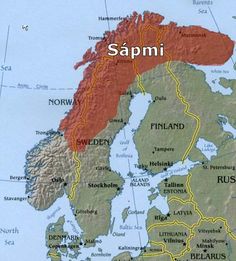
Just like Australia has the Aborigine and China has the Pamiri – Sweden has the Sami. For about 5000 years, the Sami people have lived way up in the arctic north of Sweden in the homeland they call ‘Sapmi’. Today Sapmi actually covers not only Sweden, but also Norway, Finland and Russia. Historically, the Sami were referred to as Lapps, but today this is deemed a derogatory term.

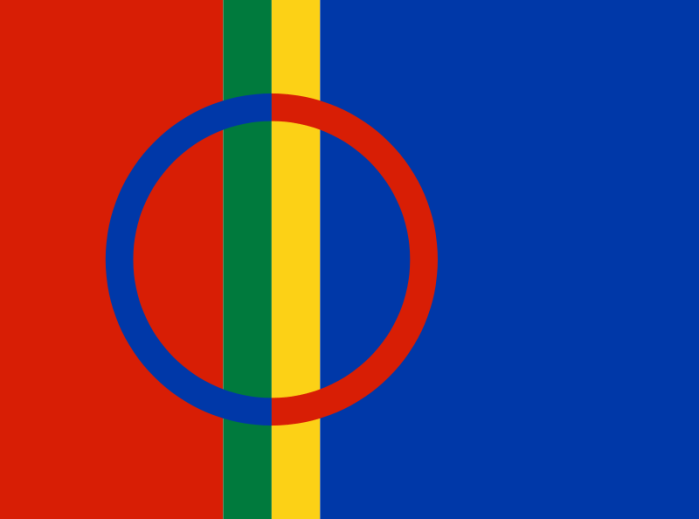
Today, February 6th, is the National Day of the Sami. Today, the Sami flag should be flown and the Sami national anthem is sung in the local Sami language.  The first time this day was celebrated was in 1993 in Jokkmokk, Sweden.

The Sami are the only indigenous people in Scandinavia that are recognised and protected by international convention. The United Nations estimates that there are over 370 million indigenous people living in over 70 countries worldwide. This is roughly 6% of the global population.

Today, around 10% of the Sami population of approximately 70,000 work within the traditional work of reindeer herding. Most of the rest of the indigenous Sami population is urbanised. Like many indigenous people around the world, the Sami have also been treated very badly by the colonising inhabitants of their country. Scandinavia has a legacy of law and assimilation that denied Sami their rights, and an state-sanctioned history of the removal of generations of children for placement in boarding schools and missions. A recent film called ‘Sameblod’ depicted this shameful era of Swedish history.

It took until 1989 for Sweden to recognise the ‘Sami nation’. Sami pupils are entitled to be taught in their native language, although a loophole enables this right to be sometimes bypassed. In 1998, Sweden apologized for their wrongs against the Sami. To make up for past suppression, the authorities of Norway, Sweden and Finland now make an effort to build up Sami cultural institutions and promote Sami culture and language.

However, it is far from rosy in the arctic north. Conflict over land rights, herding rights, exploitation rights are still raging on across Sapmi. Today, the Sami are experiencing cultural and environmental threats, including unwelcome oil exploration, mining, dam building, climate change, military bombing ranges, and exploitative tourism.

Apart from through activism, it is in the Sami parliaments that the main conflicts are debated.  There are three, unconnected Sami parliaments spanning the region – Sweden founded in 1993, Finland in 1973 and Norway in 1989. Russia has not recognized the Sami as a minority and, therefore there is no official Sami parliament (an unrecognised one exists). These democratic parliaments stand up for Sami heritage but have very weak political influence.

Like many nations around the world, Sweden and their neighbours have to balance the ghost of a shameful past with the conflicts of the present and the hope of the future. Without doubt, discrimination against the Sami people still exists.

This is why today, February 6th, is so important as a day of celebration and recognition but also as a day of atonement.

Swedish expressions: ‘Drunk as a jackdaw’


kaja-2

In English, we have vivid sayings such as ‘pissed as a fart’, ‘drunk as a skunk’ and ‘pissed as a newt’. In Sweden, one of the expressions to describe an intoxicated person is ‘drunk as a jackdaw‘ (Swedish: full som en alika). It might seem odd, but there is an explanation.

The most popular theory has to do with the small breweries that populated the Swedish countryside in the past. At the end of the brewing process, the brewers would through the unusable remnants out into the yard. This meant that there were attractive piles of sweet mush distributed all over the countryside. The local jackdaws were rather partial to this mashy, mushy goo, and they would swoop down to eat it. While getting food in themselves, they also imbibed alcohol, and after a while, they would stagger away across the yard in blissed inebriation. The local population of course loved this, and coined the phrase ‘drunk as an jackdaw’.

In Swedish, there is another expression for being a drunk, this time in a noun form – ‘fyllekaja’ – which also means ‘drunk jackdaw’. The word ‘kaja’ is the word for jackdaw in most of Sweden. ‘Alika’ is a regional word used mostly in the southern counties.

Sweden’s Las Vegas on the Baltic Sea

Did you know that Sweden was once a great political power? The Swedish Empire exercised control over the Baltic region for over 100 years. The beginning of the Empire is usually taken as the reign of King Gustav Adolf in 1611, and the end as the loss of territories in 1721 following the Great Northern War. Sweden had control of Finland, Estonia, Latvia, Denmark, Norway and parts of Germany. It is rumoured in Swedish history that King Gustav Adolf had an ambition to make the Baltic Sea a large lake inside Sweden.

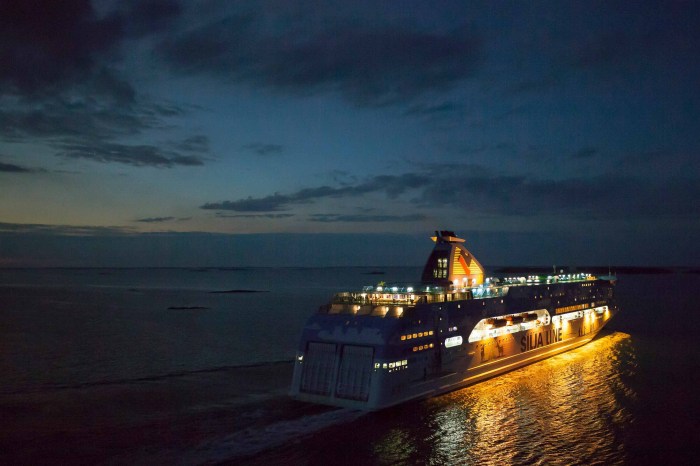
This was all a very long time ago, and today things don’t look quite the same for Sweden. Today, the most common boats that travel over the Baltic Sea are ferries and cruise ships. These huge ships traffic, amongst other destinations, Stockholm, Helsinki, Åbo, Åland, Visby, Riga, Gdansk, Rostock and Tallinn. Today, they are not for invading Swedes but mostly for multinational tax-free shopping, city breaks, partying, cruising, transporting goods and touristing.

The specific party boats between Sweden and Finland are a Swedish classic. They are also a special case – they are a kind of ‘booze cruise’ and are an interesting study in how many varying levels of intoxication there are. It’s hard to say who wins the competition in being most drunk and going berserk – the Swedes or the Finns – but both nations give it a good attempt. These boats are notorious locations for partying and, like Las Vegas, what happens on the ferry stays on the ferry. It’s a fascinating sight to witness.

The boats have various well-used bars, nightclubs, cabaret lounges with tacky stage performances, a mix of good to production-line restaurants, basic and luxury cabins, spa, poker tables, slot machines, karaoke, bingo and tax free shopping. Everything is ambitiously designed to give passengers a fun night or two at sea.

You don’t have to party like crazy to travel these boats however. Lots of families, couples and calm groups of friends use the boats as transportation or as cruises and mini breaks. With an upgrade, you can experience nicer restaurants and better cabins. The view out of the window is also very pretty as the boats glide gently through the thousands of islands in the archipelago and out into the open sea.

So, whether you’re looking for beautiful scenery, a sociological study of the Swedes and the Finns, or wanting a wet party night, then jump on a cruise ship from Stockholm and venture out onto the Baltic Sea.

Sweden’s longest night

winter solstice

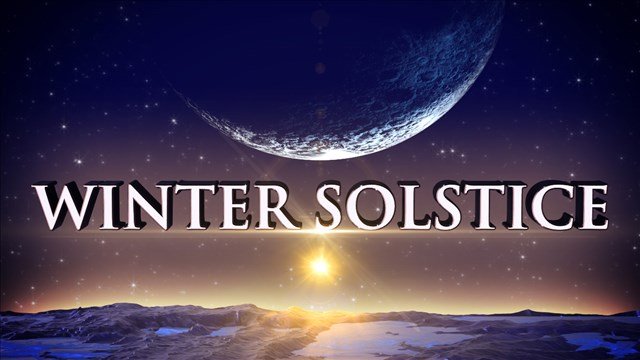
Today, Friday Dec 21st is the longest night for people in Sweden and the rest of the northern hemisphere. At this time of year, it doesn’t get much darker than this. In Swedish, there’s an expression – now we’re moving towards brighter times – and it’s really relevant today, as from tomorrow the amount of daylight will gradually extend until June.

The winter solstice is the official start of astronomical winter, and this year it will be extra special. The winter solstice marks the exact moment each year when the Northern Hemisphere reaches its greatest possible tilt away from the sun, according to National Oceanic and Atmospheric Administration. It signals the beginning of winter in the Northern Hemisphere and the summer season in the Southern Hemisphere.

But this year, the solstice isn’t the only celestial show in the coming days. A full moon known as the Cold Moon will take place on Saturday. The moon will appear full for a few days. However, it is the first time it coincides with the winter solstice since 2010. It won’t occur again until 2094, by which time most of us will be dead. In addition to the full moon, a meteor shower will take place on Friday and Saturday nights, according to NASA.

So it might be dark and dreary outside, but look up to the sky. You might just witness something spectacular – and I don’t mean Santa and his sleigh.

50 Swedish words for snow

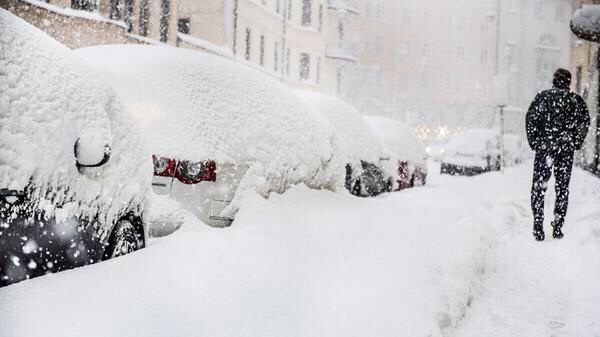
Last year, I published this list of words for snow and I thought since the snow has arrived in most of Sweden, it’s worth sharing the list again.

Not surprisingly when living in a country where it snows a lot, people start to see differences and nuances in the type of snow, whereas in English the word might just be an unsatisfactory ‘snow’. The Swedish language makes it easy to join words together to describe these nuances.

Here is a list of 50 Swedish words related to snow.

1) Blötsnö – wet, slushy snow
2) Drivsnö – snow that is blown into troublesome snow drifts
3) Aprilsnö – snow in April, according to suspicion signifies plenty of food for the coming season
4) Hårdsnö – compacted hard snow
5) Konstsnö – artificial snow
6) Kramsnö – squeezy snow, perfect for making snowballs
7) Julesnö – snow at Christmas
8) Klabbsnö – wet, warm snow for building snowmen
9) Kolsyresnö – frozen carbondioxide
10) Kornsnö – small white snow breadcrumbs
11) Lappvante – thick, falling snow
12) Lössnö – snow that can loosen and be dangerous
13) Majsnö – surprising and unwelcome snow in May
14) Modd – snow that has partly melted due to salt
15) Natursnö – real snow (as opposed to artificial)
16) Nysnö – fresh snow, crisp and white
17) Pudersnö – powder snow
18) Rekordsnö – an unusual amount of snow, breaking previous snow records
19) Slask – slushy snow mixed with rain and dirt on the ground
20) Snö – snow
21) Snöblandat regn – snow mixed with rain
22) Muohta – the Sami word for snow (it is said the Sami actually have 200 words for snow!)
23) Snörök – faint particles of snow that look like smoke
24) Yrsnö – snow being whipped around by the wind in all directions
25) Åsksnö – snow that pours down during a thunder storm

26) Snökanon – a sudden blast of snow that suddenly hits a place, and feels like snow has been dumped on you

27) Jungfrusnö – virgin snow

28) Snösmocka – a huge amount of snow

29) Snötäcke – snow on the ground

30) Sjösnö – snow over the sea that can roll in over land

31) Snöfall – snow in the air

32) Flingsnö – snow with larger crystals

33) Skarsnö – a crispy surface on a blanket of snow

34) Packsnö – thickly packed snow

35) Pärlsnö – snow like small pearls that hurts when it hits your face

36) Snöglopp – wet snow mixed with rain

37) Spårsnö – snow that allows footprints to be formed

38) Fjöcksnö – a light, fluffy snow

39) Flister – snow the consistency of salt that stings the face when it falls

40) Flaksnö – a sheet of snow

41) Upplega – snow on the upper side of a tree branch

42) Firn – liquid-like snow that can initiate an avalanche

43) Fimmel – sandy snow that falls at low temperatures

44) Själja – a thin layer of ice on top of the snow that resembles glass

45) Knarrsnö – crispy snow that creaks when you walk on it

46) Snöfyk – wet snow

47) Torrsnö – dry snow

48) Månsilver – a poetic word to describe the dusting of snow

49) Snöis – snow on cold water that forms an icy solid surface

50) Stöp – a mixture of snow and ice resembling porridge that forms on top of cold water

So, let it snow! Let it snow! Let it snow!

Let the light in – Lucia morning in Sweden

A Chinese proverb says this,

‘It’s better to light a candle than to curse the darkness’.

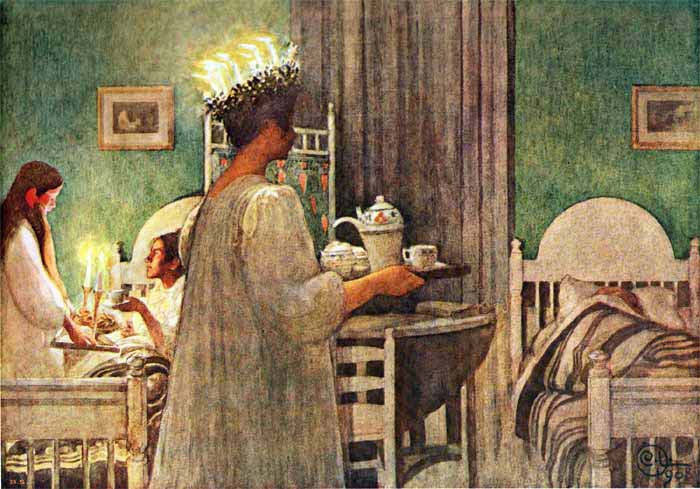
Never was this more true than today. Lucia day. At the darkest time of the year, when we all are drained by the black mornings and afternoons in Sweden, Lucia pays us a visit. With candles in her hair and surrounded by her handmaidens and boys in a procession, Lucia shines light into the dark depths of our spirits. And slowly, slowly, the day awakens.

I love Lucia. Long live Lucia!

Lucia traditions are celebrated in Sweden, Norway, Denmark, Italy, Latvia, Estonia, Finland, Hungary, Malta, Bosnia, Bavaria, Croatia, Slovakia and St. Lucia, West Indies. But where does she come from and why is she one of the few Saint’s days celebrated in Sweden?

Santa Lucia is believed to have been a Sicilian saint who suffered a martyr’s death in Syracuse, Sicily around AD 310. She was seeking help for her mother’s long-term illness at the shrine of Saint Agnes, in her native Sicily, when an angel appeared to her in a dream beside the shrine. As a result of this, Lucia became a devout Christian and refused to compromise her virginity in marriage. Officials threatened to drag her off to a brothel if she did not renounce her Christian beliefs, but were unable to move her, even with a thousand men and fifty oxen pulling. So they stacked materials for a fire around her instead and set light to it, but she would not stop speaking. One of the soldiers stuck a spear through her throat to stop her, but to no effect. Soon afterwards, the Roman consulate in charge was hauled off to Rome on charges of theft from the state and beheaded. Lucia was able to die only when she was given the Christian sacrement.

The tradition of Santa Lucia is said to have been brough to Sweden via Italian merchants and the idea of lighting up the dark appealed so much that the tradition remained. The current tradition of having a white-dressed woman with candles in her hair appearing on the morning of the Lucia day started in the area around Lake Vänern in the late 18th century and spread slowly to other parts of the country during the 19th century.

The modern tradition of having public processions in the Swedish cities started in 1927 when a newspaper in Stockholm elected an official Lucia for Stockholm that year. The initiative was then followed around the country through the local press. Today most cities in Sweden appoint a Lucia every year. Schools elect a Lucia and her maids among the students. The regional Lucias will visit shopping malls, old people’s homes and churches, singing and handing out gingerbread.

So, it might be cold and dark outside, but inside it’s light. And the light is always stronger than the darkness. Keep your light lit, and you will never feel the darkness.

Trump in Swedish

Today I was reminded of a fun Swedish word. A very contemporary one.

The Swedish word I’m referring to is ‘trumpen’. Contemporary for obvious reasons, the word is an adjective and translates as the following:

  • Glum
  • Moody
  • Morose
  • Stuffy
  • Surly

Appropriate, isn’t it? Shame it doesn’t also mean misguided, arrogant and narcissistic.

Cash free Sweden

I read in the paper yesterday that Sweden has taken over from the USA in terms of cash free payments. Plastic prevails in this country as does the mobile payment technology called ‘Swish’. With a simple transfer, Swedes can send money to each other via their phones. All that’s needed is a bank account, a bank ID and, of course, a mobile.

Shop after shop is putting up signs saying ‘we do not accept cash – only card and Swish’. I have to wonder if this is legal, as coins and notes are still actually legal means of payment. Do they have the right to refuse?

Sweden’s cash free society really hit home with me this morning. Sitting on the tube on the way into work, a beggar got into my carriage.

He stood in the middle of the aisle and presented a plea for the money he needed to buy food. Nobody looked at him, everybody looked at their cell phones.

In response to this, the beggar said, ‘if you prefer not to give me cash, I take Swish!’

Odd Swedish names

Ok, I know that English has quite a lot of funny names such as Dick and Willy, but Sweden also has its fair share.

Here come the top 10 hysterical and odd names that people in Sweden actually have.

  • 1. Gun. A popular name of over 18000 women in Sweden. Not bad for a pacifist country
  • 2. Jerker. Seriously. A man’s name, and also the name of a piece of furniture at IKEA.
  • 3. Saga. Ugly when pronounced in English, this name for a woman actually means ‘fairy tale’.
  • 4. Odd. An odd one this. A name owned currently by 735 men in Sweden.
  • 5. Even. Interestingly, the name Even also exists. Odd and Even would make a well-balanced coupled wouldn’t they?
  • 6. Love. It’s true. You could fall in love with a Swedish boy called Love.
  • 7. Ninni. A name of a Swedish woman. Although it means ‘an idiot’ in English, I assume all Ninnis in Sweden are not stupid.
  • 8. Knut. An unfortunate name that, at best, gets pronounced as nut, and at worst gets the letters mixed up to mean something altogether more rude
  • 9. Tintin. Yeah, it’s true. There are many people in Sweden, both male and female, who have this name. Over 500 to be more precise.
  • 10. Titti. This has to be the queen of all unfortunate Swedish names. 1024 women in Sweden currently bear this name with pride.