Great Swedish Women Part 1 – The Catalyst

Today, March 8th, is International Women’s Day.

In support, I am writing series on Great Swedish Women, past and present: women with stength and passion, women with a voice, women who create change.

For seven days, I will write about these Great Swedish Women, one per day. I hope you want to join me in celebrating them.

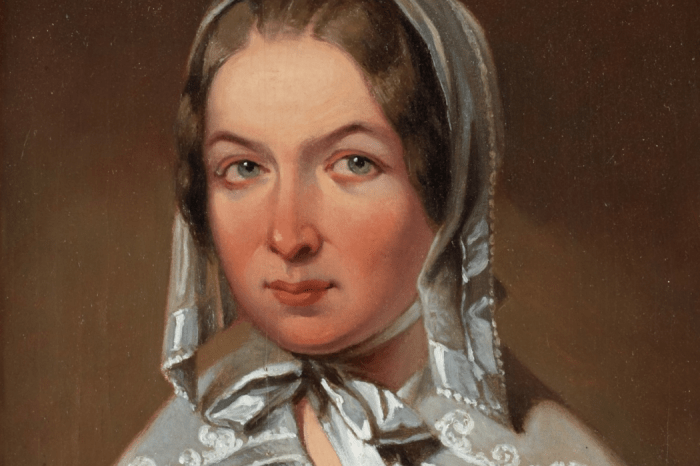
Fredrikabremer

First out is the 1800’s writer and feminist reformer Fredrika Bremer, a kind of Swedish Jane Austen and one of the catalysts of the early feminist movement in Sweden.

Many of the women’s rights that we take for granted in Sweden today did not exist in the Fredrika Bremer’s time. For example, in 1800’s Sweden, women were not free to educate themselves as they liked, marry as they liked, live as they wanted, to have economic independence or to vote in elections. Married women were controlled in all manner by their husbands, unmarried women by their closest male relative. Fredrika Bremer was born into this kind of society in 1801 in Åbo, Sweden, which today is part of Finland. At the age of three, her family moved to Stockholm where Fredrika and her sisters were raised to marry well. Fredrika found the limited and passive family life of Swedish women of her time suffocating and she described her family as “under the oppression of a male iron hand’. Fredrika never was forced under the shackles of marriage, so had a certain level of independence inaccessible to married women at that time. Throughout her adult life, she became a world traveler, an accomplished author (at first anonymously) and a political activist. She was very interested in social reform regarding gender equality and social work and she participated actively in debates around women’s rights in Sweden.

Fredrika Bremer was a catalyst of the first real feminist movement in Sweden. There is much in modern day Sweden to thank her for. In 1853, she started by co-founding the ‘Stockholm Women’s Fund for Childcare’ and the following year, the ‘Women’s Society for the Improvement of Prisoners’. However, it was in her novel, Hertha (1856) that she issued in most change, making it probably her most influential literary work. In the book, she wrote about the lack of freedom for women, which subsequently raised a debate in the parliament called “The Hertha debate”. This directly contributed to a new favourable law for adult unmarried women in Sweden in 1858, and was a starting point for the campaign for women’s rights in Sweden. Hertha also raised the debate of higher formal education for women and, in 1861, the University for Women Teachers was founded by the Swedish state.

In 1860, Fredrika helped to fund Tysta Skolan, a school for the deaf and mute in Stockholm. Now an established and respected citizen and patron, she supported giving women the vote in the electoral reforms of 1862. In the same year, women of legal age were granted this in municipal elections in Sweden. The first real women’s rights movement in Sweden, the ‘Fredrika Bremer Association’, founded by Sophie Adlersparre in 1884, was named after her, 19 years after her death.

Fredrika Bremer’s leaves a legacy of equality and autonomy behind her. Her legacy extends far beyond Sweden’s borders. Not only is she recognised as an influencial writer and reformer, but the town of Frederika in Bremer County Iowa, USA is named after her.


.

Are ‘shy Swedes’ sociable?  


Do you subscribe to the belief that Swedes are shy, difficult to get to know, cold and unfriendly? This is not an uncommon perception, amongst foreigners and Swedes alike. 
Well it could be that your perception is nothing more than a stubborn stereotype. Or at least that’s what a new piece of research seems to suggest. 

In the UK’s Guardian newspaper this week, research into identifying the world’s most sociable city was recently published. And the winner? The number one most sociable city in the world? 

Gothenburg. Yes, Gothenburg. 

Sweden’s shimmering city on the west coast beat London, New York and Berlin to grasp the title. And the number two position? The second most sociable city in the world? 

Stockholm. Yes, the Swedish capital. 

I find it rather confusing, but very interesting. The research looked at amongst things propensity to party, openness, and use of social media. 

How does this research match your experience of living in Sweden? 

To see the research, here’s the link: 

https://www.theguardian.com/travel/2017/feb/22/party-gothenburg-voted-worlds-most-sociable-city-hostelworld-stockholm-new-york

Shedding my light on the Lucia debate


Today is Santa Lucia in Sweden – December 13th.  At the darkest time of the year, when we all are drained by the black mornings and afternoons, Lucia pays us a visit. With candles in hair and surrounded by a posse of singers, Lucia shines light into the dark depths of our spirits. The music plays. The choir harmonises. Lucia smiles at us. And slowly, slowly, the day awakens.

I love Lucia. Long live Lucia – this Sicilian martyr, who’s tradition is said to have come to Sweden via Italian merchants around the late 18th century.

Every year, towns around Sweden elect a Lucia and they visit shopping malls, old people’s homes and churches, singing and handing out gingerbread. And every year there is a debate about who owns the right to be Lucia. The answer to that question depends on your starting point – does one take a traditional view or a modernist view? The Swedish traditionalists will say that Lucia definitely has to be a girl, ideally blonde and blue-eyed. The modernists will say Lucia should reflect today’s society and therefore can be any colour or gender.

This year, as many before, the debate took a nasty turn. A large department store depicted Lucia as a gender-neutral, dark-skinned child. For some people, this was too much. Hateful, despicably racist, and, of course, anonymous comments flowed in via social media, revealing yet another crack in Sweden’s tolerant facade.  Consequently, the department store removed the advert to protect the child. This social media behaviour is unacceptable and should be in no way condoned. Having a view point is everybody’s right (be it traditionalist or modernist), but attacking a child is something totally different.

As I watched Lucia this morning I was reminded of the real message. The humanist message. Sure, Lucia is literally about bringing light to the dark day. But the metaphor is clear, if we care to remember it. It is about caring. It is about being open even when we feel closed. It is about community.

One of the songs the choir sang this morning is called ‘Sprid ditt ljus’ – and I think this sums it all up. Translated into English, the chorus goes: ‘Spread your light, in the darkest times, warm us now and let us all feel peace’

Maybe it’s just me, but I think who is elected Lucia isn’t that important. What’s more important is that we remember the point. We should open our eyes to the light that is shone on our society where we have growing social divides, enormous groups of displaced people, poverty, starvation, homelessness on our streets.

Once a year, Lucia shines the light. Can we find it within us to shine our lights on each other? I, for one, intend to try.

Happy Lucia! May the light keep you warm.


Top 10 things I miss about Sweden

swebuildings

I’ve been hearing and reading a lot of Sweden-bashing recently. While we are free to think what we want, I believe it’s all too simplistic to focus on the negative and complain about Sweden or Swedes. It’s very easy to focus on what Sweden is not, rather than what it is.

Recently, I’ve been a lot in Asia and Latin America, far away from Sweden and my family and friends. Sometimes when we’re confronted by new environments, it is then we realize what we appreciate about our home locations. I’ve been putting some thought into it. Apart from my loved ones, what is it that I miss about Sweden when I’m away?

Here are my top 10, in no particular order of priority.

  1. the feeling that the sky is big and endless, giving a sense of freedom in my mind and spirit
  2. knowing that I can take a deep breath and fill my lungs with fresh oxygen instead of polluted toxic fumes
  3. the calmness in my thoughts and that I don’t have to battle with external noises in order just to hear myself think
  4. my anonymity and just blending in with the crowd
  5. the certainty of knowing how things function and how I am supposed to behave
  6. walking outside without interruption, confusion or danger
  7. the knowledge that I don’t have to keep buying bottled water – I can drink directly from the tap without getting seriously sick as a consequence
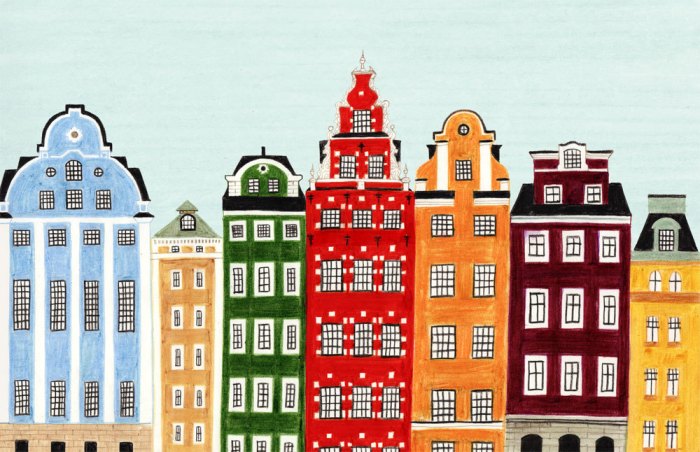
  8. the evening light cascading on the colorful buildings – the umbras, the rusty reds and the deep golds
  9. the sting of the cold air on my nose and cheeks (never thought I’d admit to that one)
  10. the Swedish aesthetic – environments filled with stylish modern design, cool Nordic solutions and healthy-looking easy-on-the-eye people

None of this is to say that I don’t enjoy traveling, because I do very much so. I just think that sometimes it’s worth taking a moment to reflect over what you appreciate about where you live.

I’m sure, if you do, you’ll find there’s a lot more than you think.

What do you appreciate about Sweden when you’re not here? I’d love to hear your thoughts – write them in the comments below.

If you like this blog, please share it with your friends.

This thing about being tall 

At a height of 193 cm, I am at the tall end of the man scale. However, in Sweden, I am rarely reminded of it. While I am taller than the Swedish 182 cm average, I still blend in. It isn’t until I visit another country that I become reminded that I am towering over other people and height becomes a source of attention or in worse case ridicule. 

This makes me think of visibility in relation to the intercultural experience. Does the more visible we are affect the authenticity of the experience? 

I remember my first time in Asia how people pointed at me and laughed. I remember in Mexico how people wanted to touch me and in China how they wanted to take a photo with me. My physicality was strange to them and, as such, my presence was impossible for them to ignore. 

I genuinely think that my experience of other countries is coloured by the fact that I can’t hide. I am seen by everybody wherever I go. Shorter people can more easily disappear in the crowd and, as such, can more neutrally observe their surroundings. Through no choice of my own, I am often influencing mine, which consequently makes my surroundings less authentic. 
In Sweden, people don’t notice. Or maybe they just don’t care. Or are too polite to point it out. Whatever the reason, I perceive that my feeling of physical sameness rather than difference is something that helped me adapt quickly to Swedish society and acknowledge it as the place I feel at home. 

The debate over Swedish values


Every summer in Sweden, there is a politics week held on the Baltic island of Gotland. Over 8 days, each of the main political parties gets a chance to promote their agenda. This year, there has been a lot of talk about Swedish values, which in turn has started a debate about what are Swedish values and if they even exist. 

If we are looking for values that are exclusive to Sweden, the answer is no. If however we are looking for values that are prioritised in Sweden and function as a way to move society forward then, yes, they do exist. It is a matter of definition.  They may not apply to every Swede, but researchers have seen clear values in Swedish society that, while not unique to Sweden, are very strong. 

There has been a lot of talk about values of equality and tolerance. These values have been strong in Swedish society in the past and have enabled the welfare state, the laws and the political systems we enjoy today. 

According to the World Values Survey, which is a credible and extensive body of research that looks into what values drive society, there are two main value sets that separate Sweden from many other countries in the world. Those values are so-called secular/rational values and values of self expression/self actualisation.

Secular/rational values. In other words, the importance of the church and religion has deminished in Swedish society, religion and politics are separated, traditional family structures exist side by side with less traditional structures. Decisions are made ‘rationally’ and not based on scripture or a religious morality. This is very different from most places around the world.

Self expression/actualisation. The right and the need to say what one thinks is a strong driver in Swedish society. The right to your own opinion, your own perspective and to live the life of your own choice are considered undeniable human rights. This is different from many other places around the world. 

Many behaviours we see in society, in families and in the work place can be traced to these underlying driving values in Swedish society. 

The danger in discussing Swedish values lies in the belief that these are static and fixed. As society changes, so do the prevailing values. As the world around us changes, so do the values. As the environment is impacted, as war and crisis occur, values change. 

When political parties want to reinforce Swedish values, they are romanticising and simplifying. This is dangerous rhetoric as they are wilfully and deliberately using values to exclude. 

Panic on the streets of Stockholm 

  
To quote the Smiths in their song ‘Panic’ – ‘Panic on the streets of London, panic on the streets of Birmingham, I wonder to myself, could life ever be sane again?’ 
This song resonates around my head as I reflect over the recent happenings on the streets of the Swedish capital – masked vigilantes, street brawls, police attacks. 

A group of masked men gathered in central Stockholm with the motivation of protecting Swedes by attacking immigrant street children. Flyers have been handed out around town with the message that ‘enough is enough’. A Facebook invitation has also been sent out asking for ‘Vikings’ to start patrolling the streets in gangs to protect Swedish women from ‘Muslim rapists’.

What is this? What the hell is this? 

I don’t know what the solution is. But while we must remember it is illegal behaviour by a minority, we also must realise that it’s a symptom of a deeper panic. We can’t keep living in a bubble.

1) More resources must be directed to the law enforcement agencies. Tax income or small tax increases could be redirected to enable this. 

2) Racist groups must be strongly counteracted. The consequences of their actions should be felt by them. 

3) An education program for Swedes in schools must be instigated. Schools should talk about values, integrity and the benefits of diversity and pluralism. People are not born racist. 

4) A huge media campaign on the positive aspects of diversity must be instigated – not least on the TV. 

5) Refugees must be humanised and not marginalised. Tell us their stories. Who are these people? What have the faced? What are their dreams, hopes, wishes? 

6) Traumatised street children must be cared for. Resources must be directed to this. Small increase in tax could easily finance it. We all gain from this investment. 

I know none of this is simple, but it must be done. 

Sweden is changing. Right now it is changing for the worse, developing out of fear and paranoia. 

This can be turned around – Swedes need to be reminded of what makes them proud to be Swedish. And that’s not gangs punishing street kids in the name of Viking culture. It’s the way that this country has welcomed people in need with open arms – more than any other country per capita.  It’s the way this country has respected the right to seek asylum. That is Swedish. That is something for Sweden to be proud of. 

Sweden’s disgrace! 

  
In the latest poll today, over one fifth of the Swedish voting population would vote for the nationalistic right wing party, putting the party into position of the second largest political party in Sweden. 

Let’s be clear what this means. One fifth of Swedes support a party that has its roots in the nazi party, that has verbally and physically attacked minority groups and that believes in Swedish racial superiority. It’s a disgrace for all Swedes who believe in tolerance, openness and solidarity. 

It’s time to act. To speak out. This is not going away. As the established parties bitch at each other, the Swedish population grows tired of their rhetoric. Consequently, they feel more disengaged and resentful and turn to a party that seems to talk straight to their concerns and promises protection of the Swedish identity. It is scarily reminiscent of the past. 

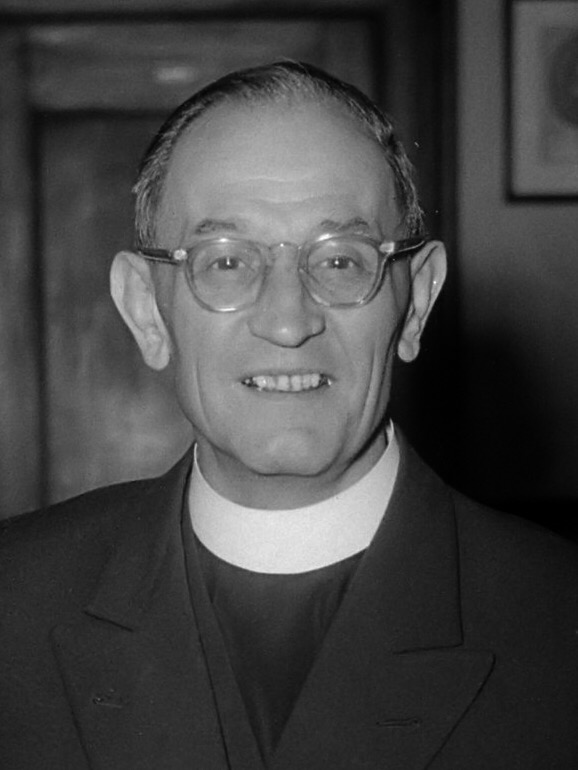
Pastor Martin Niemoller, pictured above, wrote a famous poem after he survived the concentration camps of the Second World War. His poem criticised the cowardice of German intellectuals after the Nazi’s rise to power and their subsequent purging of one group after another. It’s worth reflecting over his words. They are very relevant today. Right now. In Sweden. About us. 

‘First they came for the Socialists, and I did not speak out— Because I was not a Socialist.

Then they came for the Trade Unionists, and I did not speak out— Because I was not a Trade Unionist.

Then they came for the Jews, and I did not speak out—Because I was not a Jew.

Then they came for me—and there was no one left to speak for me.’

Do these words resonate with you? Are we the cowards he’s referring to? Are we so comfortable and complacent that we just sit back and watch it happen? 

If, like me, you believe in a multicultural society, it’s time to take a stance. Write to your MP. Talk to your colleagues, neighbours and friends. Get involved. Share this blog. Root out those one in five and challenge them. Demonstrate. Communicate. Educate. 

Speak out. While you can. Before it’s too late. 

And Sweden’s ‘Christmas present of the year’ 2015 is…

Every year, Sweden’s trade research institute nominates an item that is the ‘Christmas present of the year’. This item should have sold in large quantities and/or represent current trends in Swedish society. 

The first item to be granted this status was in 1988 and it was the baking machine. Since then, various items have been the mobile phone, the tablet, the spike mat, the book, the food home delivery service, the woolly hat and the wok. Last year’s was the smartband – a reflection of today’s physical activity trend and the need to digitally track and register results. 

So this year, what is it? 

Given the current state of the world, and the number of refugees that Sweden has taken in, one might hope that it is a charitable contribution. But no it’s not. 

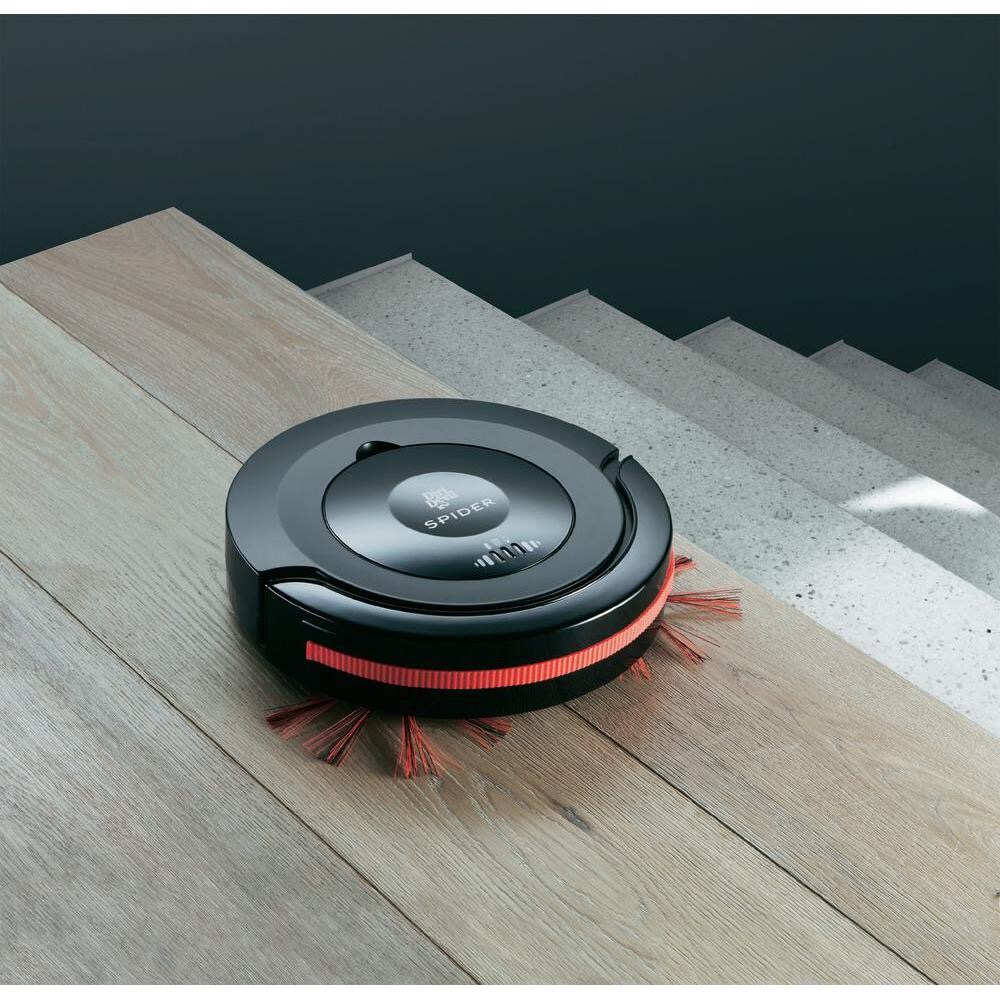
It’s the robot hoover. 

What does this say about Sweden’s current time? It clearly represents the robotisation of our society, and the automisation of household functions. But it also reflects the stressful nature of today’s society in which people feel that time is limited. Additionally, it shows that the home is back in focus and the need to be liberated from boring tasks such as vacuum cleaning is strong. 

So Happy Christmas and a dust-free New Year! 


Stockholm’s building

  
Someone, I don’t know who, once said that you can tell if a town is prosperous by the amount of building that’s going on. By that definition, Stockholm must be a very wealthy place.

The amount of roadworks and building works currently happening in Stockholm is astounding. Main arteries have been dug up to create more lanes or bus stops, buildings are creeping upwards and additional floors are built on the rooves, new developments are being squeezed into empty plots. And the Slussen intersection is being demolished, reformed, debated and berated. 

As a Yimby, I love these improvements but it can make day-to-day life difficult. And the fact is, this isn’t going to stop. Stockholm continues to thrive and be Sweden’s engine. In research by the Chambet of Commerce released this week, Stockholm is the fastest growing capital in the EU. 

So fasten your seatbelts. It’s gonna be a bumpy ride.