Why I am so proud to be watching the Swedes


A young woman with a pushchair walks past me and pins a pink rose onto the wire fence. She stops a moment to reflect, clearly taken by the gravity of the moment. A middle-aged couple huddle together holding tightly onto their teenage son. A woman wearing a hijab gently puts a consoling hand on a crying stranger’s shoulder as she passes silently by. 

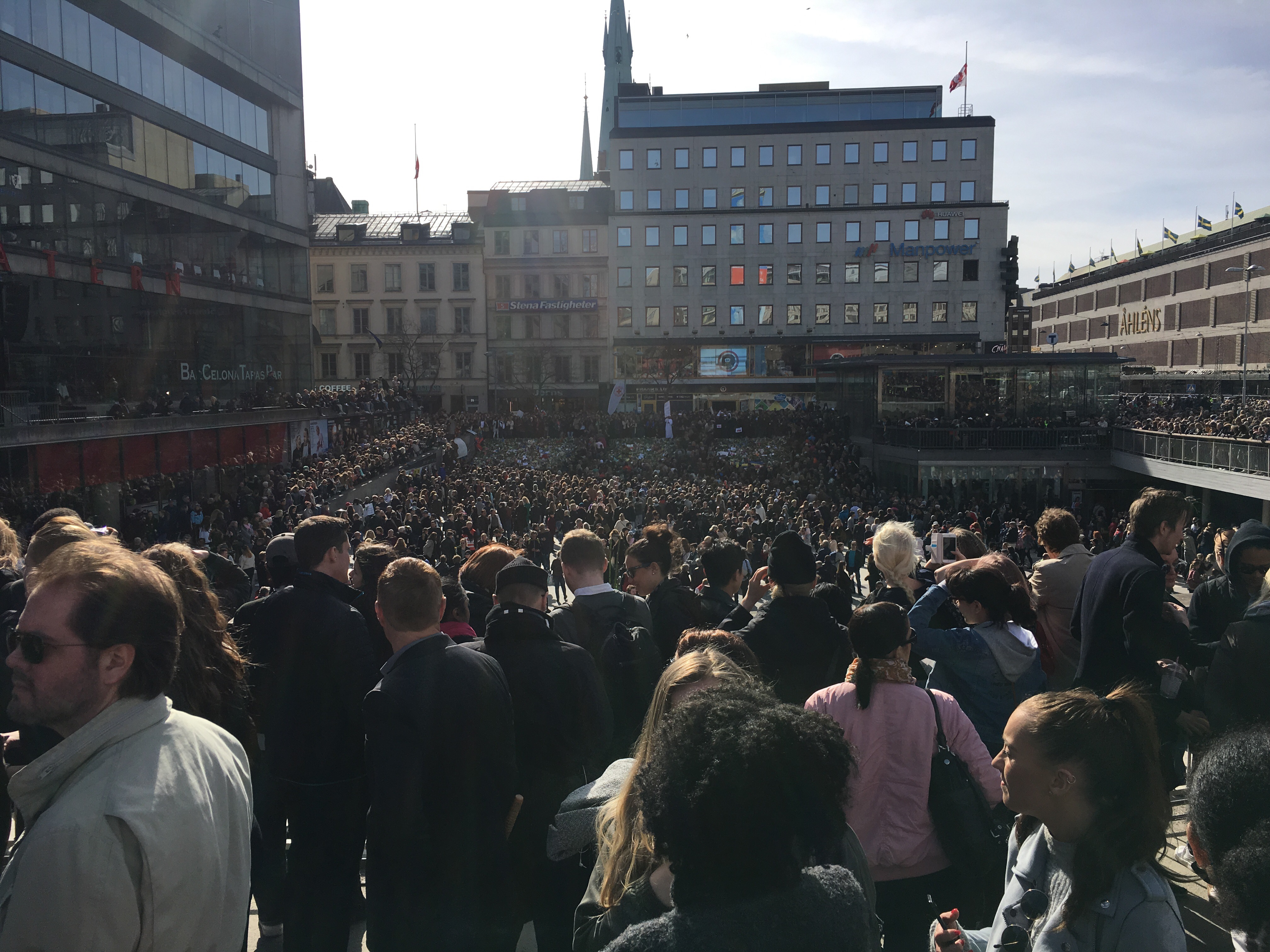
There are tens of thousands of people gathered here on Sergel’s Torg Plaza in Stockholm but the noise level is subdued. A respectful silence hangs in the air. The sun is high and shines down on us on this, the warmest day of the year so far. 

A few meters from here, 48 hours ago, 4 people lost their lives in a terrorist attack, and many more were injured. Amongst the murdered victims were a Belgian tourist, a British man living in Stockholm and two Swedes, one of which was a 11 year old girl on her way home from school. 

Today, Stockholmers are gathered in a ‘Love manifestation’ vigil to pay their respects to the victims and their families. The place is packed with people of all ethnic, religious, political and social backgrounds. But today none of this matters, they are united as one. 

I have never been more proud to be watching the Swedes as I am at this moment. When faced with a national trauma, what do these people do? Do they meet it with fear? No, they meet it with love. It is almost palpable at this moment. And with their love, they beat terrorism. 

Minutes after the terrorist attack, the hashtag #openstockholm appeared on which people opened their hearts to each other. They offered sanctuary, support, a sofa for the night, a lift home, food to anyone who needed it. They responded with love, not fear. 

The day after, they went in their droves to the location of the attack and attached flowers to a fence and lit candles. They hugged emergency workers and covered a police car with flowers to show their gratitude. They responded with love, not fear. 

And today, they came in their tens of thousands to show that they are not afraid. They listened to inspirational speeches and moving music. They took back the streets and they did it with love, not fear. 

I’ve spent many years writing about these people – the Swedes. I write sometimes in despair, sometimes in frustration but often with fondness and humor. But today I write with pride. An immense pride. 

As I linked arms with a stranger, an old white-haired lady, and participated in a one-minute silence, I felt inspirited. I was a part of something larger than myself. I don’t know what it was, but it was significant: a meaningful moment in Sweden’s history that will affect the national psyche for a long time to come. 

One of the speakers at the vigil encouraged people to continue to open their hearts and their doors. Showing solidarity and keeping Stockholm an open city is a priority. But this is something we can only achieve if we do it together. 

The final quote of the vigil summed everything up. A quote from Martin Luther King – 

Darkness can not drive out darkness; only light can do that. Hate cannot drive out hate; only love can do that.’

Terror on the streets of Stockholm 


At 2.30pm yesterday, a masked man stole a delivery truck from outside of a restaurant. The delivery man tried to stop the thief by standing in front of his truck.  However, the thief pushed over the driver, picked up speed and proceeded to drive zig zag down Stockholm’s main pedestrian shopping street, ploughing into people as he went. The truck’s final destination was one of Sweden’s largest department stores, into which it smashed in a billowing cloud of smoke. 

Like everybody else I was really shaken up by this act of violence.  I, and my nearest and dearest, were all in safety and my phone rang and beeped frenetically as we contacted and reassured each other. 

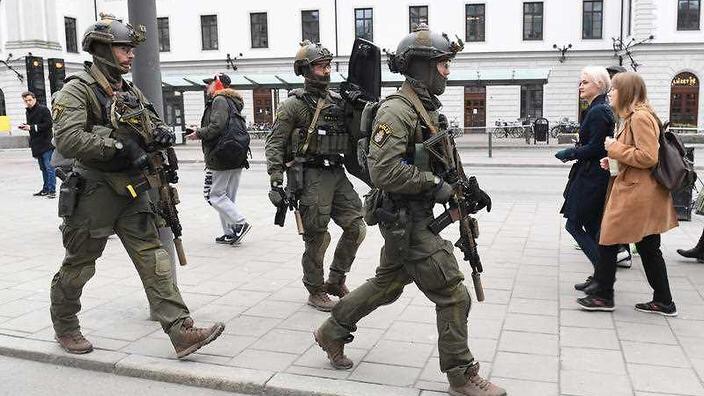
Stories reached me about friends being locked into their offices or hiding out in shops and restaurants. The streets were awash with armed police, and the whole city was shut down within 20 minutes – trains, buses and the underground were all stopped and roads were cordoned off as residents and tourists were rapidly ushered out of the city center. 

In the midst of the chaos, Stockholmers reached out to each other in support. People opened their homes to provide sanctuary to each other, cafes provided food and beverages, social media was flooded with people offering to help and offering protection. In this emergency, love prevailed – which was moving and heart-warming. I myself was in a gym, and the doors were locked. The staff went straight to action providing us with support and offering food and drink and unscheduled training classes for those who wanted a distraction. 

The latest news at time of writing this blog is that 4 people and 1 dog were killed, and 15 seriously injured. The driver has been arrested.  Another person is in custody believed to have some connection to the driver. Border control has been tightened up and there are still disturbances in local traffic. 

Stockholm now joins the long line of cities such as London, Berlin, St Petersburg, Paris and Nice, who have suffered under terrorist attack. 

No matter who is responsible for this act of violence, be it an organisation or an individual, we must never give into them.  The nature of terrorism is to spread fear by using intentionally indiscriminate acts of violence. It’s its indiscriminate approach that makes it difficult to predict and we are often powerless to influence it. Therefore we should do what we do best – not bow down to it but stand up and keep going. It is by living our lives in our open, democratic societies that we win.

I sincerely hope that Stockholm does not become a fearful, suspicious, closed city. This place that I love is a target because of its freedom and that is a freedom we should protect by continuing to live our lives. 

Terror will never win. It is designed to exploit our human fear. It is the ultimate act of intimidation. We must not let it win. My heart goes out to the victims and their families. Yesterday, we showed love to each other. Let’s continue to do that. We do not need more hate. 

We must prevail. 

Sweden’s nazi sympathiser, secret agent, communist spy, musical diva!!

ZarahLeander

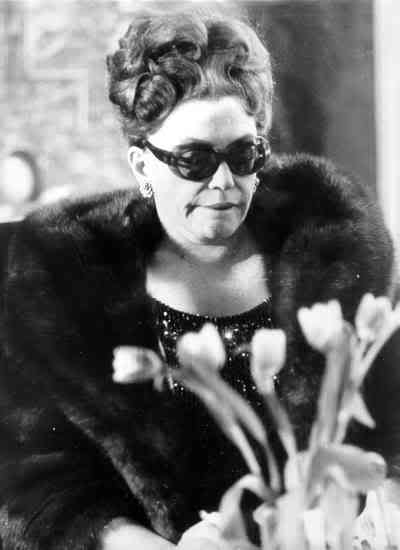
Long before Swedish pop sensation Zara Larsson became famous, she had another famous namesake from Sweden.

Also a singer, Zarah Leander was her name, and she remains an enigma to this day. Active during the war years, was she a source of pride or a source of shame for Sweden? Nobody really knows.

Zarah Leander was born in the town of Karlstad in 1907 by the name of Sara Stina Hedberg. She began her singing career in the late 1920s, and by the mid-1930s she was hugely successful in Scandinavia and in Europe. In particular, the Germans loved her and in 1936, she was contracted to work for the German Film Foundation for whom she made many movies. As her employer was subordinate to the Third Reich, many people viewed her films and her music as nazi propoganda, although Zarah Leander herself never took a public political stance or officially joined the Nazi party. She performed live at many concerts, even after Nazi Germany had invaded Denmark and Norway. She profited from being the biggest, and most well-paid, star in Germany at that time.

After her home in Berlin was bombed towards the end of the war years, she returned to Sweden under much criticism. She was shunned by the artistic community but eventually managed to resume her career. She died in 1981 in Stockholm at the age of 74.

So was Zarah Leander a source of shame for Sweden? Was she a cold-blooded, fame-seeking, profiteering, Nazi sympathiser? On paper it would seem so. But who really knows?

Or was she a source of pride? Was she, as she herself claimed, just an entertainer working to please an enthusiastic audience in a difficult time?

Or was she in fact a spy? Soviet intelligence officer Pavel Sudoplatov claimed, just before his death, that Leander had been a Soviet agent with the codename “Rose-Marie”. He claimed she was a secret member of the Swedish Communist Party and conducted the work for political reasons.

Zarah Leander talked openly about her past and consistently denied that she had any sympathies with the Nazi or the Communist parties or that she worked as a spy for any country. But was she telling the truth? The mystery of Zarah Leander followed her to the grave and today the only legacy we have is her music and her films.

Zarah Leander, 1907-1981. Nazi sympathiser? Communist spy? Secret Agent? Musical Diva!!!

How Swedes indoctrinate their children

tittamaxgrav

A friend of mine was visiting at the weekend with her small child, and she forgot one of her books when she left. I looked through it and was struck by how the story book reflected Swedish society and lifestyle: a picture book designed to groom children in the Swedish way.

The book is called ‘Titta Max grav’‘Look, Max’s grave!‘ – and it was first published in 1991 and written by Barbro Lindgren and Eva Eriksson. The book is a fascinating account of the life of a little boy called Max from the cradle to the grave. He is born, learns to walk and talk, gets a dog, goes to school, becomes a banker, finds a woman (unclear if they are married), has a child. But then it all goes downhill for Max. He watches too much television, so his woman gets sick of him and leaves. He gets sick, wants to consume Swedish ‘snus’ (snuff), gets sicker and eventually dies alone. And the final picture – look, Max’s grave.

The ‘simple’ story promotes many Swedish values which guide Swedish society: all children receive an education, men and women don’t have to be married to have children, women are empowered to leave useless men, everybody receives healthcare, many people die alone.

There’s nothing specifically unique about this particular book. All cultures pass on their values to their children via stories. Sometimes these are verbal stories told by grandparents as they entertain their grandchildren. Sometimes these are communicated via tv or other screens to curious minds.

Very often they are transmitted via ‘simple’ books full of pictures and easy words by parents at bedtime. But these books are actually not simple at all: they are cultural mechanisms designed to pass on values and ethics and indoctrinate children into the prevailing sense of morality.

So those of you with small children. Have you refelcted over what the stories are teaching your children? How are you indoctrinating them?


Swedes! Where’s your barbecue?!

DST_Countries_Map

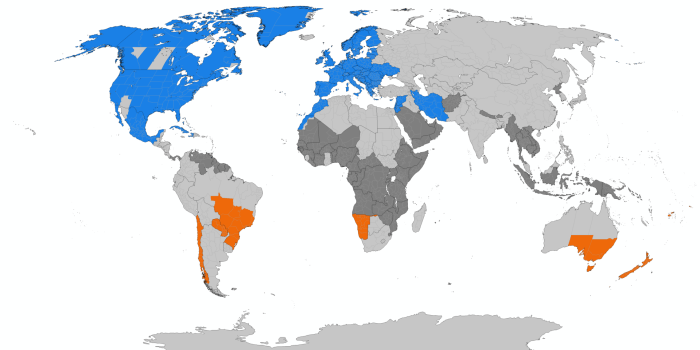
This weekend in Sweden, the clocks went forward one hour to Summer Time. Despite the occasional complainer who moans about losing an hour’s sleep, this is usually received very positively in the country. Suddenly,  the light at 6pm becomes the light at 7pm. People are happier, daylight is longer, people venture outside to enjoy the burgeoning spring.

So why do we do this? There are clear benefits, but where does it come from? The practice was first initiated during World War I to give more light for agriculture and other important societal functions. However it was abandoned shortly afterwards, only to come back during World War II.

It was never very popular and by the 1950’s it had again been cancelled. However come the 1960’s, it was reintroduced in many countries due to the energy crisis – the lighter evenings required less electricity.  In 1981, the EU legislated Summer Time in Europe requiring member states to decide particular start and end dates for Summer Time which varies in the different countries.

In Sweden, Summer Time was originally introduced on 15 May 1916 but then took it away. In 1980, Summer Time has been observed every summer in Sweden starting on the last Sunday in March and ending on the last Sunday in October.

In Europe, there are 4 countries that do not switch to and from summer time. They are Belarus, Russia, Iceland and, since 2016, Turkey.

Around the world, there are various countries observing the switch. In USA, they refer to this as ‘Daylight saving time’ but it is not used in all states. In the picture above, blue and orange represent the countries that switch to and from summer time (nothern hemisphere summer and southern hemisphere summer). Dark grey have never used daylight saving time and light grey have formally used daylight saving time.

Remembering when to turn the clocks back and forward is sometimes a challenge to remember. In English, the saying ‘Spring forward, Fall back’ was developed to help jog people’s memories. Even the expression ‘March forward’ is used as a reminder.

So what do they say in Swedish? Well, they refer to the popular summer activity of barbecuing. Many Swedes who live in houses, or have a summer house, own a barbecue. In the summer they use it, and in the winter it is safely kept in storage.

So the Summer Time saying?

‘In spring we put forward (English: out) the barbecue, in the autumn we put back the barbecue’.


Your Swedish money’s  worth nothing 


Go through your pockets. Empty your piggy bank. Clean out your drawers. Start using up your money now, because from June 30th 2017, much of your Swedish currency will be invalid. 
Recently, Sweden introduced a new range of bank notes featuring Swedish celebrities: writer Astrid Lindgren, Hollywood actress Greta Garbo, troubadour Evert Taube, opera singer Birgit Nilsson, politician Dag Hammarsköld and film director Ingemar Bergman. In line with this, old bank notes and coins are being successively phased out. 

From June 30th this year, the older 100 and 500 krona notes and the 1, 2 & 5 krona coins will become invalid. The only old coin left in circulation will be the 10 krona coin. 

So start rummaging through your private areas, you might have a small fortune hidden there! 

How Swedes have sex

sea-of-nudity

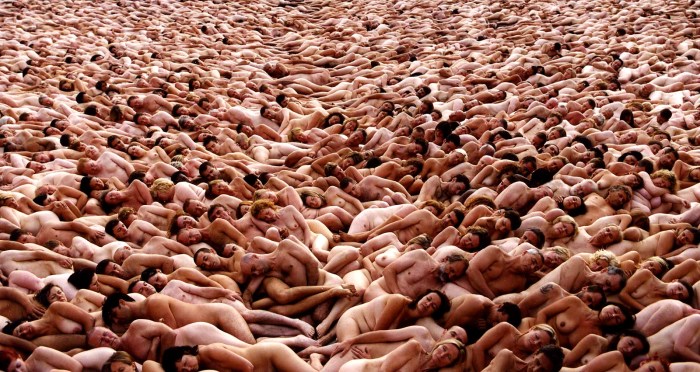
One of the major stereotypes of Swedes is that they are sexually liberated.

Twenty years ago, a large research project on 2800 people was carried out looking into how Swedes view sex. Participants were between 18-74 years old. In comparison to many other countries, Sweden was consequently seen as a place that has a liberal view on sex. Now this research is about to be carried out again, to see what, if anything, has changed in the last two decades. The suspicion is that a lot has changed in the last twenty years.

So what did the results look like 20 years ago?

Here’s a summary, courtesy of daily newspaper DN.

In 1996,

  • Sexual debut was on average 16 years old
  • The average woman had 4,6 sexual partners
  • The average man had had sex with 7,1 people on average
  • Swedes between 26-55 had the most sex
  • Sexual activity had increased since the previous study in 1967, except between the ages 31-50 were there was a decrease, probably due to work pressure
  • The top 10% were called ‘superactives’ and the men had slept with 29-560 people and the women had slept with 15-100 people
  • 38% of the Swedes had experience of sexual relations outside of their committed relationship
  • The average amount of penetrative sex was 65 times per year
  • 15-20% of women had same-sex fantasies, 3% of men.
  • Women more frequently reported a diminshing interest in sex. Difficulty to achieve orgasm was the most common reason. Amongst the men who claimed the same reduced desire, premature ejaculation was the most common reason.

 The last time they had sex,

  • 95% had had vaginal sex
  • 59-72% had carressed eachother’s genitals
  • 25% had oral sex
  • 1% had anal sex
  • 71% of men orgasmed, 62% of women acheived orgasm
  • 80% had sex with their husband, wife, partner
  • 5-6% had sex with a friend or casual partner
  • 1% had met via a contact ad


In the last twenty years, a lot has happened in Sweden. Easy sexual contacts via aps such as Grindr and Tinder makes sex more accessible. Young people who experiment with their sexualities, and refuse to identify as hetero or homo, is more common than twenty years ago. On the other hand, Sweden is a more multi-cultural society than before and attitudes to sexuality may well be influenced by religion, culture and a new restrictive morality. It will be interesting to read what the results of the new survey reveal.

What do you think? How have things changed?

Let me know in the comments below.


Great Swedish Women Part 7 – The Activist

Since March 8th,  I  have been writing a series to celebrate Great Swedish Women, past and present: women with strength and passion, women who create change. Today is the final day. 

aleksa

Part 7 – transactivist, journalist and actor Aleksa Lundberg.

Aleksa Lundberg was born with the wrong body. She was born with a boy’s body and at the age of 22, she underwent corrective surgery and became physically a woman. She is the first actor in Sweden to have undergone gender reorientation. She is a strong, proud Swedish woman. But her transition hasn’t necessarily been smooth sailing – as a transwoman, she has experienced hate, disgust, rejection and ridicule.

Today Aleksa is a transactivist and works hard to change society’s view about transgender men and women and to reinforce the trans perspective in society and politics. She is a vocal representative and a fierce, sometimes provocative, oponent and is frequently seen in debate programs on television and in other media.

Aleksa is also an accomplished actor. She has played many groundbreaking, interesting roles. Currently, you can catch her in ‘King Kristina Alexander’ at Strindbergs Intima Theatre in Stockholm, directed by Elisabeth Olson Wallin.

Aleksa’s political message is actually very simple. She wants to strengthen the rights of transgender people and also change the whole of society. Everybody, regardless of gender, race, sexual orientation, handicap should feel accepted, needed and loved. In a recent interview, she says:

‘Our sexuality doesn’t choose men or women. In the end, it’s about choosing a person. For me, it’s more about politics than romance that love is the the meaning of life. I hope that we can have a world where everyone actually understands that.’

Who can argue with that? Love is the key. Long live Queen Aleksa.


Great Swedish Women Part 4 – The Fighter

Since March 8th was International Women’s Day, I  am writing series on Great Swedish Women, past and present: women with strength and passion, women with a voice, women who create change. For seven days, I am writing about these women, one per day. I hope you want to join me in celebrating them.

linnea claesson.png

Part 4 – handball player and social media warrior Linnéa Claesson.

When Linnéa Claesson was 12 years old, she was on-line chatting with a guy who she though was the same age as her. When she turned on her camera, she was greeted by an older man masturbating to her.

It is impossible to imagine what must have run through 12 year old Linnéa’s mind and it’s horrendous to think that she had to experience it. For Linnéa, it was the start of years of ongoing net abuse and social media hate. And one day she decided to not take it any more. She decided to fight back.

Linnéa Claesson is one of Sweden’s most accomplished handball players on elite level and has won, for example, gold in the handball World Championships. After matches, she typically gets unsolicited messages from men on social media which include sexual propositions, pornographic comments about her body, physical threats and penis photographs. Linnéa decided to retaliate, and set up an Instagram account called ‘assholesonline’ where she takes a screenshot of the comments and how she has answered them, often using humour as her weapon. Here’s an example:

‘My fantasy: Me, you and another girl licking you until you scream. Maybe a bubble bath. What’s your fantasy?

Linnéa’s answer?

‘My fantasy: Me, you and another girl kicking you until you scream. Maybe a blood bath.’

In responding to the comments, Linnéa wants to take back the conversation and show those harrassing her, and other women, that she is not ashamed and that she is in control. The reaction she receives from the men is often angry and aggressive and not infrequently leads to threats on her life. In a recent interview, she said,

‘I have to do this, even if I’m scared. I have to be brave. Generations after me shouldn’t have to face the same thing.

Linnéa Claesson is not only a fighter on the playing field, she is a fighter in many other aspects. She fights against the sexual harrassment of women and in doing so she is trying to create a debate around this problem. The ultimate goal – to change society’s attitude and view of women and create a positive change. In her own words,

‘We should stand up for each other and when we see something wrong we should challenge it. I think that this is important.’

Here is Linnéa’s Instagram account  assholesonline.

Great Swedish Women Part 3 – The Creator

Since March 8th was International Women’s Day, I  am writing series on Great Swedish Women, past and present: women with strength and passion, women with a voice, women who create change. For seven days, I am writing about these women, one per day. I hope you want to join me in celebrating them.

astrid lindgren

Part 3: writer Astrid Lindgren, creator of the strongest girl in the world.

When I moved to Sweden, I vaguely knew  about writer Astrid Lindgren. It wasn’t until I arrived here that I understood what impact she has had on generations of Swedish children, and not least on generations of girls. The creator of fictional character Pippi Longstocking showed girls that it is ok to be strong, to be independent, to be different and to be the best.

Astrid Lindgren grew up in Näs, Sweden, and many of her books are based on her family and childhood memories and landscapes. Her most famous character Pippi Longstocking was invented for her daughter to amuse her while she was ill in bed. She wrote many classic stories – the most famous being  Emil in Lönnerberga, Karlsson on the Roof, the Six Bullerby Children, Mio my Mio, The Brothers Lionheart and, my personal favourite Ronja the Robber’s Daughter. Her fiction formed the backdrop of the childhood of many Swedish children and, even today for children around the globe. She is the fourth most published childrens’ author in the world and has to date sold around 144 million books in 95 different languages. She received many awards during her life and was known for her support for  children’s and animal rights and her opposition to corporal punishment.

Astrid is a national icon in Sweden and her image currently decorates the 20 kronor note. At her funeral in Stockholm’s Cathedral in 2002, Sweden’s King and Queen and other Royals were in attendance reflecting her importance and contribution to Swedish culture.

Astrid Lindgren gave strength to young Swedish girls and helped them to believe in themselves. In the confident words of the strongest girl in the world, Pippi Longstocking, :

‘I’ve never done that before so  I’m sure I can do it’.