Swedish Midsummer – food and drink

Swedish Midsummer celebrates abundance and as such, a great deal of food and drink is consumed. After guests arrive and have their first drink(s), the wreaths start to get made, the potatoes peeled, strawberries topped and the maypole gets decorated with flowers and leaves. Once erected, and danced around, it’s time for lunch.

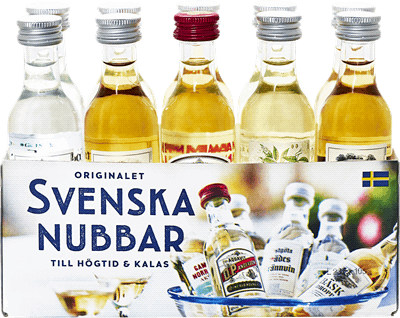
As far as drinking goes, ‘nubbe’, or snaps, is a common tipple accompanied by traditional drinking songs and washed down with beer. A popular brand of snaps is OP Anderson which is flavored with aniseed and fennel and is 40% proof. The drink has been around for 130 years on the market – the first snaps being sold in 1891! Another popular nubbe , the Danish Jubileums, is 40% proof and tastes of dill, coriander and bitter orange. There are also small-sized bottles than can be bought in fun packages that have a mixture of flavorings.

When it comes to the food, in the evening it has become popular in recent years to have a barbecue. But it is at lunch time when the traditional food is consumed, with a Midsummer smorgasbord (buffet).

On this buffet, it is common to find various types of pickled herring, soused herring, boiled new potatoes, gravlax with ‘hovmästare’ sauce, smoked salmon, Västerbotten cheese pie, crisp bread and mature cheese, chopped herbs, red onion, egg halves, ‘silltårta’ (herring cake), various sauces and mixes, fresh and smoked shrimps, fish roe.

As you can imagine, this food is very rich and fatty, which is why it is usually eaten together with the alcoholic snaps.

For dessert, the only thing to eat are Swedish strawberries and cream or a home-made strawberry cake. Anything else would be sacrilege. Some families also eat rhubarb pie.

After lunch, bolstered by the snaps, it’s usually time for garden games, a walk in the woods or a quick dip in the not-quite-yet-warm-enough lake or sea.

If the party lasts really late into the night, then there can also be a ‘vickning’. This is a ‘midnight meal’ designed to sober up drunk guests. It often includes some leftovers from the day, or can also be a very welcome hot dog. 🌭

How Swedish students celebrate!


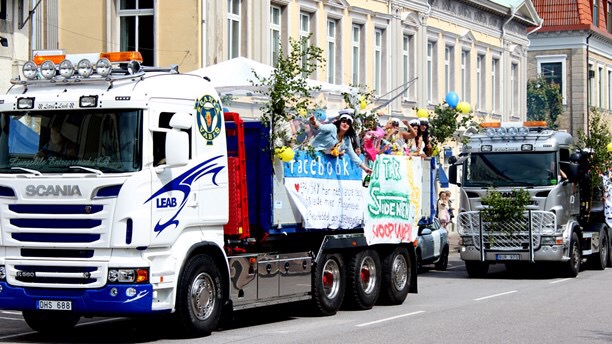
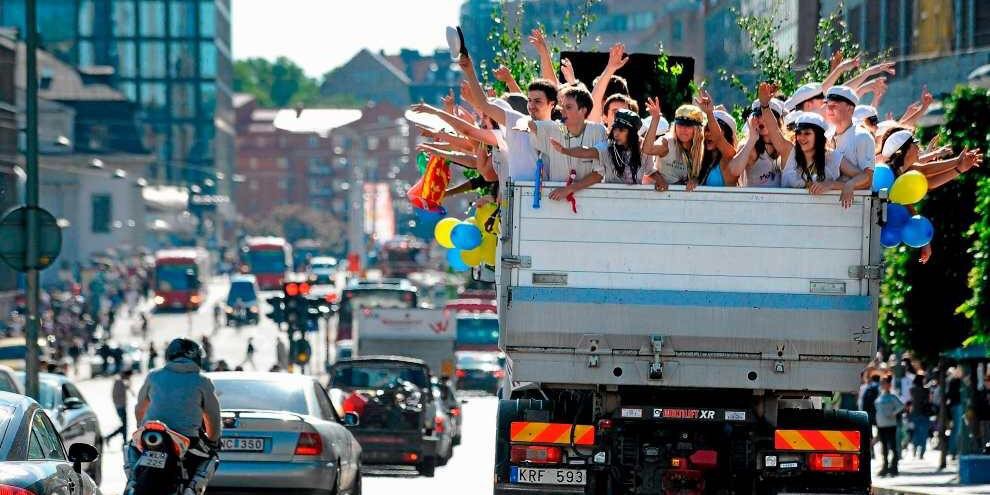
This time of the year, a common sight and sound on the streets of Sweden is 19-year old students on trucks.

Dressed in traditional white caps, and often bolstered with alcohol, the students jump up and down to the booming music from loud speakers concealed in the vehicle. They scream, sing, shout and spray beer on each other and sometimes unsuspecting pedestrians.

Many of them have banners hanging on the side of the trucks. Usually these just contain information about their school and class, but sometimes they’re personal, political or funny.

These youngsters are celebrating the end of their school career. They have just graduated from Sixth Form College/High School. 

It’s not all fun and games though. Every year the media reports accidents and injuries, which is not entirely unexpected considering the mad energy with which the students jump and scream. And trucks have been banned from certain roads and areas in the towns. 

In Sweden, doing ‘studenten’, as it’s called in Swedish, is a major rite of passage into adult life. The youngsters finish their last day at school, come running out of the building to be greeted by waiting parents and families holding placards with a childhood photo on.

The students then climb aboard their trucks for their lap of honour. After that they go around to each other’s homes where each family usually arranges a reception to honour the newly-graduated student. 

It is a very common sight on the streets of Sweden this time of the year and a refreshing reminder of the hopefulness of youth. 

Today is a Swedish squeeze day

Today is a ‘squeeze day’ in Sweden. What, you may wonder, is a squeeze day?

It is not a day when everybody goes around hugging each other, or a day for drinking copious amounts of fresh citrus juice.

No, a ‘squeeze day’, or ‘klämdag’ in Swedish, is a day of the week that falls between a public holiday and a weekend.

In Sweden, when a public holiday occurs on a Tuesday or a Thursday, a common custom is to take the day between the holiday and the weekend as a day off. Often this is even subsidized by the employer. In English, this is called a ‘bridge day’ but in Swedish it’s cutely referred to as a ‘squeeze day’.

As yesterday (Thursday) was a public holiday, many people are also off work today.

Why is May 1st celebrated in Sweden?

In Sweden, and 160 other countries, May 1st is International Workers’ Day. Sweden has been celebrating it since 1939.

But why specifically May 1st?

The answer is found in a massacre in the USA. On 1 May 1886, laborers in Chicago went out on strike for an 8 hour working day. On 4 May 1886, the Chicago police force and the demonstrators clashed in a physical conflict. Eleven people died.

The event is called the Haymarket Massacre. Seven of the demonstrators were sentenced to death, despite lack of evidence. To commemorate the massacre, the socialist organization suggested that 1 May should become day of demonstrations every year around the world. Ironically, USA does not follow this tradition, but celebrates their Labour Day in September instead.

In Sweden, traffic is shut off, huge flag-waving demonstrations are held and people gather to hear political speeches.

The demonstrations represent people from various parties. However, since most of them are from the political left, the streets are awash with bright red flags and banners.

Not all Swedes demonstrate of course. For many, today is just a day off work – an opportunity to perhaps nurse a hangover from the festivities of the previous evening or to relax, go for a walk and enjoy the day.

Baby we’re burning – Swedes, songs and Satanists

valbiorg

Tonight, the 30th April, in Sweden is Valborgsmässoafton. Yes, another one of those long indecipherable Swedish words.

This one translates as Walpurgis Eve, and is celebrated in many European countries such as Germany, Holland, the Czech Republic, Lithuania, Latvia, Estonia and Finland. 

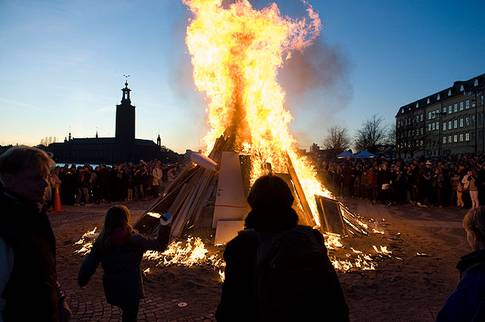
The name ‘Valborg’ is from an English Saint but, despite that, this isn’t really a religious celebration. It’s more to do with the welcoming of spring, and feels rather pagan actually. In the evening on Valborgsmässafton, Swedes gather around huge bonfires and listen to songs. These songs are in the form of traditional choir music designed especially for this occasion to shake off  the nasty dark winter and celebrate the burgeoning buds of the lighter season.

And like many traditions in Sweden, this one also has a rural origin. These bonfires are part of a Swedish tradition dating back to the early 18th century. On this day, farm animals were let out to graze and bonfires lit to scare away predators and other evil beings. This is rather ironic as Walpurgis Eve is also an important holiday in Satanism at it marks the founding of the Church of Satan.

But religion aside. On Walpurgis eve, we are joined in the knowledge that we survived another winter, and summer is coming!

April, April! You stupid herring!

april-fools-day-2015

Playing April Fool’s jokes on each other on the first of April is a tradition in many countries – Sweden included. In fact it is an old tradition – the oldest written reference being in 1392 in Chaucer’s ‘The Cantebury Tales’.

In Sweden, when someone is tricked, the tradition is to say ‘April, April din dumma sill!‘. This translates as ‘April, April you stupid herring!’. This is however not as weird as it might sound. In many countries, such as Italy, France and Holland, April 1st is known as “April fish”. On this day, people try to attach paper fish onto the backs of their victims.

April Fool’s pranks are common in newspapers, with classics such as:

  • IKEA is getting into the airline business. Furnishing all the flights with Ikea furniture, the name of the airline is FLYKEA.
  • Swedish supermarket chain ICA introduced toothpaste with the taste of chocolate. It might be brown, but it makes your teeth white.
  • Burger King introduced a new burger for left-handed people where ingredients were rotated 180 degrees.

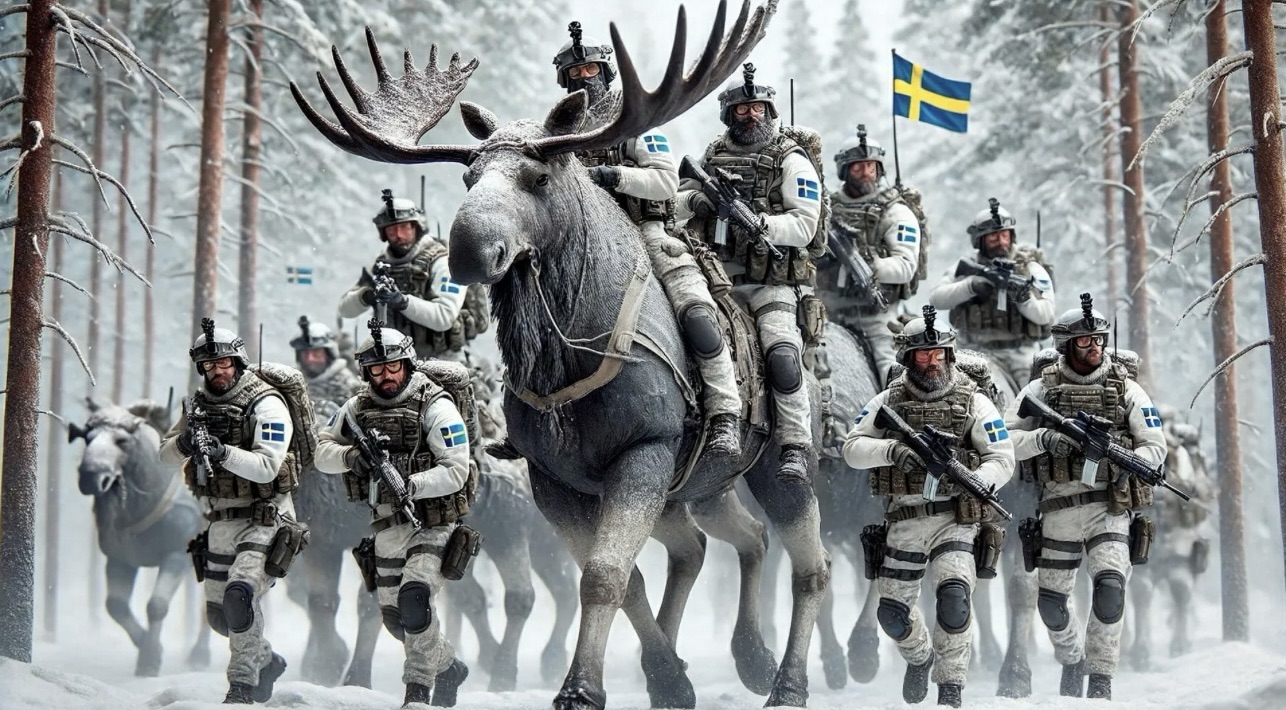
I had a look this morning at the media to see if I could identify any April Fools tricks and I found one! A paper in northern Sweden reported that it had found a leaked document from the Swedish Armed Forces, revealing that Sweden is to receive its first moose cavalry. No animal is better suited for battle than the king of the forest, the newspaper claims. An AI image also shows armed soldiers riding moose!


Swedish astrology

The earliest astrology can trace its roots to 19th Century BC. Beginning in Mesopotamia, it later spread to Greece and Rome, and eventually Central and Northern Europe.

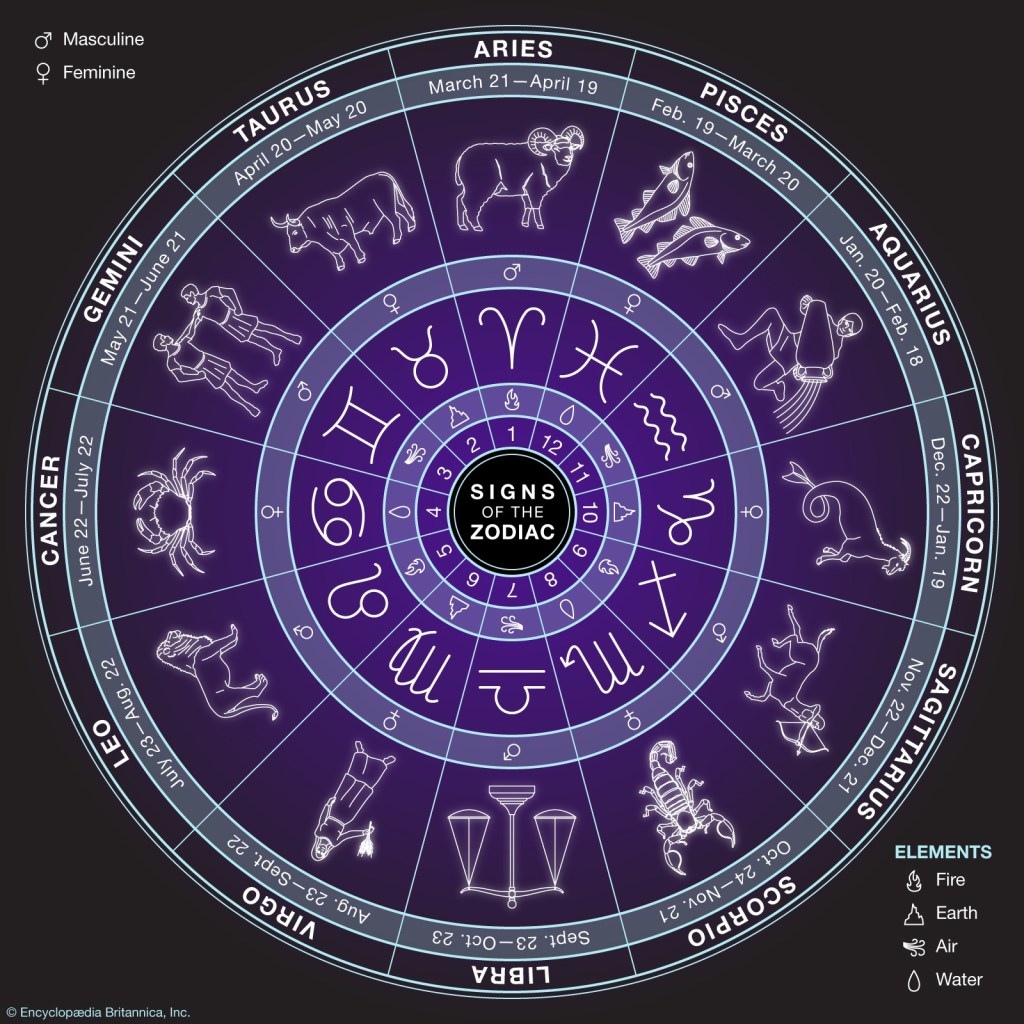
Western astrology has twelve signs, reflecting the month in which you were born. In English, these signs are named after the original Greek words. But not the Swedish names. Like much else in the Swedish language, the words for these signs are very literal. They are also in the definite form.

Aquarius – Vattumannen (the Water Man)

Pisces – Fiskarna (the Fish)

Aries – Väduren (the Ram)

Taurus – Oxen (the Oxe)

Cancer – Kräftan (the Crab)

Gemini – Tvillingarna (the Twins)

Leo – Lejonet (the Lion)

Virgo – Jungfrun (the Maiden / virgin)

Libra – Vågen (the Scale)

Scorpio – Skorpionen (the Scorpion)

Sagittarius – Skytten (the Archer)

Capricorn – Stenbocken (the Goat/Ibex)

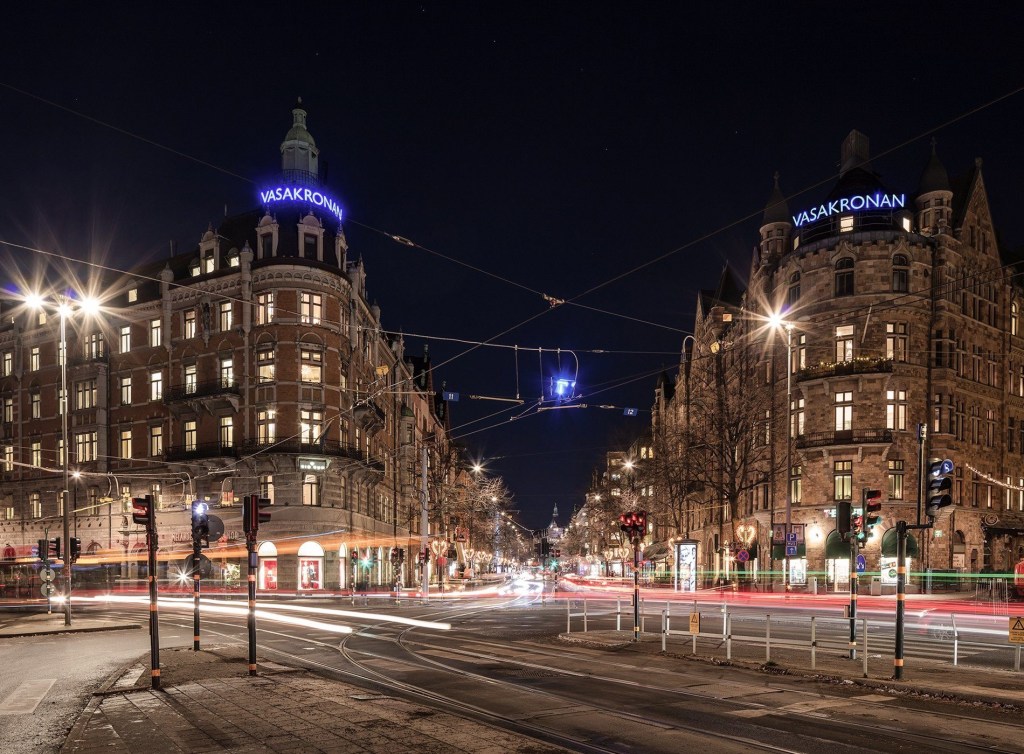
The streets and squares of Sweden: Birger Jarlsgatan

You can learn a lot about a culture from the names of its streets and squares. From heros, to events, and significant dates, you often find cultural concepts immortalised in the names the citizens choose to give their roads. This is my next series of posts – the streets and squares of Sweden.

First out – Birger Jarlsgatan, a major road cutting through the center of Stockholm. The word ‘gata’ means street.

But who then was Birger Jarl?

Birger Jarl was a Swedish statesman, and later regent, who played an important role in the consolidation of Sweden. He lived 1210-1266 and is attributed with the foundation of Stockholm. He was a significant character in Sweden’s history.

Not only is he commemorated with his own street, but he also has his own city square, decorated with a bronze statue of the man himself.

Additionally, Sweden’s most well known cenotaph – outdoors at the foot of the tower at Stockholm City Hall – was intended to hold his remains when it was built in 1923. However, the local parish in Vadstena refused to release them. So, the grand sarcophagus has remained empty – unlike the street that bears his name and is one of the busiest in the city.

Birger Jarlsgatan.

Thirteenth Day in Sweden

Today, 6 January, is a national holiday in Sweden and in many places around the world. In Sweden, not a lot happens on this day – it is just another day off. If it lands on a weekend, the bank holiday is forfeited, unlike in many other countries where the following Monday is taken off in lieu.

So what does the 6 January celebrate?

In orthodox churches, the 6 January is celebrated as the day of Jesus’ birth.

In western Christianity, the 6 January notes the arrival of the three wise men (the magi) to Bethlehem to visit the baby Jesus in his cradle. These wise men are said to represent the three continents of Europe, Africa and Asia.

In Eastern Christianity, today celebrates the baptism of Jesus in the Jordan river and his manifestation to the world as the son of God.

January 6 also commemorates the legend of the Wedding at Cana, where Jesus exercised his divinity by turning water into wine.

Epiphany

In English, today is called Epiphany – which comes from the Greek word ἐπιφάνεια, epipháneia, meaning ‘manifestation’ or ‘appearance’. It is derived from the verb φαίνειν, phainein, meaning “to appear”. It signifies the day when Jesus first appeared to the Gentiles, in his cradle.

In the practical language of Swedish, there is no reference to manifesting or appearing. Today is given the name of Trettondag Jul (Thirteenth Day Yule) – literally thirteen days after Christmas Eve.

Advent Calendar – Dec 9: Julbelysning

Every day, I will open a window containing a Swedish word that has something to do with Christmas and the festive season.

Today’s word is ‘Julbelysning‘ which translates as ‘Christmas lights’.

Like others around the world, Sweden’s cities and towns install public Christmas lights this time of the year. These decorations illuminate the dark December days and are an important part of building up the Christmas cheer at an otherwise miserable time of the year.

Since 1996, on Skeppsbron in Stockholm, the city’s largest Christmas tree has been positioned. An enormous, impressive tree that towers over the buildings of the Old Town and spreads its light over the harbour. The tree in actual fact isn’t a real tree – it is constructed over a central pole with branches attached to it. In doing so, the tree is pleasingly symmetrical.

This week is also Nobel week in Stockholm and a light festival called Nobel Lights is taking place. Monuments and buildings around the city are decorated and transformed with projected light shows. The display on the City Hall is particularly spectacular. More information on http://www.nobelweeklights.se