In Sweden, and 160 other countries, May 1st is International Workers’ Day. Sweden has been celebrating it since 1939.
But why specifically May 1st?
The answer is found in a massacre in the USA. On 1 May 1886, laborers in Chicago went out on strike for an 8 hour working day. On 4 May 1886, the Chicago police force and the demonstrators clashed in a physical conflict. Eleven people died.
The event is called the Haymarket Massacre. Seven of the demonstrators were sentenced to death, despite lack of evidence. To commemorate the massacre, the socialist organization suggested that 1 May should become day of demonstrations every year around the world. Ironically, USA does not follow this tradition, but celebrates their Labour Day in September instead.
In Sweden, traffic is shut off, huge flag-waving demonstrations are held and people gather to hear political speeches.
The demonstrations represent people from various parties. However, since most of them are from the political left, the streets are awash with bright red flags and banners.
Not all Swedes demonstrate of course. For many, today is just a day off work – an opportunity to perhaps nurse a hangover from the festivities of the previous evening or to relax, go for a walk and enjoy the day.
You can learn a lot about a culture from the names of its streets and squares. From heros, to events, and significant dates, you often find cultural concepts immortalised in the names the citizens choose to give their roads. This is my next series of posts – the streets and squares of Sweden.
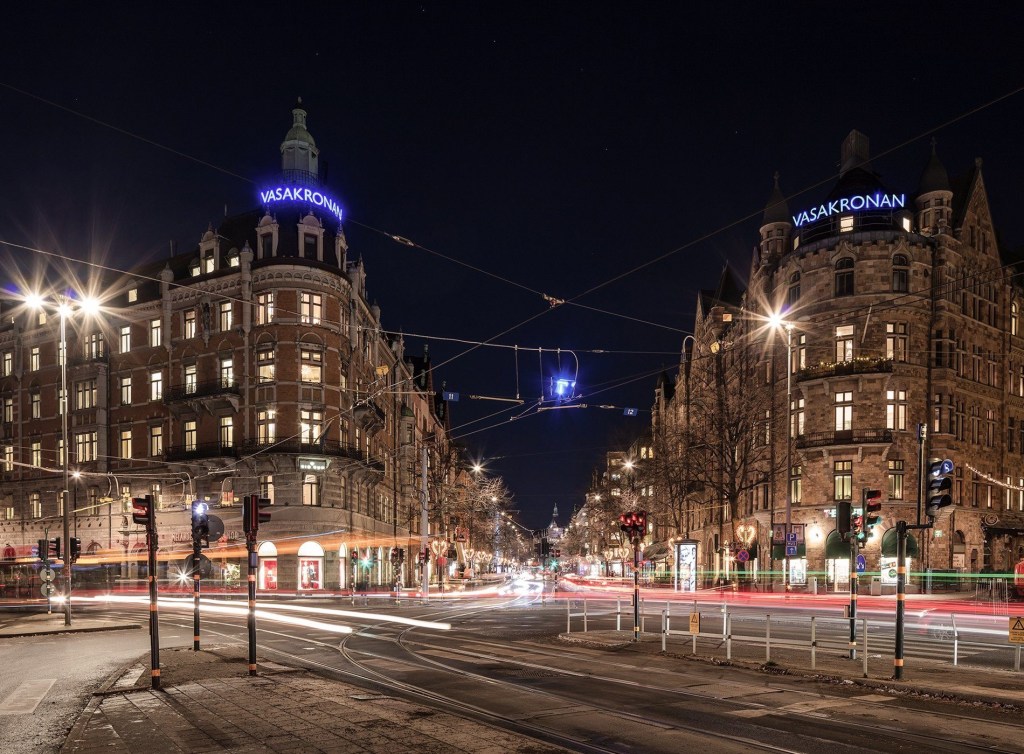
First out – Birger Jarlsgatan, a major road cutting through the center of Stockholm. The word ‘gata’ means street.
But who then was Birger Jarl?
Birger Jarl was a Swedish statesman, and later regent, who played an important role in the consolidation of Sweden. He lived 1210-1266 and is attributed with the foundation of Stockholm. He was a significant character in Sweden’s history.
Not only is he commemorated with his own street, but he also has his own city square, decorated with a bronze statue of the man himself.
Additionally, Sweden’s most well known cenotaph – outdoors at the foot of the tower at Stockholm City Hall – was intended to hold his remains when it was built in 1923. However, the local parish in Vadstena refused to release them. So, the grand sarcophagus has remained empty – unlike the street that bears his name and is one of the busiest in the city.
Today, 6 January, is a national holiday in Sweden and in many places around the world. In Sweden, not a lot happens on this day – it is just another day off. If it lands on a weekend, the bank holiday is forfeited, unlike in many other countries where the following Monday is taken off in lieu.
So what does the 6 January celebrate?
In orthodox churches, the 6 January is celebrated as the day of Jesus’ birth.
In western Christianity, the 6 January notes the arrival of the three wise men (the magi) to Bethlehem to visit the baby Jesus in his cradle. These wise men are said to represent the three continents of Europe, Africa and Asia.
In Eastern Christianity, today celebrates the baptism of Jesus in the Jordan river and his manifestation to the world as the son of God.
January 6 also commemorates the legend of the Wedding at Cana, where Jesus exercised his divinity by turning water into wine.
Epiphany
In English, today is called Epiphany – which comes from the Greek word ἐπιφάνεια, epipháneia, meaning ‘manifestation’ or ‘appearance’. It is derived from the verb φαίνειν, phainein, meaning “to appear”. It signifies the day when Jesus first appeared to the Gentiles, in his cradle.
In the practical language of Swedish, there is no reference to manifesting or appearing. Today is given the name of Trettondag Jul (Thirteenth Day Yule) – literally thirteen days after Christmas Eve.
ABC is a concept in Swedish town planning, said to have been minted by Stockholm city planner Sven Markelius around 1952. ABC refers to the approach of building a suburb where modern families have easy access to work, dwelling and services, such as shops. A stands for ‘arbete’ (work), B stands for ‘bostad’ (accommodation) and C stands for ‘centrum’ (center for services and shops).
ABC city planning was introduced mid 1950’s and it expanded suburban Stockholm to the north and south. This growth was spurred on by the influx of people to the capital after the Second World War, and the severe shortage of accommodation.
In the original development plan from 1952, Markelius suggests that blocks of flats should be constructed within 450m of the centre, small houses should be built within 900m of the centre and light industry 600m from the centre. Everything should be built compactly in order to facilitate daily life for its 16000 residents. An underground system would connect the ABC suburb to the rest of the city and Stockholm’s downtown.
If you’d like to visit an ABC suburb, the two that are mostly still in tact are Vällingby to the north of Stockholm, and Farsta to the south.
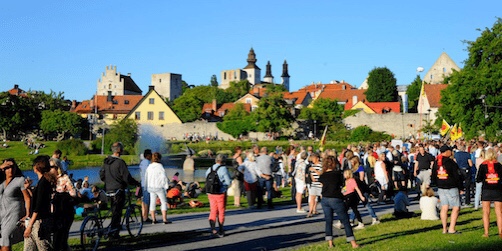
Once a year, with exception of the two pandemic years, there is a summer politics week in Sweden. The week is happening now. It takes place in a park called Almedalen on the Baltic island of Gotland, and attracts heavy media coverage.
During the week, the leaders of the eight parliamentary parties deliver speeches – their view of Sweden’s challenges and future.
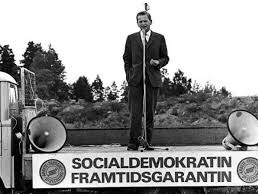
The Almedalen politics week started when legendary Swedish Prime Minister Olof Palme spoke publicly, from the back of a truck, during a summer visit to Gotland. It was at the end of the 60s and there was an audience of a few hundred people. It very quickly became a tradition.
Now Almedalen politics week attracts thousands of participants and is intended to involve the person on the street in politics and to protect the strong Swedish value of democracy and free speech. The idea is that at Almedalen politics week, we meet each other in debate. And in debate and discussion, we influence each other and our environment. This is an amazing, and very Swedish, approach to politics.
However, Almedalen Politics Week has also been heavily criticized for being elitist. Accommodation is, for example, very difficult to find, and expensive to book. The event has also become a popular opportunity for businesses to promote themselves by meeting, networking and partying with each other and engaging in media stunts. And writing it off as a marketing initiative.
Some people go to Almedalen only for this purpose and not to participate in any political activities. Social media is every year awash with images of participants mingling, drinking rose wine, partying, dancing and taking drunken groupies.
This is of course a provocation for many Swedes who perceive Politics Week as a week to enact change, and not to party and mingle. With this expanded version of Almedalen Politics Week, the question becomes is it still a platform for democracy or has it been watered-down by all of the ballyhoo?
In Sweden, and 160 other countries, May 1st is International Workers’ Day. Sweden has been celebrating it since 1939.
But why specifically May 1st?
The answer is found in a massacre in the USA. On 1 May 1886, laborers in Chicago went out on strike for an 8 hour working day. On 4 May 1886, the Chicago police force and the demonstrators clashed in a physical conflict. Eleven people died.
The event is called the Haymarket Massacre. Seven of the demonstrators were sentenced to death, despite lack of evidence. To commemorate the massacre, the socialist organization suggested that 1 May should become day of demonstrations every year around the world. Ironically, USA does not follow this tradition, but celebrates their Labour Day in September instead.
In Sweden, traffic is shut off, huge flag-waving demonstrations are held and people gather to hear political speeches.
The demonstrations represent people from various parties. However, since most of them are from the political left, the streets are awash with bright red flags and banners.
Not all Swedes demonstrate of course. For many, today is just a day off work – an opportunity to perhaps nurse a hangover from the festivities of the previous evening or to relax, go for a walk and enjoy the day.
So Sweden is now an official member of NATO, the military defense alliance.
As the 32nd country to join the alliance, Sweden will be protected under Article 5 – the ultimate guarantee of allie’s freedom and security.
To the outside world, this might not be that significant. But for Sweden, March 7th 2024 is a day that will be recorded as one of the most momentous in history.
By becoming a member of NATO, Sweden ends over 200 years of official non alignment. This neutrality stretched back to the Napoleonic wars.
Sweden joining NATO was inconceivable just over two years ago, and the Swedish population had little appetite to join a military alliance.
The country remained neutral in both World Wars but when Russian troops began marching toward Kyiv in February 2022, Sweden – and neighbour Finland – became alert to the threat Moscow could pose to nearby countries outside the alliance.
And everything changed.
Finland joined NATO in April 2023, and Sweden, after lots of head-butting with Turkey and Hungary, formally joined yesterday.
It is currently unknown how the membership will affect the lives of Swedes. Hopefully, not noticeably.
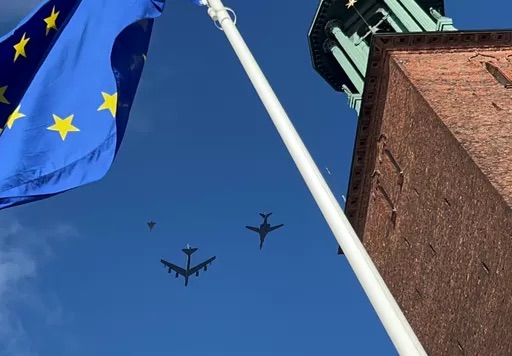
But it was very apparent on Tuesday when two American bomb planes, B52 and B1B, flew at a low altitude over central Stockholm – that things have changed in this formally-neutral country in the north.
Today, 6 January, is a national holiday in Sweden and in many places around the world. In Sweden, not a lot happens on this day – it is just another day off. If it lands on a weekend, as it does this year, the bank holiday is forfeited, unlike in many other countries where the following Monday is taken off in lieu.
So what does the 6 January celebrate?
In orthodox churches, the 6 January is celebrated as the day of Jesus’ birth.
In western Christianity, the 6 January notes the arrival of the three wise men (the magi) to Bethlehem to visit the baby Jesus in his cradle. These wise men are said to represent the three continents of Europe, Africa and Asia.
In Eastern Christianity, today celebrates the baptism of Jesus in the Jordan river and his manifestation to the world as the son of God.
January 6 also commemorates the legend of the Wedding at Cana, where Jesus exercised his divinity by turning water into wine.
Epiphany
In English, today is called Epiphany – which comes from the Greek word ἐπιφάνεια, epipháneia, meaning ‘manifestation’ or ‘appearance’. It is derived from the verb φαίνειν, phainein, meaning “to appear”. It signifies the day when Jesus first appeared to the Gentiles, in his cradle.
In the practical language of Swedish, there is no reference to manifesting or appearing. Today is given the practical name of Trettondag Jul (Thirteenth Day Yule) – literally thirteen days after Christmas Eve.
More than 90,000 articles have been written about the Koran burnings that are occurring in Sweden. The burnings have led to an escalated terrorist threat, international public protests, storming of embassies, burning of the Swedish flag, and condemnation from everyone from Turkey’s Erdogan to the Pope.
For many people outside Sweden it is hard to understand why the burnings are being permitted. The bottom line is that it is not against the law. The question is why is it not against the law.
It all boils down to understanding Sweden’s version of freedom of speech, expression and demonstration. In Sweden, you are allowed to publicly comment on, demonstrate against and criticize anything. Sweden’s centuries-old democracy is built on this.
Powers such as the royal family, industry giants or organized religions cannot legally stop or influence this. In secular Sweden, religion has no influence over politics. However, you are free to follow any religion you want, and this right is protected by law. Likewise you are free to criticize any religion you want.
With this understanding, you can see how the burning of books, including any religious scripture is allowed and not, per se, limited only to the Koran.
So you have to separate the law from ethics. Is it ethical? Maybe not. Is it illegal? No. This is why the Swedish government condemns the action but at the same time defends the right to self expression.
That said, there are other laws in Sweden that restrict public speech. For example, if it is considered hate speech, or incitement to violence, or against the interests of national security.
In the case of recent Koran burnings, outside a mosque on the first day of Eid, or outside the embassies of Muslim countries, and with today’s political instability, one can seriously question the police’s choice to allow such demonstrations to occur. Many Swedes say that it shows a poor sense of judgement and disregard for public safety and national security. But it isn’t illegal, and is fully in line with freedom of speech and demonstration.
Swedish law often looks at intent. At this could be the case with the Koran burnings moving forward. What is the intent of the demonstrators? Personally, I see it as a obvious provocation, an attempt to destabilize Swedish society and a direct insult to all the Swedish Muslims residing in the country.
Denmark has recently suggested a law change, based on the fact that the intent behind the action is malicious. The legislation will prohibit the inappropriate handling of objects with essential religious significance for a religious community. The Minister of Justice says ‘I fundamentally believe there are more civilised ways to express one’s views than burning things.’ I’m sure he is right. Changing the law isn’t about bowing down to the extremist demands of other nations, but showing respect for the diverse citizens of one’s own country.
More than 90,000 articles have been written about the Koran burning in Stockholm that occurred last week. Many of these articles are declaring Sweden as Islamophobic. The action has led to international public protests, storming of embassies, burning of the Swedish flag, and condemnation from everyone from Turkey’s Erdogan to the Pope.
So, is this true? Is liberal-minded, egalitarian Sweden, in fact Islamophobic? Like everything the answer lies in your definition, and perspective.
It all boils down to understanding Swedish freedom of speech. In Sweden, you are allowed to publicly comment on, demonstrate against and criticize anything.
Influential powers such as the royal family, industry giants or organized religions cannot legally stop or influence this.
In Sweden, you are free to follow any religion you want. Likewise you are free to criticize any religion you want. That is the basis of democracy in Sweden.
With this understanding, you can see how the burning of any religious scripture is allowed and not, per se, limited only to the Koran.
So you have to separate the law from ethics. This is why the Swedish government condemns the action but at the same time defends self expression.
That said, there are other laws in Sweden that restrict public speech. For example, if it is considered hate speech, or incitement to violence, or against the interests of national security.
In the case of the recent Koran burning, outside a mosque on the first day of Eid, and with today’s political instability, one can seriously question the police’s choice to allow a such a demonstration to occur. Personally, I think it shows a poor sense of judgement and disregard for public safety and national security. But it wasn’t illegal, and fully in line with freedom of speech.
So, is Sweden islamophobic? From this one action, no. If you want to burn a bible or the tora, you can. Is Sweden Islamophobic in other regards? Maybe. Were the actions of the individual demonstrator islamophobic? Maybe, although he himself is Muslim. He claims his action to be politically motivated.
Time will tell what the outcome is of this. The man who carried out the act is currently living under police security, and amongst other things is being charged with starting a fire during a fire ban.