A Swedish walk in the park

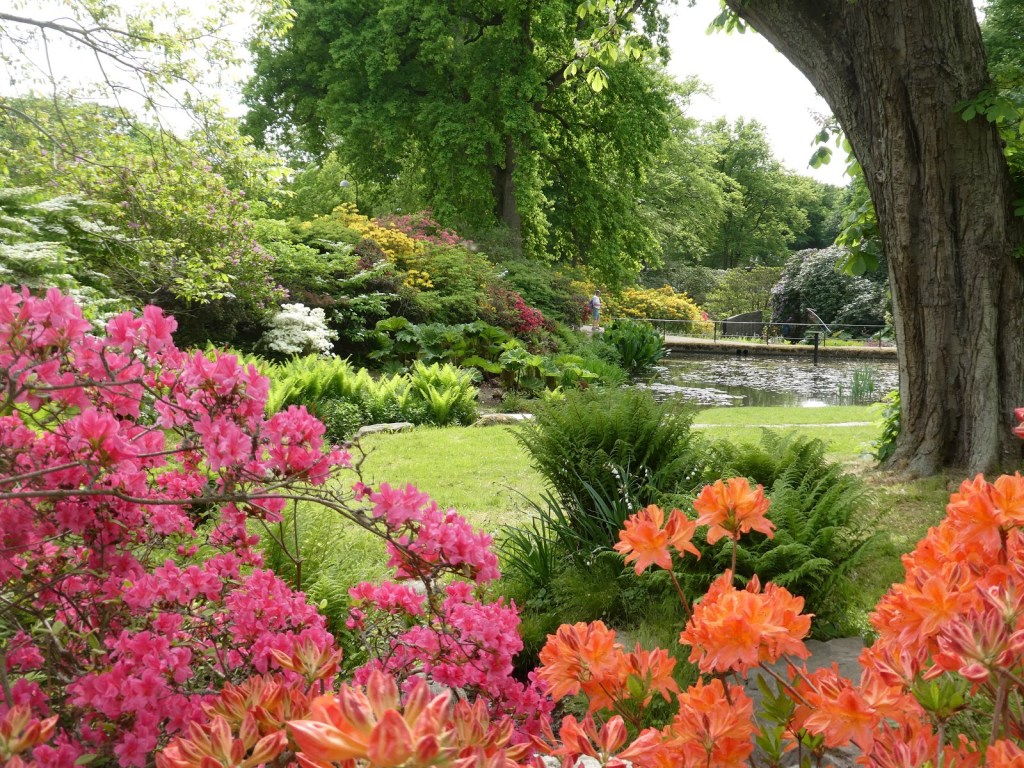
Today, 30 March, is International ‘Take a walk in the park’ Day. While some residents in some locked down countries might not appreciate the irony of it, here in Sweden it is fully possible to celebrate today by stepping out into one of the many green areas.

Take a Walk in the Park Day was founded to celebrate small excursions and the difference they can make to our mental, physical and emotional health.

In Sweden, there are thousands of parks and 30 official National Parks. What kind of park you prefer is of course a matter of taste. However, according to our friends on the internet, the three most beautiful parks in the country are Sofiero slottsträdgårdar in Helsingborg, Hagaparken in Stockholm and Boulognerskogen in Gävle. I’m sure there are a lot of people with other opinions.

Sweden also has a tradition of the ‘Folkpark’ which is a place for entertainment, cabaret, theatre, relaxation and enjoying the great outdoors. Folkpark’s had their heydey in the 1940’s-1960’s where artists would play on the stages and there would be party party and dance. The first Folkpark was built in Hällefors in 1796. Today they still exist, but have faced a lot of competition from festivals, arenas and other outdoor entertainment spaces.

For most urban dwellers around the world, the parks are the lungs of the city. And it’s the same in Sweden’s built up regions. Living in Stockholm, I am so lucky to have many parks and green areas within easy walking distance.

So, depending on where you live, and your time zone, it might not be too late. Put on your shoes and step out into your street, and go take a walk in the park. After all, today is ‘Take a Walk in the Park Day’.
Clocks forward in Sweden

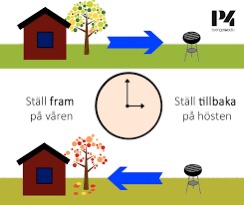
Tonight the clocks go forward in many countries, Sweden included. In English, we say ‘spring forward, fall back.’ It’s a handy way of remembering that the clocks go forward one hour in spring, and back one hour again in autumn.

This pun doesn’t work in Swedish though. Instead they use a metaphor of a barbecue, or garden furniture. In the spring you ‘ställa fram grillen’ (literally put forward the barbecue, also meaning put out the barbecue.) And in the autumn you ‘ställa tillbaka grillen’ (put the grill back, meaning put it away.)

St Patrick’s Day – Irish in Sweden

Yesterday was St Patrick’s Day! I hope you remembered to wear something green, even if you didn’t leave your living room. Normally St Patrick’s Day is celebrated in Sweden, like many places around the world, with noisy, boozy parties. This year of course was different. Public gatherings in Sweden are limited to 8 people, which makes a somewhat subdued party, not up to the standards of a real St Patrick’s Day bash.

The relationship between Sweden and Ireland is a good one. According to Sweden’s Central Bureau of Statistics, there are 2892 Irish people living in Sweden. Ireland has an embassy on Blasieholmen in Stockholm. Sweden has a consulate in Dublin, and honorary consulates in Limerick and Galway. There is a Swedish-Irish society that was founded in 1949 by a group of Swedish friends interested in Ireland. According to their website, ‘the society has been building friendships between the two countries, promoting Irish culture in Sweden and has gradually also become a hub for Irish and Swedish-Irish in Sweden. We organise events throughout the year and membership is open to everyone who shares our interests!’

For the purposes of doing business, there is a Swedish-Irish Chamber of Commerce. This is a not-for-profit organisation dedicated to building a professional community to promote and strengthen commercial collaboration, development and exchange between Swedish and Irish businesses.

Classic Irish pubs in Stockholm include The Liffey, The Auld Dub and O’Connells. In Gothenburg there’s the Dubliner and the Irish Embassy, and Malmö has Fagan’s and The Shamrock. Normally these places would be packed to bursting, and rocking to the sound of the fiddle on St Patrick’s Day. Hopefully next year will see a return to normal.

Swedish sunflowers

sunflowers

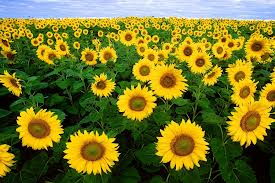
Sunflowers might not be the first thing you think of when you think of Sweden. But at this time of year, the place is full of them. Well, not really sunflowers per se, but a type of sunflower.

The fantastic thing about sunflowers, apart from their brash yellow colour and the flocks of butterflies that they attract, is the way in which they move. Their big, open faces look up at the sky, reaching for the light, and when the sun is out the sunflower moves its face to follow the its path across the sky. They really enjoy soaking up the rays of light and the warmth that the sun provides. It’s a fantastic sight to behold as you drive through the countryside in France or Italy.

But we’re not in France or Italy, we’re in Sweden. So what has this got to do with Sweden then?

Well, Swedes are like sunflowers.

Confused? Let me explain.

After a long, dark, cold winter, Spring eventually arrives.  This year, it seemed to arrive early. This week, temperatures already soared to 14 degrees celcius, the sky was blue and people hit the streets. Everybody emerged from their winter, and corona, hybernation.

They sat on park benches, on window ledges, outside restaurants, on balconies. They leaned up against sunny walls. And as they sat there, they lifted their faces, just like sunflowers, to face the sun and to feel the warming rays of light on their pale wintery skin. Sometimes people just stopped randomly on street corners and lifted their faces up to the sun, eyes closed, to soak up the light.

So you see, Swedish sunflowers are the Swedes themselves. And you’d be hard pushed to find a more sun-worshipping, thankful population at this time of the year.

Swedish ice batheing

This winter, taking an outdoor ice bath has become very fashionable in Sweden. Disrobing and lowering yourself into frozen lakes at below zero temperatures is considered very healthy for the body and its ability to repair itself.

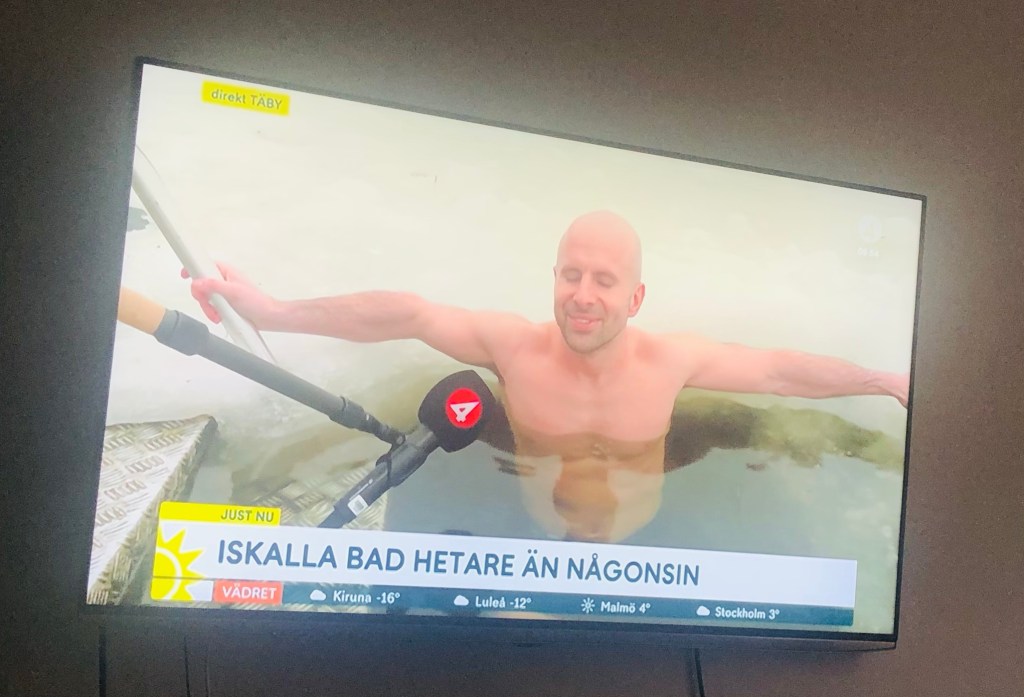
Spring has now arrived and the ice is melting but die hards are still squeezing the last out of the ice batheing season. Like this guy featured on TV, who regularly sits in the frozen lake – for 20 minutes at a time!

This may seem like a long time, but actually it is nothing compared to the world record. The world record for ice submersion is held by Austrian Josef Koerbel who, in 2020, held himself under ice for 2 hours and 30 minutes. In his case, it was in an ice box on a public square in the town of Melk.

Brrrr.

So, what about you? Do you feel enticed by the concept of plunging into the chilly depths to take an ice bath? Or would you rather keep yourself wrapped up warm and toasty on the bank of the lake?

Avalanche in the city


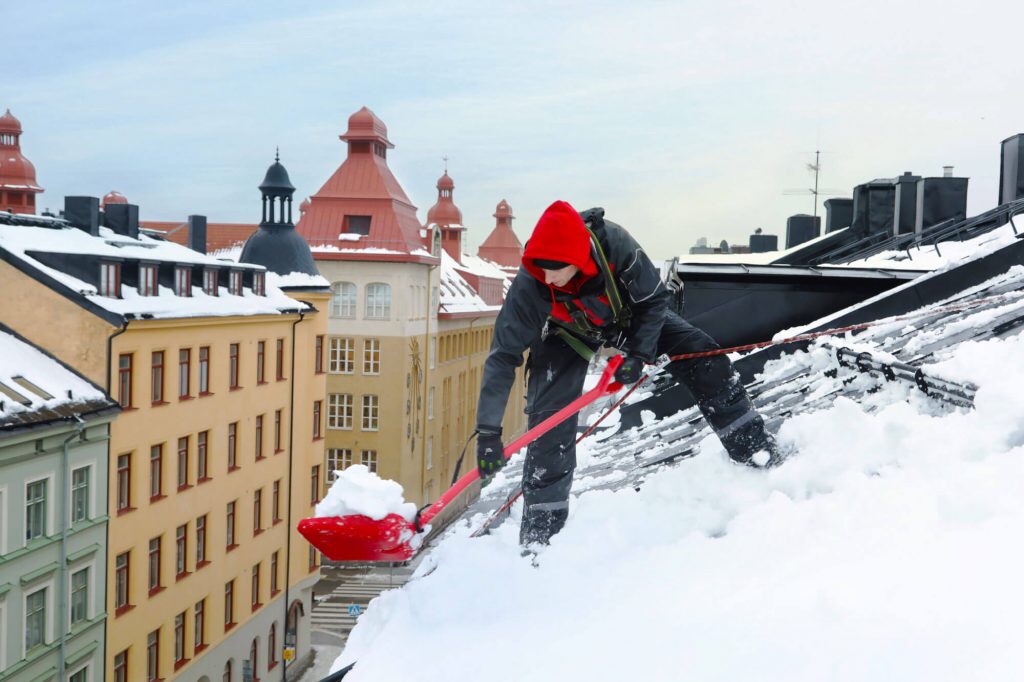
Currently in Stockholm, pavements everywhere are cordoned off with orange pylons and hazard tape. Men in flourescent yellow coats shout ‘Watch out!’ and ‘Stand still!!’ and wave us pedestrians into the street and straight into the on-coming traffic.

On the roof tops high above, mounds of snow are pushed down by workers who are perched precariously and attached by ropes and harnesses. A seemingly insecure occupation. The snow explodes onto the pavements below and splinters of ice and powdery snow billow up like jets of steam. Walking through Stockholm at this time of year is like navigating a minefield with explosions to the left and to the right.

It seems like the snowy roof-tops have become too dangerous in the city. And when this happens, who do you call? The snow busters.

This is yet another strange part of life in Sweden. Avalanches in the city.

It’s fatty Tuesday – Swedish style!

Today it’s ‘Fat Tuesday’ in Sweden, known as Shrove Tuesday or Mardi Gras around the world.

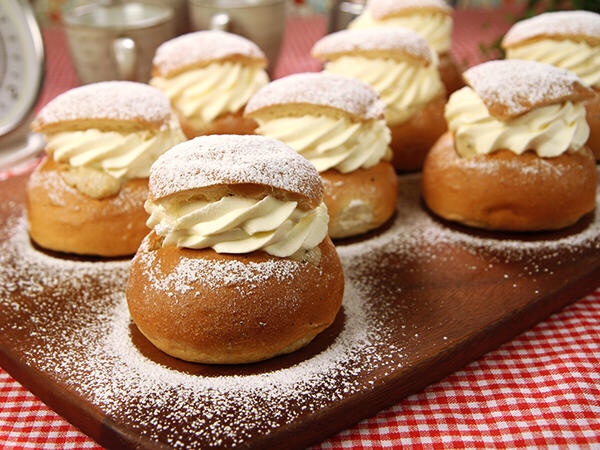
While in the UK we eat pancakes (today is even called Pancake Day) and in Latin America they scoff down fried bread, Swedes celebrate by eating the traditional cream Lent bun – the ‘semla’. I’m also clearly going to indulge. In fact, my mouth is watering just writing this post.

The semla is a creamy bun filled with delicious almond paste. They were eaten traditionally in Sweden to commemorate the start of Lent and the great Fast, leading up to Easter. In the south of Sweden, they still refer to them as ‘fastlagsbullar’ – Shrovetide buns. Nowadays however, semlas are usually sold anytime between Christmas and Easter.

I just love them. I could eat a barrel load. But I’d end up looking like a barrel if I did. I love the taste of them, and the feeling of luxurious indulgence. I also love the knowledge that as you take a bite into a creamy semla, you are biting into over 500 years’ history of Scandinavian baking.

The word ‘semla’ comes from the Latin ‘simila’ which means fine flour and originally referred just to the bun without any filling. As long ago as the 1500’s, bakers started to hollow out the middle of the bun and fill it with cream and butter. As ingredients became more available, bakers started adding almond and cardemon and the type of semla that we know today developed towards the end of the 1800’s. After rationing of sugar and dairy products ceased at the end of WW2, the semla took off and became very popular.

Nowadays the semla trend has reached new heights. Every year bakers around the country try to launch new types of semla, with their own spin on it -for example, the semla wrap, the semla burger, the semla layer cake, the semla cocktail, the chocolate semla, the vanilla semla, the lactose-free, gluten-free vegan semla. This year, the gross-sounding fermented Baltic herring semla was revealed.

But I’m a traditionalist in this matter. Give me a round fluffy cardemon-scented wheat bun brimming over with whipped cream and almond paste.

And give it to me NOOOOWWW!!!

It’s fatty Tuesday – Swedish style!

Today it’s ‘Fat Tuesday’ in Sweden, known as Shrove Tuesday or Mardi Gras around the world.

While in the UK we eat pancakes (today is even called Pancake Day) and in Latin America they scoff down fried bread, Swedes celebrate by eating the traditional cream Lent bun – the ‘semla’. I’m also clearly going to indulge. In fact, my mouth is watering just writing this post.

The semla is a creamy bun filled with delicious almond paste. They were eaten traditionally in Sweden to commemorate the start of Lent and the great Fast, leading up to Easter. In the south of Sweden, they still refer to them as ‘fastlagsbullar’ – Shrovetide buns. Nowadays however, semlas are usually sold anytime between Christmas and Easter.

I just love them. I could eat a barrel load. But I’d end up looking like a barrel if I did. I love the taste of them, and the feeling of luxurious indulgence. I also love the knowledge that as you take a bite into a creamy semla, you are biting into over 500 years’ history of Scandinavian baking.

The word ‘semla’ comes from the Latin ‘simila’ which means fine flour and originally referred just to the bun without any filling. As long ago as the 1500’s, bakers started to hollow out the middle of the bun and fill it with cream and butter. As ingredients became more available, bakers started adding almond and cardemon and the type of semla that we know today developed towards the end of the 1800’s. After rationing of sugar and dairy products ceased at the end of WW2, the semla took off and became very popular.

Nowadays the semla trend has reached new heights. Every year bakers around the country try to launch new types of semla, with their own spin on it -for example, the semla wrap, the semla burger, the semla layer cake, the semla cocktail, the chocolate semla, the vanilla semla, the lactose-free, gluten-free vegan semla. This year, the gross-sounding fermented Baltic herring semla was revealed.

But I’m a traditionalist in this matter. Give me a round fluffy cardemon-scented wheat bun brimming over with whipped cream and almond paste.

And give it to me NOOOOWWW!!!

Swedish Valentine – All Hearts’ Day’

Like many places around the world, Swedes celebrate Valentine’s Day on February 14th. Called ‘Alla Hjärtans Dag’ – All Hearts’ Day – it is a newish tradition that started around 50 years ago, but didn’t really gain traction until the 1990’s. American influence and commercialization are often cited as the reasons for this. I also think that it’s a timing issue – the month of February is an otherwise boring time of year in Sweden. A little celebration is a small distraction from the tedium.

In Sweden, Valentine’s wishes are not only limited to love interests, but also extended to children, friends and even school teachers.

Romantically, the most common Valentine’s gifts are flowers, and treating your loved one to a nice dinner, in a restaurant or at home. Approximately 10 million red roses are sold around this day, which is huge considering the population is also 10 million.

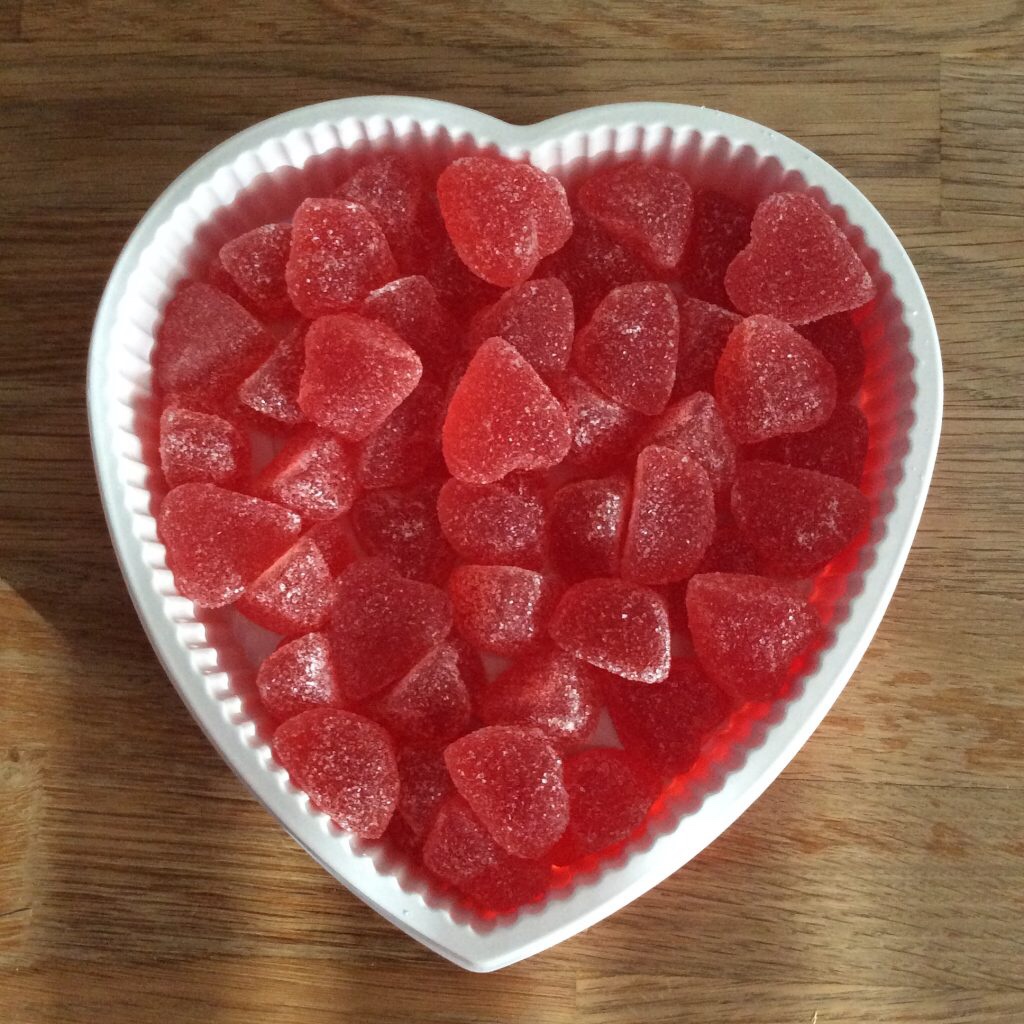
Heart-shaped candy is also popular, and in Sweden the most common is ‘jelly hearts’. Sales of chocolate and candy apparently increase by 90% every year around Valentine’s Day.

So, I might not have flowers or chocolates to give you, but I’d like to wish each of you a Happy Valentine’s Day. I appreciate that you want to read my writing, and in return I send you some loving energy. I hope you have love and affection in your life and that, when the day comes, you can celebrate with a long, warm hug!

The Swedish Law of Sexual Consent

I’ve been watching the interesting Martin Scorsese documentary series on Netflix called ‘Pretend it’s a City.’ The programme is based on a series of interviews with sardonic writer Fran Lebowitz. In one episode, she talks about MeToo, and how when a woman accuses a man of rape the focus has shifted from ‘prove to me that she’s telling the truth’ to ‘prove to me that she’s lying.’

This is merely a change of perspective in most places and not enshrined in law. Except in a few countries, including Sweden. In 2018, a new law was introduced in Sweden – called the samtyckeslag – the Law of Sexual Consent. The basic principle of the law is that sex should be voluntary and that sex without explicit consent is considered rape. This applies whatever the gender.

The Swedish verb for ‘to rape’ is ‘våldta’ which literally translates as ‘to take by violence’. This reflects the previous definition of rape which involved some form of violence, force or threat or that the victim had been in a vulnerable position. An important part of the previous legislation was that the victim decisively said ‘no’. Since 2018, this is not the case.

A crime called ‘negligent rape’ was introduced which is a sexual act that occurs when there has not been an explicit statement of consent, but in which the perpetrator had not intended to commit rape or assault. In other words, before sex there has to be a clear ‘yes’ or active demonstration of consent. If there isn’t, it is rape.

Today, if a woman accuses a man of rape, she does not have to provide evidence that he was violent or coercive, that she had to fight him off or prove that she said ‘no’. The victim does not have to prove she is telling the truth, the accused has to prove she is lying.

The new law has been significant in many convictions in recent years. In one case, the Supreme Court wrote: ‘A person who is subjected to sexual acts against their will does not have any responsibility to say no or express their reluctance in any other way.’

So a ‘yes’ is a ‘yes’. And a lack of a ‘yes’ is a ‘no’