Ullared – Mecca in Swedish

  
Deep in the woods of rural Sweden lies what can only be described as a Swedish Mecca. To this location, people travel from all over the country. The journey might take several hours, but it’s well worth it for them. 

The place is a village called Ullared. And in Ullared is a massive low-price shopping centre called Gekås. 

Surrounding the airline hanger that is Gekås are a variety of outlet stores, restaurants, a camp site, a hotel – all making the journey more attractive to the pilgrimaging bargain hunter. When I went to Ullared this week for the first time, I felt like I experienced another level of Swedish culture. 

The car park itself was my first surprise, rows upon rows of vehicles that would put any Disneyland to shame. After parking the car, you walk towards the shopping centre like a trail of lemmings. On the way, you pick up a trolley large enough to house a small family. Each trolley is colour-coded and numbered so that it’s easy to locate should you step away from it inside the building. We walked straight  into the store, but I’ve heard that it’s not unusual to wait a long time in a queue – sometimes due to the sheer volume of people, they adopt a one-out, one-in policy. Once inside, you are overwhelmed by the giganticness of the place, the thousands of customers, they yellow and blue blinding interior and the aisle upon aisle upon aisle of bargains. But the initial shock abates quickly. Within 10 seconds, I had purchased a frying pan and was trying to persuade a friend that they should buy individual hamburger thermometers. 

All in all, I ended up with towels, sheets, underwear, freezer bags and a variety of other things. I left the place feeling satisfied with a job well done, even though I am an amateur when compared to many of the other shoppers there. Some seriously disturbed people even spend a week there, camping at the camp site and shopping every day. 

It is hard to explain how legendary Ullared is in Sweden. Everyone has an opinion about it, it seems. At Gekås they turn over multibillions per annum. Employees and regular customers have become TV celebrities thanks to a reality show that follows life in this shopping Mecca and is broadcasted weekly on national television.  At the local museum in Varberg, there is even a small exhibition about Ullared, which reflects its place in popular culture. It was there I learned that the average customer is a single mother of three, aged 42, who visits Ullared twice a year and spends 3600 sek each time. 

So if you ever visit Sweden, and want to experience something outside of the usual red cottages, forests, lakes and beautiful cities, take a trip to Ullared. You never know what you might find there. 

Prawn pig out – a Swedish concept

  
This week I had what can only be described as a very Swedish experience. With friends, I participated in a ‘shrimp cruise’, also referred to as a ‘prawn pig out’. 

It works like this. You board a boat and, as it chugs around the archipelago, you eat as many shrimps as you can stomach. The menu consists of shrimps, aioli, bread. You wash this down with wine, cocktails and beer. Then there’s cheese and coffee. As you peel and pick away, the gastronomical treat is accompanied by a live band playing very loud music of a varied nature – rock, pop, country, Eurovision. I guess it’s to appeal to a wider audience. 

On this particular prawn pig out, there were about 50 passengers. And they were as eclectic as the music. Young couples, middle-aged couples, former party girls, pensioners and a gang of work colleagues from what seemed to be a construction company. Despite our differences, we all had one thing in common – a love for all-you-can-eat shrimps. 

I can’t exactly describe this experience as classy. But it was actually fun. And very very Swedish. 

The Short Swedish Summer

  
In Sweden there’s a series of classic songs that are strongly related to the summer. One of these songs, I have always hated. It’s by an aging pop star called Thomas Ledin. I fear his summer song may be coming true this year. 

This year, we’ve had the rainiest May and June in human memory. We had a heat wave of 5 days at the beginning of July. And today? It’s 14 degrees and raining again. So much for summer. Maybe that was it last week, flashing by in the blink of an eye. 

So what is Thomas Ledin’s song? In Swedish it goes ‘sommaren är kort, det mesta regnar bort’ which translates as ‘summer is short, most of it just rains away.’

Art meets life in an annoying, but this year truthful, summer melody. 

Sweden’s Easter Art Drive

konstrundan

Soon it’s Easter break with 4 lovely days off for most of us. In Sweden, this is a time that many people go out to their country houses or travel abroad to warmer climes. If you’re still in Sweden, and looking for something to do, one suggestion is to head south to the county of Skåne, and the region within Skåne called Österlen. Every year, over Easter, this area hosts an Easter Art Drive, or ‘Open Studios Week’ where you can travel around and get a rare glimpse into the homes and studios of working artists.

This event started in 1968, when a few artists decided to open their studios to the public. Within six years, this had expanded to well over 60 artists welcoming people directly in to their places of work. Most of the artistic fields are represented – sculptors, painters, textile artists, glassblowers, silversmiths, ceramic artists, printmakers, handcraftsmen, wood and computer artists.

It is a fantastic experience. Driving through the beautiful Swedish countryside between villages, wandering amongst the studios built from renovated barns, drinking coffee in the temporarily opened out buildings and hen houses.  The artists themselves are usually there and it is easy to engage in conversation about their work and their inspiration. Everything is for sale, so you can also leave Easter week with a unique and reasonably-priced piece of art under your arm.

For more information, check out http://www.oskg.nu/english

Swedish sunflowers

sunflowers

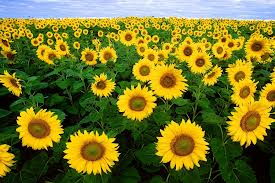
Sunflowers might not be the first thing you think of when you think of Sweden. But at this time of year, the place is full of them. Well, not really sunflowers per se, but a type of sunflower.

The fantastic thing about sunflowers, apart from their brash yellow colour and the flocks of butterflies that they attract, is the way in which they move. Their big, open faces look up at the sky, reaching for the light, and when the sun is out the sunflower moves its face to follow the its path across the sky. They really enjoy soaking up the rays of light and the warmth that the sun provides. It’s a fantastic sight to behold as you drive through the countryside in France or Italy.

But we’re not in France or Italy, we’re in Sweden. So what has this got to do with Sweden then?

Well, Swedes are like sunflowers.

Confused? Let me explain.

After a long, dark, cold winter, Spring eventually arrives.  This year, it seemed to arrive early. This week, temperatures soared to 14 degrees celcius, the sky was blue and people hit the streets and the parks. Everybody emerged from their winter hybernation.

They sat on park benches, on blankets, on window ledges, outside restaurants, on balconies. They leaned up against sunny walls. And as they sat there, they lifted their faces, just like sunflowers, to face the sun and to feel the warming rays of light on their pale wintery skin. Sometimes people just stopped randomly on street corners and lifted their faces up to the sun, eyes closed, to soak up the light.

So you see, Swedish sunflowers are the Swedes themselves. And you’d be hard pushed to find a more sun-worshipping, thankful population at this time of the year.

Swedish snow champion!

kalla

Many Swedes are great sport-lovers. And surprisingly for a country with a small population, they’re relatively successful. Right now, winter sports are in focus as Sweden hosts the World Championship in Cross-Country Skiing.

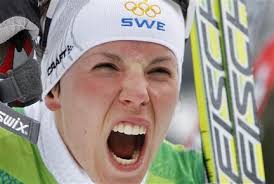
It’s hard to believe when you’re sitting in sunny, un-icy Stockholm that there is any snow elsewhere in the country. But there is and today, Sweden won gold! Popular skier Charlotte Kalla demolished the competition and won a gruelling 10km race in pouring snow. She won with a 41 second margin, which is significant in this sport and she slammed the Norwegians who normally rule the roost in cross-country ski sports.

A glimpse at the current media gives an indication of how important this is to Swedes and what an acheivement it is:

‘GOLD EXTRA! Kalla – a Dream come true!’

‘Kalla’s Gold crush – now she’s the best’

‘Charlotte Kalla’s magnificent gold achievement’

‘Gold! She crushed the opposition!’

‘Kalla crushed the competition at her favourite distance race’

With all this crushing, it’s easy to see that this is huge in Sweden – a victory on home turf – and in that moment Charlotte Kalla just became the nation’s powerhouse sweetheart.

Are Swedes masochists?

A quick look at a definition of ‘Masochistic Personality Disorder’ tells us that it is ‘A pervasive pattern of self-defeating behavior. The person may often avoid or undermine pleasurable experiences, be drawn to situations or relationships in which they will suffer, and prevent others from helping them’.

There are a few characteristics:

– they choose situations that lead to disappointment, failure, or mistreatment even when better options are clearly available
– they respond with depression, guilt, or a behavior that produces pain
– they incite angry or rejecting responses from others and then feel hurt, defeated, or humiliated
– they reject opportunities for pleasure

I don’t know why, but my mind jumps to Saturday nights in February/March. The annual torture known as ‘Melodifestivalen’ is broadcast as Swedes attempt to select the song to represent them at Eurovision. People compulsively throw themselves into their sofas and watch the drivel that spews out in front of them. One piece of questionable music after another. They watch attentively, they vote.

And then they complain. They complain about the overriding bad quality. They complain about the winning songs. They complain about the host’s dress or hairdo. They complain that the best song didn’t get through. They complain about the dance routines. They complain on social media, during brunch and when they’re out on their Sunday walk.

But yet, the following week they’re there again watching the next episode of this 6-week long debacle.

So are Swedes masochists? Hell, yes!!

IMG_4994

Stand up for Swedes

IMG_4978

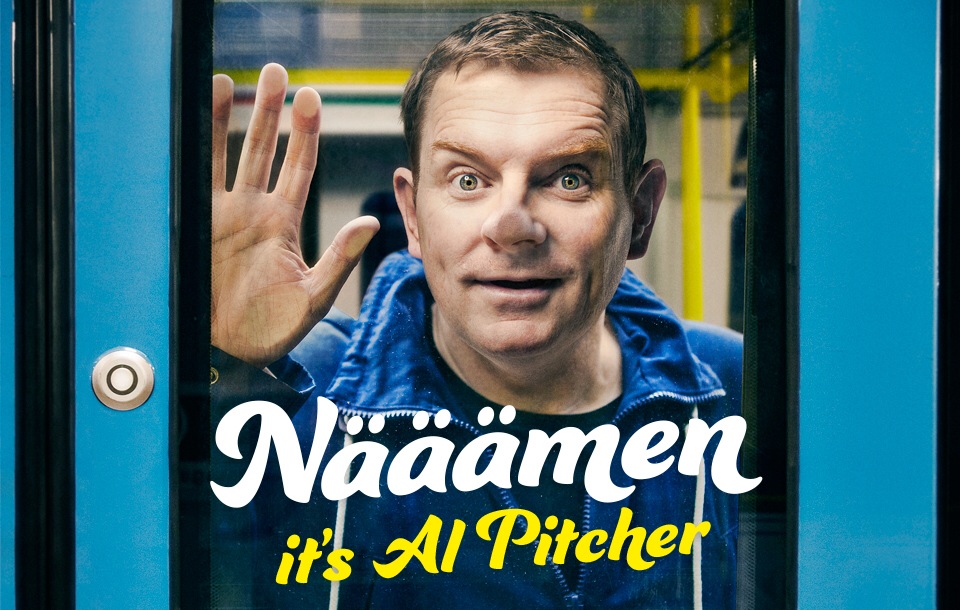
Last night I went to see a hilariously funny stand up comedian called Al Pitcher. From New Zealand, this fast-thinking, quick-talking ironist talks about his family life in Sweden, what he finds fascinating about Swedes, why he loves them and how they dumbfound him. In his one man show at Rival on Mariatorget, he bounced between naked toddlers to poisonous ticks, from helping old ladies in a Stockholm suburb to his exploits in the isolated regions of Norrland. He even made the town of Flen sound semi-interesting by describing his dancing a jig to Swedish folk music when he was there.

It was a pleasure to spend a couple of hours in the company of Al Pitcher. If you get a chance to see his up-coming shows, I highly recommend it. You can get more information at http://www.alpitcher.se or likewise http://www.alpitcher.com You can also follow him on Facebook.

Sunny Stockholm Sunday

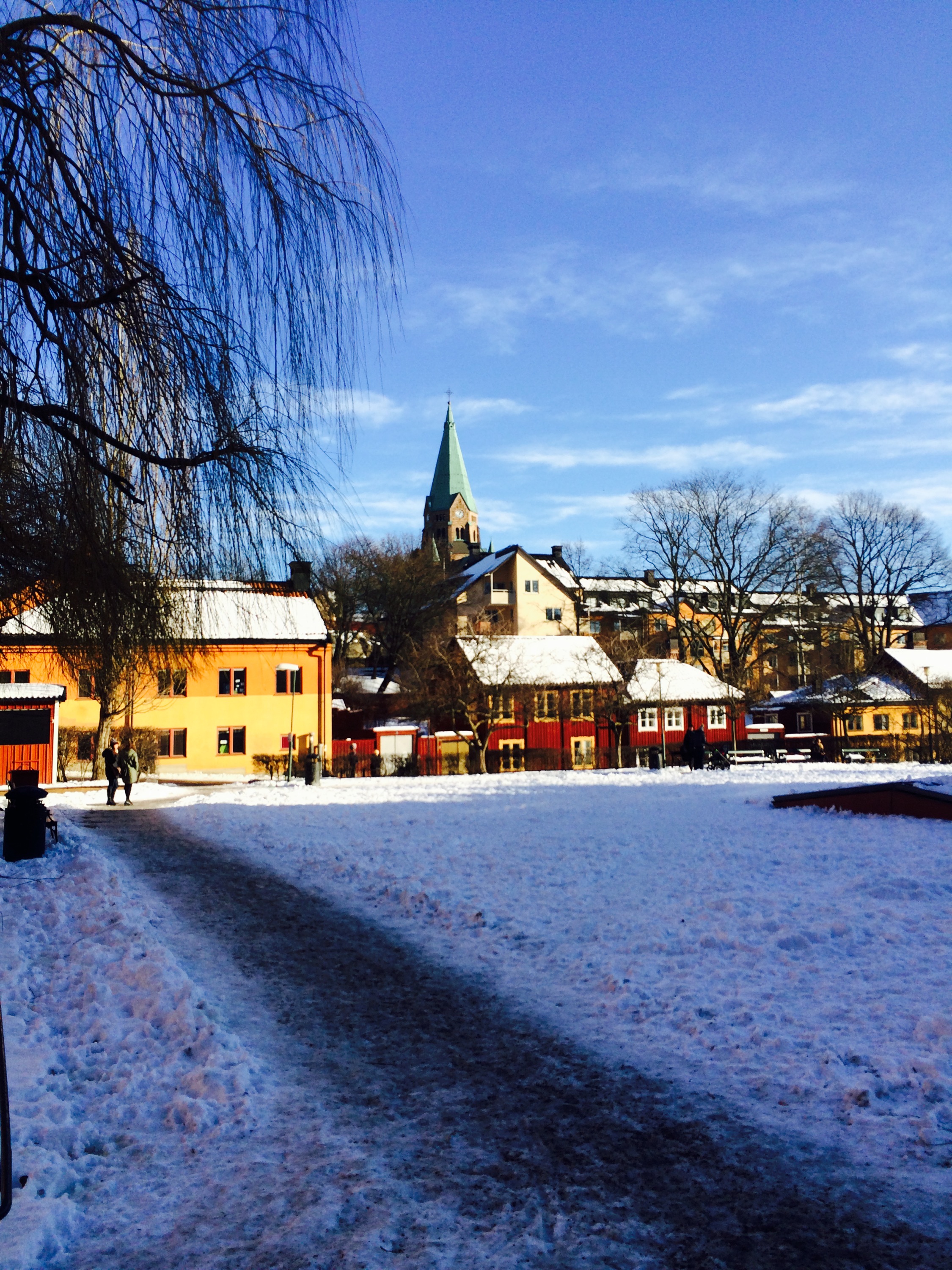
Facebook is today inundated with photographs of the great outdoors. After a long, dark autumn the sun is shining brightly over Stockholm and the sky is royally blue. Photos of people on skis, frozen lakes, rust-colored facades, glistening trees, ice crystals, chilly dogs, and snow-covered rooves abound. Like hibernating bears, the people of the Swedish capital emerge from their lairs when the sun appears. And at this time of the year, a cold, bright white sun is the perfect remedy to the winter blues. Stockholm is a breath-takingly beautiful city on these crisp, February days. So, it’s just to put on the woolly hat, the scarf, gloves, thick coat and winter boots and head outside for your shot of beauty and vitamin boost.

Here’s a picture from my walk:

IMG_4964