Sweden’s Lucia Celebration

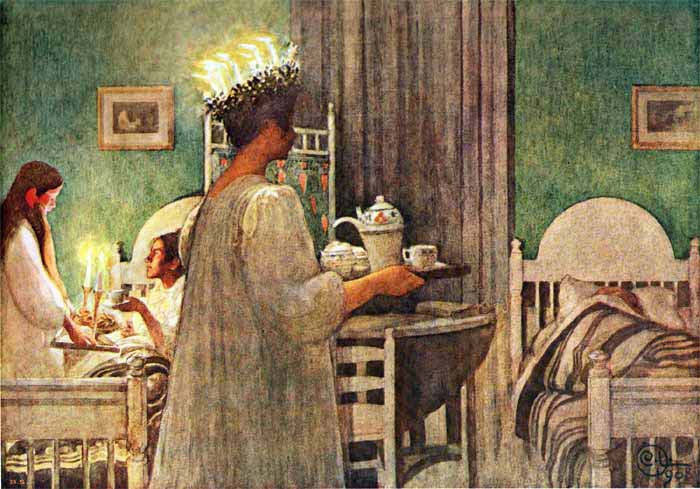
At the darkest time of the year, Santa Lucia (St Lucy) pays us a visit early in the morning on December 13th. Lucia has candles in her hair and is surrounded by her handmaidens and boys, and shines light into the dark depths of our spirits. And slowly, slowly, the day awakens.

Santa Lucia is believed to have been a Sicilian saint who suffered a martyr’s death in Syracuse, Sicily around AD 310. She was seeking help for her mother’s long-term illness at the shrine of Saint Agnes, in her native Sicily, when an angel appeared to her in a dream beside the shrine. As a result of this, Lucia became a devout Christian and refused to compromise her virginity in marriage.

Officials threatened to drag her off to a brothel if she did not renounce her Christian beliefs, but were unable to move her, even with a thousand men and fifty oxen pulling. So they stacked materials for a fire around her instead and set light to it, but she would not stop speaking.

One of the soldiers stuck a spear through her throat to stop her, but to no effect. Soon afterwards, the Roman consulate in charge was hauled off to Rome on charges of theft from the state and beheaded. Lucia was able to die only when she was given the Christian sacrement.

The tradition of Santa Lucia is said to have been brought to Sweden via Italian merchants and the idea of lighting up the dark appealed so much that the tradition remained. The current tradition of having a white-dressed woman with candles in her hair appearing on the morning of the Lucia day started in the area around Lake Vänern in the late 18th century and spread slowly to other parts of the country during the 19th century.

The modern tradition of having public processions in the Swedish cities started in 1927 when a newspaper in Stockholm elected an official Lucia for Stockholm that year. The initiative was then followed around the country through the local press. Today most cities in Sweden appoint a Lucia every year. Schools elect a Lucia and her maids among the students. The regional Lucias will visit shopping malls, old people’s homes and churches, singing and handing out gingerbread.
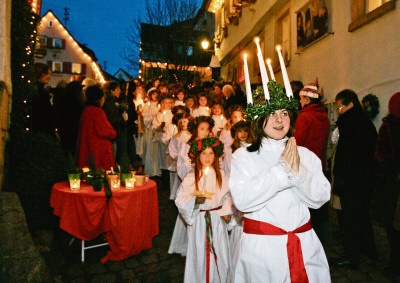
Not only does Lucia represent tradition, but there is also a symbolic meaning. Never more important than this year when the world is in turmoil. So remember, it might be cold and dark right now, but after the darkness comes the light.

The pagan origins of Sweden’s Midsummer celebrations

The long Midsummer weekend is drawing to a close in Sweden. Known as “Midsommar”, it is one of the most significant and widely celebrated holidays in the country. Its history blends ancient pagan traditions with later Christian influences and remains a vital part of Swedish cultural identity.

The origins of Midsummer in Sweden are rooted in pre-Christian solstice celebrations. Ancient peoples marked the summer solstice, the longest day of the year, with rituals to honour nature, fertility, and the sun. These rituals often involved dancing, feasting, and the lighting of bonfires, believed to ward off evil spirits and ensure a good harvest.

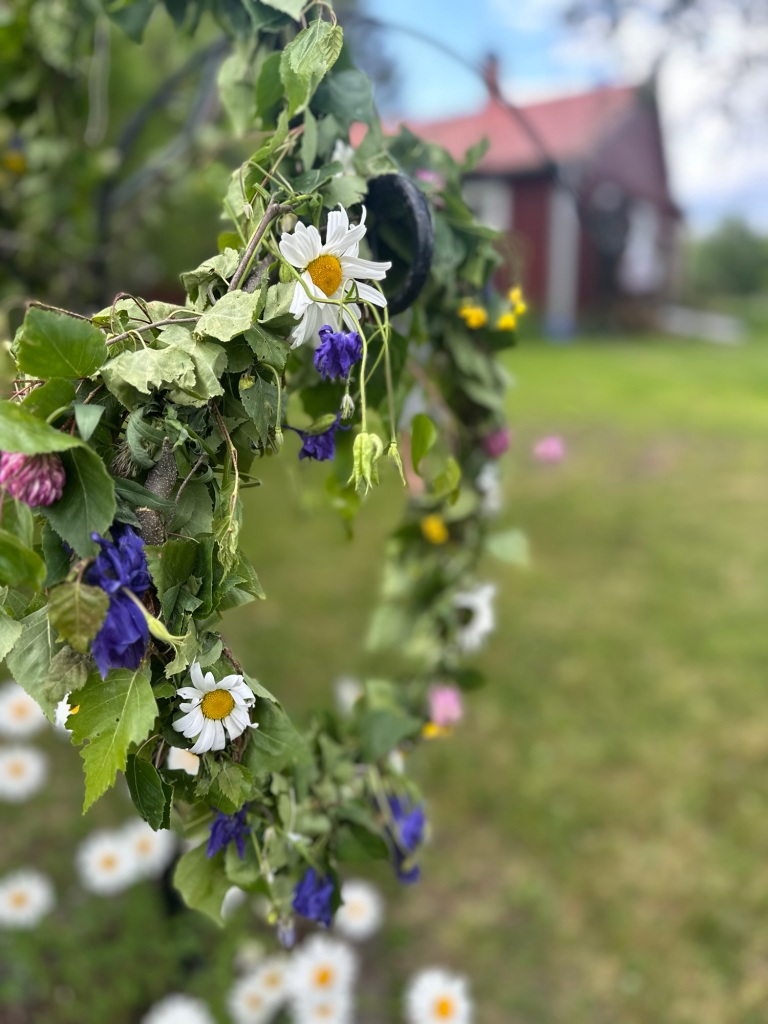
Flowers and greenery played an important role, symbolising fertility and the power of nature at its peak. It was also a time associated with magic and love, when people believed that plants had healing powers and that dreams could foretell the future—especially for young women seeking to glimpse their future husbands.

With the spread of Christianity in Scandinavia during the early Middle Ages, many pagan customs were adapted into the Christian calendar. The Church linked Midsummer celebrations to the feast of St John the Baptist, celebrated on 24 June. As a result, Swedish Midsummer traditionally falls around this date, although in modern times it is observed on the Friday between 19 and 25 June, followed by Midsummer Day on the Saturday.

Despite this Christian connection, the festival retained much of its pagan character, particularly the focus on nature and fertility, rather than religious observance.

Today, Midsummer remains the major secular celebration in Sweden. It marks the unofficial start of the summer holidays, when many Swedes leave cities for the countryside or their summer cottages (sommarstugor).

The festival is a strong symbol of national identity, with its emphasis on community, connection to nature, and timeless traditions. It is a day when Swedes of all ages participate in shared customs that span generations.

Advent Calendar – Dec 24: Kalle Anka

Window 24. As I am following the Swedish system of advent calendars, today is the last window, not the 25th as in the UK. So here is the final word: Kalle Anka. This is the Swedish name for Donald Duck – a Disney character with a strong, and unexpected, connection to Swedish Christmas.

Traditional Christmas celebrations on Christmas Eve in Sweden get off to a slow start. It all begins with a Christmas breakfast, consisting of rice porridge, wort bread, ham and Christmas cheese, amongst other things. After breakfast, some people go for a walk, some go to church, others begin the preparation for the Christmas julbord (buffet).

When to eat julbord differs from family to family. For some, it’s at lunch time, for others it more towards late afternoon. One surprising time marker is Kalle Anka (Donald Duck).

Every Christmas Eve since 1960, the Disney show ‘From All of Us to All of You’ featuring Donald Duck and his friends has been broadcasted on Swedish television at 3pm (now 3.05pm). Every single year. A very weird tradition for someone like me who grew up listening to the Queen’s speech on Christmas Day at 3pm. In the UK we have the monarch. In Sweden, Donald Duck.

So the discussion in Swedish homes is ‘should we eat before or after Kalle?’.

Today, Kalle Anka is watched as a sentimental tradition, or as background noise on Christmas Eve. But in the 1960’s when it began, it was the only time of the year that cartoons were shown on tv, so it was a Christmas treat. Since it’s been broadcast for almost 60 years, it is an integral part of what many Swedes associate with Christmas.

After Kalle Anka och julbord, it’s time for a visit from Tomten with gift-giving. This is followed usually by more food and drink. Some people conclude the day with a Midnight service at their local church.

Christmas is, like many places around the world, a time of overconsumption. Enormous amounts of food are left over and eaten during the following days.

In Sweden, Christmas Day and Boxing Day are both Public holidays – and the official end of Christmas is January 13th. Then it is time to traditionally throw out the Christmas tree. The lights in the windows have usually disappeared by February.

And as the daylight slowly returns to Sweden, people start planning for the lighter and warmer time of the year. And Christmas fades into memory…until next December.

Advent Calendar – Dec 23: Dan före dopparedan

Window 23. Today’s words are ‘Dan före dopparedan‘ – which translate somewhat curiously as ‘the day before dipping day’. Or, the day before Christmas.

I always thought that the name ‘dopparedan’ (dipping day) for Christmas Eve was somehow a reference to John the Baptist.

But I was wrong.

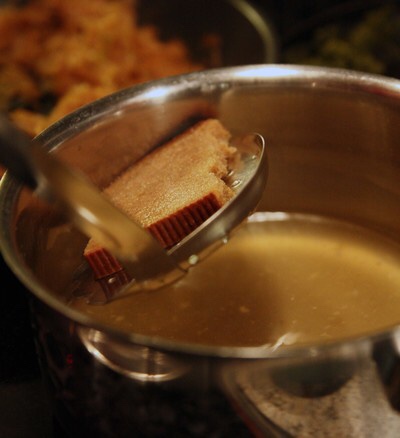
It actually comes from the Medieval Swedish tradition of dipping and drenching bread in the stock juices in which the Christmas ham has cooked, and eating it.

This traditional practice is called ‘dopp i grytan’ and originated in agricultural communities. People dipped their bread as a little snack while they made final preparations for the celebrations later in the evening. Some people still do this today.

Because Christmas Eve was called ‘dopparedagen’, the 23rd Dec became known as ‘dan före dopparedan’ – the day before the day of dipping bread.

Today’s ‘dan före dopparedan’ is more to do with making the final stressful arrangements for tomorrow. Final baking is done, last-minute Christmas presents are bought, a visit to Systembolaget (alcohol shop) is made. Long queues are to be expected.

And then, darkness and calmness descends over homes all around the country. The evening before Christmas Eve is called ‘uppersittarkväll’ and Swedish families traditionally gather to wrap presents, participate in tv bingo, play games and write Christmas present rhymes.

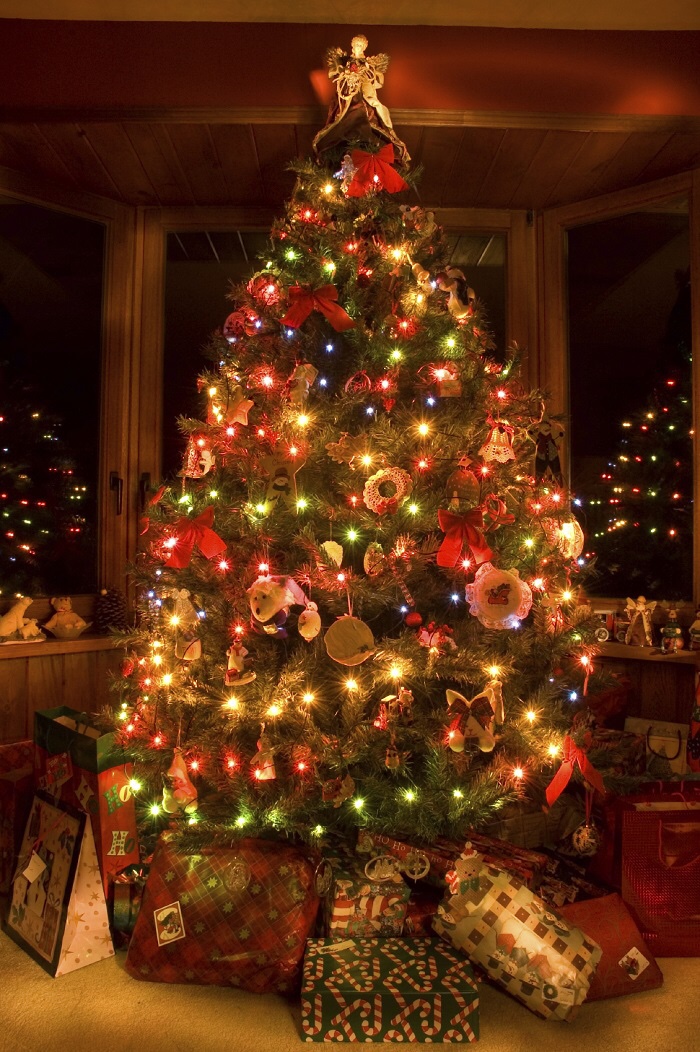
It is also the evening when traditionally people put up final decorations and dress the Christmas tree, although this happens earlier for many families.

Once everything is finalized, hopefully there is a moment of relaxation to be had with a glass of warm glögg and a pepparkaka.

And then, it’s time to head off to bed in anticipation for the big day tomorrow – dipping day!

Advent Calendar – Dec 22: Tomten

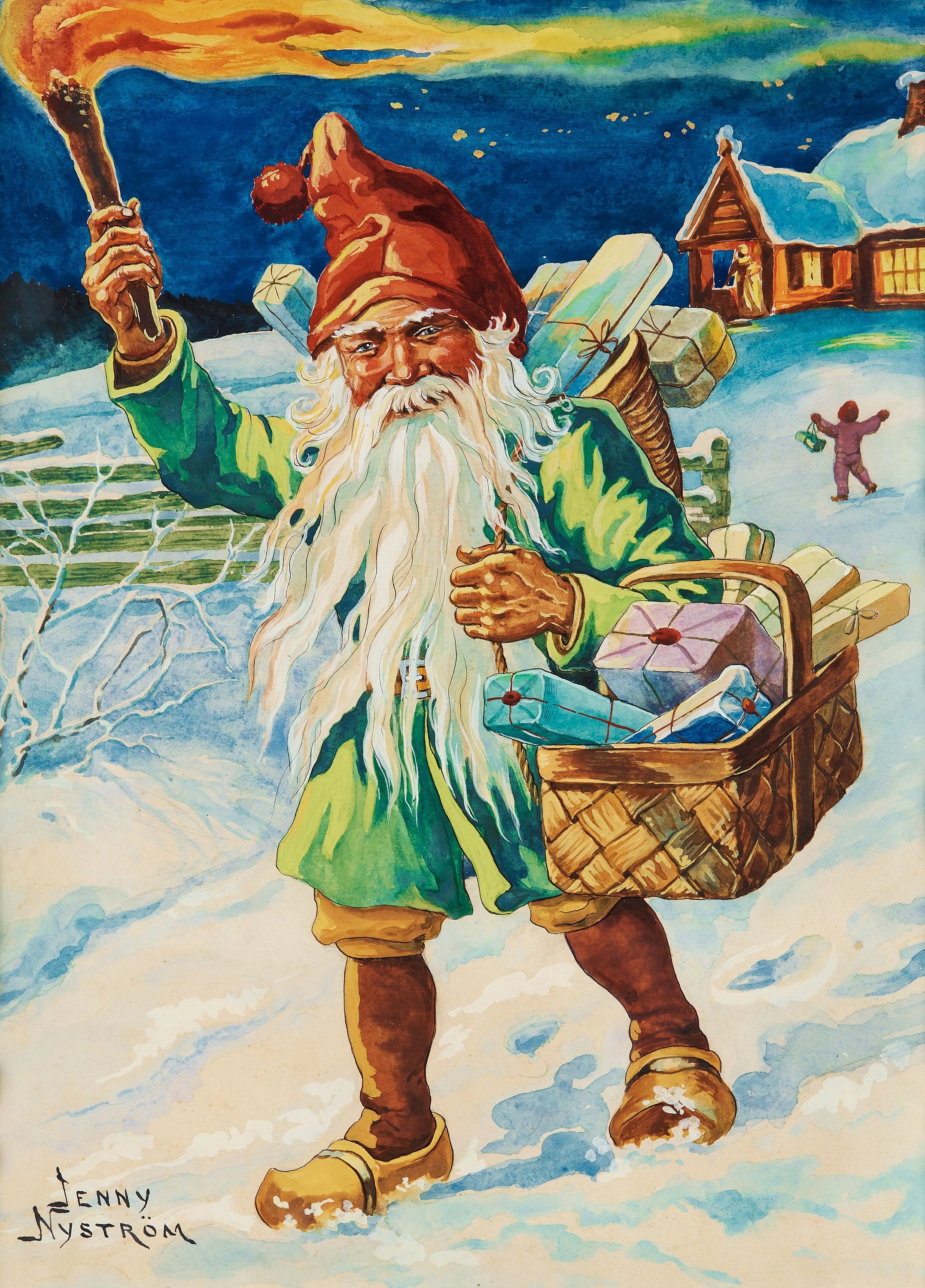
Window 22. Today’s word is ‘Tomten‘ – who is the Swedish equivalent of Santa Claus.

Around the world, Santa is based on the mythology of St Nikolas – the Greek/Turkish patron saint who’s legend morphed in the USA from the Dutch immigrants’ Sinterklaas to the jolly figure who rewards good children that we see today.

The Swedish symbol of Tomten is partially based on St Niklas and the American depiction of Santa Claus. However, he is also based on a goat and a mythical sprite.

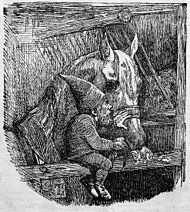
Let’s travel back to rural Sweden hundreds of years ago. Here, in the countryside, Tomten was a kind of sprite (hob, gnome, pixie) who lived on the farm and made sure that the farm had good luck.

Tomten was described as a little man, dressed in sackcloth and with a beard. He usually lived in the barn and was shy, mischievous, and irritable – and also vengeful. To keep Tomten happy, the farmer would leave out rice porridge for him to eat – a food that became known as ‘tomtegröt’ and that is still eaten for Christmas breakfast in Sweden today.

With industrialization in the late 1800’s, Sweden started to become inspired by the German St Nicholas, and in modern minds he merged with the rural sprite to become ‘jultomte’ – the gift-bearing sprite.

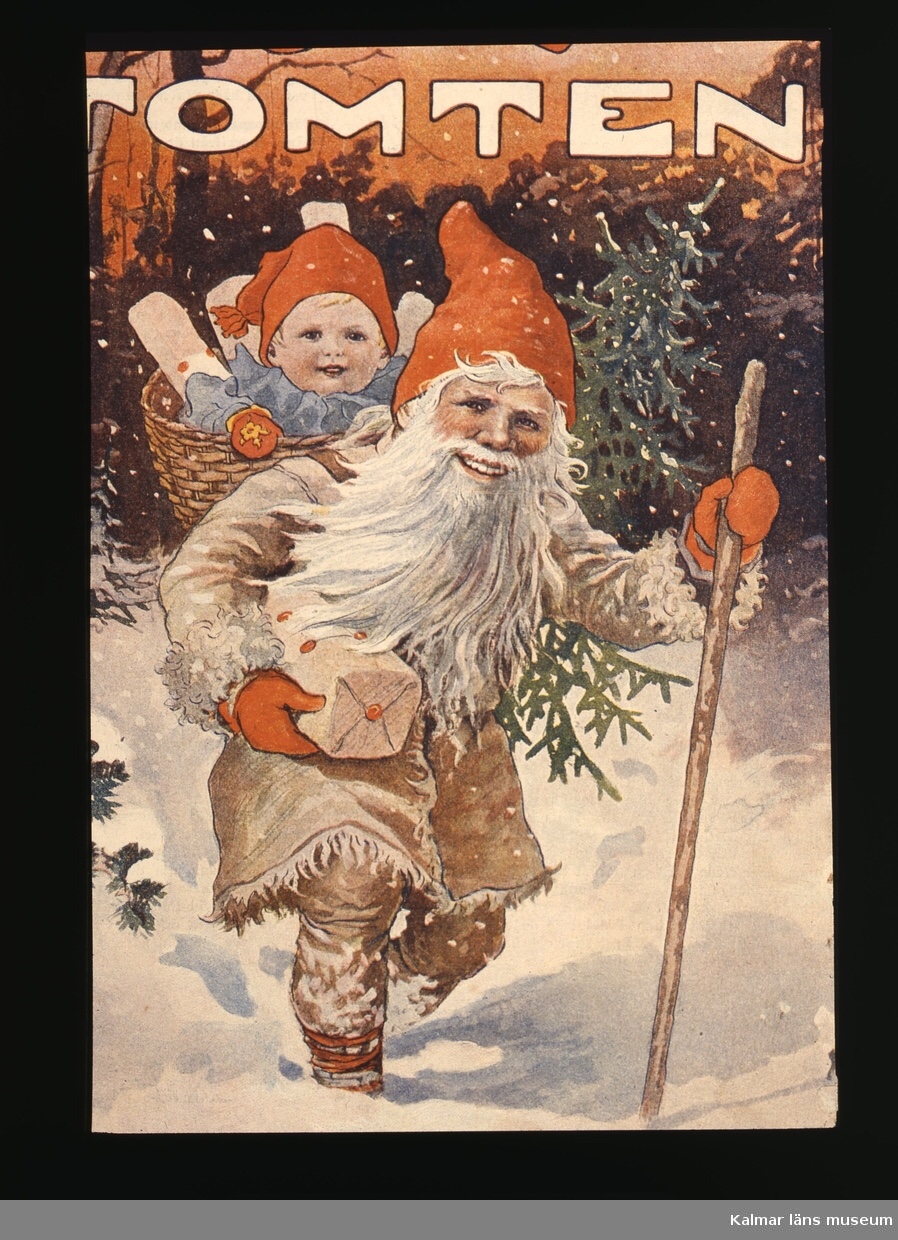
Popular Christmas cards by Swedish artist Jenny Nyström depicted this new version of Tomten in 1874 and strongly influenced the Swedish way of seeing jultomte. He was dressed in red hat, with a fluffy white beard. He is also seen to have many little helpers – known as ‘tomtenissar’ (a kind of elf).

And in 1881, a poem by Viktor Rydberg called ‘Tomten’ strongly cemented his transformation and associated the figure with mid-winter and Christmas time.

Prior to this concept of Jultomte/Tomten, gifts were brought in Sweden by the Christmas goat. Straw goats are still a part of Christmas decorations in Sweden and can be found hanging in Christmas trees or standing at the foot of the tree.

In Sweden today, Tomten arrives on Christmas Eve, usually in the late afternoon. He delivers gifts to families, usually with the introduction of ‘Ho, Ho, Ho are there any good children here?’

Strangely, he always seems to arrive just when a member of the family (often dad) has gone out to the shops or gone for a walk.

Advent Calendar – Dec 21: Julvärd

Window 21. Today’s word is ‘Julvärd‘ which translates as Christmas host.

The term Christmas host is not referring to the religious bread that represents the body of Christ. Although you’d be forgiven for thinking so at this time of the year.

No, the Christmas host is a personality on tv who guides the viewers through the proceedings on Christmas Eve.

For 27 years the ‘julvärd’ was the same person – a man called Arne Weise – and he is, for many Swedes, eternally associated with Christmas Eve.

But since 2003, a new host is announced every year and it is considered a great honour to be given the role. This year the ‘julvärd’ is popular tv personality Mark Levengood.

While the role of ‘julvärd’ might seem trivial, it is actually very important. The Christmas host is present throughout the whole day and introduces the programs. He or she also talks about the value of Christmas and what it means. And not least, the ‘julvärd’ keeps lonely people company by inviting themselves into living rooms up and down the country.

The ‘Julvärd’ can be seen on SVT – Sweden’s Public Service Television – and is usually broadcast live.

Advent Calendar Dec 20: Mistel

Window 20. Today’s word is ‘mistel‘ which translates as ‘mistletoe’.

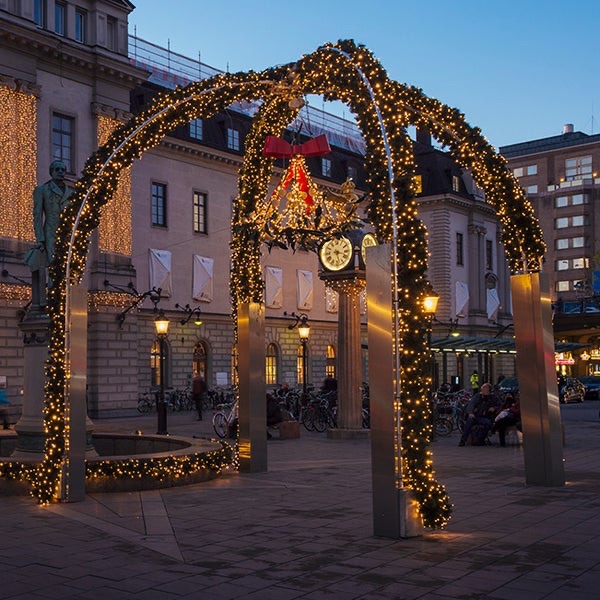
Kissing under the mistletoe is a tradition in many countries and outside Central Station in Stockholm, there is an enormous one to pucker up under.

But do you know the origin of the tradition?

Well, one of the theories is that it comes from Norse mythology in a story about the god Baldur. In the story, Baldur’s mother Frigg casts a powerful magic to make sure that no plant grown on earth could be used as a weapon against her son. The one plant the spell does not reach is the mistletoe, as it does not grow out of the earth, but out of a tree’s branches. The scheming Loki, upon learning this, makes a spear out of mistletoe — the spear that would eventually kill Baldur. 

In many tellings, Frigg then declares the mistletoe to be a symbol of love after her son’s death and promises to kiss anyone who passes underneath it. 

Advent Calendar – Dec 19: Julklappsrim

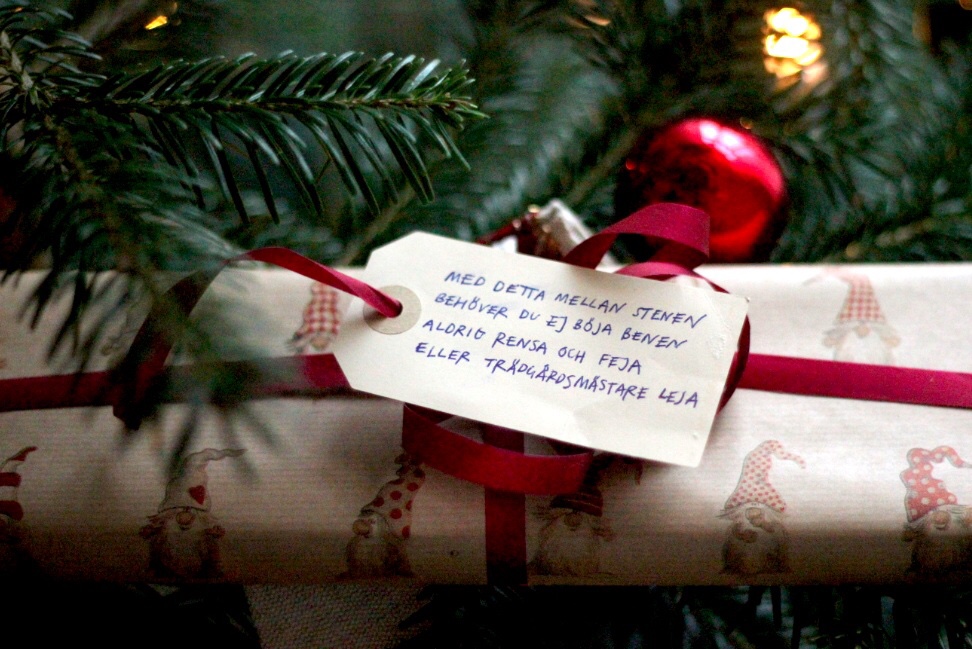
Window 19. Today’s word is ‘Julklappsrim‘ which translates as ‘Christmas present rhyme’

If you receive a gift at Christmas time,

You’ll find in Sweden that it comes with a rhyme.

The packets are wrapped, the present to hide

And a poem describes all the contents inside.

You see, Swedes write poems on the label

Sometimes direct, sometimes a fable.

They sit in a workshop creating their verse,

It needs to be brief, but not at all terse.

The poem is read, the packet ripped open

And you see what you got, but it still leaves you hopin’

For a phone or a trip or a book about crime,

Wrapped up with a Swedish Christmas rhyme.

Advent Calendar – Dec 14: Lussekatt

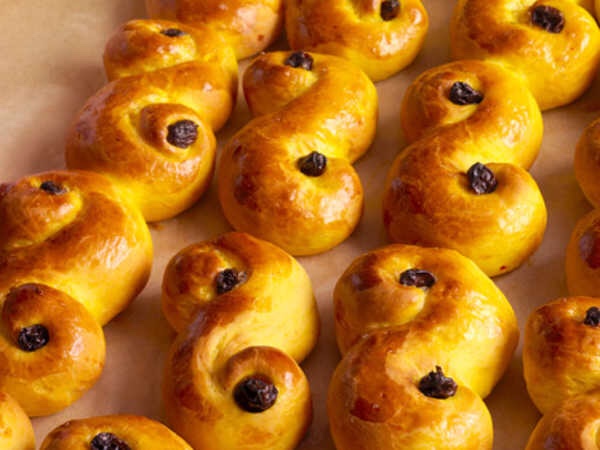
Window 14. Today’s word is ‘Lussekatt‘ which is a traditional saffron bun.

The sight and smell of the lussekatt screams Advent and Christmas in Sweden. The lussekatt, is a rich, spiced yeast-leavened sweet bun that is flavoured with saffron and usually contains raisins. In fact, saffron is a very popular ingredient at Christmas time with a whole cornucopia of baked goods being spiced with the expensive substance.

The lussekatt buns are baked into many shapes, of which the most common is a reversed S-shape. They are traditionally eaten during Advent, and especially on Saint Lucy’s Day, December 13. This could be the reason why it is called ‘lusse’ – a derivative of Lucy. However, there is a more sinister explanation.

In one theory, the lussekatt has its origins in Germany in the 1600’s. According to legend at that time, the devil used to appear as a cat, to torment children. To counteract this, people baked buns and colored them bright yellow to mimic the sun and scare away the devil. In West Sweden, the saffron buns were referred to as Devil’s buns (‘döbelskatt’) and the theory is that the name Lussekatt, comes from the word Lucifer. And the shape? Could it reflect a cat’s tail, or even the devil’s tongue?

Whatever the origin, the lussekatt remains a clear favourite in Sweden to eat at Christmas with pepparkaka and washed down with glögg.

If you’d like to bake your own lussekatt, you can find a recipe here

Advent Calendar – Dec 13: Lucia

Window 13: Today’s word is ‘Lucia‘ – a light-bringing saint who is commemorated today.

At the darkest time of the year, Santa Lucia (St Lucy) pays us a visit early in the morning. Lucia has candles in her hair and is surrounded by her handmaidens and boys, and shines light into the dark depths of our spirits. And slowly, slowly, the day awakens.

Santa Lucia is believed to have been a Sicilian saint who suffered a martyr’s death in Syracuse, Sicily around AD 310. She was seeking help for her mother’s long-term illness at the shrine of Saint Agnes, in her native Sicily, when an angel appeared to her in a dream beside the shrine. As a result of this, Lucia became a devout Christian and refused to compromise her virginity in marriage.

Officials threatened to drag her off to a brothel if she did not renounce her Christian beliefs, but were unable to move her, even with a thousand men and fifty oxen pulling. So they stacked materials for a fire around her instead and set light to it, but she would not stop speaking.

One of the soldiers stuck a spear through her throat to stop her, but to no effect. Soon afterwards, the Roman consulate in charge was hauled off to Rome on charges of theft from the state and beheaded. Lucia was able to die only when she was given the Christian sacrement.

The tradition of Santa Lucia is said to have been brought to Sweden via Italian merchants and the idea of lighting up the dark appealed so much that the tradition remained. The current tradition of having a white-dressed woman with candles in her hair appearing on the morning of the Lucia day started in the area around Lake Vänern in the late 18th century and spread slowly to other parts of the country during the 19th century.

The modern tradition of having public processions in the Swedish cities started in 1927 when a newspaper in Stockholm elected an official Lucia for Stockholm that year. The initiative was then followed around the country through the local press. Today most cities in Sweden appoint a Lucia every year. Schools elect a Lucia and her maids among the students. The regional Lucias will visit shopping malls, old people’s homes and churches, singing and handing out gingerbread.

So, it might be cold and dark outside, but remember – after darkness comes the light.