11 hacks for surviving Swedish midsummer

With Midsummer arriving on Friday, it is time to start planning for your survival. Midsummer’s Eve is the craziest custom in the Swedish calender and the time of the year when Swedes go a little bonkers. As a non-Swede, get ready to brace yourself. Here are a few hacks to make sure you make it to Midsummer’s Day in one piece.

Greet like a Swede. In Sweden it is considered polite to greet everybody individually, even if you plan to never speak to them again or remember their name. The appropriate way is to stand 1-2 meters away, look directly in their eyes, say ‘hej’ followed by your name. They will do the same. You might even give a small wave or shake hands if you are comfortable doing so. If you are feeling adventurous, follow up your ‘Hej’ with a ‘trevligt’ or even a ‘Glad Midsommar’. Job done. Now you can hit the booze.

Snaps is not the same as a shot. A lot of alcohol gets drunk on Midsummer’s Eve, especially beer and snaps With the popularity of shots in recent years, it’s easy to make the mistake that Swedish snaps is the same thing. Believe me, it is not. Snaps can be up to 40% proof, considerably more than your normal shot. So, go easy and sip the snaps or see yourself slipping sideways off your chair before the strawberry dessert has even been put on the table.

Take tissue. Midsummer’s Eve is a looong day and you probably will need the loo at some point. The trouble is, so will everybody else – to the detriment of the supply of toilet paper. There’s a big chance you will be seeking relief in the woods so come equipped with the appropriate amounts of paper for your needs.

If shy, bring swimwear. Bathing in the icy June waters is a common activity at Midsummer. Swedes generally are not afraid of skinny dipping when they do this. If you are, then come prepared with swimwear and a towel.

Shelve your maturity. Part of Midsummer is dancing around the maypole, playing silly games, pretending to be a frog, participating in competitions. To survive these activities, it helps to conjour up your inner child and forget you are an adult for a while.

Protect yourself. Given the amount of alcohol consumed at Midsummer, it is no surprise that the many babies in Sweden are made on this day. It you don’t want to join the ranks of parents, remember to put it on before you put it in.

Throw in the thermals. It looks like it might be super sunny and warm this Midsummer’s Eve. One of the warmest ever! But it is good to be prepared. It is not unusual that temperatures fall into single figures and that pesky rain pours down onto the smorgasbord. So bring a jumper, a rain jacket and even thermals to enhance your experience.

Don’t expect culinary miracles on Midsummer’s Eve. The food is exactly the same as is eaten at Christmas and Easter, with a few small summery exceptions – strawberries, cream, dill and new potatoes. Remember to use hand disinfectant before you attack the buffet.

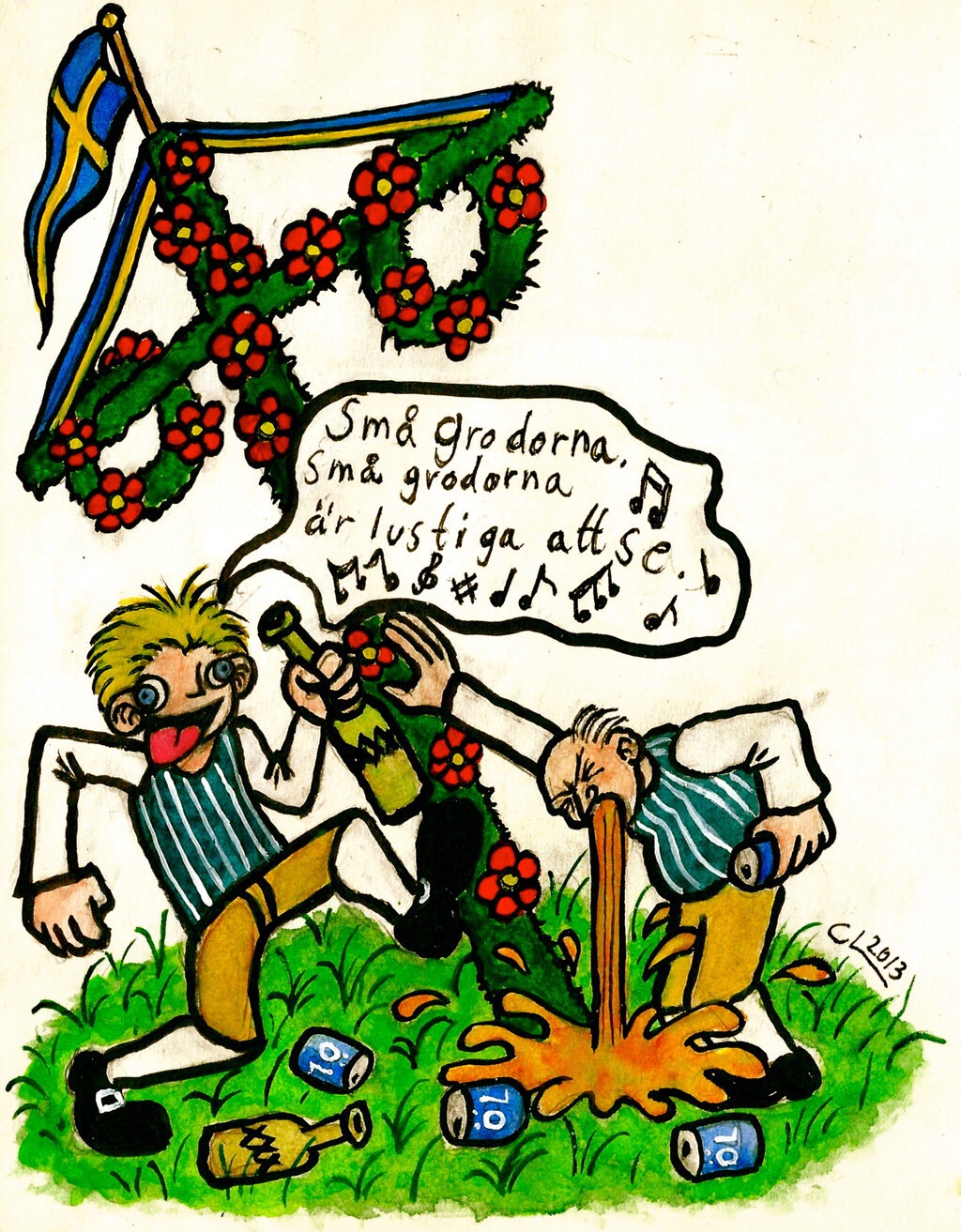
Learn a drinking song. On Midsummer’s Eve, food and alcohol is accompanied by Swedish drinking songs. Learn one in advance and shine at the table. Even better sing one in your own language and you are guaranteed to use those rubbers you packed just for the occasion. For me, ‘what shall we do with the drunken sailor’ works every time.

Argue over the rules. At Midsummer a popular Swedish garden game is called kubb. Involving the throwing of sticks, everybody seems to have their own understanding of the way to play. If you want to feel really Swedish, make sure you start an argument about the rules.

Take pills. Of varying types. Allergy pills are good because there are flowers everywhere: on the table, in the maypole, on peoples’ heads. Pain killers are good as a lot of snaps is consumed. Indigestion pills are good as the food is oily, fatty, acidic, smoky and rich. The after day pill is good, well… because…

That’s it! Follow this guide and you are sure to have a wonderous Midsummer’s Eve in Sweden.

Glad Midsommar!

Please share this post to help others get ready for the big day!
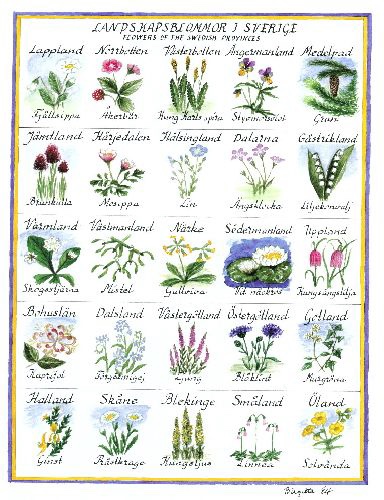
Swedish Province flowers

Since 1908, each of Sweden’s 25 provinces (landskap) has its own animal, coat of arms, flag and flower to define its identity.

Stockholm, for example, is on the border of two provinces – Uppland and Södermanland. The flower of Uppland is the beautiful ‘kungsängslilja’ (snake’s head fritillary). Södermanland has the floating ‘vit näkros’ (white water lily).

Other official provincial flowers include heather, daisy, honeysuckle, forget-me-not, lily of the valley, cowslip and, interestingly in Blekinge, they have the English oak.

Some provinces have been in disagreement for over 100 years on which flower to settle on – so they have two. To see the full list, go to the following link: http://www.ugglemor1.se/Hembygd/sweden-flowers.htm or https://swedesinthestates.com/swedens-provincial-flowers/

In 2021, Sweden’s new national flower was chosen in a public vote. The winner? The colourful and ubiquitous harebell, also known as the small bluebell (in Swedish Blåklocka’.)

I’m from County Durham in the UK, where we have the vivid spring gentian as our county flower. The UK national flower is, since the 1400’s, the Tudor rose.

What’s the national or provincial/county flower where you come from?

Swedish National Day – a new king, an old king, a new constitution and 500 years of independence.

On 6 June 1523, Gustav Vasa was crowned King of Sweden. He was one of the few survivors of the Stockholm Bloodbath, in which his father and 80 other nobles were murdered, Game of Thrones style.

He ruled the country until 1560. During his reign, he released Sweden from the Kalmar Union consisting of Sweden, Denmark and Norway. He also turned Sweden from a catholic country into a Protestant one, with the monarch and not the pope as head of the church.

6 June is another significant day in Swedish history – on 6 June 1809 the country signed a new constitution. This lay the foundation for Sweden’s current status as an independent democracy and was in place until 1974.

The constitution returned political power to the parliament after King Gustav IV Adolph was deposed in a military coup in 1809. He was the last Swedish monarch to rule over Finland. After him, the crown passed not to his children but to his uncle, Charles XIII. Charles had no legitimate heir, which set into motion the quest for a successor. This was found the following year in the person of Jean-Baptiste Bernadotte, the first monarch of the present royal family.

For these two reasons, Sweden celebrates its National Day today – June 6th. It was declared in 1983, and was first celebrated as a public holiday in 2005. And this year celebrates 500 years of independence!

The day is celebrated with various events up and down the country.

The Finnish island where everyone speaks Swedish

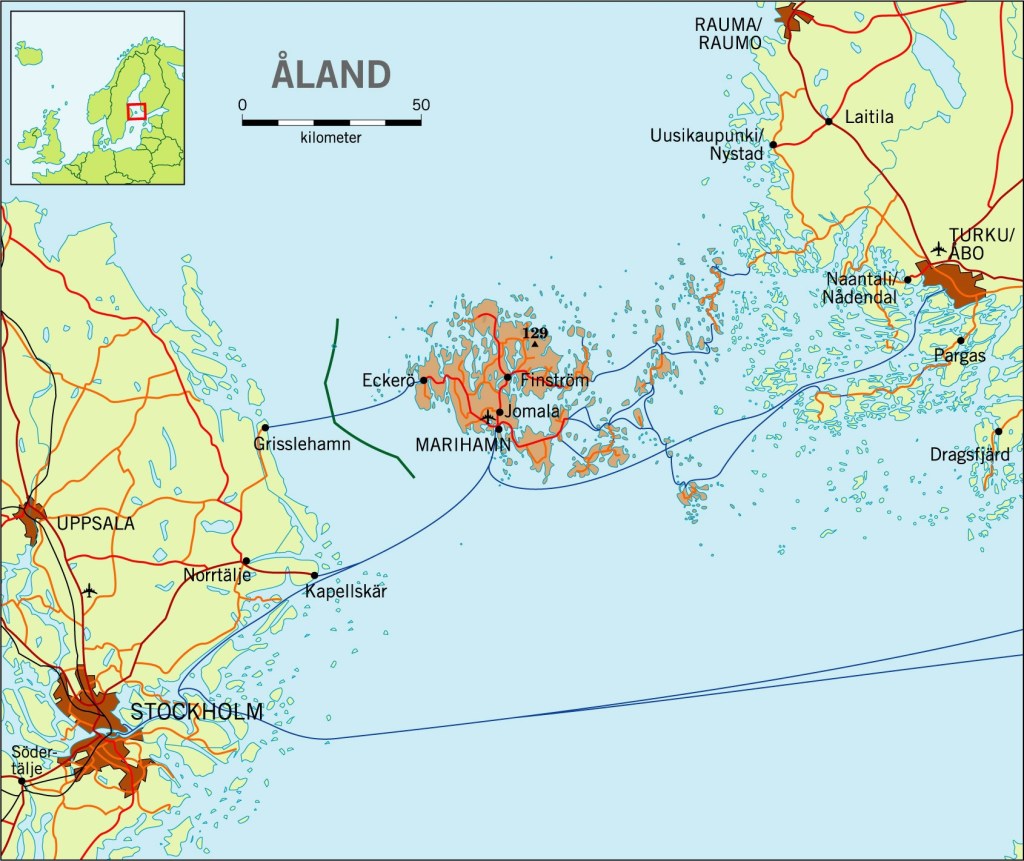
I am currently on an island in the Baltic Sea, at the mouth of the Bay of Bothnia. It is a Finnish island called Åland. The island is about 170 km from Stockholm and 160 km from Åbo in Finland. Åland consists of Fasta Åland on which 90% of the population resides and about 6,500 skerries and islands, of which 60–80 are inhabited. The capital city, where I am, is called Mariehamn where around 15,000 people live.

So how come the official language of Åland is Swedish?

The island was originally a part of the Swedish Empire, but has also belonged to Russia, France, Germany and Sweden again, before becoming a part of Finland. After much conflict, the League of Nations decided in 1920 that, although belonging to Finland, the island would be independent and self-governing. By law, Åland is politically neutral and entirely demilitarised, and residents are exempt from conscription. Åland was granted extensive autonomy by new legislation of the same name in 1951 and 1991. Åland remains exclusively Swedish-speaking by this act.

Speaking to the locals, the accent sounds like an interesting blend of Swedish, Finnish and Gotlandic (another Baltic island).

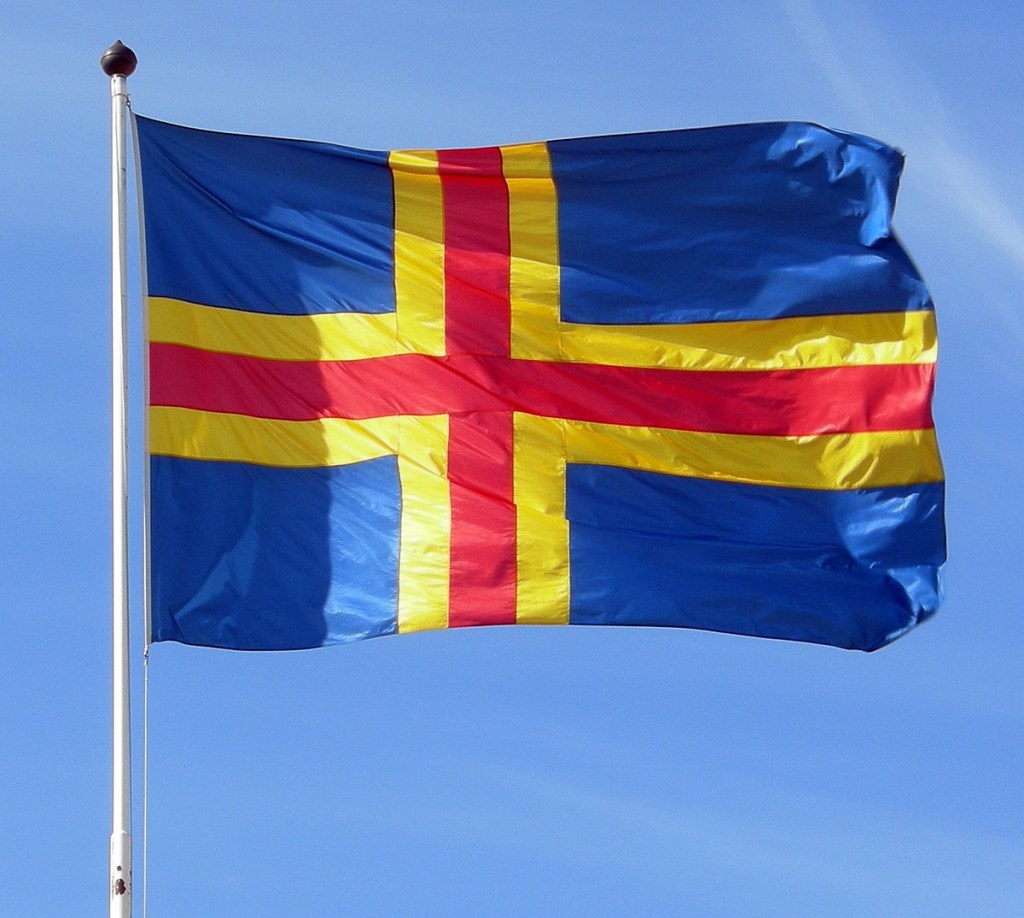
Åland, as an autonomous region, has its own parliament, police force, bank, postal service and flag. It is also a tax-free zone, and is a daily stopping point for ferries from Sweden and Finland where passengers are able to buy duty-free alcohol, tobacco and other goods. In fact, about 2 million people a year visit Åland, but usually only to switch boats. I have to confess this has been the way for me also. This trip is the first time I’ve actually ventured into the town and further onto this beautiful island.

Why is May 1st celebrated in Sweden?

In Sweden, and in many other countries, May 1st has been embraced as the International Workers’ Day. In 1938, May 1st became Sweden’s first non-religious public holiday and has been an important celebration of labourers and the working classes since then.

But why specifically May 1st?

The answer is found in a massacre in the USA. On 1 May 1886, laborers in Chicago went out on strike for an 8 hour working day. On 4 May 1886, Chicago police and the demonstrators clashed and 11 people died.

The event is called the Haymarket massacre. Seven of the demonstrators were sentenced to death, despite lack of evidence. To commemorate the massacre, the socialist organization suggested that 1 May should become day of demonstrations every year around the world.

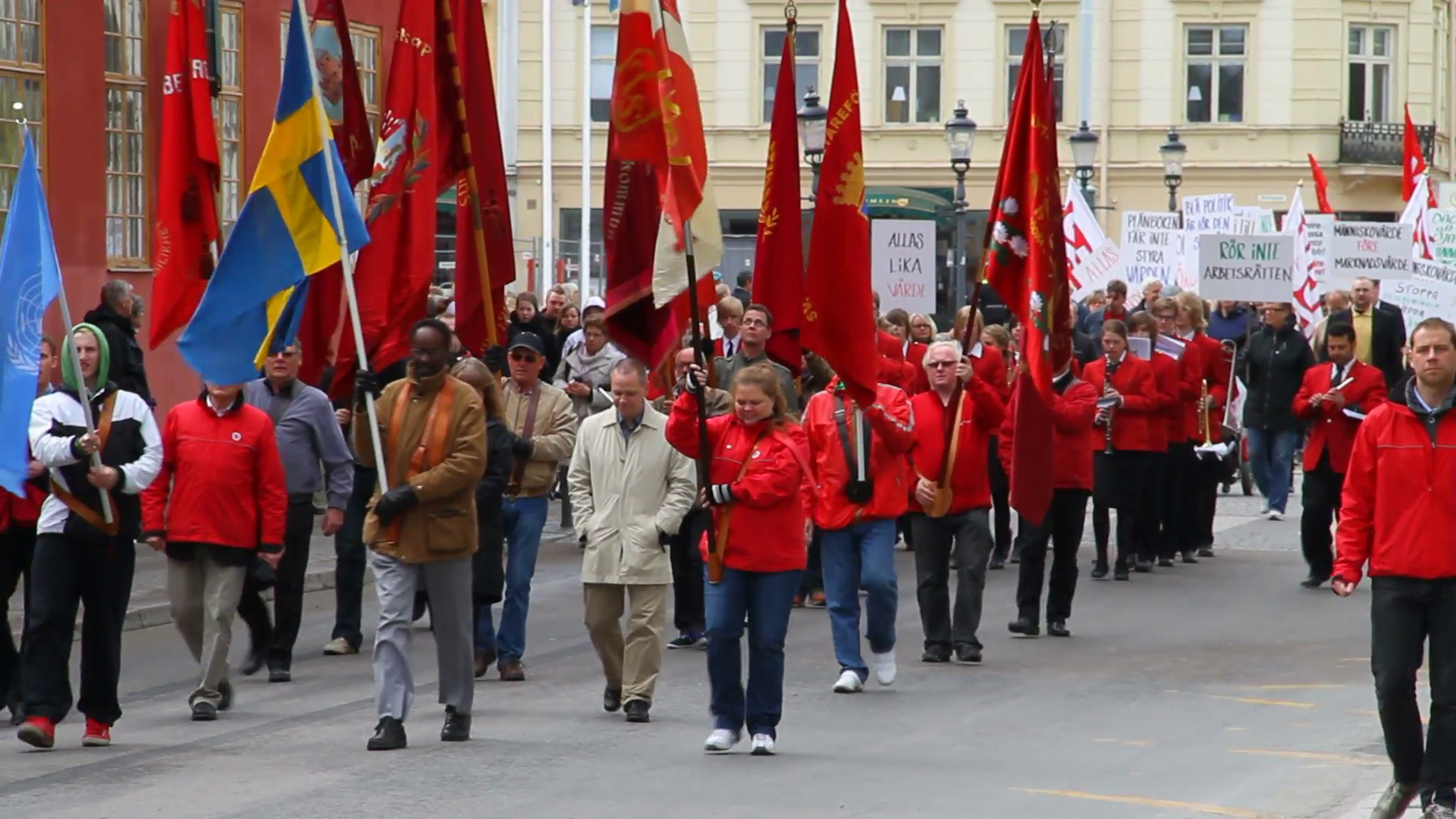
In Sweden, traffic is shut off, huge flag-waving demonstrations are held and people gather to hear speeches from their politicians and representatives.

The demonstrations represent people from various parties. However, since most of them are from the political left, the streets are awash with bright red flags and banners.

Contrary to the stereotype, not everybody in Sweden supports left wing political groups. There are 8 political parties, of which only 2 have a self-proclaimed left-orientation. If you ask a Swede if they are demonstrating, you will either get a ‘yes, of course!’, or as I got yesterday when I asked someone, ‘Hell no! I’m not red!

This means that for many Swedes, today is just a day off work – an opportunity to perhaps nurse a hangover from the festivities of the previous evening or to relax, go for a walk and enjoy the day.

Walpurgis Eve – when spring arrives in Sweden

Today, 30 April, is Walpurgis Eve, called Valborgsmässoafton in Swedish, or ‘Valborg’ for short. The name Walpurgis is taken from the eighth-century Saint Walburga, and in Sweden this day marks the arrival of spring.

In a cold, dark country like Sweden, residents have suffered through a long, miserable winter. So it is no surprise that the arrival of spring is an occasion to mark. On the evening of Valborg, Swedes usually gather to celebrate together.

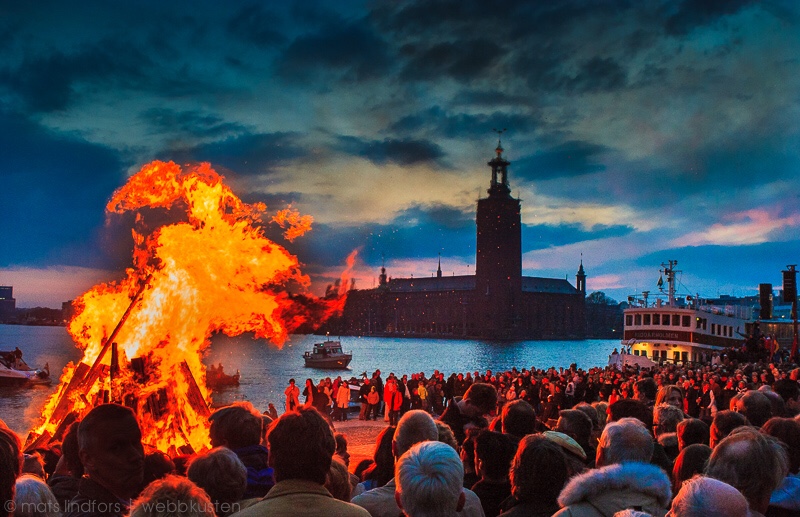
The forms of celebration vary in different parts of the country and between different cities. However, essential celebrations include lighting a large bonfire, listing to choirs singing traditional spring songs and a speech to honour the arrival of the spring season. Some of the traditional spring songs are titled ‘Beautiful May – Welcome!’ and ‘Longing for the countryside – winter rushes out’. You can see a clip below.

Walpurgis bonfires are an impressive thing to see and are part of a Swedish tradition dating back to the early 18th century. At Walpurgis, cattle was put out to graze and bonfires lit to scare away predators.

The weather is often unpredictable on Walpurgis Eve. It can be sunny and warmish, or it can still snow on 30 April! Today looks like it’ll be a cold one.

Despite bad weather, Swedes still shiver around the bonfires and ironically celebrate the arrival of Spring.

The colourful Swedish Easter tree

Just like at Christmas, many Swedes also pimp their homes for Easter. Yellow table cloths, yellow curtains and yellow tulips are common, as is something called a ‘påskris’. Pronounced ‘poskrees’, this is a Swedish Easter tree.

The Easter tree is a bunch of twigs and sticks (usually birch) in a vase with brightly coloured feathers attached to the ends. Some people also hang decorated eggs, colourful ribbons or festive chickens. The Easter tree can be seen all over the country this time of year. Outside shop entrances, in peoples’ living rooms, outdoors in the neighbours’ gardens. It is a very popular decoration, probably because it brings colour at a time of the year when most flowers haven’t yet bloomed in Sweden.

So, what is the origin and symbolism of the Easter tree then? Well, some Swedes say that it symbolises the sweeping away of the winter. The twigs represent a broom and the feathers get caught in the broom as we brush.

Others say that it represents witchcraft. The twigs represent a witch’s broomstick and the feathers indicate flight. This could also be why Swedish kids dress up as witches at Easter and do a kind of ‘trick or treating’ for Easter eggs.

But, apparently the Easter tree has a completely different, and more dubious, origin and symbolism. It dates from the 1600’s. Swedish people at this time were very pious, and used to take twigs and sticks and beat each other with on Good Friday – to commemorate the suffering of Jesus. In the 1800’s and 1900’s, they started to be decorated and became a symbolic decoration for Easter.

Why Swedes celebrate on the ‘afton’ (eve)

In the UK, we celebrate ‘Days’ such as Christmas Day & Easter Day. In Sweden, these days are the bank holidays but there is also a tradition of celebrating on the Eve. In fact, it is the Eve ( ‘afton’) that is the big celebration time. Today, for example, is Easter Eve and it is typically today that families meet for the big meal.

There’s påskafton, Valborgsmässoafton, Midsommarafton, julafton, nyårsafton, trettondagsafton. Why is this? Surely it can’t just be to get extra holiday?

Well, actually it originates from a time before the mechanical clock. In that period, a new day began at sunset rather than at midnight as it does now. In the Medieval times there was an expression – ‘vid kväll ska dag leva’ – which means something like ‘in the evening, shall the day live.’

Scandinavians held onto this tradition even after clocks were invented, and this is why they celebrated their important days the evening before. Now the evenings have, for practicalities sake, become day time activities.

That’s why Swedes celebrate on the ‘Afton’. Oh yeah, and for the extra day’s holiday.

Vasaloppet in Sweden – the world’s longest cross country ski race


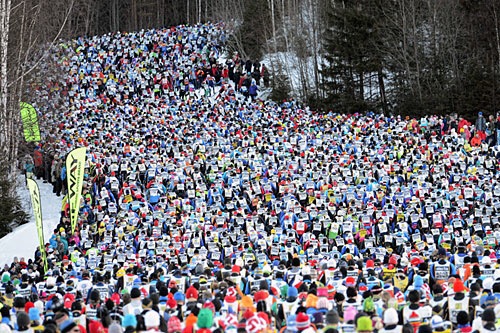
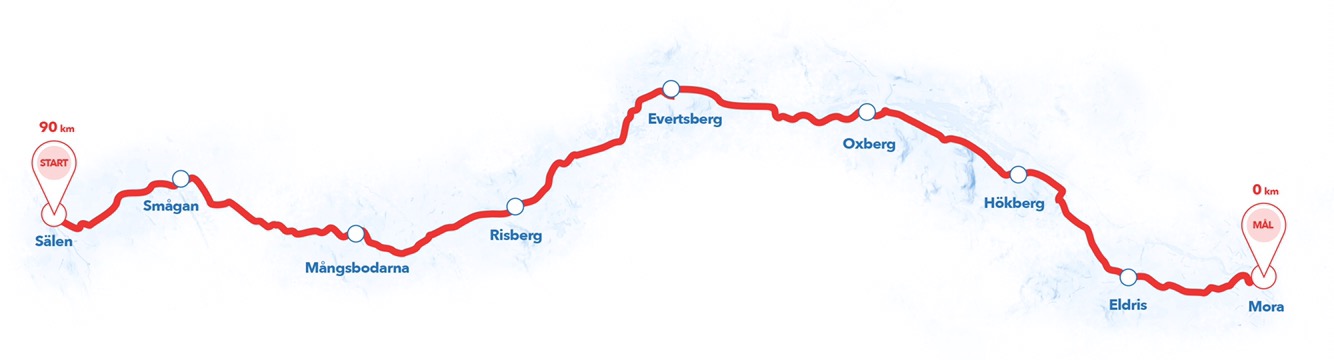
Today, the world’s longest cross country ski race takes place in Sweden. Called Vasaloppet, it entails the approximately 15,000 participants skiing 90 kilometers from start to finish. It’s an extremely popular international race which is broadcast live on tv. When tickets to participate are released, they usually sell out in 15 minutes – it’s that popular.

This year is the 99th occasion. The first Vasalopp was in 1922 and takes place annually, the first Sunday in March and it is a first sign of spring.  Normal participants can take up to 12 hours to complete the gruelling course, but the elite athletes do it in a comparatively speedy time of around 4 hours.

So why is this race called ‘Vasaloppet’? Well, it takes its name from a Swedish king. The race commemorates the escape to Norway, through the forest, of King Gustav Vasa in 1521. Legend has it that he carried out the long journey on skis, but experts believe he more likely completed this escape on snow shoes. Nevertheless, out of this legend sprung the race which is so popular today. ‘Vasa’ after the king, and ‘loppet’ meaning ‘the race’.

Modern day skiers don’t see the experience as an escape, they see it as a challenge and for many of them it’s a rite of passage.

And as you sit watching the TV comfortably from the sofa, with tea and toast, you take vicarious pleasure in this long, amazing Swedish race.

It is broadcast today from 7.30 on SVT ( Swedish TV). You can also check it out on the internet in the streaming service SVT Play.

It’s Fat Tuesday – Swedish style!

Today it’s ‘Fat Tuesday’ in Sweden, known as Shrove Tuesday or Mardi Gras around the world.

While in the UK we eat pancakes (today is even called Pancake Day) and in Latin America they scoff down fried bread, Swedes celebrate by eating the traditional cream Lent bun – the ‘semla’. 40 million of them every year! I’m also clearly going to indulge. In fact, my mouth is watering just writing this post.

The semla is a creamy bun filled with delicious almond paste. Traditionally, they were only eaten in Sweden to commemorate the start of Lent and the great Fast, leading up to Easter. In the south of Sweden, they still refer to them as ‘fastlagsbullar’ – Shrovetide buns. Nowadays however, semlas are usually sold anytime between Christmas and Easter.

I just love them. I could eat a barrel load. But I’d end up looking like a barrel if I did. I love the taste of them, and the feeling of luxurious indulgence. I also love the knowledge that as you take a bite into a creamy semla, you are biting into over 500 years’ history of Scandinavian baking.

The word ‘semla’ comes from the Latin ‘simila’ which means fine flour and originally referred just to the bun without any filling. As long ago as the 1500’s, bakers started to hollow out the middle of the bun and fill it with cream and butter. As ingredients became more available, bakers started adding almond and cardemon and the type of semla that we know today developed towards the end of the 1800’s. After rationing of sugar and dairy products ceased at the end of WW2, the semla took off and became very popular.

Newspapers often have the ‘Semla of the Year’ award, and nominate the best semla in town. Consequently, Swedes flock like sugar-addicted lemmings to the winning bakery, and you can stand in a queue for an hour to get your hands on one.

Nowadays the semla trend has reached new heights. Every year bakers around the country try to launch new types of semla, with their own spin on it -for example, the semla wrap, the semla burger, the semla layer cake, the semla cocktail, semla ice cream, semla nachos, semla langos, the chocolate semla, the vanilla semla, the lactose-free, gluten-free vegan semla. In 2021, the gross-sounding fermented Baltic herring semla was revealed.

But I’m a traditionalist in this matter. Give me a round fluffy cardemon-scented wheat bun brimming over with whipped cream and almond paste.

And give it to me NOOOOWWW!!!