Swedish Midsummer – the light and the magic

Midsummer Night is the lightest of the year, when it doesn’t really get fully dark.

Naturally, this depends on where you are in Sweden. The sky presents as a dim glow on the southern plains of Skåne. In the Arctic north, the land of the Midnight Sun, it is a bright searing daylight all night long. In Stockholm, where I live, we experience a magical dusky twilight that conjures up associations of witchcraft, druids and paganism.

At dusk, at this time of year, the light creates a strange reflection in the water. Lakes turn a petrol blue and the waves seem thick and heady with the magic of the night.

Historically, the light Midsummer night was considered a mystical night, as it was the best time for telling people’s futures. Girls ate salted porridge so that their future husbands might bring water to them in their dreams, to quench their thirst. You could also discover treasures, for example by studying how moonbeams fell.

Also that bright night, it was said, water was turned into wine and ferns into flowers. Many plants acquired healing powers on that one night of the year.

It is no wonder that Shakespeare wrote of the intoxication of a Midsummer Night’s Dream. In Sweden, the light is very intoxicating indeed.

Swedish Midsummer: the origin

Midsummer’s Eve is possibly the biggest public celebration in Sweden, and it’s happening this week on Friday. Swedes gather to eat, drink and be merry together.

So, what are the origins of Midsummer and why is it celebrated?

Sweden has its origins in an agrarian society, and it was on the farms that people started the celebration. Even today, some Swedes don’t consider it Midsummer unless they are ‘på landet’ – in the countryside.

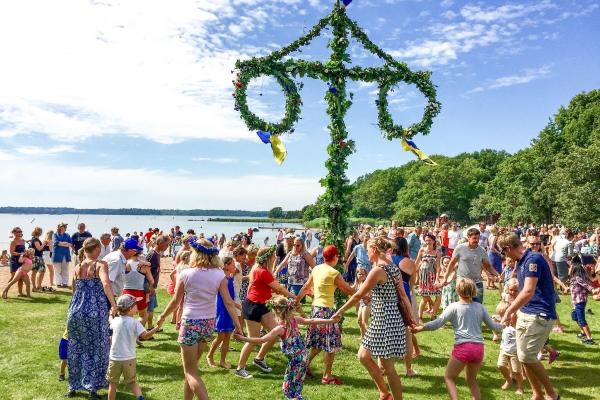
The main purpose for the farmers was to welcome the summertime and the season of fertility, after a long, cold winter. These celebrations began as early as the 500’s. People lit bonfires and visited holy springs where they engaged in games and dancing. This tradition developed to dancing around a decorated maypole sometime in the 1500’s.

In the 1700-1800’s, the celebration of Midsummer spread to the industrial communities where, for example, workers were given pickled herring, beer and snaps. A food tradition that exists today.

Eventually in the 1900’s, Midsummer became a celebration for all Swedes and developed into Sweden’s most Swedish festivity!

Swedish National Day – a new king, an old king, a new constitution and 500 years of independence.

On 6 June 1523, Gustav Vasa was crowned King of Sweden. He was one of the few survivors of the Stockholm Bloodbath, in which his father and 80 other nobles were murdered, Game of Thrones style.

He ruled the country until 1560. During his reign, he released Sweden from the Kalmar Union consisting of Sweden, Denmark and Norway. He also turned Sweden from a catholic country into a Protestant one, with the monarch and not the pope as head of the church.

6 June is another significant day in Swedish history – on 6 June 1809 the country signed a new constitution. This lay the foundation for Sweden’s current status as an independent democracy and was in place until 1974.

The constitution returned political power to the parliament after King Gustav IV Adolph was deposed in a military coup in 1809. He was the last Swedish monarch to rule over Finland. After him, the crown passed not to his children but to his uncle, Charles XIII. Charles had no legitimate heir, which set into motion the quest for a successor. This was found the following year in the person of Jean-Baptiste Bernadotte, the first monarch of the present royal house.

For these two reasons, Sweden celebrates its National Day today – June 6th. It was declared in 1983, and was first celebrated as a public holiday in 2005.

The day is celebrated with various events up and down the country.

Why is May 1st celebrated in Sweden?

In Sweden, and 160 other countries, May 1st is International Workers’ Day. Sweden has been celebrating it since 1939.

But why specifically May 1st?

The answer is found in a massacre in the USA. On 1 May 1886, laborers in Chicago went out on strike for an 8 hour working day. On 4 May 1886, the Chicago police force and the demonstrators clashed in a physical conflict. Eleven people died.

The event is called the Haymarket Massacre. Seven of the demonstrators were sentenced to death, despite lack of evidence. To commemorate the massacre, the socialist organization suggested that 1 May should become day of demonstrations every year around the world. Ironically, USA does not follow this tradition, but celebrates their Labour Day in September instead.

In Sweden, traffic is shut off, huge flag-waving demonstrations are held and people gather to hear political speeches.

The demonstrations represent people from various parties. However, since most of them are from the political left, the streets are awash with bright red flags and banners.

Not all Swedes demonstrate of course. For many, today is just a day off work – an opportunity to perhaps nurse a hangover from the festivities of the previous evening or to relax, go for a walk and enjoy the day.

Walpurgis Eve – when spring arrives in Sweden

Today, 30 April, is Walpurgis Eve, called Valborgsmässoafton in Swedish, or ‘Valborg’ for short. The name Walpurgis is taken from the eighth-century Saint Walburga, and in Sweden this day marks the arrival of spring.

In a cold, dark country like Sweden, residents have suffered through a long, miserable winter. So it is no surprise that the arrival of spring is an occasion to mark. On the evening of Valborg, Swedes usually gather to celebrate together.

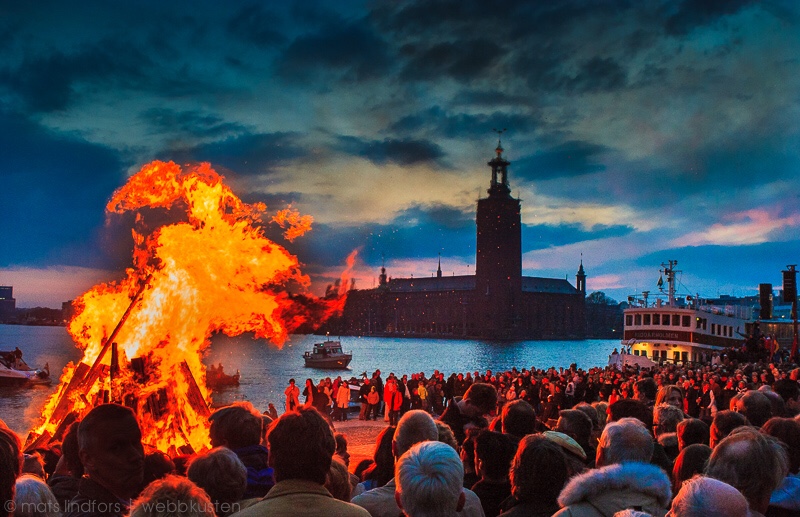
The forms of celebration vary in different parts of the country and between different cities. However, essential celebrations include lighting a large bonfire, listing to choirs singing traditional spring songs and a speech to honour the arrival of the spring season. Some of the traditional spring songs are titled ‘Beautiful May – Welcome!’ and ‘Longing for the countryside – winter rushes out’. You can see a clip below.

Walpurgis bonfires are an impressive thing to see and are part of a Swedish tradition dating back to the early 18th century. At Walpurgis, cattle was put out to graze and bonfires lit to scare away predators.

The weather is often unpredictable on Walpurgis Eve. It can be sunny and warmish, or it can still snow on 30 April!

Despite bad weather, Swedes still shiver around the bonfires and ironically celebrate the arrival of Spring.

Why Swedes celebrate on the ‘afton’ (eve)

In the UK, we celebrate ‘Days’ such as Christmas Day & Easter Day. In Sweden, these days are the bank holidays but there is also a tradition of celebrating on the Eve. In fact, it is the Eve ( ‘afton’) that is the big celebration time. Yesterday, for example, was Easter Eve and it is typically yesterday that families meet for the big meal with the traditional food.

There’s påskafton, Valborgsmässoafton, Midsommarafton, julafton, nyårsafton, trettondagsafton. Why is this? Surely it can’t just be to get extra holiday?

Well, actually it originates from a time before the mechanical clock. In that period, a new day began at sunset rather than at midnight as it does now. In the Medieval times there was an expression – ‘vid kväll ska dag leva’ – which means something like ‘in the evening, shall the day live.’

Scandinavians held onto this tradition even after clocks were invented, and this is why they celebrated their important days the evening before. Now the evenings have, for practicalities sake, become day time activities.

That’s why Swedes celebrate on the ‘Afton’. Oh yeah, and for the extra day off work.

‘Long’ Friday in Sweden

Today, Good Friday, is called ‘Long Friday’ in Swedish – ‘Långfredag’. It commemorates the long day and the long suffering that Jesus endured on the cross, according to Christian teachings. It is a public holiday, and for many years, everything was closed in Sweden making the day deliberately long and boring for many people. Now, most things are open.

‘Long Friday’ is a day of cooking, shopping and going for walks. Some people attend church services. For traditionalists, salted fish is the food of the day – such as salted herring or salted salmon. This symbolises the thirst that Jesus felt on Golgotha. Fish was also the only food that historically was available for people to eat in Sweden at this time of the year.

In English, this day used to also be called Long Friday, but at some point in history it changed to Good Friday. Good in this context means Holy.

NATO – an extraordinary day in Sweden’s history

So Sweden is now an official member of NATO, the military defense alliance.

As the 32nd country to join the alliance, Sweden will be protected under Article 5 – the ultimate guarantee of allie’s freedom and security.

To the outside world, this might not be that significant. But for Sweden, March 7th 2024 is a day that will be recorded as one of the most momentous in history.

By becoming a member of NATO, Sweden ends over 200 years of official non alignment. This neutrality stretched back to the Napoleonic wars.

Sweden joining NATO was inconceivable just over two years ago, and the Swedish population had little appetite to join a military alliance.

The country remained neutral in both World Wars but when Russian troops began marching toward Kyiv in February 2022, Sweden – and neighbour Finland – became alert to the threat Moscow could pose to nearby countries outside the alliance.

And everything changed.

Finland joined NATO in April 2023, and Sweden, after lots of head-butting with Turkey and Hungary, formally joined yesterday.

It is currently unknown how the membership will affect the lives of Swedes. Hopefully, not noticeably.

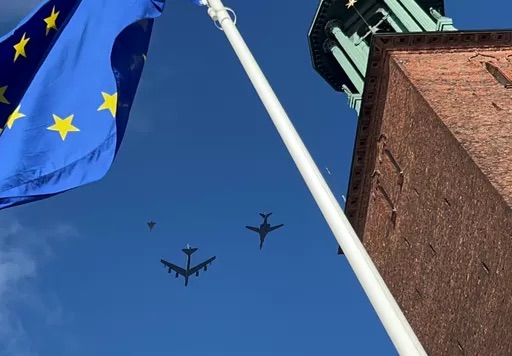
But it was very apparent on Tuesday when two American bomb planes, B52 and B1B, flew at a low altitude over central Stockholm – that things have changed in this formally-neutral country in the north.

Sweden’s 20th day of Christmas – it’s officially over!

Today – 13 January – is the official last day of Christmas in Sweden. Known as ‘Tjugondedag jul’ (twentieth day of Christmas) or ‘tjugodag Knut’ (twentieth day Knut), it marks the twentieth, and final, day of the festive season.

The name ‘Knut’ comes from the fact that today is St Knut’s Day in Sweden – commemorating the Danish king who was assassinated in 1131. One of laws that Knut introduced was that nobody should fast during twenty days of Christmas, and that January 13 was the official end of the period.

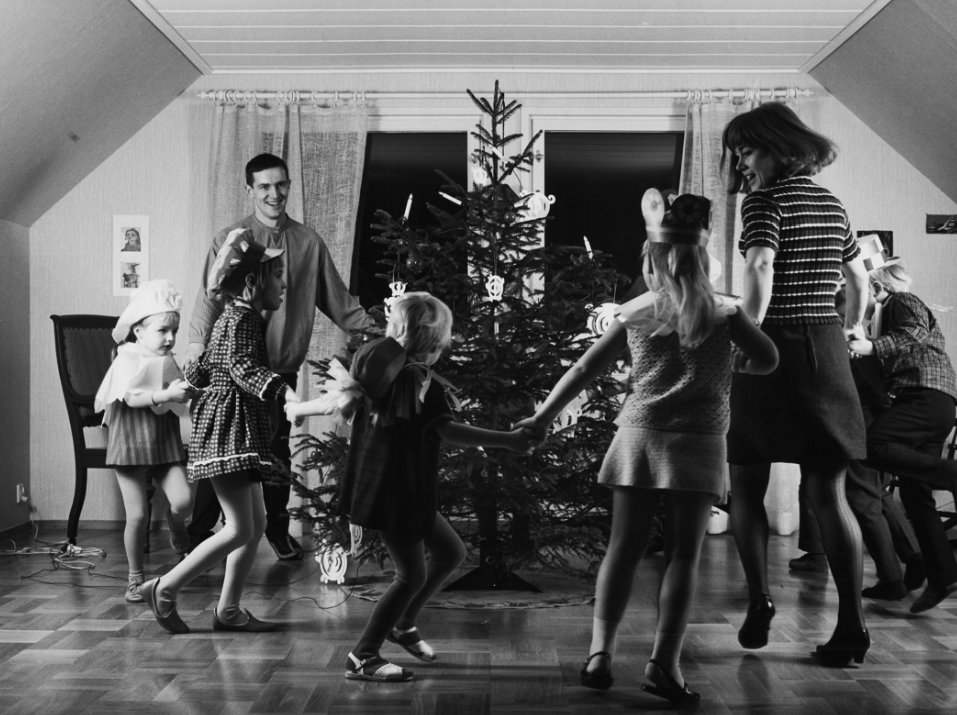
In Sweden, today is the day when Christmas should be ‘danced out’. Traditionally, the Christmas tree is removed via ‘julgransplundring’ (Christmas tree plundering), in which Swedes remove decorations, eat the edible ones, dance around the tree and throw it out.

This is known as the St Knut’s Party and originated in the mid 1800’s.

On a more practical note, the discarded Christmas trees are gathered by the local councils and burned to provide heating or used on the traditional spring bonfires in April.

Swedish expression: ’There is no cow on the ice’.

With all the frozen lakes at the moment, I am reminded of the Swedish expression ‘Det är ingen ko på isen’ or ’there’s no cow on the ice’. This expression is used to mean there is ‘ no need for worry’ or ‘don’t be concerned’. So, where does the expression originate?

Well, like many Swedish expressions, this one also has a rural origin.

In the old days, farmers that had no running water would take their cows down to the lake to drink. As long as the cows stayed on land, and didn’t venture onto the frozen waters, there was no risk of them falling through the ice and drowning.

In fact, the expression is an abbreviation of the longer saying ‘there’s no cow on the ice as long as their rear end is on land’. (Det är ingen ko på isen så länge stjärten är i land.) As long as they had a firm footing, they could rescue themselves if the ice broke around the periphery of the lake.

So it would seem that the original meaning of the saying might have been ‘there is no need for worry as long as you take precautions.’