Swedish Long Friday, English Good Friday

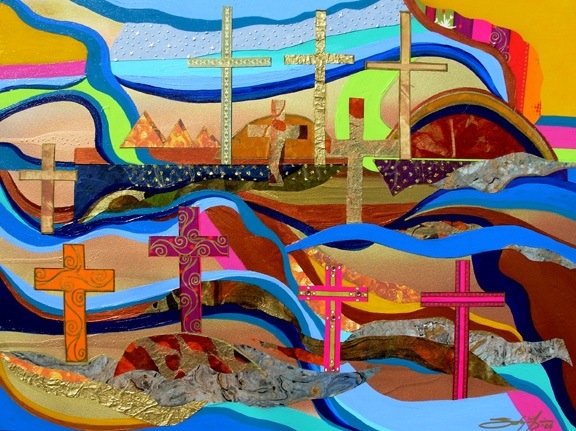
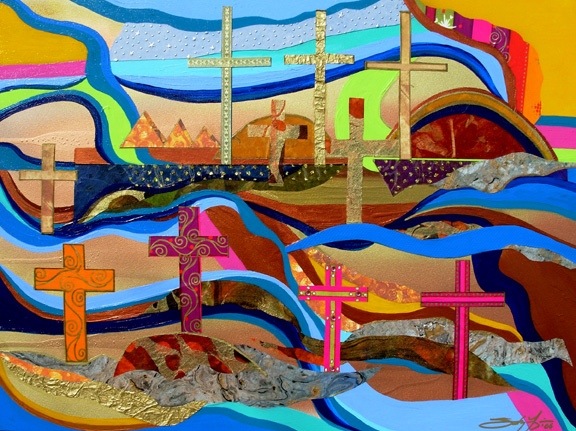
Today is Long Friday in Sweden, Good Friday in English-speaking countries. If you hold to the Christian belief, it’s the day Jesus was crucified on Golgata, outside of Jerusalem.

Why the differences in names for this day? In English-speaking countries, there are differences of opinions as to why it’s called Good Friday. Some people claim Good is an old English word meaning Holy – so Holy Friday. Others say it’s a development of the word God. And other theories say it is good because it is the day Jesus, dying on his cross, was victorious over sin, death and the devil and took upon him all the sins of Mankind. Heavy stuff.

In Sweden, it is called Long Friday as it was said to be a day of mourning for the long day of suffering that Jesus endured will being crucified.

In Sweden, as in the UK, today is a public holiday, people don’t need to dress in black anymore and all the shops and places of entertainment are open. Some people go to church, some paint eggs and decorate Easter trees, some prepare food for Easter Saturday.

I think it’s interesting to know the origins of our traditions. Often these origins are long forgotten. But understanding the history helps put things into perspective as we celebrate in the way we prefer, traditions that have been followed for centuries before and centuries to come.

20140418-082902.jpg

20140418-085041.jpg

Pink Thursday?

20140417-074309.jpg

Today is ‘Skärtorsdag’, or Maundy Thursday in English. In Sweden it’s celebrated by children dressing up as witches. This tradition originates from the belief centuries ago that tonight was the witches night, where witches would make their journey to Blåkulle – the Blue Mountain. It was a night of danger and evil, and Swedish people would bar their doors to their houses and barns and leave outside gifts that would make the witches’ journey easier – food, milk, clothes, broomsticks. Today, Swedes give the children sweets and money.

But why is it called Skärtorsdag’? The word ‘skär’ means ‘pink’. But does that make today Pink Thursday?

Actually not.

The word ‘skär’ has another, pre-Nordic meaning that is more relevant – ‘clean’.

If you know your bible stories, today being the day before Good Friday is the day when Jesus gathered his disciples together for the last supper, introduced communion, and was later betrayed by Judas, and condemned to death on the cross. It is the day evil was said to be released – hence the witches described earlier in this text.

Prior to the last supper, Jesus washed the feet of the disciples. And he washed them clean – a symbolic metaphor for purification and the washing away of sin.

So, today isn’t Pink Thursday – it’s Clean Thursday.

I’d better start mopping the kitchen floor then.

Austrian stereotypes of Swedes

I was in Vienna at a wedding this weekend and mingled with the other guests. When they found out I lived in Sweden, they wanted to talk about Stockholm and Swedish people. They were very pleasant and what was interesting is how stereotypes persist. Amongst other stereotypes, they thought Swedes were reserved and formal. When I explained that maybe some are but it’s not the case entirely,they actually looked sceptical.

This is the funny thing about stereotypes – they’re often outdated and almost always wrong. How can a single characteristic be applied to 9,000,000 Swedes, or 70 million Brits, and still be accurate? Stereotypes can be fun to talk about but if we start believing them, we’re in trouble. Instead, let’s look at the individual to form our perceptions of that person (understanding we can still be wrong) and try to avoid sweeping condemnations of the collective. I think we’ll get a lot further in our cultural sensitivity that way.

‘Vobba’ – a brand new Swedish complaint

Image

Perspectives-taking is one of the most important skills required for working in an multicultural environment. Anybody who’s travelled abroad knows that a new perspective is often one of the main impressions we receive. This is especially true if we travel to countries that are culturally and economically different from ours. In the context of the other society, we gain perspective on our own.

Yesterday, I returned from a trip to Thailand and Cambodia and was left, as often, with a humbling feeling. Cambodia is a dirt poor country, as yet not destroyed by tourism. The countryside, the cities and the people, raped by their recent history, are warm and humane and welcome us with open arms. Homelessness is rife, unemployment and sikness prevail. There, they really have a lot to complain about, and I’m sure at times they probably do.

Transport to Sweden, Monday  morning, breakfast television. As I sat there this morning and watched the local news to catch up on latest happenings,  I learned a new Swedish word. And this Swedish word reminded me of the importance of having perspective – ‘Vobba’.

‘Vobba’ is a combination of two Swedish words – ‘Jobba’, which means to work and ‘Vabba’ which means to be at home with a sick child and therefore free from work. In Sweden, parents receive support from the government to ‘Vabba.’

This new word ‘Vobba’ refers to parents who are home with their sick child but, thanks to technology, they also do a little work while at home, such as check emails or speak on the phone.

According to the report on the news this morning, one third of parents who have to ‘vobba’ feel stressed, and invaded, by it and find it impossible to balance their home and work lives with their sick child. 

What a problem! Oh dear me! I really don’t know how they cope! Not only are they paid to be at home by the tax payer, and their child is probably asleep in bed, but it’s really hard work to check a few emails on a smart phone while they’re having a cup of coffee.

Really??? Get some perspective!  

In countries like Cambodia, where daily survival is a struggle, they would be shocked by this new Swedish stress factor.

So, I am asking all of us to get some perspective on this issue and on all those other issues and compaints that we have. In the greater scheme of things, how important are they?

Instead of focusing on what is stressful, invasive or unfair, let’s focus on the positive! Sweden is a great country where parents get to be home with their sick child and are not forced to take a day’s holiday or leave the child with an unknown baby-sitter or force the sick child to go to school. That is fantastic!

Let’s focus on that instead and remember most people around the world don’t have it anywhere near as good as we do.


If you like this text, please spread it and share it!
A theory about Stockholmers

Stockholm

It happened again today. And, actually, it has happened once too often.

When I approached my office building this morning, there was a small group of people speaking Swedish standing outside in the cold. They couldn’t get into the building. As I have a pass card, I knew I could let them in. So, I smiled, and I said ‘I can let you in to the warmth’. There was no reaction, apart from a little wry smile. Swiping my card, I let them into the building and turned to look at them. Not one of them acknowledged what I’d done and said ‘Thank you.

This might seem like a small thing, but it happens all the time to me. I hold a door open for somebody. I get no ‘thank you’. I let somebody go on the bus before me. Nothing. Soembody bumps into me. And I apologise!

Why is this the case? Why do many Stockholmers not acknowledge or thank each other. It isn’t that they don’t see each other. Is it that they don’t care?

An interesting fact is that the vast majority of people in Stockholm come from somewhere else in Sweden. They have migrated from smaller towns and villages to seek work, love and excitement in the capital. My experience of being in towns outside Stockholm is that people are friendly, polite and acknowledging of each other. So what happens to these people when they move to the city?

I have a theory. I think that many Stockholmers who have migrated into the city have a perception of what a city should be. They seem to think a city should be fast-paced, tough, individualistic and unfriendly. That people should push themselves forward, and through, other people. That connecting with a stranger in a public place with eye contact, a small remark or a thank you does not belong in a capital city. I think that they are playing pseudo cosmopolitans.

In my opinion, this attitude is shamefully misguided. Citizens of much larger cities, such as New York or London, still find time to small talk, for politeness and to say sorry or thank you to each other. Try bumping into somebody in New York and not apologise. The price of impoliteness is sometimes harsh.

And the solution is easy. Say ‘thank you’ to the next person who does something for you today.

Really, it’s not that difficult.

Sweden, it’s time for ‘fredagsmys’

Bild

Soon it’s the weekend! A collective sigh of relief falls over the Swedish population, at least those who are not forced to work Saturdays and Sundays of course.

A weekend means relaxation and family time. It means late nights and parties. It means sports activities with the kids. It means sleeps-in and late breakfasts. It means cultural activities. It means computer game or TV series marathons. It means sledging and skating, drinking hot rose-hip soup.

Weekends mean so many different things to different people.

And it means a very Swedish concept: Fredagsmys

‘Fredagsmys’ loosely translated as ‘Friday Cosying’, is a modern ritual in Sweden. It is when friends and families gather together to mark the end of the working week and get ready for the approaching week. Traditions are different depending on if children are involved but one common denominator seems to be that food is easy and quick to make. Friday night is a big taco and pizza night in other words. 

Gathering around food for cosy family evenings has a long tradition in Sweden. In the 1800’s and 1900’s something called ‘Söndagsfrid’ (Sunday peace) was popular. Then in the 1970’s ‘kvällsgott’ (Evening Goodies) became a concept.

The concept ‘fredagsmys’ became popularised in a high-profile advertising campaign for crisps. With the perky slogan ”Now it’s the end of the week, it’s time for Friday cosying”, (really, it’s perky in Swedish), they captured the Swedish market and encouraged the consumer to devour potato chips on Friday nights.

So how does your Friday night look? What kind of cosying are you planning?

Do you see the horse?

See the horse

Much intercultural understanding arises from misinterpretation and misconception. We tend to think our perceptions of something are correct, when often they can be very wrong. What we see usually isn’t the whole picture.

In a cultural situation, simple situations such as how much eye contact we give people when we talk, how close we stand to somebody when we communicate and what kind of gestures we use are all examples of things that can easily lead to misinterpretation. I remember when I moved to Sweden and some of the misperceptions I had because I didn’t understand the whole picture. I remember, for instance, thinking Swedes were unfeeling, purely based on the lask of emotional response and the more reserved body language than I was used to. I was wrong. Just because a person doesn’t gesticulate or emphasize when they speak does not mean they feel any less.

The road to cultural sensitivity is paved with misunderstanding, misinterpretation and false perception. One key is to suspend judgement about another person or a specific situation and instead try to see the larger context. To ask ourselves why might this have happened? What are all the possible interpretations?

Look at it from another angle, who knows what might emerge. Just like in the visual above…so, do you see the horse?

Are Swedes always off work?

keep-calm-its-nearly-holiday-time

‘Swedes never work, they’re always on holiday’

This is a frequent comment I hear when I work internationally. Colleagues and sometimes customers abroad, are irritated by the fact that they can’t get in touch with Swedes from, for example, the end of June to the second week of August. Sweden seems to be shut down! ‘Swedes never work, and are also lazy’ – they say.

I, of course, defend Sweden’s holiday structure by emphasizing that people work longer hours in the winter to compensate for shorter hours in the summer time. Or that the winters are so long here, it’s only natural that people want to be off work during the warmest, brightest time of the year. Or that thanks to advances in technology, Swedish employees are often still accessible though they might not be at the actual workplace. Or I even try the argument that Sweden has a healthy work-life balance.

These arguments however often fall on stony ground and I am often disbelieved. People shrug their shoulders, shake their heads and roll their eyes. From their perspective, Swedes are spoiled.

I try to encourage cultural understanding, I really do. But sometimes it’s not that easy. For example, situations like this Christmas and New Year don’t help me to be more persuasive. While most Americans got 3 days off work and many Brits got 5 days of work, Swedes frolicked in the free time they were able to access. This festive period was commonly referred to as an ’employees’ Christmas’ meaning it was good for the employees and not for the employers. Many Swedes (and me too) are back to work for the first time today, and have been free since the 23rd December 2013. That makes a total of 12 days off work – 16 days if you also count the weekends.

You see Swedes don’t only take the national holidays off – they also take off the ‘Eve’. So although ‘Christmas Eve’ and ‘Midsummer’s Eve’ are technically not national holidays, they are celebrated as though they are. And then it’s also considered a right to be able to take off a half a day before the ‘Eve’ just in order to get ready for the approaching celebrations. If a national holiday falls on a Thursday or a Tuesday then there’s also something called a ‘Bridge day’. It’s not officially a holiday but most people take it off because there’s no point in going in to work for just one day is there? This Christmas season had a couple of bridge days in it to pad out the time taken off work and required only a little bit of personal holiday leave to be taken.

So the question becomes are Swedes happy that they got 16 days off work? I think most are. But on social media, in the office and on public transport, others complain that it wasn’t long enough, that they’re exhausted or that they need a break.

Mmm, maybe there’s something in the perception of the spoiled Swede?

Origins of FIKA

20140102-210626.jpg

Interesting description of the origins of the Swedish word for drinking a cup of coffee – ‘fika’.

In the 1800’s it was weirdly fashionable to invert words. For example, ‘gata’ might have become ‘agat’ or ‘roligt’ might have become ‘igtrol’.

The slang word for coffee at that time was kaffi.

And when this is inverted, it becomes ……. FIKA!!

IKEA – part of the problem or the solution?

CSR

IKEA, the ultimate representative of Swedishness abroad, is currently in hot water. In their customer magazine, IKEA LIVE, they often present articles on people, the reason being to inspire and motivate their members to shop. The idea is that readers don’t just buy a piece of furniture, they buy a ‘Lifestyle’. In 26 countries, the latest IKEA magazine portrays a lesbian couple, Clara and Kirsty, in their home. In terms of representing the Swedish values of equality and tolerance, so far so good.

However, this report on Clara and Kirsty has been removed from the IKEA magazine that is circulated in Russia. IKEA defend their action by stating that they do not want to break the Russian anti-gay propaganda law, a law that has been criticised by the UN for breaking international Human Rights laws. IKEA also says ‘our job is to sell furniture in Russia’.

Many voices, including mine, have been raised in criticism of this action.

Who is it who can take a stand against discriminatory laws?
Who is it who can protect human rights?
Who is it who can lead by example?

In this economically-driven globalized world, it is the large, international corporations who can! IKEA can! If they wanted to. They are concerned that breaking the law may get them sued. I wonder how likely that actually is and even if being sued led to them being forced to remove the article portraying gay lifestyle, that in itself would be taking a stand.

But here is the real twist. Just because IKEA is Swedish do we expect them to represent Swedish values in general? Respect. Honesty. Egalitarianism. Solidarity. The bottom line is that IKEA is a business run purely for profit. Their job is to earn money for their shareholders by ‘selling furniture in Russia’. And, however cynical that may be, are we really surprised at their behaviour?

IKEA like many companies have a policy for Corporate Social Responsibility (CSR). In the light of these latest actions, their policy is a mockery:

‘The IKEA vision is to create a better everyday life for the many people. This includes doing what we can to help create a world where we take better care of the environment, the earth’s resources, and each other. We know this continuous improvement is a never-ending job, and that we are sometimes part of the problem. But we work hard to be part of the solution’.

Clearly in this case, IKEA is part of the problem. I would like to understand what they are doing to be a part of the solution.

Please LIKE and SHARE this post.