Tricking Sweden – April Fool’s jokes 2017

april-fools-day-2015

Playing April Fool’s jokes on each other on the first of April is a tradition in many countries – Sweden included. In fact it is an old tradition – the oldest written reference being in 1392 in Chaucer’s ‘The Cantebury Tales’.

In Sweden, when someone is tricked, the tradition is to say ‘April, April din dumma sill!‘. This translates as ‘April, April you stupid herring!’. This is however not as weird as it might sound. In many countries, such as Italy, France and Holland, April 1st is known as “April fish”. On this day, people try to attach paper fish onto the backs of their victims.

April Fool’s pranks flourished this year in newspapers and in social media. Here are a couple of the main ones that tricked Sweden this year:

  • Furniture giant IKEA is branching out into the airline business. Furnishing all the flights with Ikea furniture, the airline will offer low-cost flights to popular destinations. And the name of the airline? FLYKEA.
  • Since military service is to be introduced again in Sweden, a high tech computer company will take over the castle in the town of Örebro. The thick walls and moat will make it inpenetrable for data hijacking.
  • Theresa May needs help to fullfil the Brexit process and calls in British businessman Chris O’Neil, who is married to Sweden’s Princess Madeleine.
  • Finnish-Swedish IT Company, Tieto, are opening a sauna next to their data service center. The sauna is heated from the excess heat from the data center and is a way to environmentally reuse the waste energy
  • Airline SAS have introduced a selfie button next to the seek assistance button. In that way, passengers can photograph themselves without needing to take out their phones.
  • Swedish supermarket chain ICA introduced a new product together with Marabou. The product is toothpaste with the taste of chocolate. It might be brown, but it makes your teeth white.


Sweden’s nazi sympathiser, secret agent, communist spy, musical diva!!

ZarahLeander

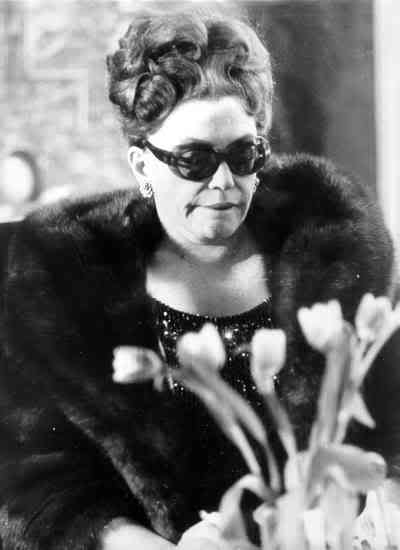
Long before Swedish pop sensation Zara Larsson became famous, she had another famous namesake from Sweden.

Also a singer, Zarah Leander was her name, and she remains an enigma to this day. Active during the war years, was she a source of pride or a source of shame for Sweden? Nobody really knows.

Zarah Leander was born in the town of Karlstad in 1907 by the name of Sara Stina Hedberg. She began her singing career in the late 1920s, and by the mid-1930s she was hugely successful in Scandinavia and in Europe. In particular, the Germans loved her and in 1936, she was contracted to work for the German Film Foundation for whom she made many movies. As her employer was subordinate to the Third Reich, many people viewed her films and her music as nazi propoganda, although Zarah Leander herself never took a public political stance or officially joined the Nazi party. She performed live at many concerts, even after Nazi Germany had invaded Denmark and Norway. She profited from being the biggest, and most well-paid, star in Germany at that time.

After her home in Berlin was bombed towards the end of the war years, she returned to Sweden under much criticism. She was shunned by the artistic community but eventually managed to resume her career. She died in 1981 in Stockholm at the age of 74.

So was Zarah Leander a source of shame for Sweden? Was she a cold-blooded, fame-seeking, profiteering, Nazi sympathiser? On paper it would seem so. But who really knows?

Or was she a source of pride? Was she, as she herself claimed, just an entertainer working to please an enthusiastic audience in a difficult time?

Or was she in fact a spy? Soviet intelligence officer Pavel Sudoplatov claimed, just before his death, that Leander had been a Soviet agent with the codename “Rose-Marie”. He claimed she was a secret member of the Swedish Communist Party and conducted the work for political reasons.

Zarah Leander talked openly about her past and consistently denied that she had any sympathies with the Nazi or the Communist parties or that she worked as a spy for any country. But was she telling the truth? The mystery of Zarah Leander followed her to the grave and today the only legacy we have is her music and her films.

Zarah Leander, 1907-1981. Nazi sympathiser? Communist spy? Secret Agent? Musical Diva!!!

Swedes! Where’s your barbecue?!

DST_Countries_Map

This weekend in Sweden, the clocks went forward one hour to Summer Time. Despite the occasional complainer who moans about losing an hour’s sleep, this is usually received very positively in the country. Suddenly,  the light at 6pm becomes the light at 7pm. People are happier, daylight is longer, people venture outside to enjoy the burgeoning spring.

So why do we do this? There are clear benefits, but where does it come from? The practice was first initiated during World War I to give more light for agriculture and other important societal functions. However it was abandoned shortly afterwards, only to come back during World War II.

It was never very popular and by the 1950’s it had again been cancelled. However come the 1960’s, it was reintroduced in many countries due to the energy crisis – the lighter evenings required less electricity.  In 1981, the EU legislated Summer Time in Europe requiring member states to decide particular start and end dates for Summer Time which varies in the different countries.

In Sweden, Summer Time was originally introduced on 15 May 1916 but then took it away. In 1980, Summer Time has been observed every summer in Sweden starting on the last Sunday in March and ending on the last Sunday in October.

In Europe, there are 4 countries that do not switch to and from summer time. They are Belarus, Russia, Iceland and, since 2016, Turkey.

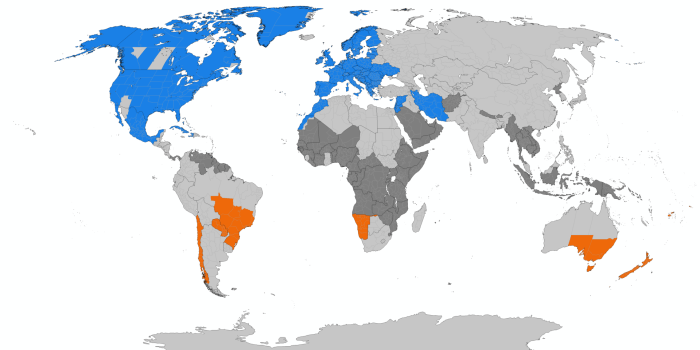
Around the world, there are various countries observing the switch. In USA, they refer to this as ‘Daylight saving time’ but it is not used in all states. In the picture above, blue and orange represent the countries that switch to and from summer time (nothern hemisphere summer and southern hemisphere summer). Dark grey have never used daylight saving time and light grey have formally used daylight saving time.

Remembering when to turn the clocks back and forward is sometimes a challenge to remember. In English, the saying ‘Spring forward, Fall back’ was developed to help jog people’s memories. Even the expression ‘March forward’ is used as a reminder.

So what do they say in Swedish? Well, they refer to the popular summer activity of barbecuing. Many Swedes who live in houses, or have a summer house, own a barbecue. In the summer they use it, and in the winter it is safely kept in storage.

So the Summer Time saying?

‘In spring we put forward (English: out) the barbecue, in the autumn we put back the barbecue’.


And today Sweden celebrates……?

tranafton


I was looking through a paper today and I read that today it is Transafton (‘afton’ means ‘Eve’ in Swedish) in Southern Sweden.

‘Wow’, I thought, ‘isn’t that great that they have a special Eve to celebrate transgender people in the South of Sweden. Very impressive

However, upon closer inspection, I realised my error – it didn’t say ‘transafton’.

It actually said ‘tranafton’.

After my bubble was burst, my curiosity became aroused.

Tranafton? What is that? After over 20 years of living in Sweden, I have never heard of Tranafton. I know that a  ‘tran’ in Swedish is the bird called ‘crane’ in English. But why a ‘Crane Eve’?

So I looked it up.

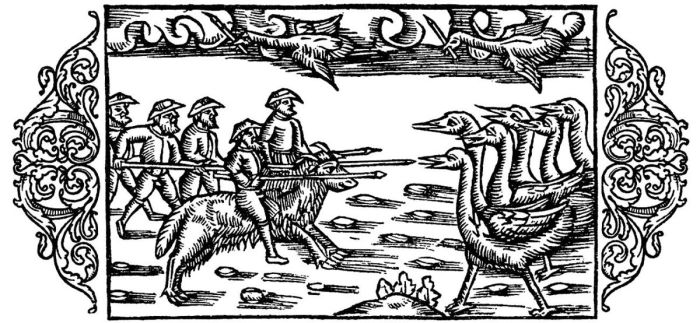
The 24th of March is known as Tranafton in Southern and mid Sweden and has been documented since the 1500’s.  . It was said that the crane returned on this day after its winter migration. This was seen as a sign of spring as it brought the light with it. Now it was so light outside that people did not need to light candles inside their houses. On Tranafton it was important to go to bed while it was still light, otherwise you might be subjected to tricks and name-calling.

On Tranafton, children ran outside barefoot – often three laps around the house. The supersition was that this would build up their immune system and make them strong and resilient. In the Swedish counties of Värmland and Dalsland, this was done dressed in bird costumes – a ritual known as ‘running crane’. In West Sweden, children hung stockings infront of the fire and the crane would come and fill them with gifts. This tradition has mostly died out today, but still exists in a handful of villages in Småland, Värmland and on Öland.

So if you are at a loss for what to do this evening – go out and run the crane to celebrate the arrival of the light. But remember, just to be safe, go to bed before it’s dark.


Swedish art – a new world?

karin-mamma-andersson
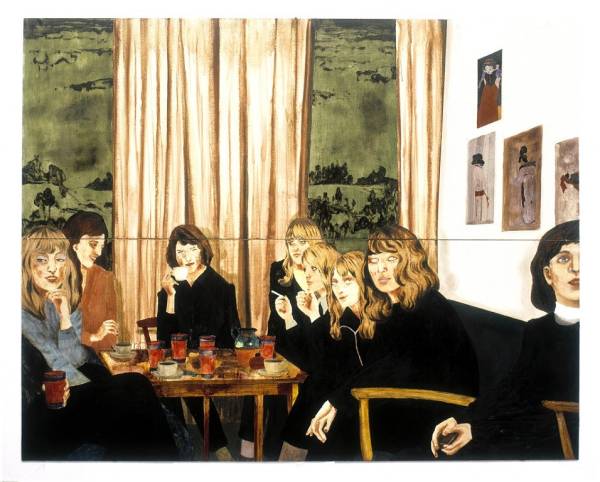
Karin Mamma Andersson – About a girl, (2005)


Going to the supermarket this weekend? Well, maybe not in the way you think….

This weekend, in Stockholm, is an art fair called Supermarket, which is an international artist-run fair that showcases artists from Sweden and all over the world. If you’re in Stockholm, it could be worth a visit. Here’s the link:SupermarketArtFair2017

Sweden and Art – is that a natural connection for you? How much do you know about Swedish art? If you are an art lover, then Sweden may very well be an undiscovered treasure trove for you.

Sweden has a strong artistic tradition and the art that is produced here often reflects the time and place in which it’s created. Art is good at that – at being the window to our souls, a kind of visual temperature check on how we as a society are feeling at that precise moment.

Let’s take the art form of painting as an example.

Looking back through history, there are many Swedish painters who became giants in their field. Very famous here, maybe not so famous outside of Sweden to those other than the die hards.

Ask somebody to name an artist and names such as Picasso, Rembrandt, Monet, Van Gogh, Kahlo probably come up. Probably names such as Larsson, Zorn, Bauer, Brate, Nyström, Jolin don’t come up in the first pass.

But maybe this is exactly what makes it so exciting. If you know nothing about Swedish artists, a whole world is waiting for you to discover.

Maybe you’re interested in discovering new Romantic art? Then check out traditionalists Carl Larsson and Anders Zorn. They were contemporaries and painted delightful pictures of Swedish pastoral life in the 1800’s, early 1900’s.

Or what if expressionism is more your cup of tea? Then check out Einar Jolin’s and Isaac Grunewald’s fabulous interpretations of Swedish society around the 1920’s. Or look up the post-impressionist Nils Dardel and his renound painting ‘The Dying Dandy’ painted in 1918.

Or is it contemporary art that rings your bell? Current painters who are worth looking into are Karin Mamma Andersson, Lars Lerin, Marie Louise Ekman, Linn Fernström, Peter Dahl and Sara-Vide Ericsson. And there are many more.

Or perhaps you want to buy some art, or make some connections? Then get yourself along to Supermarket and get inspired!

And the Best Country in the World for Business is…..SWEDEN!

madeinsweden

Despite fear-mongering in the media about the awfulness of Sweden, things are actually going rather well for the country. Or at least that’s what a recent piece of research from Forbes would suggest.

For 11 years Forbes has graded 139 countries on 11 factors: property rights, innovation, taxes, technology, corruption, freedom (personal, trade and monetary), red tape, investor protection and stock market performance.

The aim of this to identify which countries are the best for business investment and business development. In other words, which is the ‘Best Country in the World for Business’

And in the latest results, Sweden has soared to the number 1 position, beating out other EU countries, USA and low cost countries. So, Sweden is the best country in the world for business. This creates jobs, generates income and attracts new talent to the country.

And if we take a look at some of the successful companies to come out of Sweden, it would seem easy to confirm this. The country is home to some of the most well-known brands in the world, including Electrolux, SKF, Ericsson, IKEA and H&M.

Skype was co-founded by Swede Niklas Zennstrom in 2003. Music site SoundCloud and file sharing site Pirate Bay are Swedish too. Tictail and iZettle are both Swedish. Sweden is also the home to companies that created three of the biggest games of this decade: Candy Crush Saga, Battlefield and Minecraft. The 1 billion dollar financial transaction company Klarna is also founded and based in Sweden. Not bad for a country of only 10 million inhabitants.

So this would suggest that Sweden is entrepreneurial and successful. And the constant development of new ideas attracts new investment which will keep the Swedish economy motoring on strongly into the future.

Here’s the link for the full Forbes listing: https://www.forbes.com/best-countries-for-business/list/


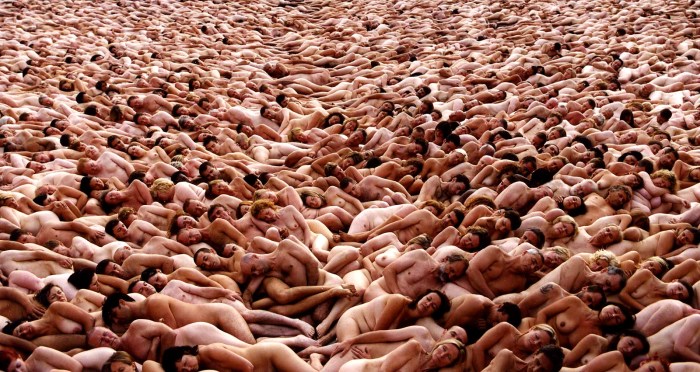
How Swedes have sex

sea-of-nudity

One of the major stereotypes of Swedes is that they are sexually liberated.

Twenty years ago, a large research project on 2800 people was carried out looking into how Swedes view sex. Participants were between 18-74 years old. In comparison to many other countries, Sweden was consequently seen as a place that has a liberal view on sex. Now this research is about to be carried out again, to see what, if anything, has changed in the last two decades. The suspicion is that a lot has changed in the last twenty years.

So what did the results look like 20 years ago?

Here’s a summary, courtesy of daily newspaper DN.

In 1996,

  • Sexual debut was on average 16 years old
  • The average woman had 4,6 sexual partners
  • The average man had had sex with 7,1 people on average
  • Swedes between 26-55 had the most sex
  • Sexual activity had increased since the previous study in 1967, except between the ages 31-50 were there was a decrease, probably due to work pressure
  • The top 10% were called ‘superactives’ and the men had slept with 29-560 people and the women had slept with 15-100 people
  • 38% of the Swedes had experience of sexual relations outside of their committed relationship
  • The average amount of penetrative sex was 65 times per year
  • 15-20% of women had same-sex fantasies, 3% of men.
  • Women more frequently reported a diminshing interest in sex. Difficulty to achieve orgasm was the most common reason. Amongst the men who claimed the same reduced desire, premature ejaculation was the most common reason.

 The last time they had sex,

  • 95% had had vaginal sex
  • 59-72% had carressed eachother’s genitals
  • 25% had oral sex
  • 1% had anal sex
  • 71% of men orgasmed, 62% of women acheived orgasm
  • 80% had sex with their husband, wife, partner
  • 5-6% had sex with a friend or casual partner
  • 1% had met via a contact ad


In the last twenty years, a lot has happened in Sweden. Easy sexual contacts via aps such as Grindr and Tinder makes sex more accessible. Young people who experiment with their sexualities, and refuse to identify as hetero or homo, is more common than twenty years ago. On the other hand, Sweden is a more multi-cultural society than before and attitudes to sexuality may well be influenced by religion, culture and a new restrictive morality. It will be interesting to read what the results of the new survey reveal.

What do you think? How have things changed?

Let me know in the comments below.


Great Swedish Women Part 7 – The Activist

Since March 8th,  I  have been writing a series to celebrate Great Swedish Women, past and present: women with strength and passion, women who create change. Today is the final day. 

aleksa

Part 7 – transactivist, journalist and actor Aleksa Lundberg.

Aleksa Lundberg was born with the wrong body. She was born with a boy’s body and at the age of 22, she underwent corrective surgery and became physically a woman. She is the first actor in Sweden to have undergone gender reorientation. She is a strong, proud Swedish woman. But her transition hasn’t necessarily been smooth sailing – as a transwoman, she has experienced hate, disgust, rejection and ridicule.

Today Aleksa is a transactivist and works hard to change society’s view about transgender men and women and to reinforce the trans perspective in society and politics. She is a vocal representative and a fierce, sometimes provocative, oponent and is frequently seen in debate programs on television and in other media.

Aleksa is also an accomplished actor. She has played many groundbreaking, interesting roles. Currently, you can catch her in ‘King Kristina Alexander’ at Strindbergs Intima Theatre in Stockholm, directed by Elisabeth Olson Wallin.

Aleksa’s political message is actually very simple. She wants to strengthen the rights of transgender people and also change the whole of society. Everybody, regardless of gender, race, sexual orientation, handicap should feel accepted, needed and loved. In a recent interview, she says:

‘Our sexuality doesn’t choose men or women. In the end, it’s about choosing a person. For me, it’s more about politics than romance that love is the the meaning of life. I hope that we can have a world where everyone actually understands that.’

Who can argue with that? Love is the key. Long live Queen Aleksa.


Great Swedish Women Part 6 – The Feminist

Since March 8th was International Women’s Day, I  am writing a series on Great Swedish Women, past and present: women with strength and passion, women who create change. For seven days, I am writing about these women, one per day. I hope you want to join me in celebrating them.

wallstrom

Part 6 – Swedish Foreign Minister and Feminist Champion – Margot Wahlström

Like all Cabinet Ministers, Margot Wahlström has come under fire for questionable decisions. This aside, I would like to focus on her acheivements as a politician in Sweden, Europe and the world. Margot Wahlström is a woman who works tirelessly for the rights of women and champions Sweden’s ‘feminist foreign policy.’

Born in the north of Sweden, Margot Wahlström has had an impressive career, working both in Swedish and European politics. A Social Democrat politician, one of her significant roles has been at the United Nations where in 31 January 2010, she was nominated the first ever Special Representative on Sexual Violence in Conflict. She was dispatched to the Democratic Republic of Congo to investigate claims that rebel fighters raped more than 150 women and baby boys over four days within miles of a UN base. She later addressed the UN Security Council on the use of sexual violence as a weapon by both rebel and government soldiers. In her speech, she demonstrated that the rapes “were not an isolated incident but part of a broader pattern of widespread systematic rape and pillage.”

In 2014, Margot Wallström was appointed to the Swedish government as Minister of Foreign Affairs. In this role, she has not been afraid to say what she thinks, something which is often not appreciated from a woman. But she does not let this prejudice dissuade her. She was the first EU Foreign Minster to acknowledge the state of Palestine, leading to Israel removing their ambassador in Sweden. On another occasion, she summoned the Russian ambassador to criticize them regarding questionable flights in the Nordic region and threats over Sweden possibly joining NATO. Recently, she commented on Saudia Arabia’s flogging of a human rights blogger calling it a “cruel attempt to silence modern forms of expression”.

Sweden’s Feminist Foreign Policy

As Foreign Minister, Margot Wahlström leads Sweden’s ‘feminist foreign policy’. She describes it in the following way:

Sweden’s feminist foreign policy aims at ensuring women’s rights and participation in central decision-making processes. Gender equality is not just the right thing to do. As research is consistently telling us, it is the necessary and smart thing to do if we want to achieve our wider security and foreign policy objectives. We know for a fact that increasing gender equality has a positive impact on food security, extremism, health, education and various other key global concerns.

Feminist foreign policy is an integral part of the activities of the Swedish Foreign Service. Our methodology can be summarised in four words, all beginning with the letter “R.”

Reality check is about getting the facts right from the outset. If we look to the needs and aspirations of 100 percent of the population, what is the situation on the ground? How should we then prioritize?

Rights. The fact is that human rights are also women’s rights. Here, two fundamental tracks must be followed when pursuing a feminist foreign policy. Firstly, there are areas where we must aim for prohibition, such as gender-based discrimination, domestic violence and forced marriages. Secondly, there are areas where the aim is progress, for example equal rights to inheritance and access to education, employment and health, including sexual and reproductive health and rights. These areas are key to women’s empowerment.

Representation, which includes influence over agenda-setting and starts by asking a simple question: who conducts policy? Whether it regards foreign or domestic policy, whether in Sweden or Tunisia, we see that women are still under-represented in influential positions in all areas of society. I am proud that the Swedish Ministry for Foreign Affairs might be an exception: five top positions – all three ministers and two out of three state secretaries – are held by women.

Resources refers to Sweden’s ambitious international work, for example in development cooperation. The starting-point here is the need to apply a gender perspective when distributing aid and resources. To give an example: today, only one per cent of spending in security sector reform is allocated to initiatives which consider gender equality a significant objective. This is unacceptable. Global gender equality goals must have financial backing.

Sweden’s feminist foreign policy aims to respond to one of the greatest challenges of this century: the continued violations of women’s and girls’ human. Regardless of whether we struggle for gender equality at home – or in a context of conflict like Libya – let’s remember how the Swedish feminist and author Elin Wägner compared values and ideals to old-fashioned bicycle lights: they don’t light up until you pedal forwards.

In our work for global gender equality, we can do a great deal together. I am confident that many of you will join in pedalling forward.

Margot Wahlström’s feminist perspective is notable, and not always popular, on the international political agenda. She continues to fight for what she believes in and to strengthen women’s rights and empowerment around the world.



Great Swedish Women -Part 5 – The Legend 

Since March 8th was International Women’s Day, I  am republishing my series on Great Swedish Women, past and present. I hope you want to join me in celebrating them.

Part 5 – the vengeful Viking Blenda.

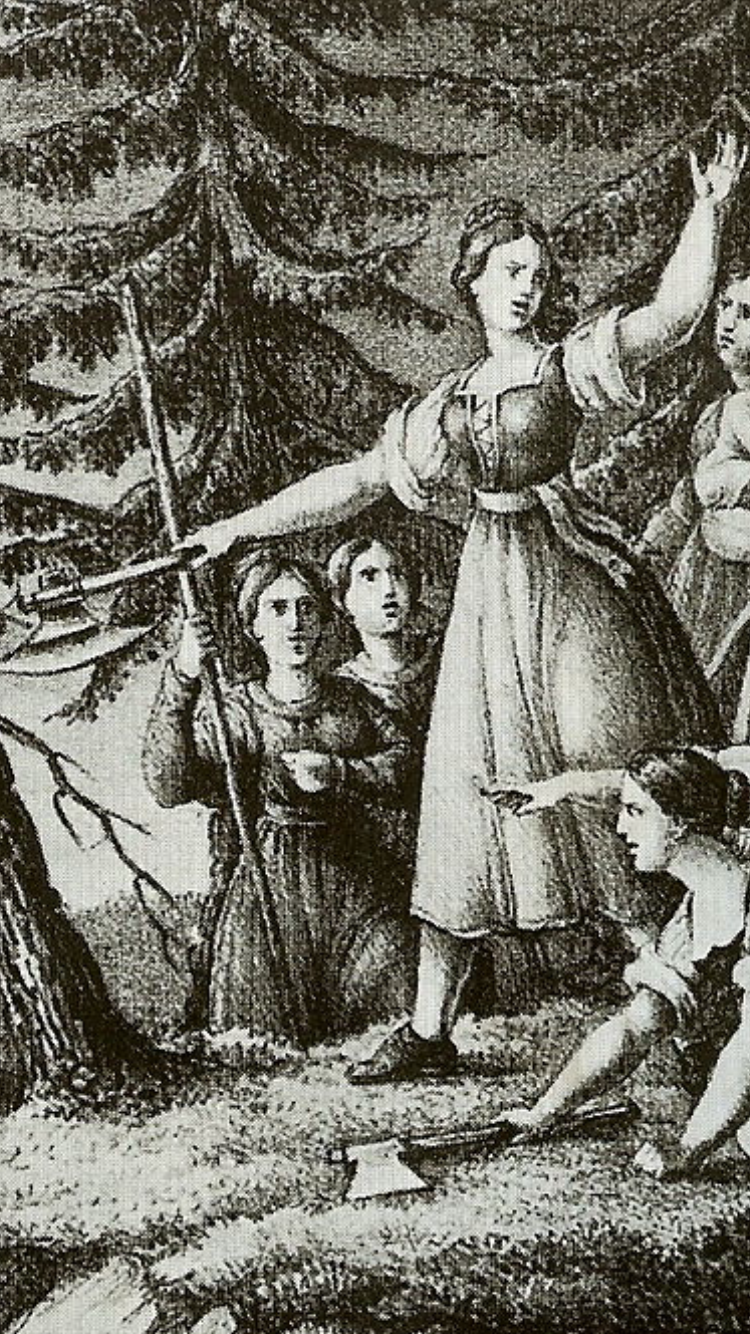
In the county of Småland in Southern Sweden, there is a legend about a brave Viking woman named Blenda.

According to legend, the menfolk of Småland were at war in Norway, leaving the women and children alone and defenceless. The Danes learned of this and chose this moment to invade and attack the region.  Blenda was a woman of noble descent and she decided to rally the hundreds of women from Albo, Konga, Kinnevald, Norrvidinge and Uppvidinge. The women armies assembled on the Brávellir, which according to Smålandish tradition is located in Värend.

The women approached the Danes and told them how much they were impressed with Danish men. They invited the men to a banquet and provided them with food and drink. After a long evening, the Danish warriors fell asleep and the women killed every single one of them with axes and staffs.

When the king returned, he bestowed new rights on the women. They acquired equal inheritance with their brothers and husbands, the right always to wear a belt around their waists as a sign of eternal vigilance and the right to beat the drum at weddings and to wear armour.

There have been various disputes about the validity of this legend, if and when it happened. One theory is that it happened around the year 500. At this time, female soldiers existed in Sweden. Called Shieldmaidens, three hundred are known to have fought during the great Battle of Bråvalla in 750. If you’ve seen the successful series ‘Vikings’, you will be familiar with these women.

Blenda is perhaps the first known woman in a long line of strong Swedish women who defend themselves from aggressors and contribute to better equal rights between the sexes.