Swedish icons 19: Nils Dardel

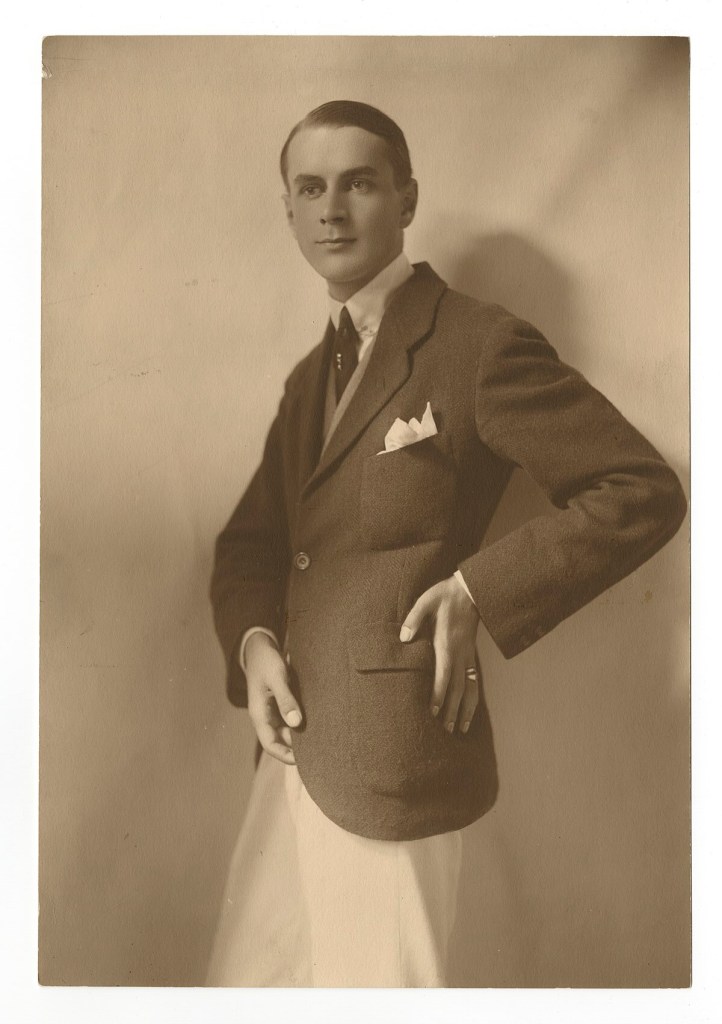
Nils von Dardel was born in 1888 in Bettna, Södermannland. He is considered one of Sweden’s most important post impressionist artists and his painting ‘Vattenfall’ is the most expensive modernistic Swedish painting ever to be sold at auction.

Born into a wealthy, cultural elite, Nils Dardel was able to spend his life as a nomad. On his travels around Europe, USA, Peru, Mexico, Asia, he painted people from varying backgrounds and all types of situations. He lived a self-destructive hedonistic lifestyle, which is apparent in several of his works , especially those from his pre-war burlesque Paris era.

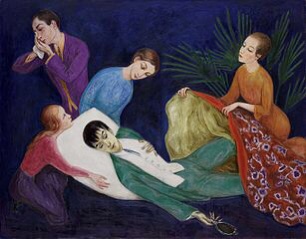
His paintings are often very colourful and depict eccentricity and ambiguous sexuality. One of his famous paintings is ‘The Dying Dandy’ which today hangs in Stockholm’s Modern Museum, and is perhaps one of the most recognisable pieces of art from Sweden. Some of his other paintings are today on display around Sweden as well as in Paris, Oslo and Hamburg.
For 12 years, Nils Dardel was married to painter and author Thora Dardel although, given his hectic and bohemian lifestyle, he had affairs with both men and women. Together, they had one child – Ingrid – also herself an artist. She, in turn, became mother to two contemporary and acclaimed artists Henry Unger and Nils Ekwall.

Nils Dardel died of a heart attack in 1953 in the artist hotel The Beaux Arts on 44th Street in New York. He is buried on the island of Ekerö outside Stockholm.

60 years ago – a momentous Swedish event

On this day, 60 years ago in 1961, something amazing happened in Stockholm’s harbour. This event would cast the Swedish people back 333 years and come to change the face of tourism in Scandinavia.

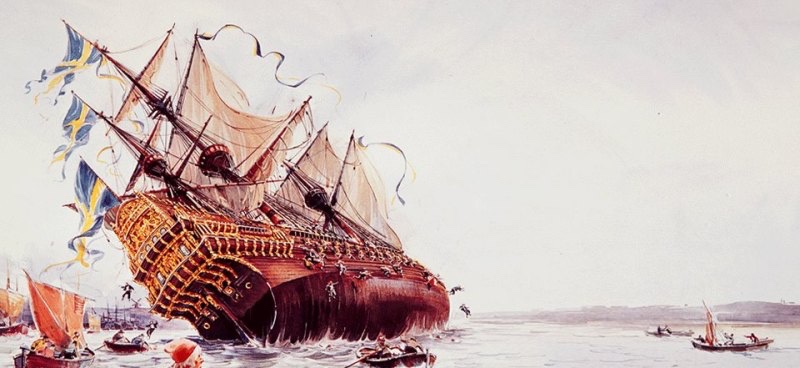
In 1626, a grand battleship was commissioned by King Gustav II Adolf. He was expanding his realm into the Baltic and wanted a battleship that would be beautiful, awe inspiring and armed to the teeth. When she was completed she was richly decorated, with bronze cannons and was one of the most powerfully armed vessels in the world. He called the ship the Vasa, after his grandfather.

However beautiful she was, the flagship Vasa was dangerously unstable, with too much weight in the upper structure of the hull. Despite her obvious lack of stability, she was sent on her maiden voyage in 1628, and after only a couple of minutes afloat, she sank to the bottom of the harbour. The King was of course livid, and after a long process, blame fell upon the ship’s designer Henrik Hybertsson. As he had been dead for a year, he couldn’t defend himself, and instead became a historic scapegoat. King Gustav II Adolf himself died 4 years later at the Battle of Lützen.

The Vasa’s bronze canons were salvaged in the 1700’s after which she was forgotten, left to her watery grave. But then, in 1956, her exact location was identified and 5 years later, on April 25th, she was raised to the surface.

The Vasa ship is the only 1600’s galleon in the world that has been salvaged in such good condition. The cold, dark, brackish waters of the Baltic meant that the wood did not rot, and the ship’s huge hull was almost completely preserved. Today, the fully-restored ship and its other contents, are displayed in an enormous museum in central Stockholm. It is the world’s best preserved 17th century ship and Scandinavia’s most visited museum. On the roof of the museum, the masts indicate how high the ship was on its day of launch.

When traveling is allowed again, and museums are reopened, you must visit Stockholm. When you’re here, your top cultural priority should be the Vasa Museum. You will be blown away by the sheer dimension of this boat and you too will be thrown back to a time when Sweden was a great military power to be reckoned with.

For more information, go to http://www.vasamuseet.se

Infidelity, despair and revenge – Swedish style

They say that revenge is best served cold, and nothing is colder than what the ‘Cuckold of Skeppsbron’ did in Stockholm.

As you walk along the road of Skeppsbron, you have the harbour and Baltic Sea on one side, and the historical houses of the Old Town on the other. When you approach number 44, take a look above the door and you’ll see a stone face sporting an exaggerated expression of despair. And below the grimace, if you look carefully, you’ll spot a carving of a vulva.

Legend has it that the face belongs to a wealthy merchant called Carl Smitt, who owned the building. He discovered that his wife had been cheating on him. In revenge, he had her genitalia sculpted and mounted on the wall, so that all the world would know her betrayal. Above her privates, he installed his own tormented face.

Wanting to add to her shame, he had the sculpture of his face designed so that on rainy days, the water would fall from his eyes like tears, splashing his wife’s genitalia below.

So revenge isn’t just best served cold. It’s also served in stone and lasts over many centuries.

Shakespeare in Sweden

Today 23 April is the anniversary of the death of William Shakespeare. The literary giant died this day in 1616, aged 52. Shakespeare was world-famous for his many plays and sonnets – one of his most noted works being based in Denmark. But what about Sweden’s relationship to the Bard of Avon?

The Swedes were initiated into the poetic musings of Shakespeare in 1592, but he didn’t gain popularity until some 150 years later. The first translation into Swedish came in 1813 and was of the macabre Macbeth. Today, Shakespeare is the second-most frequently produced playwright in Sweden. Not surprisingly August Strindberg is in first place. Romeo and Juliet seems to be the most popular play to produce, followed by Twelfth Night and Hamlet.

Three of my most memorable theatre experiences in Sweden were in fact Shakespeare. The first was at Drottningholm Palace Theatre outside of Stockholm. This amazing theatre, built in 1766 is the world’s oldest preserved theatre. Still in its original condition, with its original mechanical stage, it is a wonder to behold. In the lush gardens of the theatre I watched a performance of Macbeth – around Midsummer time. The Scandinavian blue lit background and the (luckily) balmy weather contributed to a magical evening.

The second experience was Richard III, starring the charismatic actor Rikard Wolff. The play was performed at Stockholm’s Stadsteater where we, the audience, sat in a rotating auditorium, like a fairground ride. As the play progressed, we spun around to witness scenes that were gruesome and beautiful in equal measure.

The most memorable, however, was when I was visiting the Ice Hotel in Jukkasjärvi in Swedish Lappland. The year I was there, they had built a replica of Shakespeare’s Globe Theatre completely in ice, on the edge of the Torneå river. Like the original, it was open to the heavens. There I sat, wrapped in thermal clothes in minus temperatures, on a block of ice covered in reindeer skin, and watched a performance of Hamlet in Sami. As the play progressed, the sky shifted colour and fat flakes of snow fell down onto the proceedings. It was one of the most remarkable and memorable experiences I’ve ever had. During the interval, we retreated to the ice bar, and drank vodka shots from ice glasses. A few months later and the theatre ceased to exist – it melted back into the river.

What is your most memorable experience of a Shakespeare performance?

Chinese in Sweden

Today, 20 April is Chinese Language Day. The day was inaugurated by the UN to celebrate the linguistic diversity of the organisation. The date was chosen to pay tribute to Cangjie, a mythical figure who is presumed to have invented the Chinese alphabet 5,000 years ago. According to legend, he had four eyes and the gods and ghosts cried and the sky rained millet after his invention.

The first documented Chinese person in Sweden arrived on a Swedish East Indian Company boat in 1786. His name was ‘Afock’ and he was considered so ‘exotic’ that he was given an audience with the King. According to Sweden’s Statistical Bureau, there are 45,868 Chinese-born people registered as living in Sweden today.

It wasn’t until the 1970’s/80’s that immigration from China to Europe became common, and many of those who initially arrived supported themselves by opening restaurants. The first Chinese restaurant in Sweden, called ‘The Chinese Wall’, opened however in 1959 in Gothenburg.

Today, there are many Chinese restaurants and several Chinese shops and supermarkets. Unlike many other cities, such as London, San Francisco, Singapore, New York, Stockholm does not have a ‘Chinatown’. Many Chinese people who move to Sweden now come to study, and continue to work, often in the IT and Tech sectors.

A few Chinese-inspired pieces of architecture exist in Sweden. Three in Stockholm are The China Theatre, built 1928, the Chinese Pavilion in Haga Park and the UNESCO listed Chinese Palace built in 1753 in the grounds of Drottningholm Palace.

Perhaps the most bizarre piece of architecture is Dragon Gate, a monstrous compound built by the motorway outside the small town of Älvkarleby. This is intended to be a cultural meeting place for Swedes and Chinese and includes a temple, a museum, a copy of the Terra-cotta Army, monuments, restaurant, hotel, kungfu school and a huge square. It has been an economic failure since its opening and today is closed.

A recent survey carried out by the Swedish Institute looked at Chinese attitudes to Swedes and Sweden. The survey focused on Chinese people living in China, and not those who emigrated. Various perceptions were that Swedes are obedient, relaxed, lazy and introvert. Sweden was perceived as rich, beautiful and clean but expensive, with high taxes and a depressing climate.

Interestingly, many Chinese confuse Sweden with Athens! The probable explanation is that Sweden in Madarin is Ruidian and Athens is Yadian.

21 ways to die in Swedish

Yesterday was the sombre funeral of Prince Philip in St George’s Chapel in Windsor, UK. In the House of Nobility in Stockholm, his coat of arms was also hung as he was a member of the noble Swedish Serafimer order.

All this got me thinking about the different ways you can describe somebody dying. In English, we have expressions like ‘bite the dust’, ‘pop your clogs’, ‘join the choir’, ‘go to meet your maker’, ‘kick the bucket’ and ‘shuffle off your mortal coil’. I wondered how many words or expressions there are in Swedish – and I found 21!

Att dö – to die

Att avlida – to die

Att gå ur tiden – literally to ’go out of time’

Att gå bort – to ’go away’

Att somna in – to ’sleep in’

Att trilla av pinn – to fall off the stick

Att stupa – to fall (often in battle)

Att gå i graven – to go to the grave

Att gå hädan – to go away

Att samlas till sina förfäder – to be gathered by your ancestors

Att ta ned skylten – to ‘take down the sign’

Att kola vippen – untranslatable, meaning to die

Att bita i gräset – to bite the grass

Att duka under – to go under

Att dra sitt sista andetag – to take your final breath

Att vinkla upp tofflorna – to point up your slippers

Att dra på sig träfracken – to put on your wooden suit

Att ge upp andan – to give up breathing

Att krepera – to die

Att lämna jordelivet – to leave this earthly life

Att kila vidare – to die, to ‘run onwards’

Can you think of any more expressions or words to add to this list?

Sweden’s Patrik Day

Today, 16 April, is Patrikdag – Patrik Day in Sweden. Not to be confused with the Irish St Patrick’s Day and nothing to do with partying, drinking and dancing.

No, this day is to with agriculture, and crops. In Sweden’s old agrarian society, spring was an intensive time. It was important to sow at the right moment in order to have a successful harvest. In the southern-most county of Skåne farming calendar, Patrik Day was marked as being the last day to sow. If it was too cold, and the ground too hard, then the tradition was to sow inside the barn. In other more northern parts, this was the absolute last day to begin ploughing the fields.

The name Patrik comes from the Swedish tradition of giving each day a name. Yesterday was Olivia, tomorrow is Elias. And today is Patrik Day.

Swedish icons 22: Carina Ari

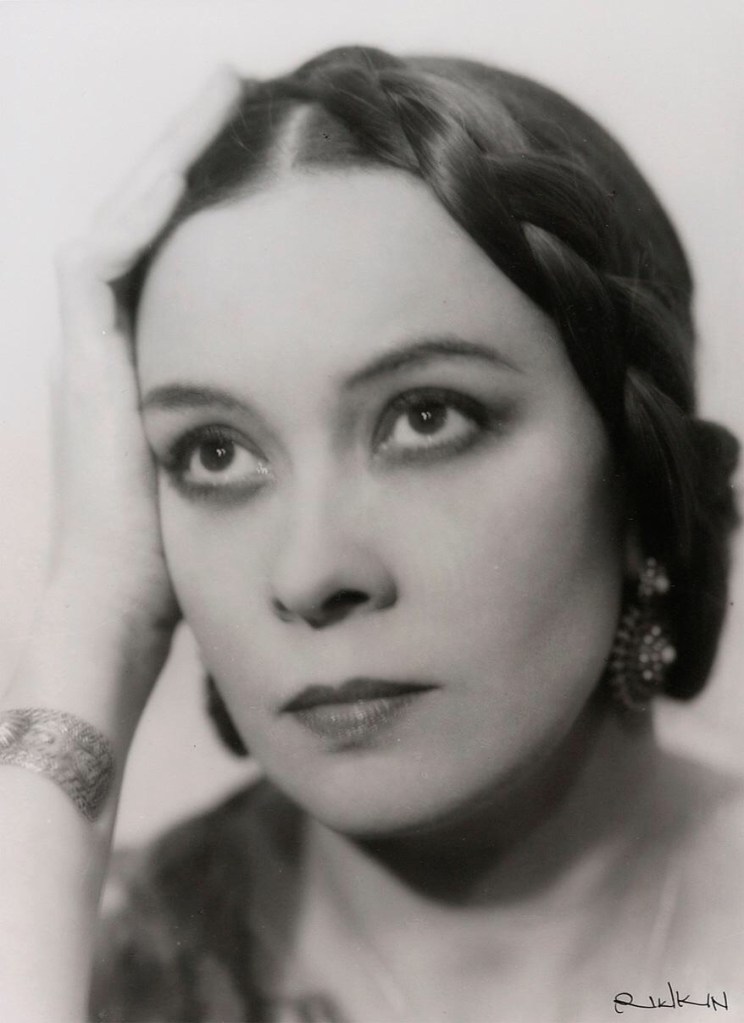
Carina Ari was born Maria Karina Viktoria Jansson in Stockholm in 1897. She went on to become one of Sweden’s most successful dancers and choreographers throughout history. For most Swedes, she may be unknown, but she certainly made a lasting mark on Swedish and international cultural life.

Carina Ari started dancing at a young age to support her infirm mother, who died when Ari was 16. Shortly afterwards, she was employed as a dancer at the Royal Theatre and within two years was promoted to solo dancer. During the 1920’s, she danced and choreographed many acclaimed performances in Stockholm, Copenhagen and in Paris for a variety of institutions and companies. In Paris, she was the prima ballerina at the controversial and experimental Swedish Ballet. In 1924, she toured Europe with her highly successful Scènes dansées. In 1927, she choreographed a much talked-about performance for the French President Loubet at the Élysée Palace. In 1930, she was appointed Director of Ballet at the Algiers Opera, where she created for many years before returning to the Opera Comique in Paris. During her active years, she was the darling of dance, a somewhat controversial prima donna and a sought-after choreographer. Married to French composer Désiré-Émile Inghelbrecht, they were a power couple on the cultural scene.

In the late 1930’s, mid divorce, Ari was holidaying in the south of France when she met, and fell in love with, a Dutch businessman. When the Second World War approached, they moved to Argentina, where they married and lived the rest of their lives. Upon his death, she inherited a great fortune and was able to maintain a residence in Stockholm and studio in Paris, both of which she frequently visited. In Argentina, she became a grand old dame, living a life of culture, entertainment and fine dining. She frequently visited the Teatro Colón and watched their dance performances. Although considered one of the best opera houses in the world, she was apparently vocally critical of the quality of their dancers.

As part of her legacy, the Carina Ari Foundation gives financial support to young, promising dancers and to older dancers who have fallen on hard times. On Holländargatan in Stockholm is the Carina Ari Library, which is the largest library of dance in Northern Europe. Additionally, the Carina Ari Medal is occasionally awarded to people who have contributed to the art of dance in Sweden.

However, her legacy is not only in dance. Carina Ari was also an accomplished sculptor. She specialized in portrait busts and some of her works are displayed at Sweden’s National Museum. Her bust of Birgit Nilsson is at the Opera House in Stockholm and her bust of Dag Hammarskjöld is located in New York in the square that bears his name.

Carina Ari died in 1970 in Buenos Aries after complications from breaking her leg, and is buried with her husband in Haarlem in the Netherlands.

French kiss, Irish coffee and Swedish fish!

There are many adjectives that include a nationality, such as French kiss, Danish pastry, Turkish bath, Spanish Flu, Mexican Wave, Brazilian Wax…..

How many such combinations are combined with the word Swedish? A quick look on line and I find the following five:

Swedish……meatballs

Swedish……massage

Swedish……Chef

Swedish……Bikini Team

Swedish……Fish

Can you think of any more to add to the list?

Gun salutes in the UK and Sweden

To mark the recent death of the UK’s Prince Philip, a 41-gun salute was held across Great Britain yesterday. For many, it seemed like an odd number. So, why 41?

In both the UK and Sweden, gun salutes mark special royal occasions and the number of rounds fired depends on the place and occasion. The basic salute in both countries is 21 rounds.

In the UK, however if fired from a royal park, an extra 20 rounds are added – making 41. At the Tower of London 62 rounds are fired on British royal anniversaries (the basic 21, plus a further 20 because the Tower is a Royal Palace and Fortress, plus another 21 for the City of London.)

The most shots have been given from the Tower when the late Duke of Edinburgh’s birthday (62 shots) coincided with the Queen’s official birthday (62 shots). This gave a total of an annoying 124 shots booming out over the city.

So, does Sweden always have 21 shots?

No, not always. When a Royal birth takes place and the infant is the firstborn to either the reigning monarch or to the heir to the throne, an extra 21 rounds (for a total of 42) are added to the normal salute. Additionally, 19-gun salutes are used for heads of government, cabinet ministers and ambassadors.

Another gun salute consists of two rapid gunshots only. This is used by the military and was fired to identify a Swedish ship entering a harbour or on the battle field to identify the Swedish troops. This signal is called the ‘Svensk Lösen’ – the Swedish Signal. This salute is today fired on special occasions, usually within the armed forces.

21-gun salutes in Sweden occur on:

  • 28 January – the King’s Name Day
  • 30 April – the King’s birthday
  • 6 June – Sweden’s National Day
  • 14 July – Crown Princess Victoria’s birthday
  • 8 August – Queen Silvia’s Name Day
  • 23 December – Queen Silvia’s birthday.

So, why is 21 standard?

Well, it originated in British maritime tradition. Historically, ships would fire 7 shots as they approached a foreign harbour. As ships usually had seven cannons on board, this was to show they had disarmed themselves and declare the vessel to be no threat on entry.

The military on land could store more gunpowder and therefore could reload their cannons more quickly. The tradition became that they would fire three shots for every one shot made at sea – hence 21 shots – as a sign of welcome and peace.

Interestingly in Sweden’s neighbouring country, Denmark, the gun salute given to majesties is 27. Could this be based on the same thinking? 3 x 9 shots?