A rainy Swedish summer

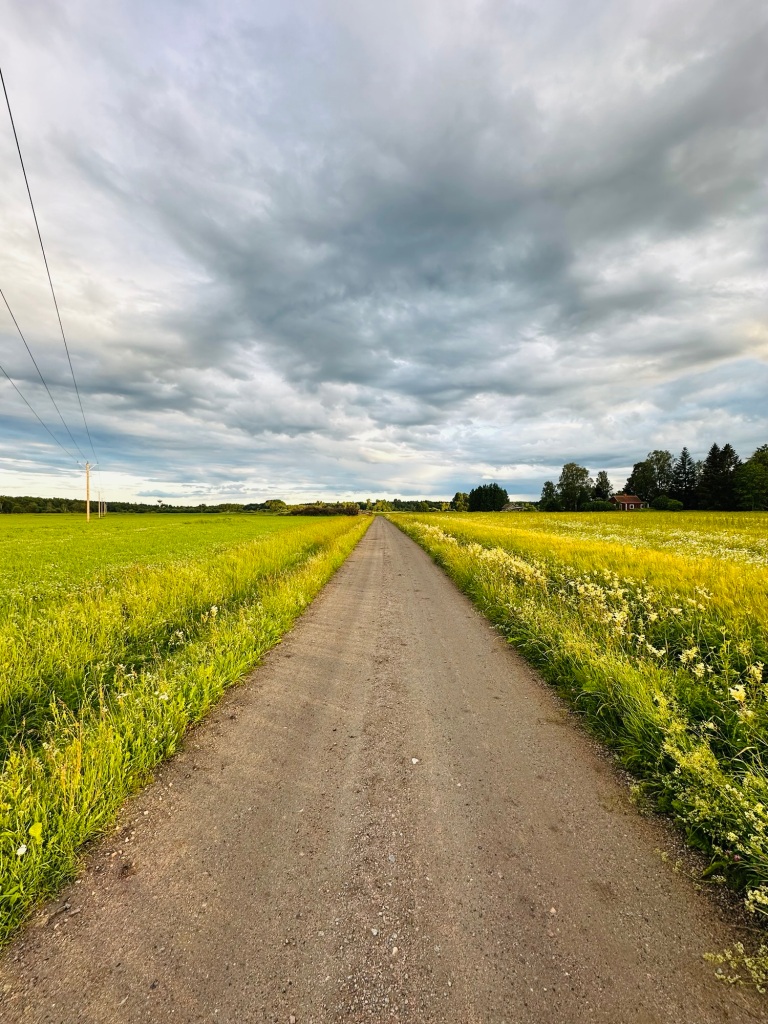
While Southern Europe is experiencing temperatures over 30-40 degrees, Sweden is undergoing a cold, rainy summer. The sun is forecast to arrive tomorrow to many parts of the country for a few days, followed by more rain.

I guess we shouldn’t be surprised. Rain is a characteristic of a typical Swedish summer. In fact, the two rainiest months of the year across much of the country are July and August. (February being the driest).

Ironically, these are also the months that most Swedes take their holidays – because of the warmer temperatures, the lighter days and the school system.

So there’s nothing to do but lie on the sofa and read books, or play card games around the kitchen table while the rain smatters the windows. Alternatively, put on your wellies and go for a wet walk. Or go to IKEA, or for a coffee somewhere nearby. And wait until the sun shows its face, albeit temporarily, in the Swedish summer sky.

The pagan origins of Sweden’s Midsummer celebrations

The long Midsummer weekend is drawing to a close in Sweden. Known as “Midsommar”, it is one of the most significant and widely celebrated holidays in the country. Its history blends ancient pagan traditions with later Christian influences and remains a vital part of Swedish cultural identity.

The origins of Midsummer in Sweden are rooted in pre-Christian solstice celebrations. Ancient peoples marked the summer solstice, the longest day of the year, with rituals to honour nature, fertility, and the sun. These rituals often involved dancing, feasting, and the lighting of bonfires, believed to ward off evil spirits and ensure a good harvest.

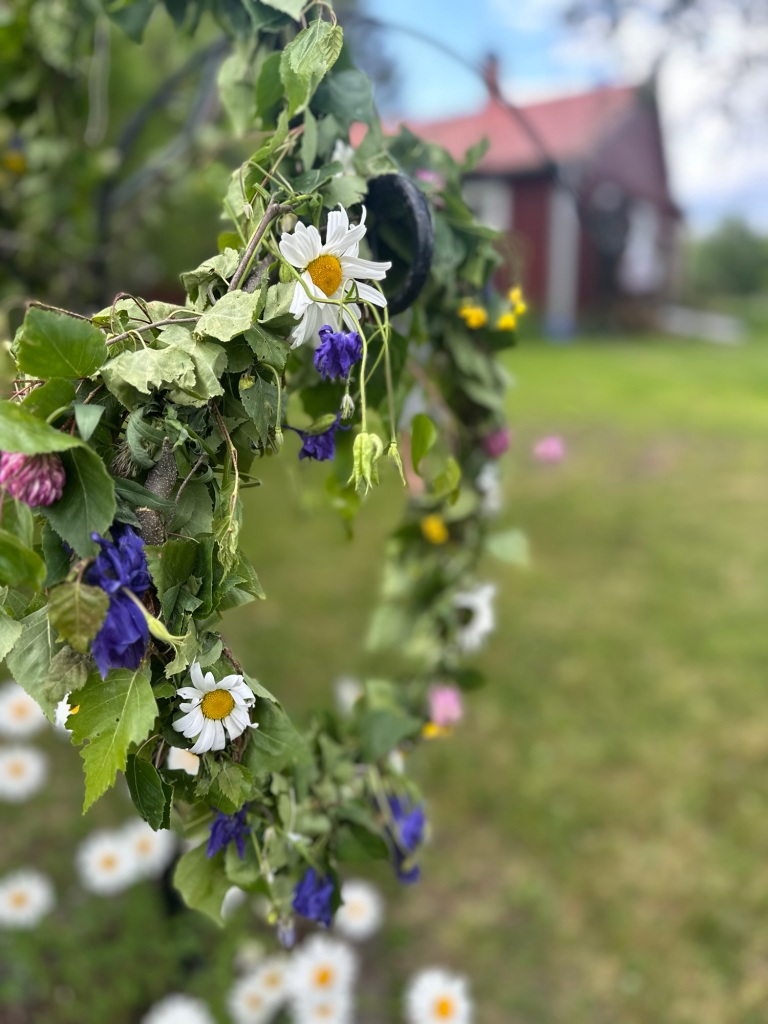
Flowers and greenery played an important role, symbolising fertility and the power of nature at its peak. It was also a time associated with magic and love, when people believed that plants had healing powers and that dreams could foretell the future—especially for young women seeking to glimpse their future husbands.

With the spread of Christianity in Scandinavia during the early Middle Ages, many pagan customs were adapted into the Christian calendar. The Church linked Midsummer celebrations to the feast of St John the Baptist, celebrated on 24 June. As a result, Swedish Midsummer traditionally falls around this date, although in modern times it is observed on the Friday between 19 and 25 June, followed by Midsummer Day on the Saturday.

Despite this Christian connection, the festival retained much of its pagan character, particularly the focus on nature and fertility, rather than religious observance.

Today, Midsummer remains the major secular celebration in Sweden. It marks the unofficial start of the summer holidays, when many Swedes leave cities for the countryside or their summer cottages (sommarstugor).

The festival is a strong symbol of national identity, with its emphasis on community, connection to nature, and timeless traditions. It is a day when Swedes of all ages participate in shared customs that span generations.

Swedish caviar – but not as you know it

kalleskaviarWhen you hear the word ‘caviar’, you probably get an instant picture in your head – a picture of jewelled fish eggs, vodka, champagne, Russia and luxuriousness.

Until you hear about Swedish caviar – or more specifically a popular Swedish fishy foodstuff called ‘Kalle’s kaviar’. The New York Times referred to it as ‘challenging the global gag reflex’.

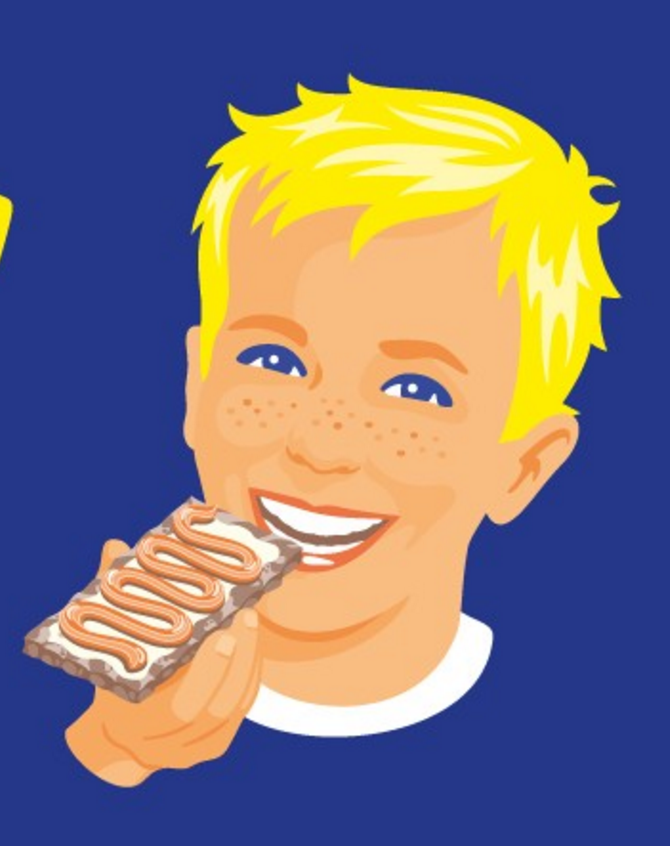
Kalle’s caviar comes in a tube, emblazened with the image of a blue-eyed, blonde-haired boy called Kalle. It hit the Swedish market in 1954, and has remained an extremely popular food since then. The tube contains smoked, sugar-salted cod and sik roe. It also contains lots of sugar, lots of salt, potato flakes and tomato purée. To eat it, one simply squeezes it from the tube, like toothpaste, onto an open sandwich usually containing boiled eggs. Kalle’s caviar is a fishy staple in the Swedish diet. It has a very pungent, extremely salty fishy taste.

It seems to be a divider amongst people. Some people love it, some people despise it. I would politely say that it’s an acquired taste. It certainly is a taste that has took me twenty years to acquire. When I first tasted it, I remember balking and questioning if it was even fit for human consumption. But now, I will happily squeeze the fishy stuff onto my boiled egg at breakfast time.

Sure, it’s caviar. But not as you know it.


Sweden – a peaceful society awash with violence

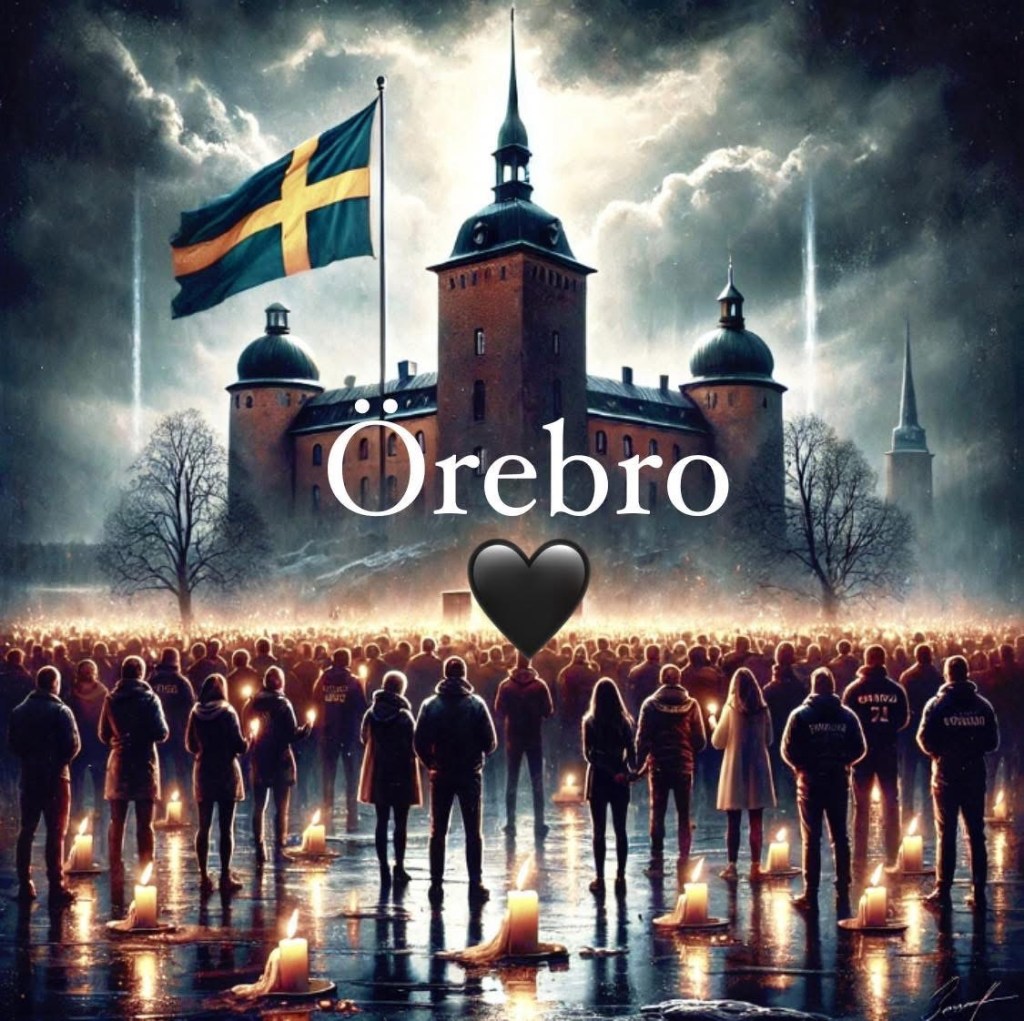
Yesterday in the town of Örebro in Sweden, 10 people were killed in a despicable school shooting. While this kind of attack is rare in Sweden, it follows a rapidly escalating period of terrible bombings, gang shootings and other hate crimes in society. In 2025, so far, there has been at least one crime of this type reported on the news every day.

Politicians, police and the population in general are devastated. It seems like authorities have lost control, and it is not easy to fix, as it has been going on a long time. However, it is resolvable – with the right strategies and the right investments.

I was curious on how AI might solve the problem, so I asked the question. And this is what I got. Definitely food for thought, and many good suggestions for concrete action.

Stopping a wave of shootings and bombings requires a multi-layered approach that addresses both immediate threats and the deeper causes of violence. Here are some key strategies:

1. Immediate Security Measures

• Increase Law Enforcement Presence: Deploy more police in high-risk areas to deter attacks.

• Improve Intelligence Gathering: Strengthen surveillance, monitoring of extremist groups, and cooperation between law enforcement agencies.

• Gun and Explosive Control: Tighten regulations on firearms, ammunition, and bomb-making materials.

2. Addressing Root Causes

• Social and Economic Programs: Address poverty, unemployment, and lack of opportunities that may push individuals toward violence.

• Education and Awareness: Promote education programs that counter radicalization and teach conflict resolution.

• Mental Health Support: Provide access to counseling and mental health services to identify and assist individuals at risk.

• De-radicalization Programs: Engage with communities to rehabilitate individuals influenced by extremist ideologies.

3. Political and Legal Reforms

• Strengthen Laws Against Violence: Enforce strict penalties for illegal weapons possession, terrorist activities, and hate crimes.

• Promote Dialogue and Mediation: Encourage political and community leaders to engage in discussions that prevent extremism and violence.

• Fight Corruption: Ensure law enforcement and government agencies operate transparently to maintain public trust.

4. Long-Term Cultural Shifts

• Promote Nonviolence and Tolerance: Through media, education, and religious institutions, promote peaceful coexistence.

• Strengthen Community Bonds: Encourage local communities to work together in preventing violence.

• Regulate Social Media Misinformation: Work with tech companies to prevent the spread of extremist propaganda.

A society that combines strong security measures with social reforms and long-term cultural changes has the best chance of stopping a wave of shootings and bombings.

Thirteenth Day in Sweden

Today, 6 January, is a national holiday in Sweden and in many places around the world. In Sweden, not a lot happens on this day – it is just another day off. If it lands on a weekend, the bank holiday is forfeited, unlike in many other countries where the following Monday is taken off in lieu.

So what does the 6 January celebrate?

In orthodox churches, the 6 January is celebrated as the day of Jesus’ birth.

In western Christianity, the 6 January notes the arrival of the three wise men (the magi) to Bethlehem to visit the baby Jesus in his cradle. These wise men are said to represent the three continents of Europe, Africa and Asia.

In Eastern Christianity, today celebrates the baptism of Jesus in the Jordan river and his manifestation to the world as the son of God.

January 6 also commemorates the legend of the Wedding at Cana, where Jesus exercised his divinity by turning water into wine.

Epiphany

In English, today is called Epiphany – which comes from the Greek word ἐπιφάνεια, epipháneia, meaning ‘manifestation’ or ‘appearance’. It is derived from the verb φαίνειν, phainein, meaning “to appear”. It signifies the day when Jesus first appeared to the Gentiles, in his cradle.

In the practical language of Swedish, there is no reference to manifesting or appearing. Today is given the name of Trettondag Jul (Thirteenth Day Yule) – literally thirteen days after Christmas Eve.

The ABC of Swedish town planning

ABC is a concept in Swedish town planning, said to have been minted by Stockholm city planner Sven Markelius around 1952. ABC refers to the approach of building a suburb where modern families have easy access to work, dwelling and services, such as shops. A stands for ‘arbete’ (work), B stands for ‘bostad’ (accommodation) and C stands for ‘centrum’ (center for services and shops).

ABC city planning was introduced mid 1950’s and it expanded suburban Stockholm to the north and south. This growth was spurred on by the influx of people to the capital after the Second World War, and the severe shortage of accommodation.

In the original development plan from 1952, Markelius suggests that blocks of flats should be constructed within 450m of the centre, small houses should be built within 900m of the centre and light industry 600m from the centre. Everything should be built compactly in order to facilitate daily life for its 16000 residents. An underground system would connect the ABC suburb to the rest of the city and Stockholm’s downtown.

If you’d like to visit an ABC suburb, the two that are mostly still in tact are Vällingby to the north of Stockholm, and Farsta to the south.

Sweden at the Olympics

Yesterday, Sweden won its first medal at the Paris Olympics – a bronze in Judo.

For a relatively small country, Sweden often does quite well at the Olympics. In the 2020 Tokyo games, 9 medals were won. The most medals Sweden has ever won was in 1912 in Stockholm and 1920 in Antwerp where the athletes won a staggering 64 medals, each time. In London in 1944, a neat 44 medals were won.

Sweden is one of the 14 original countries to participate in the modern Olympics since its beginning in 1896, and has participated every time since then. The one exception is 1904 in St Louis.

The most successful Swedish summer Olympian of all time is Gert Fredriksson, a canoeist who has won 6 gold medals. In the world, the most gold medals have gone to swimmer Michael Phelps who has won a staggering 23 golds! The next best are Russian gymnast Larisa Latynina, Finnish runner Paavo Nurmi and Americans Carl Lewis and Mark Spitz, each with 9 gold medals.

From a historical country perspective, the USA has the most gold medals: a total of 1,179, according to the Olympic Foundation. Following is the now-disbanded Soviet Union, with 473 gold medals.  Germany takes third, with 342 gold medals. 

Great Britain, France, Italy, China, Sweden and Norway have all won more than 200 gold medals apiece, according to the Olympic Foundation.

This year in Paris, Sweden is realistically hoping to bring home 12 medals, in disciplines such as pole vault, discus, swimming, dressage, volleyball, handball, and sailing.

The judo bronze was unexpected – so let’s see what other surprises Paris might bring.

The cultural diversity of the tea cake

Ever seen those cakes that are whipped meringue domes, or peaks, coated with a thin, crisp layer of chocolate? Sometimes with a biscuit base, sometimes not? In Swedish, if they have a biscuit bottom, they are called ‘mums-mums’. Without the biscuit bottoms they can be called ‘chokladbollar’.

If you’re Swedish, I am about to blow your mind! Those little chocolate domes are, in Scotland, called tea cakes!

In Sweden, a tea cake is something quite different. It is a kind of sweetened bread bun made with wheat and milk. It is often used to make ham or cheese sandwiches.

But the disagreement on what a tea cake doesn’t end there. In England, a tea cake is also something else. Although there are regional differences, it is generally a soft yeast-based bun, filled with dried fruits, such as sultanas, and eaten toasted with melted butter.

In USA, a tea cake is, yet again, something else. It is a large, hard cookie made from wheat and sugar. In Russia, it is also a cookie – but containing nuts.

In Ireland, a tea cake is a fluffy butter cake, as it in Australia – although there it is often flavoured with, eg, cinnamon, and apple.

Who knew that the humble tea cake could present so much diversity? One thing they have in common though, is that they are traditionally enjoyed as a sweet accompaniment to a cup of tea. Apart from the Swedish one that is- which is sandwich bread to probably enjoy with a cup of coffee.

NATO – an extraordinary day in Sweden’s history

So Sweden is now an official member of NATO, the military defense alliance.

As the 32nd country to join the alliance, Sweden will be protected under Article 5 – the ultimate guarantee of allie’s freedom and security.

To the outside world, this might not be that significant. But for Sweden, March 7th 2024 is a day that will be recorded as one of the most momentous in history.

By becoming a member of NATO, Sweden ends over 200 years of official non alignment. This neutrality stretched back to the Napoleonic wars.

Sweden joining NATO was inconceivable just over two years ago, and the Swedish population had little appetite to join a military alliance.

The country remained neutral in both World Wars but when Russian troops began marching toward Kyiv in February 2022, Sweden – and neighbour Finland – became alert to the threat Moscow could pose to nearby countries outside the alliance.

And everything changed.

Finland joined NATO in April 2023, and Sweden, after lots of head-butting with Turkey and Hungary, formally joined yesterday.

It is currently unknown how the membership will affect the lives of Swedes. Hopefully, not noticeably.

But it was very apparent on Tuesday when two American bomb planes, B52 and B1B, flew at a low altitude over central Stockholm – that things have changed in this formally-neutral country in the north.

Thirteenth Day in Sweden

Today, 6 January, is a national holiday in Sweden and in many places around the world. In Sweden, not a lot happens on this day – it is just another day off. If it lands on a weekend, as it does this year, the bank holiday is forfeited, unlike in many other countries where the following Monday is taken off in lieu.

So what does the 6 January celebrate?

In orthodox churches, the 6 January is celebrated as the day of Jesus’ birth.

In western Christianity, the 6 January notes the arrival of the three wise men (the magi) to Bethlehem to visit the baby Jesus in his cradle. These wise men are said to represent the three continents of Europe, Africa and Asia.

In Eastern Christianity, today celebrates the baptism of Jesus in the Jordan river and his manifestation to the world as the son of God.

January 6 also commemorates the legend of the Wedding at Cana, where Jesus exercised his divinity by turning water into wine.

Epiphany

In English, today is called Epiphany – which comes from the Greek word ἐπιφάνεια, epipháneia, meaning ‘manifestation’ or ‘appearance’. It is derived from the verb φαίνειν, phainein, meaning “to appear”. It signifies the day when Jesus first appeared to the Gentiles, in his cradle.

In the practical language of Swedish, there is no reference to manifesting or appearing. Today is given the practical name of Trettondag Jul (Thirteenth Day Yule) – literally thirteen days after Christmas Eve.