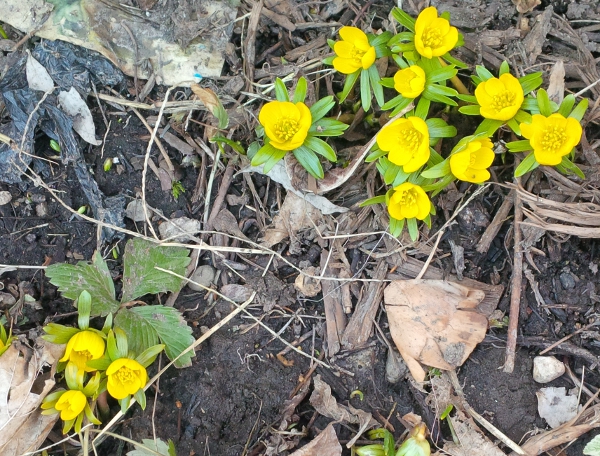
… you start posting photos of flowers popping up in flower beds or buds on trees because you’re so happy spring is finally here.
Neil Shipley on Swedish culture – the strange, the special and the sublime
… you start posting photos of flowers popping up in flower beds or buds on trees because you’re so happy spring is finally here.

All over the world. the franchised talent shows ‘Country’s got talent’ and ‘X Factor’ unveil contestants with surprising talents. We all know about Paul Potts, Susan Boyle and recently the fantastic Sam Bailey in the UK, who caused a storm when they opened their mouths and sang. This storm was mostly caused by the contradiction of their appearances and their incredible singing capabilities. The same applied to America’s Got Talent’s sweet singing, musical goth by the name of Andrew de Leon.
What about Sweden then? The current series of ‘Talang’ has shown a breadth of skill and inventiveness but I’ve felt, in comparison to the UK and the USA, it’s all a bit amateur. Until last night. Up on the stage walked Glenn Edell,a seemingly shy unemployed father. He stood on the stage, shaking and opened his mouth to sing. And he proved that Sweden’s got talent.
Still, the surprise factor was lacking a little. Compare it to this fantastic 8 year old Norwegian girl Angelina Jordan who recently blew audiences away with her bluesy, jazz voice. She’s so good, you almost suspect foul play.
So, Sweden does got some talent. But does Norway got more?
I was in Vienna at a wedding this weekend and mingled with the other guests. When they found out I lived in Sweden, they wanted to talk about Stockholm and Swedish people. They were very pleasant and what was interesting is how stereotypes persist. Amongst other stereotypes, they thought Swedes were reserved and formal. When I explained that maybe some are but it’s not the case entirely,they actually looked sceptical.
This is the funny thing about stereotypes – they’re often outdated and almost always wrong. How can a single characteristic be applied to 9,000,000 Swedes, or 70 million Brits, and still be accurate? Stereotypes can be fun to talk about but if we start believing them, we’re in trouble. Instead, let’s look at the individual to form our perceptions of that person (understanding we can still be wrong) and try to avoid sweeping condemnations of the collective. I think we’ll get a lot further in our cultural sensitivity that way.
A promo film on all that is good about Stockholm has created an internet storm. Really informative, and entertaining. Check it out.

The image of the healthy, well-trained Swede has found support in some research from the Europabarometer released recently.
According to this research, ‘41% of Europeans exercise or play sport at least once a week, while an important proportion of EU citizens (59%) never or seldom do so.’
Generally speaking, ”citizens in the Northern part of the EU are the most physically active. The proportion that exercises or plays sport at least once a week is 70% in Sweden, 68% in Denmark, 66% in Finland, 58% in the Netherlands and 54% in Luxembourg. The lowest levels of participation are clustered in the Southern EU Member States. Most respondents who never exercise or play sport can be found in Bulgaria (78%), Malta (75%), Portugal (64%), Romania (60%) and Italy (60%).”
So, Sweden tops this research at 70% of interviewees saying the exercise at least once a week, closely followed by Denmark and Finland. Why might this be? Why could there be such a difference between Scandinavian countries and the Southern European countries?
I think a major contributing factor is values. We all know that values differ from group to group , and that those values often determine the desired behaviours of the people.
According to the respected ‘World Values Survey’, in Scandinavia, and in Sweden especially, a strong value is self-actualisation, or self-realisation. In other words, we as individuals have the right to be who we want to be, live how we want to live, think what we want to think and make the most of ourselves in the way we choose.
While other countries, such as Bulgaria and Romania, are focusing on how to survive the day, many Swedes are focusing on self-development, education, environmentalism and, not least, physical appearance and health.
So that Sweden comes out top in this research is not surprising. In Sweden, most of the serious ‘survival problems’ of life have already been solved, allowing many citizens to focus on other things.
Such as themselves.
If you’re interested in reading more about the research, find it here.
Please like and share this blog
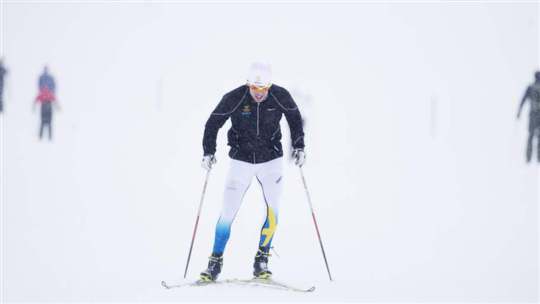
When watching the aftermath of the long-distance skiing on the TV, one of the participating in skiers described the track as difficult. A lot of snow had suddenly come and the interviewee described it as ‘kräksnö’. Directly translated this means ‘vomit snow’ – big flakes that dump into piles on the floor.
What is it with the Swedish fascination for creating emphasis by adding disgusting words to other words???
Other examples are:
– ‘Snordyrt’ – Snot expensive
– ‘Asfult’ – Cadavre ugly
– ‘Skitroligt’ – Shit fun
– ‘Knullrufs‘ – Fuck hair
– ‘Kukjävel’ – Cock idiot
– ‘Fisförnäm‘ – Fart noble (snobby)
And you thought Swedes were politely spoken?!
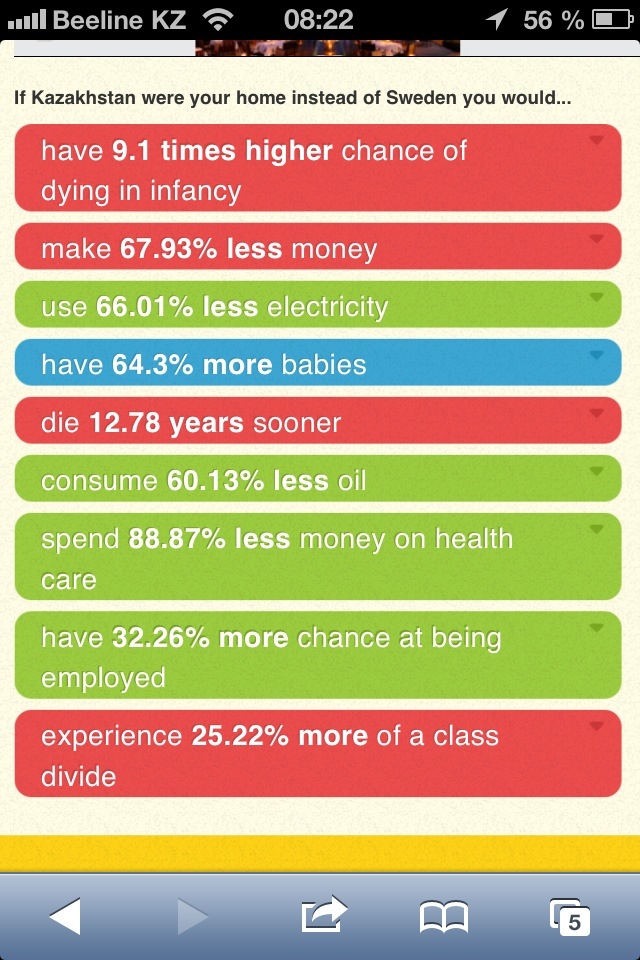
Am currently in Kazakhstan, a country worlds away from Sweden. The 8th largest country in the world, Kazakhstan is the largest land-locked nation of the globe. And home to Borat. The feeling here is a mix of Chinese, Russian, Mongolian and Central Asian. The contrasts between rich and poor, old and new, traditional, contemporary and Soviet are stark. And right now, it’s cold. Minus 10 degrees and snowy, the mountains tower above the former capital of Almaty and host a wide range of winter sports. Although there’s snow, you couldn’t feel further away from Sweden here. And that, for me, is part of the joy of travelling -stepping outside of our daily routines, comparing differences and appreciating both them and what we have in our own lives.
A visiting friend of mine from Austria was walking in Stockholm taking in the sights. When I met her later that day, I asked what her biggest impression was. And her answer surprised me. It wasn’t about the beautiful buildings, the amount of water or the narrow streets. No, she said the following:
‘Well, the men really like their hair gel here don’t they’.
She was struck by the fact that the men on the street were pimped up, groomed and well styled. She perceived this as vanity.
It reminds me of a joke once told to me:
‘Why do Swedes always go outside when there’s lightning?’
‘Because they think someone’s taking a picture of them’
Are Swedes more vain than other nationalities?
What do you think?

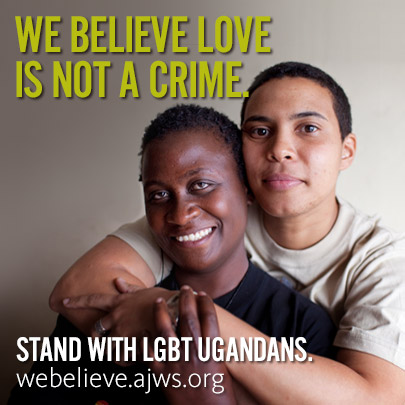
This is a human rights challenge!!
Sweden prides itself on being a democracy that believes in equality and human rights. It is the Swedish brand, the Swedish identity and the Swedish discourse. Part of this self-image is embodied in the large amount of overseas aid Sweden provides to developing countries or nations in need. Rarely disputed, this money is taken as a natural redistribution of Swedish tax payers money in the name of solidarity and humanism.
In a true democracy, Swedish citizens, which I have become, should have a right to influence how this tax money-funded aid is divided and where it goes. In the light of this, I want to take a stand. A stand for humanism, for human rights and against one current Swedish aid policy.
I am talking about Uganda. Earlier this week, the Ugandan President signed a vile law outlawing homosexuality. The draconian law increases penalties for homosexual acts, including life imprisonment for ‘aggravated homosexuality’. One Ugandan politician justifed the law by saying that in fact they are being tolerant (as requested by the Pope) because ‘at least we are not massacring them’.
It might be convenient for us to look at Uganda and think that their laws don’t affect us. But it’s when the rights of minorities or the disenfranchised are at risk that we must stand up. Nobody is protected until we are all protected equally under the law. And one way for a nation to speak up is via aid programs.
Sweden provides 250 million Swedish kronor to Uganda in aid. Of that amount, approximately 85 million goes directly to the government – the same government that just signed the anti-gay law. Denmark and Norway have redirected its aid in protest of this new law but the Swedish government refuses to do so. They want to observe the situation first and see what happens. This weird neutrality, for me, contradicts directly with the Swedish brand of human rights and equality. I wonder if the Ugandan law had been targeted at Jews, white people or at a specific tribal group, if the Swedish government had reacted differently?
As a tax payer in Sweden, I do not support aid being provided to Uganda. I demand that the Swedish government redirects the aid currently donated to the Uganda government.
I encourage everyone write to Aid Minister Hillevi Engström – hillevi.engstrom@regeringskansliet.se or call her on 08-405 10 00 and demand an immediate redirection of aid from Uganda.
Also mail The Foreign office on utrikesdepartementet.registrator@regeringskansliet.se
Or why not the Foreign Minister Carl Bildt on carl.bildt@regeringskansliet.se
Please spread this blog onwards! Please share!!
Today, 24th February is ‘Sverigefinnarnas’ Day, the day that celebrates the roughly half million Finnish-speaking people who live in Sweden. According to Wikipedia:
”Sweden Finns (ruotsinsuomalaiset in Finnish, sverigefinnar in Swedish) are post-World War II immigrants of Finnish origin, and their descendants, living in Sweden, some of whom still speak Finnish in addition to Swedish. In 2012 there were about 426 000 people in Sweden, 4.46 percent of the total population, who were either born in Finland or had at least one parent who was born in Finland.[2] But since only the country of birth is registered in Sweden, not ethnicity or language, a considerable number of those registered as being of Finnish origin are actually of Finland-Swedish descent. According to “Finlandssvenskarnas Riksförbund i Sverige”, the national organisation for Finland-Swedes living in Sweden, around 20% of all people of Finnish origin who live in Sweden are Finland-Swedes, and were thus Swedish-speakers even before emigrating to Sweden.[3]
In the 1940s, 70,000 young Finnish children were evacuated from Finland to Sweden during the Winter War and the Continuation War. 15,000 are believed to have stayed and an unknown number to have returned as adults.
In the 1950s and 1960s the migration from Finland to Sweden was considerable, chiefly due to economic differences between the countries, as a result of Sweden not being involved in World War II and helped by the Nordic Passport Union. The emigration caused some alarm in Finland with most of the emigrants in their most productive age — although many of them returned to Finland in the following decades. Many of the Finns who have moved to Sweden have been Finland-Swedes (i.e. from the Swedish-speaking areas of Finland): In the 1950s they made up around 50% of the Finns moving to Sweden, and from the 1960s and onward around 20-30%. (Thus, the fact that a person in Sweden has a Finnish background does not automatically mean he or she has a Finnish-speaking background.)
The city of Eskilstuna, Södermanland, is one of the most heavily populated Sweden Finnish cities of Sweden, due to migration from Finland, during the 1950s until the 1970s, due to Eskilstuna’s large number of industries. In Eskilstuna, the Finnish-speaking minority have both a private school (the only one in the city of Eskilstuna, there is no public school or teachers in Finnish at the public schools. Only the lower level is in Finnish, upper level is in Swedish) and only one magazine in Finnish. Some of the municipal administration is also available in Finnish.

The unofficial flag

Areas with Finnish-speaking population in per cent, in southern Sweden, 2005
In the Finnish mindset, the term “Sweden Finns” (ruotsinsuomalaiset) is first and foremost directed at these immigrants and their offspring, who at the end of the 20th century numbered almost 200,000 first-generation immigrants, and about 250,000 second-generation immigrants. Of these some 250,000 are estimated to use Finnish in their daily lives,and 100,000 remain citizens of Finland. This usage isn’t quite embraced in Sweden. According to the latest research by Radio of Sweden (Sveriges Radio), there are almost 470,000 people who speak or understand Finnish or Meänkieli, which is about 5.2% of the population of Sweden.
In the Swedish mindset, the term “Sweden Finns” historically denominated primarily the (previously) un-assimilated indigenous minority of ethnic Finns who ended up on the “right” side of the border when Sweden was partitioned in 1809, after the Finnish War, and the Russian Grand Duchy of Finland was created. These Finnish-speaking Swedes are chiefly categorized as either Tornedalians originating at the Finnish–Swedish border in the far north, or skogsfinnar (“forest Finns”) along the Norwegian–Swedish border in Central Sweden.”
 Watching the Swedes