‘Why is Sweden so dull?’


I’m just home from a business trip to India, where I worked with groups of people in Delhi and in Chennai. They worked with Swedes in a remote team and many had actually been to Sweden. I started my session by asking them what they would like to know about Swedes and Sweden. Their requests were interesting. 

Apart from the usual work-related questions, there were other questions which reveal a lot about how Sweden might be perceived by others. Here are some of their comments:                                       

    
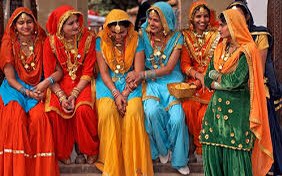
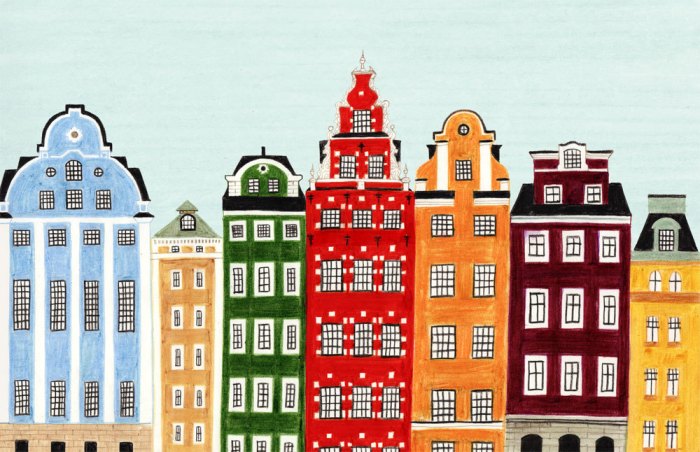
‘Why is Sweden so uncolourful and dull?’

‘Why is Swedish food so bland?’

‘Why are Swedes not interested in us?’

‘They focus so much on their work-life balance. Why don’t they care about ours?’

‘How do they survive the cold weather?’

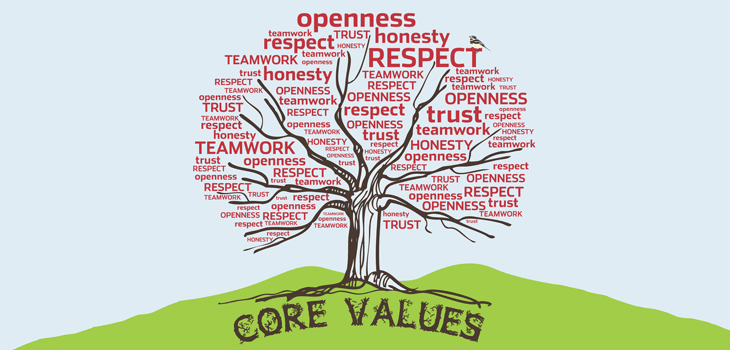
‘Because they are not religious, where do they get their values from?’

‘Why are Swedes so lonely?’

The debate over Swedish values


Every summer in Sweden, there is a politics week held on the Baltic island of Gotland. Over 8 days, each of the main political parties gets a chance to promote their agenda. This year, there has been a lot of talk about Swedish values, which in turn has started a debate about what are Swedish values and if they even exist. 

If we are looking for values that are exclusive to Sweden, the answer is no. If however we are looking for values that are prioritised in Sweden and function as a way to move society forward then, yes, they do exist. It is a matter of definition.  They may not apply to every Swede, but researchers have seen clear values in Swedish society that, while not unique to Sweden, are very strong. 

There has been a lot of talk about values of equality and tolerance. These values have been strong in Swedish society in the past and have enabled the welfare state, the laws and the political systems we enjoy today. 

According to the World Values Survey, which is a credible and extensive body of research that looks into what values drive society, there are two main value sets that separate Sweden from many other countries in the world. Those values are so-called secular/rational values and values of self expression/self actualisation.

Secular/rational values. In other words, the importance of the church and religion has deminished in Swedish society, religion and politics are separated, traditional family structures exist side by side with less traditional structures. Decisions are made ‘rationally’ and not based on scripture or a religious morality. This is very different from most places around the world.

Self expression/actualisation. The right and the need to say what one thinks is a strong driver in Swedish society. The right to your own opinion, your own perspective and to live the life of your own choice are considered undeniable human rights. This is different from many other places around the world. 

Many behaviours we see in society, in families and in the work place can be traced to these underlying driving values in Swedish society. 

The danger in discussing Swedish values lies in the belief that these are static and fixed. As society changes, so do the prevailing values. As the world around us changes, so do the values. As the environment is impacted, as war and crisis occur, values change. 

When political parties want to reinforce Swedish values, they are romanticising and simplifying. This is dangerous rhetoric as they are wilfully and deliberately using values to exclude. 

Breakfasting under Brexit


Currently in the UK watching the Brits instead of the Swedes. At breakfast this morning I reflected over the Brexit referendum that takes place tomorrow, the day I make my exit back to Scandinavia. I can’t vote in this referendum, even though I’m British, because I’ve lived abroad for more than 15 years. I might not have the right to vote but I do have the right to my opinion. 

Many Brits are truly confused over this. It seems like the arguments are contradictory and vague. Both the remain side and the leave side are using propaganda scare tactics to clinch the vote. False information abounds, unrealistic statistics and outright lies are published in the newspapers. Celebrities are publicly coming out on both sides of the campaign. 

What this referendum seems to be about, for those wanting to leave,  is simply immigration. Fuelled by racist politicians and nationalistic media, the message is ‘make Britain great again’. There is a clear sense of victimisation amongst some people – poor Britain brought to its knees by the evil EU. (When in fact Britain is highly respected and has a powerful voice in the EU). Old conflicts bubble to the surface – Britain won two world wars and now they are cow towing to the Germans and Angela Merkel. And there is a constant fear of being under attack and overrun by refugees queuing up on the other side of the Channel. 

I get that people feel disenchanted with the EU and not in control of their own lives. In my mind that has to do with the policies of the UK and less to do with the EU. If you elect David Cameron as PM, you get his cost-cutting, welfare-slashing, begrudging cynical policies. 

There is no denying that the UK has serious problems. It saddens me to see that there are significant rifts in society, between the remains and the leaves, the Scots and the English, the rich and the poor, the working and the unemployed, the ethnic Brits and the immigrants. Britain is not embracing its changing identity and instead is feeling a strong sense of loss. And the insecurity and frustration this causes makes people look to the past to the halcyon days of the British empire, when ‘things were better’.  But this is an irretrievable illusion, a fantasy. We need to deal with the here and now, and Britain has a lot of healing to do. 

With Brexit, we can debate about economy, trade, freedom of movement, peace, immigration, taxation but the bottom line is a philosophical one. Do you want to live in a country that looks to the past, that isolates itself and looks inwards? Or do you want to live in a country that looks to the future, cooperates with others and looks outwards? For me it’s a no brainer. The EU has its flaws, but it’s better to be a part of it to be able to influence and improve it. 

If I could vote, I would proudly vote to REMAIN. 

What do Shakespeare, the 1st of May and immigrants have in common?

Shakespeare_2888800b

Today is May 1st 2016, celebrated in Sweden as in many other countries, with demonstrations, political speeches and parades. Most political parties, including the fascist party, have rallies and gatherings. One of the hot topics this year is immigration and the large increase of asylum seekers that have arrived in Sweden during the recent months. For some people in Sweden, these immigrants are a positive addition to Swedish society. For others the influx of immigrants is unwelcome, a problem that is perceived to bring with it social and societal disruption.

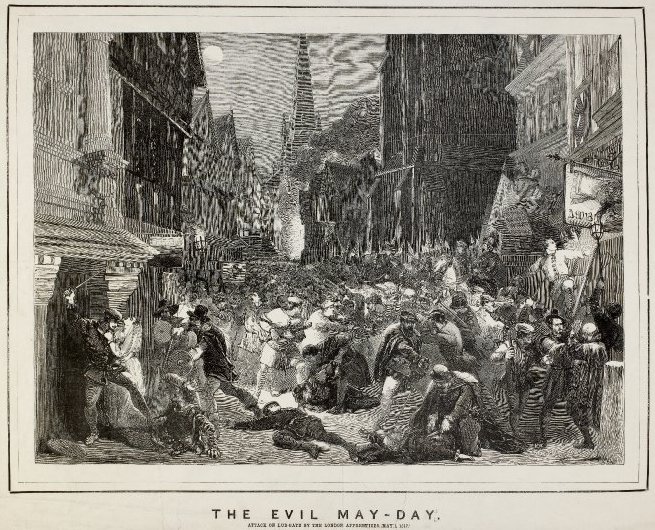
Reflecting over this situation, I hear echoes of something that happened in London on May 1st, 1517 – almost exactly 500 years ago – something known as ‘Evil May Day’.

During this period ín history, the reign of Henry the Eighth, Londoners were feeling unhappy with their situation. There was a great deal of misery, poverty and disease. As a consequence, they came to resent the presence of foreigners in the city, especially those seen to have money.  An inflammatory xenophobic speech had been made at Easter calling on all “Englishmen to cherish and defend themselves, and to hurt and grieve aliens for the common weal’.  Over the following two weeks there were sporadic attacks on foreigners and immigrants. On May Day 1517, it culminated, and a mob of thugs, liberated prisoners and others took to the streets and attacked foreigners and looted their homes. The under-sheriff at the time, the legendary Thomas More, tried unsuccessfully to dissuade them. Nobody was killed but several were arrested and charged with treason. Referring to the events of this day, William Shakespeare, many years later, wrote a text depicting the speech that Thomas More delivered to the rioters.

The voice of Shakespeare, who died 400 years ago last week, resonates through this text. The fascinating thing about it is that it is as relevant today as it was 400 years ago. This saddens me. The same forces at action centuries ago, are still in action today. This should be a reminder to all of us to be vigilant. Not everything, it seems, does change with time.

Here’s the text:

‘A Plea on behalf of Immigrants’ by William Shakespeare

Grant them removed, and grant that this your noise
Hath chid down all the majesty of England;
Imagine that you see the wretched strangers,
Their babies at their backs and their poor luggage,
Plodding to the ports and coasts for transportation,
And that you sit as kings in your desires,
Authority quite silent by your brawl,
And you in ruff of your opinions clothed;
What had you got? I’ll tell you: you had taught
How insolence and strong hand should prevail,
How order should be quelled; and by this pattern
Not one of you should live an aged man,
For other ruffians, as their fancies wrought,
With self same hand, self reasons, and self right,
Would shark on you, and men like ravenous fishes
Would feed on one another.

You’ll put down strangers,
Kill them, cut their throats, possess their houses,
And lead the majesty of law in line
To slip him like a hound.
Alas, alas! Say now the king
Should so much come too short of your great trespass
As but to banish you, whether would you go?
What country, by the nature of your error,
Should give you harbour? go you to France or Flanders,
To any German province, to Spain or Portugal,
Nay, any where that not adheres to England,
Why, you must needs be strangers: would you be pleased
To find a nation of such barbarous temper,
That, breaking out in hideous violence,
Would not afford you an abode on earth,
Whet their detested knives against your throats,
Spurn you like dogs, and like as if that God
Owed not nor made not you, nor that the claimants
Were not all appropriate to your comforts,
But chartered unto them, what would you think
To be thus used? this is the strangers case;
And this your mountainish inhumanity.


Evil%20May%20Day.jpg


A witchy pink Thursday

easterwitchmooon

Today is ‘Skärtorsdag’, or Maundy Thursday in English. In Sweden it’s celebrated by Children dressing up as witches. This tradition originates from the belief centuries ago that tonight was the witches night, where witches would make their journey to Blåkulle – the Blue Mountain. It was a night of danger and evil, and Swedish people would bar their doors to their houses and barns and leave outside gifts that would make the witches’ journey easier – food, milk, clothes, broomsticks. Today, Swedes give the children sweets and money.

But why is it called Skärtorsdag’? The word ‘skär’ means ‘pink’. But does that make today Pink Thursday?

Actually not.

The word ‘skär’ has Another meaning that might be more relevant – ‘clean’.

If you know your bible stories, today being the day before Good Friday is the day when Jesus gathered his disciples together for the last supper, introduced communion, and was later betrayed by Judas, and condemned to death on the cross. It is the day evil was said to be released – hence the witches described earlier in this text.

Prior to the last supper, according to the Easter story, Jesus washed the feet of the disciples. And he washed them clean – a symbolic metaphor for purification and the washing away of sin.

So, today isn’t Pink Thursday – it’s Clean Thursday.

I’d better start mopping the kitchen floor then.

The scandalous obsession with Swedish schlager

jag-aelskar-schlager

Sweden has proven itself to be a musical nation – topping pop, rock and dance music charts all over the world for decades. After the USA and the UK, Sweden is the world’s largest exporter of pop music, which says a lot for a country this size. But there’s one type of music we should be grateful for. And by that, I mean grateful that it generally doesn’t get exported outside the Nordic region and Germany. I am talking about the odd Swedish music style called Swedish ‘Schlager’. It is unfathomably and inexplicibly popular in Sweden.

What is Swedish schlager music you may wonder? Let me attempt to explain.

It is a style of popular music The style emerged in Europe after World War 2 as a backlash against American rock and roll. The style uses very simple patterns of music and they are either sweet, highly sentimental ballads with a simple, catchy melody or light pop ditties. Sometimes the songs integrate folk instruments. Often the lyrics are about love and relationships. Titles such as ‘Good Vibrations’, ‘Take me to your heaven’, ‘Captured by a storm wind’ give you an indication.

To get the idea of what schlager is, it’s best to think about the Eurovision Song Contest. It’s more or less that type of music. In fact, the competition and the selection trials are often referred to a ‘Schlagerfestivalen’ in Sweden – the festival of, yes you guessed it, Schlager.

Schlager music might not be intellectually challenging but it is disgustingly catchy. It is old fashioned, simplistic and annoying. But it immensely popular around the  country and is almost always the music that gets played at parties once people have had a few too many drinks and dare to approach the dance floor.

Tomorrow night the trials begin for who will represent Sweden in the international final in Stockholm in May. And Swedes take this very seriously. More people watch these trials than watch televised sporting events or royal weddings. And tomorrow’s trial is already making the headlines. Tragic schlager hasbeen, Anna Book, was disqualified as it turns out her song was involved in 2014 in Moldavia!! Shock! Horror! Poor Anna Book is devastated and the media is calling it a sensational and tragic scandal.

  • People dying in make-shift boats as they flee for their lives across the ocean is a scandal.
  • Gangs of masked men marauding through the streets of Stockholm and attacking immigrant children is a scandal.
  • That over 20% of Sweden’s population vote for a right-wing racist party is a scandal.
  • That young women get groped and physically abused when they are in public places is a scandal
  • That health care, elderly care and education are rapidly deteriorating in Sweden is a scandal

Anna Book being disqualified from a music competition is not a scandal.

Maybe some people are so obsessed with the inanity of schlager and Eurovision that they can’t lift their eyes and focus on more important issues. For me, that’s a sensational and tragic scandal.


Swedish women fight back

Strength-woman-arms

In response to the hoards of ‘Vikings’ roaming Stockholm’s streets to protect their ‘women’ from ‘muslim rapists’, the women of Sweden have spoken up. In a social media campaign called ‘inteerkvinna’ – ‘not your woman’ – they are fighting back.

‘Den rasistiska lynchmobben som drog fram i Stockholm i fredags (29/1) och misshandlade barn och andra som inte är vita, påstår, likt andra rasistiska och fascistiska grupperingar, att de vill “skydda” vita/”svenska” kvinnor. De talar inte för mig. Deras “skydd” är i själva verket en önskan om att dominera, kontrollera, stänga in och äga kvinnor samtidigt som de försöker skrämma, misshandla och till och med utrota andra människor. De talar inte för mig. Internationell solidaritet är grunden för jämlikhet, rättvisa och fred. ‪#‎inteerkvinna‬

‘The racist lynch mob that rampaged through Stockholm on Friday attacking children and other non-white people, claim, like other racist and fascist groups, that they they want to protect white/Swedish women. They do not speak for me. Their ‘protection’ is in actual fact a desire to dominate, control, imprison and possess women. At the same time, they try to scare, abuse and exterminate other people. They do not speak for me. International solidarity is the basis of equality, justice and peace. I am Not Your Woman.


Panic on the streets of Stockholm 

  
To quote the Smiths in their song ‘Panic’ – ‘Panic on the streets of London, panic on the streets of Birmingham, I wonder to myself, could life ever be sane again?’ 
This song resonates around my head as I reflect over the recent happenings on the streets of the Swedish capital – masked vigilantes, street brawls, police attacks. 

A group of masked men gathered in central Stockholm with the motivation of protecting Swedes by attacking immigrant street children. Flyers have been handed out around town with the message that ‘enough is enough’. A Facebook invitation has also been sent out asking for ‘Vikings’ to start patrolling the streets in gangs to protect Swedish women from ‘Muslim rapists’.

What is this? What the hell is this? 

I don’t know what the solution is. But while we must remember it is illegal behaviour by a minority, we also must realise that it’s a symptom of a deeper panic. We can’t keep living in a bubble.

1) More resources must be directed to the law enforcement agencies. Tax income or small tax increases could be redirected to enable this. 

2) Racist groups must be strongly counteracted. The consequences of their actions should be felt by them. 

3) An education program for Swedes in schools must be instigated. Schools should talk about values, integrity and the benefits of diversity and pluralism. People are not born racist. 

4) A huge media campaign on the positive aspects of diversity must be instigated – not least on the TV. 

5) Refugees must be humanised and not marginalised. Tell us their stories. Who are these people? What have the faced? What are their dreams, hopes, wishes? 

6) Traumatised street children must be cared for. Resources must be directed to this. Small increase in tax could easily finance it. We all gain from this investment. 

I know none of this is simple, but it must be done. 

Sweden is changing. Right now it is changing for the worse, developing out of fear and paranoia. 

This can be turned around – Swedes need to be reminded of what makes them proud to be Swedish. And that’s not gangs punishing street kids in the name of Viking culture. It’s the way that this country has welcomed people in need with open arms – more than any other country per capita.  It’s the way this country has respected the right to seek asylum. That is Swedish. That is something for Sweden to be proud of. 

Time for Semlas! 

  
Today I’ve decided to indulge. I’m going to eat my first semla of the year. These creamy buns are filled with delicious almond paste and were eaten traditionally in Sweden to commemorate the start of Lent and the great Fast. In the south of Sweden, they still refer to them as ‘fastlagsbullar’ – Shrovetide buns. Nowadays however, semlas are usually sold anytime between Christmas and Easter. So I’ve done very well to resist them this far. 

I just love them. I could eat a barrel load. But I’d end up looking like a barrel if I did. I love the taste of them, and the feeling of luxurious indulgence. I also love the knowledge that as you take a bite into a creamy semla, you are biting into over 500 years’ history of Scandinavian baking. 

The word ‘semla’ comes from the Latin ‘simila’ which means fine flour and originally referred just to the bun without any filling. As long ago as the 1500’s, bakers started to hollow out the middle of the bun and fill it with cream and butter. As ingredients became more available, bakers started adding almond and cardemon and the type of semla that we know today developed towards the end of the 1800’s. After rationing of sugar and dairy products ceased at the end of WW2, the semla took off and became very popular. 

Nowadays the semla trend has reached new heights. Every year bakers around the country try to launch new types of semla, with their own spin on it -for example, the semla wrap, the semla burger, the semla layer cake.

All delicious I’m sure, but I’m a traditionalist in this matter. Give me a round fluffy cardemon-scented wheat bun stuffed with whipped cream and almond paste. And give it to me NOW!!!