The Swedish Easter egg

In the UK, Easter eggs are usually bought ready-made. The big egg is itself made of chocolate, and inside is a small bag of more chocolates. It is wrapped in colourful packaging, and marketed around a particular brand of chocolate such as Maltesers, or Buttons or Dairy Milk.

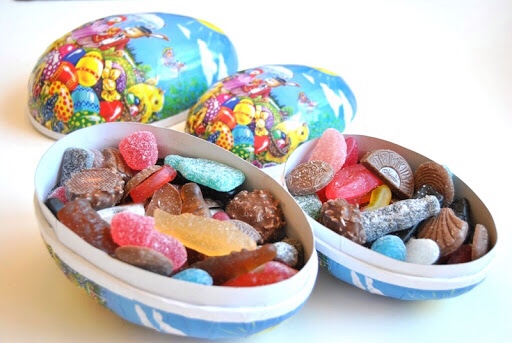
For me that was what an Easter egg liked like. Until I moved to Sweden. Here, Easter eggs look quite different. The Swedish egg is usually an inedible cardboard egg, emblazoned with colourful Easter motifs. It can also be made of tin or porcelain. So, the egg itself is also the packaging. Inside the egg, is pick ‘n’ mix, usually consisting of a few candied eggs and other well-chosen sweets such as cola bottles, sour dummies and fudge. This style of Easter egg was actually also popular in the UK around the reign of Queen Victoria.

Giving Easter eggs as gifts in Sweden became popular in the 1800’s and was facilitated by the paper-making industry. Although decorating eggs dates further back, to the 1600’s, when Swedes would paint eggs to celebrate the spring.

Whatever the type of egg the Easter bunny brings you this year, I hope you enjoy it!

Happy Easter!

‘Long’ Friday in Sweden

Today, Good Friday, is called ‘Long Friday’ in Swedish – ‘Långfredag’. It commemorates the long day and the long suffering that Jesus endured on the cross, according to Christian teachings. It is a public holiday, and for many years, everything was closed in Sweden making the day long and boring for many people. Now, most things are open.

‘Long Friday’ is a day of cooking, shopping and going for walks. Some people attend church services. Tomorrow, Easter Saturday, is the normal day of celebration when Swedes gather to eat from a bulging smörgåsbord. Typical food includes variations of salmon, egg, herring and lamb. Dark Easter beer is consumed and snaps is knocked back.

In English, this day used to also be called Long Friday, but at some point in history it changed to Good Friday. Good in this context means Holy. According to the Daily Mash this is ‘still stupid. You don’t get much worse days than being flogged, nailed to a cross, then stabbed. And that includes your annual performance review. It’s like calling funerals ‘Happy Burying Nana Day’.

Where does the Swedish word for Easter -‘Påsk’- come from?

The English word Easter originates from the Germanic goddess of fertility – Eostre. Prior to the 300’s, pagan festivities were held in her honour in the month of April. These festivities were slowly replaced by Christian traditions to celebrate the resurrection of Christ – and given the ‘recognisable’ name Easter.

But what about the Swedish word for Easter – Påsk? Where does that originate?

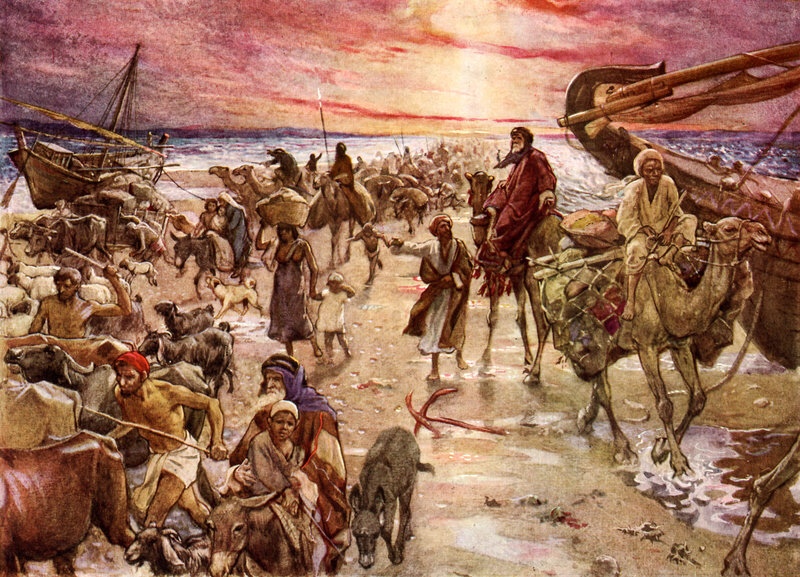
During the same period as Easter, Jewish people celebrate a holiday of Passover to mark their liberation by God from slavery in ancient Egypt and their freedom as a nation under the leadership of Moses. Passover commemorates the story of the Exodus in which the Israelites were freed from slavery in Egypt. The name of this celebration is ‘Pesach‘.

Originating in this word ‘pesach’ is the Aramaic word ‘paska‘. And from ‘paska’ comes the Swedish word ‘Påsk‘.

So, interestingly, the more secular country of Sweden actually has the most religious origin of the word Easter.

International Romani Day-Roma in Sweden

Today, 8 April, is International Romani Day. It marks the first World Romani Congress that was held in London in 1971. The day exists to shine a light on the ongoing persecution and abuse that the Roma population of the world has been forced to endure throughout history.

The Romani originate from northern India. They are dispersed, and their most concentrated populations are located in Europe, and Western Asia, since around 1007. Nobody really knows why the Roma left India in the first place, as no records were kept. However theories abound: from early persecution based on caste, to banishment from angering the king, and religious war.

The estimated 12 million Roma are consequently a nomadic people with no land to call their own. Their mobility and the fact that they lived in temporary camps contributed through the centuries to associations with poverty and accusations of high rates of crime. The discomfort that others felt about their presence led to perceptions of the Roma as antisocial, unsophisticated or even dangerous. Partly for this reason, discrimination against the Romani people has continued to the present day.

Romani have existed in Sweden since at least the 1500’s and today they are classed as one of Sweden’s five national minority groups (together with Jews, Sami, Swedish Finns and Tornedalers). Romani chib has the status of official minority language.

Over the centuries, the people of Sweden discriminated against, marginalised and excluded its Roma population. For 40 years, up to 1976, Sweden had a legal policy of enforced sterilization of people to avoid ‘unacceptable offspring’. Much suggests that Roma women were particularly subjected to this abuse.

The Pew Research Poll of 2016 found that 42% of Swedes held strong anti-Roma views (compared to 82% in Italy, and 37% in Holland).

A Romani political activist in Sweden was Singoalla Millon, who died in 2020, and spent her entire life fighting for education, housing and acceptance. Another was Katarina Taikon who dedicated herself to improving conditions for Romani people in Sweden. She tried to convince the Swedish government to see the Romani as political refugees. She died in 1995. Today, the politician Soraya Post has worked as an EU politician defending the rights of the Romani and other minorities.

In 2012, the Swedish government introduced an 20-year equal opportunities strategy for Roma people. The strategy includes objectives and measures within several areas such as schooling, employment; housing, health, social care, culture and language. Of course, discrimination and marginalization are still very real in Sweden, but this is at least a step in the right direction.

Terror on the streets of Stockholm 

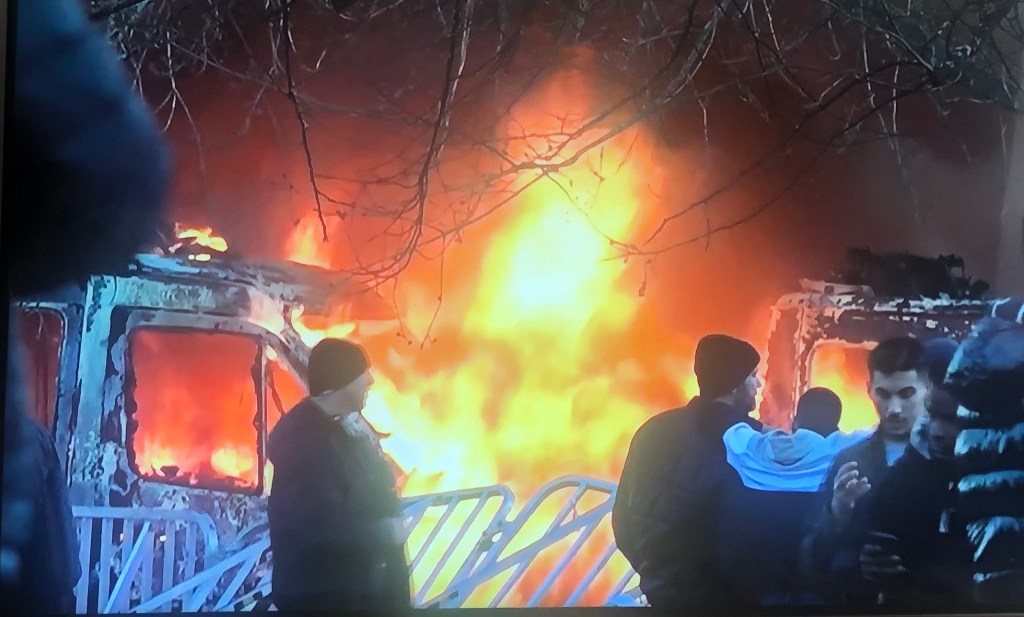
5 years ago today, Sweden experienced a hateful terrorist attack. Today, flowers have been placed along the city street where it occurred. My thoughts go to those who were murdered, and their families and friends.
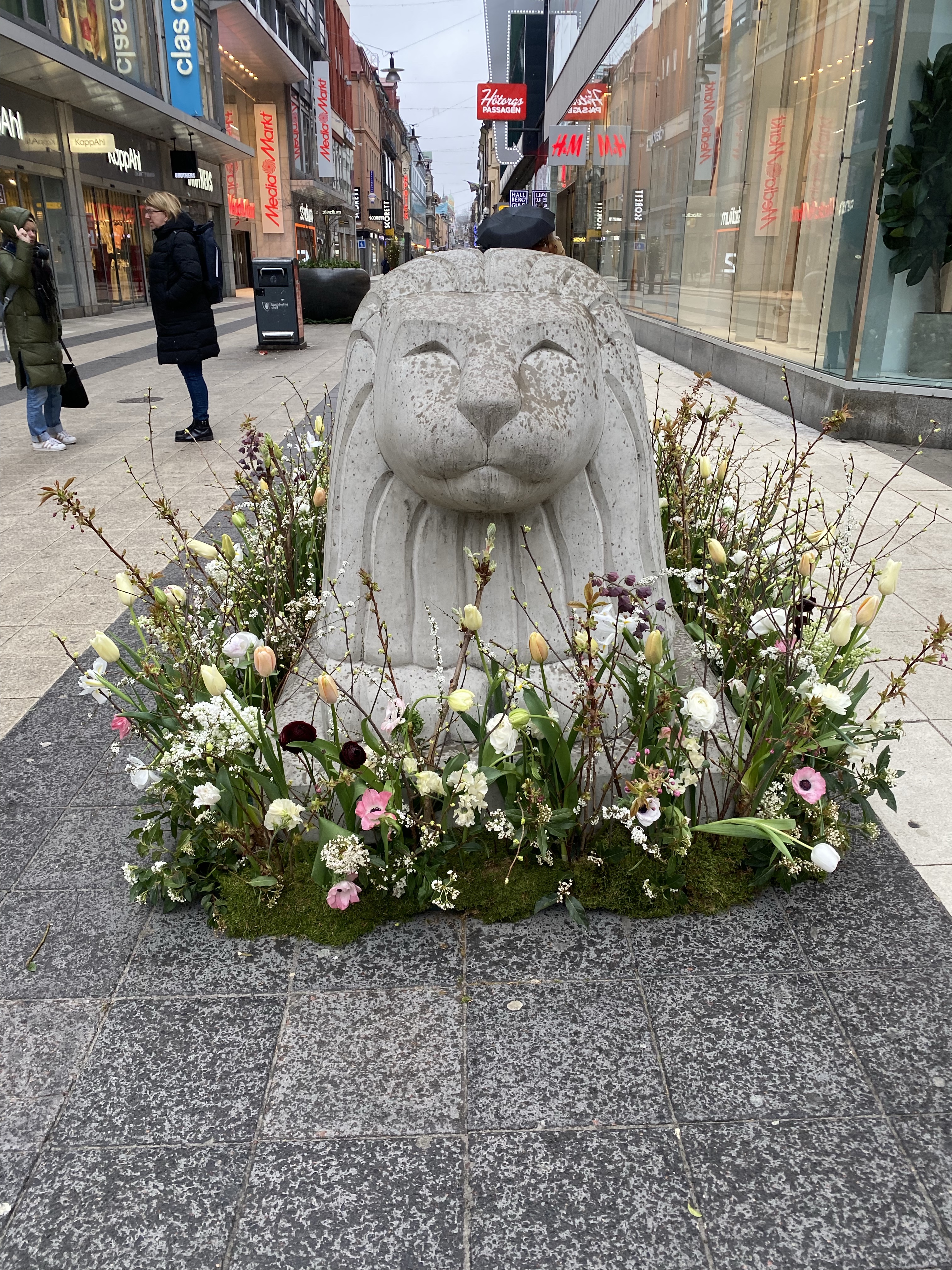
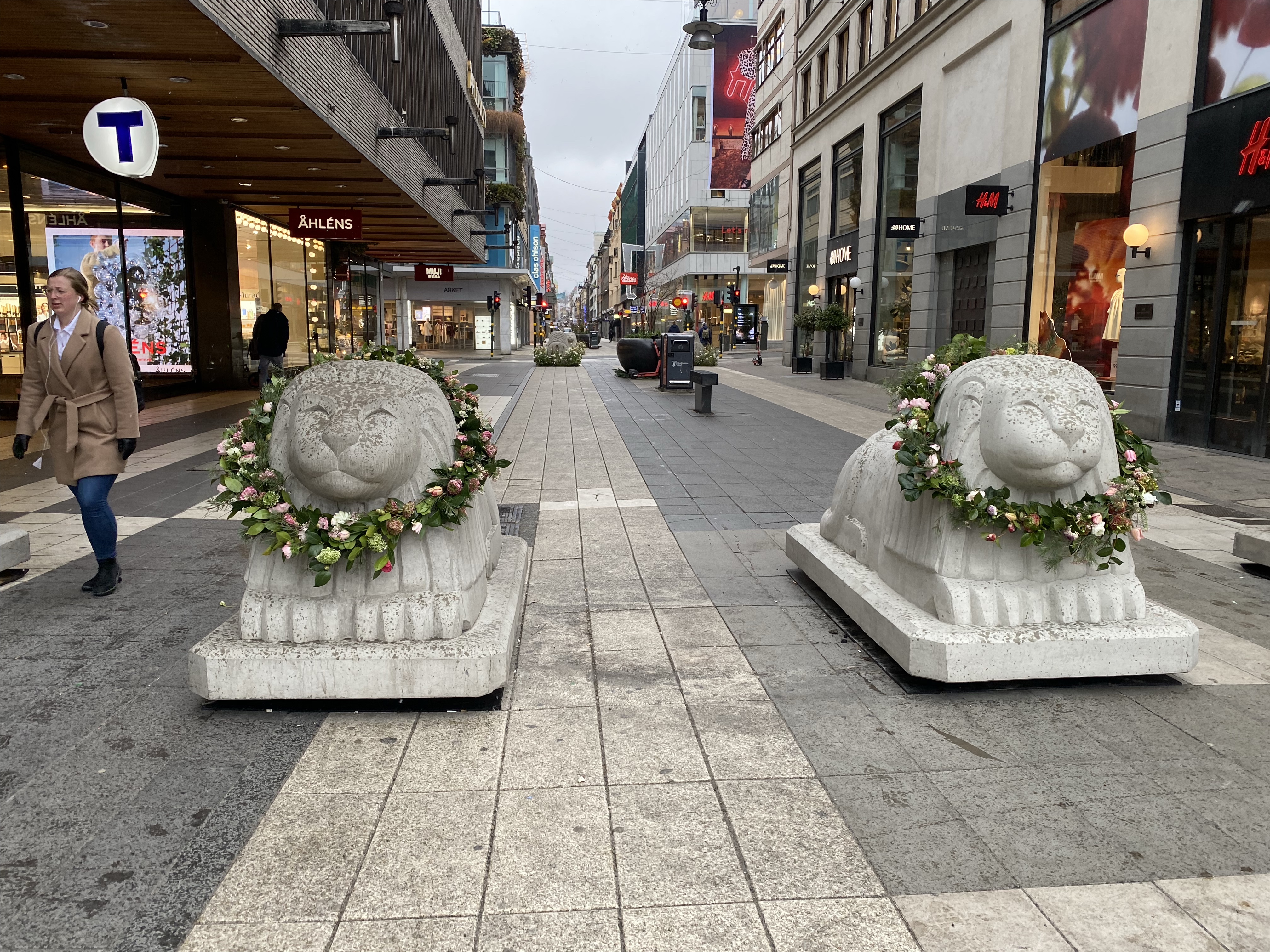
If you would like to read my post from that attack 5 years ago – here it is again….

At 2.30pm yesterday, a masked man stole a delivery truck from outside of a restaurant. The delivery man tried to stop the thief by standing in front of his truck.  However, the thief pushed over the driver, picked up speed and proceeded to drive zig zag down Stockholm’s main pedestrian shopping street, ploughing into people as he went. The truck’s final destination was one of Sweden’s largest department stores, into which it smashed in a billowing cloud of smoke. 

Like everybody else I was really shaken up by this act of violence.  I, and my nearest and dearest, were all in safety and my phone rang and beeped frenetically as we contacted and reassured each other. 

Stories reached me about friends being locked into their offices or hiding out in shops and restaurants. The streets were awash with armed police, and the whole city was shut down within 20 minutes – trains, buses and the underground were all stopped and roads were cordoned off as residents and tourists were rapidly ushered out of the city center. 

In the midst of the chaos, Stockholmers reached out to each other in support. People opened their homes to provide sanctuary to each other, cafes provided food and beverages, social media was flooded with people offering to help and offering protection. In this emergency, love prevailed – which was moving and heart-warming. I myself was in a gym, and the doors were locked. The staff went straight to action providing us with support and offering food and drink and unscheduled training classes for those who wanted a distraction. 

The latest news at time of writing this blog is that 4 people and 1 dog were killed, and 15 seriously injured. The driver has been arrested.  Another person is in custody believed to have some connection to the driver. Border control has been tightened up and there are still disturbances in local traffic. 

Stockholm now joins the long line of cities such as London, Berlin, St Petersburg, Paris and Nice, who have suffered under terrorist attack. 

No matter who is responsible for this act of violence, be it an organisation or an individual, we must never give into them.  The nature of terrorism is to spread fear by using intentionally indiscriminate acts of violence. It’s its indiscriminate approach that makes it difficult to predict and we are often powerless to influence it. Therefore we should do what we do best – not bow down to it but stand up and keep going. It is by living our lives in our open, democratic societies that we win.

I sincerely hope that Stockholm does not become a fearful, suspicious, closed city. This place that I love is a target because of its freedom and that is a freedom we should protect by continuing to live our lives. 

Terror will never win. It is designed to exploit our human fear. It is the ultimate act of intimidation. We must not let it win. My heart goes out to the victims and their families. Yesterday, we showed love to each other. Let’s continue to do that. We do not need more hate. 

We must prevail. 

60 years of Sweden’s Sun film

Every Monday, once a week, from the beginning of the year until the Summer Solstice, the ‘Sun film’ is broadcast on Swedish TV. The film shows what time the sun goes up and down in Lund, Stockholm, Kiruna and Lycksele.

Fantastically retro, the film has been broadcast for almost 60 years.

And tonight, I recorded it for you….

Tricking Sweden – April Fool

april-fools-day-2015

Playing April Fool’s jokes on each other on the first of April is a tradition in many countries – Sweden included. In fact it is an old tradition – the oldest written reference being in 1392 in Chaucer’s ‘The Cantebury Tales’.

In Sweden, when someone is tricked, the tradition is to say ‘April, April din dumma sill!‘. This translates as ‘April, April you stupid herring!’. This is however not as weird as it might sound. In many countries, such as Italy, France and Holland, April 1st is known as “April fish”. On this day, people try to attach paper fish onto the backs of their victims.

April Fool’s pranks are common in newspapers, with classics such as:

  • IKEA is getting into the airline business. Furnishing all the flights with Ikea furniture, the name of the airline is FLYKEA.
  • Swedish supermarket chain ICA introduced toothpaste with the taste of chocolate. It might be brown, but it makes your teeth white.
  • Burger King introduced a new burger for left-handed people where ingredients were rotated 180 degrees.

I had a look this morning to see if I could identify any April Fools tricks but I failed. The papers were just full of misery – War, Death, Politics, Covid, Murders, and Shootings. Maybe the seriousness of our current times renders silly jokes redundant. If you manage to find one, please share here!


Transgender Sweden

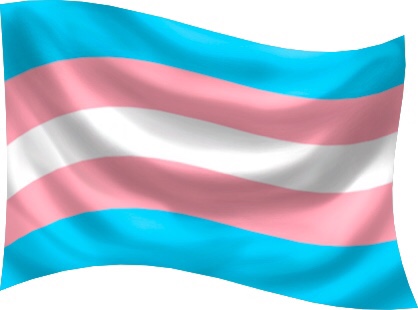
Today is the International Day of Transgender Visibility. The day is dedicated to honouring the victories and contributions of the transgender and non binary communities while also bringing awareness to the work that is still needed to protect trans lives. During 2021, 375 trans and gender nonconforming individuals were murdered. Around 70% of these occurred in Central and South America.

Transgender in Sweden: It has been a long and rocky road for the transgender population to receive legal protection in Sweden. This road has been lined with demands on enforced divorce and enforced sterilization. In fact, it wasn’t until 2013 that the requirements to be sterilized and undergo sex reassignment surgery in order to change gender became unconstitutional. Sterilization had been in effect since 1972, and enforced on 500 to 800 transgender people.

Today, the transgender community is protected under the Anti-Discrimination Law of 2009. Additionally, in 2018, “transgender identity and expression” was added to the hate crime legislation.

It would however be naive to believe that this has eradicated this type of discrimination and crime in Sweden. In fact, many transgender people report a constant feeling of insecurity and vulnerability in society. Around 12% of the reported hate crime in Sweden has a homophobic or transphobic motive. Who knows how much happens that isn’t reported?

Days like International Day of Transgender Visibility are hugely important for breaking the negative cycle of hate. If you would like some input on how to support the trans and non binary people in your life, go to http://www.thetrevorproject.org and look under Resources.

Swedes, time change and barbecues

DST_Countries_Map

Last night in Sweden, the clocks went forward one hour to Summer Time. Despite the occasional complainer who moans about losing an hour’s sleep, this is usually received very positively in the country. Suddenly,  the light at 6pm becomes the light at 7pm. People are happier, daylight is longer, people venture outside to enjoy the burgeoning spring.

So why do we do this? The practice was first initiated during World War I to give more light for agriculture and other important societal functions. However it was abandoned shortly afterwards, only to come back during World War II.

It was never very popular and by the 1950’s it had again been cancelled. However come the 1960’s, it was reintroduced in many countries due to the energy crisis – the lighter evenings required less electricity.  In 1981, the EU legislated Summer Time in Europe requiring member states to decide particular start and end dates for Summer Time which varies in the different countries. In Sweden, summer time occurs on the last Sunday in March and ends on the last Sunday in October.

In Europe, there are 4 countries that do not switch to and from summer time. They are Belarus, Russia, Iceland and, since 2016, Turkey.

In 2019, the EU Parliament decided to remove the annual time changes with March 2021 suggested as the last occasion. However, each country could decide if they want permanent summer time or permanent winter time. As yet, the decision has not been made by the individual member countries – so it remains.

Around the world, there are various countries observing the switch. In the picture above, blue and orange represent the countries that switch to and from summer time (nothern hemisphere summer and southern hemisphere summer). Dark grey have never used daylight saving time and light grey have formally used daylight saving time.

Remembering when to turn the clocks back and forward is sometimes a challenge to remember. In English, the saying ‘Spring forward, Fall back’ was developed to help jog people’s memories. Even the expression ‘March forward’ is used as a reminder.

So what do they say in Swedish? Well, they refer to the popular summer activity of barbecuing. Many Swedes who live in houses, or have a summer house, own a barbecue. In the summer they use it, and in the winter it is safely kept in storage.

So the Summer Time saying?

‘In spring we put forward (English: out) the barbecue, in the autumn we put back the barbecue’.