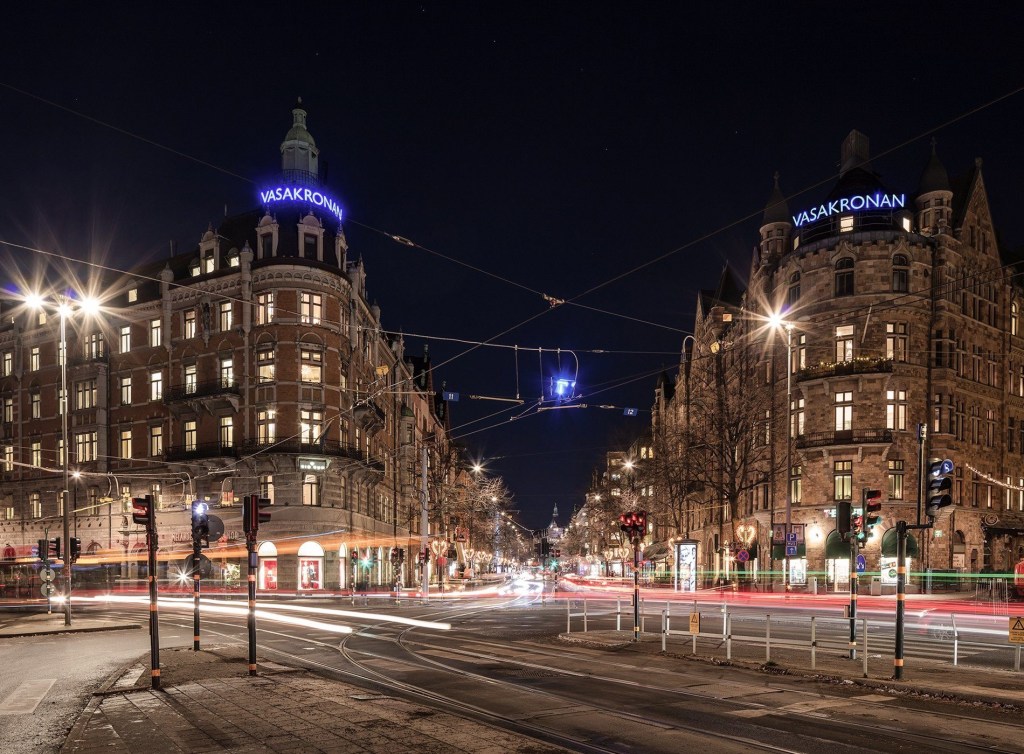
The streets and squares of Sweden: Birger Jarlsgatan

You can learn a lot about a culture from the names of its streets and squares. From heros, to events, and significant dates, you often find cultural concepts immortalised in the names the citizens choose to give their roads. This is my next series of posts – the streets and squares of Sweden.

First out – Birger Jarlsgatan, a major road cutting through the center of Stockholm. The word ‘gata’ means street.

But who then was Birger Jarl?

Birger Jarl was a Swedish statesman, and later regent, who played an important role in the consolidation of Sweden. He lived 1210-1266 and is attributed with the foundation of Stockholm. He was a significant character in Sweden’s history.

Not only is he commemorated with his own street, but he also has his own city square, decorated with a bronze statue of the man himself.

Additionally, Sweden’s most well known cenotaph – outdoors at the foot of the tower at Stockholm City Hall – was intended to hold his remains when it was built in 1923. However, the local parish in Vadstena refused to release them. So, the grand sarcophagus has remained empty – unlike the street that bears his name and is one of the busiest in the city.

Birger Jarlsgatan.
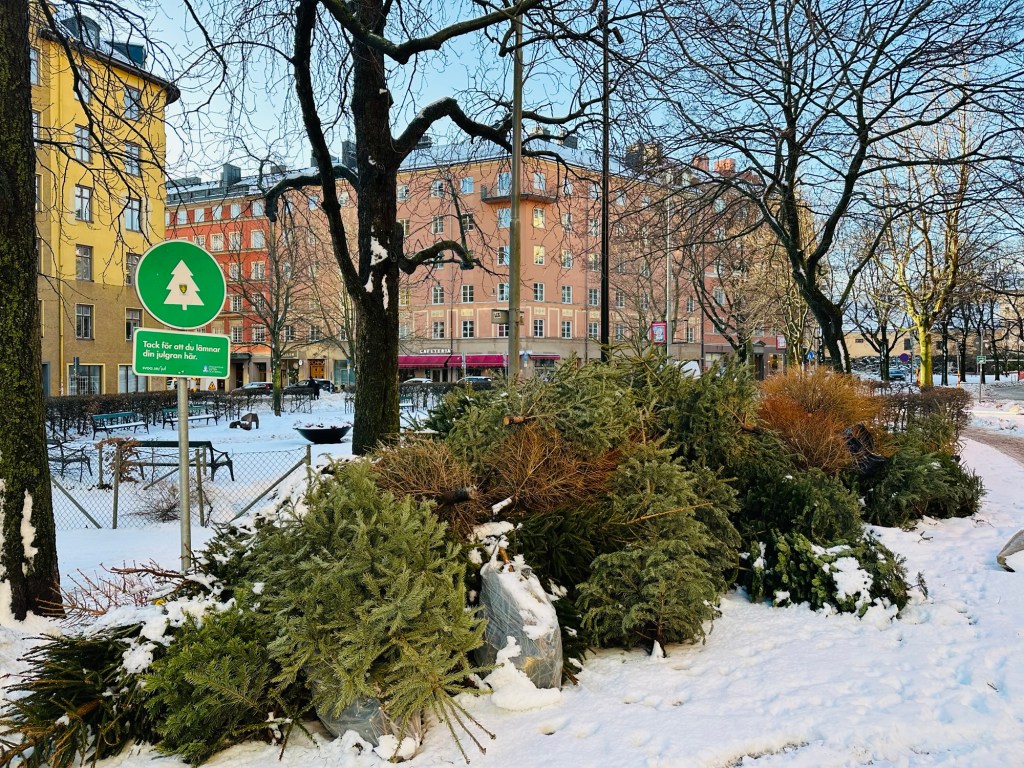
Sweden’s Christmas tree piles

Soon Christmas is officially over in Sweden – the 13 January being the proper last day. Some people, however, already start clearing out Christmas before that. This is evident from the piles of used Christmas trees that appear on the streets all around town.

The discarded Christmas trees are gathered by the local councils and burned to provide heating. About 3 million Christmas trees are estimated to be discarded in Sweden. The heat generated from these is calculated to heat up 1200 houses per year.

Thirteenth Day in Sweden

Today, 6 January, is a national holiday in Sweden and in many places around the world. In Sweden, not a lot happens on this day – it is just another day off. If it lands on a weekend, the bank holiday is forfeited, unlike in many other countries where the following Monday is taken off in lieu.

So what does the 6 January celebrate?

In orthodox churches, the 6 January is celebrated as the day of Jesus’ birth.

In western Christianity, the 6 January notes the arrival of the three wise men (the magi) to Bethlehem to visit the baby Jesus in his cradle. These wise men are said to represent the three continents of Europe, Africa and Asia.

In Eastern Christianity, today celebrates the baptism of Jesus in the Jordan river and his manifestation to the world as the son of God.

January 6 also commemorates the legend of the Wedding at Cana, where Jesus exercised his divinity by turning water into wine.

Epiphany

In English, today is called Epiphany – which comes from the Greek word ἐπιφάνεια, epipháneia, meaning ‘manifestation’ or ‘appearance’. It is derived from the verb φαίνειν, phainein, meaning “to appear”. It signifies the day when Jesus first appeared to the Gentiles, in his cradle.

In the practical language of Swedish, there is no reference to manifesting or appearing. Today is given the name of Trettondag Jul (Thirteenth Day Yule) – literally thirteen days after Christmas Eve.