50 Swedish words for snow

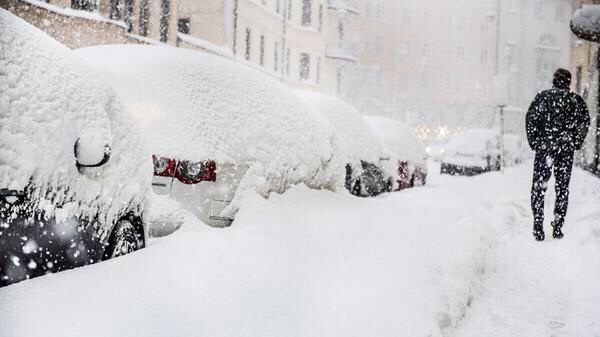
A massive amount of snow has landed in Sweden, so I thought it’s worth sharing this list again.

Not surprisingly when living in a country where it snows a lot, people start to see differences and nuances in the type of snow, whereas in English the word might just be an unsatisfactory ‘snow’.

The Swedish language makes it easy to join words together to describe these nuances.

Here is a list of 50 Swedish words related to snow.

1) Blötsnö – wet, slushy snow
2) Drivsnö – snow that is blown into troublesome snow drifts
3) Aprilsnö – snow in April, according to superstition, signifies plenty of food for the coming season
4) Hårdsnö – compacted hard snow
5) Konstsnö – artificial snow
6) Kramsnö – squeezy snow, perfect for making snowballs
7) Julesnö – snow at Christmas
8) Klabbsnö – wet, warm snow for building snowmen
9) Kolsyresnö – frozen carbondioxide
10) Kornsnö – small white snow breadcrumbs
11) Lappvante – thick, falling snow
12) Lössnö – snow that can loosen and be dangerous
13) Majsnö – surprising and unwelcome snow in May
14) Modd – snow that has partly melted due to salt
15) Natursnö – real snow (as opposed to artificial)
16) Nysnö – fresh snow, crisp and white
17) Pudersnö – powder snow
18) Rekordsnö – an unusual amount of snow, breaking previous snow records
19) Slask – slushy snow mixed with rain and dirt on the ground
20) Snö – snow
21) Snöblandat regn – snow mixed with rain
22) Muohta – the Sami word for snow (it is said the Sami actually have 200 words for snow!)
23) Snörök – faint particles of snow that look like smoke
24) Yrsnö – snow being whipped around by the wind in all directions
25) Åsksnö – snow that pours down during a thunder storm

26) Snökanon – the word for the snow canon that creates artificial snow on ski slopes has also come to mean a sudden blast of snow that suddenly hits a place, and feels like snow has been dumped on you.

27) Jungfrusnö – virgin snow

28) Snösmocka – a huge amount of snow

29) Snötäcke – snow on the ground

30) Sjösnö – snow over the sea that can roll in over land

31) Snöfall – snow in the air

32) Flingsnö – snow with larger crystals

33) Skarsnö – a crispy surface on a blanket of snow

34) Packsnö – thickly packed snow

35) Pärlsnö – snow like small pearls that hurts when it hits your face

36) Snöglopp – wet snow mixed with rain

37) Spårsnö – snow that allows footprints to be formed

38) Fjöcksnö – a light, fluffy snow

39) Flister – snow the consistency of salt that stings the face when it falls

40) Flaksnö – a sheet of snow

41) Upplega – snow on the upper side of a tree branch

42) Firn – liquid-like snow that can initiate an avalanche

43) Fimmel – sandy snow that falls at low temperatures

44) Själja – a thin layer of ice on top of the snow that resembles glass

45) Knarrsnö – crispy snow that creaks when you walk on it

46) Snöfyk – wet snow

47) Torrsnö – dry snow

48) Månsilver – a poetic word to describe the dusting of snow

49) Snöis – snow on cold water that forms an icy solid surface

50) Stöp – a mixture of snow and ice resembling porridge that forms on top of cold water

So, let it snow! Let it snow! Let it snow!
Sweden’s 20th day of Christmas – it’s officially over!

Today – 13 January – is the official last day of Christmas in Sweden. Known as ‘Tjugondedag jul’ (twentieth day of Christmas) or ‘tjugodag Knut’ (twentieth day Knut), it marks the twentieth, and final, day of the festive season.

The name ‘Knut’ comes from the fact that today is St Knut’s Day in Sweden – commemorating the Danish king who was assassinated in 1131. One of laws that Knut introduced was that nobody should fast during twenty days of Christmas, and that January 13 was the official end of the period.

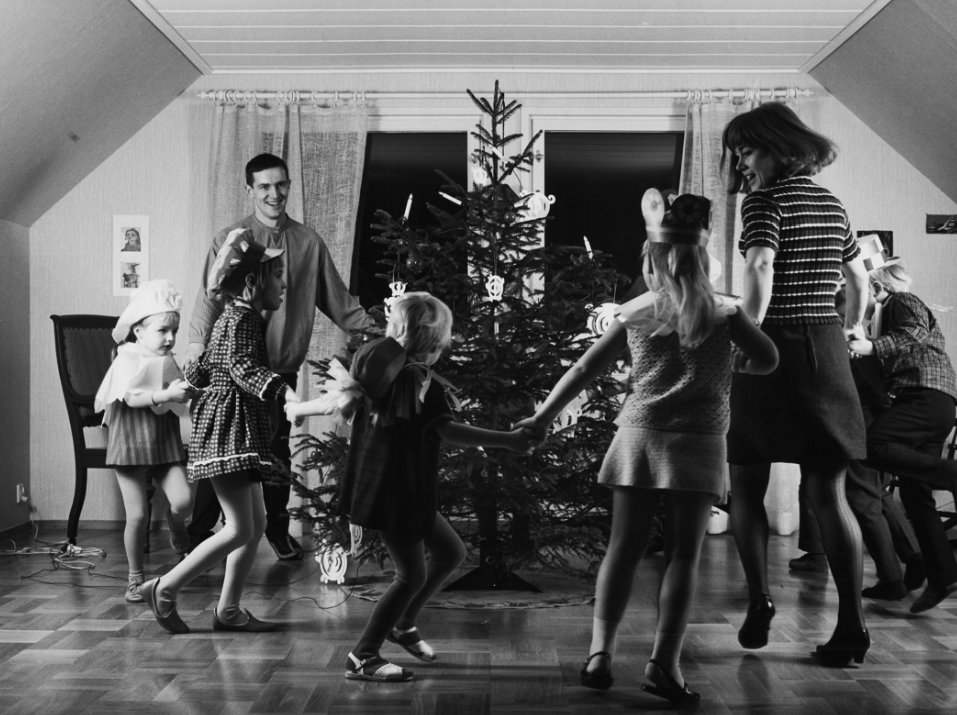
In Sweden, today is the day when Christmas should be ‘danced out’. Traditionally, the Christmas tree is removed via ‘julgransplundring’ (Christmas tree plundering), in which Swedes remove decorations, eat the edible ones, dance around the tree and throw it out.

This is known as the St Knut’s Party and originated in the mid 1800’s.

On a more practical note, the discarded Christmas trees are gathered by the local councils and burned to provide heating or used on the traditional spring bonfires in April.

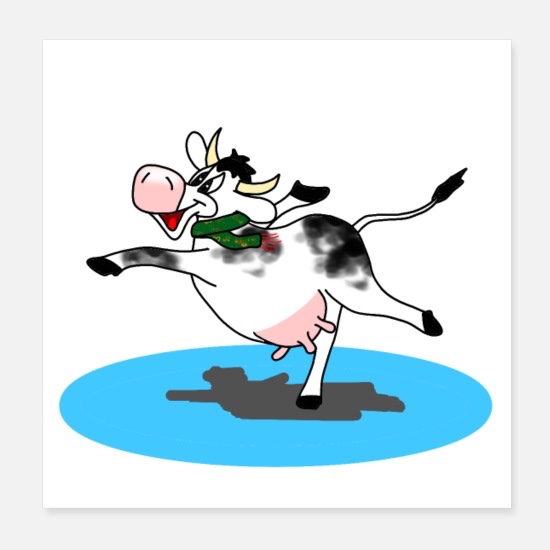
Swedish expression: ’There is no cow on the ice’.

With all the frozen lakes at the moment, I am reminded of the Swedish expression ‘Det är ingen ko på isen’ or ’there’s no cow on the ice’. This expression is used to mean there is ‘ no need for worry’ or ‘don’t be concerned’. So, where does the expression originate?

Well, like many Swedish expressions, this one also has a rural origin.

In the old days, farmers that had no running water would take their cows down to the lake to drink. As long as the cows stayed on land, and didn’t venture onto the frozen waters, there was no risk of them falling through the ice and drowning.

In fact, the expression is an abbreviation of the longer saying ‘there’s no cow on the ice as long as their rear end is on land’. (Det är ingen ko på isen så länge stjärten är i land.) As long as they had a firm footing, they could rescue themselves if the ice broke around the periphery of the lake.

So it would seem that the original meaning of the saying might have been ‘there is no need for worry as long as you take precautions.’

Swedish expression: ’There is no cow on the ice’.

With all the frozen lakes at the moment, I am reminded of the Swedish expression ‘Det är ingen ko på isen’ or ’there’s no cow on the ice’. This expression is used to mean there is ‘ no need for worry’ or ‘don’t be concerned’. So, where does the expression originate?

Well, like many Swedish expressions, this one also has a rural origin.

In the old days, farmers that had no running water would take their cows down to the lake to drink. As long as the cows stayed on land, and didn’t venture onto the frozen waters, there was no risk of them falling through the ice and drowning.

In fact, the expression is an abbreviation of the longer saying ‘there’s no cow on the ice as long as their rear end is on land’. (Det är ingen ko på isen så länge stjärten är i land.) As long as they had a firm footing, they could rescue themselves if the ice broke around the periphery of the lake.

So it would seem that the original meaning of the saying might have been ‘there is no need for worry as long as you take precautions.’

Swedish expression: ‘to suspect owls in the moss’

In English, when we suspect something isn’t quite right we ‘smell a rat’ or say something is ‘fishy’. In Swedish, they suspect ‘owls in the moss’.

The expression – ‘att ana ugglor i mossen’ – has a Danish origin. The original saying dates to the 1600’s and was ‘det är ulve i mosen’ which translates as ‘there’s a wolf in the moss’. The expression makes sense and was used when a dangerous situation was suspected.

So, how did a wolf turn into an owl? There are two theories. One theory is that it happened as a mistake. The sound of the Danish word for wolf ‘ulve’ was misheard as ‘uggla’ the word for owl – and the creature hiding in the moss became a wise bird rather than a viscous predator.

Another theory is that the saying was consciously changed when wolves disappeared from Denmark. The wolf was replaced by an owl because it hoots a warning at the presence of danger.

Thirteenth Day in Sweden

Today, 6 January, is a national holiday in Sweden and in many places around the world. In Sweden, not a lot happens on this day – it is just another day off. If it lands on a weekend, as it does this year, the bank holiday is forfeited, unlike in many other countries where the following Monday is taken off in lieu.

So what does the 6 January celebrate?

In orthodox churches, the 6 January is celebrated as the day of Jesus’ birth.

In western Christianity, the 6 January notes the arrival of the three wise men (the magi) to Bethlehem to visit the baby Jesus in his cradle. These wise men are said to represent the three continents of Europe, Africa and Asia.

In Eastern Christianity, today celebrates the baptism of Jesus in the Jordan river and his manifestation to the world as the son of God.

January 6 also commemorates the legend of the Wedding at Cana, where Jesus exercised his divinity by turning water into wine.

Epiphany

In English, today is called Epiphany – which comes from the Greek word ἐπιφάνεια, epipháneia, meaning ‘manifestation’ or ‘appearance’. It is derived from the verb φαίνειν, phainein, meaning “to appear”. It signifies the day when Jesus first appeared to the Gentiles, in his cradle.

In the practical language of Swedish, there is no reference to manifesting or appearing. Today is given the practical name of Trettondag Jul (Thirteenth Day Yule) – literally thirteen days after Christmas Eve.

Swedish New Year’s pizza – with cabbage! 


Today, January 1st, is the most popular day to eat take-away pizza in Sweden. Partly it’s easy to order but also its greasiness acts as a great remedy for sore heads and tired bodies.

The Vesuvio and the Capricciosa are very popular pizzas in Sweden. However, the number 1 ‘national pizza’ is the Kebab pizza – a greasy pizza with kebab meat (and sometimes fries) dumped on the top.

When you order a pizza in Sweden, you will also experience a very strange bedfellow.

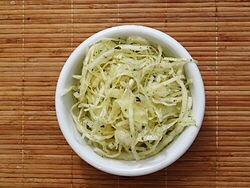
In Sweden, pizza is served with complimentary salad, in both restaurants and take aways. This salad is called creatively –  ‘pizza salad’ and is made of cabbage. It is a kind of coleslaw with white wine vinegar, salt, pepper and oil. It’s fresh, crispy and a bit weird. 

This odd combination is, as far as I know, only offered in the Nordic countries and its origin is a bit unclear.

One theory is that when the first pizzerias opened in Sweden, the traditional tomato salad wasn’t an option due to the climate in the winter. So, subsequently the pizza baker decided to use a more available, local vegetable – the cabbage – inspired by the Croatian salad ‘kupus salata’. 

Whatever it’s origin, the pizza salad is so ingrained in the Swedish mentality, it’s become a cultural ‘classic’.  In fact, it’s hard to imagine a pizza without cabbage salad in Sweden. Especially on New Year’s Day!