How Sweden’s population stacks up


sweden-population-pyramid-2016

One way of understanding the present and future challenges a society is facing is to look at their demographic and an interesting method of presenting this information is in the form of a population pyramid.

According to ‘The World Factbook’ which is information gathered by America’s CIA, the population pyramid, related to age, for Sweden looks as above.

In a socialised society like Sweden, this picture can tell us several things:

  • Women in Sweden seem to live longer than men.
  • There are more men than women in their 20’s in Sweden. So if you are attracted to men, Sweden could be a great place to visit!
  • For the last 10 years there has been an increase in births in Sweden. This is good as these citizens are future workers whose tax contributions will support the pressured welfare state!
  • A potential problem may arise for Sweden in 10-15 years when the largest population group (currently 50-54) will retire and start taking out their pensions. A smaller group of workers will be left to support the growing number of pensioners. This suggests birth rates and immigration need to increase!

Any other conclusions you can draw from this information?

Please share below…


A casebook example of civil courage

baudin-jpg

Sometimes the best thing we can do is protest with our wallets.

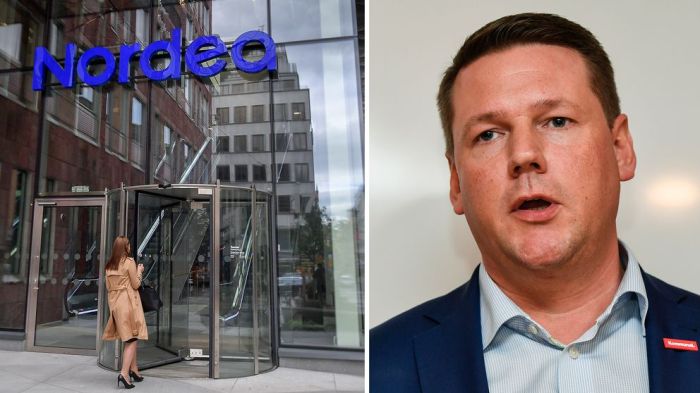
Swedish bank giant Nordea announced recently that they are moving from Sweden to Finland because of a new bank tax that the Swedish government is planning to put in place. The final decision will be made at an annual meeting next year. The threat to move has caused a lot of hoo-ha from both sides of the equation – those who criticise the bank for tax evasion and greed, and those who criticise the government for forcing companies to leave Sweden due to unattractive taxation laws.

Criticising the banks is Sweden’s largest trade union ‘Kommunal.’ – the union that represents council and municipal workers. Just today they announced that if the move happens, they will remove all their money from the bank. We are not talking about a small amount of money either. The amount is one billion Swedish crowns.

‘ We choose banks that reflect our morals and values and who act responsibly. Neither Nordeas MD or board do this,‘ says Kommunal’s chair Tobias Baudine

Kommunal joins other trade unions ‘Handels’ and ‘Seko’ who have also decided to leave Nordea and take with them investments to the value of half a billion Swedish crowns respectively.

Agree or disagree, this is definitely a great example of moral and civil courage. Sometimes as consumers, the best thing we can do is protest with our feet and our wallets.

  • If a business is acting in a way that is contradictory to our values and beliefs then leave them as a customer.
  • If a newspaper is spreading lies and hate, do not buy it or go to its website.
  • If an industry is employing dubious methods, then stop consuming their product.

Do not fund hate. Do not fund greed. Do not fund unethical behaviour (whatever that means for you).

By taking a stance, we have the power to change the world around us. If only we would realise it.


Amazing immigrants in Sweden: Part 7 Mustafa Can 


Negativity. Fear. Concern. These are some of the reactions many Swedes are experiencing about the influx of immigrants to Sweden in the last couple of years. So, I became curious to learn about some of those individuals who came here as refugees or immigrants to make a better life for themselves. People with roots somewhere else who built a home here and who contributed to Swedish society in a positive way.
For the next seven days, I will celebrate these people. My hope is that we can lift our eyes from the challenges of immigration and understand what useful contributions these people can make to society if given the chance. To our society. Our Sweden


Part 5: Mustafa Can 

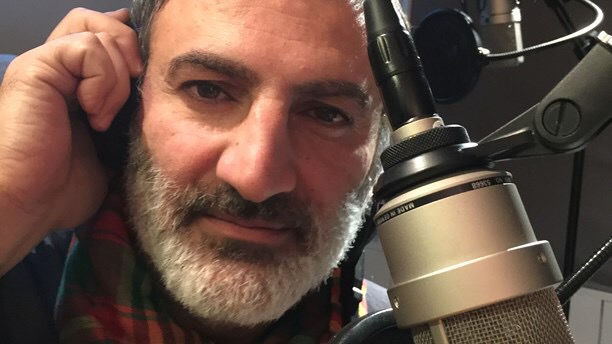
In Sweden, every summer there is a radio series called ‘Radio Talkers’ where various people get a chance to tell their stories and play music. It was in this program some years ago that I first heard of Mustafa Can. His program was very moving and focused around his mother. It was so moving that he won many radio and media prizes as a result.

Mustafa Can works as a prize-winning author, independent journalist and public speaker. His recent work focuses mostly on cultural diversity, identity and xenophobia in Sweden. He provides a controversial voice to the Swedish integration debate.

Mustafa has lived in Sweden for over 40 years. Orginally from Northern Kurdistan in Turkey, he fled with his family when he was 6 years old. He is a great example of someone who arrived in Sweden as a child, became well integrated and uses his position and his voice to try to make Swedish society a better place for everybody.

Amazing immigrants in Sweden Part 6: Hanif Azizi


Negativity. Fear. Concern. These are some of the reactions many Swedes are experiencing about the influx of immigrants to Sweden in the last couple of years. So, I became curious to learn about some of those individuals who came here as refugees or immigrants to make a better life for themselves. People with roots somewhere else who built a home here and who contributed to Swedish society in a positive way.
For the next seven days, I will celebrate these people. My hope is that we can lift our eyes from the challenges of immigration and understand what useful contributions these people can make to society if given the chance. To our society. Our Sweden

   
Part 5: Hanif Azizi

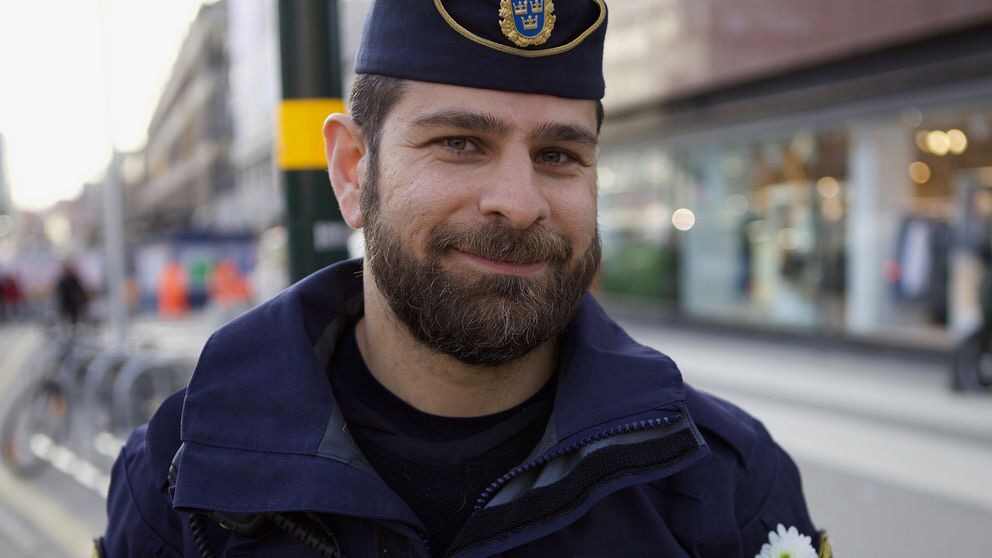
At the age of 9 years old, Hanif Azizi arrived in Sweden as an unaccompanied refugee. His parents were active in a political military organisation, a rebel Group fighting against the regime in Iran. When he was 6 years old, his father was killed in battle and his mother decided to send her children away to safety.

In 1991, Hanif arrived in Sweden with his younger brother and were placed in a host home. In this home, they were subjected to physical and pyschological abuse and were eventually removed by the Swedish Social Services and placed in a secure and supportive environment.

Today, Hanif is 35 and works as a policeman based in the Stockholm suburb of Järva. Here, he works to prevent crime but also to support youths who are at risk of falling into criminality. In Järva there are lots of individuals with an ethnic background. Hanif tries to help them feel involved in Swedish society so as to avoid radicalisation and crime. 

His contribution to Swedish society is extremely valuable. Hanif is an amazing immigrant in Sweden and a positive role model and contributor to Swedish society. 

Amazing immigrants in Sweden: Part 2 Shori Zand

Shori-Zand-500x500

Negativity. Fear. Concern. These are some of the reactions many Swedes are experiencing about the influx of immigrants to Sweden in the last couple of years. So, I became curious to learn about some of those individuals who came here as refugees or immigrants to make a better life for themselves. People with roots somewhere else who built a home here and who contributed to Swedish society in a positive way.

For the next seven days, I will celebrate these people. My hope is that we can lift our eyes from the challenges of immigration and understand what useful contributions these people can make to society if given the chance. To our society. Our Sweden

Part 2: Shori Zand, midwife and entrepreneur from Iran

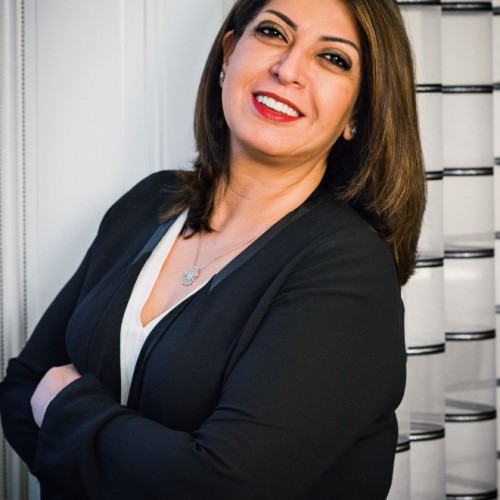
Giving her sons a safer and more prosperous life was Shori Zand’s motvation when she arrived in Sweden in 1987. At the age of 25, she arrived with her husband, two small sons and three suitcases. And nothing else – except ambition.

In Iran, Shori had worked as a nurse so, once she had a command of the Swedish language, she re-trained to be a nurse in Sweden and then ultimately, a midwife.

In 2000, thanks to the relaxation of healthcare laws in Sweden, Shori saw an opportunity to open a midwife clinic in Linköping. By 2010 she had a healthcare organisation that turned over 400 million Swedish kronor. Providing care in maternity, elderly care, mammography, neurology, gynocology and hearing rehabilitation, Shori’s company ‘Avesina’ employed a staff of  1200 people.

Shori Zand is often referred to as a role model for female entrepreneurs. Apart from her successes with Avesina, she has won an array of prizes, been on the boards of ‘Svensk Näringsliv’, TLV and Nutek as well as advising the Swedish government in IT and being Vice President of the Swedish Organisation for Healthcare Entrepreneurs.

Shori Zand arrived in Sweden with almost nothing. She is now an integrated, respected and accomplished businesswoman who has enabled care for thousands of Swedes. She has also created jobs – for over a thousand people – and undeniably contributed to Sweden’s economy and society.

Swedish pizza – with cabbage! 


If you want a cultural food experience in Sweden – order a pizza. When you do, you will also experience a very strange bedfellow. In Sweden, pizza is served with complimentary salad, in both restaurants and take aways. This salad is called creatively –  ‘pizza salad’ and is made of cabbage. It is a kind of coleslaw with white wine vinegar, salt, pepper and oil. It’s fresh, crispy and a bit weird. 

This odd combination is as far as I know only offered in the Nordic countries and its origin is a bit unclear. One theory is that when the first pizzerias opened in Sweden, the traditional tomato salad wasn’t an option due to the climate in the winter. So, subsequently they decided to use a more available, local vegetable – the cabbage – inspired by the Croatian salad ‘kupus salata’. 

Whatever it’s origin, the pizza salad is so ingrained in the Swedish mentality, it’s become a cultural ‘classic’.  In fact, it’s hard to imagine a pizza without cabbage salad in Sweden. 

How I have been Swedified 


After my last blog about Swedish geography, somebody commented that it is hysterical that there is a place in Sweden called Norrbotten. 
This got me thinking. 

When first moving to Sweden and learning the language, I saw all sorts of funny words which made me giggle. Now, some two decades later, I don’t even see those funny words any more – I have been Swedified. 

  • ‘Plopp’ to me is a chocolate bar, and nothing else
  • ‘Puss’ is a kiss and not a little kitty or a body part
  • ‘Kiss’ isn’t a romantic exchange between consenting people. Kiss is urine
  • ‘Slut’ is simply the end of something
  • ‘Avfart’ on a motorway is just the exit 
  • ‘Rea’ is a sale and not an old British singer 
  • ‘Kök’ and ‘kock’ are the kitchen and the chef, not a body part
  • I don’t even see the squidginess of the ‘slutspurt’ any more. All I see is that it’s the end of the sale. 
  • I don’t titter any more when someone says ‘shit’ to describe the putty around the window or the number six is the same as ‘sex’. 
  • ‘Prick’ is a dot and not an insult 

It is with a smidgen of regret that I guess I have been integrated – at least linguistically! 

Dividing up Sweden 


Today I thought I was in one region of Sweden, but I was reminded by a Swedish friend that I was in fact somewhere else. This dividing up of Sweden is not easy to get a grip of. 
Sweden is divided into 3 regions: Norrland, in the North, Svealand in the middle and Götaland at the bottom. These regions have no official purpose, except making it easier for weather readers to present their forecasts. 

Within each region, there are many counties (landskap). Sweden has in fact 25 counties, with Lapland being the most northern and Skåne being the most southern. These counties have their own coats of arms, flowers, and often traditional clothing. 

In 1634, the administrative responsibilities for justice, roads, hospitals etc were removed from the counties and given to an organisation of ‘län’ – administrative counties. There are 20 of these in Sweden. There can be more than one county in the area covered by a ‘län’. For example Södermannsland ‘län’ includes the counties of Södermannland, Uppland and Närke. Each ‘län’ has a main city of residence, where the county government (länsstyrelsen) is based and the governer (landshövding) has his/her residence. For Södermannland, this is Nyköping. 

Within each administrative county there are local councils (Kommun) who are responsible for social services on a local level. There are 290 of these in Sweden today. 

So when traveling through Sweden, you will be in a region, a county, an administrative county and a council at the same time. No wonder it’s hard to know where you are sometimes! 

Why Nazis are welcome to Gotland 


When I went to university in the U.K., there was a policy called ‘no platform’. This meant that students were allowed to demonstrate, hold rallies and meetings about any subject they liked except with one agenda – racist. The university claimed it was democratic but also allowed ‘no platform for racists’. I personally do not hold right-wing views, but this policy never sat easily with me as I saw the clear paradox that it created and it raised the question of what a democracy is. This is a question that raises its head very frequently in today’s culturally and politically polarized society. 

One very recent example in Sweden is the annual politics week that finishes today on the Baltic island of Gotland. This is a week where political parties gather and debate the current political landscape of the country. It’s a tradition that started in 1968 under the initiative of legendary leader Olof Palme. This year, for the first time, a Nazi group were allowed to participate  with a tent and speeches. They, course, were condemned by all parties and many voices to ban them were heard – ‘no platform for Nazis’. 

This is the dilemma for any modern democracy. If democracy means that everybody has the right to exercise their own ideas and beliefs, then society can not ban or intervene when people have the ‘wrong’ beliefs. We can’t just stop somebody from participating because we don’t like their point of view. It is different of course if they are breaking the law. But being a nazi is not breaking the law in Sweden, just as it is not illegal to be a civil rights activist, a communist or a feminist campaigner. 

We shouldn’t forget the very foundation of a democratic society means the right to hold whatever belief we want and go wherever we want with whoever we want. That is our liberty. If we start to infringe on it with bans, or ‘no platform’ policies, we are heading down a slippery slope of state control, elitism and autocracy. 

For me, Nazis should not be forbidden to go to Gotland. To ban them is to undermine our democracy. Threatening behavior, nazi symbolism, Hitler salutes, encitement of violence are however illegal and should not be accepted or allowed. 

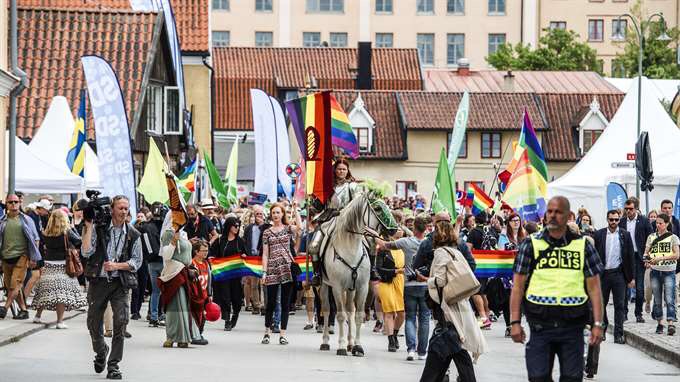
It is in the shadow that their presence casts that a counter balance can be demonstrated. And exactly that happened on Gotland in the form of a well-visited Diversity Parade. Thousands of people marched for a plurastic society and in protest of the views propagated by right wing parties. This was a fantastic manifestation representing the majority of Swedes. And this could only happen in a democratic society. 

Don’t get me wrong, I am not undermining anybody’s discomfort or fear. I am sure that the presence of the Nazis was horrible to experience. But if history has shown us anything it is that we cannot put our heads in the sand and ignore these destructive forces. We must face them head on in debate, in demonstration, in democracy and in massive, massive resistence. 

Bringing politics to the people


politikerveckan

If the election in the UK and USA has shown us anything, it is this. Bring politics closer to the people and you will win.

In the USA, it meant successfully manipulating the beliefs of the disillusioned and the sceptical.

In the UK, it meant focusing on the issues closest to people’s hearts and putting a fire under the asses of young voters.

Politicians in Sweden are, in my opinion, too often remote from the electorate and their reality. This is with one notable distinction in a quickly-growing, right-wing, populist party. This party has now taken the position as the second largest party in Sweden and poses a real threat to the other established parties and their ability to form governments in the future.

Every summer in Sweden, politicians hold a politics week on the island of Gotland in the Baltic Sea. This week brings together all the parties and they discuss and debate the current issues at hand, all televised to a broader Swedish public. I am all for politics and media debates but recently the Gotland Politics Week sits a little uneasy with me. In many ways, it is fantastic but it has moved far from its initial intention of putting politics in focus for the ordinary person. Today, it is more of an elitist gathering of lobbyists, journalists, aides and corporate partners standing in tents sipping free rose wine and partying until the early hours. How can people of the electorate relate to this? How can they even participate when, for example. it costs a lot to travel to remote Gotland and is difficult to find affordable accomodation?

As an alternative to this, a new Politics Week has risen. Initiators from the Stockholm suburbs have decided to bring politics to the people and have arranged a week of political debate and discussion on a football field.

On their website, they write:

‘The purpose of Järva Politics Week is to reduce the distance between politicians and citizens, create better conditions for ordinary people to engage themselves in politics, and put the issues of the local residents on the political agenda. This week gives politicians the opportunity to put forward their policies on exclusion, education, security and marketplace integration directly to the groups who are most impacted.’

It seems like all of the parties have accepted the invitation and most of the party leaders will attend this event to hold a speech.

Hopefully, in the suburbs, looking the real electorate in the eyes, they will realise what is needed to create positive integration, positive change and a positive future for everybody in Sweden.