One of the differences in languages in the way people tell time. There are a few differences between Swedish and English that can be confusing.
The biggest difference is how Swedes say half past the hour. They actually say ‘half to’, so they refer to the hour that’s coming and not the one that’s gone. So, half past five (5.30) in English is called ‘half six’ in Swedish. You can imagine the confusion. This is probably why Swedes usually apply the 24 hour clock in writing – ie 17.30.
As an extension of the ‘half to’ concept, the time between 5.31 and 5.44 is also interesting. In Swedish 5.35, for example, is explained as ‘five past half six’. Once the clock hits 5.45, it becomes a recognizable ‘quarter to’.
Another interesting concept in Swedish time is that she is female. What is the time is ‘hur mycket är klockan?’ (How much is the clock?) but it can also be ‘hur mycket är hon?’ (How much is she?). The answer is ‘hon är klockan tre’ (she is three o’clock).
Finally, Swedes write dates in the year-month-day format, which can also be confusing at times. Today’s date, for example, is 21-03-12.
Swedish actor Ingrid Bergman is considered one of Sweden’s best, and most famous, actors ever. Born in 1915 in Stockholm, she moved to USA in 1939 and took the world by storm. Her poise, her beauty and her talent were showcased in classic films such as Casablanca, For Whom the Bell Tolls, Notorious and The Bells of St Mary’s.
The mother of actor Isabella Rossellini, Ingrid Bergman was highly decorated, winning three Oscars for best actress in Gaslight and Anastasia and for supporting actress in Murder on the Orient Express. She has been described by the American Film Institute as one of the world’s Top 50 most significant actors throughout history.
Ingrid Bergman died of breast cancer in 1982 in London and she is buried in Stockholm.
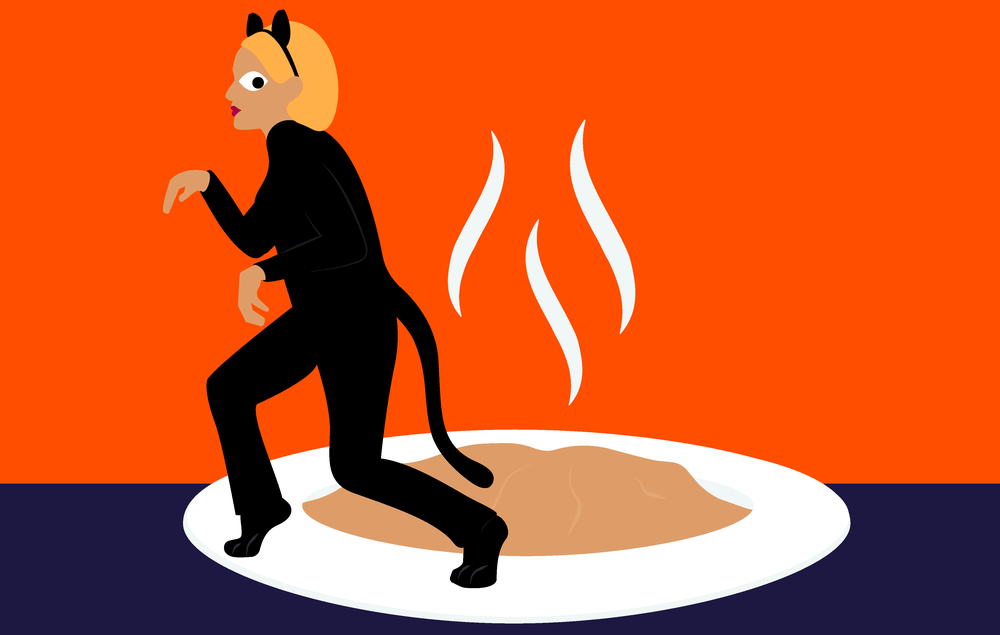
Given the historical relationship between humans and cats, it’s not surprising that there are lots of expressions using the cat as a metaphor. ‘Att gå som katten runt het gröt’ literally translates as ’to walk like the cat around hot porridge’ and refers to the fact that a cat does not want to eat the porridge before it has cooled. But what does it mean as a saying?
The idiom was first documented in 1641 and means to avoid speaking or acting directly about something – to skim the periphery. The English equivalent is ‘to beat around the bush’, which is a hunting reference, or ‘pussyfooting about’ which also refers to the tentative nature of the cat’s gait.
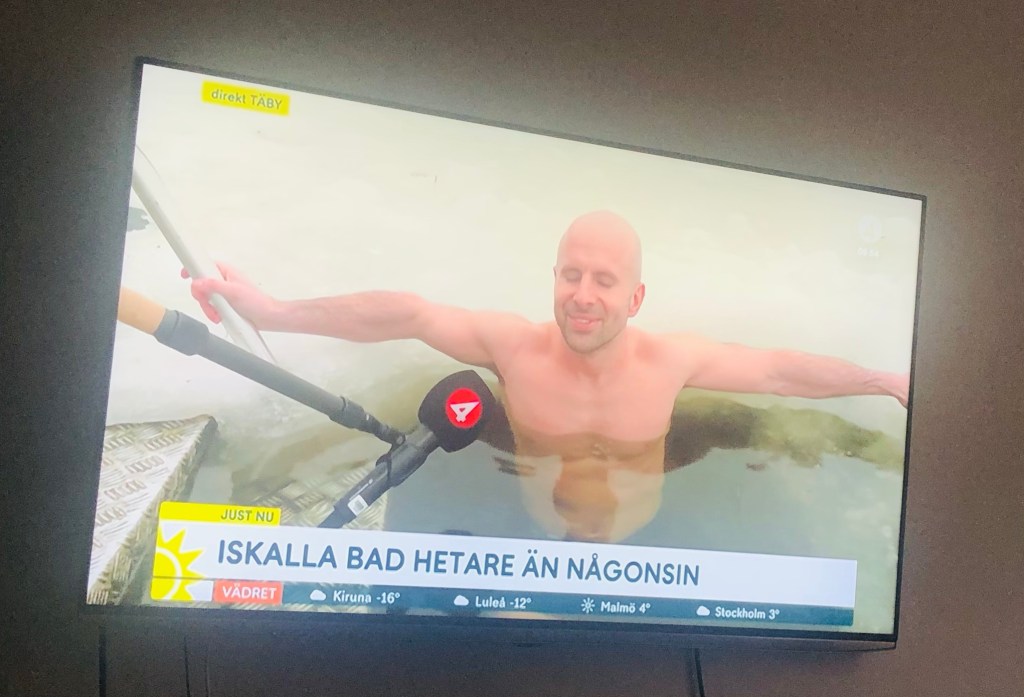
This winter, taking an outdoor ice bath has become very fashionable in Sweden. Disrobing and lowering yourself into frozen lakes at below zero temperatures is considered very healthy for the body and its ability to repair itself.
Spring has now arrived and the ice is melting but die hards are still squeezing the last out of the ice batheing season. Like this guy featured on TV, who regularly sits in the frozen lake – for 20 minutes at a time!
This may seem like a long time, but actually it is nothing compared to the world record. The world record for ice submersion is held by Austrian Josef Koerbel who, in 2020, held himself under ice for 2 hours and 30 minutes. In his case, it was in an ice box on a public square in the town of Melk.
Brrrr.
So, what about you? Do you feel enticed by the concept of plunging into the chilly depths to take an ice bath? Or would you rather keep yourself wrapped up warm and toasty on the bank of the lake?
Swede Anita Ekberg, from Malmö in Skåne, played an iconic leading role in Federico Fellini’s La Dolce Vita (1961). She is notably remembered for the scene where she bathed in la Fontana di Trevi. Born in 1931, she won the Miss Sweden title at the age of 20, and then went to USA to compete in Miss Universe. Although she didn’t win, she worked as a model and a hostess and got small film roles.
She was famously opinionated and refused to change her surname saying that if she became famous everybody would learn her name, and if she didn’t it wouldn’t matter.
Ekberg appeared in many films, but interestingly never a Swedish one. She retired from acting in 2002 and died in 2015 at age 83 in Rome.
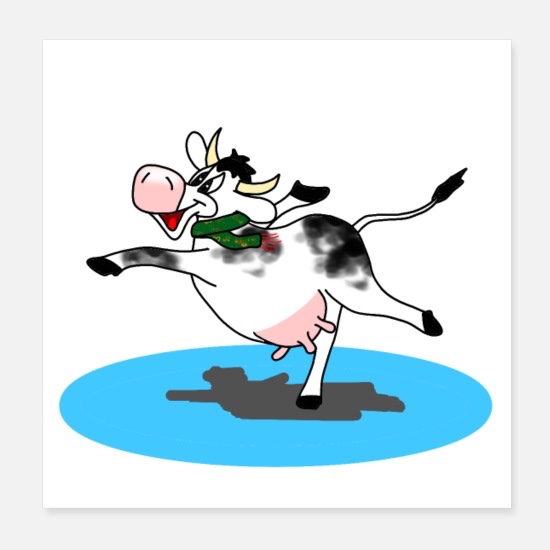
With all the open air ice skating going on at the moment, I am reminded of the Swedish expression ‘Det är ingen ko på isen’ or ’there’s no cow on the ice’. This expression is used to mean there is ‘ no need for worry’ or ‘don’t be concerned’. So, where does the expression originate?
Well, like many Swedish expressions, this one also has a rural origin. In the old days, farmers that had no running water would take their cows down to the lake to drink. As long as the cows stayed on land, and didn’t venture onto the frozen waters, there was no risk of them falling through the ice and drowning. In fact, the expression is an abbreviation of the longer saying ‘there’s no cow on the ice as long as their rear end is on land’. (Det är ingen ko på isen så länge stjärten är i land.) As long as they had a firm footing, they could rescue themselves if the ice broke around the periphery of the lake.
There’s a change blowing in Swedish politics and I’m really interested to hear your point of view.
In recent years, the far right, nationalistic party Sweden Democrats (SD) have gained traction. However, although they have a 17% representation in the parliament, they have never sat in the government. This is mostly because the other established parties have refused to negotiate or cooperate with them.
Today, Sweden has a minority government supported by smaller parties. One of the raison d’etre of this solution is to keep SD away from any form of governmental influence.
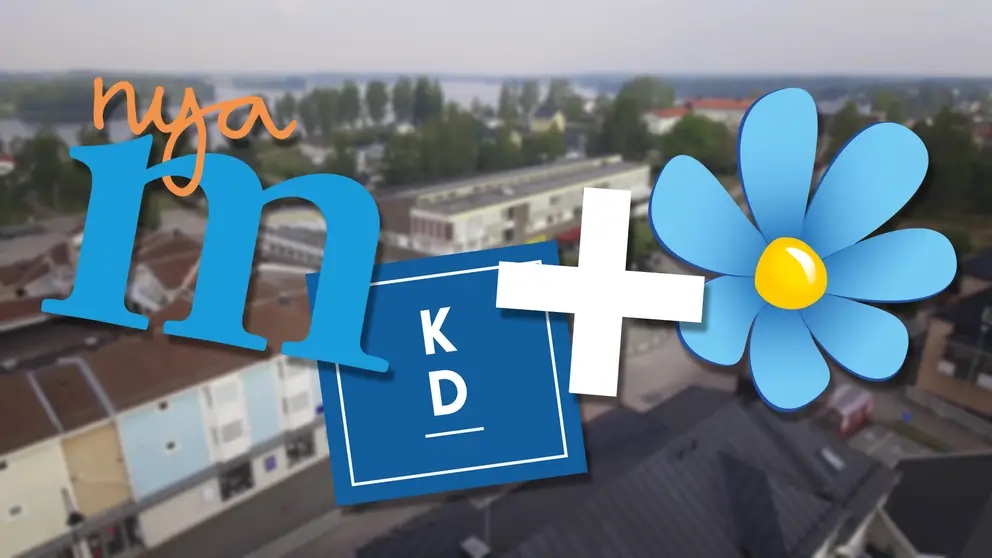
However, there is a shift. The two other right-oriented conservative parties, the Moderates (M) and the Christian Democrats (KD), are now opening the door to SD. In a bid to gain power, M and KD have understood they cannot reign without SD. Together, this block could get the largest number of votes, if not an outright majority.
Many people are concerned about this. History tells us how radical right-wing parties have previously gained political domination via the established conservative parties. The conservative parties opened the door, and then lost control. People are worried that this will happen in Sweden and that a right-wing union would devastate the country.
What do you think? Is this a valid concern or are people simply being alarmist?
Like many places around the world, Swedes celebrate Valentine’s Day on February 14th. Called ‘Alla Hjärtans Dag’ – All Hearts’ Day – it is a newish tradition that started around 50 years ago, but didn’t really gain traction until the 1990’s. American influence and commercialization are often cited as the reasons for this. I also think that it’s a timing issue – the month of February is an otherwise boring time of year in Sweden. A little celebration is a small distraction from the tedium.
In Sweden, Valentine’s wishes are not only limited to love interests, but also extended to children, friends and even school teachers.
Romantically, the most common Valentine’s gifts are flowers, and treating your loved one to a nice dinner, in a restaurant or at home. Approximately 10 million red roses are sold around this day, which is huge considering the population is also 10 million.
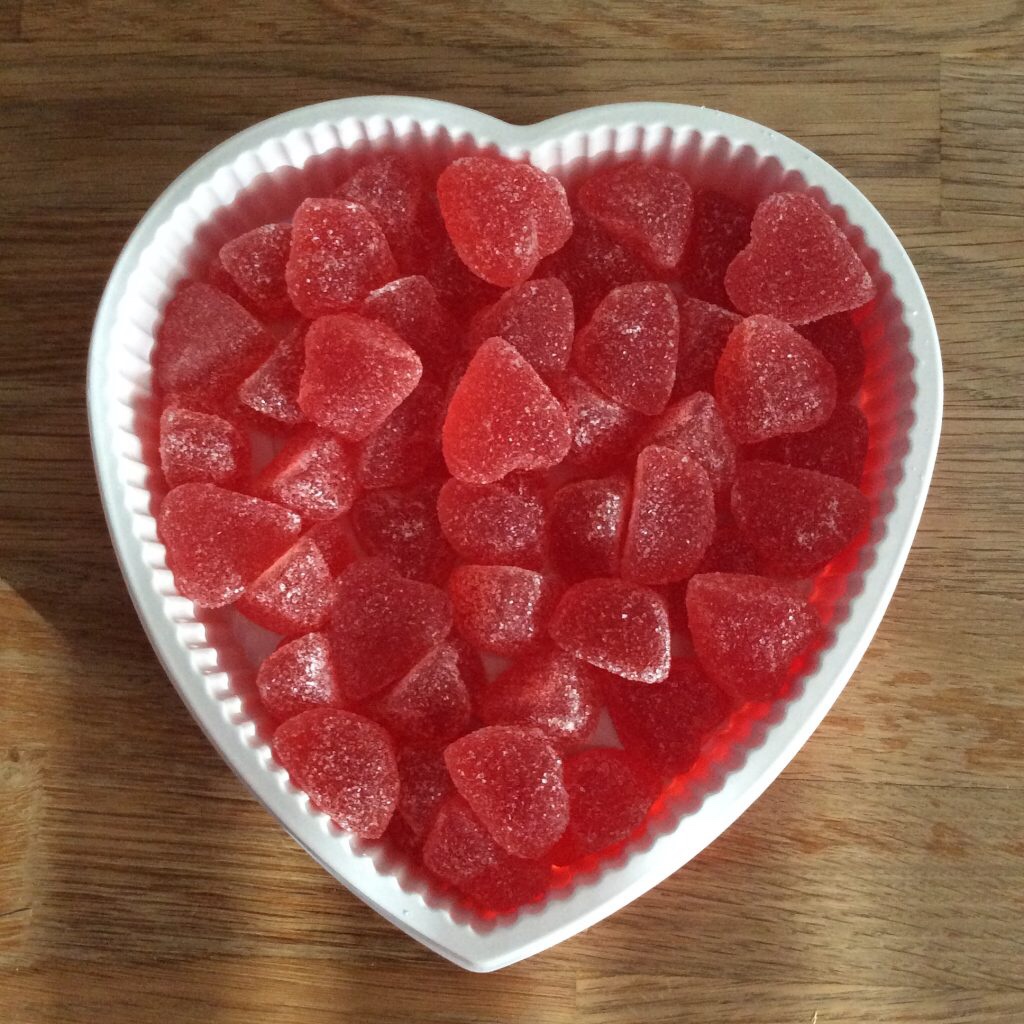
Heart-shaped candy is also popular, and in Sweden the most common is ‘jelly hearts’. Sales of chocolate and candy apparently increase by 90% every year around Valentine’s Day.
So, I might not have flowers or chocolates to give you, but I’d like to wish each of you a Happy Valentine’s Day. I appreciate that you want to read my writing, and in return I send you some loving energy. I hope you have love and affection in your life and that, when the day comes, you can celebrate with a long, warm hug!
I’ve written previously about the cream bun called a semla that is eaten around this time of year in Sweden. Traditionally consumed on Shrove Tuesday, this is a sweet, wheat bun filled with whipped cream and almond paste. And it is de-lish-us.
However, there is a way to eat it that I have never got on board with. A traditional method called the ‘hetvägg’, which translates literally a ‘hot wall.’ This is when the semla is placed into a bowl of warm milk, and eaten with a spoon. The result is a sugary, creamy slop.
The ‘hetvägg’ has a long history, going way back to the 1700’s when a warm, wedge-shaped spiced bun was served in a bowl of warm milk. This was eaten around Europe. In fact, the name ‘hetvägg’ has nothing to do with ‘hot wall’, but comes from the German for ‘hot wedge’ – “heisse wecke”. The top of today’s semla is often wedge-shaped as a historical nod to the original bun.
It is said that King Adolf Fredrik died from eating too many ‘hetvägg’ in 1771, but in fact it was a heart attack. Granted, he was a gluttonous man, and eating ‘hetvägg’ was indeed part of his questionable diet. After his death, there was a call to ban the sugary treat, as it was rumoured to have murdered the king.
The ‘hetvägg’ wasn’t banned and today it is still a popular way to consume the semla. I personally prefer mine dry and fluffy. But, hey, as they say in Swedish – ‘taste is like the backside – divided!’
Today is my birthday, but it’s not the first time I’m celebrating in Sweden. I must have had at least 20 birthdays here. This year is a bit special since big parties are not allowed, so it got me thinking what is typical about celebrating birthdays in Sweden?
1) Wake up call – Swedes who do not live in a single household are usually woken up early in the morning by friends or family coming into the bedroom with bubbly, breakfast, and gifts. The breakfast tray is often adorned with a candle. This is a lovely way to wake up, unless you’re not a morning person that is.
2) Singing – Swedes love to sing, in general, and they usually sing when they carry out the morning wake up call. The Swedish birthday song is a cheerful melody entitled ‘ja, må han/hon leva’. This translates as ‘yes, may he/she live (for a hundred years)..’ Curiously, there’s no mention of birthday in the Swedish song, unlike the English ‘Happy Birthday to You.’ After the singing, there is traditionally a ‘hurra’ at the end of the song. In most of Sweden, there are four ‘hurras’ but in the county of Skåne only three – hurra, hurra, hurra!
3) Green cake. A popular birthday cake is a green, marzipan clad cake called a ’Princesstårta’. Full of whipped cream, it’s a sickly treat. It seems ungracious but in Sweden, the celebrant themselves is responsible for bringing their own cake with them if they want to be celebrated in the work place.
4) Gift giving is usual in Sweden when somebody has their birthday. Usually, gifts are unostentatious such as flowers, chocolates, wine or something small and meaningful. Gifts for children tend to be more plentiful. A common group gift is to take the celebrant out to a restaurant. At some point during the dinner, a slightly self-conscious ‘Ja, må hon/han leva’ is sung.
5) The round number. Birthdays that end with a ‘0’ tend to be celebrated larger than others in Sweden as they are seen as a milestone. Swedes will often have a big party or will travel away with friends and family to warmer climes. Since neither are currently permitted in the shadow of the pandemic, birthdays with round numbers are celebrated in a smaller fashion or postponed to a later year.
Celebrating birthdays in Sweden became popular during the 1600’s in the Royal Court. Towards the end of the 1800’s it made its way into the general population. Important birthdays that are celebrated a little extra are 18, when a person comes of age, 20 when a person can legally buy alcohol and 65, when they retire. At the age of 100, Swedes receive a telegram from the monarch. According to Sweden’s Statistic Agency, the most common birthday in Sweden is 15 April. The least common, other than 29 February, is the 21 November.