Watching the Swedes react to corona virus

As the corona virus sweeps across the world, it’s interesting to watch how people react. While the measures the Swedish government are making do not seem as extreme as many other countries, the behaviour of some people is. Panic buying seems to be the name of the game. Panic buying and hoarding. And it doesn’t seem unique to Sweden.

Social media is awash with images of empty supermarket shelves. People are hoarding certain obvious items – such as hand gel, pasta, eggs, rice, beans and flour. But also weird items. For example, in my local supermarket, cucumbers are totally gone! And the Italian red wine shelf was pumped dry at my local wine store!

But the item causing the most debate seems to be toilet paper. Apparently the loo roll shelves have been totally cleaned out. It seems Swedes, and many others around the world, are seriously worried about wiping their bums if they get the virus.

Currently in Sweden, there is no general quarantine or curfew, as in many other countries. However, many companies have temporarily closed and employees are being asked to work from home. Public gatherings of over 500 people are forbidden. At the time of writing this the borders are still open and so are the schools.

We do have to be vigilant and we do have to act responsibly. Washing hands regularly, avoiding people who show symptoms, coughing/sneezing into the fold of our arms and not participating in large gatherings of people are a few of the ways. ‘Social distancing’ is the term this has been given – a new word for the 2020 dictionary.

But wiping out the supermarket shelves? In general, it’s good to have enough food at home to last a couple of weeks I guess. But do we really need enough toilet paper and red wine to last 6 months?

Hoarding is a logical panic reaction to a crisis situation, and it’s interesting to see how quickly people succumb to herd mentality. But it’s also a selfish action. Draining the supermarket shelves means that there is nothing left to buy for lower income people (elderly, unemployed, studying, sick) who live day to day and do not have the economic means to bulk buy. So let’s remember the concept of solidarity next time we go shopping.

One thing I’ve observed so far from this crisis; how quickly self-interest and self-preservation takes over.

Am I Swedish? A reply to my haters.

After my latest blog, I was hate trolled and told to ‘go home’ because I am ‘not Swedish’. This has happened numerous times before. Normally I don’t respond to haters. I don’t think it benefits to feed the troll. But this got me thinking about what makes somebody Swedish. And I realised the answer isn’t just about me, but about anybody who moves to this country.

Here’s my reply to my haters:

Dear hater,

You are right, I wasn’t born here. I was raised in the UK. That makes me British.

I have lived in Sweden for 25 years. 9 years ago I became a Swedish citizen. That granted me the right to be Swedish.

I have a Swedish passport. That makes me a Swedish national.

Dear hater, how do you define who is Swedish? Is it citizenship, or is it birthright? Often when people discuss this subject, they mix up nationality and ethnicity. Nationality is the relationship between an individual and the nation(s) that he or she is affiliated with. Ethnicity is the identification between an individual and a particular racial, cultural or religious group.

So when you tell me to ‘go home’ because I am not ‘Swedish’, you are not referring to my nationality – because I am a Swedish citizen. You are referring to my ethnicity. And there is a word for wanting to remove people from a population based on their ethnicity – it’s called ethnic cleansing.

I can accept that I wasn’t born here. But I can’t accept being told to ‘go home’ based on the fact that I am ‘not Swedish’ and have a different opinion. I am a Swedish citizen and have as much right as you or any other Swede to voice my opinion in whatever channel I want.

In fact, not only am I a Swedish citizen, I am a model citizen. Let’s just take a look at my track record, shall we?

I am educated to Master’s degree level and all of my education was taken outside of Sweden. I haven’t cost the state a single krona for my schooling.

I have no children – so I have not taken any parental benefits in money or paid time off work. I haven’t cost the state a single krona.

In a quarter of a century, I have only received state sick benefit for two weeks.

I have never been unemployed but have always worked and paid my own way. I have never received any social benefits from the Swedish state.

I have worked for 25 years in Sweden and paid all the relevant income taxes.

I own a company and pay corporate tax. I provide a livelihood for others by employing them and paying employee tax on their salaries. And they, in turn, also pay income tax.

Should we compare my track record to yours?

So, you see dear hater, the state has earned a lot more on me than I have cost. I have contributed a great deal in financial terms to this country – just like so many new Swedes have.

I am not complaining; I am happy to contribute via my taxes. I believe in socialized healthcare, welfare and education. I strongly appreciate that the benefit system is a strong one, and that it exists to help people who need it when they need it. And maybe one day I will need it. Solidarity is one of the reasons I admire Sweden so much.

My moving here was a choice. Probably yours wasn’t. My contribution to society is positive. Probably yours isn’t. I haven’t cost Sweden a single krona. I’m guessing you are very expensive for society.

So as long as I am here, I will continue to voice my opinion. I have earned it. And if you want to keep trolling, then go ahead. But realise that your comments put fire in my belly – you are not my hater, you are my motivator.

Oh, and by the way, I will not be ‘going home’ – because I already am home.

The month the world shrank

The existence and the spreading of the Corona virus in the last few weeks cannot have passed anybody by. In the earlier stages of the virus, flights were cancelled in and out of China, then we were advised to avoid other countries in South East Asia. Then Iran? And Italy? Should we also soon avoid Gothenburg?

The world went from a wide open planet of international travel to a closed place where we are advised to stay put. In under a month, the world shrank.

How might this impact Sweden and the Swedes? Well, business is certainly affected. Imports are stuck in China. Events are cancelled. Employees returning from affected areas are told to stay home for two weeks, in a corporately-imposed quarantine. And this might just be the beginning.

What about the Swedes themselves? Swedes are well-known for being travelers. The people of this small, cold nation set out all over the world in search of sun, warmth, light, and adventure. Will it be so easy to tell them to stop traveling? Some would say it is impossible. You can take away many things from a Swede, but don’t touch their overseas holiday. For some, it is almost perceived as a human right to travel to warmer climates. I would say how easy it is to get Swedes to stop traveling depends on how any possible travel ban is imposed.

In general, Swedes value rules. And, in general, they follow them: traffic rules, laws, deadlines and agreements. In comparative cultural research one of the frameworks that is often used is the contrast between rules/task and relationships. Simply put, some societies value rules over relationships, thinking that rules should be followed irrespective of the relationship between people. Others value relationships over rules, often seeing the rule more as a recommendation.

Consistently in research, Sweden comes out as oriented towards the rules-side of the spectrum. While this is of course a generalization, it suggests that Swedes tend to take to rules and regulations very easily, tend to prioritize them, and tend to value them. When Sweden legislated against smoking in restaurants, people’s behavior fell into line over night. It wasn’t the case in many other countries. In the EU, Sweden is one of the countries that has applied most of the EU legislation on a local level. When participating in tenant association meetings, Swedes rely heavily on the house charter to understand what is right and wrong behaviour. A customer of mine refused a friendly lunch (in my mind to build relationship) because the company had issued a decree against corruption. None of this might be the case in other countries where a higher premium is put on individual relationships and circumstances, rather than what it says in the rule book.

So will Swedes stop traveling? If it is legislated, yes. If it becomes an official ban, then most Swedes will probably follow it. The practical nature of the Swede will understand its importance. The logic of the solution will prevail. However, if it just comes as a suggestion, left to the whims of the individual, then most Swedes will probably keep traveling. They will avoid the worst areas, and reroute to somewhere they perceive as safer.

You can take a lot of things away from a Swede, but don’t touch their overseas holiday.

Swedish politics for the uninitiated

For those of you unfamiliar with the Swedish political system, here is a quick crash course.

Sweden is governed by a democratically elected government, led by a Prime Minister. Legislation is proposed by the government and decided by a multi-party parliament. The system of election to parliament is one of proportional representation. This means that there are several smaller parties, and sometimes they end up holding the balance of power. To hold one of the parliament’s 349 seats, parties must have a minimum of 4% of the vote. This barrier was put in place to prevent very small parties getting in.

Every four years, in September, a General Election is held in Sweden. At the same time, elections for the 290 local council authorities, and 20 county authorities are held. Sweden had a 87.18% voter turn-out in the last election in 2018, which shows a strong democratic interest from the electorate.

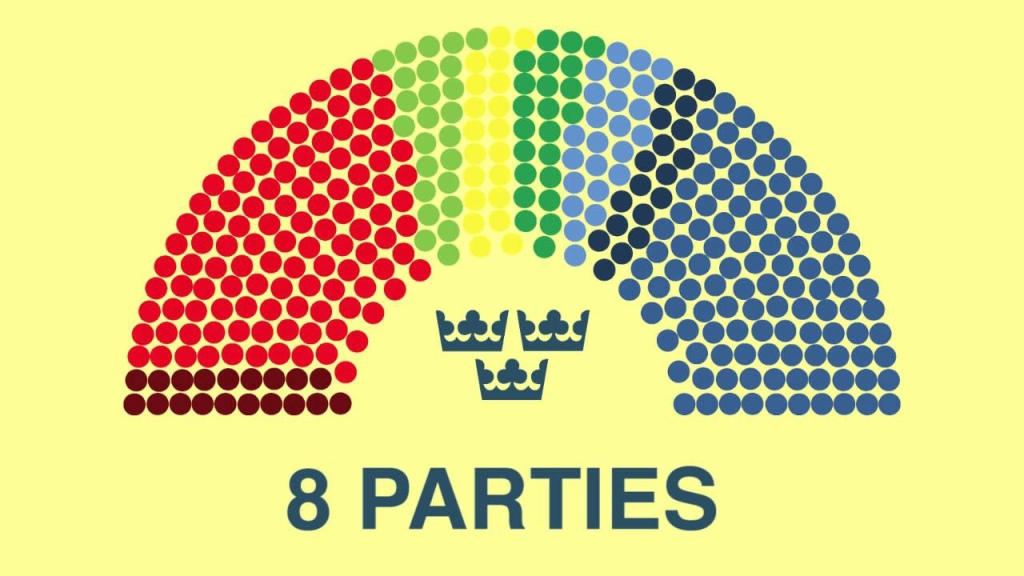
There are currently 8 parties in the Swedish Parliament. In the last election, the Social Democrats (left of center) gained the largest percentage of the vote – 28.26%. The next largest party was the Moderate (Conservative) party with 19.84%. Since proportional representation is the method, no single party receives their own mandate in Swedish politics. This means a process of discussion, negotiating and wheeling-dealing with smaller parties is required to gain majority, come over 50% and to gain a position of government.

Sweden’s current government took a very long time to finalise. After each general election, the Speaker of the House announces the preliminary Prime Minister, initially the leader of the party with the most votes. This person then has the task of forming a government and getting it passed through parliament. After the last election, the government was finally approved after an enormous 129 days of negotiation. It is a minority government led by the Social Democrats and containing the Greens (4.41%). It is supported by 3 opposition parties – the Left Party (8%), the Center Party (8.61%) and the Liberals (5.49%). This is a very unusual coalition which has shuffled around the political map and brought together parties with many opposing views. Some people think of it as an unholy and unsustainable grouping. However, despite their different political ideologies, this middle-ground alliance are united in one ambition – keeping the right-wing nationalistic party Sweden Democrats (17.53%) out of government.

It remains to be seen how long this alliance will hold, and indeed what will happen in the next election in 2 years time. It seems that Sweden might be caught in the jaws of political populism. In a recent opinion poll, the nationalists Sweden Democrats came out as number 1.

So is Sweden in a conservative renaissance – will the next coalition government be conservative-right wing?

Time will tell.

Sweden’s Swexit?

In the aftermath of Brexit on Friday at midnight, I now cherish my Swedish passport even more. It is the Swedish passport that provides me with the free movement and international access that I so strongly believe in. And it is the membership in the EU that, in my opinion, gives us strength, community and a chance for peace. From living in Sweden, I have learned an important lesson – ‘tillsammans är vi starkare’ – together, we are stronger.

Watching the officials remove the Union Jack from the EU Parliament display, I noticed that it was positioned next to Sweden’s blue and yellow flag. It got me thinking that if Sweden was to leave the EU, it would be called a Swexit. But what could it be called in Swedish? Which one sits most comfortably on the tongue?

  • Svutgång
  • Svorti
  • Svutträde
  • Svupplösning
  • Svavgång

Hopefully, it will never happen. It would be truly swawful.

Who 20 Swedish airports should be named after

Naming airports after individuals is common – for example Paris’ Charles de Gaulle, or New York’s JFK or Liverpool’s John Lennon airports. But not in Sweden. No naming commercial airports after celebrities here. Who the hell do you think you are?

In Sweden, it is tradition to name commercial airports after the location they are in – so Stockholm is called ‘Arlanda’, Gothenburg is called ‘Landvetter’ and Malmö includes the village of ‘Sturup’.

There was loose talk about changing Stockholm Arlanda to Alfred Nobel, but the idea didn’t fly. So, I thought, who could the airports be named after? There are about 38 airports in Sweden – here is my name list for 20 of them:

  1. Stockholm – ABBA Airport
  2. Gothenburg – Ace of Base Airport
  3. Malmö – Zlatan Ibrahimovic Airport
  4. Linköping – Louise Hoffsten Airport
  5. Nyköping Skavsta – Tess Merkel Airport
  6. Östersund Åre – Henrik Lundqvist Airport
  7. Ängelholm – Jill Johnson Airport
  8. Borlänge – Mando Diao Airport
  9. Västerås – Tomas Tranströmer Airport
  10. Jönköping – Dag Hammarskjöld Airport
  11. Växjö – Vilhelm Moberg Airport
  12. Hemavan – Anja Pärson Airport
  13. Ronneby – Viktor Balck Airport
  14. Örebro – Prince Daniel Airport
  15. Karlstad – Selma Lagerlöf Airport
  16. Kristianstad – Axel Anderberg Airport
  17. Skellefteå – Stieg Larsson Airport
  18. Halmstad – Gyllene Tider Airport
  19. Visby – Josefin Nilsson Airport
  20. Umeå – Eva Dahlgren Airport

Advent Calendar Dec 3: Gävlebocken

Every day, I will open a window containing a Swedish word that has something to do with the festive season.

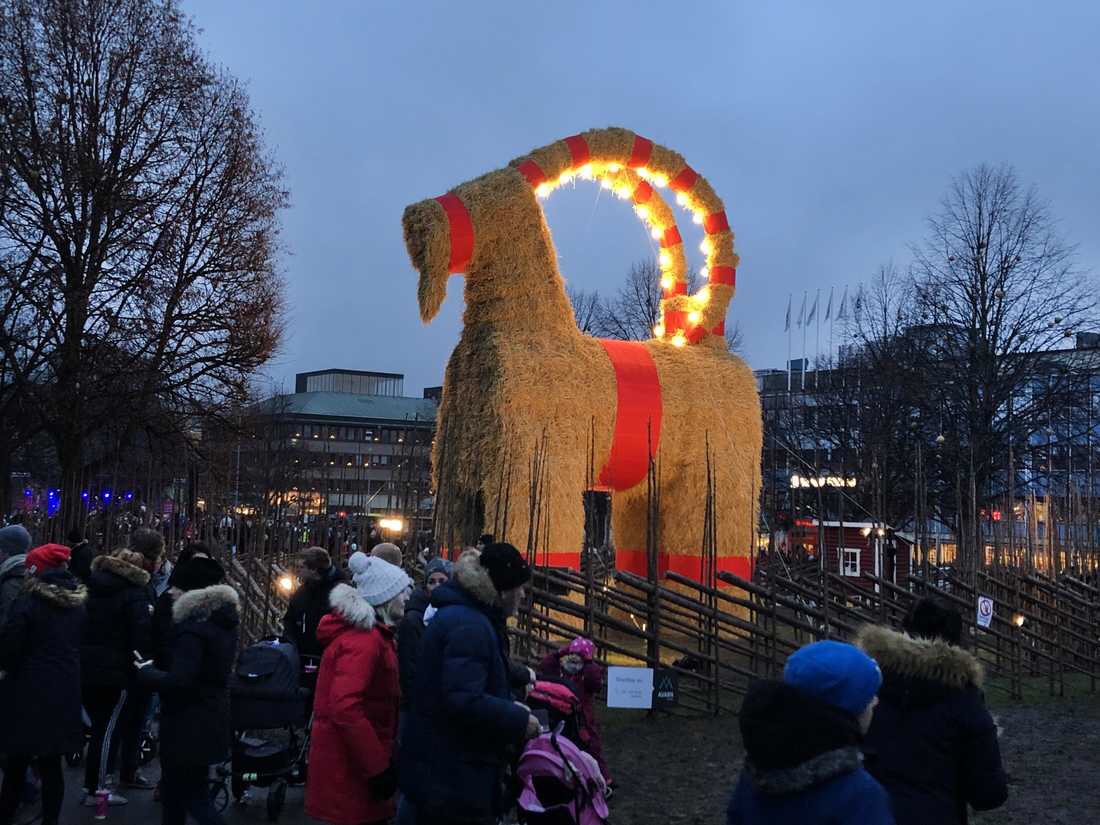
Today’s word is ‘Gävlebocken‘ which translates as ‘The Gävle Goat’.

This strange tradition takes place in the Swedish town of Gävle. Every year, a giant handcrafted straw goat is built on the town’s Castle Square. And almost every year, it gets burned to the ground by a pyromaniac.

One year, it was even burned down before its inauguration. Consequently, the local authority have increased security and have managed to prevent the burning for the last three years.

The symbol of the goat is a traditional Christmas decoration in Sweden, called a ‘julbock’ – a Christmas goat. Usually made of straw, a goat is placed under the Christmas tree or small goats are hung from the branches. The symbol of the goat has ancestry in Scandinavia far back in Nordic mythology and, up to the 1800’s, it was the goat who brought presents during the festive season. A kind of precursor to Santa Claus.

So although the Christmas goat has endured for centuries, it remains to be seen if the Gävle goat survives until the New Year.

Swedish Saints, Souls and shimmering cemeteries

Swiping through social media channels, it’s clear to see that dressing up as witches, vampires and other ghoulish things has become increasing popular in Sweden. Halloween parties are scheduled, not just on the 31st October, but at any time over the few weeks at the end of October and beginning of November.

I’m casting no shade over the masquerade, but personally I am much more enchanted by the traditional Swedish way of celebrating this time of year – it is so serene and reflective.

In Sweden, the first Saturday in November is All Saints’ Day – not necessarily November 1st as in most other countries. In 1983, the Sunday after All Saints’ Day was given the official name All Souls’ Day to separate between the saints and the dead.

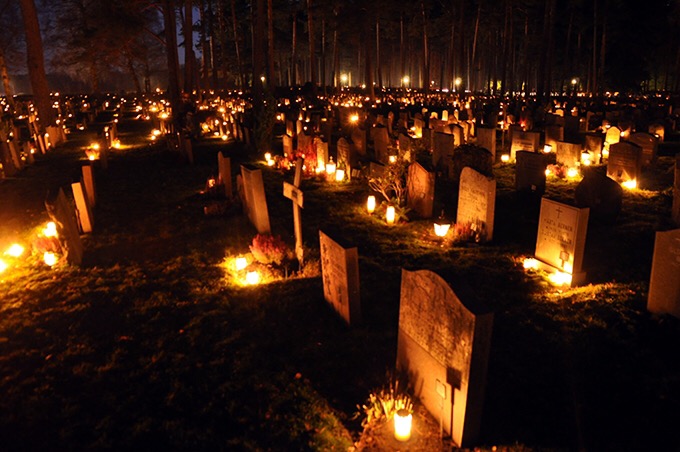
Since the 1800’s Swedes have, during this weekend, made pilgrimage to graveyards up and down the country to decorate the graves with candle light.

It is a beautiful experience to walk through the churchyards this weekend. In pitch black November, it is a shimmering reminder of those who have gone before us. Individual graves blink in the Nordic darkness, and memory groves blaze with the collective light of hundreds of flames.

If you are in Sweden today, go to a cemetery. If you happen to be in Stockholm, head for the Forest graveyard (Skogskyrkogården) for a specifically spectacular experience. 

When Sweden lays down the law

The international spotlight has been shone on Sweden’s judicial system in recent weeks. An American rapper is currently being held in custody on suspected physical assault. The President of the USA has intervened and tried to get the rapper released on bail – to no avail. Consequently, Sweden has been accused of corruption and racism.

I thought in this blog, I’d quickly clarify a few things about Sweden’s legal system so that you understand the holding of the rapper is fully compliant with the law.

The Swedish system. Sweden has a civil law system based on Romano-Germanic law. Sweden’s criminal courts have three levels: The Supreme Court of Sweden (Högsta Domstolen), 6 courts of appeals (hovrätter)and 53 district courts (tingsrätter).

The Constitution of Sweden prohibits capital punishment, [1], corporal punishment [2], and “torture or medical influence aimed at extorting or suppressing statements.”[3] Searches and seizures are restricted under Article 6 of the Constitution of Sweden.

When somebody is arrested, police and prosecutors are responsible for conducting initial investigations to determine whether an individual should be prosecuted for a crime – and which crime. Prosecution is mandatory if guilt has been established through the investigation period.

A defendant is entitled to counsel as soon as reasonable suspicion is established during the investigation stage. The defense attorney may ask the prosecutor to conduct specific investigations on the defendant’s behalf.

Any witness may be interrogated for up to six hours. In some jurisdictions such as Gothenburg, the local municipal council hires lay individuals to attend and document interrogations.

No bail system. There is no bail system in Sweden, where somebody can pay a bond to avoid pre-trial detention. Bail is more common in the Anglo-American judicial systems and not the European continental systems. In Sweden, individuals are often detained while awaiting trial, although they can be released without detention and have their travel restricted by court order. If there is a risk of fleeing the country, suspects can legally be kept in police custody by court order until investigations are complete. This is common praxis when it relates to foreign citizens with no residence in Sweden.

Once the initial investigations are complete, a court of law decides what the individual should be charged with, and the trial proceedings commence.

Independent Court of Law. In Sweden, and Finland, the legal system is totally independent and free of influence from political leaders. Members of the government or cabinet may not dictate or interfere with the daily workings of a government agency, court of law or similar. While this is common practice in other countries, in Sweden, this so-called ‘ministerstyre’ is illegal.

When Donald Trump called Sweden’s Prime Minister Stefan Löfven, the Swede explained that the Swedish judicial system, prosecutors and courts are totally autonomous. Everybody is equal in the eyes of the law and that the Swedish government will not and can not try to influence the legal process.

Let’s see what happens. If the rapper has been held in custody incorrectly or if he is charged with a crime that does not warrant incarceration then he has a right to claim compensation.

How to meet Swedes and maybe even find romance

I met up with a good friend yesterday who has just got two puppies. We went for a stroll through Stockholm’s Old Town and out onto the harbour island of Skeppsholmen. These two little puppies are of the breed Daschund, and they were incredibly popular with passers by on the street. Countless times, we were stopped and chatted to by Swedes and tourists alike. It seems that getting a dog is a great way to get people to talk to you in Stockholm!

In Swedish there is a concept called ‘hundtricket’ (the dog trick) which basically is about getting a dog so that you can pick people up on the street. And it obviously works! It’s actually how another friend of mine met her husband.

Of course, this isn’t a specifically Swedish phenomena. It’s been proven to work on dating site Tinder. A UK company carried out some research recently into how attractive people are perceived to be if they have a dog with them in their profile picture. According to the research men got 38% more swipes if there was a dog with them in their picture. Women got 69% more swipes!

People with dogs are apparently perceived as more open, relatable and approachable. Having a dog seems to be a great conversation starter, whether you’re on a dating app or walking down the street.

So, you want to connect more easily with Swedes? Get a dog!