International Romani Day-Roma in Sweden

Today, 8 April, is International Romani Day. It marks the first World Romani Congress that was held in London in 1971, making today the 50th occasion it has been celebrated. The day exists to shine a light on the ongoing persecution and abuse that the Roma population of the world has been forced to endure throughout history.

The Romani originate from northern India. They are dispersed, and their most concentrated populations are located in Europe, and Western Asia, since around 1007. Nobody really knows why the Roma left India in the first place, as no records were kept. However theories abound: from early persecution based on caste, to banishment from angering the king, and religious war.

The estimated 12 million Roma are consequently a nomadic people with no land to call their own. Their mobility and the fact that they lived in temporary camps contributed through the centuries to associations with poverty and accusations of high rates of crime. The discomfort that others felt about their presence led to perceptions of the Roma as antisocial, unsophisticated or even dangerous. Partly for this reason, discrimination against the Romani people has continued to the present day.

Romani have existed in Sweden since at least the 1500’s and today they are classed as one of Sweden’s five national minority groups (together with Jews, Sami, Swedish Finns and Tornedalers). Romani chib has the status of official minority language.

Over the centuries, the people of Sweden discriminated against, marginalised and excluded its Roma population. For 40 years, Sweden had a legal policy of enforced sterilization of people to avoid ‘unacceptable offspring’. Much suggests that Roma women were particularly subjected to this abuse, and mostly it was involuntary. Sweden removed this law in 1976. The Pew Research Poll of 2016 found that 42% of Swedes held strong anti-Roma views (compared to 82% in Italy, and 37% in Holland).

A Romani political activist in Sweden was Singoalla Millon, who died in 2020, and spent her entire life fighting for education, housing and acceptance. Another was Katarina Taikon who dedicated herself to improving conditions for Romani people in Sweden. She tried to convince the Swedish government to see the Romani as political refugees. She died in 1995. Today, the politician Soraya Post has worked as an EU politician defending the rights of the Romani and other minorities.

In 2012, the Swedish government introduced an 20-year equal opportunities strategy for Roma people. The strategy includes objectives and measures within several areas such as schooling, employment; housing, health, social care, culture and language. Of course, discrimination and marginalization are still very real in Sweden, but this is at least a step in the right direction.

‘Long’ Friday in Sweden

Today is called Long Friday in Swedish – ‘Långfredag’. It commemorates the long day and the long suffering that Jesus endured on the cross, according to Christian teachings. It is a public holiday, and for many years, everything was closed in Sweden making the day long and boring for many people. Now, most things are open, even the middle of a flaming, raging pandemic.

Good Friday is a day of cooking, shopping and going for walks. Some people attend church services. Tomorrow, Easter Saturday, is the normal day of celebration when Swedes gather to eat from a bulging smörgåsbord. Typical food includes variations of salmon, egg, herring and lamb. Dark Easter beer is consumed and snaps is knocked back.

In English, this day used to be called Long Friday also, but at some point in history it changed to Good Friday. Good in this context means Holy. According to the Daily Mash this is ‘still stupid. You don’t get much worse days than being flogged, nailed to a cross, then stabbed. And that includes your annual performance review. It’s like calling funerals ‘Happy Burying Nana Day’.

A Swedish walk in the park

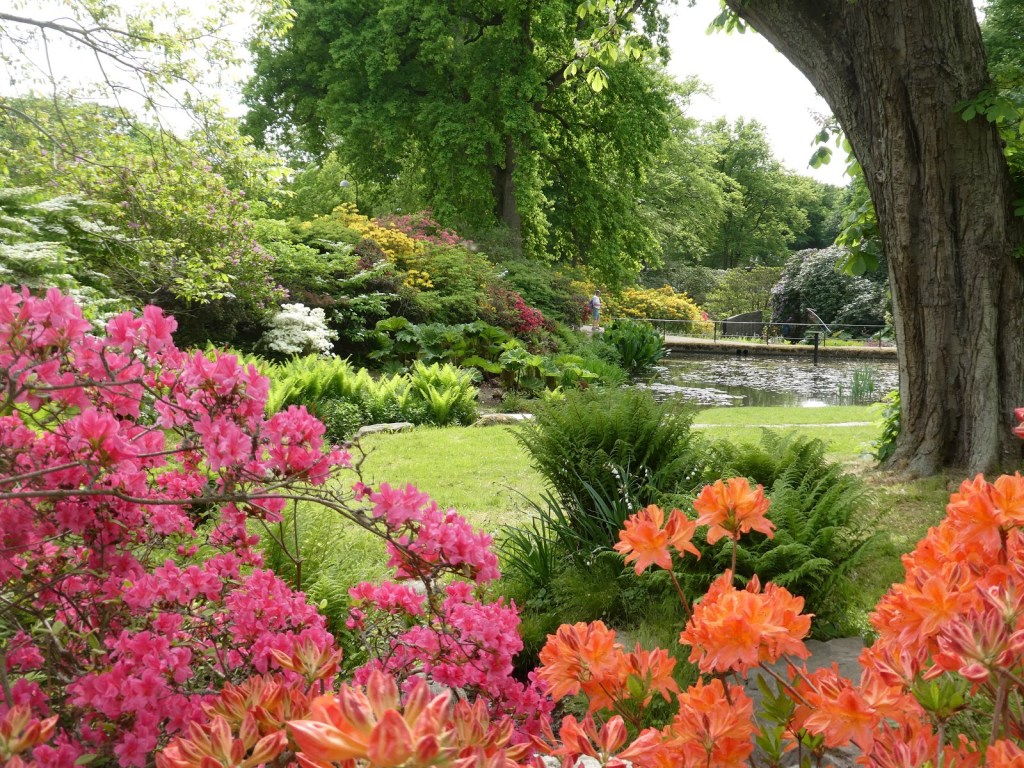
Today, 30 March, is International ‘Take a walk in the park’ Day. While some residents in some locked down countries might not appreciate the irony of it, here in Sweden it is fully possible to celebrate today by stepping out into one of the many green areas.

Take a Walk in the Park Day was founded to celebrate small excursions and the difference they can make to our mental, physical and emotional health.

In Sweden, there are thousands of parks and 30 official National Parks. What kind of park you prefer is of course a matter of taste. However, according to our friends on the internet, the three most beautiful parks in the country are Sofiero slottsträdgårdar in Helsingborg, Hagaparken in Stockholm and Boulognerskogen in Gävle. I’m sure there are a lot of people with other opinions.

Sweden also has a tradition of the ‘Folkpark’ which is a place for entertainment, cabaret, theatre, relaxation and enjoying the great outdoors. Folkpark’s had their heydey in the 1940’s-1960’s where artists would play on the stages and there would be party party and dance. The first Folkpark was built in Hällefors in 1796. Today they still exist, but have faced a lot of competition from festivals, arenas and other outdoor entertainment spaces.

For most urban dwellers around the world, the parks are the lungs of the city. And it’s the same in Sweden’s built up regions. Living in Stockholm, I am so lucky to have many parks and green areas within easy walking distance.

So, depending on where you live, and your time zone, it might not be too late. Put on your shoes and step out into your street, and go take a walk in the park. After all, today is ‘Take a Walk in the Park Day’.

Swedish Press Freedom – the first in the world

In several countries, I would not be allowed to freely write what I want in this blog. Many nations are fighting for press freedom and against censorship – some of them not very far away. Thankfully, Sweden has solved this issue of media independence. Everyone is free to express themselves in writing, provided they do not publicly defame another person or commit an illegal act.

Obviously, Sweden didn’t always have freedom of the press. In the early days of print, Swedes fought many battles against censorship and limitations on the printed word. However, things changed when, on 2 December 1766, Sweden became the first country in the world to write freedom of the press into the constitution. The Swedish Freedom of the Press Act also allowed public access to information, which made it legal to publish and read public documents.

The Act that applies today actually came into effect in 1949. Today, laws cover press ethics, disputes, freedom of expression over digital media and protection of the individual and of whistleblowers.

Compared with other countries in the EU, Sweden is the 3rd best country in terms of media independence, preceded by Finland and Denmark. Sweden holds the 4th position on a global scale, the number one country being Norway.

According to Reporters without Borders, one reason that Sweden isn’t ranked higher is that over 50% of local media is owned only by five major companies. These control the editorial line and job security.

Additionally, one third of Swedish journalists claim they self censor due to threats and harassment from trolls, violent groups, heads of overseas states and security forces. Very few perpetrators are sentenced.

The most common names in Sweden

According to svenskanamn.se, here are the most common names for men and for women in Sweden. If you’re living in Sweden, chances are you’re called one of these names – if not, you’ve definitely met one!

Most common names for men in order of frequency: Erik, Karl, Lars, Anders and Johan

Most common names for women in order of frequency: Maria, Anna, Margareta, Elisabeth, Eva.

The website also lists the most common surnames: Andersson, Johansson, Karlsson, Nilsson, Eriksson.

So technically, Erik and Maria Andersson are the most common names in Sweden.

Swedish expression: ‘to walk like the cat around hot porridge’

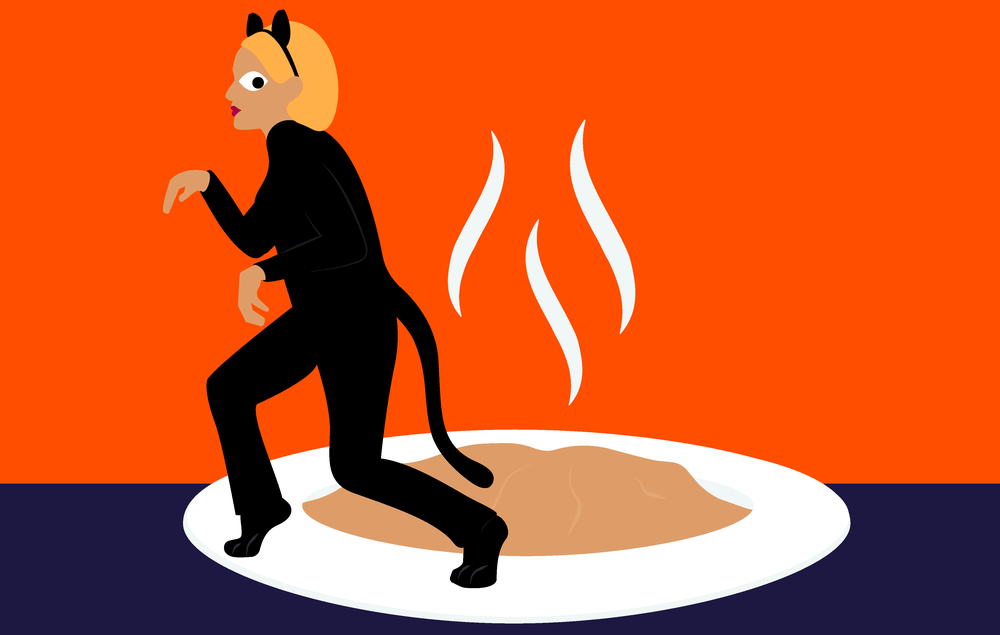
Given the historical relationship between humans and cats, it’s not surprising that there are lots of expressions using the cat as a metaphor. ‘Att gå som katten runt het gröt’ literally translates as ’to walk like the cat around hot porridge’ and refers to the fact that a cat does not want to eat the porridge before it has cooled. But what does it mean as a saying?

The idiom was first documented in 1641 and means to avoid speaking or acting directly about something – to skim the periphery. The English equivalent is ‘to beat around the bush’, which is a hunting reference, or ‘pussyfooting about’ which also refers to the tentative nature of the cat’s gait.

Graphic by Andrea Johansson

Swedish politics – alarmist or accurate?

There’s a change blowing in Swedish politics and I’m really interested to hear your point of view.

In recent years, the far right, nationalistic party Sweden Democrats (SD) have gained traction. However, although they have a 17% representation in the parliament, they have never sat in the government. This is mostly because the other established parties have refused to negotiate or cooperate with them.

Today, Sweden has a minority government supported by smaller parties. One of the raison d’etre of this solution is to keep SD away from any form of governmental influence.

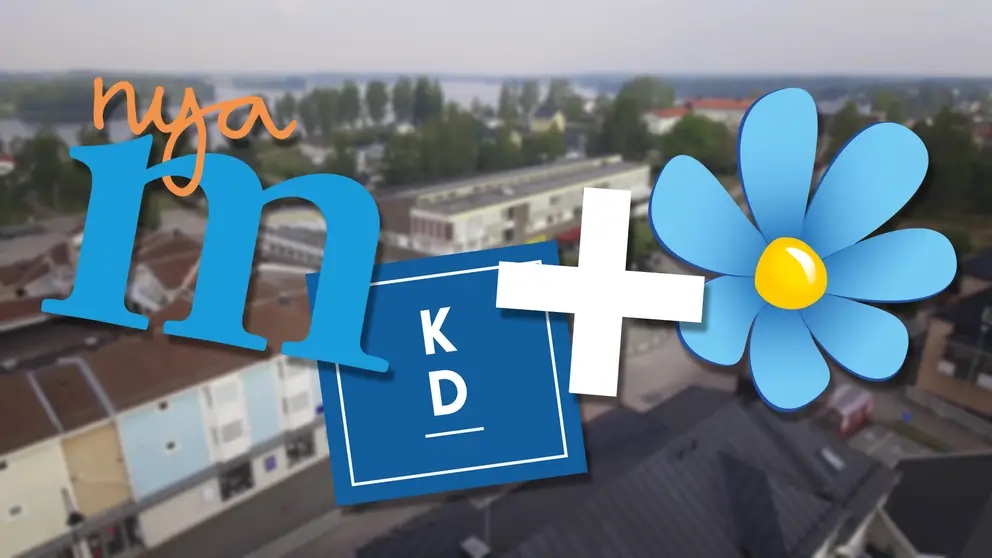
However, there is a shift. The two other right-oriented conservative parties, the Moderates (M) and the Christian Democrats (KD), are now opening the door to SD. In a bid to gain power, M and KD have understood they cannot reign without SD. Together, this block could get the largest number of votes, if not an outright majority.

Many people are concerned about this. History tells us how radical right-wing parties have previously gained political domination via the established conservative parties. The conservative parties opened the door, and then lost control. People are worried that this will happen in Sweden and that a right-wing union would devastate the country.

What do you think? Is this a valid concern or are people simply being alarmist?

Please share your thoughts.

Celebrating your birthday in Sweden

Today is my birthday, but it’s not the first time I’m celebrating in Sweden. I must have had at least 20 birthdays here. This year is a bit special since big parties are not allowed, so it got me thinking what is typical about celebrating birthdays in Sweden?

1) Wake up call – Swedes who do not live in a single household are usually woken up early in the morning by friends or family coming into the bedroom with bubbly, breakfast, and gifts. The breakfast tray is often adorned with a candle. This is a lovely way to wake up, unless you’re not a morning person that is.

2) Singing – Swedes love to sing, in general, and they usually sing when they carry out the morning wake up call. The Swedish birthday song is a cheerful melody entitled ‘ja, må han/hon leva’. This translates as ‘yes, may he/she live (for a hundred years)..’ Curiously, there’s no mention of birthday in the Swedish song, unlike the English ‘Happy Birthday to You.’ After the singing, there is traditionally a ‘hurra’ at the end of the song. In most of Sweden, there are four ‘hurras’ but in the county of Skåne only three – hurra, hurra, hurra!

3) Green cake. A popular birthday cake is a green, marzipan clad cake called a ’Princesstårta’. Full of whipped cream, it’s a sickly treat. It seems ungracious but in Sweden, the celebrant themselves is responsible for bringing their own cake with them if they want to be celebrated in the work place.

4) Gift giving is usual in Sweden when somebody has their birthday. Usually, gifts are unostentatious such as flowers, chocolates, wine or something small and meaningful. Gifts for children tend to be more plentiful. A common group gift is to take the celebrant out to a restaurant. At some point during the dinner, a slightly self-conscious ‘Ja, må hon/han leva’ is sung.

5) The round number. Birthdays that end with a ‘0’ tend to be celebrated larger than others in Sweden as they are seen as a milestone. Swedes will often have a big party or will travel away with friends and family to warmer climes. Since neither are currently permitted in the shadow of the pandemic, birthdays with round numbers are celebrated in a smaller fashion or postponed to a later year.

Celebrating birthdays in Sweden became popular during the 1600’s in the Royal Court. Towards the end of the 1800’s it made its way into the general population. Important birthdays that are celebrated a little extra are 18, when a person comes of age, 20 when a person can legally buy alcohol and 65, when they retire. At the age of 100, Swedes receive a telegram from the monarch. According to Sweden’s Statistic Agency, the most common birthday in Sweden is 15 April. The least common, other than 29 February, is the 21 November.

The Swedish Law of Sexual Consent

I’ve been watching the interesting Martin Scorsese documentary series on Netflix called ‘Pretend it’s a City.’ The programme is based on a series of interviews with sardonic writer Fran Lebowitz. In one episode, she talks about MeToo, and how when a woman accuses a man of rape the focus has shifted from ‘prove to me that she’s telling the truth’ to ‘prove to me that she’s lying.’

This is merely a change of perspective in most places and not enshrined in law. Except in a few countries, including Sweden. In 2018, a new law was introduced in Sweden – called the samtyckeslag – the Law of Sexual Consent. The basic principle of the law is that sex should be voluntary and that sex without explicit consent is considered rape. This applies whatever the gender.

The Swedish verb for ‘to rape’ is ‘våldta’ which literally translates as ‘to take by violence’. This reflects the previous definition of rape which involved some form of violence, force or threat or that the victim had been in a vulnerable position. An important part of the previous legislation was that the victim decisively said ‘no’. Since 2018, this is not the case.

A crime called ‘negligent rape’ was introduced which is a sexual act that occurs when there has not been an explicit statement of consent, but in which the perpetrator had not intended to commit rape or assault. In other words, before sex there has to be a clear ‘yes’ or active demonstration of consent. If there isn’t, it is rape.

Today, if a woman accuses a man of rape, she does not have to provide evidence that he was violent or coercive, that she had to fight him off or prove that she said ‘no’. The victim does not have to prove she is telling the truth, the accused has to prove she is lying.

The new law has been significant in many convictions in recent years. In one case, the Supreme Court wrote: ‘A person who is subjected to sexual acts against their will does not have any responsibility to say no or express their reluctance in any other way.’

So a ‘yes’ is a ‘yes’. And a lack of a ‘yes’ is a ‘no’

The Nobel prizes. What is your legacy?

Today is Nobel Day when the winners of the five Nobel prizes are celebrated. This year is a digital ceremony and the usual concert and grand banquet have been cancelled to avoid crowding.


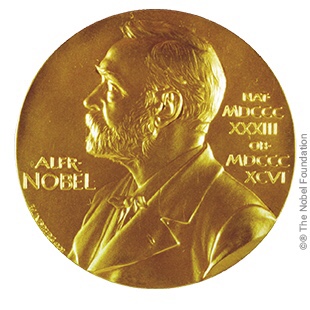
But how did the Nobel prizes come about? Well, the story goes like this. Alfred Nobel, the inventor of dynamite, woke up one day to his own obituary in the newspaper. Mistakenly, the paper had declared him dead, when in fact it was his brother. As a title for the obituary, the newspaper had written a rather unflattering ‘The angel of death is dead‘. The journalist also wrote that Alfred Nobel had made it possible to kill more people than anyone who had ever lived.


Suddenly Alfred Nobel understood this is how he would be remembered and, to change it, he founded the Nobel Prizes. Now his name is synonymous with science, literature and peace.


It makes for an interesting reflection. If you could read your own obituary, would you be proud of what you read? Would you also change your behaviours to influence the memory of you? And, if that’s the case – why not get out there and do it now?