Swedish Monsters: 10) the Troll

When I was at the open-air museum Skansen, I heard a story about mythical creatures. This started me on a series of Swedish monsters. Today, I wrap the series up with one remaining creature – the Troll!

Today – the Troll

The trolls in Scandinavian legend are not the same as the cute shock-haired characters in the animated movies that came out in the late 2010’s. Oh no, they are something altogether more sinister.

According to legend, trolls are described as being extremely old, hairy, very strong, with bulging eyes and large noses. Some are giants and some are dwarves. They are depicted as slow and dim-witted. They are voracious – feared for eating livestock, and children.

However, noticing a troll isn’t always easy. Trolls can actually take the shape of anything, including human beings. Sometimes they have a tail that they hide under their clothes. They reside far away from human habitation but frequently kidnap people and overrun farmsteads and human dwellings.

Living in forests, mountains and caves, trolls are said to fear iron and steel. Placing items made of those materials on your threshold prevents them from entering.

Trolls are also said to turn to stone in the sunlight. Luring them out of their hideaways and into the light is a way to get rid of them. Petrified trolls are associated with stony Scandinavian landmarks such as Trolltungen (troll tongue) Trollstigen (troll path), Trollveggen (troll wall) and Trollberget (troll mountain).

Trolls have been sighted everywhere in Sweden – from Värmland to Småland, Norrland to Skåne. So be careful this summer when you are strolling through the forests of Sweden and Scandinavia!
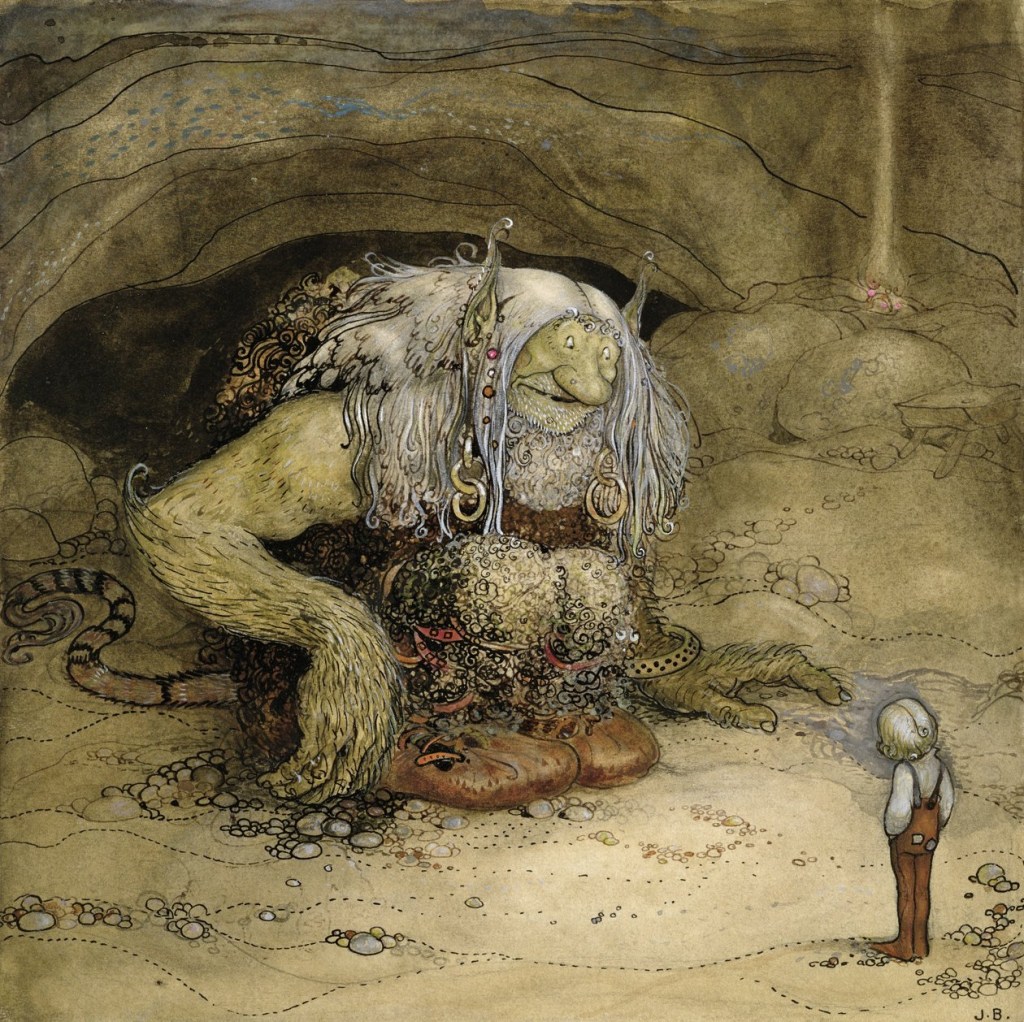
Illustration: John Bauer
Swedish Monsters: 9) Skogsrå

When I was at the open-air museum Skansen, I heard a story about trolls. This got me thinking about other mythological creatures and monsters that inhabit Sweden. And a new series was born!

Today – Skogsrå

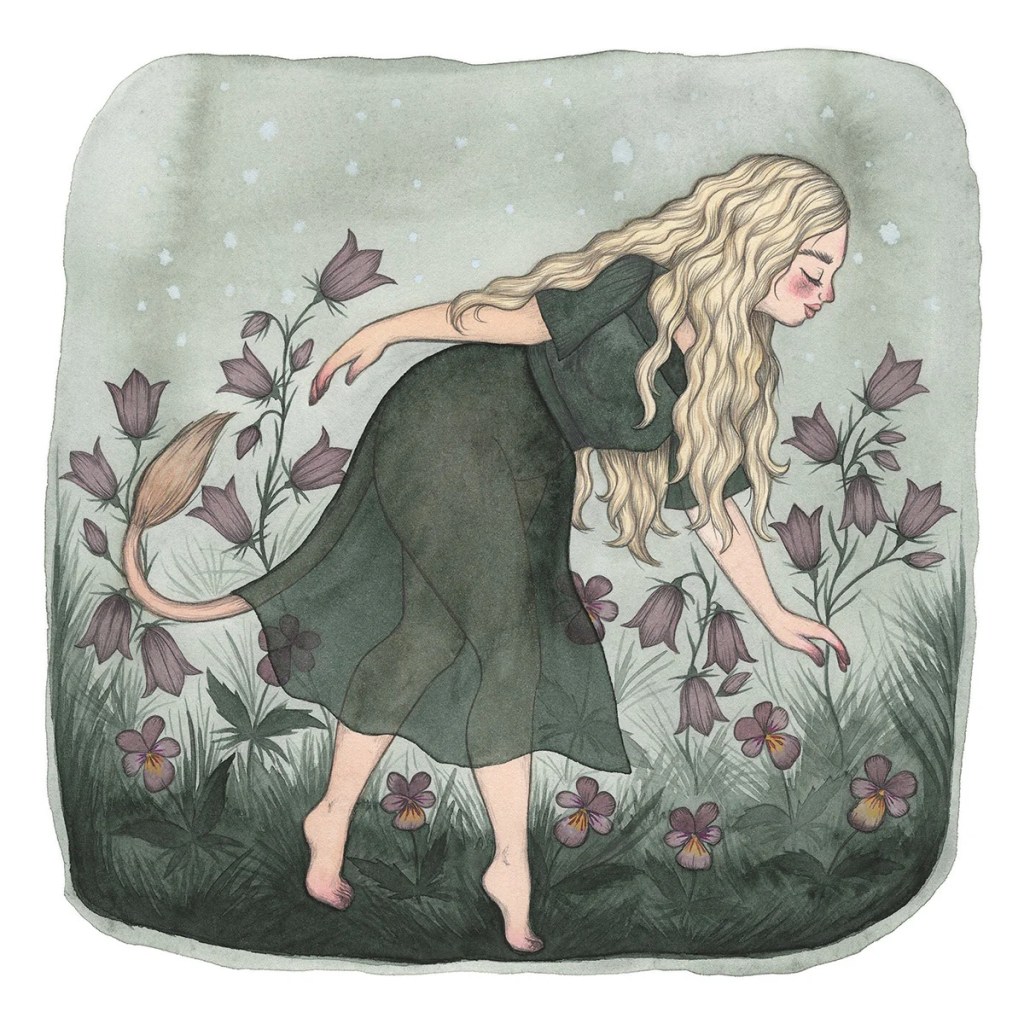
Another Swedish creature is the Skogsrå. A forest spirit, she is often depicted as a fair-haired beautiful woman, with the skill of seduction as her most prominent weapon. Using her skills, she lures men deep into the woods, to their peril.

The Skogsrå have hollowed-out backs, concealed from view. They also have a long cow’s tail. Of course, they have to also hide this from sight if their seduction is to work. The only way for a Skogsrå to lose her tail is if she gets married inside a church, when her tail will drop off, and she’ll transform into a human.

Similar to the legend of the sea-based Sirens, these forest nymphs lure men into the woods with their beautiful singing or harp-playing. They are also hypnotic dancers. It is said that if a human male has sex with a Skogsrå, he becomes sick and dies.

There are several ways to break the spell if you become bewitched by a Skogsrå. These include burning her with an ignited log and throwing tar in her face. To protect yourself, wear your clothes inside out and, under no circumstances give her your real name. If you do you will never break the enchantment.

Illustration: Kajsa Wallin

Swedish Monsters: 8) The Stalo

When I was at the open-air museum Skansen, I heard a story about trolls. This got me thinking about other mythological creatures and monsters that inhabit Sweden. And a new series was born!

Today – The Stalo.

The far north of Sweden, in the area known as Lapland, is home territory for the Stalo. According to Sami legend, this demon is a one-eyed giant troll that wears impenetrable black iron clothing. Stalo is rich, evil, and very strong. He hunts and devours people and reindeer. Locals who live nearby are expected to leave offerings on an altar to the giant. If they don’t, Stalo sends packs of wolves into the village to wound and kill its inhabitants.

However frightening he is, he is also not very intelligent and is easy to trick.

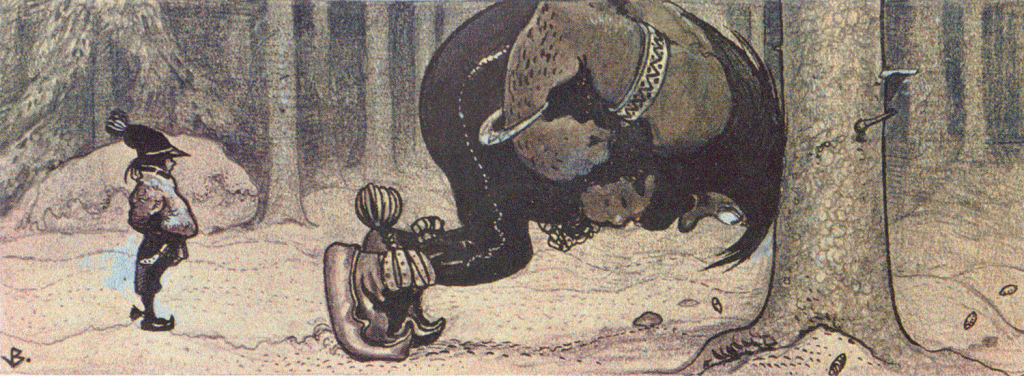
Legends exist that involve luring him onto a frozen lake, where he falls into a hole in the ice and can’t get up again. Yet another, depicted below, shows a boy called Kauras who tricks Stalo into a competition where he butts his head into a tree trunk, rendering himself unconscious. Other, more complex tales, describe children, who have been trapped by the Stalo, escaping by crushing his hands with boulders and pouring molten lead onto his face.


Image: John Bauer, Stalo and Kauras

Swedish Monsters: 7) Näcken

When I was at the open-air museum Skansen, I heard a story about trolls. This got me thinking about other mythological creatures and monsters that inhabit Sweden. And a new series was born!

Today – Näcken.

Summer is a time associated with bathing. But if you are bathing in-land, in a lake or stream or beck, keep an eye open for Näcken!

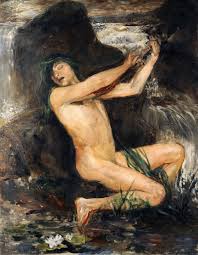
Näcken is a mythological creature in the shape of a naked man. He sits by waterways, or on lily pads, and plays beautiful music, often on a fiddle, but sometimes on a flute. With this music, he lures innocents into the water where they drown.

In certain legends, it is believed that Näcken can change his shape into, for example, a dragon, a worm or a beautiful white horse called Bäckahästen. As Bäckahästen, Näcken entices children to ride on his back and he carries them out the water to drown them. It doesn’t matter how many children there are, Bäckahästen’s back simply grows longer to accommodate them.

The name Näcken doesn’t come from the word ‘näck’ meaning naked in Swedish, as one might think. It comes from the Nordic word ‘nykr’ which meant ‘sea monster’ or ‘hippopotamus’.

So if you see a naked man playing a fiddle by the edge of a waterway – flee!

Painting: Ernst Josephson Strömkarlen

Swedish Monsters: 6) Torspjäsku

When I was at the open-air museum Skansen, I heard a story about trolls. This got me thinking about other mythological creatures and monsters that inhabit Sweden. And a new series was born!

Today – Torspjäsku.

It’s a shame that so much rain is forecast this week, because then you have to be on the look out for Torspjäsku – especially if you are on the island of Gotland.

This monster is a kind of giant troll that from the front looks like a kind, friendly and normal woman. However from the back, she is a hollowed-out tree trunk.

When it is thundering and lightning, Torspjäsku wants to take shelter inside a house to protect herself from the wrath of Thor. But whatever you do, don’t let her in, she is not very nice! In what way she is not nice, nobody knows as there are no survivors to tell the tale.

To protect yourself from this monster, put a piece of steel on your threshold, for example a pair of scissors. Then she cannot cross.

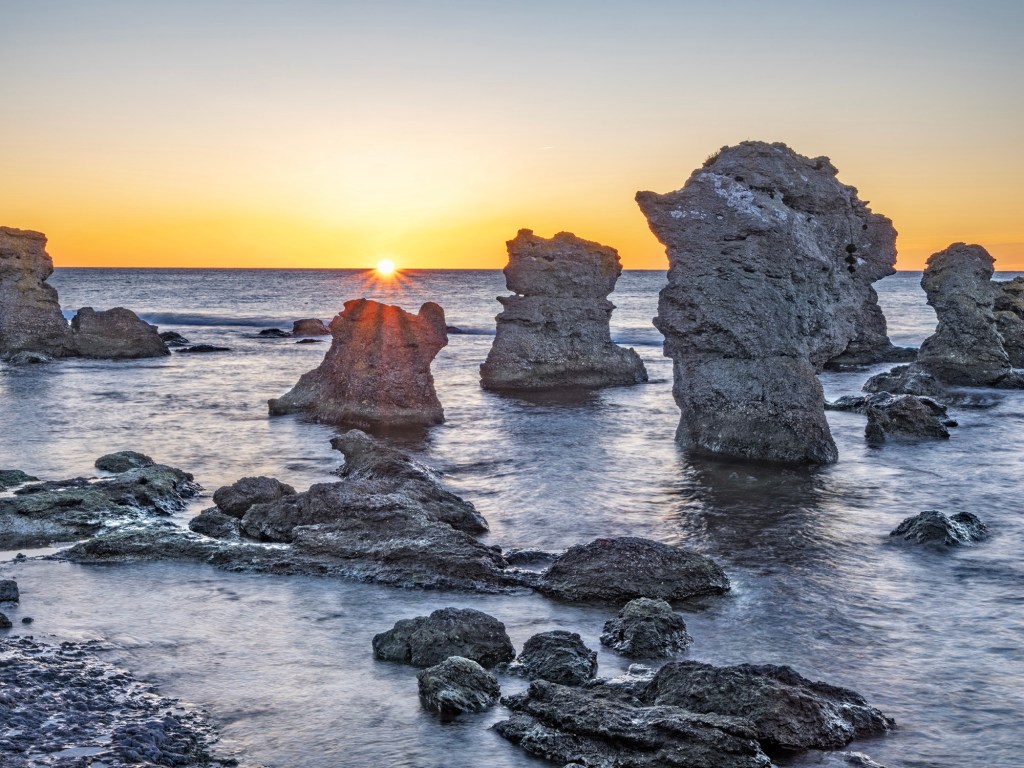
So secretive is she, that I don’t even have a picture to share! So here’s a picture by photographer Claes Grundsten of the mystical Gotlandic rock formations (rauker) instead!

Swedish Monsters: 5) Gloson

When I was at the open-air museum Skansen, I heard a story about trolls. This got me thinking about other mythological creatures and monsters that inhabit Sweden. And a new series was born!

Today – Gloson.

If you think pigs are cute, you might not after you hear about Gloson.

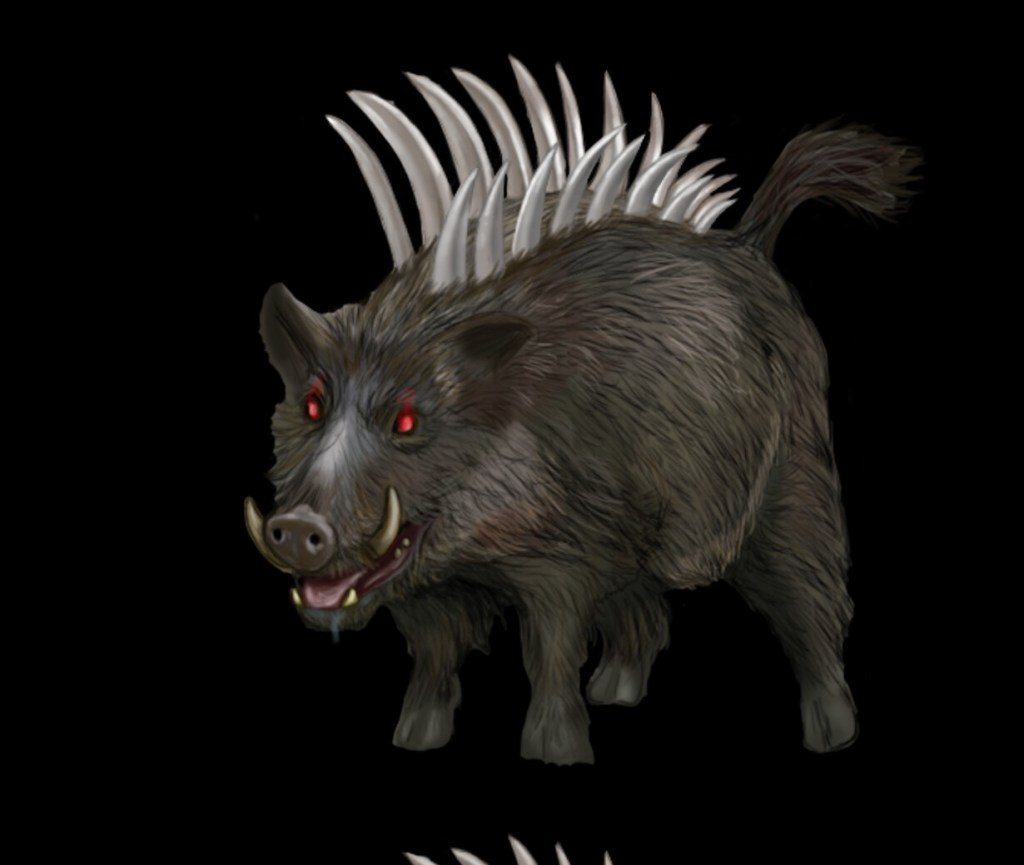
A monster from the southern part of Sweden, this creature is a ghost-like creature that takes the shape of a giant wild boar or pig. It has piercing flaming eyes, sharp tusks and fangs and a strange snout.

Along its back, there is a spiky razored ridge which it uses to run between people’s legs and split them open at their crotch. Scary!

Picture: Freja Hammar

Swedish Monsters: 4) Bysen

When I was at the open-air museum Skansen, I heard a story about trolls. This got me thinking about other mythological creatures and monsters that inhabit Sweden. And a new series was born!

Today – Bysen.

If you are visiting the Baltic island of Gotland this summer, look out for Bysen!

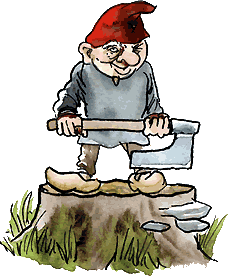
Bysen is a little Gnome-like creature that patrols and haunts the woods of the island. He carries an axe, and lures people by making them get lost and enchants their vision.

He is a mischievous character, rather like the ‘tomtar’ that inhabit barns and farms in mainland Sweden. He has been known to play tricks on foresters, delay transports, and tips loads of timber over.

He looks fairly insignificant – a small, grey man wearing a cap. It is said Bysen has done some crime within his lifetime and is therefore sentenced to wander the Earth forever. Bysen is also the ward of the forest and nature. Some people believe that there are several ‘bysens’ deep in the forest.

So be careful if you are on Gotland. If Bysen bewitches you, you might get lost in the woods forever.

Picture: ungafakta.se

Swedish Monsters: 3) Storsjöodjuret – The Great Lake Monster

When I was at the open-air museum Skansen, I heard a story about trolls. This got me thinking about other mythological creatures and monsters that inhabit Sweden. And a new series was born!

Today – Storsjöodjuret.

This monster is thought to inhabit the depths of Storsjön, a 300m deep lake in county Jämtland in the middle of Sweden. It has several names in English, such as Storsie, a play on the name Nessie – the more-famous Loch Ness Monster in Scotland.

This Swedish lake monster is first mentioned in a 1635 manuscript. Later folk legends claimed the Great Lake monster was created by trolls and that it was a cat-headed creature with a black snake-like body.

There have been around 500 people who have claimed to have witnessed the beast since the 19th century, giving varying details, some claiming a dog-like head, others saying it has humps and fins. Its average length is said to be around 10m. The most recent sighting was 2008, when a film crew claimed to have captured it on film.

On the southernmost tip of Lake Storsjön lies Svenstavik. Inside the local library there is an interactive research and visitor´s center for all curious to know more about the monster.  The center is always standby in case there is a monster sighting via the monitors on the bottom of lake Storsjön. There are also films of true witnesses telling their stories.

At the museum Jamtli in Östersund visitors can go sliding through the belly of Storsjöodjuret downstairs to the exhibitions. In the Storsjöodjurs exhibition there are, among other things, the giant iron trap that was once used to attempt to catch the Storsjöodjur. The trap was then baited with a pig, but with no success.

There are 8 official Monster Observation Spots around the lake, positioned in places where eye witnesses have claimed to have seen the beast.

So is it true or not? Who, knows.. but despite the viewings and the legends, Swedes are not afraid to bathe in the lake. One of the most popular spots is Trönö Sandy Beach 30km outside Söderhamn.

Although people seem to believe that the monster is friendly, and rather shy, would you bathe there?

Swedish Monsters: 2) The Mara

When I was at the open-air museum Skansen, I sat and listened to an old woman telling fairy tales about mythical creatures. The story I heard was about trolls. This got me thinking about other mythological creatures and monsters that inhabit Sweden. And a new series was born!

Today – The Mara.

In Swedish folklore, a mara is a supernatural creature that tortures people in their sleep by straddling them, pressurizing their chests and evoking a sense of suffocation and anxiety. It can take many forms. However it is most often in the shape of a witch-like woman, who slips in through the keyhole or any crack in the door. However, a mara can also be a cat, a monkey, or even a ball of twine.

If a Mara visits you in the night, and ‘rides’ your chest, you become paralyzed and immovable.

It is believed that the Mara can only climb into the bed by first stepping in the sleeping person’s shoes on the floor. One way to avoid this is therefore to remove your shoes to another part of the room, or put them under the bed with the toes pointing outwards.

If you ever witness somebody possessed by a Mara, go immediately to the forest and find a hollowed-out trunk. Put that in the bed next to the person and the Mara will transfer itself from them and to the piece of wood. Then you can take out the wood, and force the creature back to the forest.

An interesting point about the Mara, is that the Swedish word ‘mardröm’ and the English ‘nightmare’ originate from it.

Swedish Monsters: 1) The Lindworm

When I was at the open-air museum Skansen, I sat and listened to an old woman telling fairy tales about mythical creatures. The story I heard was about trolls, and how a troll can do magic and disguise itself amongst humans. This got me thinking about other mythological creatures and monsters that inhabit Sweden. And a new series was born!

First out – The Lindworm.

In Swedish folklore, lindworms (’lindorm’) are giant forest serpents without limbs, living deep in the woods. They are a danger to humankind. Dark in colour, they sometimes have a brighter underbelly. They have large horse-like manes, and spit out a foul milk-like substance to blind passers-by. Once their victim is blinded, the snake captures them and drags them under rocks to devour them.

Lindworms lay eggs under linden trees and, once hatched, can become extremely long. To catch fleeing humans, they swallow their own tails and become a wheel after which they roll at high speed. This has also earned them the name ‘wheel snakes’. They are said to mostly exist in the deep forests of county Småland. But who knows where else they might be!

So, if you are out this summer hiking through the forest, take extra care that you do not fall victim to a lindworm!