Swedish Monsters: 7) Näcken

When I was at the open-air museum Skansen, I heard a story about trolls. This got me thinking about other mythological creatures and monsters that inhabit Sweden. And a new series was born!

Today – Näcken.

Summer is a time associated with bathing. But if you are bathing in-land, in a lake or stream or beck, keep an eye open for Näcken!

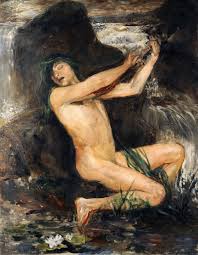
Näcken is a mythological creature in the shape of a naked man. He sits by waterways, or on lily pads, and plays beautiful music, often on a fiddle, but sometimes on a flute. With this music, he lures innocents into the water where they drown.

In certain legends, it is believed that Näcken can change his shape into, for example, a dragon, a worm or a beautiful white horse called Bäckahästen. As Bäckahästen, Näcken entices children to ride on his back and he carries them out the water to drown them. It doesn’t matter how many children there are, Bäckahästen’s back simply grows longer to accommodate them.

The name Näcken doesn’t come from the word ‘näck’ meaning naked in Swedish, as one might think. It comes from the Nordic word ‘nykr’ which meant ‘sea monster’ or ‘hippopotamus’.

So if you see a naked man playing a fiddle by the edge of a waterway – flee!

Painting: Ernst Josephson Strömkarlen

Swedish Monsters: 6) Torspjäsku

When I was at the open-air museum Skansen, I heard a story about trolls. This got me thinking about other mythological creatures and monsters that inhabit Sweden. And a new series was born!

Today – Torspjäsku.

It’s a shame that so much rain is forecast this week, because then you have to be on the look out for Torspjäsku – especially if you are on the island of Gotland.

This monster is a kind of giant troll that from the front looks like a kind, friendly and normal woman. However from the back, she is a hollowed-out tree trunk.

When it is thundering and lightning, Torspjäsku wants to take shelter inside a house to protect herself from the wrath of Thor. But whatever you do, don’t let her in, she is not very nice! In what way she is not nice, nobody knows as there are no survivors to tell the tale.

To protect yourself from this monster, put a piece of steel on your threshold, for example a pair of scissors. Then she cannot cross.

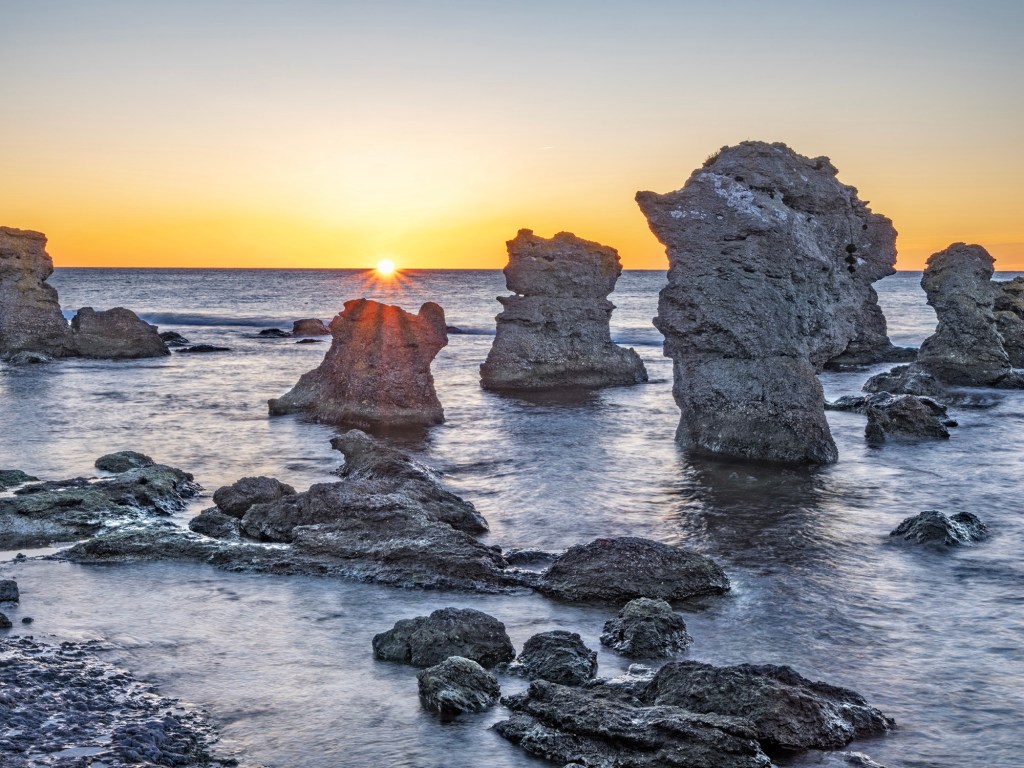
So secretive is she, that I don’t even have a picture to share! So here’s a picture by photographer Claes Grundsten of the mystical Gotlandic rock formations (rauker) instead!

Swedish Monsters: 5) Gloson

When I was at the open-air museum Skansen, I heard a story about trolls. This got me thinking about other mythological creatures and monsters that inhabit Sweden. And a new series was born!

Today – Gloson.

If you think pigs are cute, you might not after you hear about Gloson.

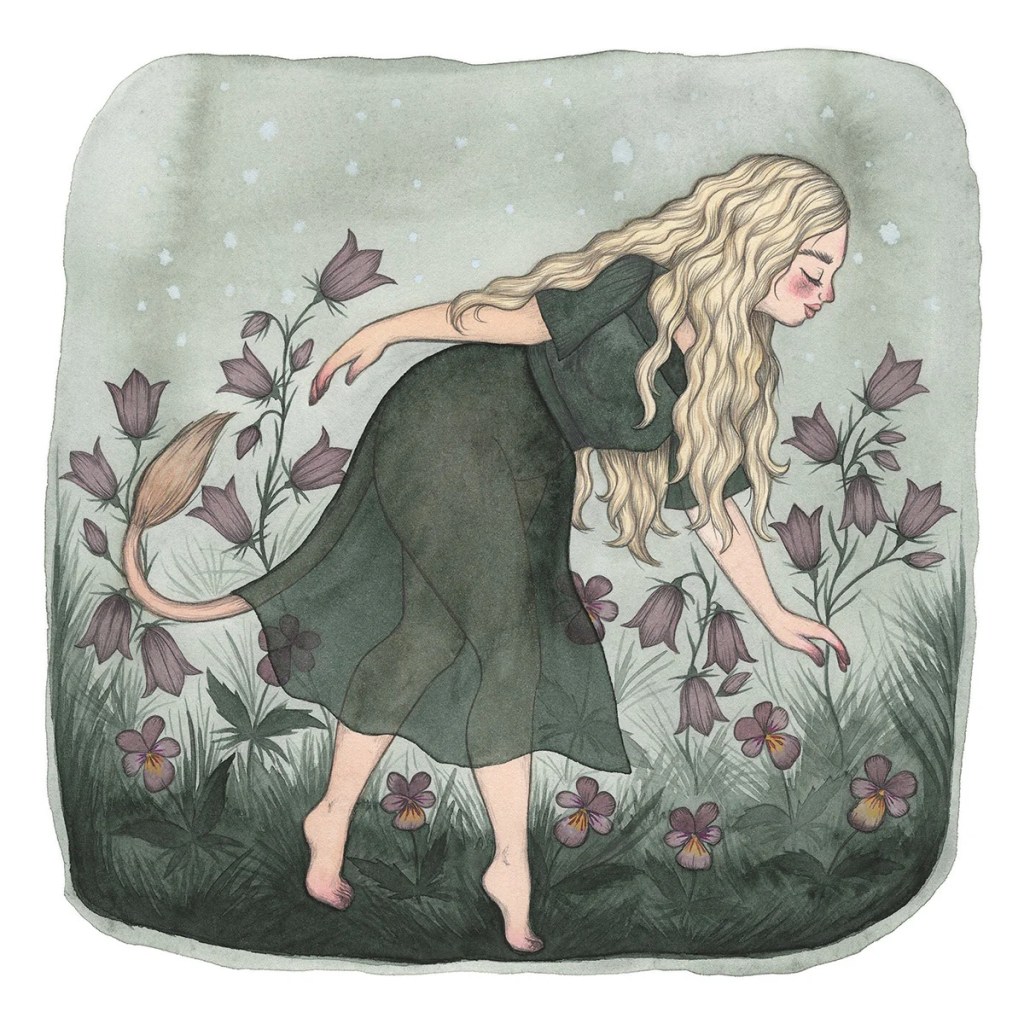
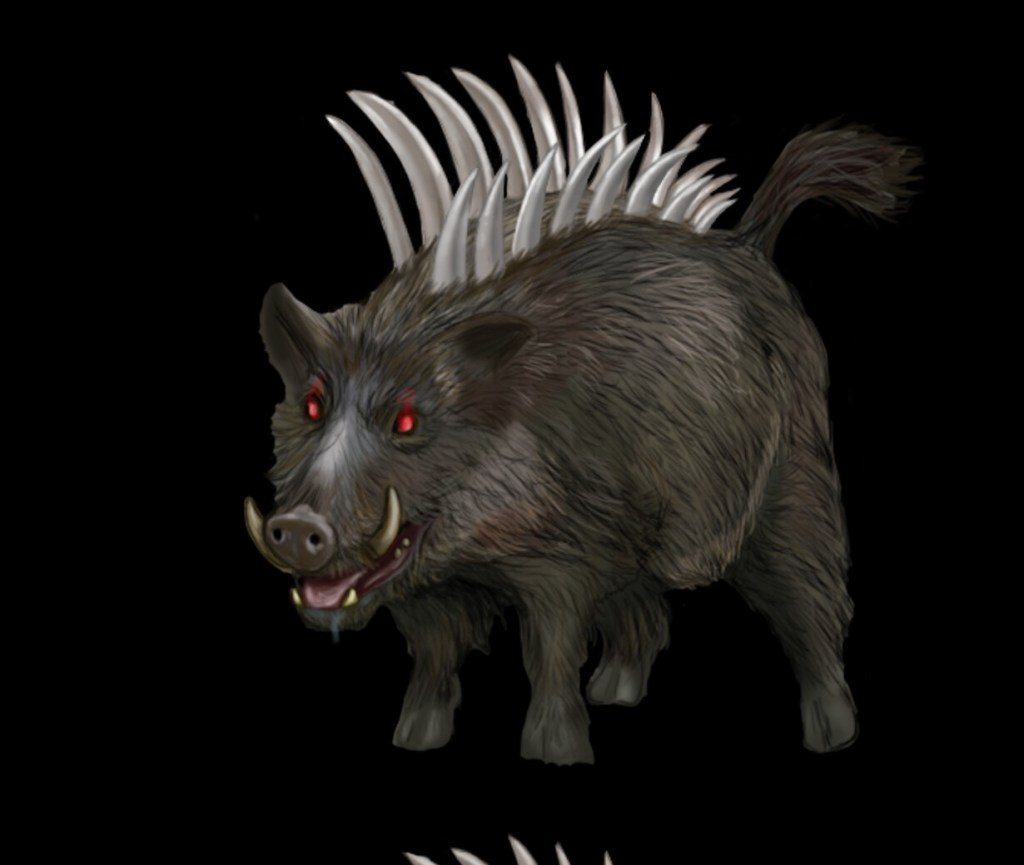
A monster from the southern part of Sweden, Gloson is a ghost-like creature that takes the shape of a giant wild boar or pig. It has piercing flaming eyes, sharp tusks and fangs and a strange snout.

Along its back, there is a spiky razored ridge which it uses to run between people’s legs and split them open at their crotch. Scary!

Picture: Freja Hammar

Swedish Monsters: 5) Gloson

When I was at the open-air museum Skansen, I heard a story about trolls. This got me thinking about other mythological creatures and monsters that inhabit Sweden. And a new series was born!

Today – Gloson.

If you think pigs are cute, you might not after you hear about Gloson.

A monster from the southern part of Sweden, this creature is a ghost-like creature that takes the shape of a giant wild boar or pig. It has piercing flaming eyes, sharp tusks and fangs and a strange snout.

Along its back, there is a spiky razored ridge which it uses to run between people’s legs and split them open at their crotch. Scary!

Picture: Freja Hammar

Swedish Monsters: 4) Bysen

When I was at the open-air museum Skansen, I heard a story about trolls. This got me thinking about other mythological creatures and monsters that inhabit Sweden. And a new series was born!

Today – Bysen.

If you are visiting the Baltic island of Gotland this summer, look out for Bysen!

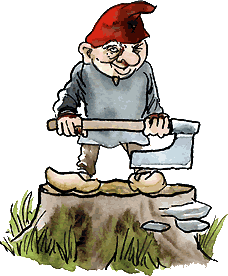
Bysen is a little Gnome-like creature that patrols and haunts the woods of the island. He carries an axe, and lures people by making them get lost and enchants their vision.

He is a mischievous character, rather like the ‘tomtar’ that inhabit barns and farms in mainland Sweden. He has been known to play tricks on foresters, delay transports, and tips loads of timber over.

He looks fairly insignificant – a small, grey man wearing a cap. It is said Bysen has done some crime within his lifetime and is therefore sentenced to wander the Earth forever. Bysen is also the ward of the forest and nature. Some people believe that there are several ‘bysens’ deep in the forest.

So be careful if you are on Gotland. If Bysen bewitches you, you might get lost in the woods forever.

Picture: ungafakta.se

Swedish Monsters: 3) Storsjöodjuret – The Great Lake Monster

When I was at the open-air museum Skansen, I heard a story about trolls. This got me thinking about other mythological creatures and monsters that inhabit Sweden. And a new series was born!

Today – Storsjöodjuret.

This monster is thought to inhabit the depths of Storsjön, a 300m deep lake in county Jämtland in the middle of Sweden. It has several names in English, such as Storsie, a play on the name Nessie – the more-famous Loch Ness Monster in Scotland.

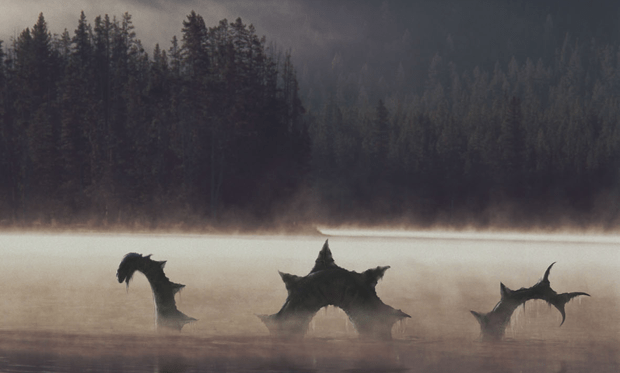
This Swedish lake monster is first mentioned in a 1635 manuscript. Later folk legends claimed the Great Lake monster was created by trolls and that it was a cat-headed creature with a black snake-like body.

There have been around 500 people who have claimed to have witnessed the beast since the 19th century, giving varying details, some claiming a dog-like head, others saying it has humps and fins. Its average length is said to be around 10m. The most recent sighting was 2008, when a film crew claimed to have captured it on film.

On the southernmost tip of Lake Storsjön lies Svenstavik. Inside the local library there is an interactive research and visitor´s center for all curious to know more about the monster.  The center is always standby in case there is a monster sighting via the monitors on the bottom of lake Storsjön. There are also films of true witnesses telling their stories.

At the museum Jamtli in Östersund visitors can go sliding through the belly of Storsjöodjuret downstairs to the exhibitions. In the Storsjöodjurs exhibition there are, among other things, the giant iron trap that was once used to attempt to catch the Storsjöodjur. The trap was then baited with a pig, but with no success.

There are 8 official Monster Observation Spots around the lake, positioned in places where eye witnesses have claimed to have seen the beast.

So is it true or not? Who, knows.. but despite the viewings and the legends, Swedes are not afraid to bathe in the lake. One of the most popular spots is Trönö Sandy Beach 30km outside Söderhamn.

Although people seem to believe that the monster is friendly, and rather shy, would you bathe there?

Swedish Monsters: 2) The Mara

When I was at the open-air museum Skansen, I sat and listened to an old woman telling fairy tales about mythical creatures. The story I heard was about trolls. This got me thinking about other mythological creatures and monsters that inhabit Sweden. And a new series was born!

Today – The Mara.

In Swedish folklore, a mara is a supernatural creature that tortures people in their sleep by straddling them, pressurizing their chests and evoking a sense of suffocation and anxiety. It can take many forms. However it is most often in the shape of a witch-like woman, who slips in through the keyhole or any crack in the door. However, a mara can also be a cat, a monkey, or even a ball of twine.

If a Mara visits you in the night, and ‘rides’ your chest, you become paralyzed and immovable.

It is believed that the Mara can only climb into the bed by first stepping in the sleeping person’s shoes on the floor. One way to avoid this is therefore to remove your shoes to another part of the room, or put them under the bed with the toes pointing outwards.

If you ever witness somebody possessed by a Mara, go immediately to the forest and find a hollowed-out trunk. Put that in the bed next to the person and the Mara will transfer itself from them and to the piece of wood. Then you can take out the wood, and force the creature back to the forest.

An interesting point about the Mara, is that the Swedish word ‘mardröm’ and the English ‘nightmare’ originate from it.

Swedish Monsters: 1) The Lindworm

When I was at the open-air museum Skansen, I sat and listened to an old woman telling fairy tales about mythical creatures. The story I heard was about trolls, and how a troll can do magic and disguise itself amongst humans. This got me thinking about other mythological creatures and monsters that inhabit Sweden. And a new series was born!

First out – The Lindworm.

In Swedish folklore, lindworms (’lindorm’) are giant forest serpents without limbs, living deep in the woods. They are a danger to humankind. Dark in colour, they sometimes have a brighter underbelly. They have large horse-like manes, and spit out a foul milk-like substance to blind passers-by. Once their victim is blinded, the snake captures them and drags them under rocks to devour them.

Lindworms lay eggs under linden trees and, once hatched, can become extremely long. To catch fleeing humans, they swallow their own tails and become a wheel after which they roll at high speed. This has also earned them the name ‘wheel snakes’. They are said to mostly exist in the deep forests of county Småland. But who knows where else they might be!

So, if you are out this summer hiking through the forest, take extra care that you do not fall victim to a lindworm!

Swedish politics week – a summer tradition

Once a year, with exception of the two pandemic years, there is a summer politics week in Sweden. The week is happening now. It takes place in a park called Almedalen on the Baltic island of Gotland, and attracts heavy media coverage.

During the week, the leaders of the eight parliamentary parties deliver speeches – their view of Sweden’s challenges and future.

The Almedalen politics week started when legendary Swedish Prime Minister Olof Palme spoke publicly, from the back of a truck, during a summer visit to Gotland. It was at the end of the 60s and there was an audience of a few hundred people. It very quickly became a tradition.

Now Almedalen politics week attracts thousands of participants and is intended to involve the person on the street in politics and to protect the strong Swedish value of democracy and free speech. The idea is that at Almedalen politics week, we meet each other in debate. And in debate and discussion, we influence each other and our environment. This is an amazing, and very Swedish, approach to politics.

However, Almedalen Politics Week has also been heavily criticized for being elitist. Accommodation is, for example, very difficult to find, and expensive to book. The event has also become a popular opportunity for businesses to promote themselves by meeting, networking and partying with each other and engaging in media stunts. And writing it off as a marketing initiative.

Some people go to Almedalen only for this purpose and not to participate in any political activities. Social media is every year awash with images of participants mingling, drinking rose wine, partying, dancing and taking drunken groupies.

This is of course a provocation for many Swedes who perceive Politics Week as a week to enact change, and not to party and mingle. With this expanded version of Almedalen Politics Week, the question becomes is it still a platform for democracy or has it been watered-down by all of the ballyhoo?

Swedish Summer Talks

Every summer in Sweden, there is a wonderful tradition. This tradition began in 1959.

Every day for 6 weeks or so, at 1pm, there is a summer talk on Swedish radio channel 1. This might sound mundane, but it is, in fact, an integral part of the Swedish summer.

Each day, a different person is responsible for the talk. This person shares their life stories, perspectives, life lessons, experiences and sometimes their tragedies. They play music of their choice. It is 90 minutes of pure relaxation, with a big dash of voyeurism. Most of the talkers are Swedish. Some of them celebrities, some are politicians, or authors or activists, or influencers, or actors, or musicians, or philosophers or soldiers or priests or astronauts or even ordinary people.

The talks are in Swedish, although the speakers can originate from outside of Sweden. It is considered an honour to be asked to hold a talk. I would love to do one. I’d share my life story and my perspectives on Swedish culture from my outside perspective. Oh and I’d play music by Kate Bush and The Smiths! What a self indulgent treat!

This year we will hear talks from, amongst others, former Prime Minister Carl Bildt, cross-country skier Ebba Andersson and film director Suzanne Osten.

Yesterday’s was one of the best I’ve ever heard. Swedish singer-songwriter Ellen Krauss shared her coming-out story, and her perspective on love, gender identity and sexual expression.

If you fancy listening, you can stream it on http://www.sr.se and look for ‘Sommarpratare’