The top 5 most disgusting Swedish foods

Swedish cuisine in later years has acheived critical aclaim and is considered trendy, healthy and modern by many foodies around the world. But, like every kitchen, the Swedish kitchen has some real humdingers lurking behind the trendy facade of smoked slmon, creme fraiche and fresh dill. Here, in reverse order, is my list of the 5 most revolting foods that Sweden has produced. Yuck!!
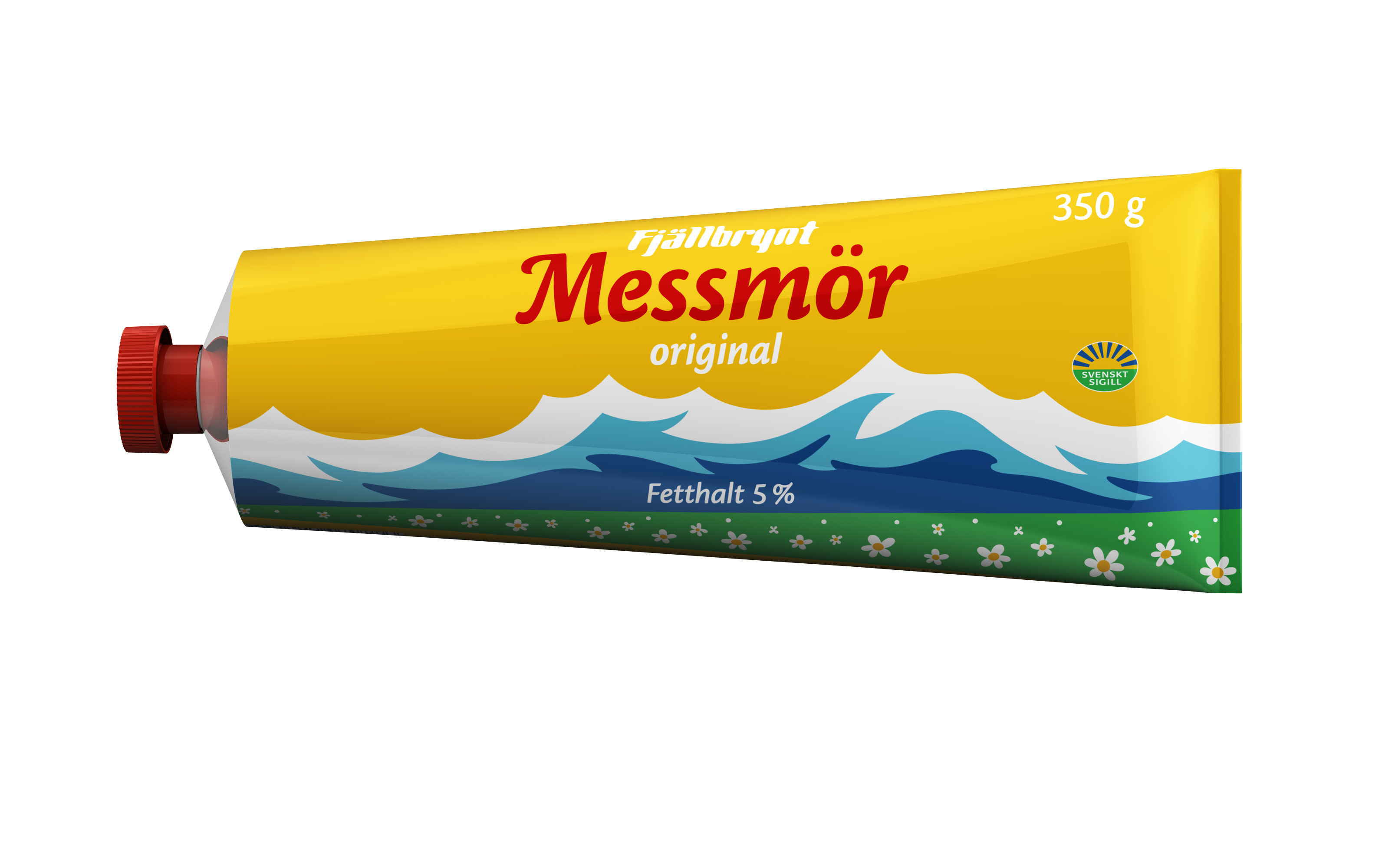
messmor_350g_original_front 5: Messmör – Soft whey butter

Translated as soft whey butter, this disgusting sandwich topping and comes in two delightful choices: goat milk-based and cow milk-based. Whey is pressed out from cheese and then boiled until it caramlises and gets an unappetising brown colour. It looks nasty and tastes revolting.
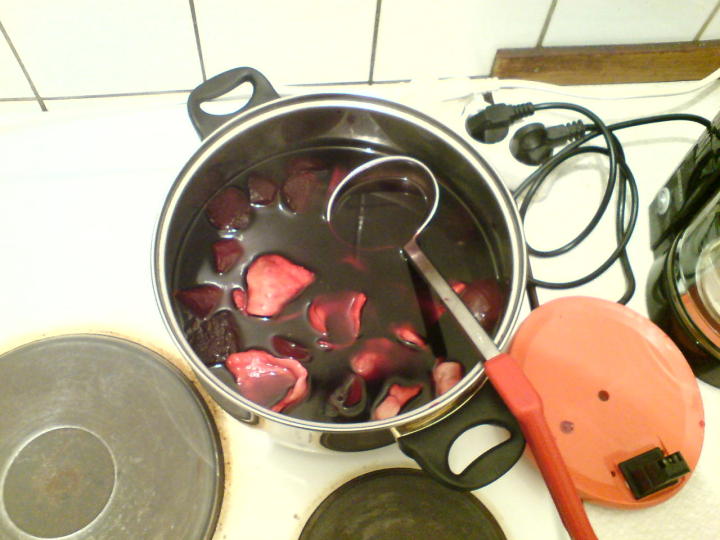
blodspoppa 4. Blodsoppa – Blood soup

Blood soup is a soup made of stock and goose blood which is thickened and flavoured with syrup, wine, cognac, vinegar, cloves, ginger and pepper. It is traditionally eaten with a roast goose dinner and it dates back to the Renaissance period. Historically, probably it was a useful source of iron, but in modern Sweden it just feels babaric and, well a little vampire-like. Maybe this is how Swedes get through the long, dark nights without biting each other’s necks?

palt 3. Palt – Potato and pork dumplings

Palt is a kind of gross potato dumpling stuffed with boiled pork. The dumpling is boiled in very salty water. It is normally eaten with butter and lingonberry jam and Swedes drink milk when they eat it just in case it doesn’t already slink down the throat. It is similar to another dish that Swedes eat called ‘body cakes’ which are just as nasty as they sound.
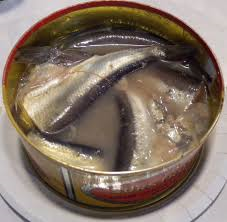
surströmming 2. Surströmming – fermented Baltic herring

This offensive dish consists of herring that is caught just prior to spawning and packed into a tin of brine to ferment. The fermentation starts from an enzyme in the spine of the fish, together with bacteria. Hydrogen sulphide is produced in the tin. Sounds appetizing? The salt in the brine allows the bacteria responsible for rotting to thrive. This bacteria prospers and decomposes the fish, making it sour. When the tin is opened, the contents release a strong and sometimes overwhelming odour which smells like human excrement. The dish is ordinarily eaten outdoors as the reek will fill out an entire building if eaten indoors. The fish is usually eaten on crispbread, or rolled in thin bread, with potatoes and sour cream. This way of preparing food was historically a process of preserving food in order to survive through the winter. But in modern-day Sweden, it is so unnecessary – now we have fridges!!!

lutefisk-akta 1. Lutfisk – Sodium Hydroxide fish

Imagine your mouth full of jelly. Wobbly, quivering jelly. Now add a creamy sauce to that consistency. Slush it round in the mouth. Now add the flavour of fish! And there you have it! Lutfisk! This revolting food is a dish consisting of dried whitefish prepared with lye (deadly sodium hydroxide) and a sequence of particular treatments. The first treatment is to soak the dried stockfish in cold water for five to six days. The saturated stockfish is then soaked in cold water and lye for an additional two days. The fish swells during this soaking, and produces a jelly-like consistency. When this treatment is finished, the fish (saturated with lye) is caustic and therefore poisonous. To make the fish edible, a final treatment of yet another four to six days of soaking in cold water is needed. Eventually, the lutfisk is ready to be boiled and then served with a creamy spiced white sauce and potatoes. This has to be the most vile thing I have ever eaten, it is truly repugnant. The good news is however that Lutfisk is a Christmas dish, so it only ever gets dumped infront of you once a year! Thank Santa for small mercies!
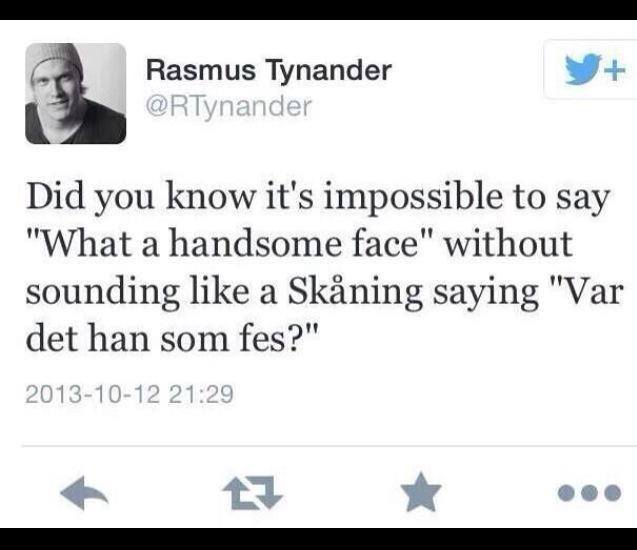
Swedish English confusion

fes

A friend sent me the above tweet today, which is very funny if you can speak English and Swedish. It made me think of other situations where the mixing of the two languages has caused hilarity or humour. One example I recall is when a friend said to me:

‘We’ll have to do it the day after julafton.’

I was very confused and asked her to repeat.

‘We’ll have to do it the day after julafton.’

I was still very confused. You see, her pronunciation of the Swedish word for Christmas Eve – julafton – was not quite correct and I also was pre-programmed into listening to English and not Swedish – so this is what I heard:

‘We’ll have to do it the day after you laughed on…’

Understand my confusion…??

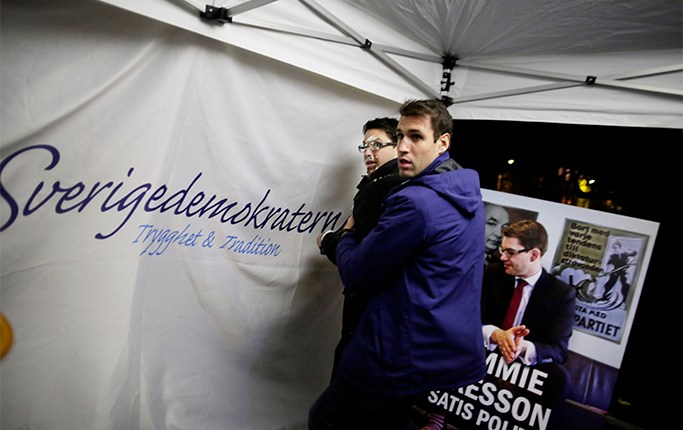
Throwing cakes in Swedish politics

jimmie cake

Yesterday evening I happened to be on Nytorget, a square in Stockholm, at the same time as the extreme right wing party, Sweden Democrats, were having a rally. Jimmie Åkesson, the leader of the party, which is gaining favour in Sweden, was signing his newly-released book and a queue of people were standing there to get their copies signed. There was a large group of anti-fascist demonstrators there chanting and protesting their opposition. The whole thing was monitored by armies of police and, despite this, one demonstrator managed to squeeze past security and throw a cake into Jimmie Åkesson’s face. Now, while I in no way condone the thowing of the cake, in fact I think it’s undemocratic and counter-productive, it is a sign of anger and frustration at the politics the Sweden Democrats are trying to enforce in Sweden.

On the way home, I walked past the now-deserted location of the demonstration and saw a lot of trampled flyers on the floor. I picked one up to read what message was being preached by this party. And I was struck by the excellent rhetoric, the smart marketing and the smooth packaging. I don’t care to repeat the message here as I don’t accept it, but needless to say the PR included in the flyer complained about the cost of immigration and appealed to the major concerned groups in society – to the sick, to the elderly, to families and those scared about crime and national security. At the same time, the material promotes ‘safety and tradition’ and the maintenance of the fallacious Swedish identity.

The effective rhetoric is remniscent of a time in the not-so-distance past and the success of the 1930’s Nazi party. Hitler was a clever rhetorician and had the ability to appeal to the masses and exploit their fears in order to gain power and introduce a disgusting politics. All over Europe today, other right-wing rhetoricians are manipulating the citizens and gaining power to implement cynical policies in their respective countries. And they are on the rise in Sweden.

For those of us who are against their xenophobic, homophobic and mysogynistic agenda, we can take a stand by exercising our freedom of speech and our democratic vote. Throwing cakes is not a way to win this argument, it just fuels the sympathy for them. The way to win is in dialogue, debate and discussion – with our parents, our colleagues, our children.

The illusion of the collective Swede

welfare state

Is the notion of the collective Swede just an illusion?

Sweden is famous around the world for its welfare state – the system of tax that provides for the country’s citizens from the cradle to the grave. This system was introduced by politicians from Sweden’s social democratic history and I think that it’s great that it exists. Many assume that the Welfare state is the product of collective thinking and solidarity. Maybe it is. But I’d like to offer an alternative perspective.  

In collective-oriented societies, individuals operate within the context of what is best for the group, even if that means surpressing their individual needs. In exchange for this, they receive loyalty and support from the other members of the group.  

In Sweden, it would be easy to look at the welfare state and relate it to the above definition of a collective. In Sweden, citizens comply to the tax laws and in exchange they are taken care of in times of need.

But let’s look at the welfare state through the lens of individualism instead. According to research, Swedes are amongt the most individualistic countries in the world. Individualistic from the perspective of self-development, self-expression, right to live life the way I want to, self actualization,, freedom to make individual choices about my life. Amongst Swedes, it is very important to have individual choice, to the point that some people feel violated if they experience another person has in some way limited their choices, however minor that might seem.

 So what about the Welfare state? In Sweden, the strong individualistic drive of the citizens created a system in which they don’t have to take responsibility for the group. Once tax is paid, the state takes care of the unemployed, the sick, the elderly so the citizens don’t have to, and consequently people can go about their lives fulfilling their individual dreams and satisfying their individual needs.

When you look at it this way, Sweden’s Welfare state is not an exercise in social solidarity. It’s an exercise in pure individualism.

So is the notion of the collective Swede just an illusion?

Street begging in Sweden – what to do about it?

Tiggare

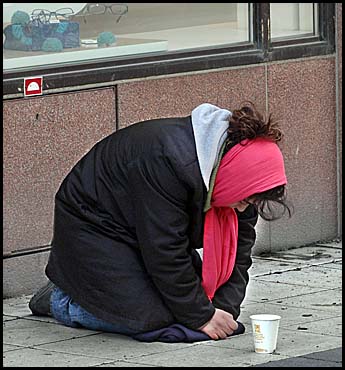
Did you know that Sweden is one of the few countries in the EU where begging is not illegal? A so-called ‘begging crackdown’ came into force in 2011 which criminalized the activity. Beggars on the streets of Swedish towns are becoming more and more common and I, amongst others, have a difficult time deciding what to think about this. On the one hand, we’ve all heard about the gangs of beggars and the organization of donation gathering as a source of income for the gang leaders. On the other hand, there is the individual person sitting on the street freezing in the November rain.

A good friend of mine made a very helpful comment recently that enabled me to reflect over my feelings and I wanted to share that with you. This is what he initially wrote on FB, which created quite a debate (I have loosely translated it into English):

‘There she sat, in the rain. Outside Coop. With her cup and her threadbare clothes. And I stepped out of my car and searched impatiently in my wallet amongst my gold ten krona coins to pay for a trolley. Have to swap this cash, I thought. This wallet’s so heavy with all this loose change. So…..impractical. That’s what I thought. When I walked past her. Without looking. In the rain. Because you know that it’s organized crime. I’m not going to contribute to that. No. So I went shopping, as you do on a Friday. A little bit of Brie from the deli counter, which melts in the mouth. And some other nibbly bits to eat in front of the open fire this evening as the rain beats against the window pain. Have a cosy Friday. The woman at the till was happy to receive all my change, I got a 100 krona bill in exchange. I throw my items into my bag and walk out to the carpark. And there she sits. I stop. I think. I question myself. What kind of person am I? I take the bill out of my wallet and put it in her cup. Where it belongs. I’ve got enough, unlike her. And she still doesn’t.’ (Calle Mikelsens)

This comment on Facebook caused a debate about begging in Sweden and whether Swedish people should accept it or ignore it. In order to explain his point of view, my friend Calle, added another comment which changed my perspective on the issue. This is what he wrote:

‘My reason is clear. I believe in the meeting between people. That I can do what I can but at the same time understand my limitations. Sometimes ten kronor or a hundred krona bill can make a big difference. I don’t want to limit myself by thinking globally but I want to instead do something. We can’t solve poverty with charity. We solve it through political action and taking a stand. But we can, along the way, help those who are at risk of falling. And feel anger every time we put money into the collection tins. I am, despite my naivity, not convinced that a political shift will eradicate world starvation. That requires a larger movement. But I feel that there is a wind of opposition sweeping over the world despite the greed and the grabbing. I have to do what I can on my small scale. That’s where I have to begin…’

So, it’s all about each of us making a choice. Do we want to look at the global perspective, in which the individual often gets lost? Or do we want to look at the local perspective, and understand that what we choose to do, or not to do, can have an impact on another person’s life?

Sweden versus Switzerland

swedswiz

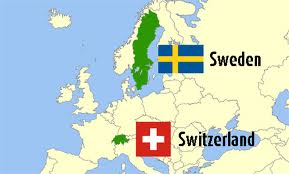
How many times hasn’t Sweden been confused for Switzerland? Many Swedes relate stories of the mix ups that they’ve encountered in their lives. Well it seems that the same happens to Swiss people.

Apparently this is so serious that the Swiss Embassy in China have started a campaign, where entrants can win a trip to Sweden and to Switzerland. All they have to do is send in humorous explanations of how Sweden and Switzerland differ.

In the pictures that follow the campaign, Switzerland is represented by money, cheese fondue and the tennis champion Roger Federer.

And what about Sweden, then? Pictures of a dad carrying a child in a babybjörn, an elk, meatballs and a gay couple are chosen to represent this country in the North.

Apparently, the campaign has had a huge impact in China, and as far as I know a winner has not yet been announced.

So, what’s your input? – What do you think is the biggest difference between Sweden and Switzerland?

Swedish autocorrect

Auto+Correct_5487c0_4262849

You know the autocorrect function on mobile phones and Facebook? Well, a somewhat depressing realization occured to me today.

After the gym this morning I felt proud and decided to update my Facebook status so everyone would know that I’d been to the gym! I wanted to write that I was freshly-exercised and lovely!

The Swedish autocorrect managed fine to predict what I wanted to write, until I wanted to write ‘nytränad’. (freshly-exercised) It simply didn’t recognise the Swedish word, and gave me all sorts of alternatives. Then I realized the depressing thing – I clearly have never written ‘nytränad’ before!!

Ghosts and Ghouls

halloween drottninggatan

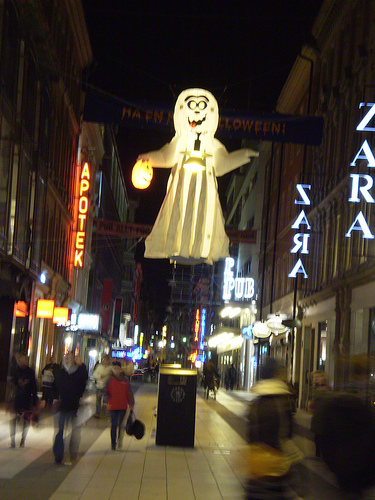
Today is Halloween and in Sweden, the tradition seems to be getting bigger and bigger every year: Jack O’Lanterns everywhere, orange and black, masquerades, scary window decorations.

Most people associate Halloween with USA, but the tradition originated in British Isles and was taken overseas by the immigrants.

Because it’s Halloween, I thought I’d share a childhood memory of the tradition from when I lived in the UK. When I was about 10, we were instructed by the teacher to write a poem about each month of the year. Since I have always loved to write, I set about the task diligently. But when I got to October, I got stuck, I could only get the first line…

‘October, now it’s Halloween,

So I asked my mum for help. She sat down beside me, and almost immediately came up with the next line!

‘October, now it’s Halloween
Ghosts and ghoulies can be seen!’

She was so proud of herself. But I laughed hysterically.

You see, in the 70’s ‘goolies’ was slang for testicles! ‘Ghouls’ means ghosts.

Sometimes grown-ups just don’t get it.

Happy Halloween!

Embarrassed on a bus

Riding home on the bus today, a woman squeezed in through the back doors and didn’t show a ticket to the driver. Suddenly, a voice boomed out over the loudspeaker. 

” You. Do you have a ticket?”

No response. Then, again…

” You. Back doors. White bag. Do you have a ticket?”

No response. People started looking round to see who the culprit is. The woman with the white bag stands firm, but starts to blush. 

Then, over the loudspeaker….

White bag, red face! You got a ticket???!!!”

And just like that, the woman ran out of the back doors and away into the Stockholm darkness. 

Swedish charity

panini

I’ve always been under the perception, valid or not, that charity (corporate and private) is not big in Sweden. In recent years, a mass of different TV galas might have been changing this – eg, ‘Children of the World’, ‘Cancer Gala’. My impression still, however, is that charity is not something yor average Swede involves themselves so much in. One explanation for this might be the welfare state structure that exists in Sweden – we pay our taxes and the state should take care of the needy. Another explanation might be that we don’t want to accept that there is such a large need for charitable actions in a modern, developed country like Sweden. A third reason is that corporate charitable donations are not tax deductable in Sweden like they are in many other countries such as the USA.

Whatever, the reason, something happened today that really impressed me.

Normally, I love the sandwich and salad shop ‘Panini’ , I buy a lot of lattes and lunches there. Today I love them even more.

Earlier this morning, as I was buying my morning latte, I noticed a sign behind the counter. The sign read:

‘Food should be eaten, not thrown away. At the end of the day, Panini gives Everything that has not been sold to ‘Stadmissionen”s shelter for the homeless’.

This really impressed me. British sandwich chain Prêt-a-Mangér has been doing this for years, and I am so happy to see it in Sweden. Everyone’s a winner – Panini, the consumer, the receivers of the donations.

So, more of this please!!!!! Sometimes, charity does begin at home.