Swedes – the healthiest in the EU?

Image

The image of the healthy, well-trained Swede has found support in some research from the Europabarometer released recently.

 According to this research, ‘41% of Europeans exercise or play sport at least once a week, while an important proportion of EU citizens (59%) never or seldom do so.’

Generally speaking, ”citizens in the Northern part of the EU are the most physically active. The proportion that exercises or plays sport at least once a week is 70% in Sweden, 68% in Denmark, 66% in Finland, 58% in the Netherlands and 54% in Luxembourg. The lowest levels of participation are clustered in the Southern EU Member States. Most respondents who never exercise or play sport can be found in Bulgaria (78%), Malta (75%), Portugal (64%), Romania (60%) and Italy (60%).”

So, Sweden tops this research at 70% of interviewees saying the exercise at least once a week, closely followed by Denmark and Finland. Why might this be? Why could there be such a difference between Scandinavian countries and the Southern European countries?

  • One answer could be the climate – maybe the long, dark winters require some kind of exercise regime in order for us to survive?  
  • Another answer might be ‘peer pressure’ or ‘training hysteria’ as it’s sometimes called in Sweden. Does a tendency to Group Think mean that we follow what others are doing in order to be ‘in’?

I think a major contributing factor is values. We all know that values differ from group to group , and that those values often determine the desired behaviours of the people.

According to the respected ‘World Values Survey’, in Scandinavia, and in Sweden especially, a strong value is self-actualisation, or self-realisation. In other words, we as individuals have the right to be who we want to be, live how we want to live, think what we want to think and make the most of ourselves in the way we choose.

While other countries, such as Bulgaria and Romania, are focusing on how to survive the day, many Swedes are focusing on self-development, education, environmentalism and, not least, physical appearance and health.

So that Sweden comes out top in this research is not surprising. In Sweden, most of the serious ‘survival problems’ of life have already been solved, allowing many citizens to focus on other things.

Such as themselves.

If you’re interested in reading more about the research, find it here.

Please like and share this blog


Dirty Swedes and their bad language

Image

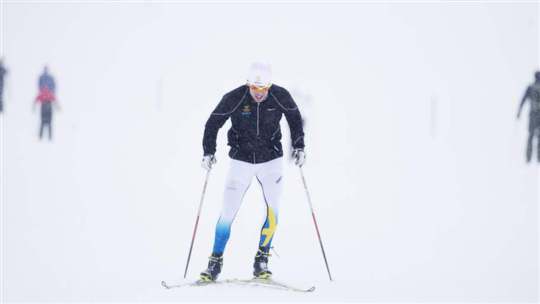
When watching the aftermath of the long-distance skiing on the TV, one of the participating in skiers described the track as difficult. A lot of snow had suddenly come and the interviewee described it as ‘kräksnö’. Directly translated this means ‘vomit snow’ – big flakes that dump into piles on the floor.

What is it with the Swedish fascination for creating emphasis by adding disgusting words to other words???

Other examples are:

 – ‘Snordyrt’ – Snot expensive

 – ‘Asfult’ – Cadavre ugly

– ‘Skitroligt’ – Shit fun

– ‘Knullrufs‘ – Fuck hair

– ‘Kukjävel’ – Cock idiot

– ‘Fisförnäm‘ – Fart noble (snobby)


And you thought Swedes were politely spoken?!  

Onneksi Olkoon – Congratulations to all Swedish Finns

Today, 24th February is ‘Sverigefinnarnas’ Day, the day that celebrates the roughly half million Finnish-speaking people who live in Sweden. According to Wikipedia:

”Sweden Finns (ruotsinsuomalaiset in Finnish, sverigefinnar in Swedish) are post-World War II immigrants of Finnish origin, and their descendants, living in Sweden, some of whom still speak Finnish in addition to Swedish. In 2012 there were about 426 000 people in Sweden, 4.46 percent of the total population, who were either born in Finland or had at least one parent who was born in Finland.[2] But since only the country of birth is registered in Sweden, not ethnicity or language, a considerable number of those registered as being of Finnish origin are actually of Finland-Swedish descent. According to “Finlandssvenskarnas Riksförbund i Sverige”, the national organisation for Finland-Swedes living in Sweden, around 20% of all people of Finnish origin who live in Sweden are Finland-Swedes, and were thus Swedish-speakers even before emigrating to Sweden.[3]

In the 1940s, 70,000 young Finnish children were evacuated from Finland to Sweden during the Winter War and the Continuation War. 15,000 are believed to have stayed and an unknown number to have returned as adults.

In the 1950s and 1960s the migration from Finland to Sweden was considerable, chiefly due to economic differences between the countries, as a result of Sweden not being involved in World War II and helped by the Nordic Passport Union. The emigration caused some alarm in Finland with most of the emigrants in their most productive age — although many of them returned to Finland in the following decades. Many of the Finns who have moved to Sweden have been Finland-Swedes (i.e. from the Swedish-speaking areas of Finland): In the 1950s they made up around 50% of the Finns moving to Sweden, and from the 1960s and onward around 20-30%. (Thus, the fact that a person in Sweden has a Finnish background does not automatically mean he or she has a Finnish-speaking background.)

The city of Eskilstuna, Södermanland, is one of the most heavily populated Sweden Finnish cities of Sweden, due to migration from Finland, during the 1950s until the 1970s, due to Eskilstuna’s large number of industries. In Eskilstuna, the Finnish-speaking minority have both a private school (the only one in the city of Eskilstuna, there is no public school or teachers in Finnish at the public schools. Only the lower level is in Finnish, upper level is in Swedish) and only one magazine in Finnish. Some of the municipal administration is also available in Finnish.

The unofficial flag

Areas with Finnish-speaking population in per cent, in southern Sweden, 2005

In the Finnish mindset, the term “Sweden Finns” (ruotsinsuomalaiset) is first and foremost directed at these immigrants and their offspring, who at the end of the 20th century numbered almost 200,000 first-generation immigrants, and about 250,000 second-generation immigrants. Of these some 250,000 are estimated to use Finnish in their daily lives,and 100,000 remain citizens of Finland. This usage isn’t quite embraced in Sweden. According to the latest research by Radio of Sweden (Sveriges Radio), there are almost 470,000 people who speak or understand Finnish or Meänkieli, which is about 5.2% of the population of Sweden.

In the Swedish mindset, the term “Sweden Finns” historically denominated primarily the (previously) un-assimilated indigenous minority of ethnic Finns who ended up on the “right” side of the border when Sweden was partitioned in 1809, after the Finnish War, and the Russian Grand Duchy of Finland was created. These Finnish-speaking Swedes are chiefly categorized as either Tornedalians originating at the Finnish–Swedish border in the far north, or skogsfinnar (“forest Finns”) along the Norwegian–Swedish border in Central Sweden.”

A new Swedish princess – but does she qualify?

Image


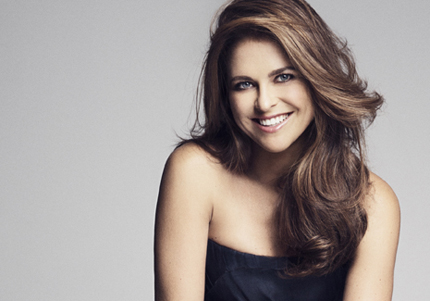
Princess Madeleine has given birth to a daughter and, in doing so, provides the Swedish people with a new princess.

Bookies are placing odds on the name of this child. Amongst the most favourite names are Elouise, Desirée, Lilian and Alice. The least likely, and therefore a chance of winning most money are Flora, Hjördis and Ulla. Princess Ulla? Mmm….

This birth, however, is not without its political complications. Since the child was born in the USA to an American/British father, she automatically is an American citizen. And, apparently, as an American citizen, she does not have the right to the Swedish throne.  This becomes a constitutional question for Sweden. Is the order of the succession to the throne connected to nationality, to geography of birth or to bloodline? It’s maybe not a hugely important question, but it’s an interesting one.


Hijacking Calle – Swedish crowdfunding

crowdfunding

I once wrote an article about lack of charitable thinking in Sweden. Now I am so eating humble pie.

One of my oldest friends in Sweden has been fighting cancer for 3 years. His body has been poked, prodded, cut, slashed and injected with poison over and over again. There is little more to do.

Calle is a passionate, strong-willed person and he has now decided to stop the poison and attempt alternative medicinal approach at the Budwig Centre in Spain. This requires private funding – 100 000 Swedish crowns – money he does not have since he has been sick for such a long time and unable to work.

He has started a fund to ask friends, colleagues, acquaintances and strangers to support him. To my amazement, people have flocked to his support. He has received some financial support and needs more. I was wrong about charity not being big in Sweden. In this case, I am happy to say people have proved me very wrong.

Estate agent Uppvik and Daughters, where Calle has previously worked, hijacked his Facebook page and wrote this open letter:

”Nu kapar vi din Facebooksida en stund, Calle! Vi som känner dig vet att du aldrig ger upp och att du har den ytterst ovanliga förmågan att betrakta dig själv med distans och humor. Förmodligen är det därför vi tycker så mycket om dig! (och för att din penna förmår skriva så att man hisnar!) Efter tre år av fruktansvärt påfrestande behandlingar, framgångar och bakslag om vartannat förstår vi inte hur du orkar… När nu din önskan är att få något annat än mera nedbrytande cellgift vill vi se till att undanröja de ekonomiska hindren för att din önskan ska infrias: vi stödjer helhjärtat att du söker dig till The Budwig Center i Malaga – en klinik med cancerläkare med ett helhetsperspektiv och betydligt fler effektiva verktyg än kirugi, strålning och cellgift, som ju är det som står till buds i den svenska cancervården! Och om alla ni som troget följer och låter er underhållas av Calles texter och foton hjälper till, får vi ju snabbt fram de 100.000:- som krävs! Vi har hittills fått ihop drygt 15.000:-, men mer behövs ju och det bums! Nordea Carl Mikelsons 3018 00 38311 – Inget bidrag är för litet – eller för stort 😉 Personligen vet jag (Gabrielle, som håller i pennan) att inte någon – varken läkare, forskare, alternativmedicinare – sitter inne med hela sanningen. Det sämsta man kan göra är att låta sig bli övertygad om att det bara finns en enda väg till läkning. Det finns många! Lymfom är sannerligen ingen dödsdom. När en engagerad och duktig läkare inte har fler uppslag och idéer betyder det inte att det inte finns mer att göra! Vad han säger är snarare: ”VI har uttömt våra resurser och kan inte göra mer för dig”. Välkända cancerprogram är just Dr Johanna Budwigs (Nobelprisnominerad fettsyreforskare) och Dr Max Gersons(strikt cancerdiet). Det finns som sagt hela hav av kunskap! Sorgligt lite tycks dock komma patienter i den svenska sjukvården till nytta! Utomlands har man på många håll kommit betydligt längre och blivit duktigare på att integrera sjukhusmedicin med många andra former av terapier. Integrativ medicin är framtidens medicin!¨” (http://www.uppvik.nu/cancer_och_integrativ_medicin.pdf)

I know you probably don’t know Calle. But if you feel like you would like to contribute to his crowd-funding, please donate to Nordea Carl Mikelsons 3018 00 38311, (The clearing number is the 3018).

Please pass this blog forward.

‘Vobba’ – a brand new Swedish complaint

Image

Perspectives-taking is one of the most important skills required for working in an multicultural environment. Anybody who’s travelled abroad knows that a new perspective is often one of the main impressions we receive. This is especially true if we travel to countries that are culturally and economically different from ours. In the context of the other society, we gain perspective on our own.

Yesterday, I returned from a trip to Thailand and Cambodia and was left, as often, with a humbling feeling. Cambodia is a dirt poor country, as yet not destroyed by tourism. The countryside, the cities and the people, raped by their recent history, are warm and humane and welcome us with open arms. Homelessness is rife, unemployment and sikness prevail. There, they really have a lot to complain about, and I’m sure at times they probably do.

Transport to Sweden, Monday  morning, breakfast television. As I sat there this morning and watched the local news to catch up on latest happenings,  I learned a new Swedish word. And this Swedish word reminded me of the importance of having perspective – ‘Vobba’.

‘Vobba’ is a combination of two Swedish words – ‘Jobba’, which means to work and ‘Vabba’ which means to be at home with a sick child and therefore free from work. In Sweden, parents receive support from the government to ‘Vabba.’

This new word ‘Vobba’ refers to parents who are home with their sick child but, thanks to technology, they also do a little work while at home, such as check emails or speak on the phone.

According to the report on the news this morning, one third of parents who have to ‘vobba’ feel stressed, and invaded, by it and find it impossible to balance their home and work lives with their sick child. 

What a problem! Oh dear me! I really don’t know how they cope! Not only are they paid to be at home by the tax payer, and their child is probably asleep in bed, but it’s really hard work to check a few emails on a smart phone while they’re having a cup of coffee.

Really??? Get some perspective!  

In countries like Cambodia, where daily survival is a struggle, they would be shocked by this new Swedish stress factor.

So, I am asking all of us to get some perspective on this issue and on all those other issues and compaints that we have. In the greater scheme of things, how important are they?

Instead of focusing on what is stressful, invasive or unfair, let’s focus on the positive! Sweden is a great country where parents get to be home with their sick child and are not forced to take a day’s holiday or leave the child with an unknown baby-sitter or force the sick child to go to school. That is fantastic!

Let’s focus on that instead and remember most people around the world don’t have it anywhere near as good as we do.


If you like this text, please spread it and share it!

Politics and hamburgers

Image


To what degree is an employer allowed to inform their staff of their personal opinion?

Is an employer allowed to urge employees to vote a certain way because a particular party has a politics that is more beneficial for the company?

Where is the line between public opinions and private opinions, between information and abuse of power?

All of these are very cultural questions. What’s your point of view?

Taking a stand for Sweden’s neighbours

Image

Finally! That’s all I can say! Finally!

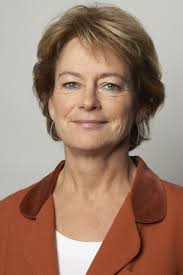
The Swedish Minister for Sport, Lena Adelsohn Liljeroth, finally took a stand today against the homophobic Russian regime and announced she will not be attending the Olympic Games Opening or Closing ceremonies in a couple of weeks. In declining the invitation, she joins USA, Germany and France who have previously stated they will be boycotting the ceremonies.

Many people say sport and poltics do not belong together. However, while each individual sportsperson absolutely has the right to fulfill their personal dreams of an Olympic medal, regardless of the country where the games are being held, I believe that governments should have a different perspective. By attending a high-profile event in a country which has dubious human rights, politicians are indirectly condoning the actions of that country. By not attending, politicians are taking a stand against oppression and violence.

I am today proud of Lena Adelsohn Liljeroth and hope that other Swedish politicians and dignitaries will follow suit.